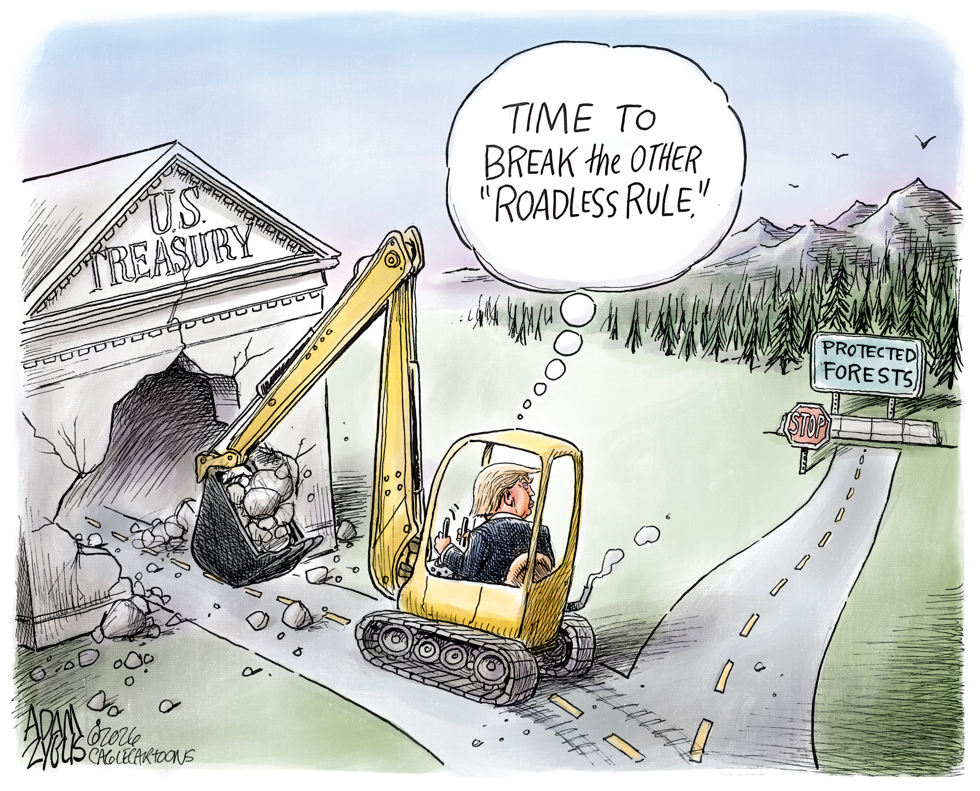
The cartoon shows Donald Trump at the controls of a yellow excavator that has already damaged the U.S. Treasury building. His thought bubble calls for breaking the other Roadless Rule while a sign marks protected forests ahead. The image comments on efforts to open national forests to development by repealing the 2001 Roadless Rule. It links the policy shift to broader questions about federal spending and regulatory priorities. The visual places the Treasury in the path of the machine to suggest fiscal or institutional costs alongside environmental changes.
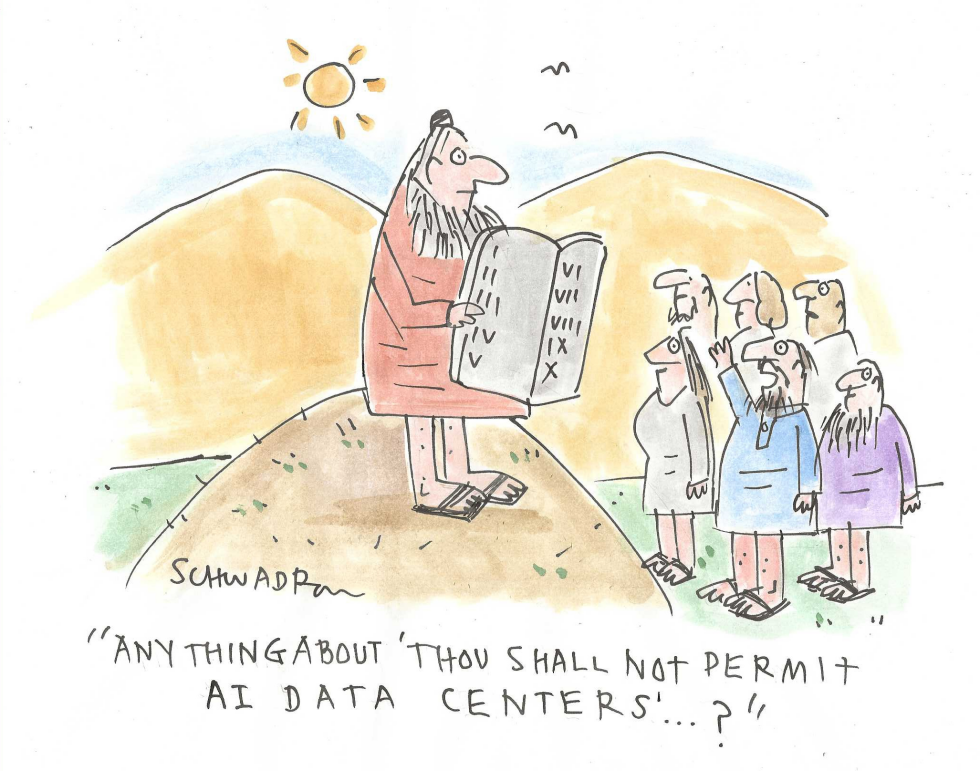
AI data centers face growing regulatory scrutiny over energy use and land impact in 2026. Lawmakers weigh new permitting standards as facilities expand rapidly. The cartoon uses the Moses figure to highlight the absence of explicit restrictions in foundational rules. It suggests modern governance struggles to apply old frameworks to new infrastructure demands. The editorial stance favors clearer limits on data center approvals.
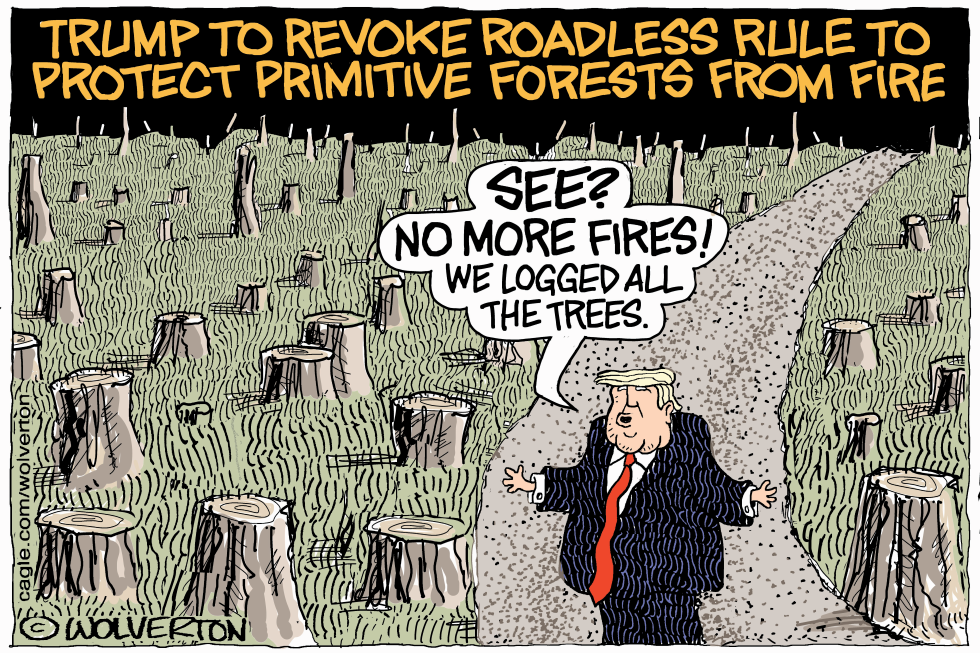
The cartoon shows Donald Trump in a landscape of tree stumps after revoking the roadless rule. He claims in a speech bubble that logging all trees eliminates forest fires. The image responds to the 2026 policy change allowing logging in previously protected primitive forests. The visual argument highlights the scale of tree removal as a supposed fire prevention measure. Publication occurred on August 18, 2026.
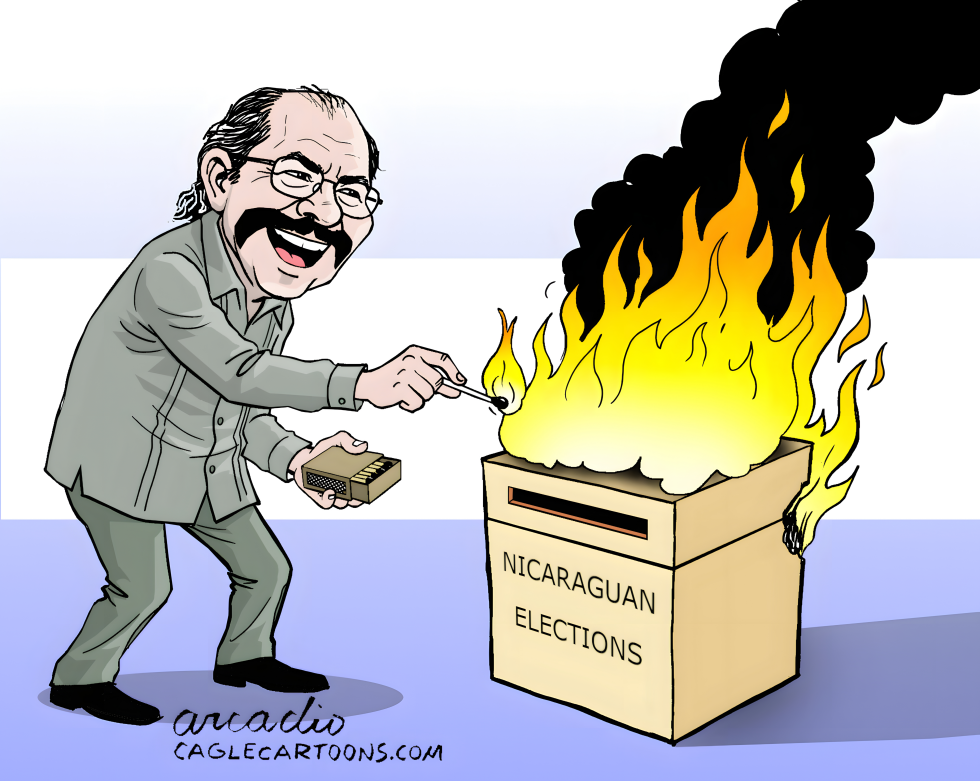
Nicaraguan President Daniel Ortega has publicly stated there will be no more elections, a move that solidifies his long-term grip on power. The declaration comes amid ongoing concerns over democratic backsliding in the Central American nation. This development matters because it removes any remaining avenues for political opposition and citizen participation in governance. The accompanying editorial takes the position that Ortega's action represents a deliberate destruction of democratic institutions rather than a legitimate policy choice.
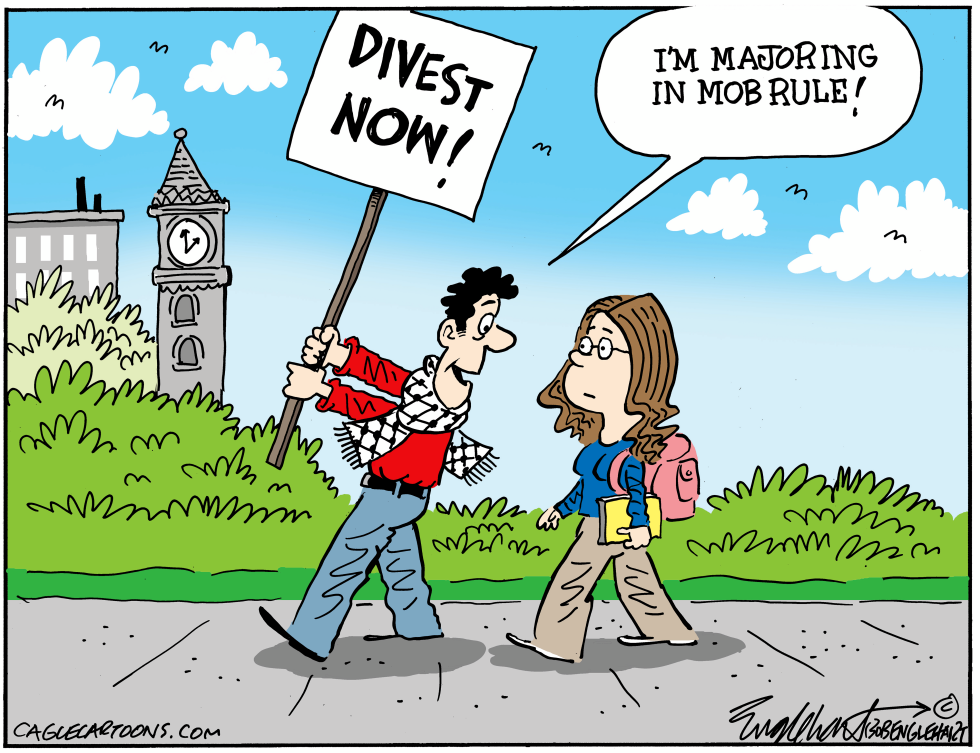
A political cartoon depicts a male protester holding a sign reading DIVEST NOW! on a college campus with a clock tower in the background. A female student with a backpack responds that she is majoring in mob rule. The image responds to campus demonstrations in spring 2024 at universities including Columbia and UCLA, where students called for divestment from companies tied to Israel amid the conflict in Gaza. The cartoon uses the exchange to comment on the intensity of the protests and their impact on campus life.
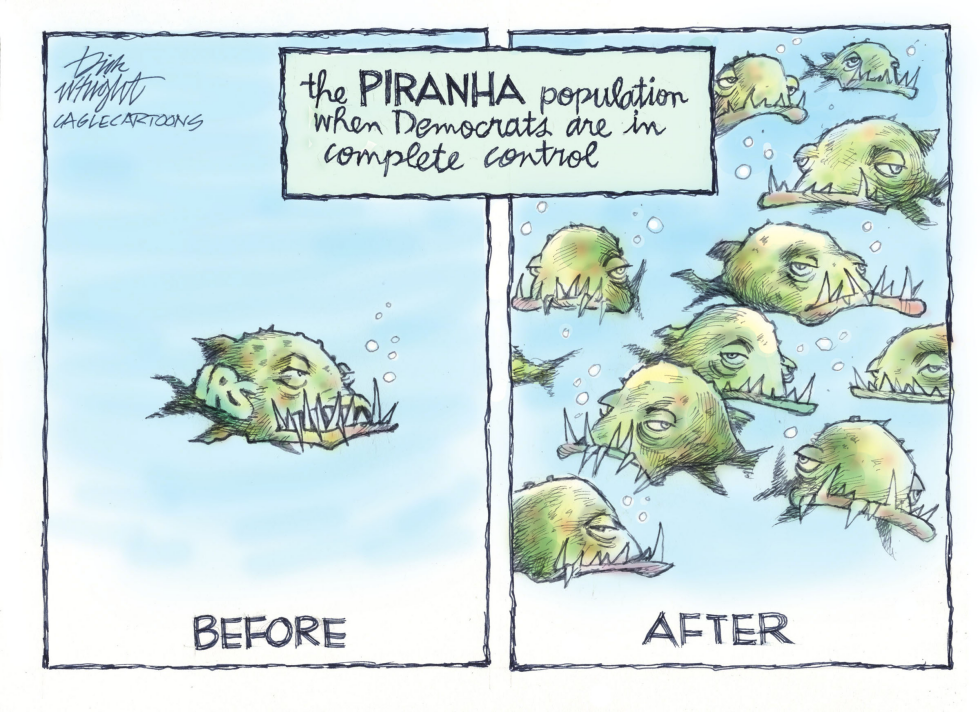
This Daryl Cagle political cartoon depicts the IRS as a lone piranha before Democrats assume complete control, then multiplying into a ferocious school afterward, bubbling with satirical bubbles. The IRS piranha metaphor cleverly critiques perceived overreach in tax enforcement, with the before after panels underscoring a conservative viewpoint on government expansion. Bubbles and grumpy fish expressions add humorous flair, making the Democrats control government satire both insightful and shareable. Overall, it's a witty jab at bureaucratic growth, perfect for sparking debates on fiscal policies.
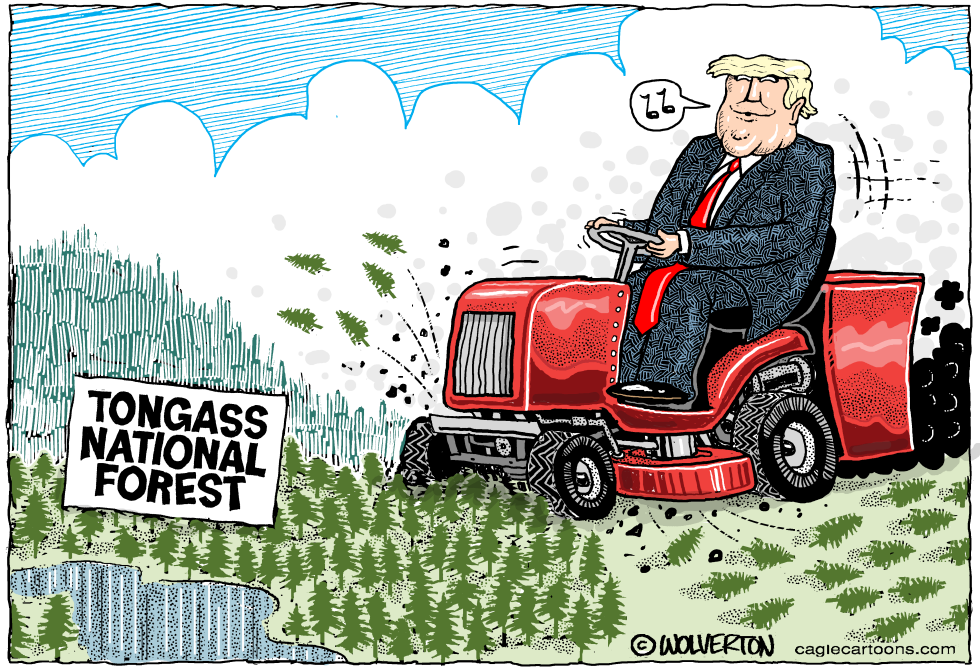
The cartoon shows President Donald Trump operating a large red riding mower through the Tongass National Forest in Alaska. Trees fall in its path while a sign identifies the location. The image responds to the Trump administration's 2019 proposal to exempt the Tongass from the 2001 Roadless Rule, opening more than 9 million acres to potential logging and road construction.
The image shows former Attorney General Jeff Sessions seated inside a sandbag and barbed-wire bunker while clutching a document labeled rule of law. The composition uses the bunker as a visual stand-in for protection of institutional norms during the Russia investigation. Publication occurred days after Sessions left office in November 2018. The drawing responds to ongoing tensions between the White House and the special counsel probe led by Robert Mueller. Broader context includes repeated questions about the independence of the Justice Department and potential interference in federal inquiries. The visual argument centers on the need to insulate legal processes from political influence.