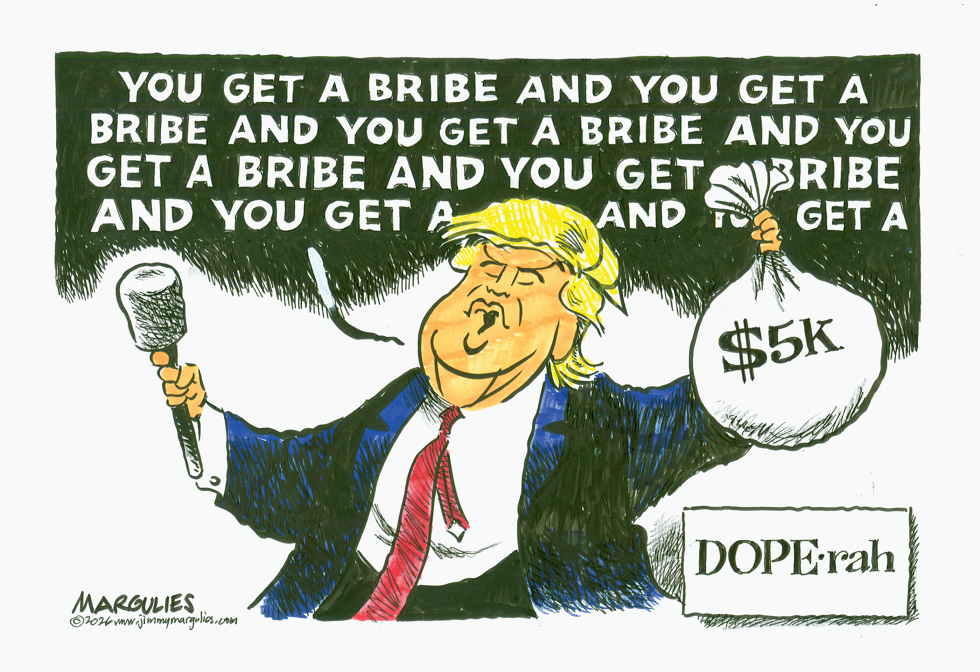
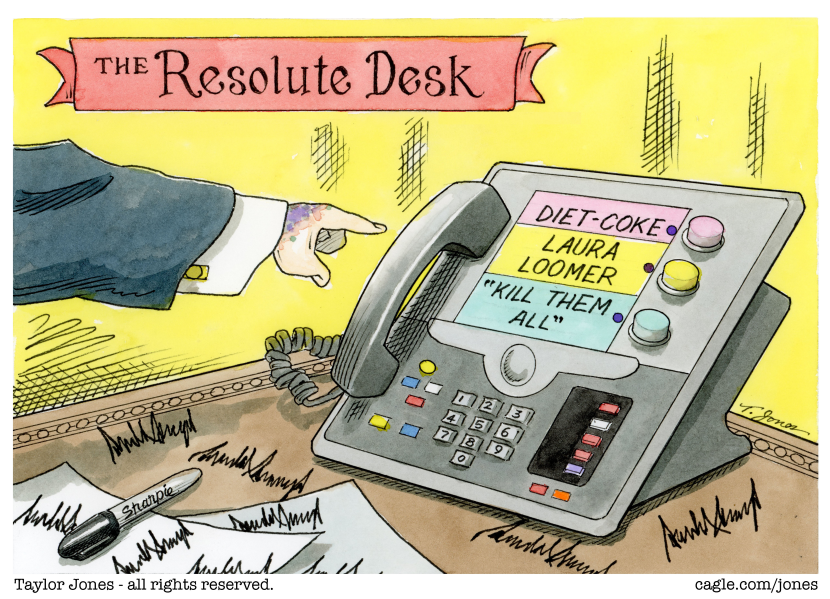
Donald Trump has faced renewed scrutiny over allegations of using official authority to distribute favors and payments. The pattern involves judicial and executive actions that critics say cross into bribery. Such conduct raises questions about accountability in high office. The cartoon frames the behavior as a deliberate, widespread distribution of bribes to allies and supporters. It argues that this approach undermines public trust and normalizes corruption at the highest levels.
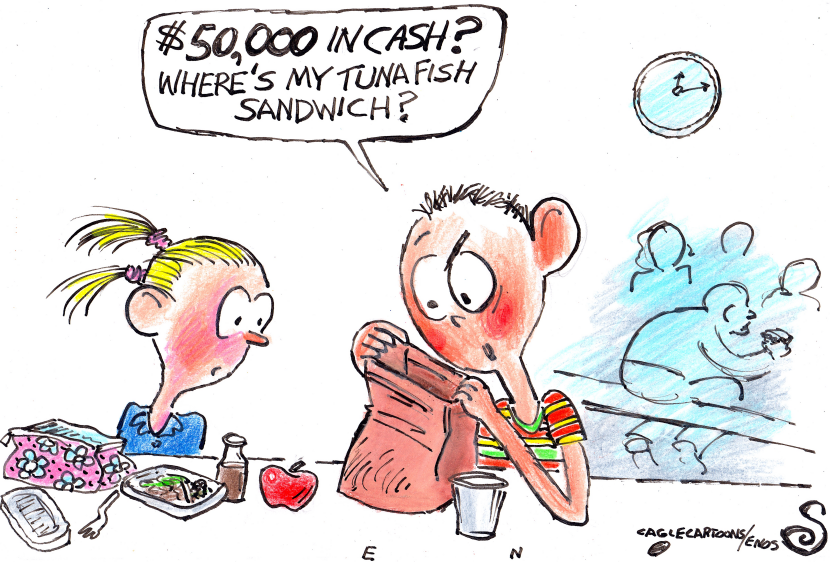
Donald Trump has publicly offered $5000 payments to Americans who follow his directives, framing the incentive as a direct reward for alignment. The pledge has drawn immediate questions from his own base about the status of related DOGE checks previously promised. The move underscores ongoing efforts to maintain supporter enthusiasm through financial inducements. Critics view the tactic as an attempt to convert political loyalty into personal obedience. The cartoon highlights the transactional nature of the offer and the skepticism it has already generated among core supporters.
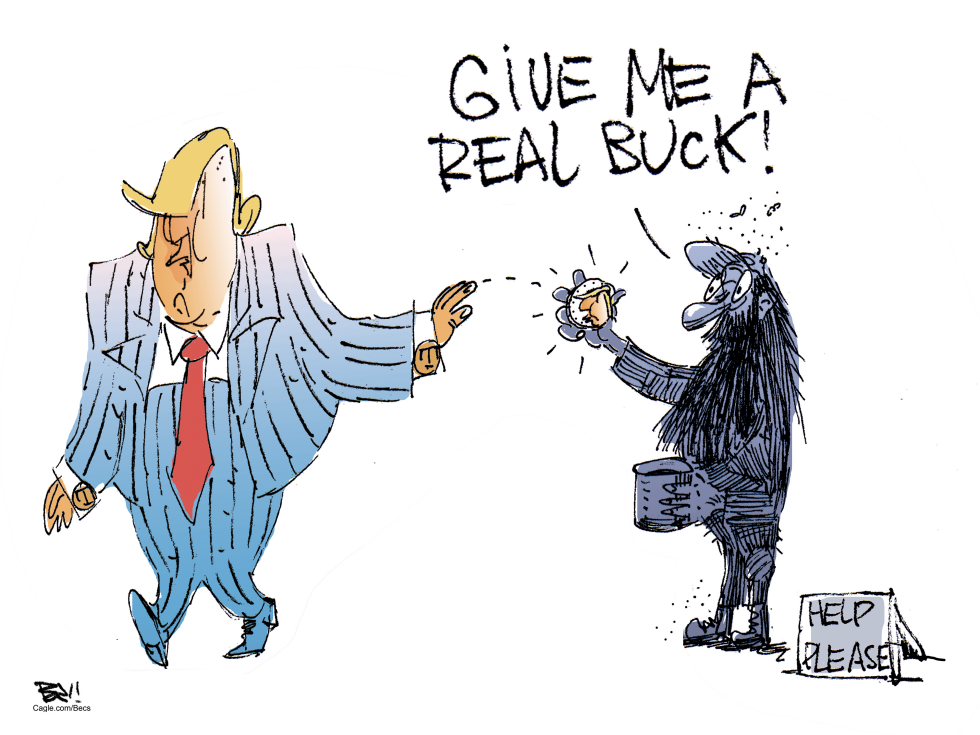
Donald Trump promotes a dollar bearing his image as a symbol of economic strength. The move draws immediate public pushback questioning its actual worth. Critics argue the branding fails to address underlying fiscal challenges. The cartoon frames the dollar as an unconvincing substitute that fails to satisfy basic needs for credible value.
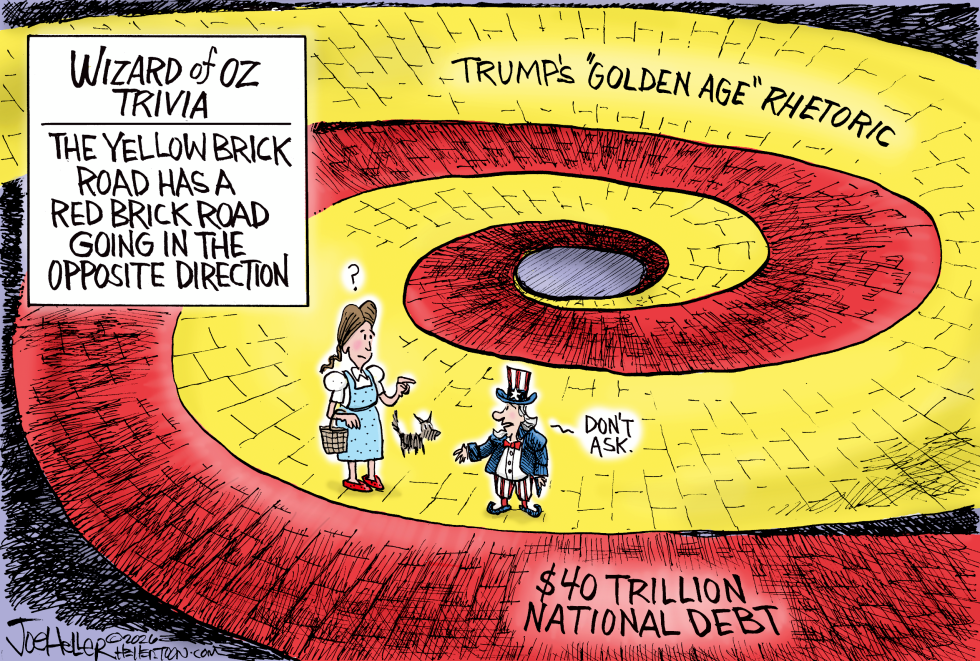
National debt has reached forty trillion dollars amid ongoing debate over fiscal policy. The administration promotes a golden age vision while critics highlight unsustainable borrowing. The piece argues that optimistic rhetoric masks a path leading directly into deeper financial trouble.
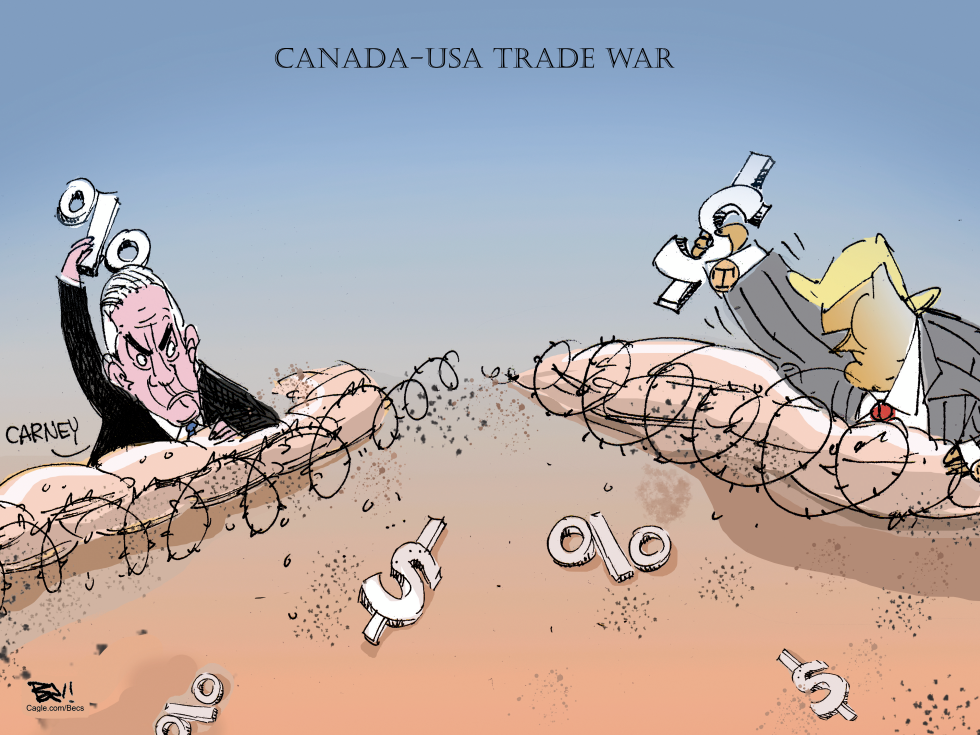
Mark Carney and President Trump clashed over Canada-U.S. trade policies in August 2026, with both sides imposing tariffs and barriers that disrupted cross-border commerce. The dispute centers on economic protections and retaliatory measures affecting businesses and consumers in both countries. The editorial highlights the mutual damage from escalating trade hostilities between the two nations.
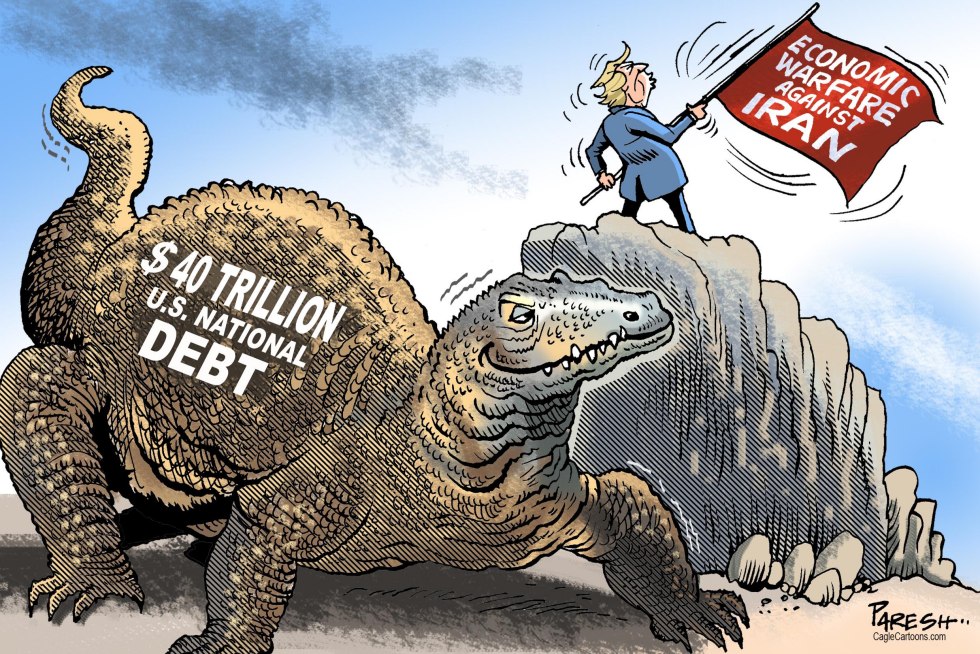
The image depicts Donald Trump standing on a rocky outcrop and waving a red flag reading Economic Warfare Against Iran. Below him a large dinosaur carries the label $40 Trillion U.S. National Debt on its side. The composition places the debt creature in motion near the rock formation. The scene responds to ongoing discussions of U.S. policy toward Iran and the size of federal obligations. The visual places the foreign policy action directly above the debt figure to link the two elements.
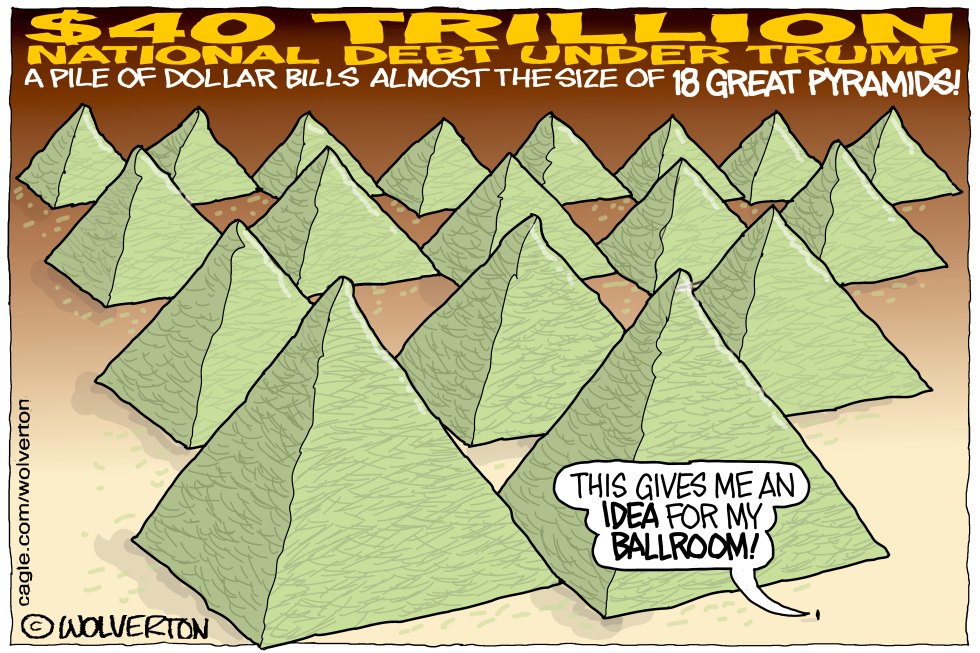
The image presents a field of green pyramids constructed from dollar bills set against a brown and tan background. Large text at the top states the $40 trillion national debt figure under Trump and compares the pile size to 18 great pyramids. A speech bubble emerges from one pyramid in the foreground with a remark about a ballroom idea. The composition places the largest structures toward the front and smaller ones receding into the distance. The visual ties the debt total directly to the current administration period referenced in the text.
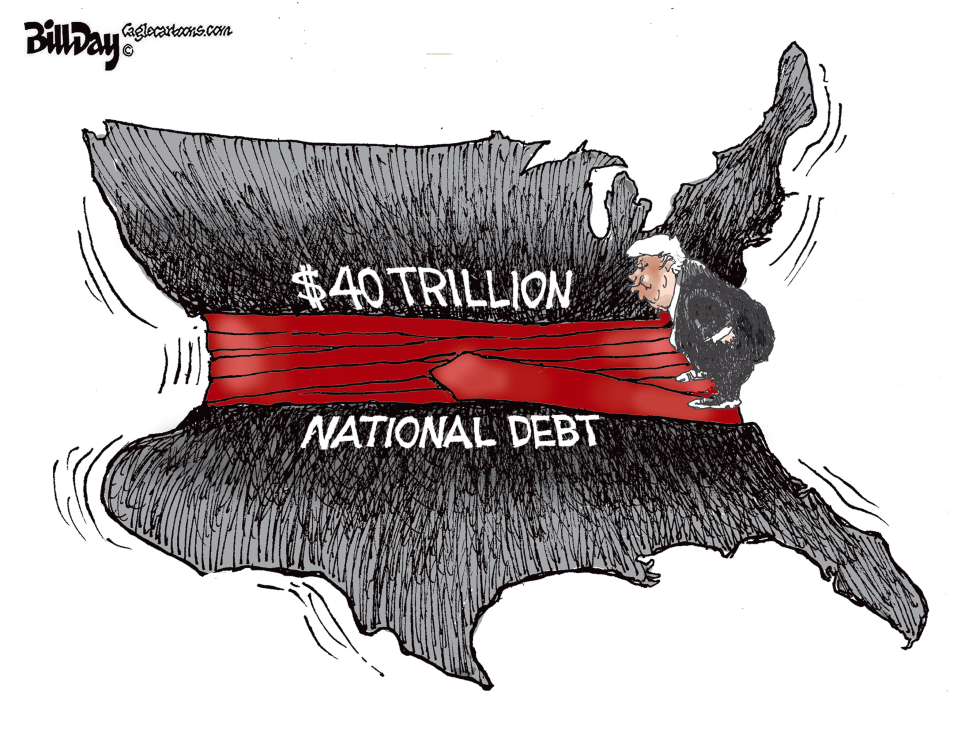
The cartoon shows Donald Trump positioned next to a red band labeled $40 trillion national debt stretched across a shaded map of the United States. The red band cuts through the map with motion lines suggesting strain. Text identifies the debt amount and the national debt label below it. The image responds to ongoing concerns about federal debt levels projected to reach that figure. It places the president in direct visual association with the fiscal challenge.
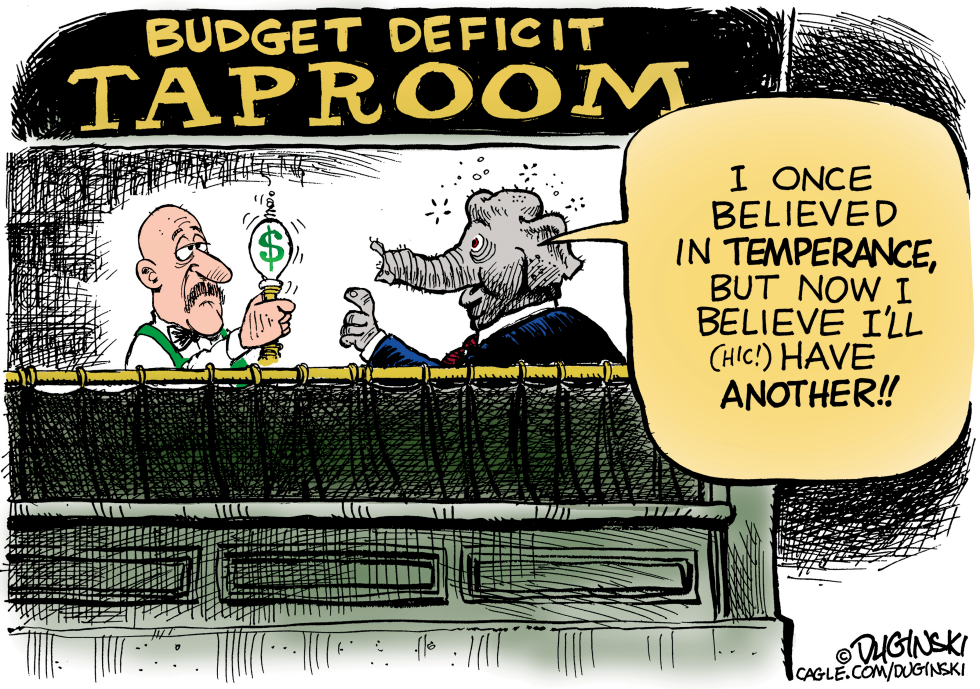
Republicans have long criticized deficit spending under Democratic administrations yet continue to support policies that expand federal borrowing when in power. The pattern reflects ongoing tension between stated fiscal restraint and actual legislative priorities on taxes and spending. The cartoon argues that the party has abandoned earlier commitments to balanced budgets in favor of repeated deficit increases.
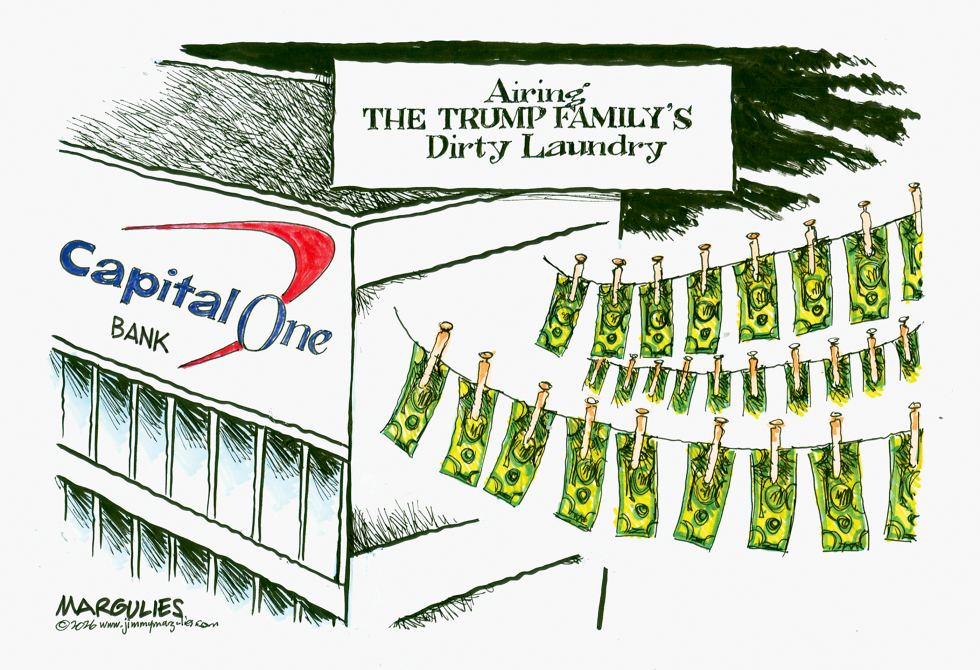
Questions persist over the Trump family's banking relationships and financial disclosures at Capital One. The bank has faced scrutiny for its handling of loans tied to the family businesses. These matters draw attention because they involve a former president and his relatives. Public records and legal filings continue to surface details about debts and repayments. The editorial takes the position that such financial entanglements warrant full transparency to maintain public trust in both political figures and major financial institutions.
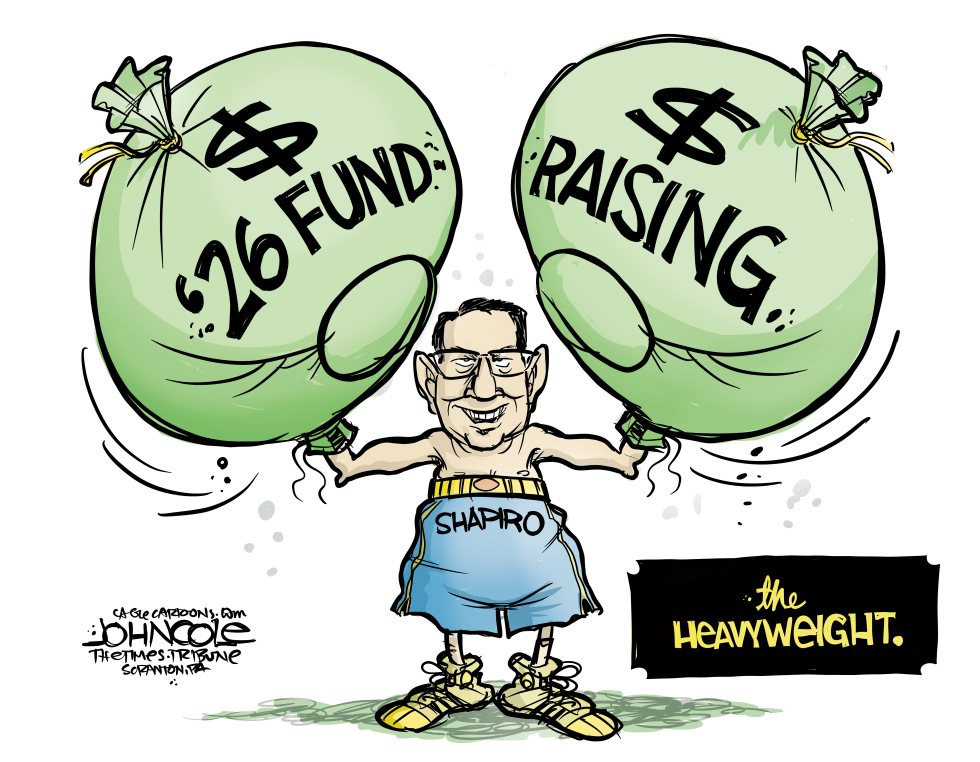
Ben Shapiro has built a substantial fundraising operation centered on a $26 fund and ongoing raising activities. The effort underscores the role of individual donors in sustaining prominent conservative media voices. The piece presents Shapiro as a dominant force in this arena.
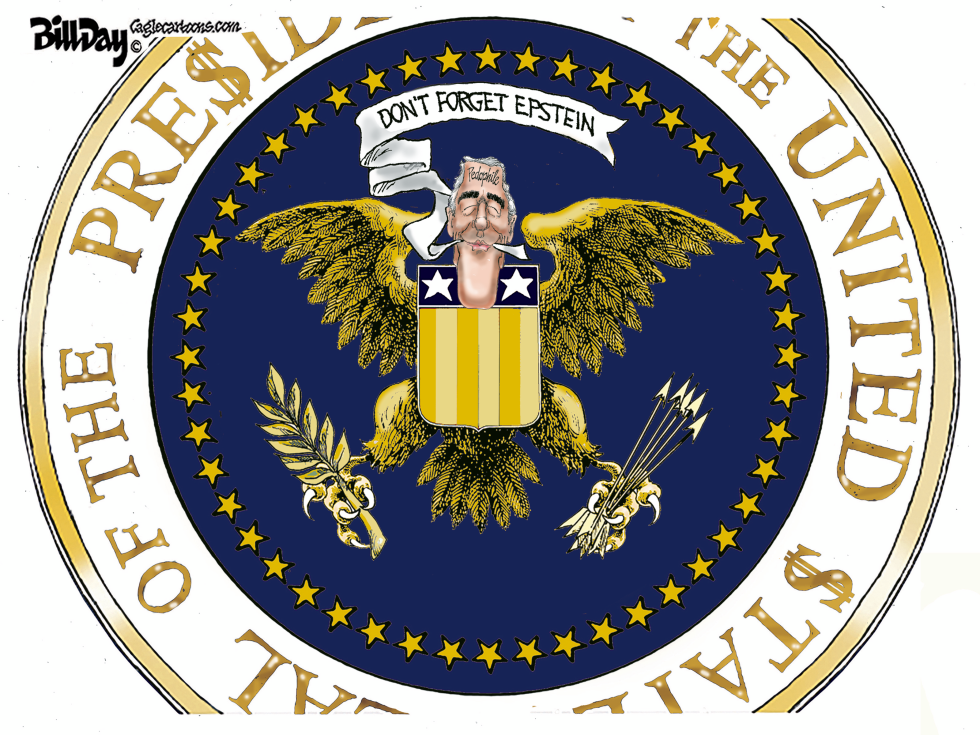
The Epstein scandal continues to generate political scrutiny years after the financier's death. Recent developments keep the case in public view through references to past associations. The piece argues that such connections deserve ongoing attention rather than dismissal.
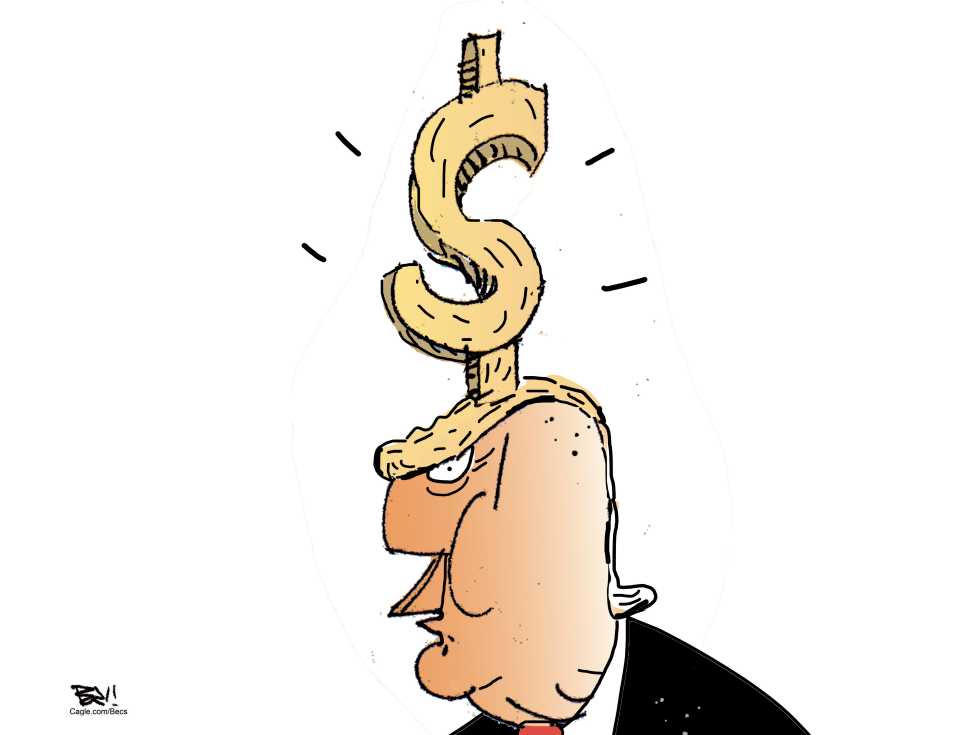
A generic business figure faces ongoing scrutiny over profit motives dominating decision making. Corporate leaders continue to prioritize financial gains amid public concerns about influence and ethics. The piece argues that such fixation distorts priorities and harms broader interests.