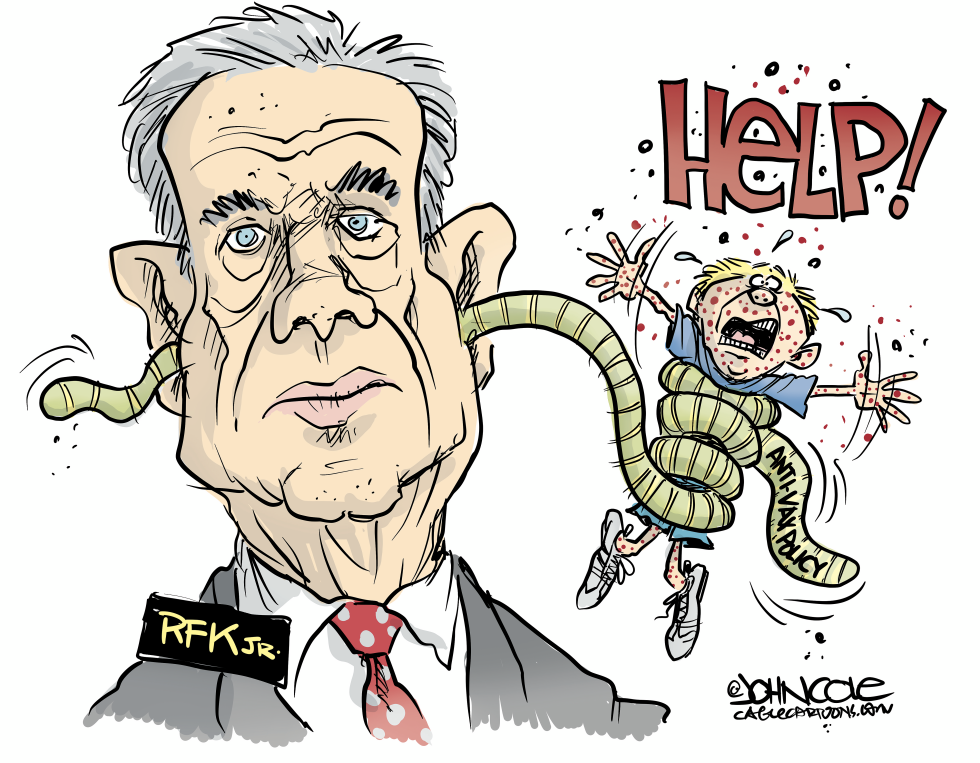
Robert F. Kennedy Jr faces renewed scrutiny over his past brain worm infection and longstanding anti-vaccine positions as he influences health policy. The episode highlights risks to childhood immunization rates and public trust in medical guidance. The piece argues these personal and ideological factors directly threaten child safety.
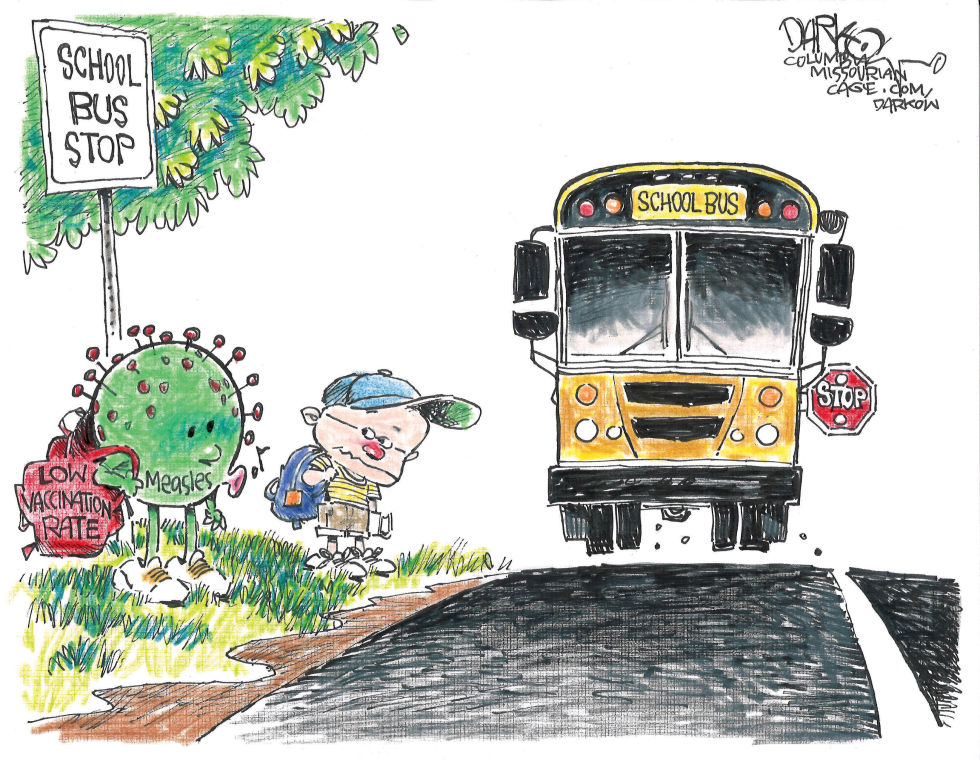
Declining childhood vaccination rates have allowed measles cases to rise in communities across the country. The highly contagious virus now poses direct risks to unvaccinated students waiting for school transportation. The editorial argues that parents who skip shots are endangering classmates who rely on herd immunity for protection.
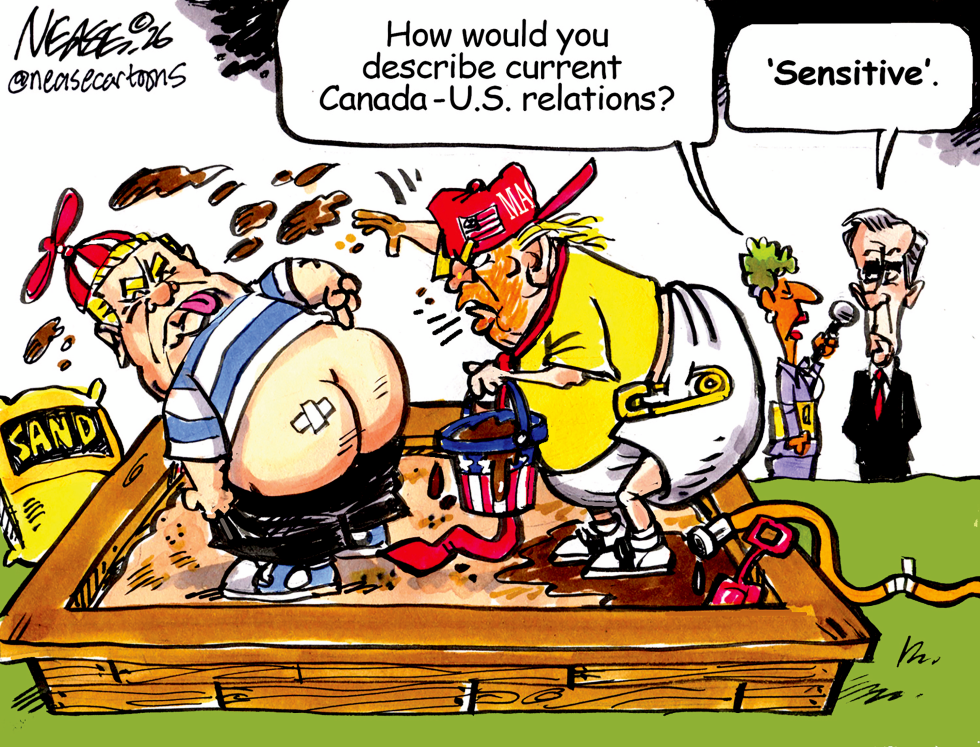
Donald Trump described current Canada-U.S. relations as sensitive during a period of ongoing trade and diplomatic friction between the two nations. The characterization came amid broader tensions over tariffs, border issues, and economic interdependence. The piece portrays the label as understated given the confrontational dynamic between the leaders.
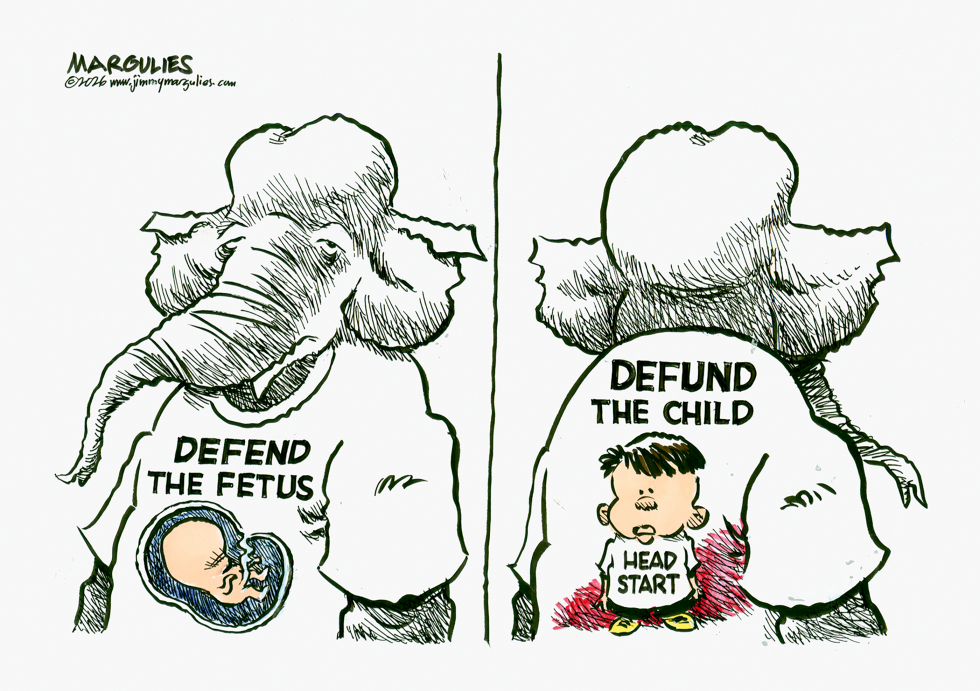
Republicans continue to champion fetal protections while proposing cuts to early childhood programs such as Head Start. The divide highlights ongoing debates over when government support for life begins and ends. The cartoon criticizes the inconsistency in prioritizing the unborn over living children in need of assistance.
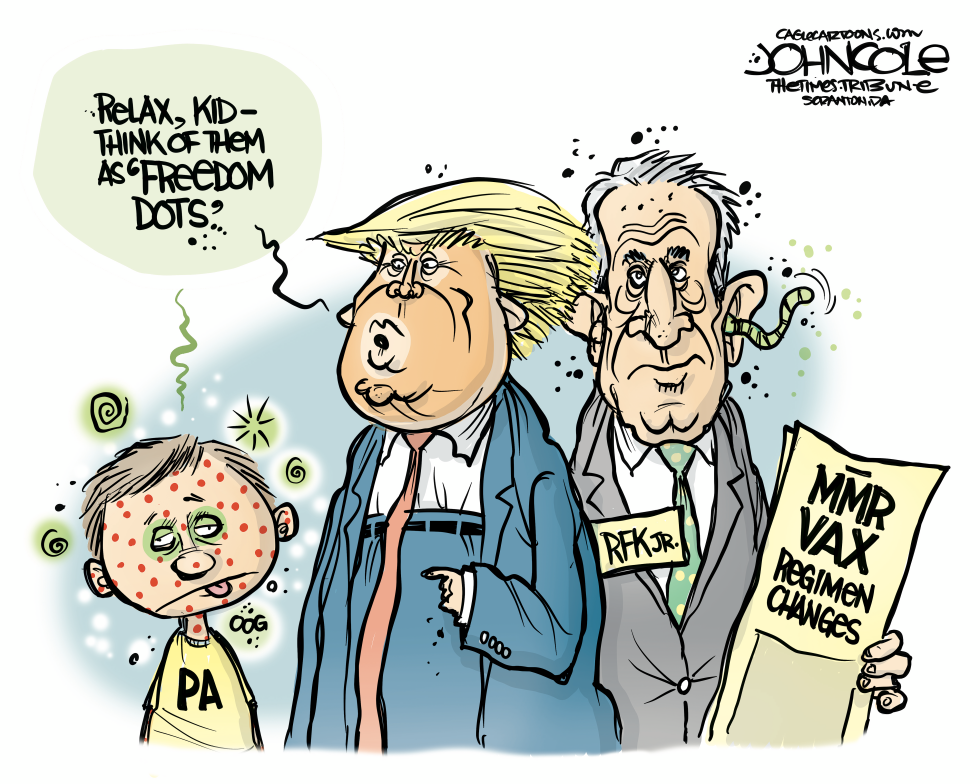
Donald Trump and RFK Jr. drew criticism in mid-August 2026 after Trump referred to measles spots as freedom dots during a Pennsylvania visit. The remarks coincided with proposed changes to MMR vaccine schedules. The piece portrays the comments as dismissive of a child's suffering and questions the administration's public health approach.
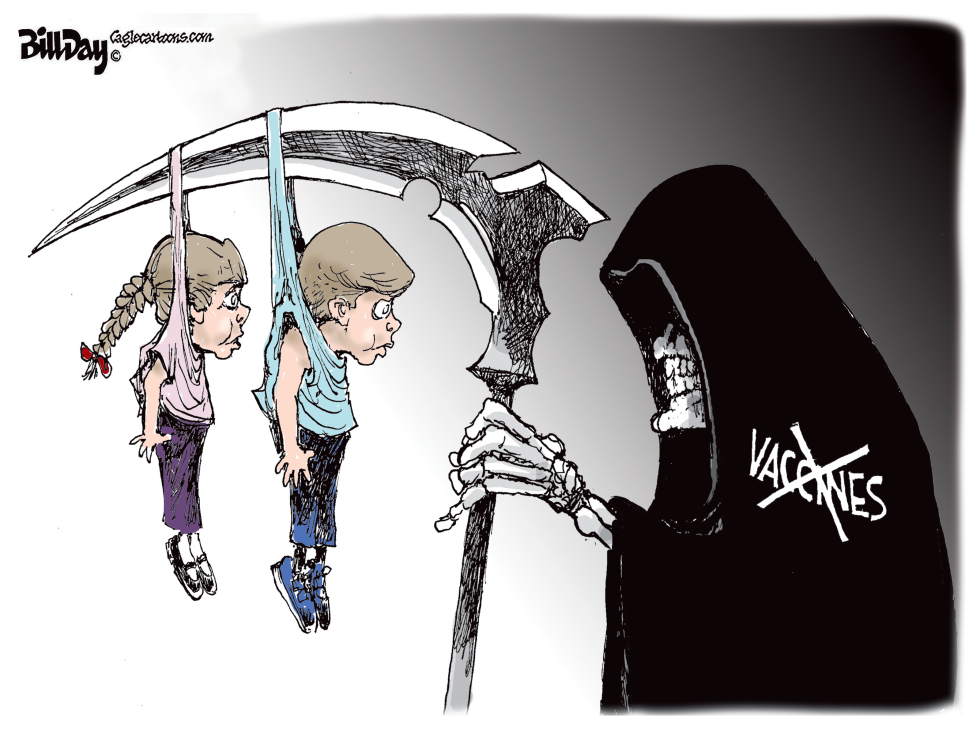
Opposition to routine childhood vaccines continues to surface in public discourse as health officials promote immunization schedules. The debate centers on parental choice versus community protection from preventable diseases. The editorial takes the position that rejecting vaccines endangers children and aligns such views with mortality risks.
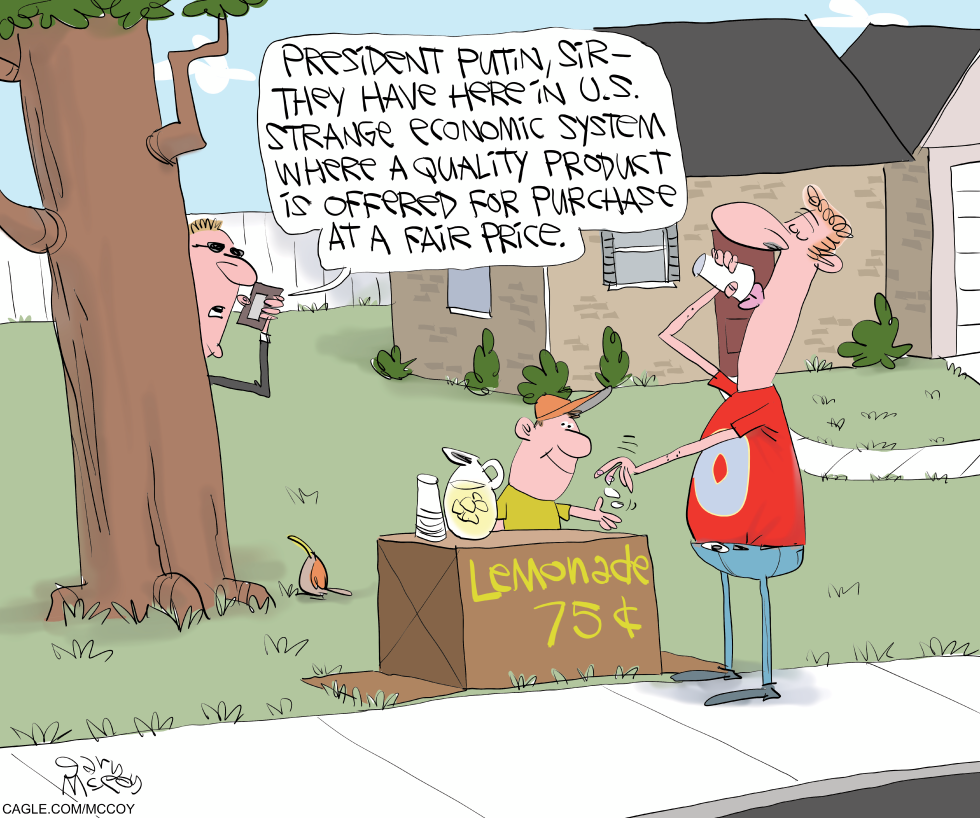
A cartoon depicts a man explaining the U.S. free-market system of offering quality goods at fair prices to President Putin during a phone call next to a child's lemonade stand. The scene underscores the perceived strangeness of American capitalism from a Russian perspective. The editorial position critiques the disconnect between market-driven economies and state-controlled systems.
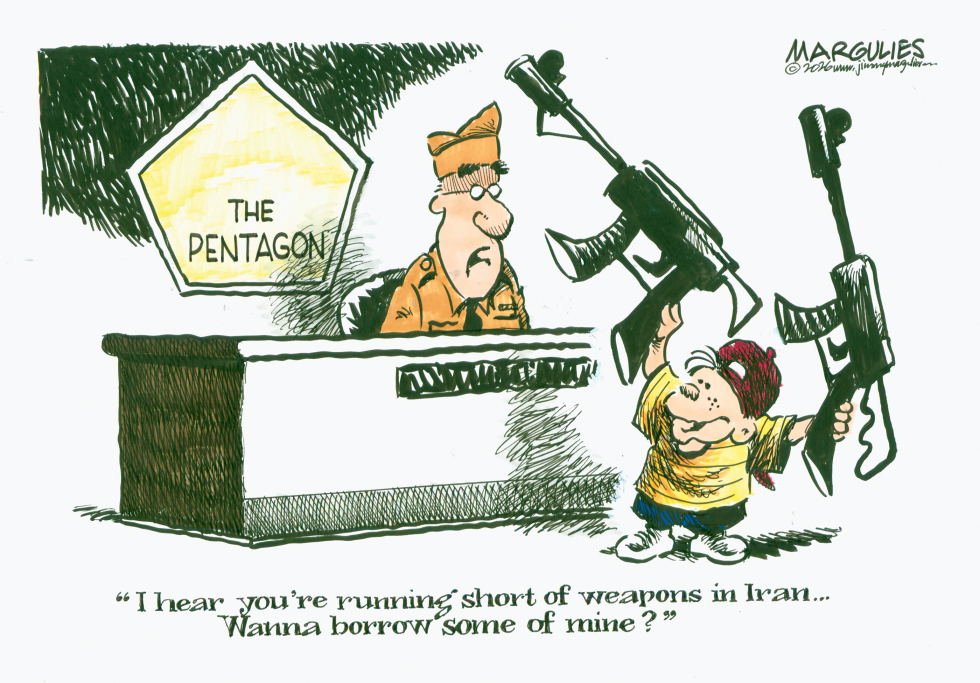
A Pentagon officer receives an unsolicited offer of rifles from a child citing shortages in Iran. The exchange underscores ongoing U.S. concerns over arms flows and regional stability in the Middle East. No specific recent policy shift or confirmed shortage has been verified in the days leading to publication. The piece frames the Pentagon as open to unconventional sources for military support. It critiques reliance on external or irregular suppliers in foreign policy decisions.
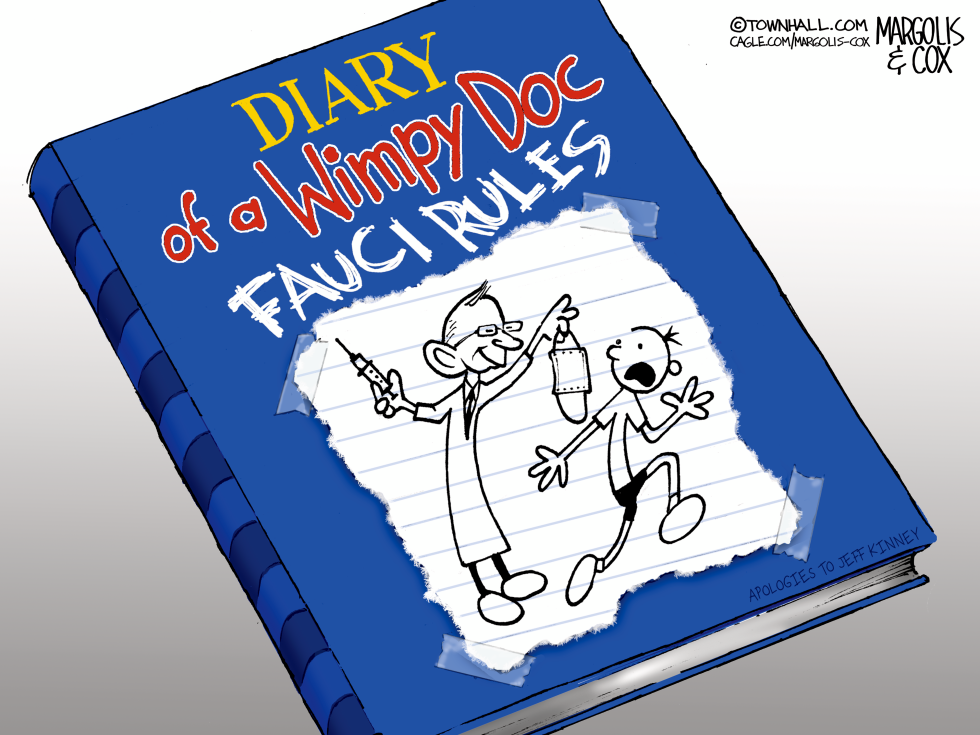
Public debate over vaccine recommendations from health officials continues amid shifting guidance and public skepticism. Anthony Fauci remains a central figure in discussions of pandemic response and mandates. The parody book cover uses the Diary of a Wimpy Kid format to highlight concerns about aggressive vaccine promotion to children. Critics argue such approaches overlook individual choice and long-term trust in institutions. The piece takes the position that Fauci's influence on policy warrants scrutiny through pointed visual commentary.
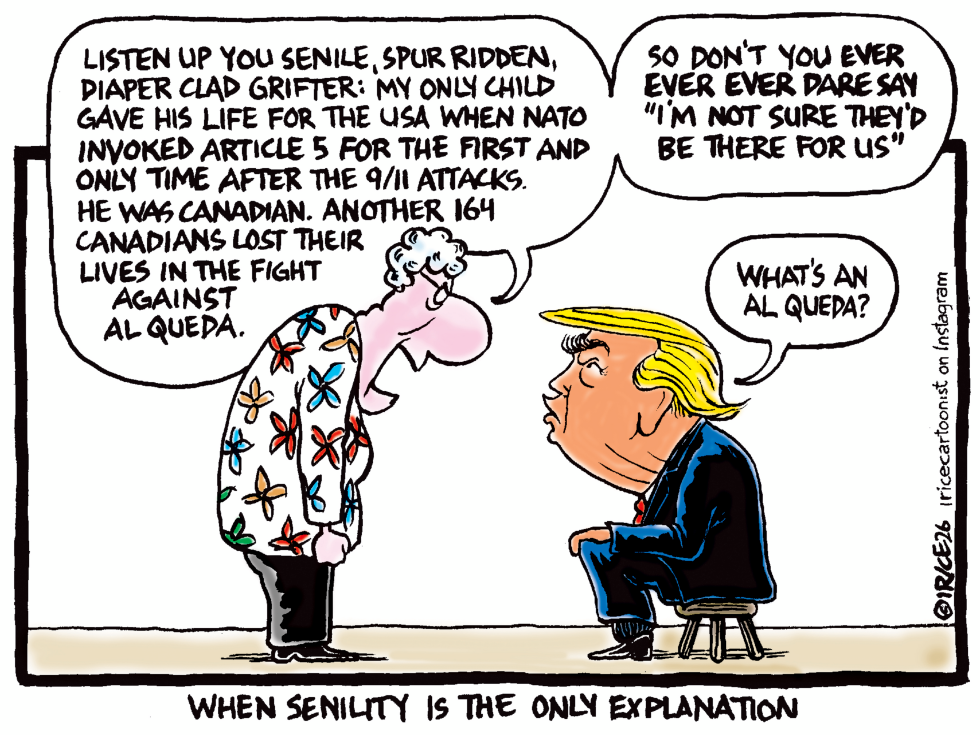
A political cartoon dated July 12, 2026, shows Donald Trump seated on a stool responding to a lecture about Al Qaeda and NATO's Article 5 invocation after 9/11. The standing figure, wearing a floral shirt, recounts the death of a Canadian child and 164 other Canadians in the fight. Trump replies by asking what an Al Qaeda is. The bottom caption reads when senility is the only explanation. The image highlights a direct confrontation over historical facts tied to the 9/11 attacks and alliance commitments.
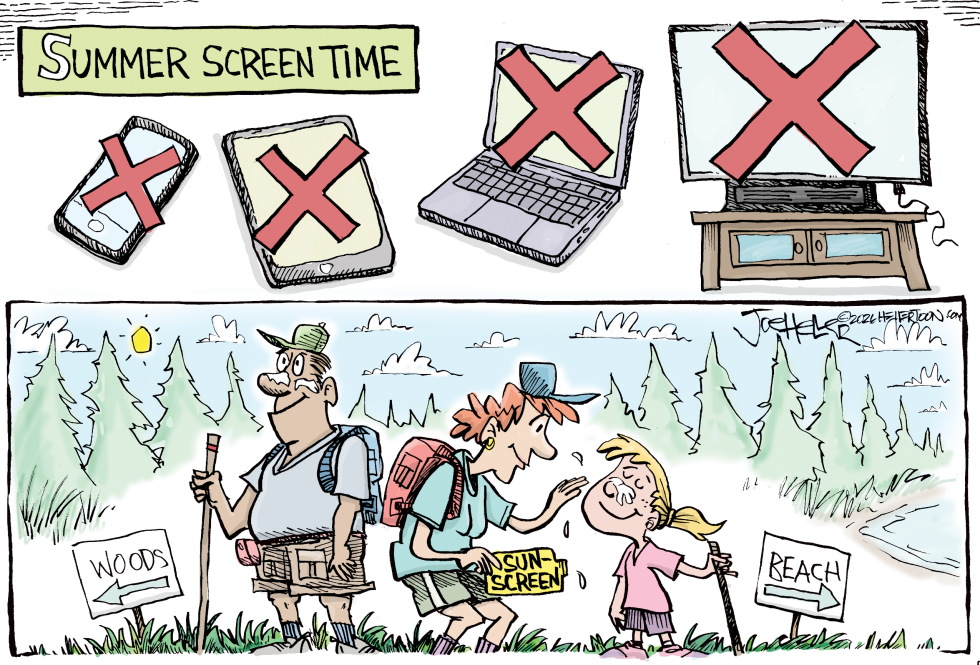
A family of three hikes along a forest trail in summer, leaving behind phones, tablets, laptops and televisions marked with red X's under a Summer Screen Time banner. The father carries a walking stick and backpack while the mother applies sunscreen to their daughter, who holds a stick near a Reach sign. A Woods sign points the way forward on the path.
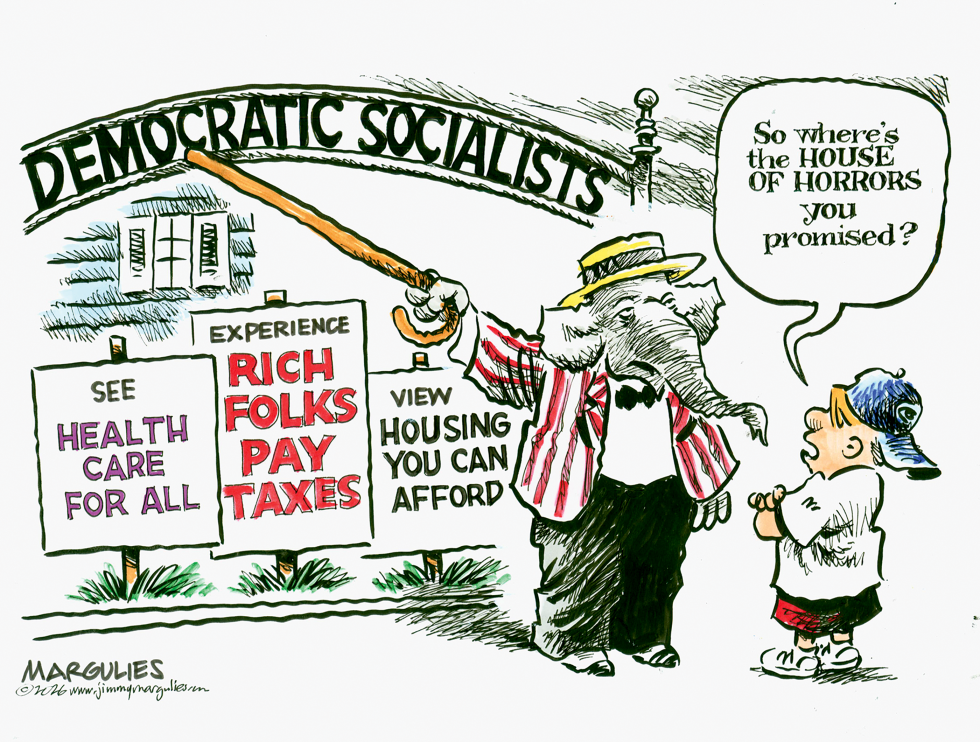
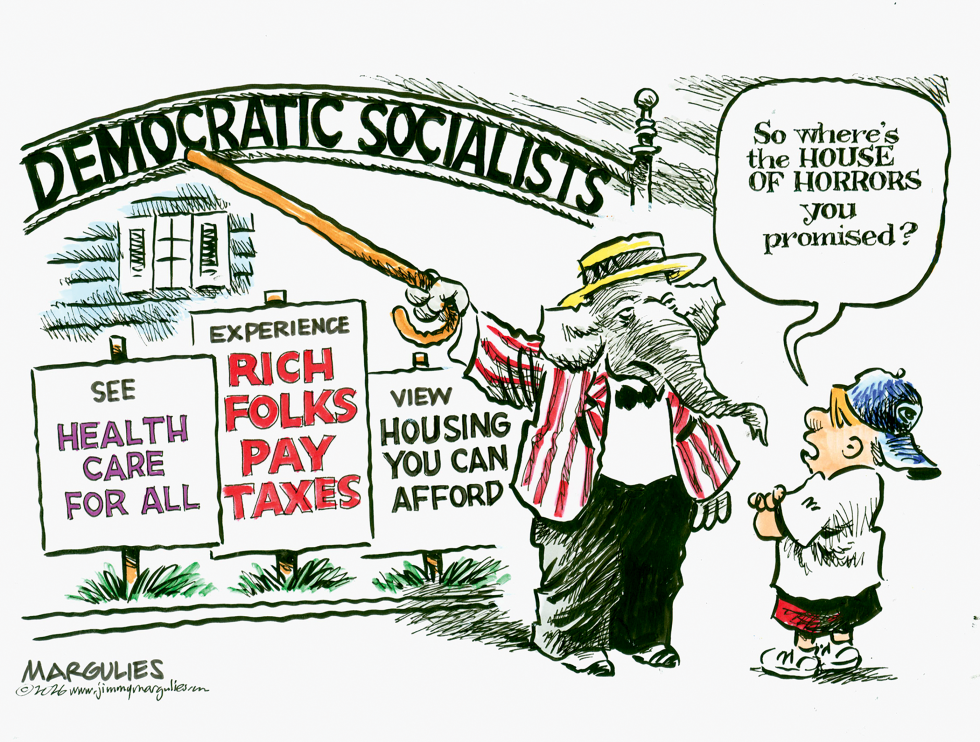
An elephant representing Republicans conducts a tour of attractions labeled Democratic Socialists on July 1 2026. Three signs advertise health care for all, taxes paid by the rich and housing that average people can afford. A young visitor in a cap asks where the house of horrors is that was promised. The scene uses the classic elephant symbol to frame policy offerings as ordinary exhibits rather than frightening outcomes.
An elephant dressed as a barker stands at a Democratic Socialists booth displaying signs for health care for all, rich folks paying taxes, and housing you can afford. The figure holds a pointer toward the arch and addresses a child visitor. The child asks where the house of horrors is located. The scene is set outdoors with a building facade visible behind the signs. Publication occurred on July 1 2026.
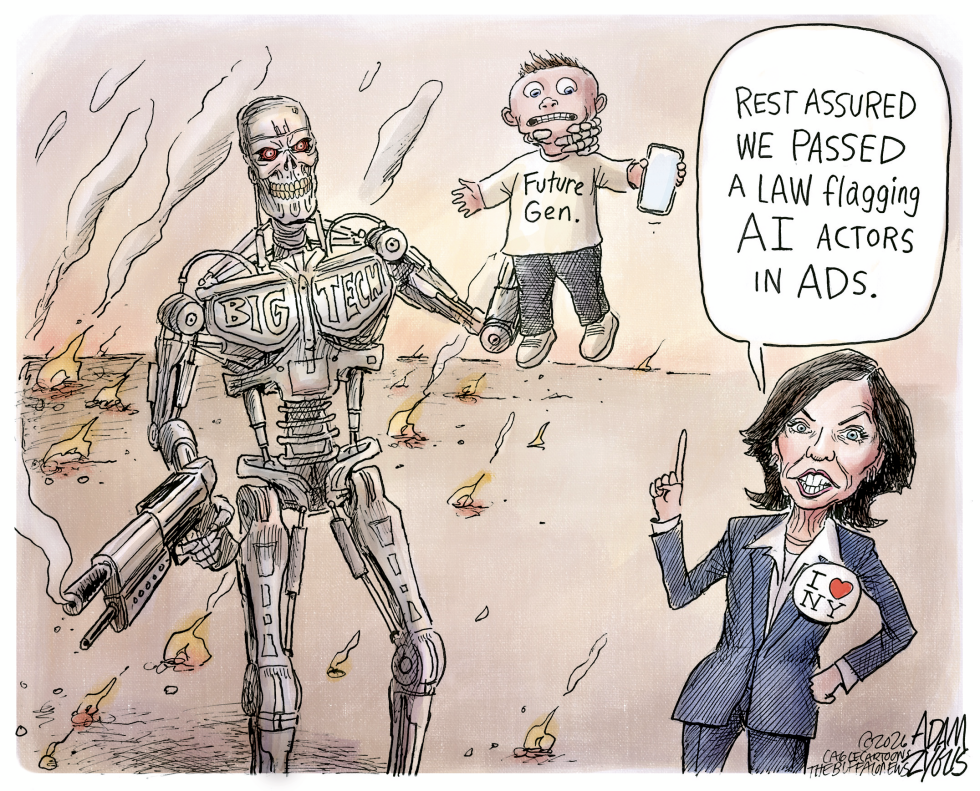
A Terminator-style robot marked Big Tech clutches a child labeled Future Gen. in a scorched landscape. The child holds a smartphone. A woman resembling New York Governor Kathy Hochul stands nearby, raising a finger and declaring that lawmakers passed a measure to flag AI actors in advertisements.