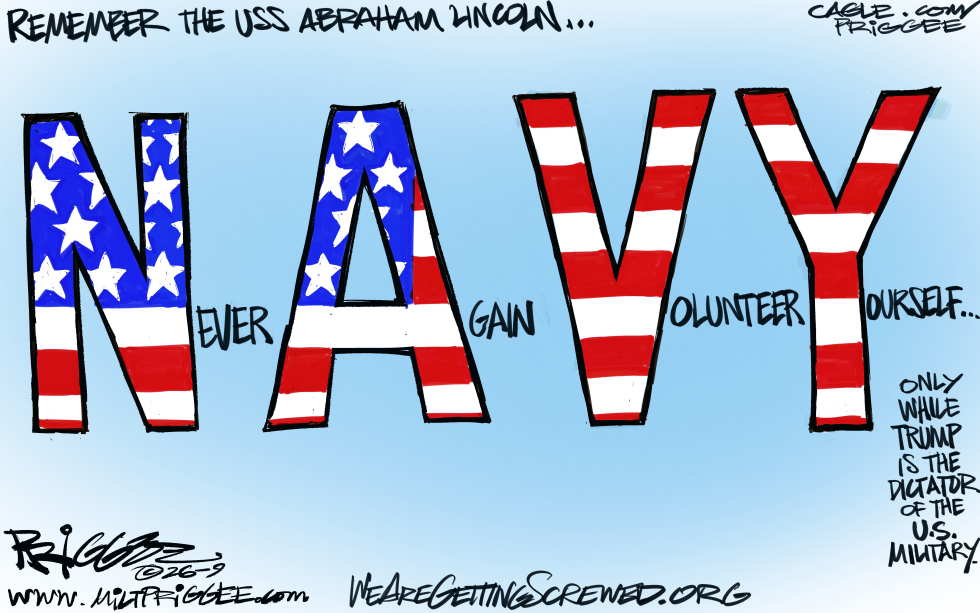
The image reworks the Navy acronym using stars and stripes segments. Inserted words create a full phrase discouraging enlistment. Text at bottom right specifies the condition tied to one individual's role. Top reference recalls a named carrier. Bottom elements include artist credit and website.
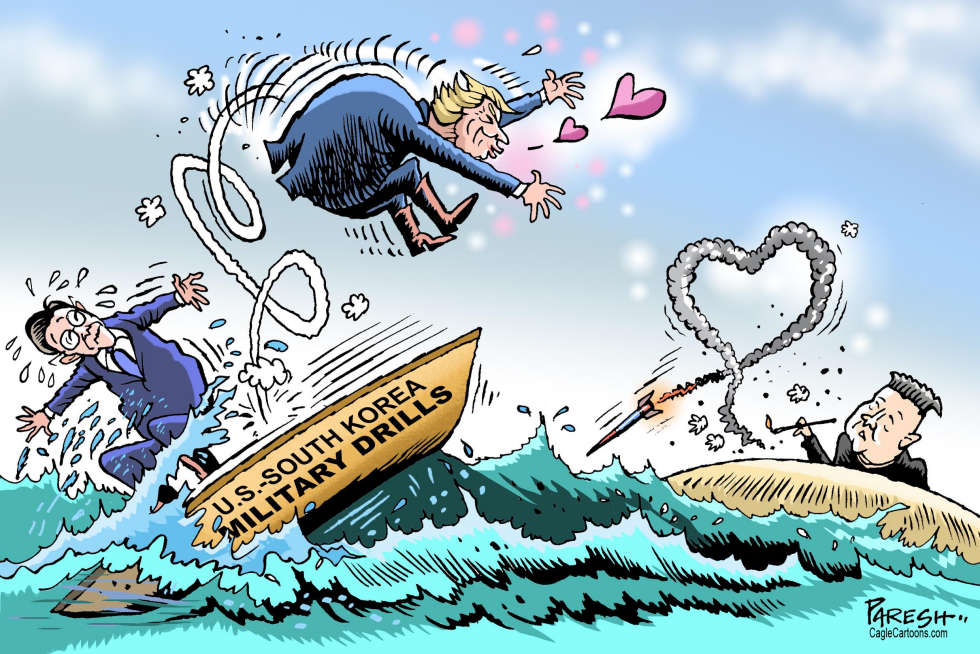
The image depicts Donald Trump being pulled from a boat labeled U.S.-South Korea military drills toward a heart formed by smoke from a missile launched by Kim Jong-un. Trump reaches out with hearts nearby while the other figure tumbles into the water. The scene illustrates tension between ongoing joint exercises and apparent interest in the North Korean leader. Publication occurred on August 21 2026 amid recurring discussions of regional security.
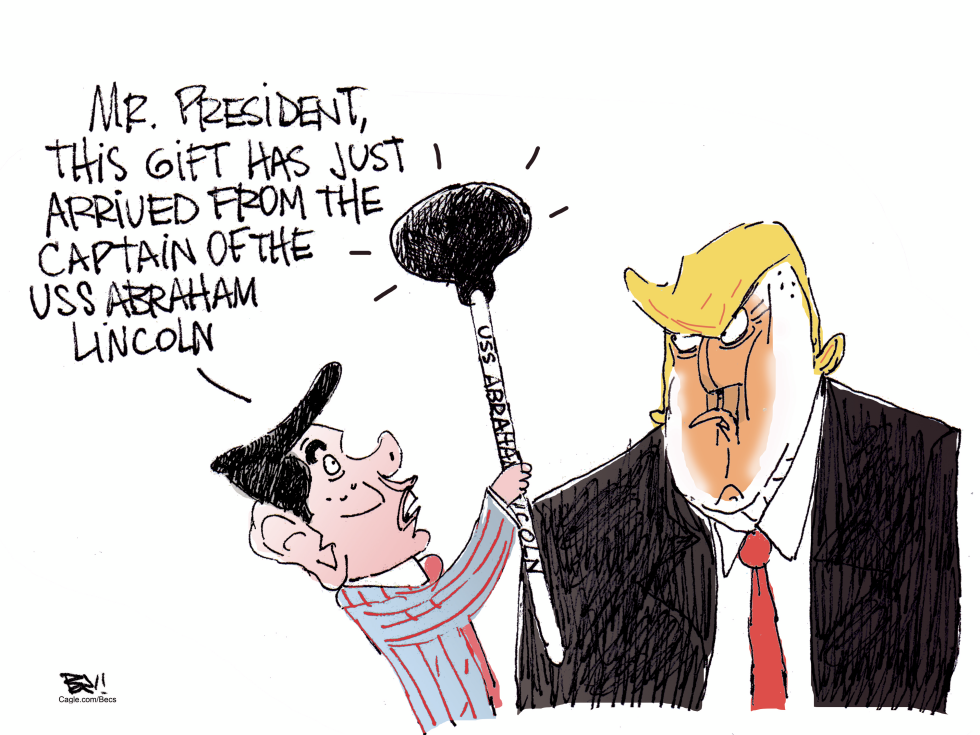
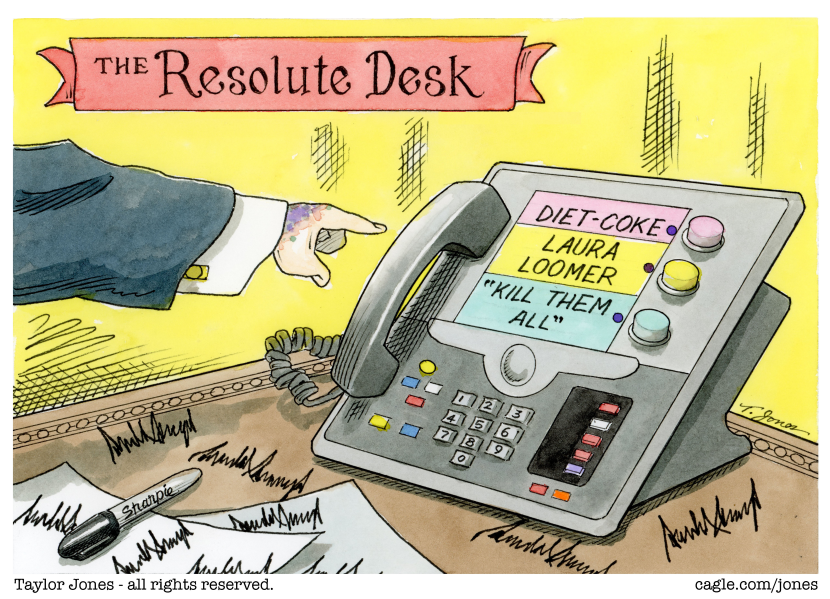
President Trump receives a ceremonial mallet sent by the captain of the USS Abraham Lincoln. The presentation occurs during routine military engagement with the White House. The gift underscores ongoing ties between the administration and naval forces. The editorial highlights the unusual nature of the item and questions its timing and purpose. It suggests the exchange reflects broader patterns in how the president interacts with the armed services.
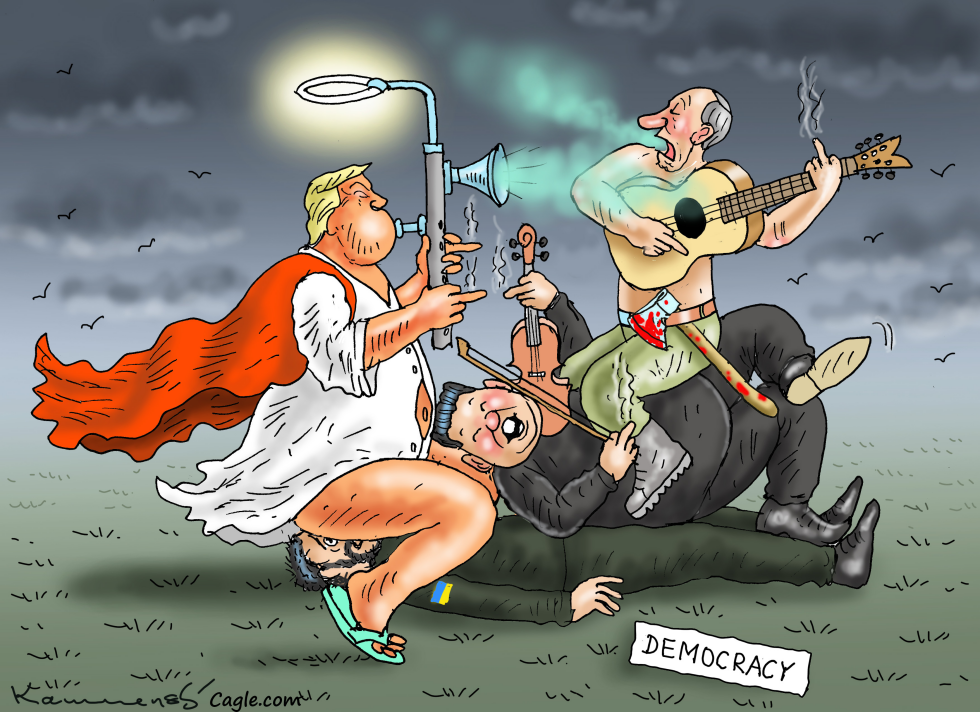
On August 21, 2026, the ongoing Ukraine conflict continued with no resolution in sight as U.S., Russian and Ukrainian leaders remained locked in diplomatic friction. The cartoon responds by depicting the three men as musicians whose finger-pointing and instruments create discord rather than harmony, underscoring the editorial view that personal posturing has overtaken substantive progress toward peace.
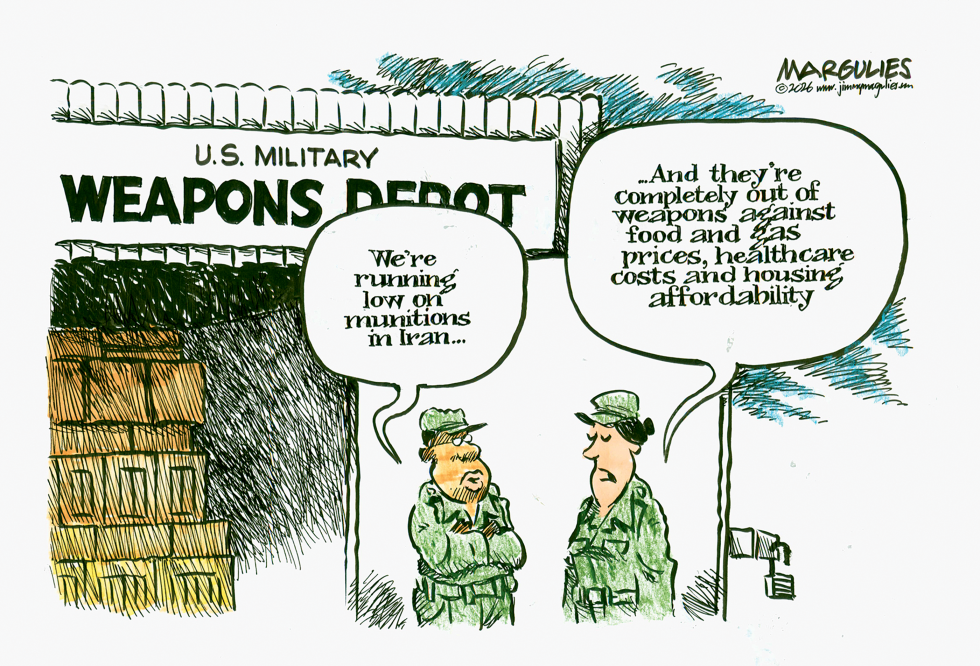
The cartoon depicts two U.S. soldiers outside a weapons depot labeled U.S. Military Weapons Depot. One soldier states the facility is running low on munitions in Iran. The second replies that domestic fronts are out of weapons against food and gas prices, healthcare costs and housing affordability. The image responds to ongoing debates over U.S. military aid commitments abroad and competing budget pressures at home as of the August 2026 publication date. It uses the depot setting and dialogue to contrast foreign military demands with economic challenges facing American households.
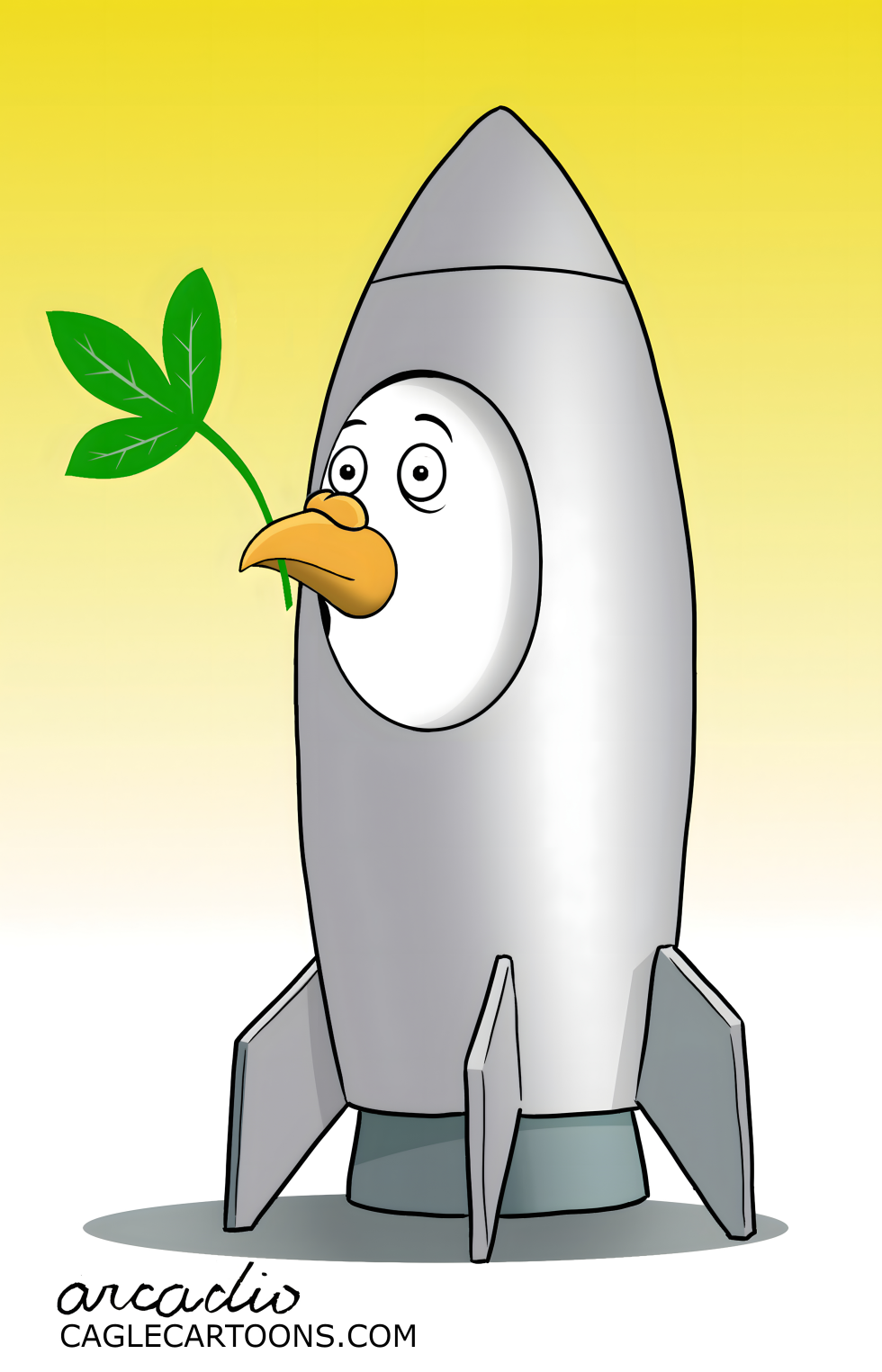
A hybrid rocket and dove figure holding an olive branch appears in editorial imagery dated August 2026. The visual merges symbols of military technology and peace efforts amid ongoing global tensions over defense systems and diplomatic initiatives. The piece presents the combined image as a commentary on attempts to balance strength with reconciliation in international affairs.
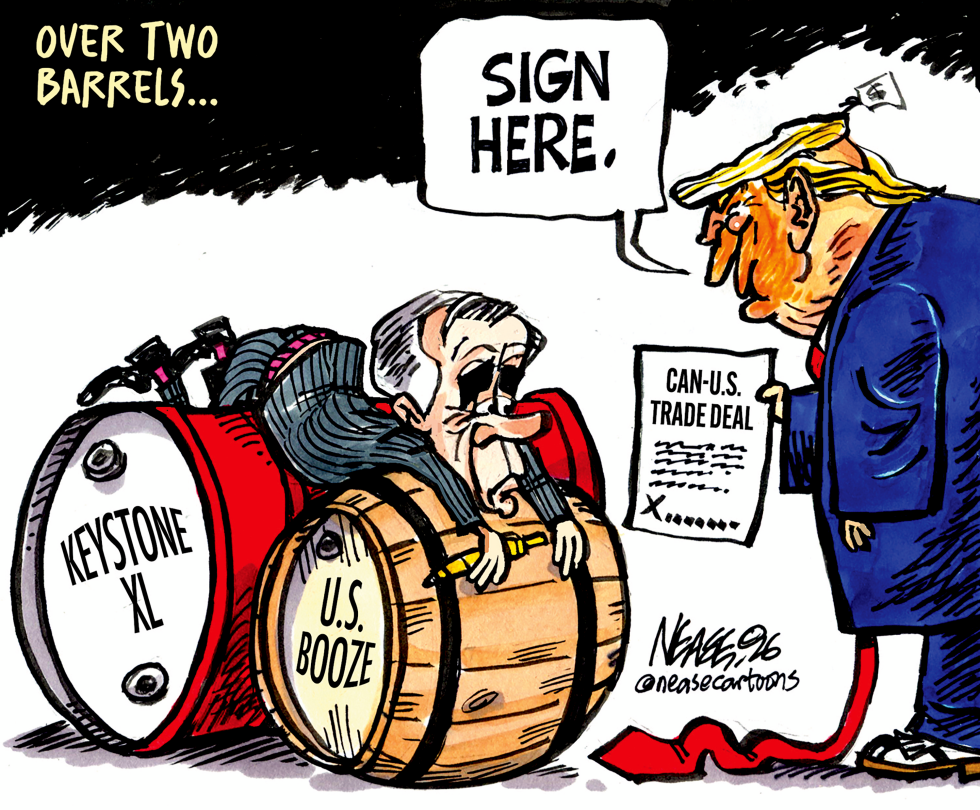
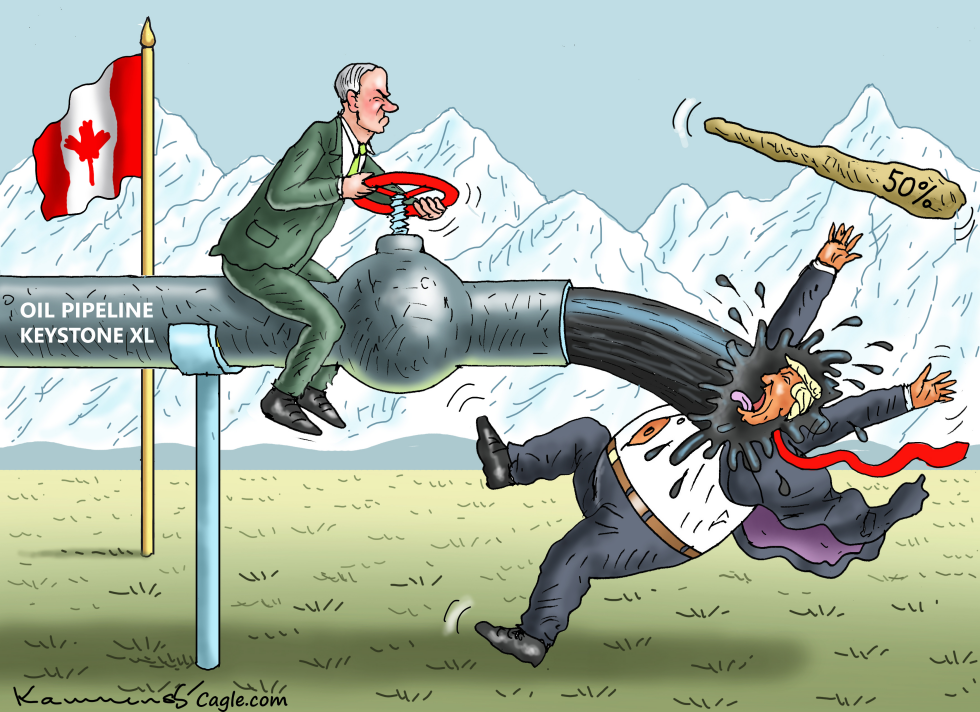
Donald Trump is pressing Canada to finalize a bilateral trade agreement by positioning the Canadian leader between a Keystone XL pipeline barrel and a U.S. booze barrel. The move ties energy infrastructure approval to broader trade concessions including alcohol exports. The editorial takes the position that such barrel-based pressure tactics risk undermining stable Canada-U.S. economic relations.
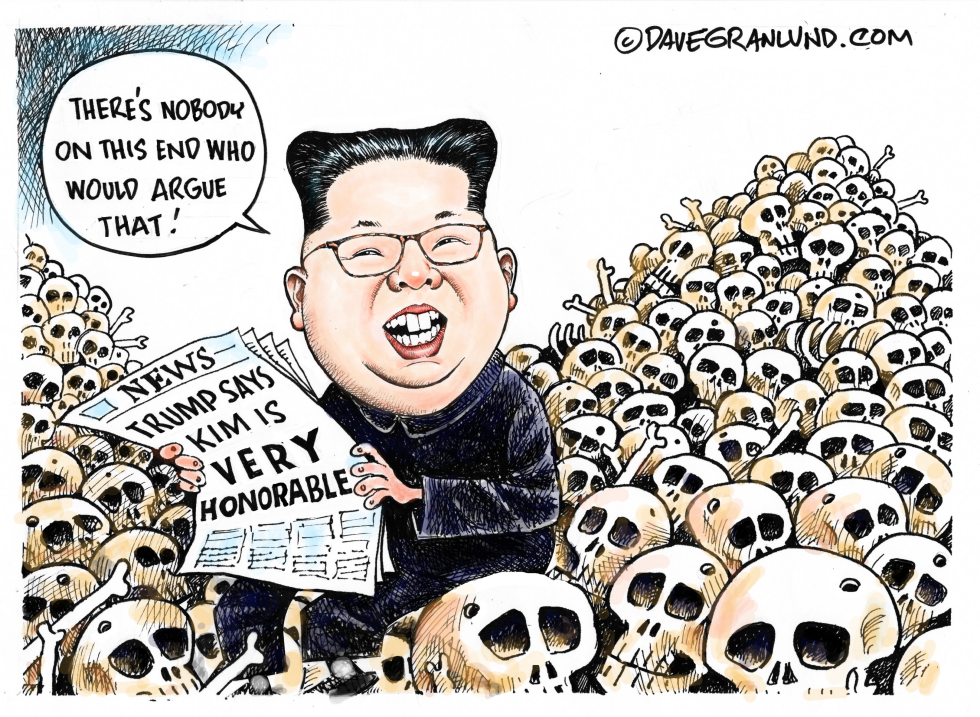
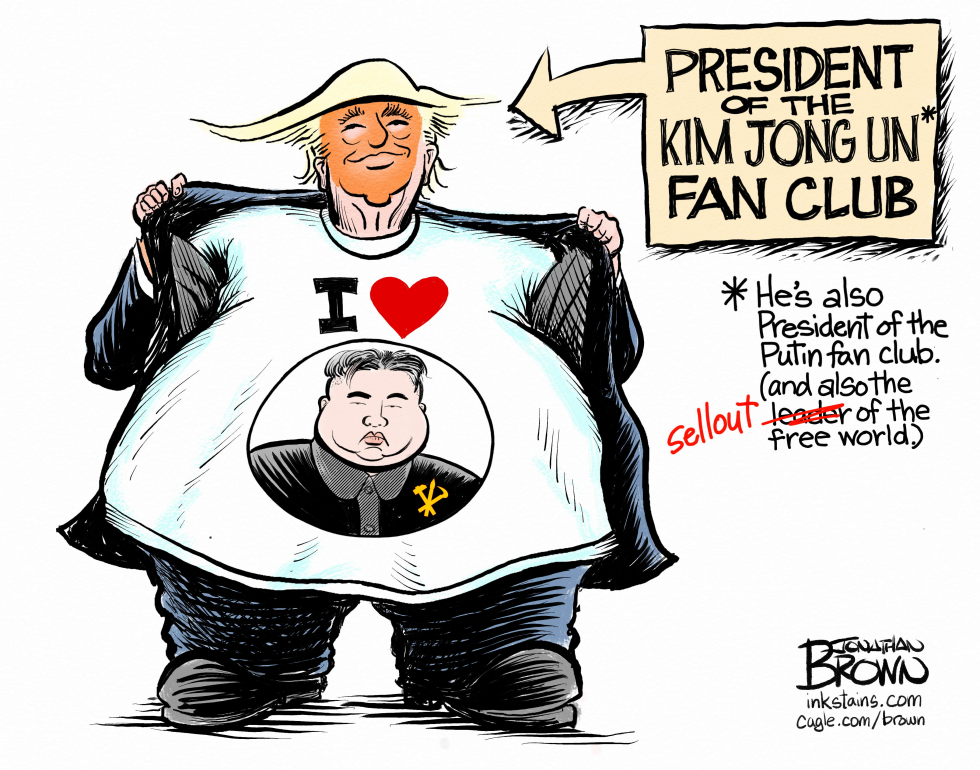
Donald Trump publicly described North Korean leader Kim Jong-un as very honorable. The remark revives questions about U.S. engagement with a regime long accused of severe human rights abuses and internal purges. Critics argue such language undercuts pressure on Pyongyang and signals weakness to allies. Supporters see it as pragmatic diplomacy aimed at reducing nuclear risks. The statement fits a pattern of personal assessments of foreign leaders that have drawn both support and condemnation depending on the political side. The editorial position holds that the praise ignores the human cost inside North Korea and weakens the moral standing of U.S. foreign policy.
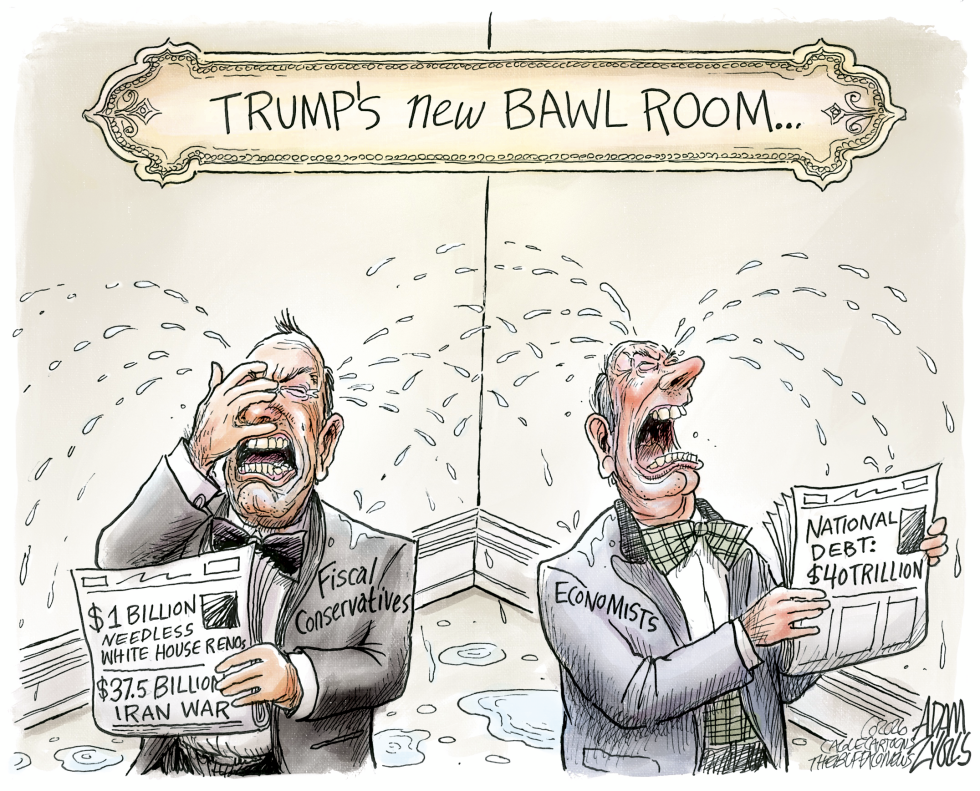
The cartoon depicts fiscal conservatives and economists weeping in a room labeled Trump's new bawl room. One holds documents citing a needless one billion dollar White House renovation and thirty seven point five billion dollar Iran war. The other displays a national debt of forty trillion dollars. The image highlights concerns over federal spending priorities.
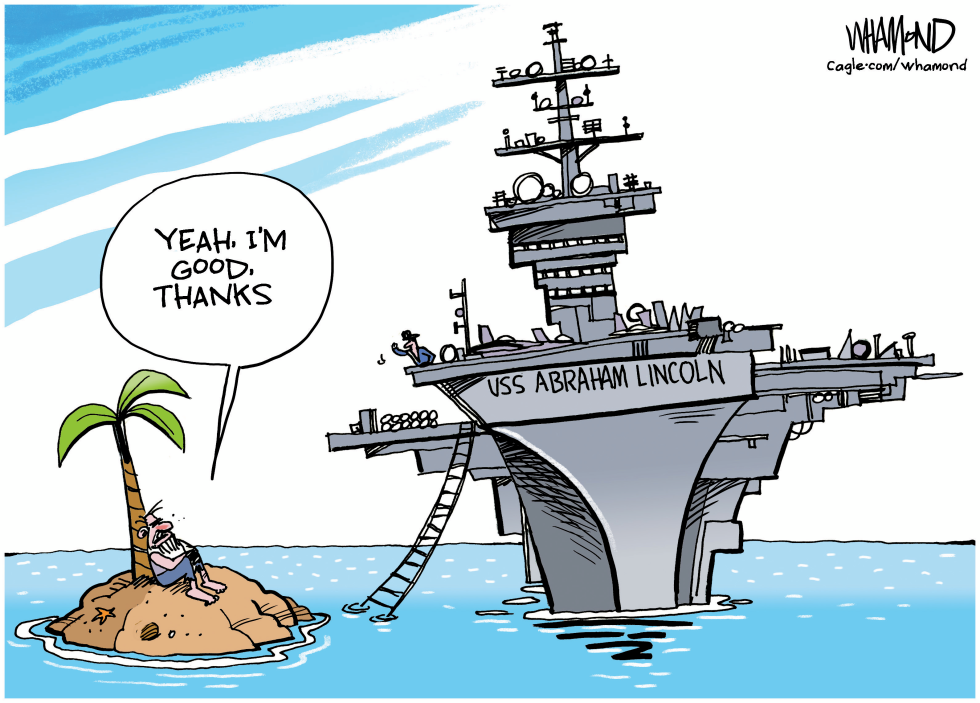
A US Navy aircraft carrier sails past a remote desert island where a lone castaway sits under a palm tree. The ship lowers a ladder in an apparent rescue attempt, yet the stranded figure declines assistance. The scene highlights ongoing debates over US military reach and whether distant outposts or individuals truly seek intervention. The editorial takes the position that such refusals underscore limits to assuming every presence is welcome or needed.
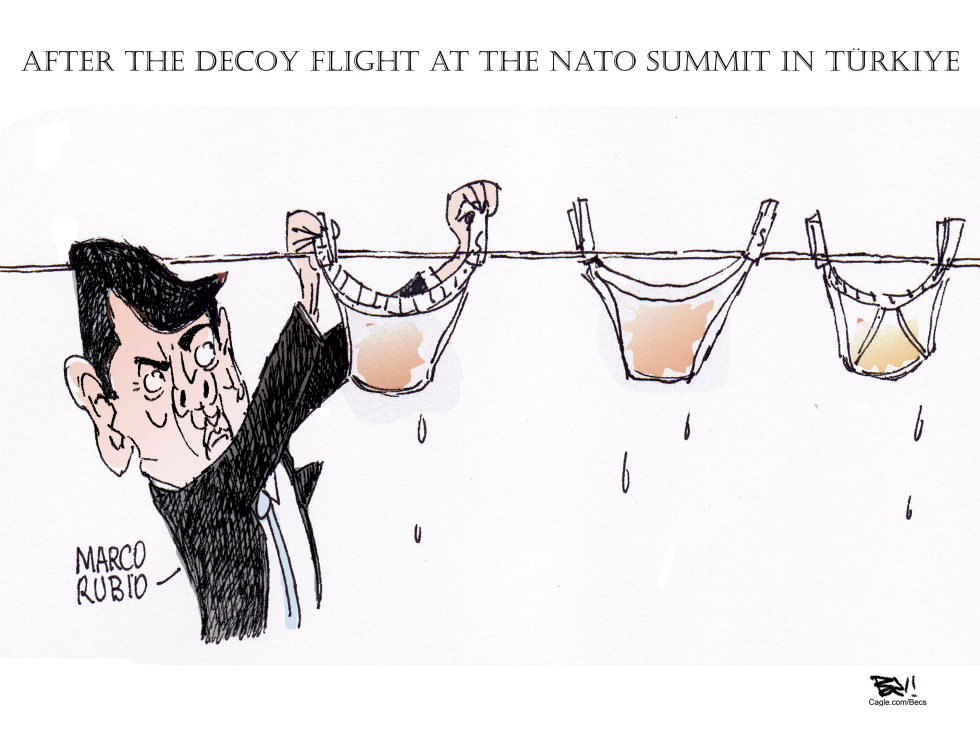
A decoy flight during the NATO summit in Türkiye forced senior U.S. officials including Marco Rubio into damage control over security and optics. The episode highlighted vulnerabilities in summit logistics and personal exposure for attendees. The piece portrays the episode as an embarrassing cleanup task for Rubio.
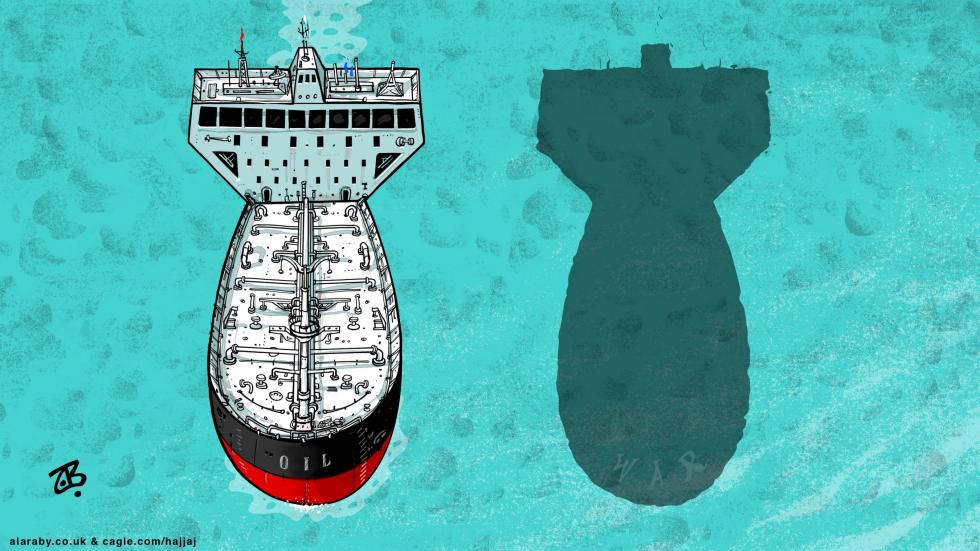
An oil tanker depicted in bomb form with a matching shadow labeled war underscores ongoing links between energy resources and armed conflict. The image responds to persistent tensions in oil-producing regions where shipping routes and resource control intersect with military actions. Such portrayals emphasize how fossil fuel transport remains entangled in geopolitical disputes. The editorial stance critiques the weaponization of energy supplies and the persistent threat of escalation tied to oil interests.
Canadian Prime Minister Mark Carney moves to restrict the Keystone XL pipeline in a direct action affecting U.S. interests tied to Donald Trump. The decision carries implications for cross-border energy flows and bilateral relations. The piece portrays the move as a targeted setback delivered through the pipeline controls.
The image shows Donald Trump pulling open his jacket to reveal a white shirt bearing a portrait of Kim Jong Un inside a heart. An arrow points to a sign declaring him president of the Kim Jong Un fan club. Additional text notes his role in a Putin fan club and crosses out the word sellout next to a reference to leadership of the free world. The composition centers on the shirt reveal and the sign in the upper right.
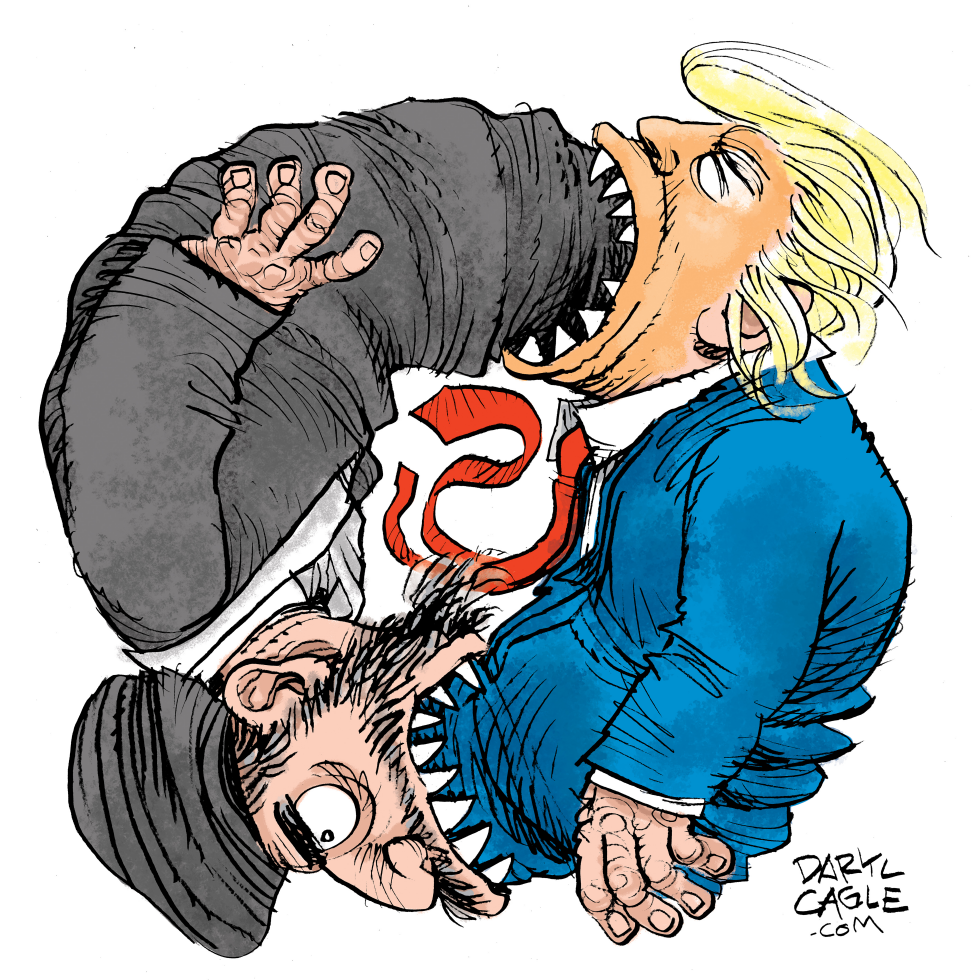
Tensions between the United States and Iran continue amid ongoing disputes over nuclear issues and regional influence. The editorial portrays the two sides as trapped in a self-perpetuating cycle of hostility with no resolution in sight.