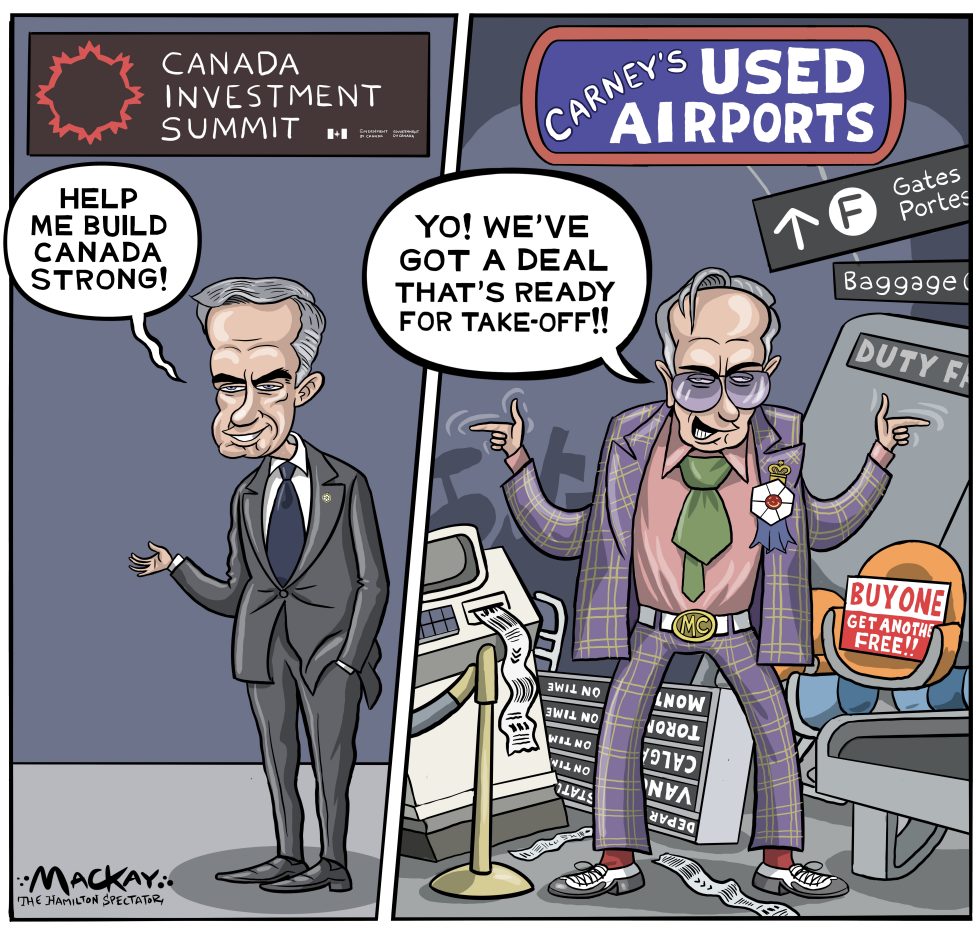
The cartoon depicts Justin Trudeau at a Canada Investment Summit appealing for help to build the country strong. In the adjacent panel, Mark Carney appears as a used-car-style salesman hawking airports with a buy-one-get-one-free offer and a ready-for-takeoff deal pitch, highlighting a satirical take on airport privatization efforts.
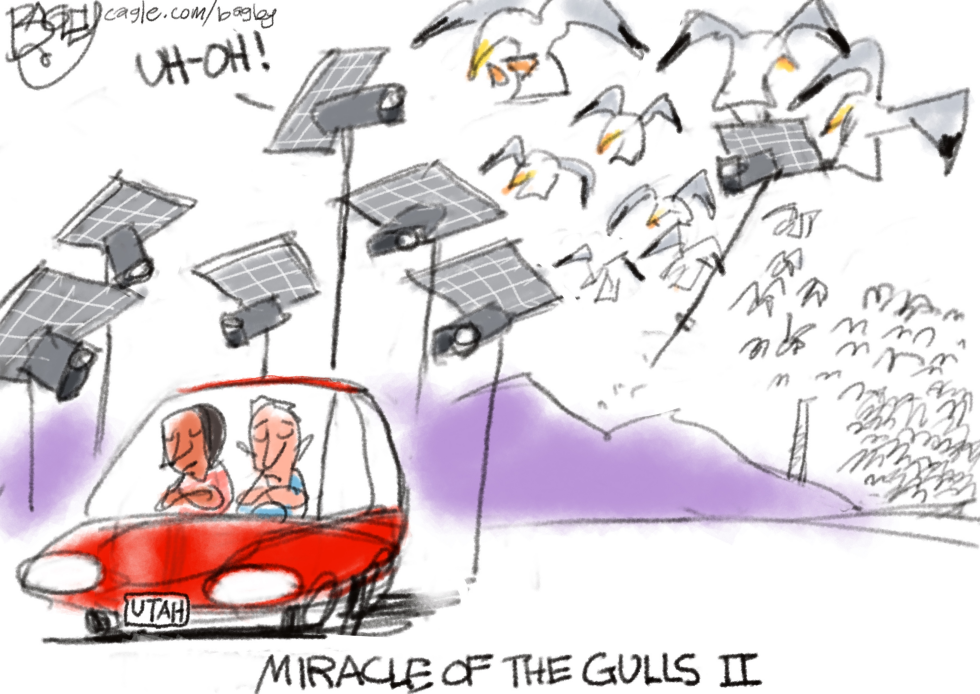
Seagulls have begun targeting solar panel arrays in Utah, damaging equipment at renewable energy sites. The incidents echo the state's historic Miracle of the Gulls story but now pose practical problems for clean power development. Officials and operators must address wildlife mitigation to protect investments in solar infrastructure. The cartoon frames the events as an unexpected obstacle to Utah's energy goals.
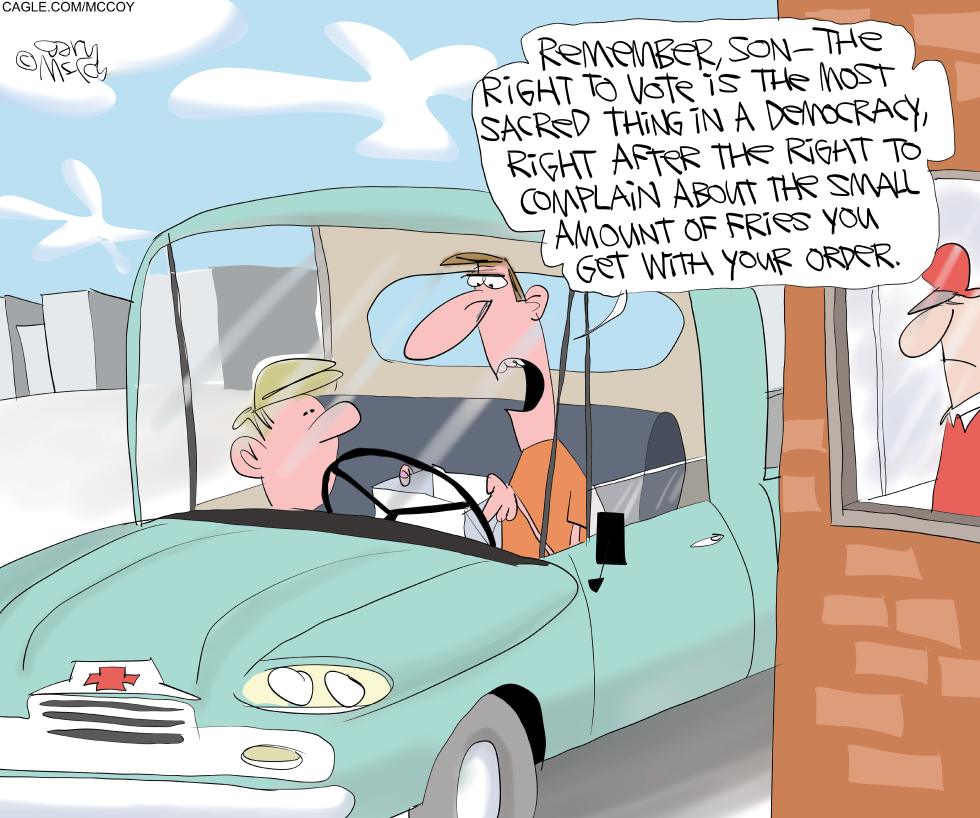
A father uses a drive-thru moment to stress that voting ranks as the most sacred democratic right, just behind complaining about insufficient fries. The exchange highlights how citizens often treat civic participation as secondary to everyday gripes. The piece argues that such misplaced priorities undermine engagement in elections and weaken democratic foundations.
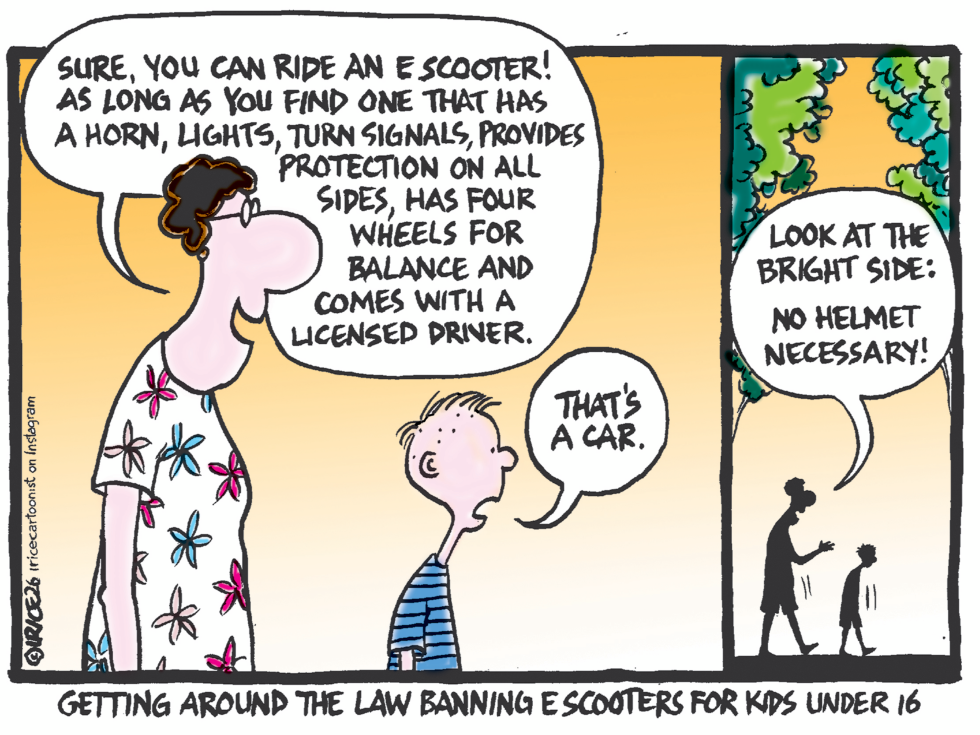
A new law bans e-scooters for children under 16. Parents seek workarounds by reclassifying other vehicles. The cartoon highlights how the rules allow a standard car to qualify while removing helmet requirements.
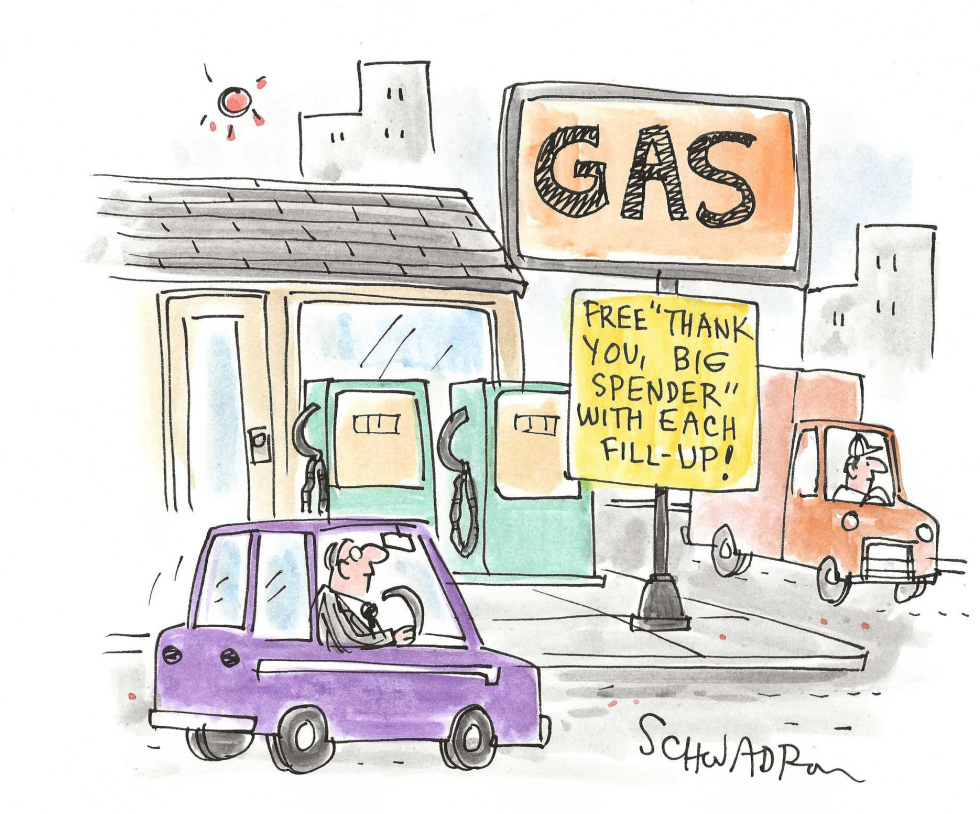
High gasoline prices continue to strain household budgets as drivers face elevated costs at the pump. The cartoon depicts a gas station using a sarcastic promotion that labels every fill-up customer a big spender. This reflects ongoing public frustration with energy costs and their impact on daily commuting and small business operations. The piece takes the position that such prices make routine purchases feel extravagant.
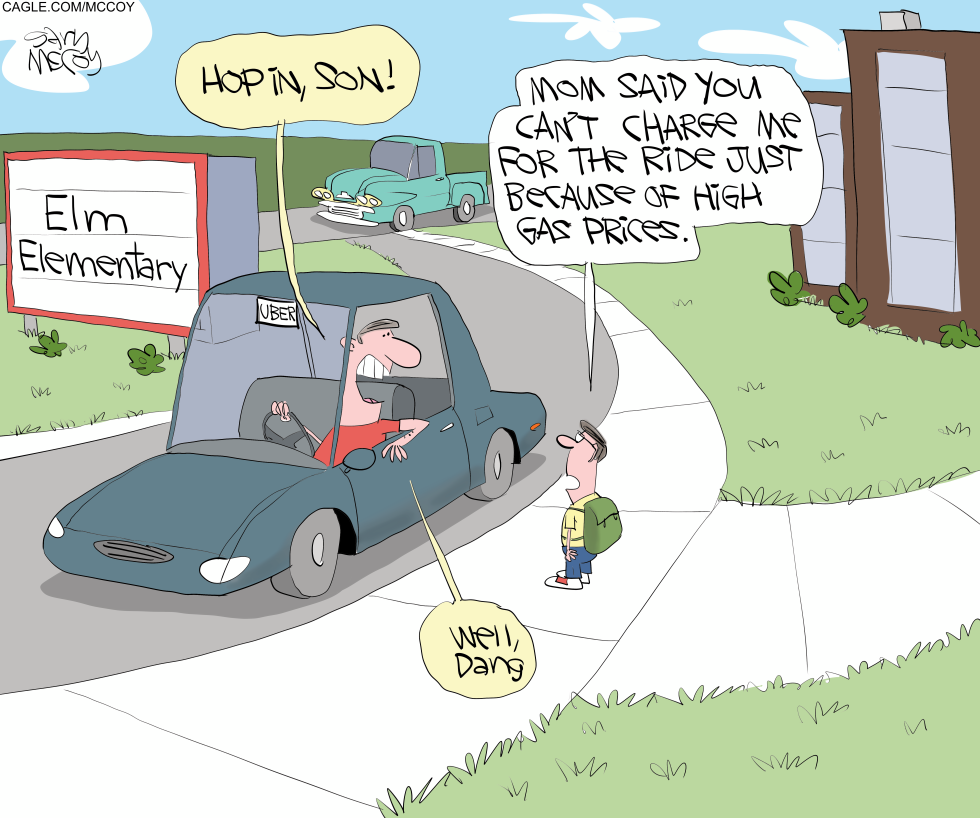
Families continue to feel pressure from elevated fuel costs during routine activities such as school transportation. Parents weigh creative ways to offset expenses while children and spouses push back on new charges. The cartoon highlights the everyday tension between household budgets and parental expectations around shared rides.
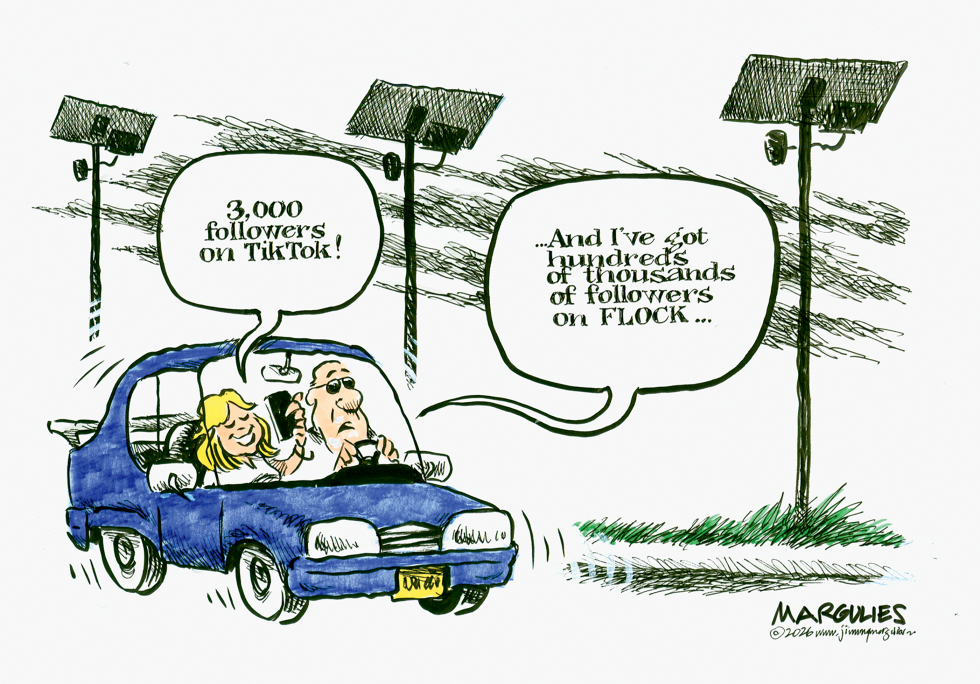
Drivers on public roads increasingly encounter networks of automated license plate readers operated by companies such as Flock Safety. The cartoon highlights the contrast between voluntary social media sharing on platforms like TikTok and involuntary data collection by surveillance systems. It underscores how both forms of attention now shape modern life, with the editorial noting the irony of competing over follower numbers in either realm.
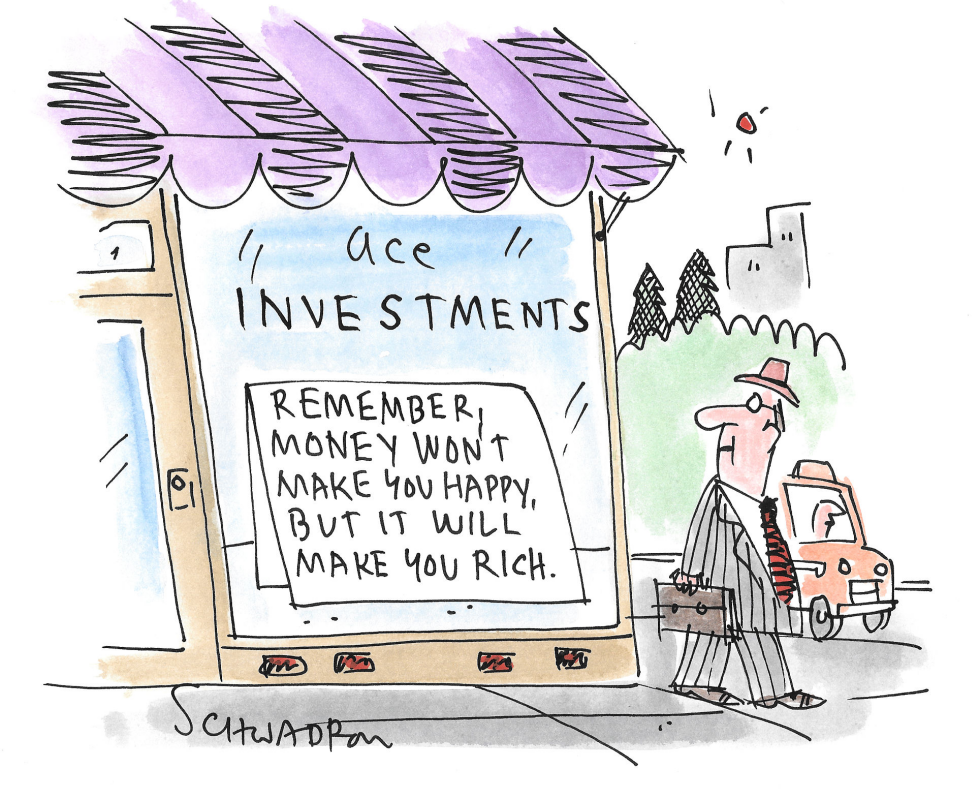
An investment firm billboard states that money will not create happiness but will create wealth. The message appears on a city street where a businessman passes by. The piece presents the ongoing dynamic of financial messaging that prioritizes riches above emotional benefits.
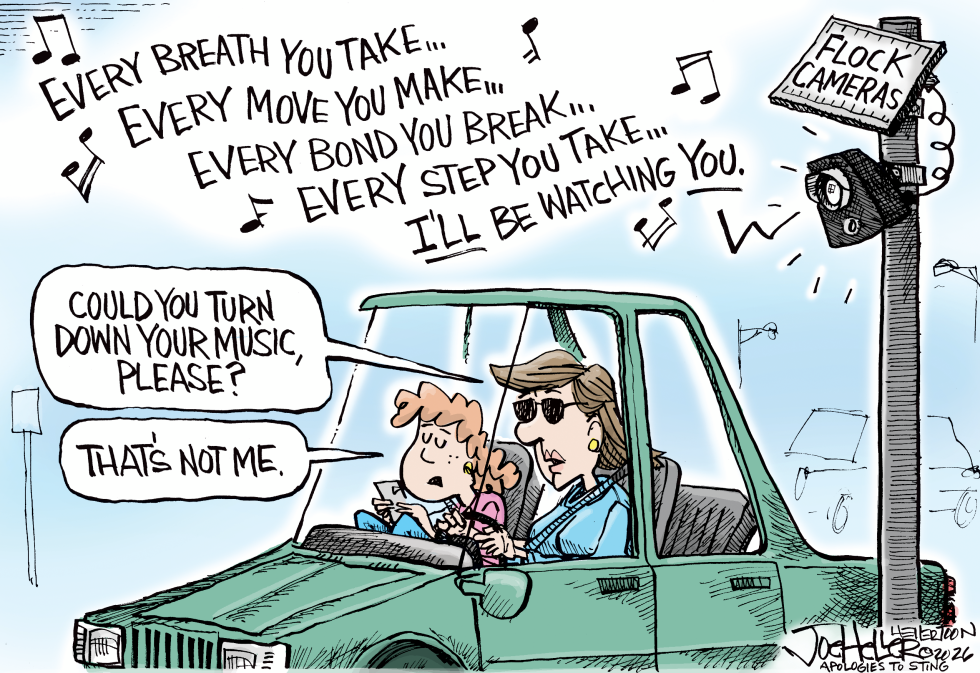
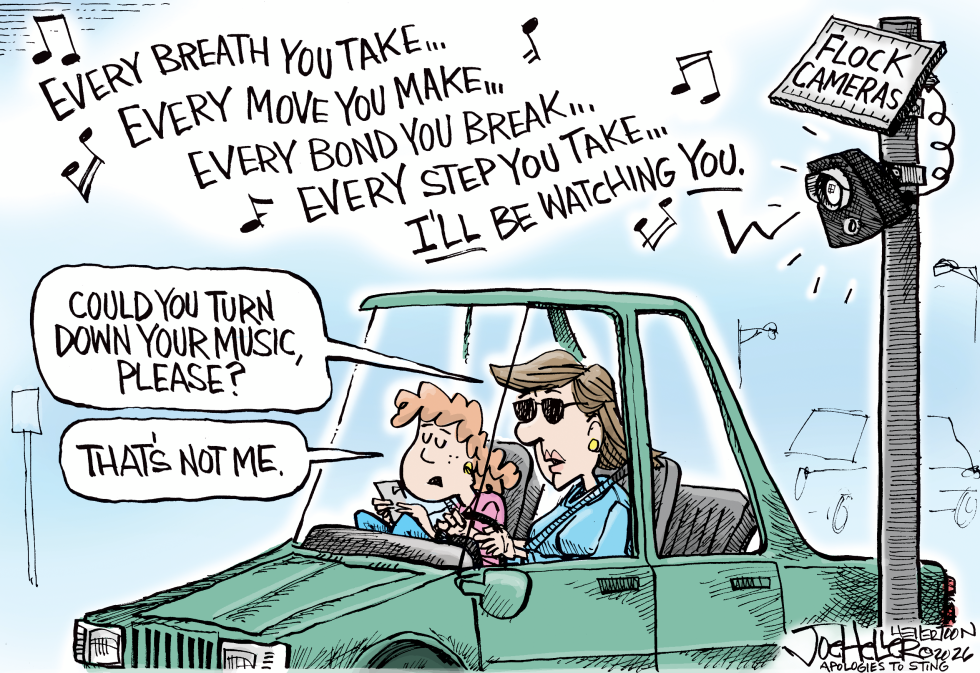
Police departments across the country have expanded use of Flock license-plate readers that capture vehicle movements in real time. The technology raises questions about data retention and warrantless tracking of citizens. The cartoon portrays the cameras as an omnipresent watcher echoing a classic song about surveillance.
Police departments across the country have expanded use of Flock license plate readers to track vehicles in real time. The technology raises questions about the balance between public safety and individual privacy. The piece argues that such systems create an inescapable watch on everyday movement.
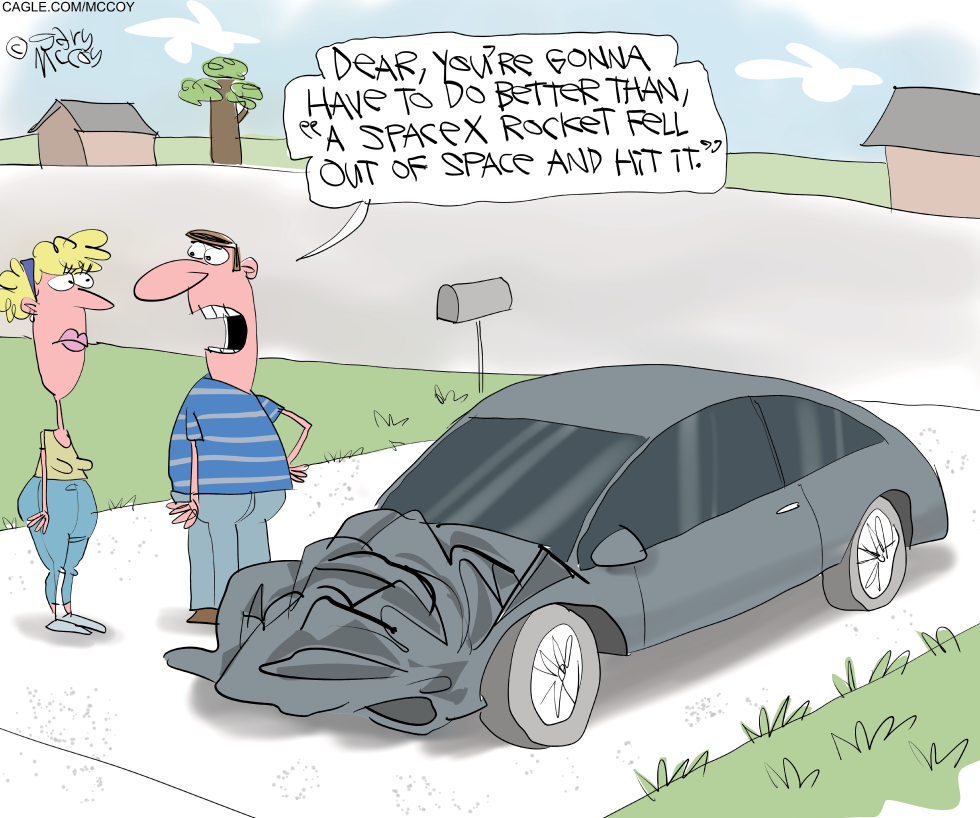
A man offers an implausible explanation for damage to a vehicle on a suburban street. The claim references a SpaceX rocket falling from space. The exchange highlights skepticism toward far-fetched excuses in everyday disputes. The piece takes the position that such a story fails to hold up under scrutiny.
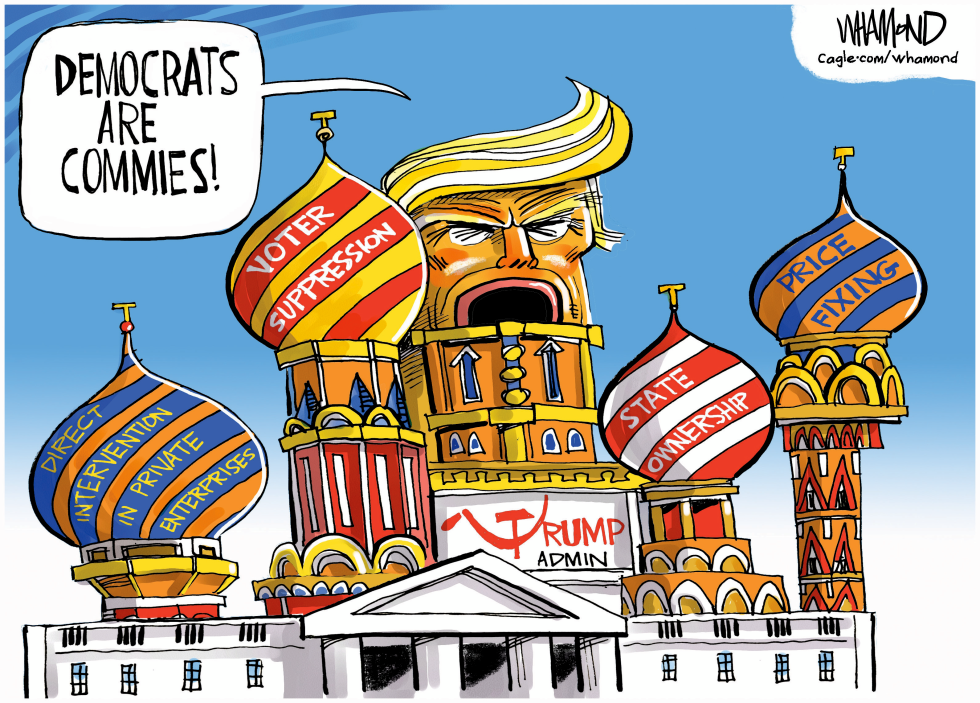
Donald Trump has renewed attacks labeling Democrats as communists amid ongoing debates over election rules and economic interventions. The accusation revives Cold War-era rhetoric in current political discourse. The piece portrays the Trump administration itself as adopting the very state-control measures it condemns.
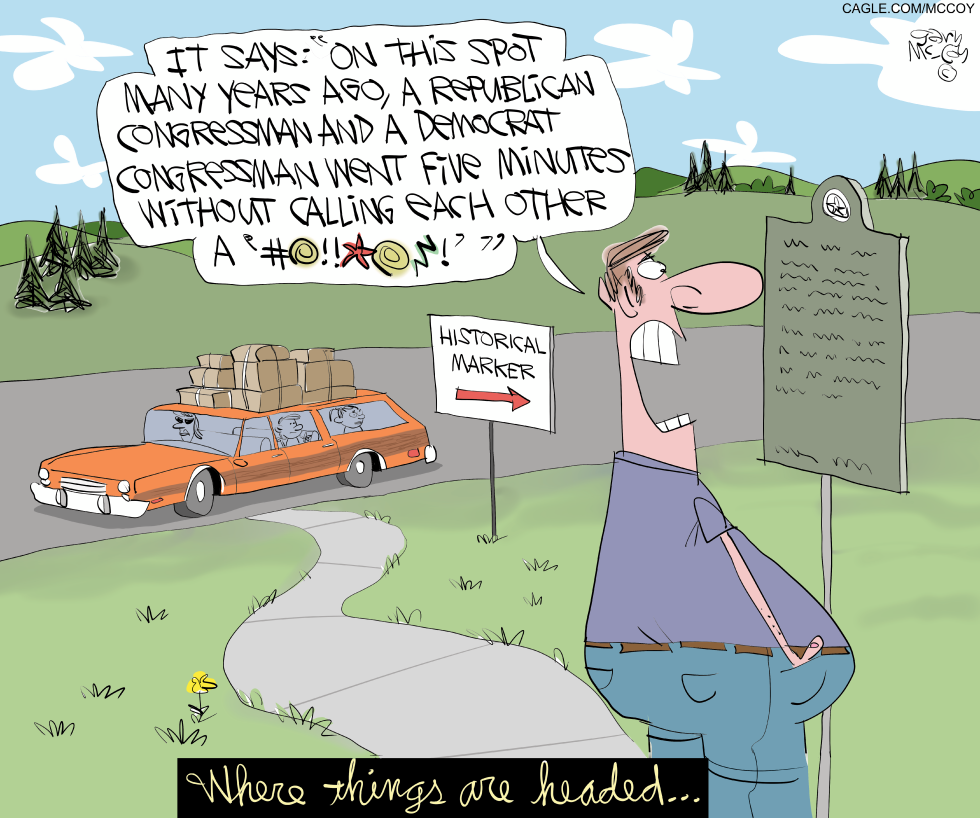
Congressional discourse has grown increasingly hostile in recent years, with members of both parties routinely trading insults rather than engaging on policy. The piece responds to this entrenched pattern by imagining a future roadside marker that treats a mere five minutes without profanity as a historic achievement worthy of commemoration. It underscores the low bar for civility in the current environment.
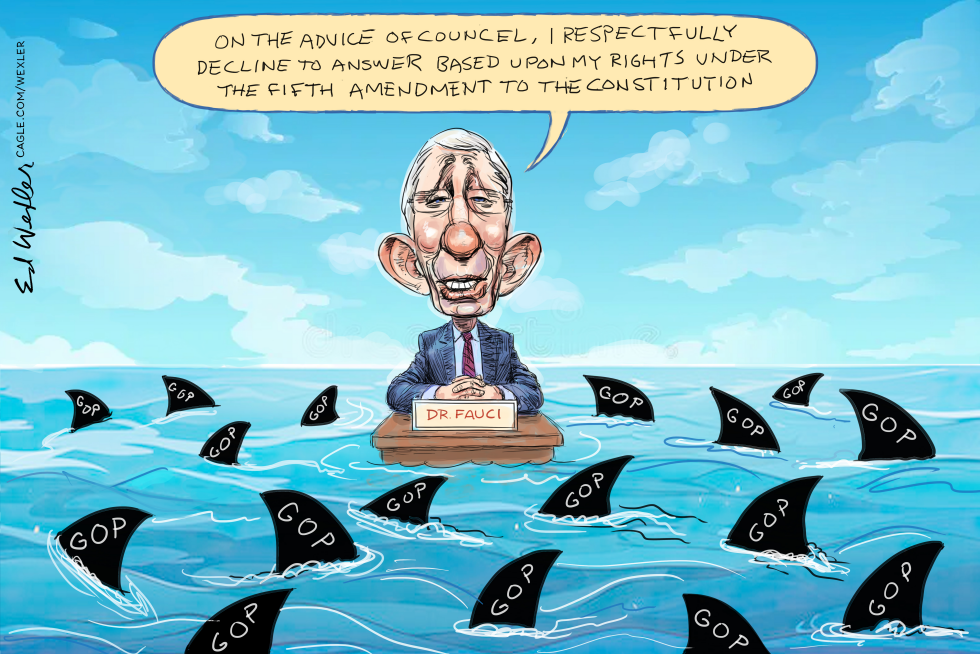
Dr. Anthony Fauci declined to answer questions at a House hearing, invoking his Fifth Amendment protections. The piece responds to Republican-led scrutiny of his role in pandemic-era public health decisions. It depicts the proceeding as a hostile setting rather than a neutral fact-finding exercise.