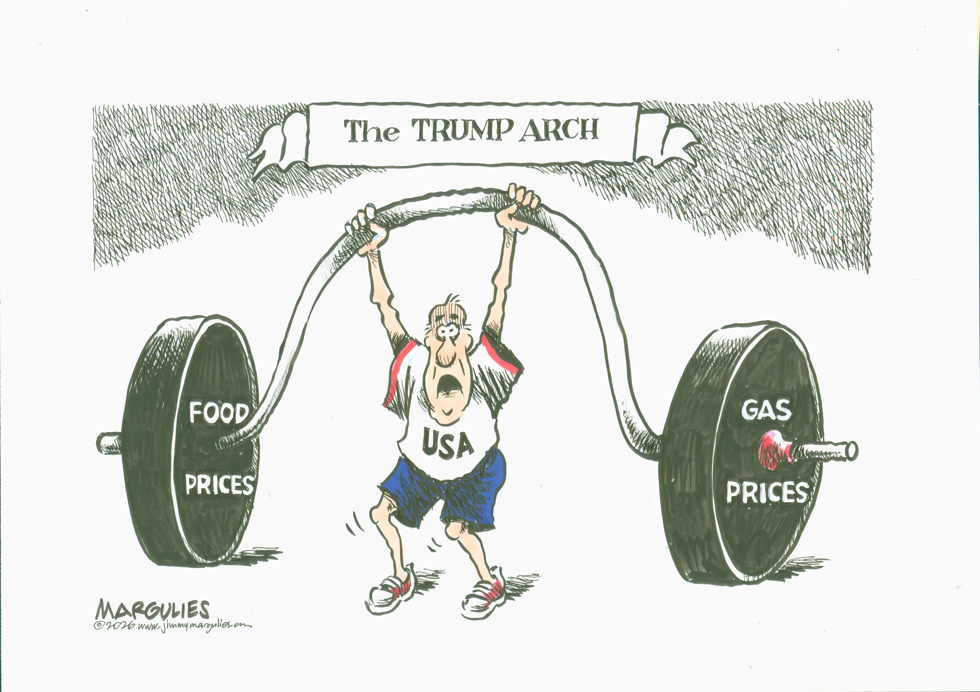
Food and gas prices remain elevated in 2026 under the Trump administration, adding to household costs across the country. The administration's economic approach has not delivered relief on key consumer expenses. Critics argue the policies prioritize other goals over inflation control. The cartoon depicts the USA as overburdened by these dual price burdens. It takes the position that Trump-era governance has left ordinary Americans carrying unsustainable economic weight.
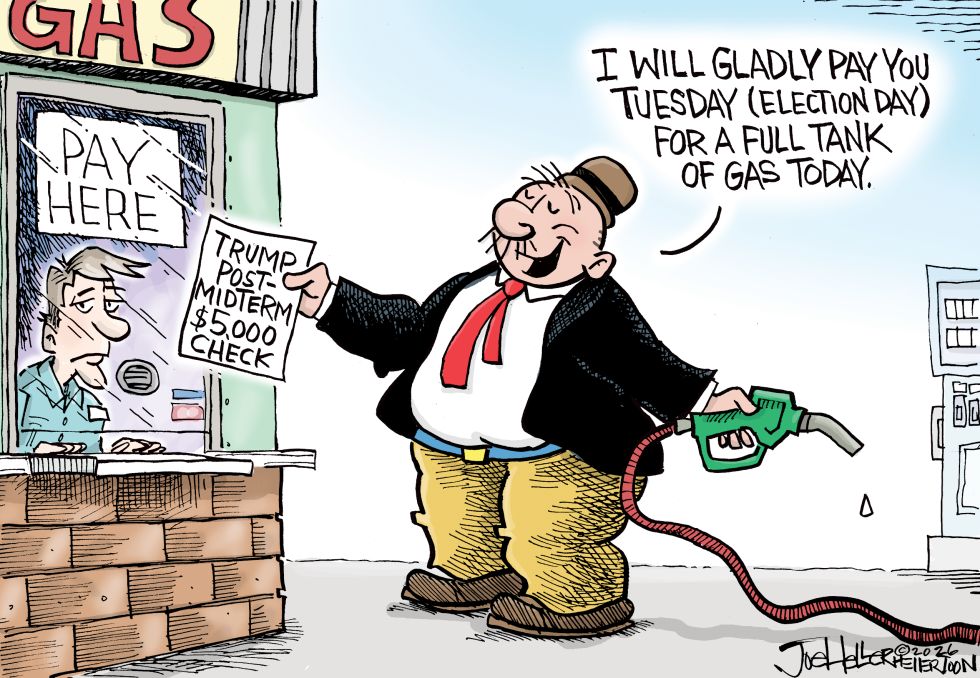
Donald Trump issued a post-midterm gas payment pledge tied to the 2026 election cycle. The promise revives a classic deferral line to link fuel costs with voting day. The cartoon argues the offer functions as an empty election tactic rather than a concrete policy step.
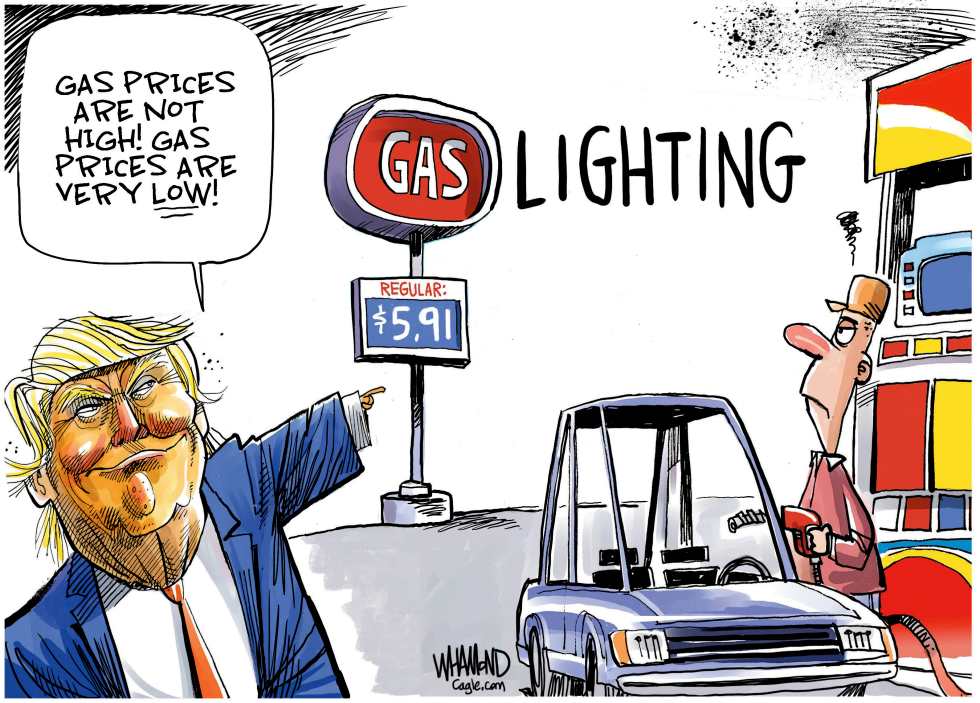
Donald Trump has repeatedly asserted that gas prices are very low even as national averages hover near record territory. The statement comes amid ongoing public frustration with energy costs that have remained elevated for months. The editorial takes the position that such denials amount to deliberate misdirection rather than engagement with economic data.
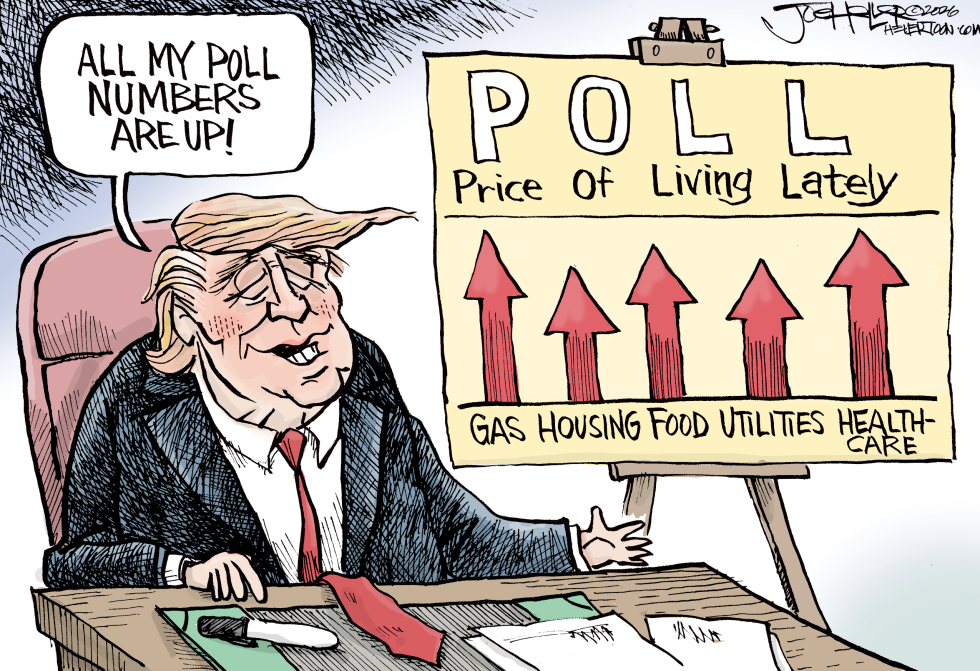
Donald Trump stated that his poll numbers were rising even as the price of living continued to climb across multiple categories. Gas, housing, food, utilities and healthcare costs all posted increases according to the visual data presented. The development matters because household expenses directly affect voter sentiment ahead of upcoming elections. Trump positioned the poll improvement as positive news despite the economic pressures shown. The piece takes the position that any reported poll gains are closely tracking the same upward pressure on everyday costs rather than reflecting broader approval.
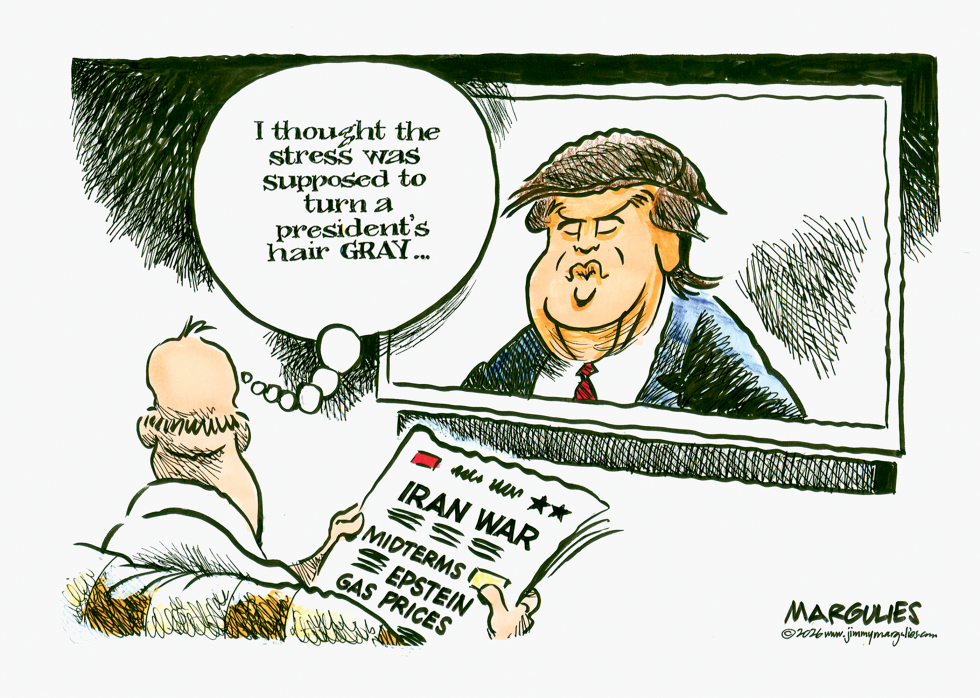
President Donald Trump confronts an Iran war, midterm election pressures, Epstein-related revelations and rising gas prices in September 2026. These overlapping challenges test the administration's capacity to manage foreign conflict and domestic economic strain simultaneously. The cartoon argues that the expected physical toll of such stress on the president has not materialized in the anticipated way.
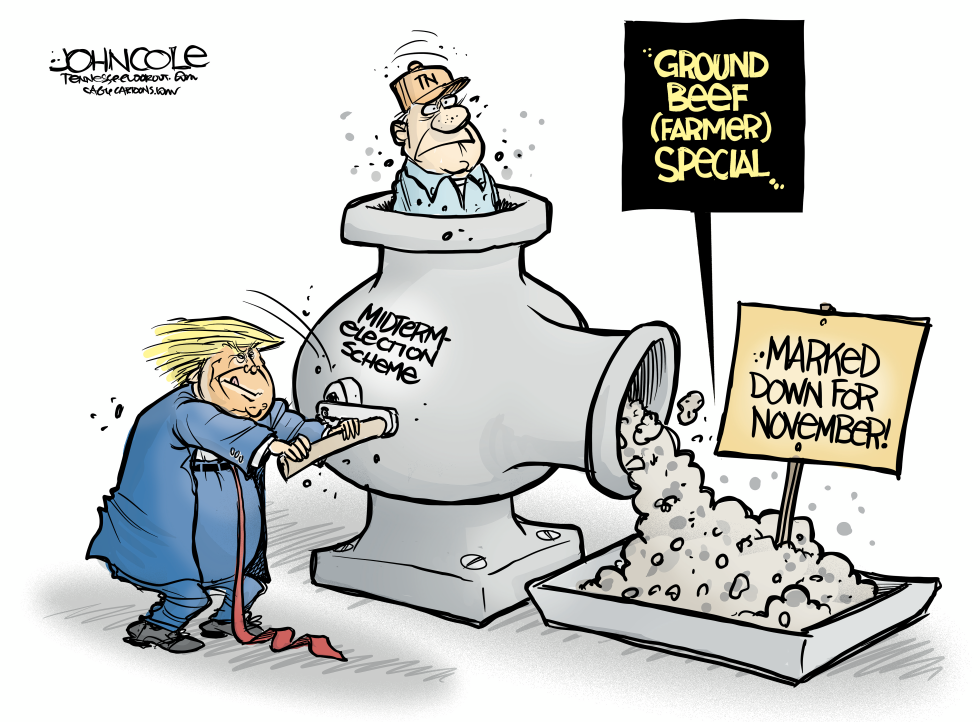
President Trump pushes a midterm election scheme that grinds down farmers ahead of the 2026 vote. The move reflects ongoing tensions between administration policies and rural constituencies whose support remains critical in key states.
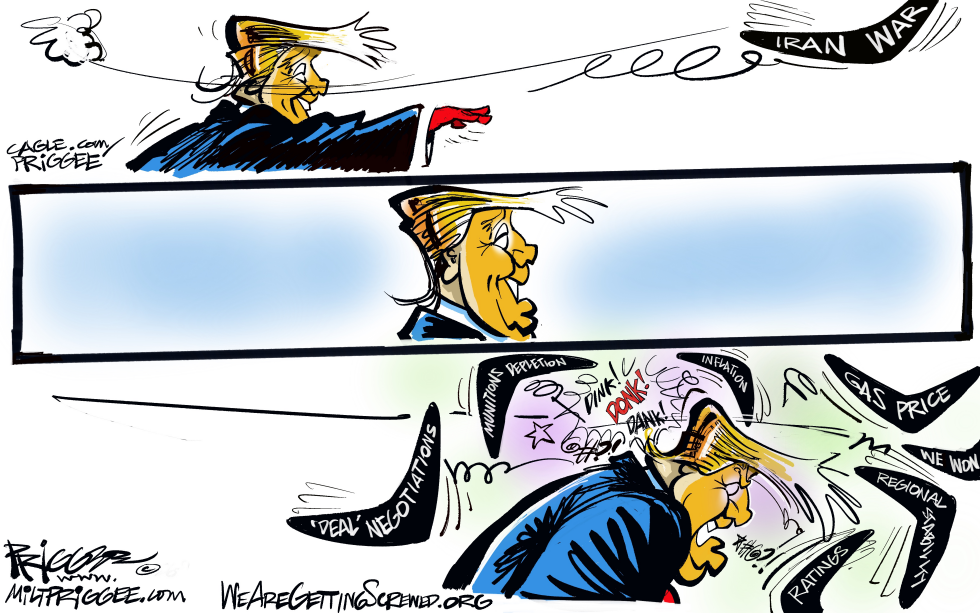
A political cartoon depicts Donald Trump launching an Iran war boomerang that returns to strike him with multiple crises. The image shows the former president hit by labels including inflation, gas prices, munitions depletion and falling ratings. The cartoon responds to ongoing tensions with Iran and the domestic fallout from military engagement. It illustrates how the conflict decision led to economic pressures and political damage as of the September 2026 publication date.
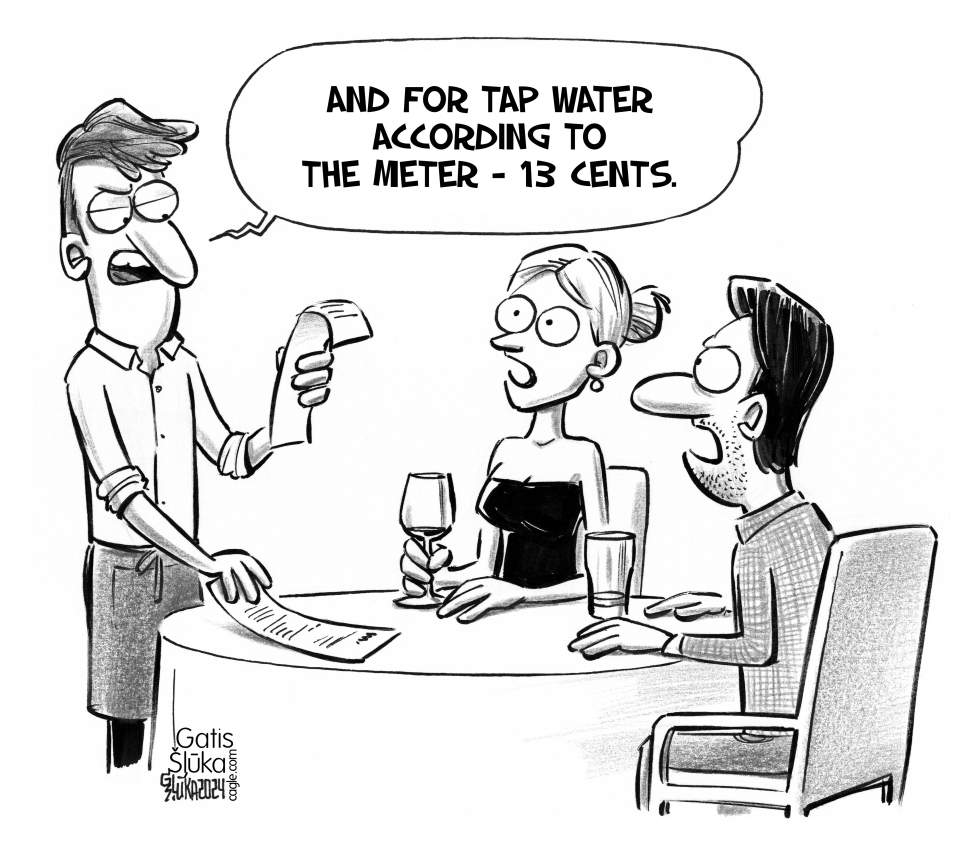
The cartoon depicts a waiter informing two diners that tap water costs 13 cents based on meter readings. It responds to ongoing discussions about restaurants charging for previously free tap water. The visual uses the meter concept to highlight billing surprises in dining.
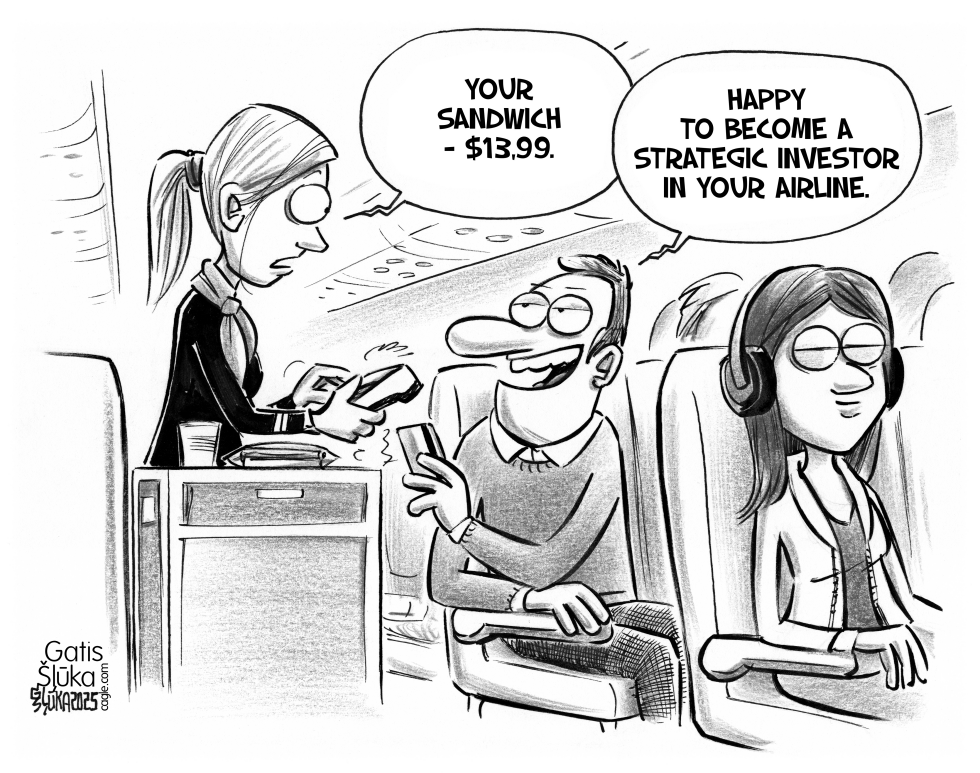
A passenger on a commercial flight faces a $13.99 charge for a sandwich from the flight attendant. Rather than pay, the passenger offers to become a strategic investor in the airline. The exchange occurs in the cabin with another traveler seated nearby. The scene captures common complaints about elevated prices for basic in-flight items. It reflects ongoing passenger frustration with airline ancillary fees and service costs.
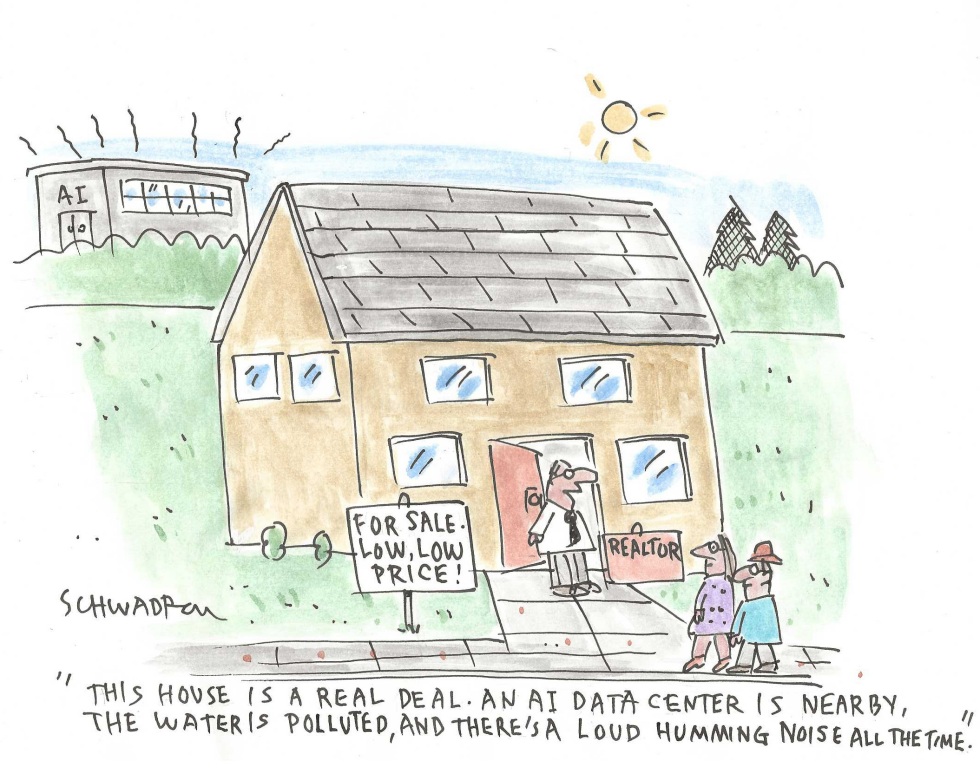
AI data centers are expanding rapidly across suburban areas, bringing jobs and infrastructure but also raising local concerns over noise, water use, and environmental effects. Home values near these facilities have begun to soften as buyers factor in constant humming and potential pollution. The cartoon highlights how real estate agents market such properties at steep discounts while openly disclosing the drawbacks to prospective buyers.
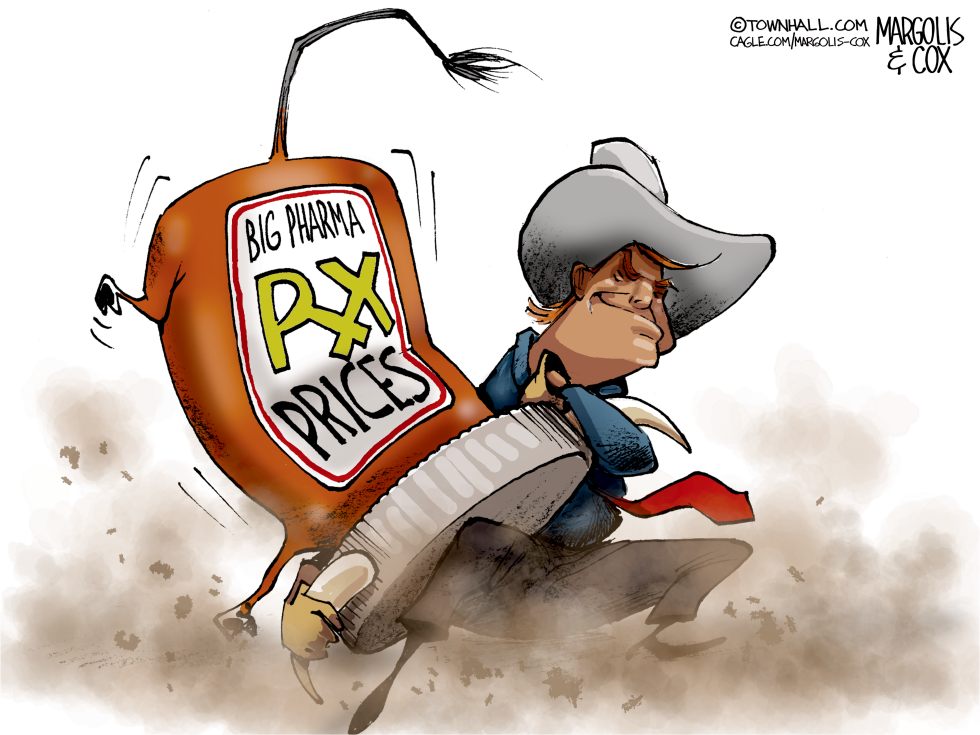
Ongoing debates over high prescription drug costs from major pharmaceutical companies continue to draw political attention. Lawmakers and regulators have pushed measures aimed at lowering prices for consumers. The cartoon depicts the challenge of reining in those costs as a high-stakes contest. It takes the position that aggressive action is needed to bring relief despite industry resistance.
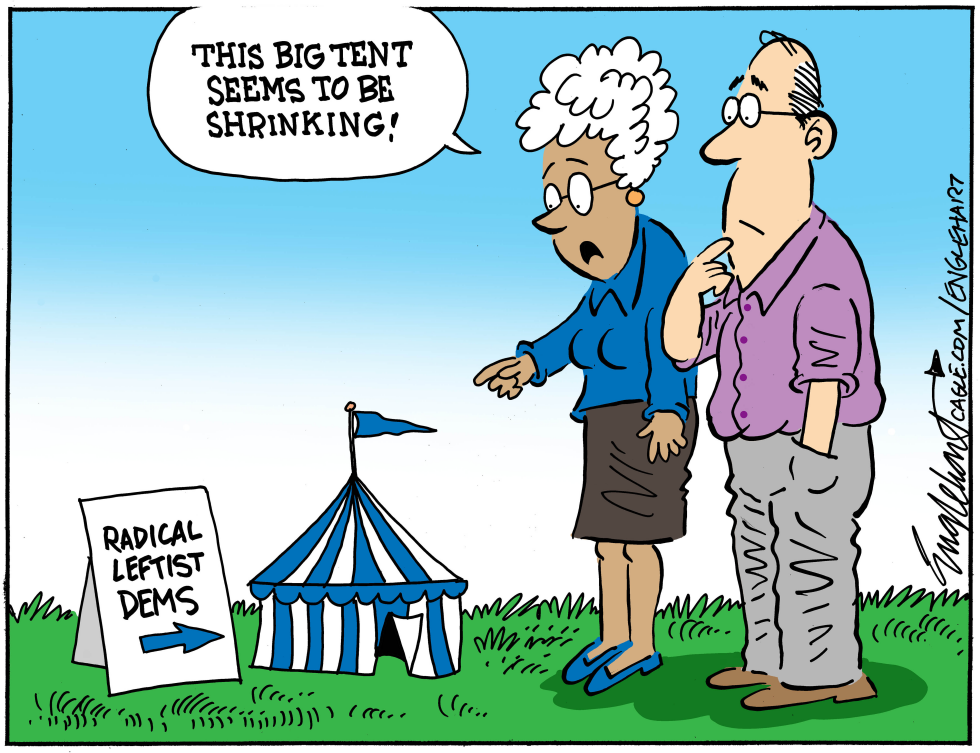
Democratic Party figures have grown concerned that the traditional big tent coalition is contracting as radical leftists consolidate control over the party's direction and messaging. The shift sidelines moderates and narrows the range of acceptable views within the organization. This dynamic raises questions about the party's ability to maintain broad electoral appeal in upcoming cycles. The editorial takes the position that the exclusionary turn is self-defeating and accelerates the party's isolation from mainstream voters.
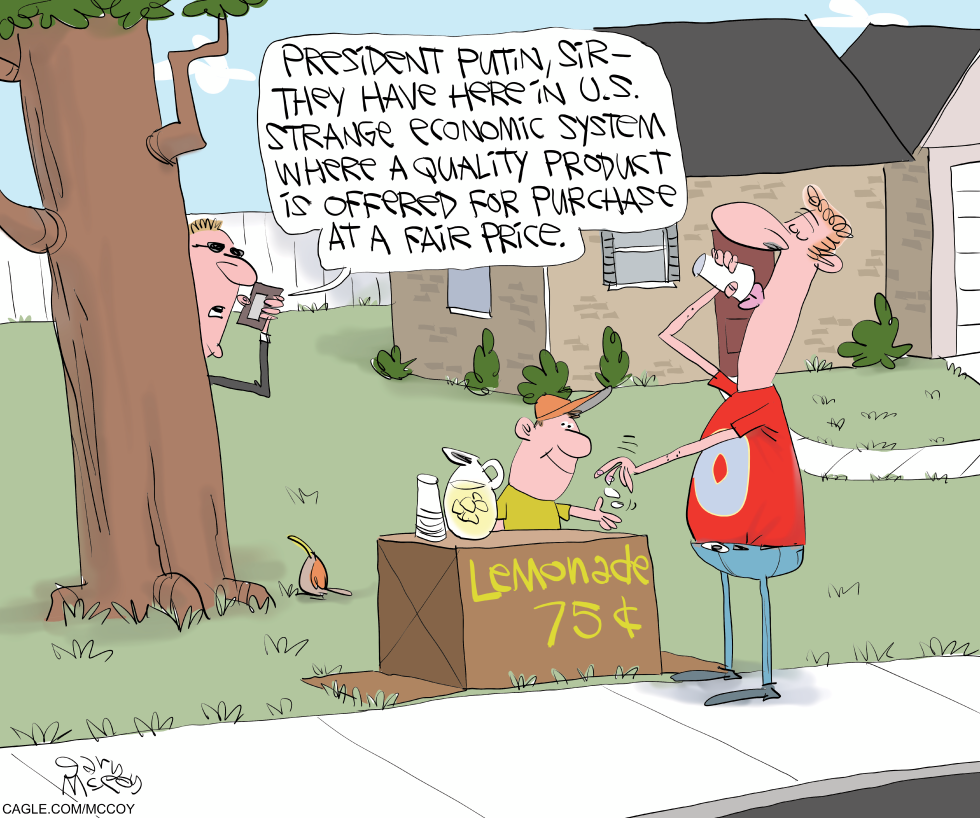
A cartoon depicts a man explaining the U.S. free-market system of offering quality goods at fair prices to President Putin during a phone call next to a child's lemonade stand. The scene underscores the perceived strangeness of American capitalism from a Russian perspective. The editorial position critiques the disconnect between market-driven economies and state-controlled systems.
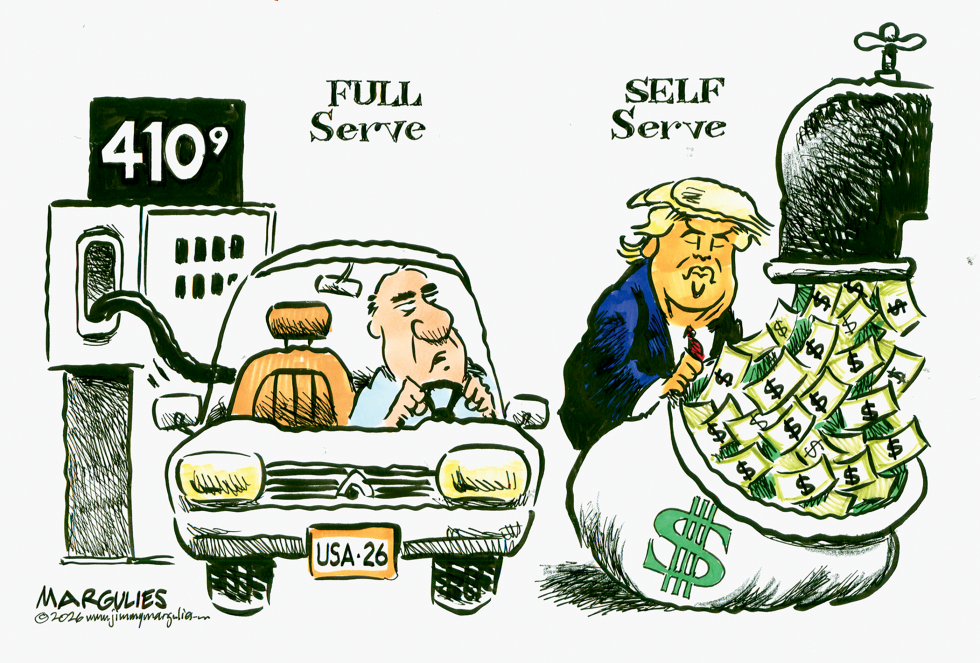
High gas prices remain a flashpoint in 2026 with pumps displaying figures above four dollars. Trump is shown collecting direct profits from the self-serve lane while a driver idles at full serve. The piece argues that the former president benefits personally from elevated energy costs rather than working to lower them for consumers.
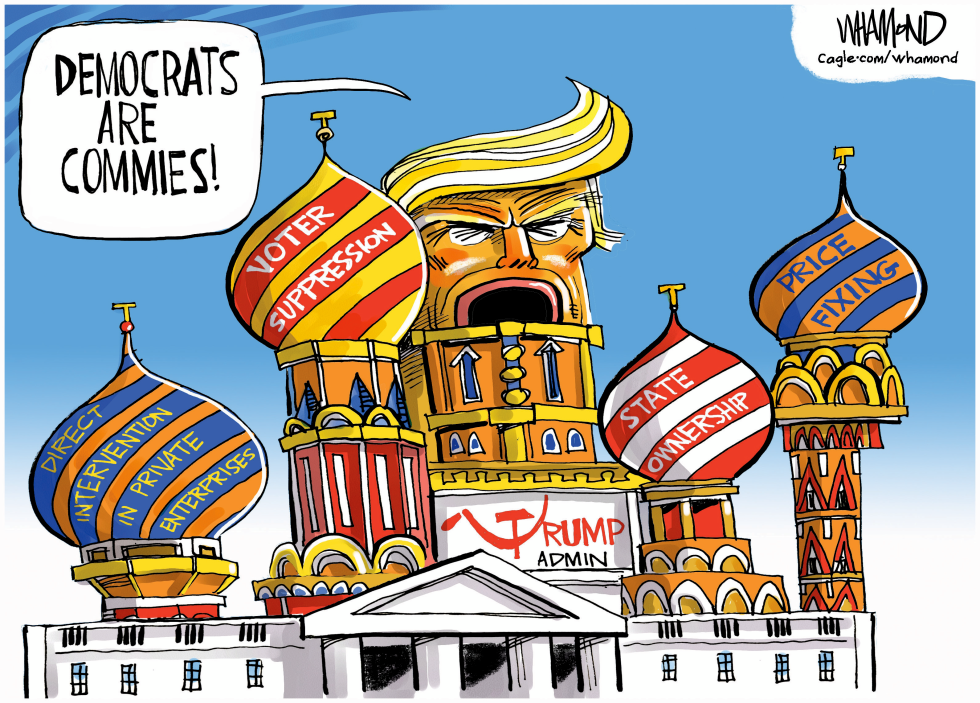
Donald Trump has renewed attacks labeling Democrats as communists amid ongoing debates over election rules and economic interventions. The accusation revives Cold War-era rhetoric in current political discourse. The piece portrays the Trump administration itself as adopting the very state-control measures it condemns.