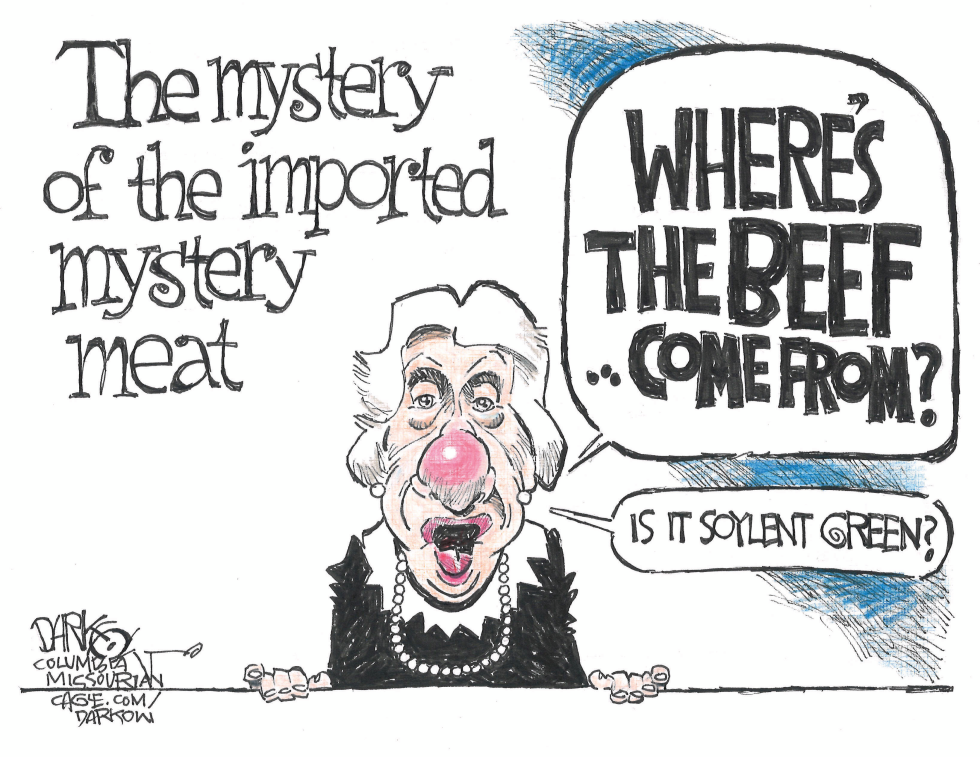
Questions about the origins and safety of imported beef have resurfaced amid broader debates over food supply chains. Regulators and consumers alike have raised concerns that labeling and inspection gaps allow lower-quality or misidentified products to reach shelves. The cartoon uses a classic slogan twist and a pop-culture reference to underscore public skepticism toward these imports. It argues that the lack of transparency turns everyday purchases into a guessing game with potential health risks. The piece positions the issue as one of accountability in trade and regulation rather than abstract policy.
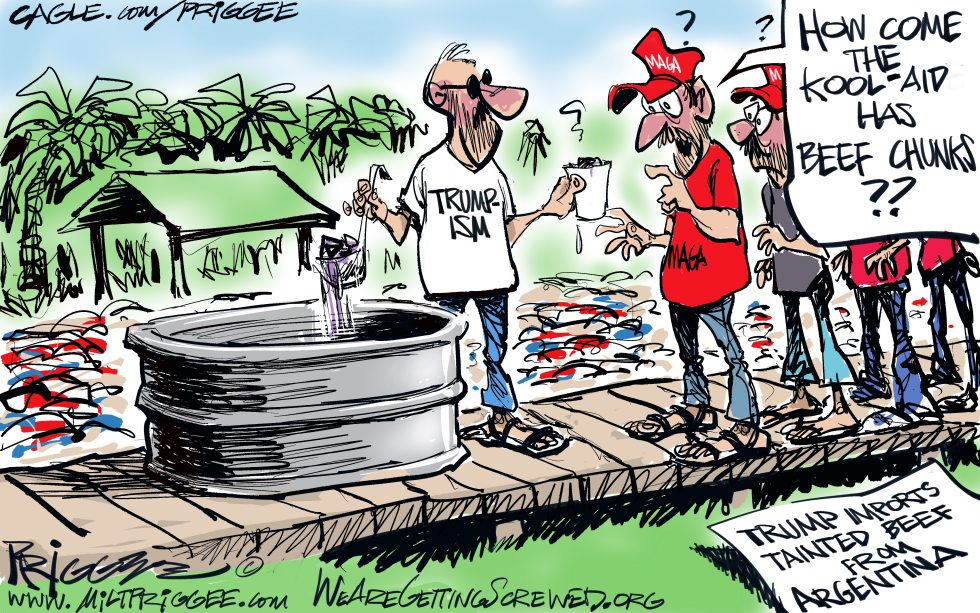
The cartoon depicts a figure labeled Trumpism pouring liquid into a well while two men in MAGA hats question why the Kool-Aid contains beef chunks. A sign at the bottom states Trump imports tainted beef from Argentina. The scene references recent policy allowing beef imports from Argentina amid concerns over quality. Supporters appear puzzled by the outcome of the trade decision. The image uses the classic Kool-Aid metaphor to illustrate how backers process the news of the imports.
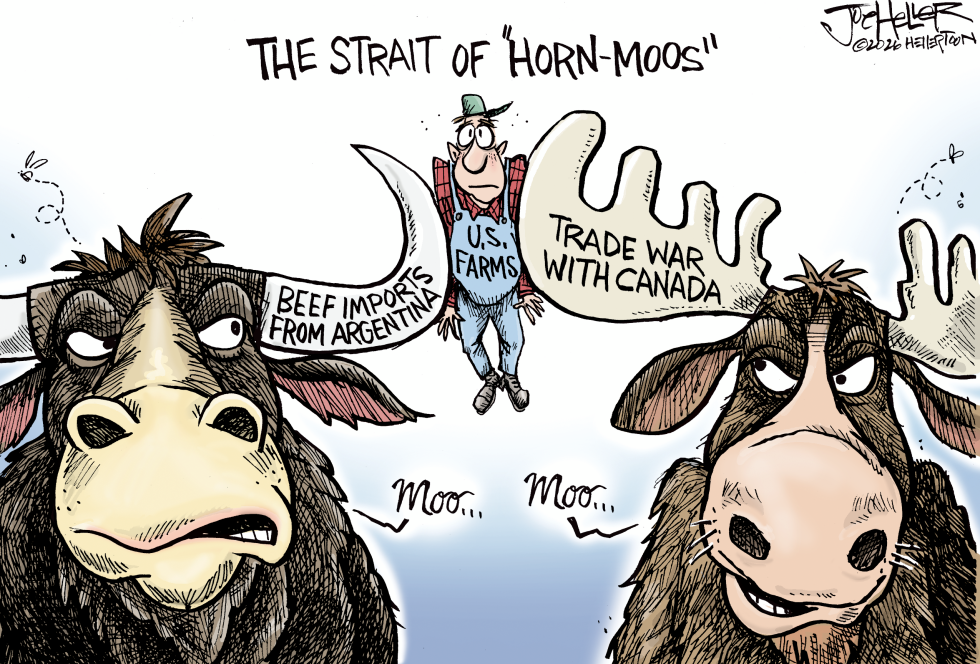
US agricultural interests face simultaneous pressure from increased beef imports from Argentina and an escalating trade dispute with Canada. The situation highlights how competing international trade policies directly affect domestic producers. The piece portrays American farms as caught in the middle of these conflicting pressures.
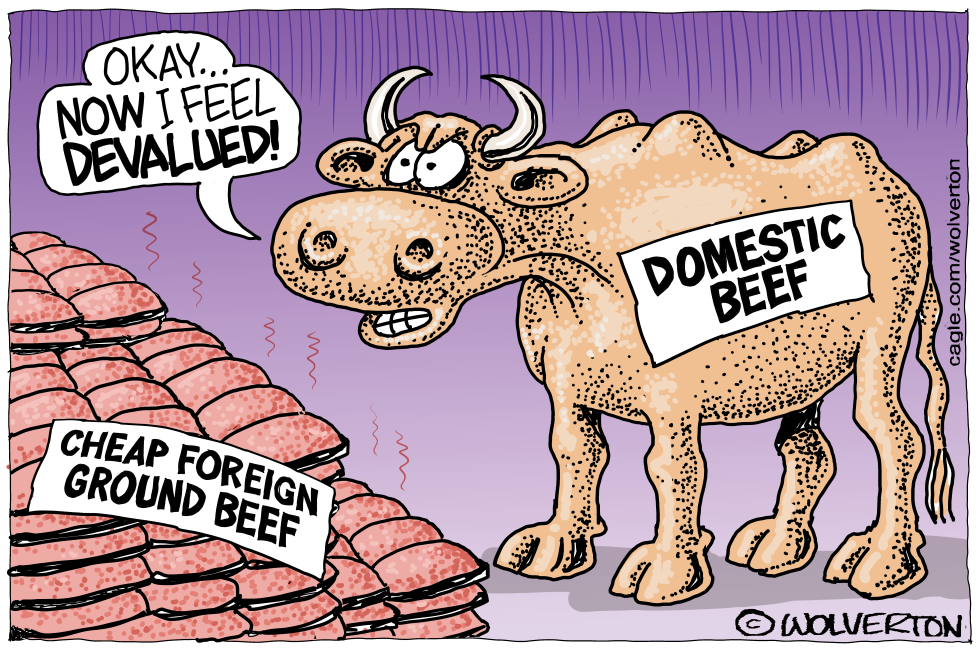
The cartoon depicts a domestic beef cow standing beside stacks of cheap foreign ground beef. The cow, labeled clearly, utters a speech bubble expressing feelings of devaluation. Artist Monte Wolverton uses the visual to address ongoing pressures on the US beef sector from lower-cost imports. The image was published on August 23, 2026. It reflects persistent concerns in agricultural markets where domestic producers compete with foreign supply. The composition places the cow in the foreground with the imported product shown as abundant and lower positioned.
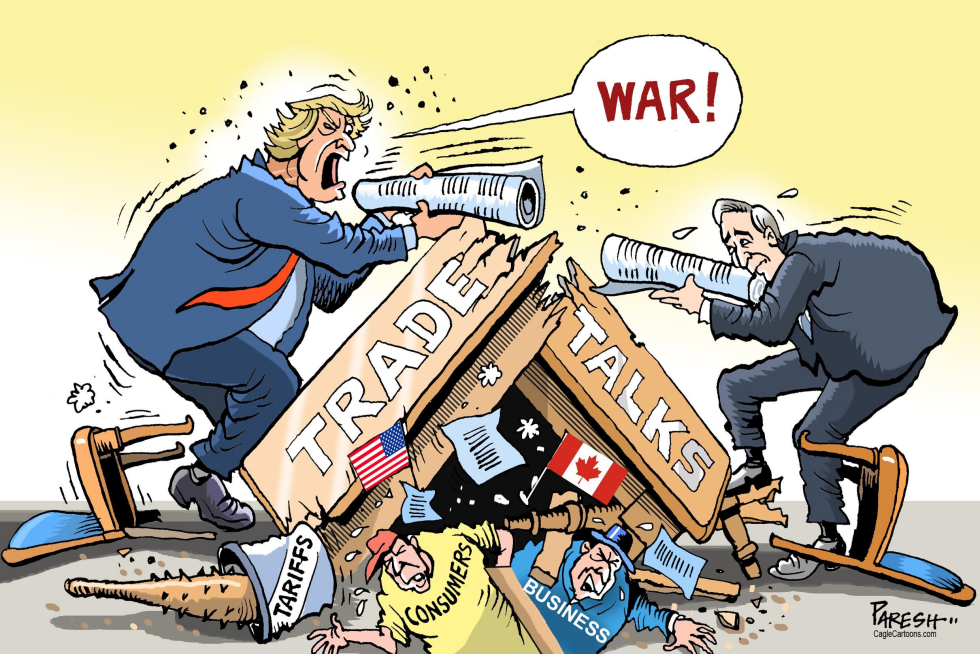
The cartoon depicts former President Donald Trump and a Canadian counterpart locked in combat, wielding rolled documents labeled tariffs and talks that smash apart a table marked trade talks. American and Canadian flags lie amid the debris while two figures representing consumers and business lie pinned underneath. Trump shouts war from a speech bubble. The image responds to ongoing US-Canada trade tensions by illustrating how aggressive tariff measures and failed negotiations harm everyday economic interests on both sides of the border.
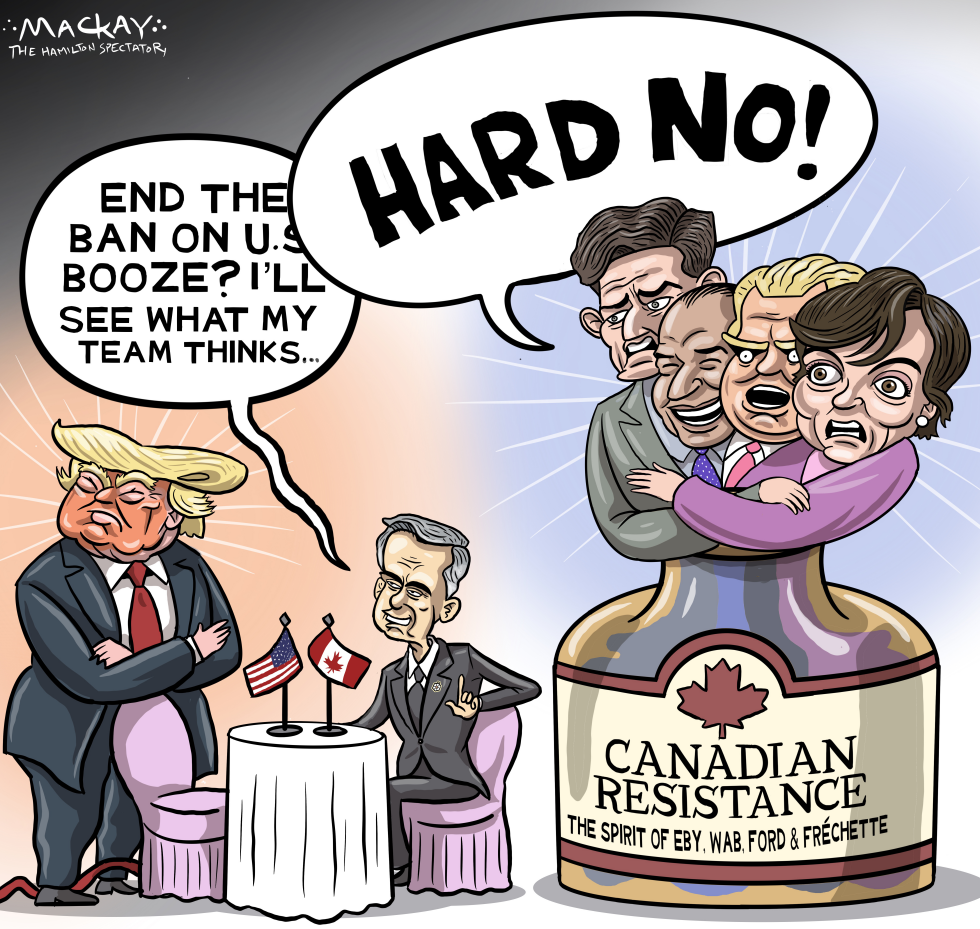
Donald Trump signaled openness to ending a ban on US alcohol imports into Canada during a meeting with Canadian officials. Provincial leaders including David Eby and Doug Ford responded with unified opposition. The cartoon portrays the premiers as a collective force of resistance and shows Trump deferring the decision to his team.
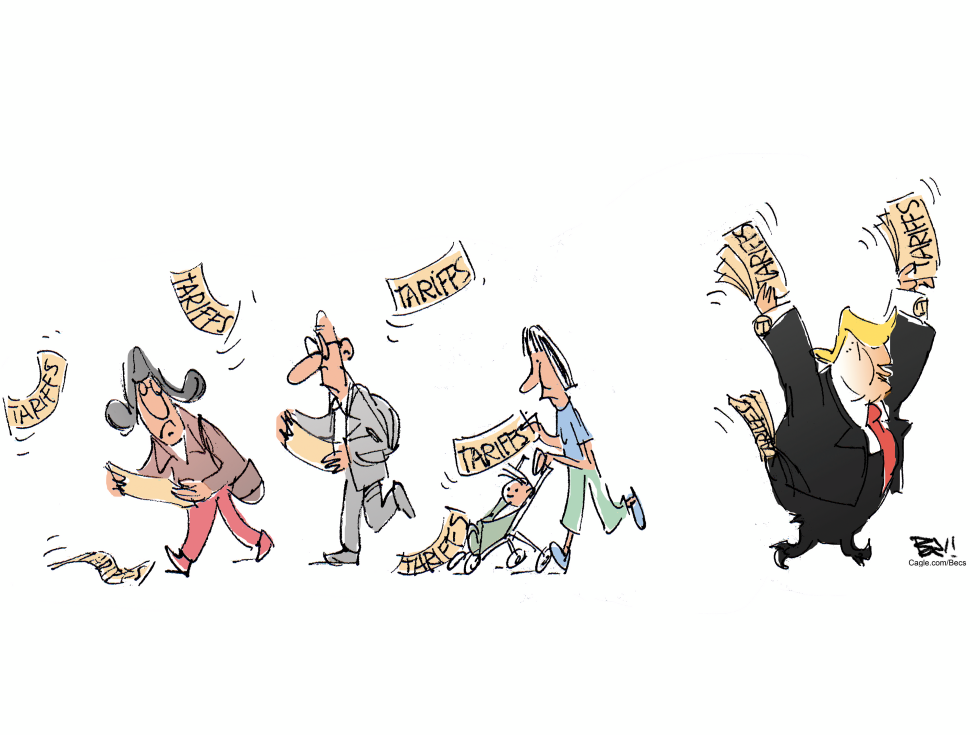
Donald Trump expanded tariffs across trading partners in mid-2026, triggering immediate market volatility and diplomatic pushback. The move raised costs for consumers and businesses reliant on imports. The piece portrays the policy as an indiscriminate barrage that disrupts daily life and global commerce.
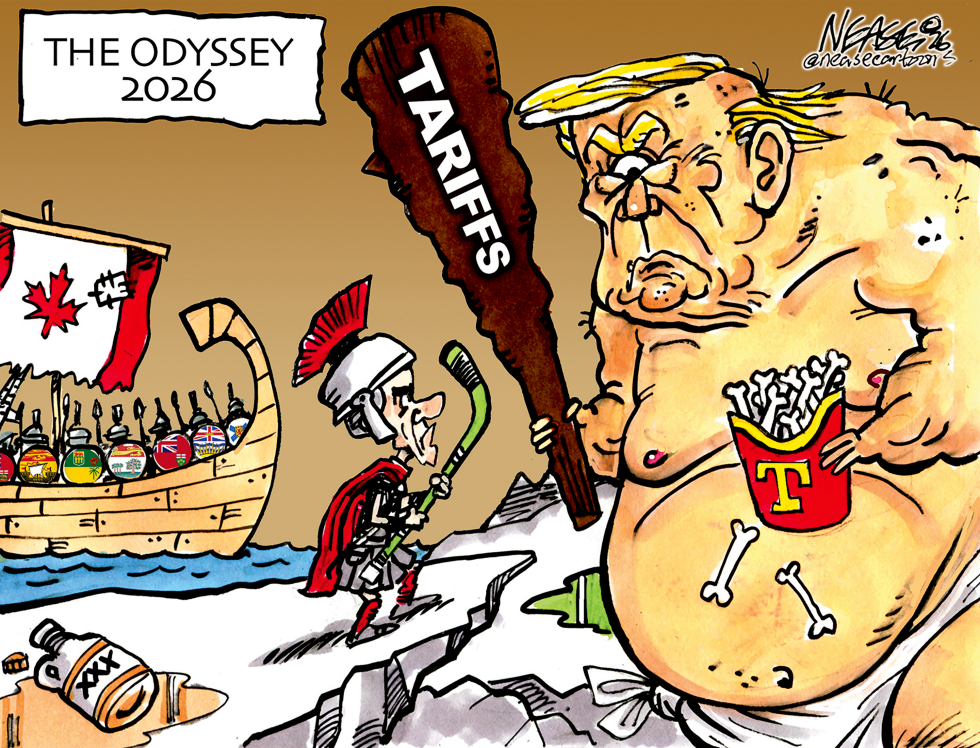
President Trump escalates tariffs on trading partners including Canada in mid-2026. The move targets imports amid ongoing disputes over trade balances and supply chains. Allies respond with coordinated pushback through diplomatic and economic channels. The cartoon casts the confrontation as a one-sided power play by the oversized tariff wielder against smaller coordinated opponents.
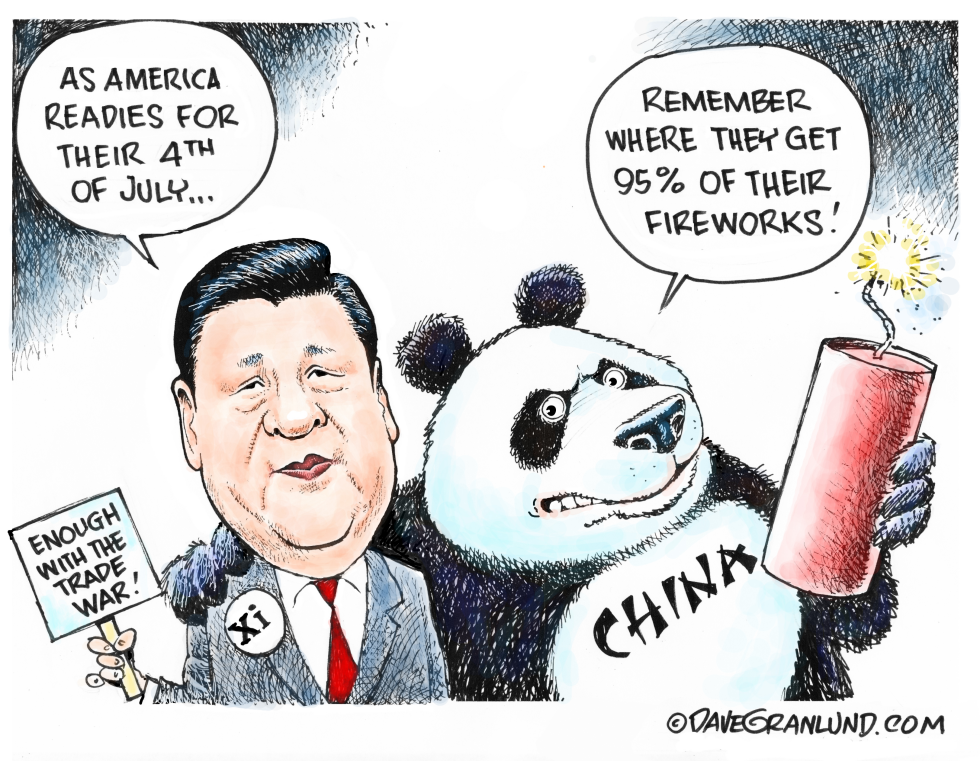
On June 19, 2026, a cartoon by Dave Granlund depicts Chinese leader Xi Jinping alongside a panda representing China. Xi holds a protest sign against the trade war while the panda reminds viewers that China supplies most American fireworks. The image addresses rising costs for July 4th celebrations tied to tariffs and supply issues with the largest provider.
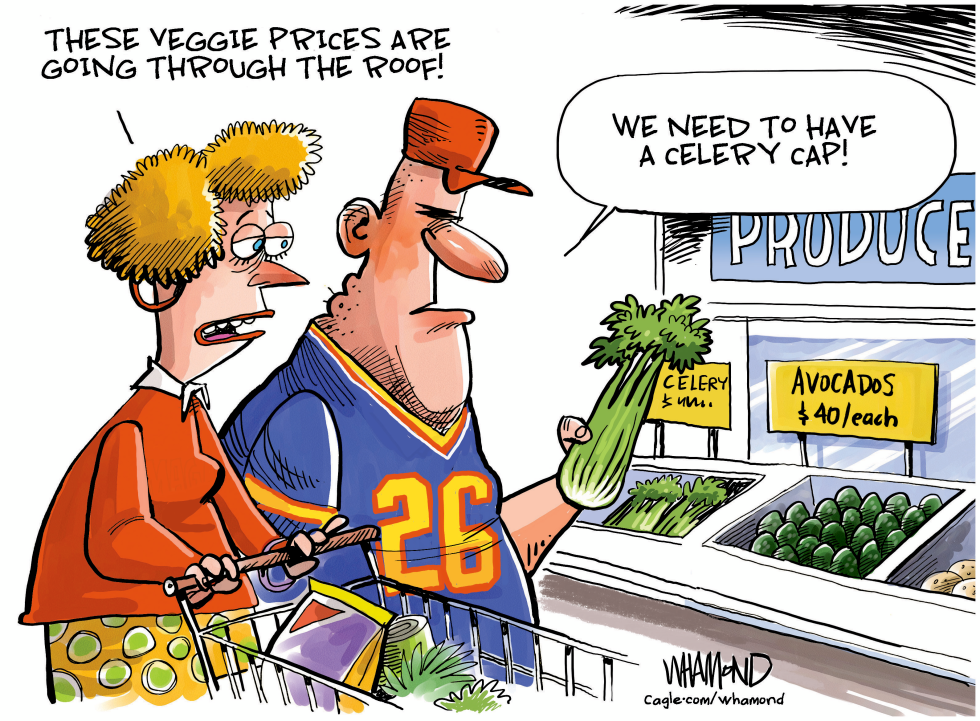
A political cartoon depicts two shoppers in a grocery produce section reacting to high vegetable prices. One figure in a sports jersey suggests imposing a celery cap while the other exclaims that veggie prices are going through the roof. Signs show celery at $4.99 and avocados at $40 each. The image responds to ongoing discussions about inflation and proposed tariffs on imports as of late 2025. It illustrates consumer concerns over affordability and the impact on everyday purchases like fresh produce.
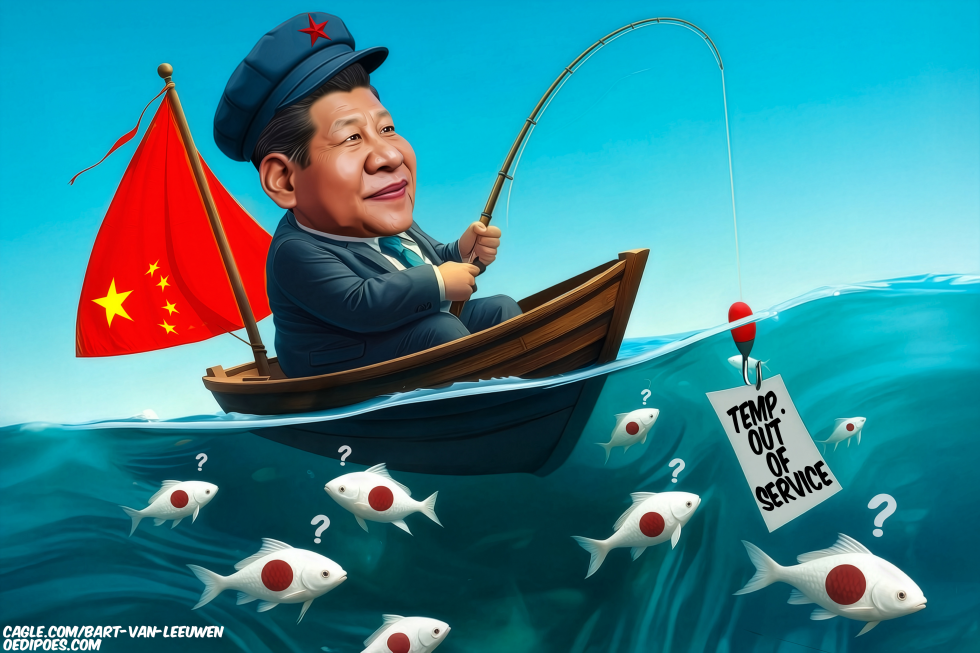
The image responds to China's November 2025 decision to suspend imports of Japanese seafood. Xi Jinping appears in a small boat beneath the Chinese flag, attempting to hook fish bearing Japan's rising sun emblem. The fish bear question marks and a dangling sign reads temporary out of service. The scene illustrates the trade friction between Beijing and Tokyo over marine products. Publication occurred on November 20, 2025.