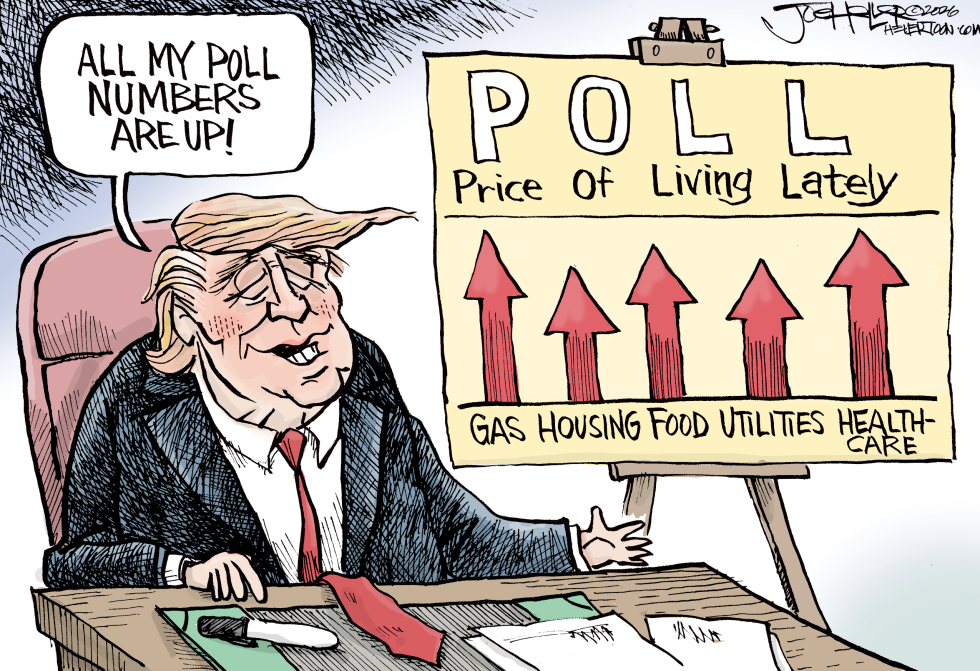
Donald Trump stated that his poll numbers were rising even as the price of living continued to climb across multiple categories. Gas, housing, food, utilities and healthcare costs all posted increases according to the visual data presented. The development matters because household expenses directly affect voter sentiment ahead of upcoming elections. Trump positioned the poll improvement as positive news despite the economic pressures shown. The piece takes the position that any reported poll gains are closely tracking the same upward pressure on everyday costs rather than reflecting broader approval.
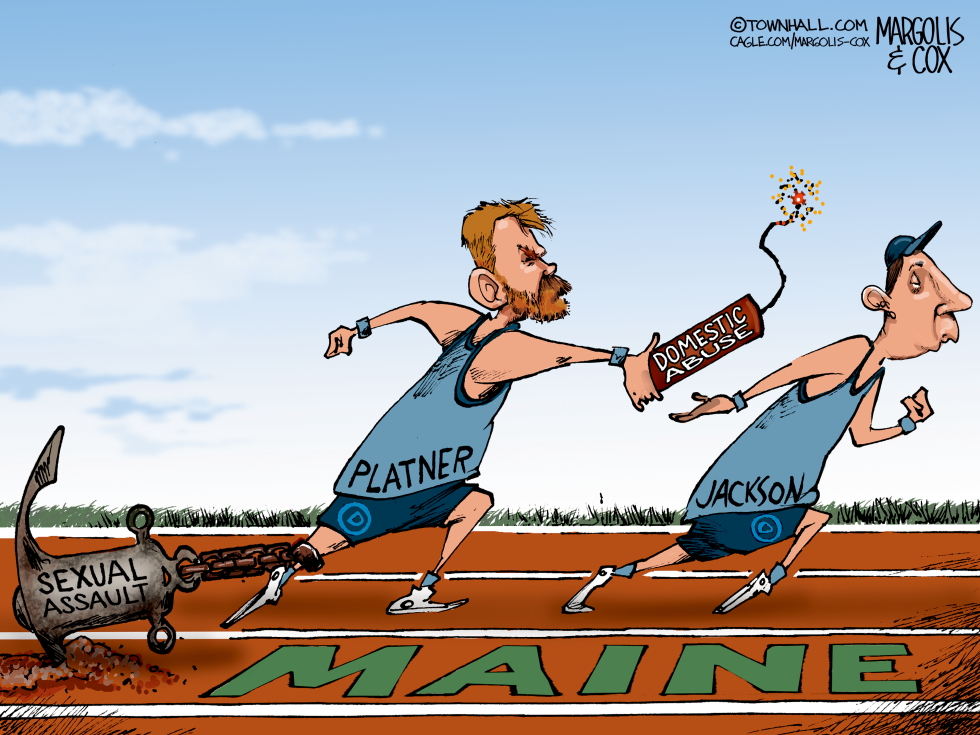
Maine candidates Platner and Jackson compete in a Senate race while facing sexual assault and domestic abuse allegations that threaten their campaigns. The scandals have become central issues in the contest. The piece portrays the candidates as hampered by these controversies.
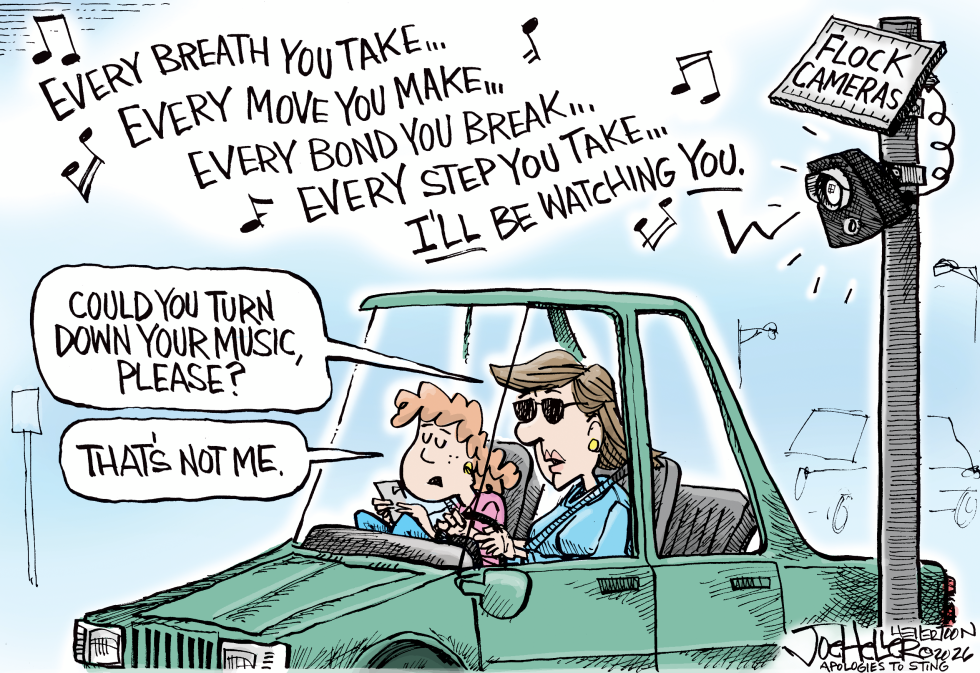
Police departments across the country have expanded use of Flock license plate readers to track vehicles in real time. The technology raises questions about the balance between public safety and individual privacy. The piece argues that such systems create an inescapable watch on everyday movement.
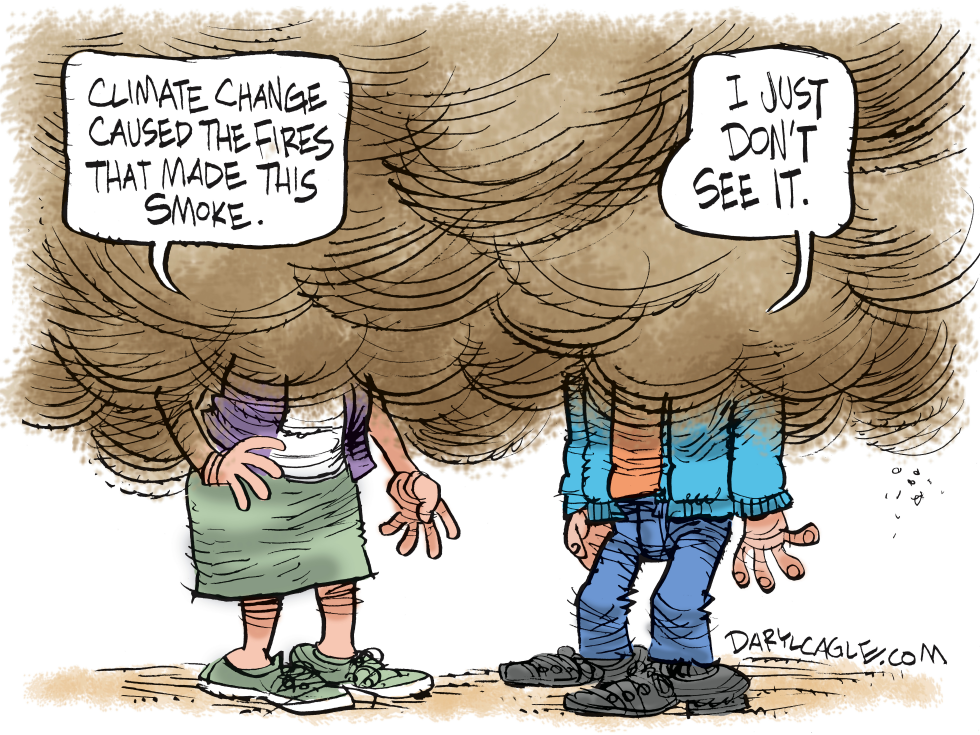
Canadian wildfires have produced widespread smoke affecting air quality across regions. The debate centers on whether climate change drives the fires or if other factors dominate. Public discourse shows persistent skepticism despite visible evidence. The piece highlights how some reject the link between rising temperatures and increased fire activity. It critiques the refusal to acknowledge observable environmental changes tied to climate patterns.
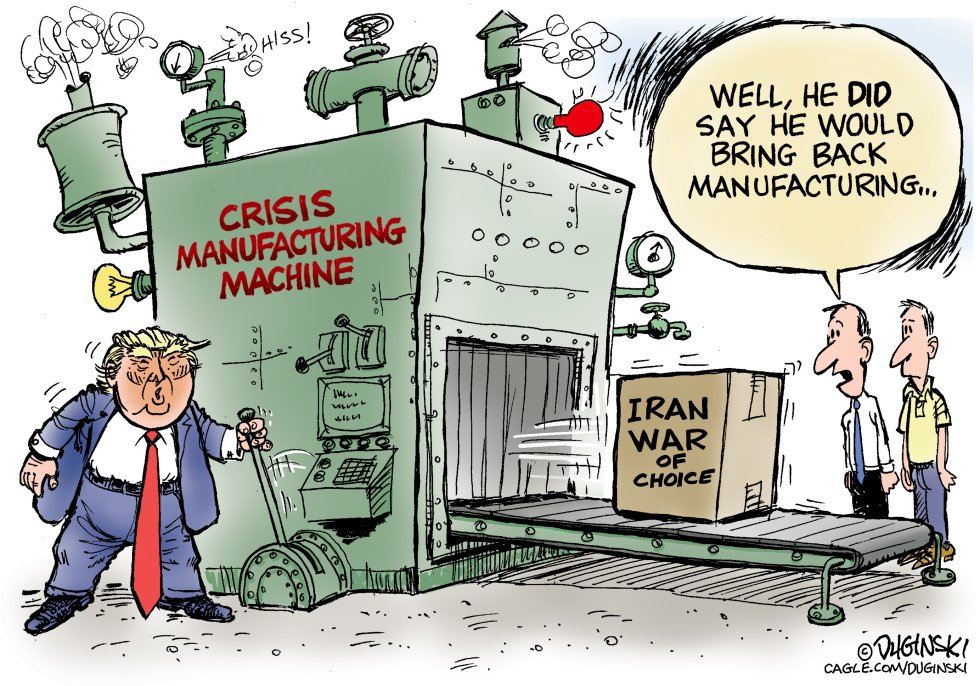
Donald Trump, holding the presidency in 2026, faces renewed scrutiny over foreign policy toward Iran. Recent statements revive campaign pledges to restore domestic manufacturing while tensions with Tehran escalate. The administration\\\'s approach draws criticism for prioritizing confrontation over diplomacy. Observers note the pattern of generating external crises rather than economic gains at home. The cartoon argues that Trump\\\'s actions fulfill a literal version of his manufacturing rhetoric by producing conflict instead of jobs.
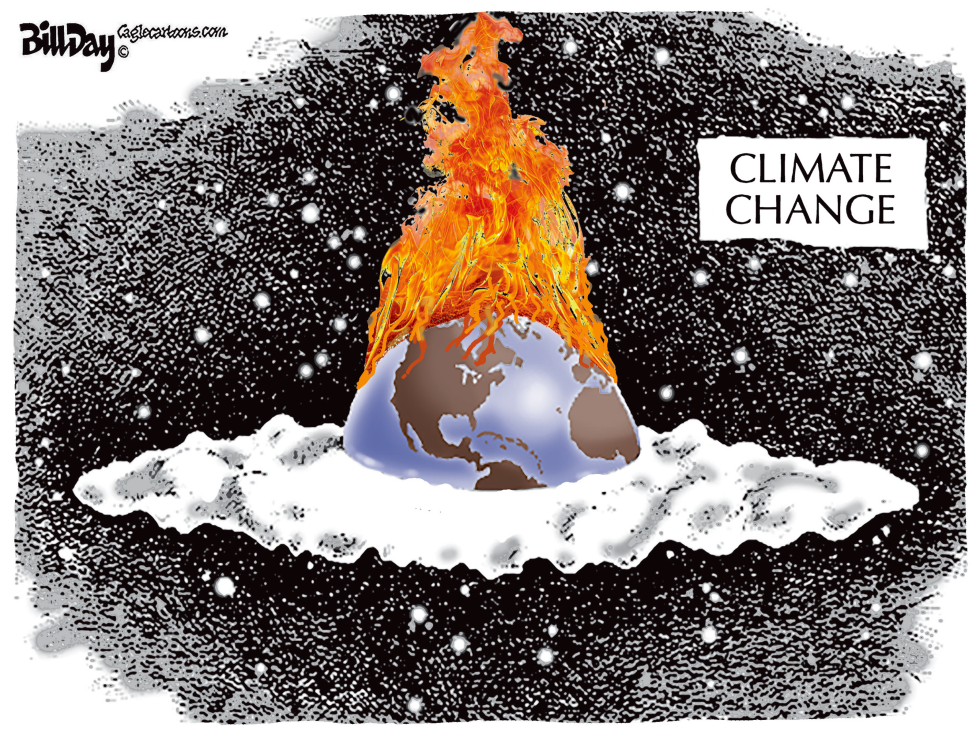
Ongoing global temperature records continue to climb in mid-2026 amid extreme weather events worldwide. Scientists and governments track accelerating impacts from greenhouse gas emissions. The cartoon underscores the direct link between human-driven climate change and planetary distress, presenting the crisis as an immediate and visible threat rather than a distant concern.
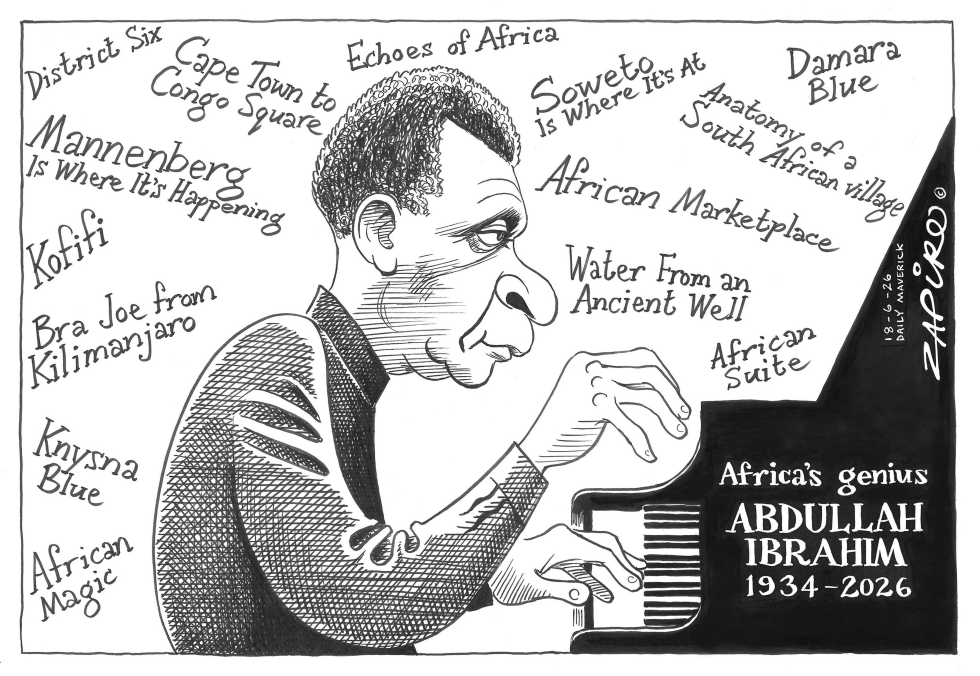
Zapiro created this tribute illustration of Abdullah Ibrahim following the South African jazz pianist's death in 2026. The drawing shows Ibrahim at the keyboard with titles of his well-known works arrayed around him, including Mannenberg, District Six, Soweto Is Where It's At, African Suite, and others drawn from his discography spanning decades of performances rooted in Cape Town and broader African musical traditions.
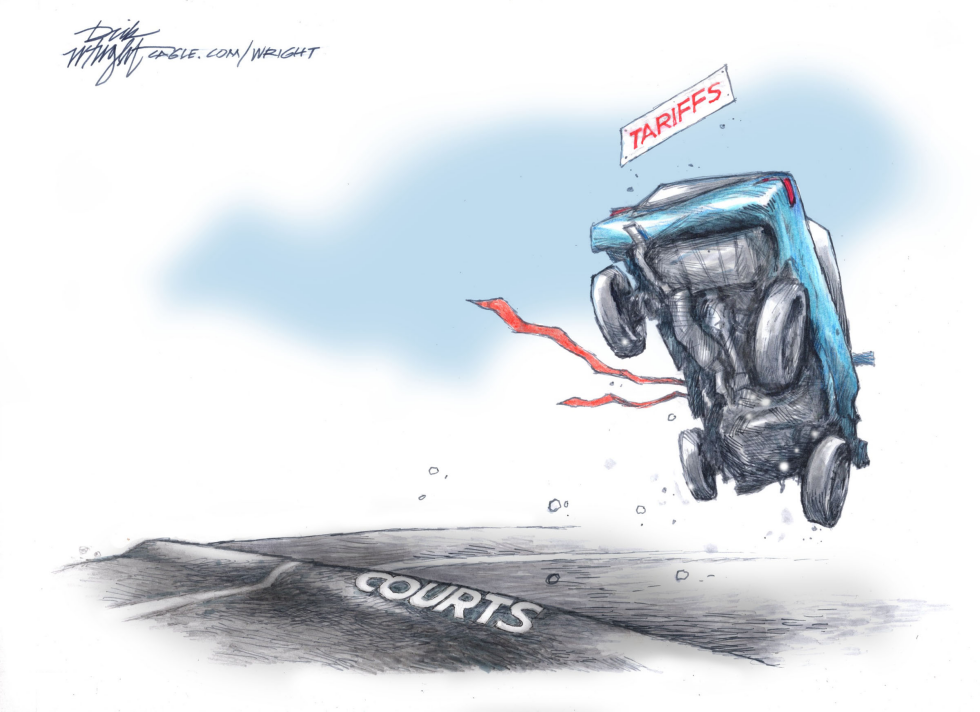
A blue pickup truck labeled tariffs flies off a paved road marked courts in this September 2025 cartoon. The vehicle is inverted with wheels up and a red strap trailing. Dust and debris scatter as the truck leaves the surface. The image responds to a recent court ruling on tariffs affecting small businesses and the broader economy.
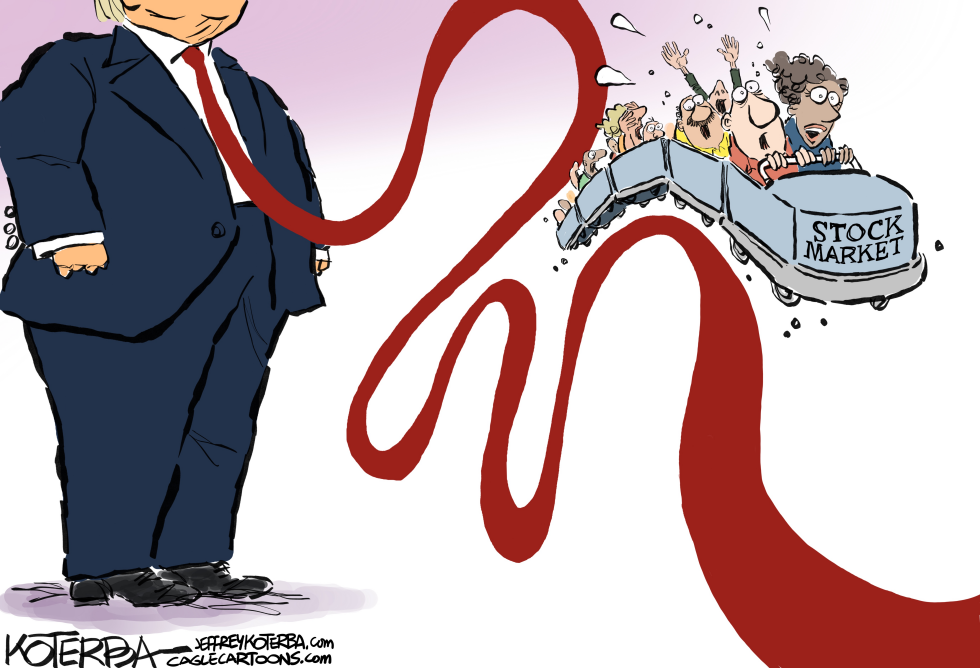
Jeff Koterba's cartoon depicts Trump in a suit, his red necktie extending into a looping roller coaster track. A car labeled 'STOCK MARKET' carries diverse passengers with raised arms, expressions of shock and thrill, suggesting volatility. Tags like Trump, tariff, necktie, roller coaster, stock market, Dow Jones, investors, and 401K frame the scene. The image captures economic uncertainty, with the tie as a metaphor for unpredictable policies affecting markets. No text bubbles or additional labels appear, keeping the satire visual and direct. Cagle Cartoons syndicates this piece, dated 2025, emphasizing timely political humor.