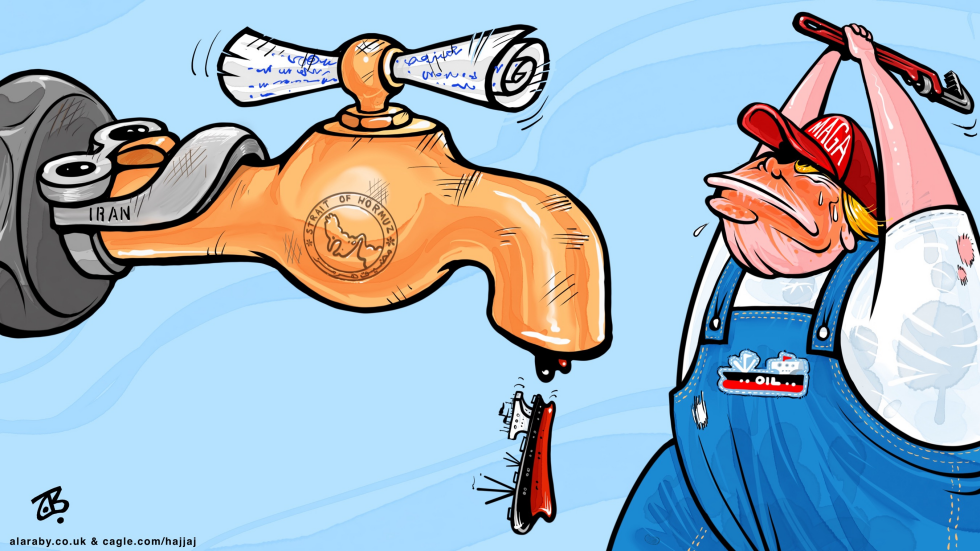
Donald Trump faces ongoing friction with Iran over control of the Strait of Hormuz, a vital oil transit route. Recent shipping incidents and sanctions disputes have kept the waterway in focus. The piece portrays these pressures as a plumbing crisis that resists easy fixes.
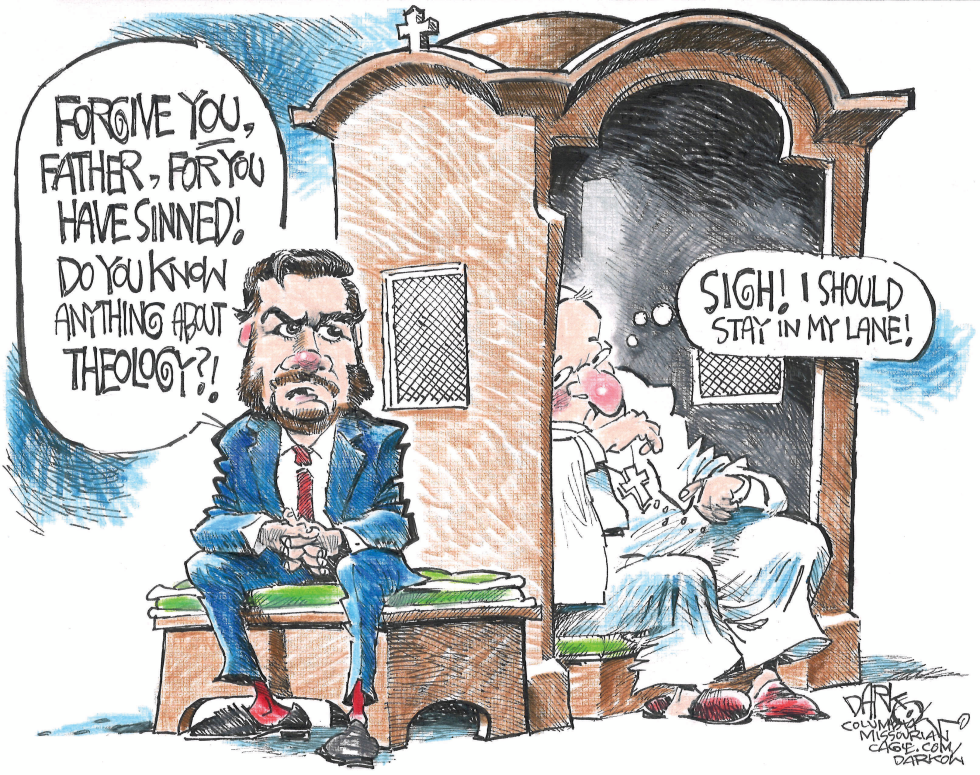
The cartoon shows a suited man with a beard, seated in a confessional booth, angrily addressing a priest dressed in white robes with a cross, using tags like JD Vance, Pope Leo, prayer, God, Jesus, war, theology, confession. The man declares forgiveness to the father for sinning and questions his knowledge of theology. The priest, holding a baby-like figure, sighs and admits he should stay in his lane. This setup captures a role reversal in a traditional confessional scene, with the layman taking an authoritative stance. The artwork by John Darkow features sketchy lines and blue shading, emphasizing the humorous tension between secular and religious domains.
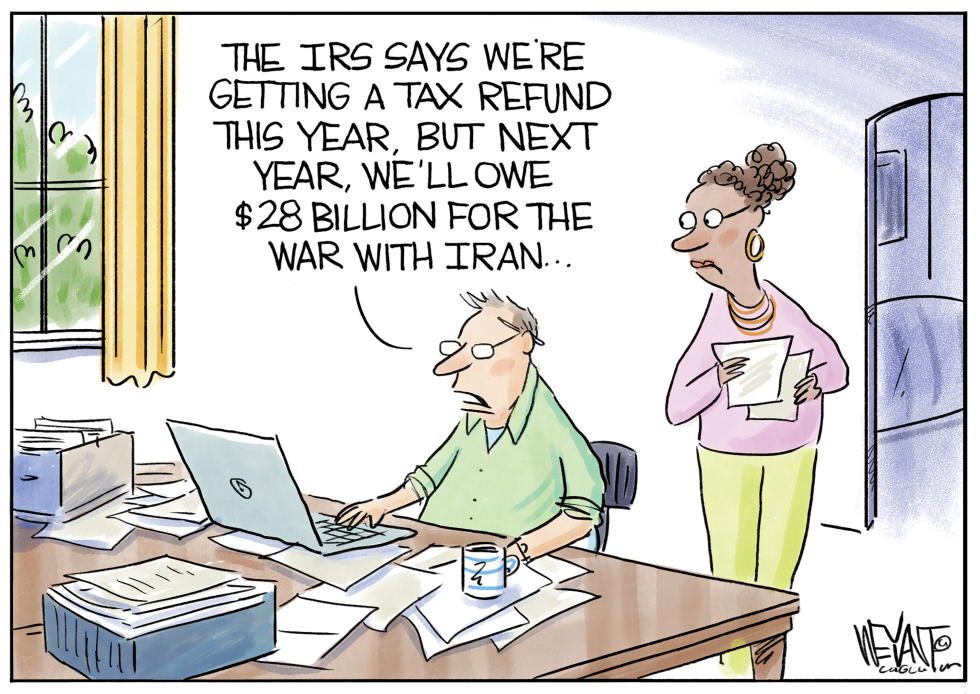
Dive into this biting political cartoon tax refund piece where a woman, holding papers, informs a laptop-working man about their IRS windfall this year, only to drop the bomb of owing $28 billion next for the war with Iran. The satirical cartoon Iran war vibe captures the absurdity of US taxes funding wars, with cluttered desks and exasperated expressions underscoring the humorous take on federal spending. It's a classic taxpayer burden Iran conflict jab, poking fun at government spending satire while illustrating the disconnect between personal finances and massive military expenses. Through cartoon about military expenses, it cleverly critiques fiscal policy in an office setting, making the war with Iran taxpayer joke both relatable and irreverently insightful for viewers pondering editorial cartoon fiscal policy.
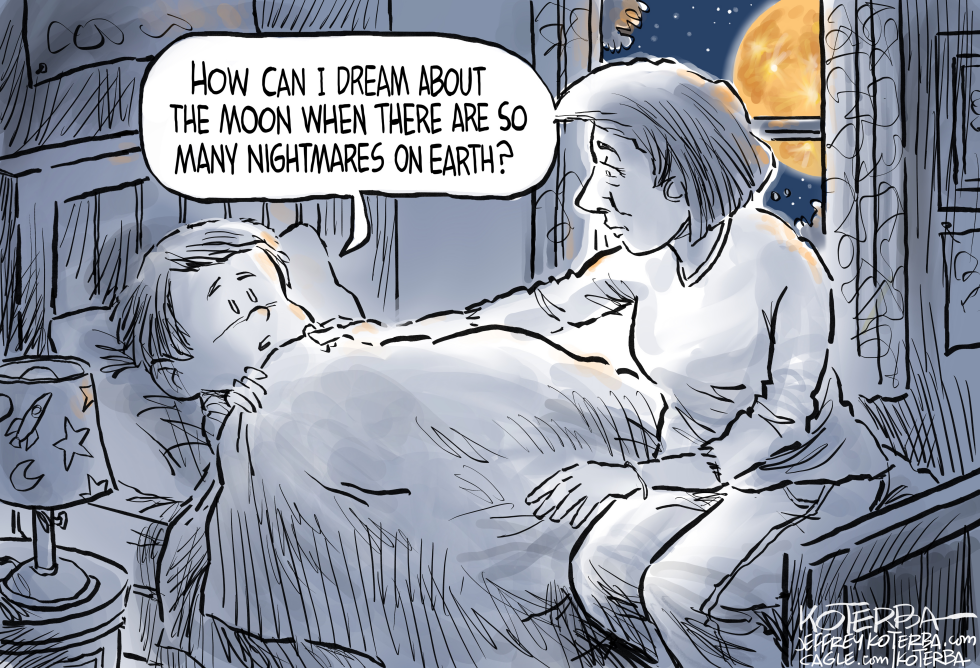
This poignant political cartoon depicts a child in bed, gazing toward a window framing a massive orange moon against a starry night sky, while confiding in a seated adult figure. The child's speech bubble reads: 'How Can I Dream About The Moon When There Are So Many Nightmares On Earth?' A bedside lamp with a star design illuminates the scene. Through this setup, the artwork satirizes how youth anxiety from global issues—like wars, climate woes, and social upheavals—stifles big dreams and aspirations. It's a clever commentary on how earthly nightmares eclipse celestial hopes, blending humor with insight into modern parenthood and childhood innocence lost. Tags: political cartoon, child nightmares, moon dreams, earth troubles, satirical illustration, youth anxiety, global chaos.
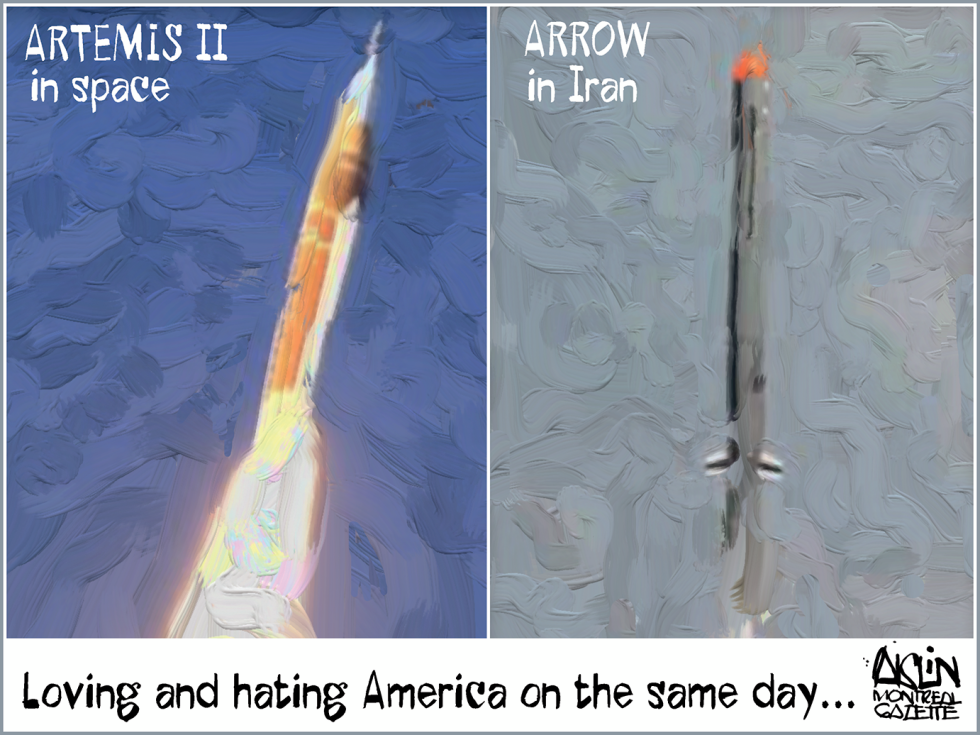
In this irreverent political cartoon, a vibrant Artemis II space launch rockets upward in a blue expanse on the left, symbolizing American innovation and triumph in US space exploration. Contrasting sharply on the right, a stark Arrow in Iran points downward with an orange glow against a gray sky, evoking geopolitical tension and Iranian weaponry. The caption 'Loving and hating America on the same day....' ties it together, offering a humorous take on the bipolar view of America in world news. With its simple yet effective composition, the artwork captures the absurdity of global perceptions, blending satire on international conflict with admiration for NASA's feats. This piece underscores the dichotomy in how the world engages with American power, from awe at space missions to ire over foreign policy frictions.
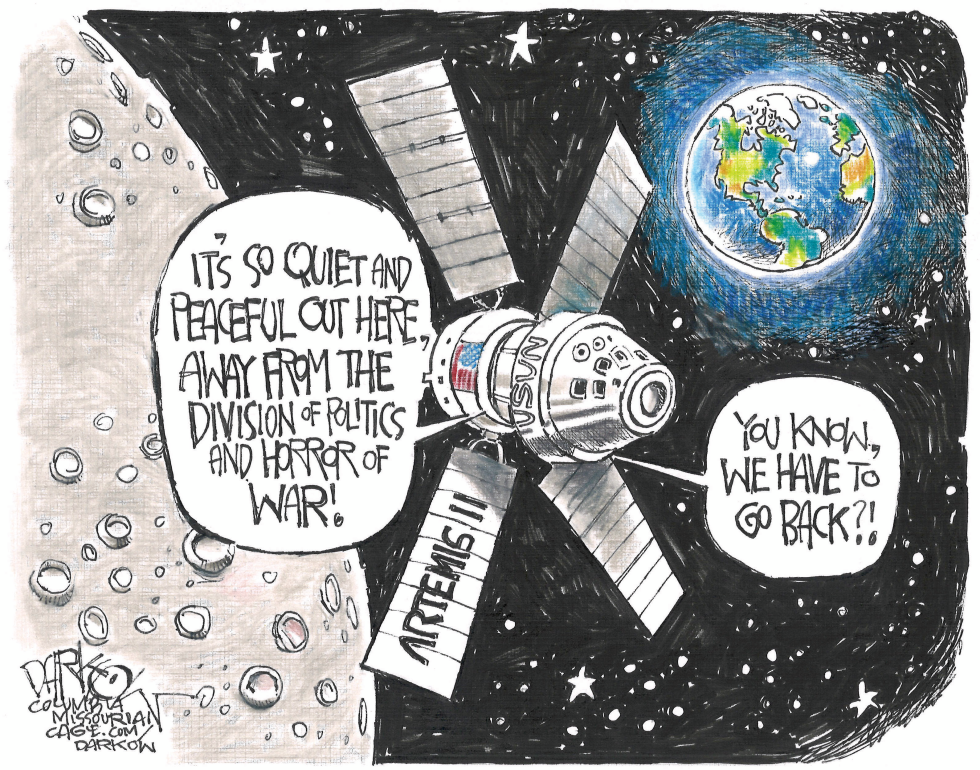
This Daryl Cagle political cartoon analysis features the Artemis II spacecraft floating in serene space, with Earth glowing in the background and the moon nearby. The left speech bubble extols the quiet peace away from division of politics and horror of war, while the right one resignedly notes the need to go back. It's a satirical cartoon on politics and war division, poking fun at how space exploration escaping earthly conflicts offers temporary respite. The NASA Artemis program humor illustration underscores the irony of advanced space missions contrasting with unresolved human divisions on Earth. Through this humorous take on returning to political division, the cartoon cleverly comments on the allure of peaceful space vs chaotic Earth without delving into specifics.
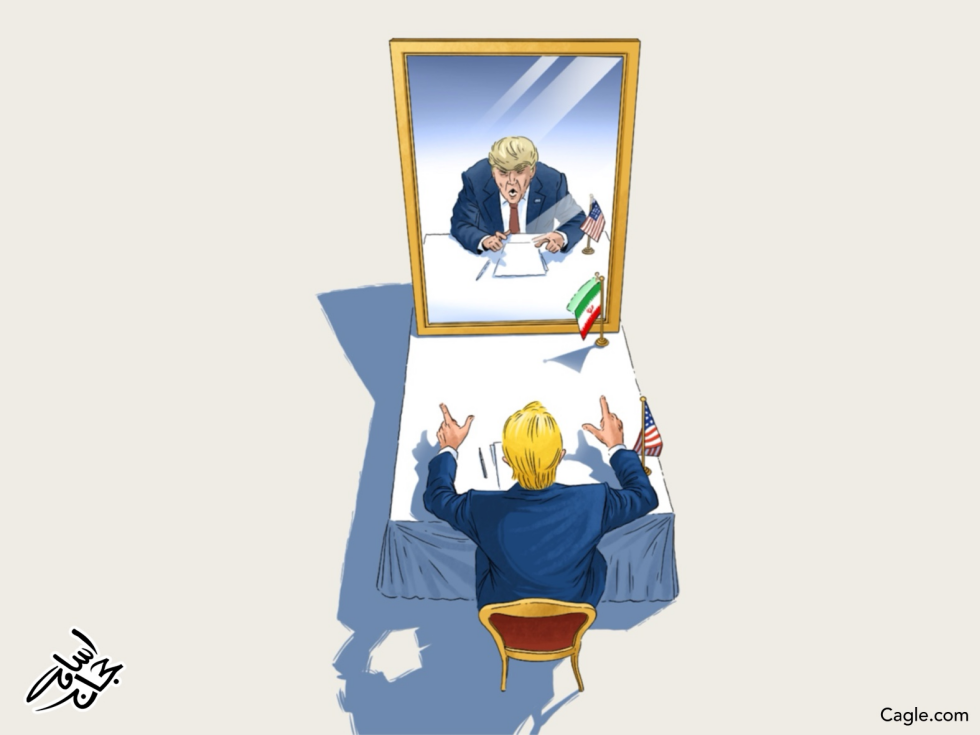
This humorous political cartoon depicts a figure with distinctive yellow hair and a blue suit seated at a table, pointing accusingly at a large mirror. In the reflection, an identical figure points back, but with an Iran flag instead of the US flag beside him. The setup cleverly satirizes self-negotiation or internal conflict in international relations, using mirror imagery for ironic effect. Elements like the pointing fingers, national flags, and desk setup emphasize bilateral tensions. As a satirical piece from Cagle.com, it offers insightful commentary on diplomatic absurdities, blending humor with political critique in a visually striking composition.
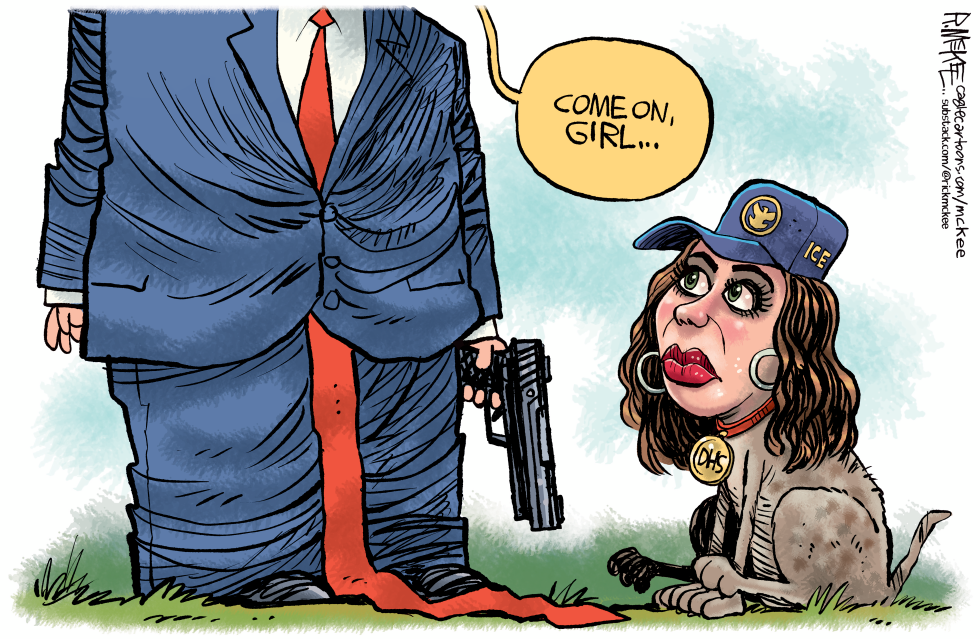
This political cartoon features Donald Trump coaxing a dog-like figure with Alexandria Ocasio-Cortez's face, donned in an ICE cap and DHS tag, gripping a gun on a leash— a sharp satire on immigration enforcement and border control. The image lampoons the Trump administration's hardline stance on deportation and US politics, using caricature to underscore the dehumanizing aspects of border patrol. With elements of political humor, it critiques how figures like AOC are portrayed in opposition, blending viral meme potential with editorial cartoon flair. The scene evokes questions about power dynamics in immigration policy, making it a timely piece for discussions on satire and governance.
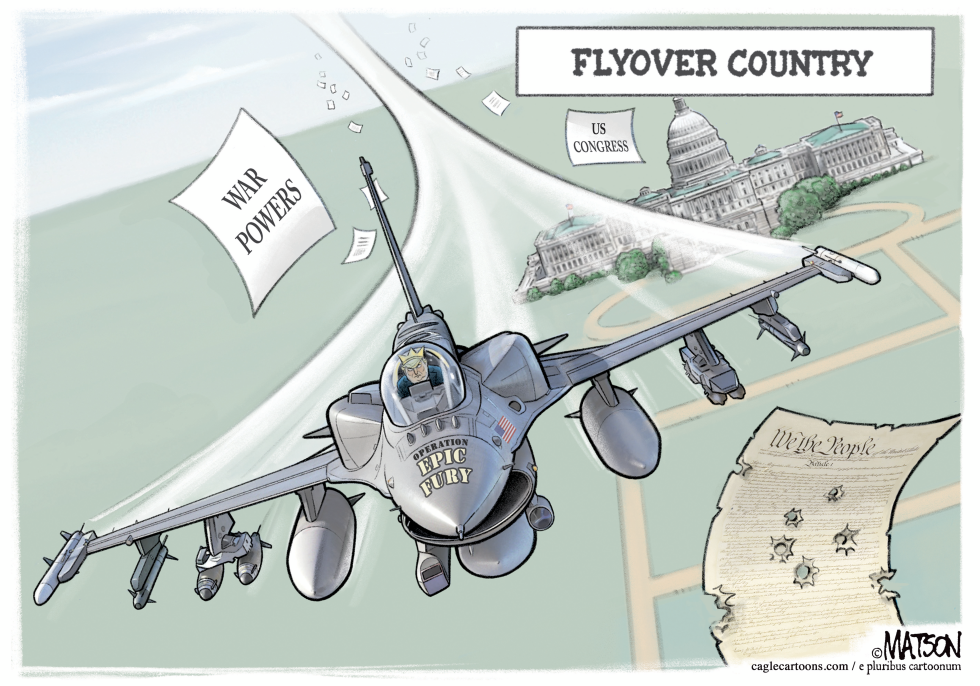
This sharp political cartoon captures the essence of executive overreach, with a fighter jet dubbed 'Epic Fury' zooming past US Congress, discarding war powers documents like confetti over flyover country. The torn US Constitution riddled with bullet holes symbolizes the erosion of constitutional principles amid unchecked military actions. Tags like political cartoon, war powers, US Congress, flyover country, US Constitution, and executive power underscore the satire on how presidents often sidestep legislative approval for wars, leaving the heartland—flyover country—to bear the brunt. It's a humorous yet insightful critique of the power imbalance in Washington, where the Capitol is just a scenic detour on the path to conflict.
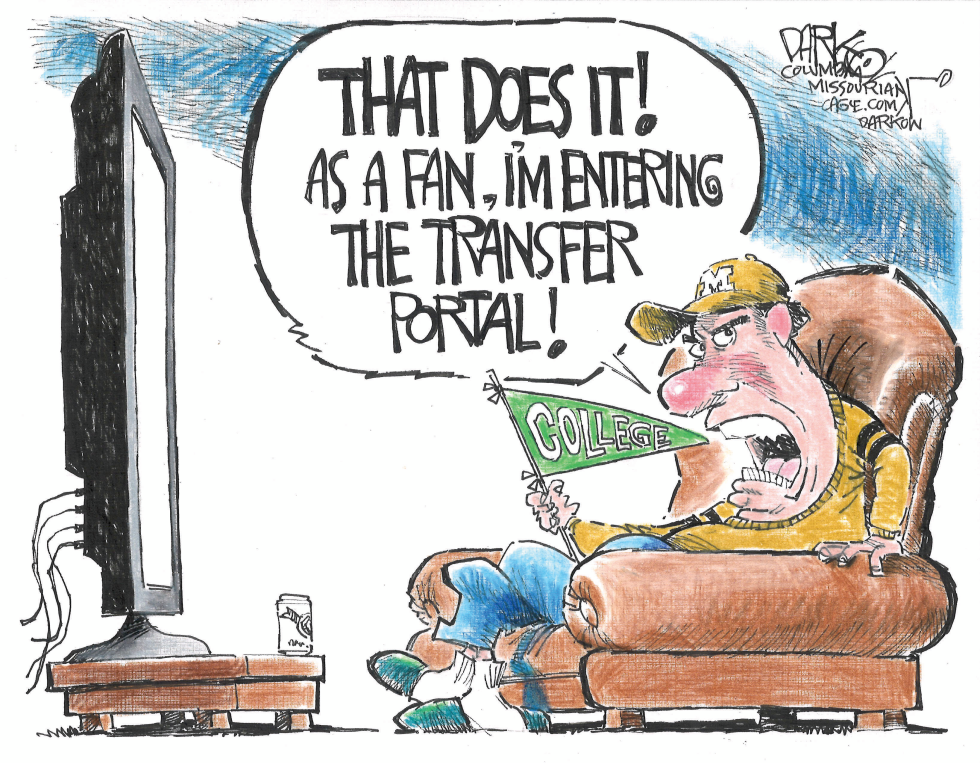
A college sports fan in a recliner erupts in anger at his television and announces he is entering the transfer portal. The scene reflects ongoing frustration with player movement, NIL compensation, and shifting team loyalties in NCAA football and basketball during the 2025 season. The cartoon highlights how these changes affect even dedicated supporters who once valued school allegiance.
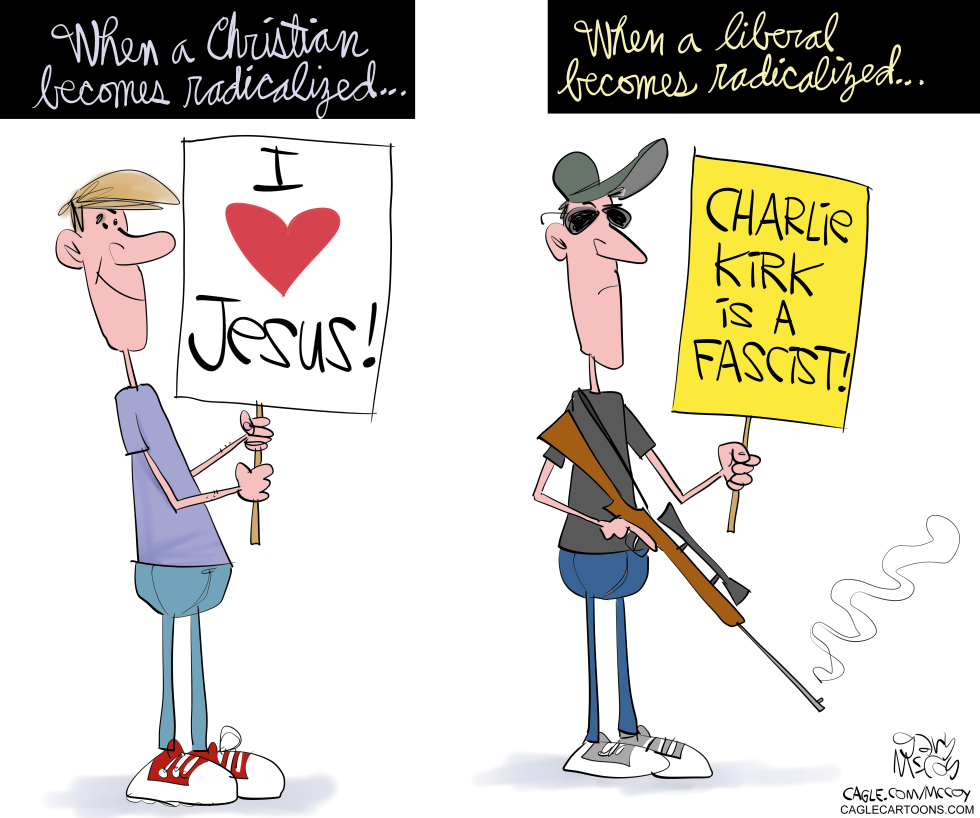
Gary McCoy's cartoon from 2025 divides the frame into two scenarios on radicalization. On the left, a figure in a cap holds a sign declaring 'I ♥ Jesus!' under the label 'When a Christian becomes radicalized...'. The right side shows a sunglasses-wearing man with a rifle emitting smoke, gripping a yellow sign that reads 'CHARLIE KIRK IS A FASCIST!' labeled 'When a liberal becomes radicalized.'. Tags like MAGA, Jesus, radicalized, Christian, liberal, Charlie Kirk, gun control, mental health, religion, Donald Trump, social media, and science frame the visual commentary. The piece highlights perceived disparities in how extremism manifests across ideological lines, with the Christian side shown as affectionate and the liberal as potentially violent.
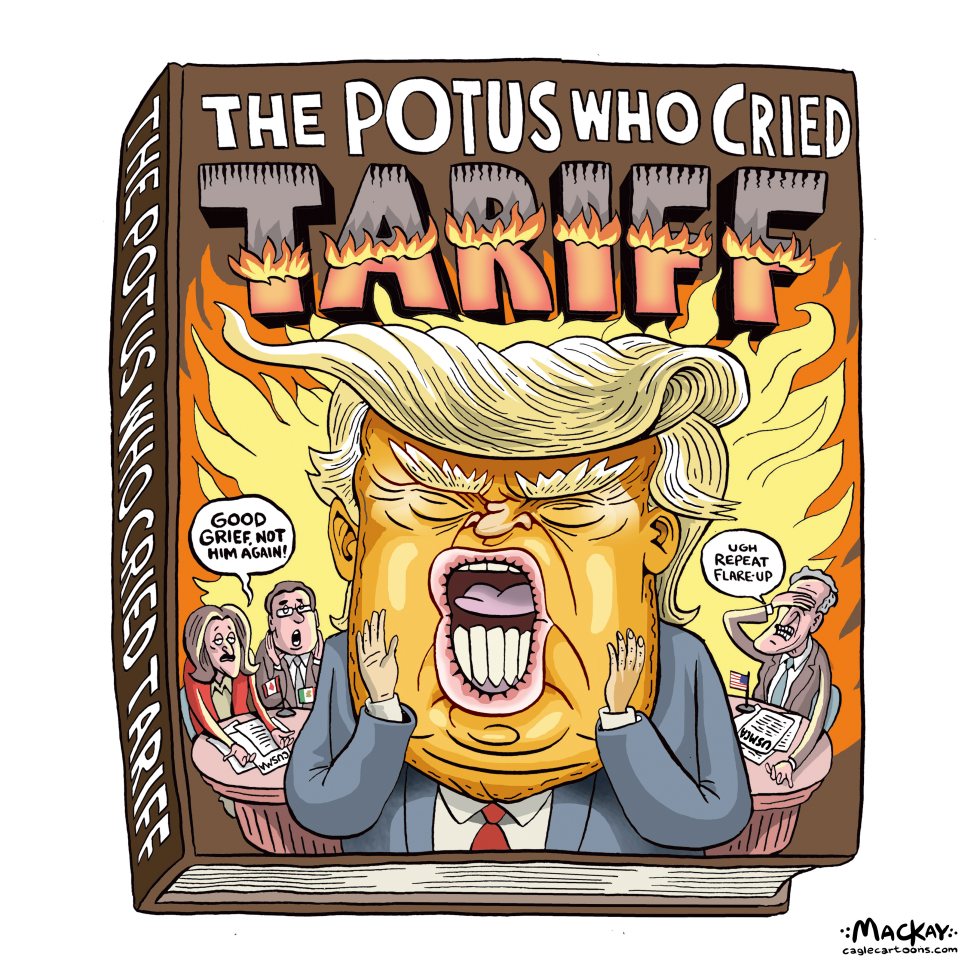
Graeme MacKay's cartoon reimagines Aesop's fable as 'The POTUS Who Cried TARIFF,' with Donald Trump's exaggerated face shouting on a fiery book cover. Representatives from USA, Mexico, and Canada sit at a table, showing exasperation with speech bubbles like 'Good Grief not him again!' and 'Ugh Repeat flare-up?' The tags USA, Mexico, Canada, trade, diplomacy, tariff, Donald Trump, USMCA, NAFTA, The Boy Who Cried Wolf, Aesop, and fable underscore the satire on repeat threats becoming ineffective. This visual pokes at how constant warnings lose impact in international relations.