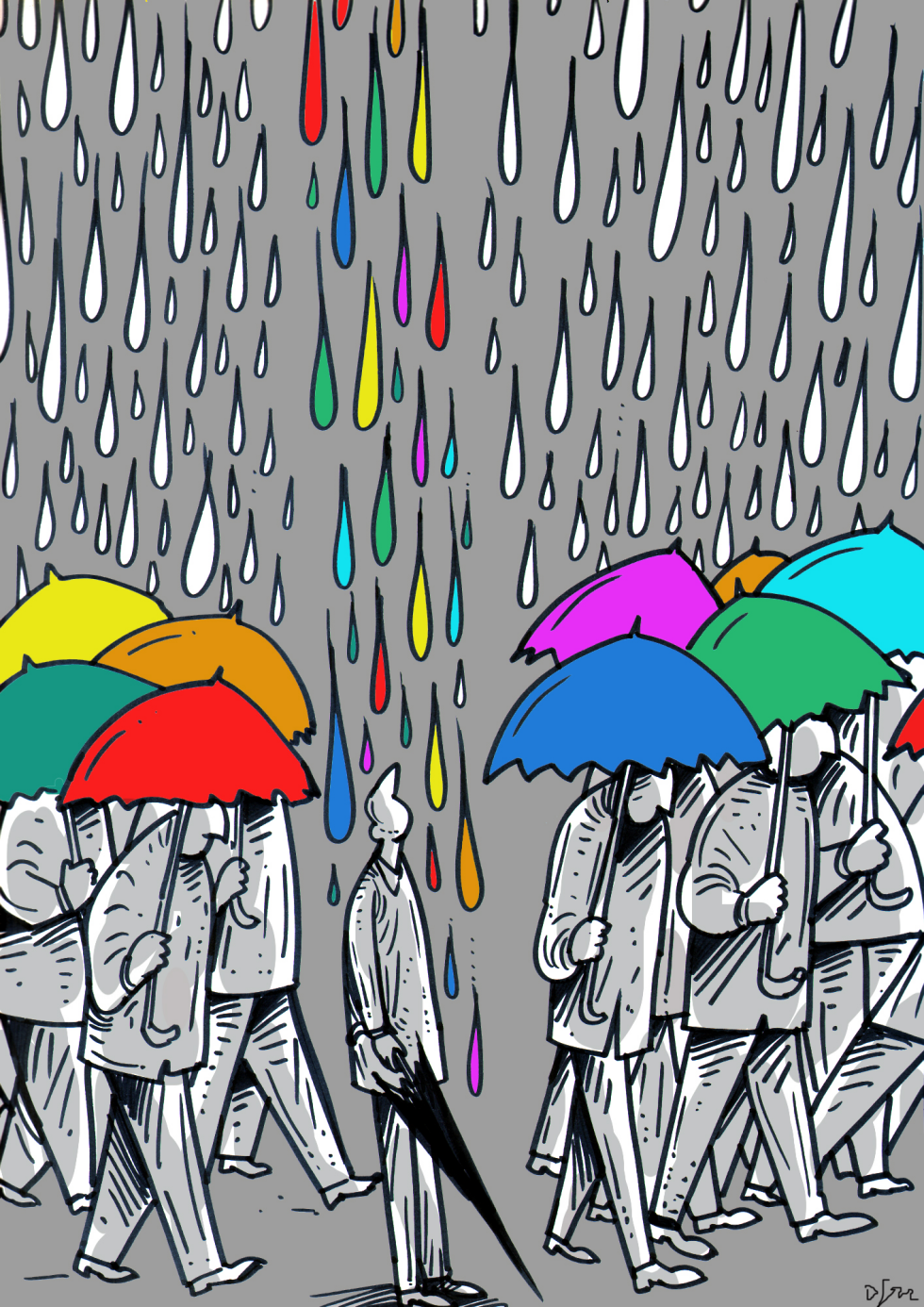
Society often pressures people to conform to norms around them. Maintaining personal identity remains important in such environments. The piece advocates for embracing one's distinct qualities.
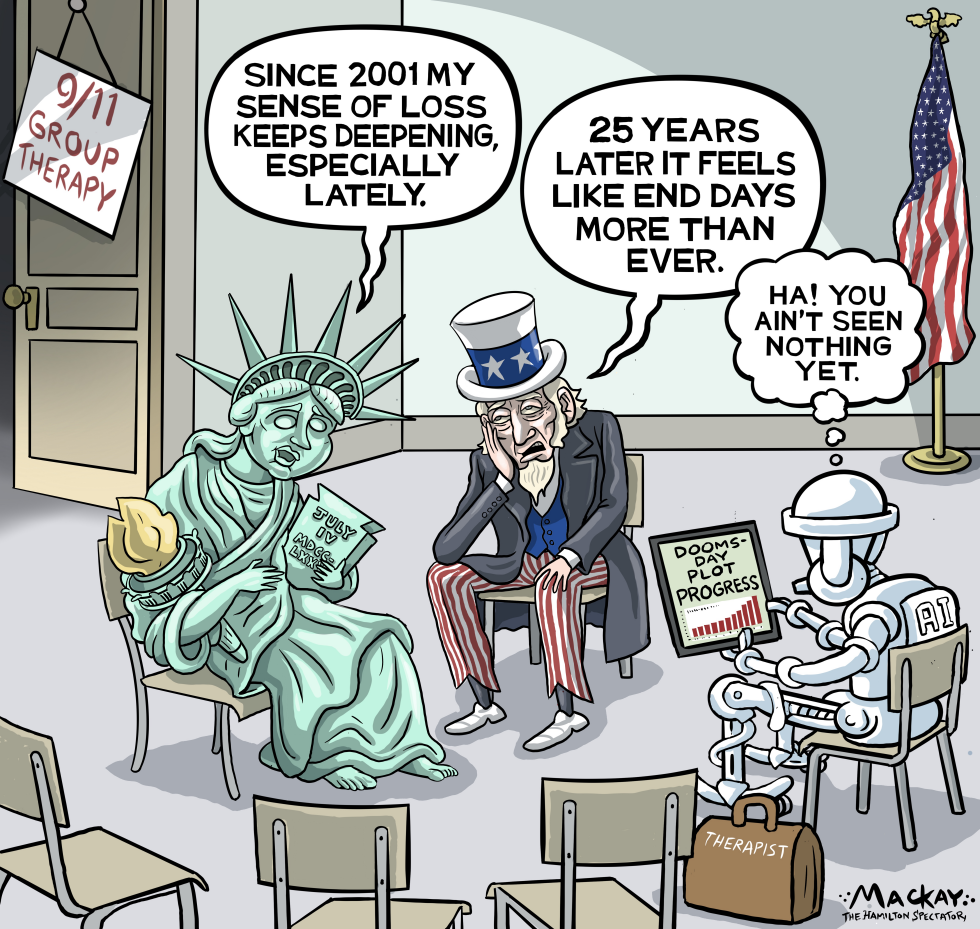
The cartoon depicts the Statue of Liberty, Uncle Sam and an AI robot seated in a 9/11 group therapy session on the 25th anniversary of the attacks. The Statue of Liberty holds a book marked July IV MDCCLXXVI and speaks of deepening loss since 2001. Uncle Sam echoes the sentiment of end days. The AI figure, labeled with a rising doomsday plot progress chart, retorts that the others have seen nothing yet. The scene uses national symbols to reflect persistent national trauma and emerging technological threats two and a half decades after the September 11 attacks.
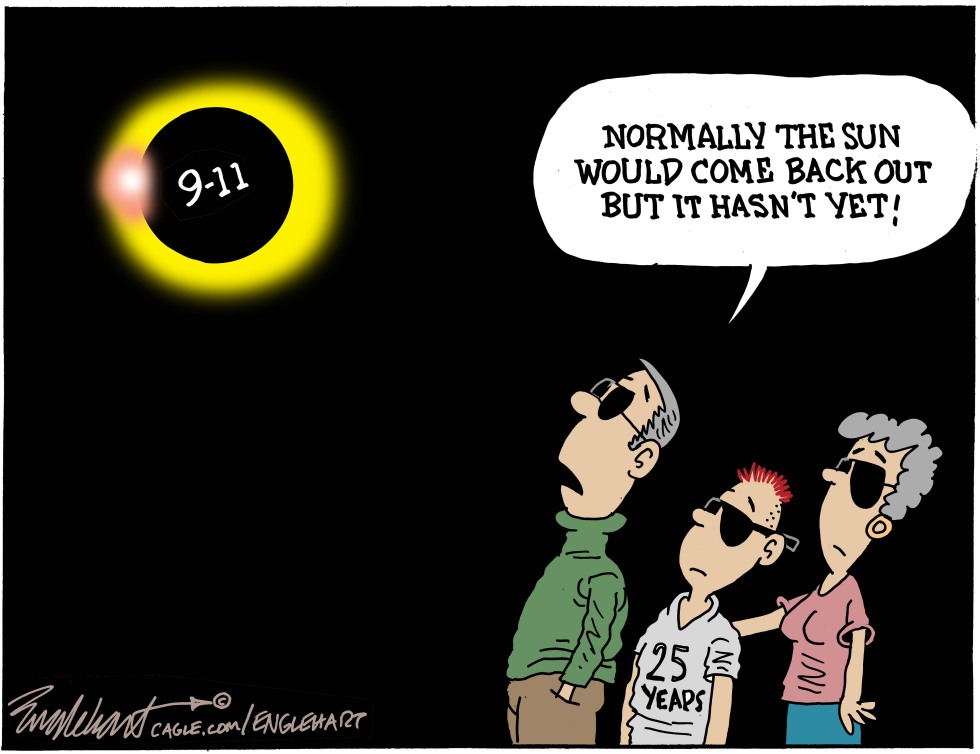
The 25th anniversary of the September 11 attacks arrives with the nation still reflecting on the event's profound and lasting effects. The cartoon uses an eclipse to represent how the attacks' shadow has not lifted. It takes the position that the trauma and changes from that day continue to define the era.
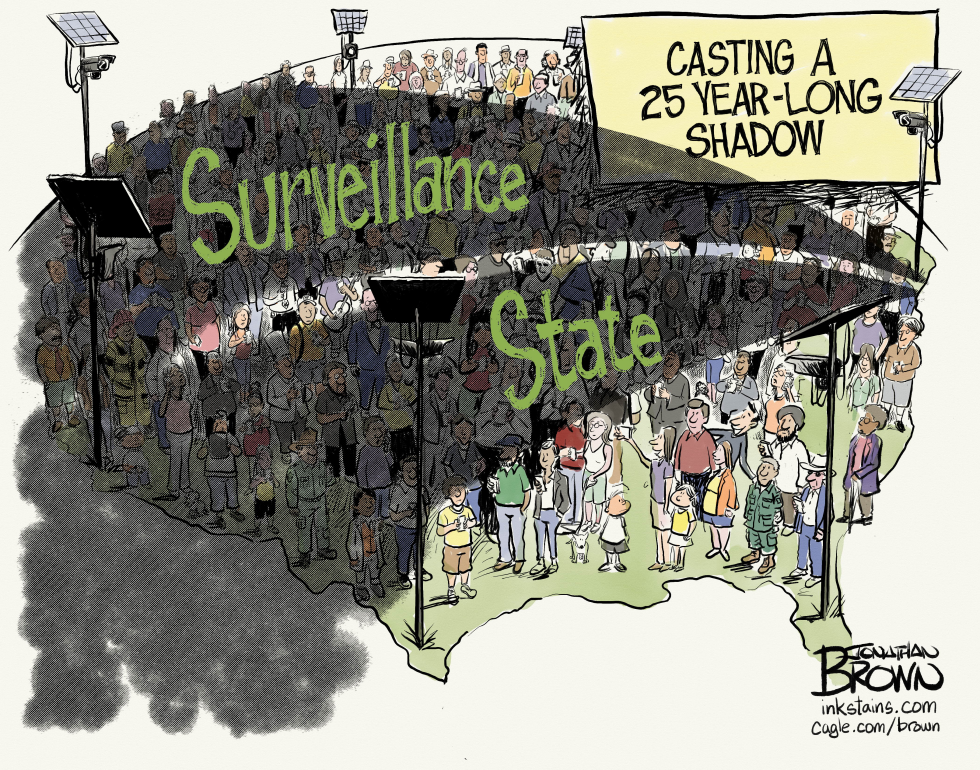
The cartoon depicts a dense crowd of Americans standing on a map of the United States, partially obscured by a large dark shadow cast by surveillance cameras mounted on poles. The words 'Surveillance State' appear prominently in green lettering across the scene, while a sign in the upper right reads 'CASTING A 25 YEAR-LONG SHADOW.' The image comments on the lasting effects of expanded government surveillance programs that began after the September 11 attacks, now spanning a quarter century. It illustrates how these measures continue to influence daily life and public spaces in 2026.
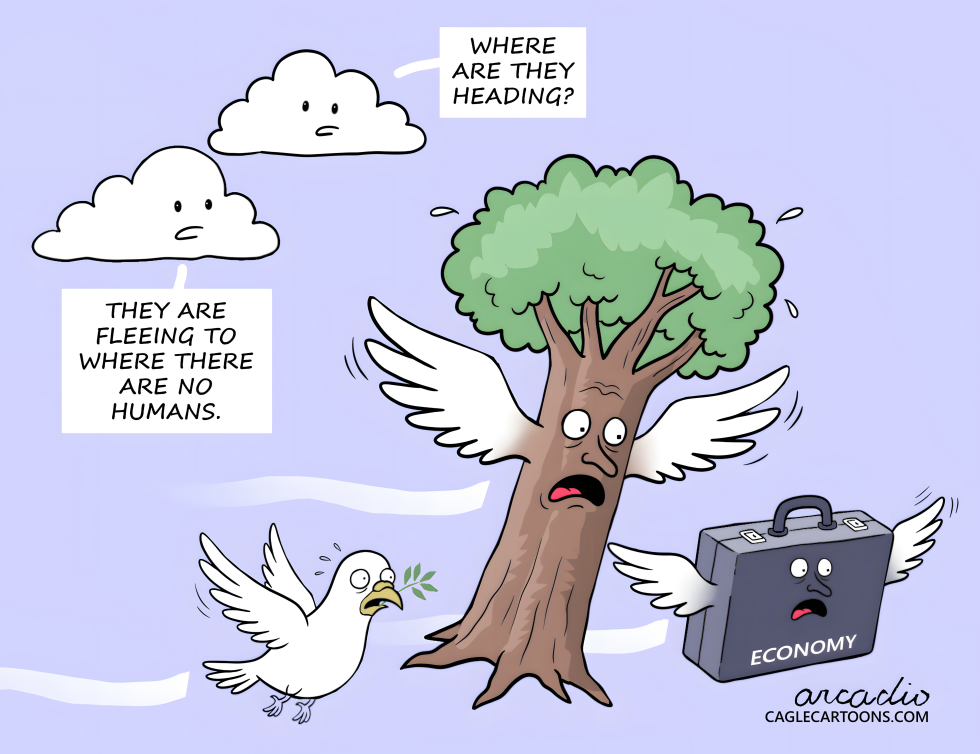
No single dated event anchors this cartoon, which addresses the ongoing dynamic of economic activity retreating from areas of heavy human environmental impact. The piece uses the visual of a winged briefcase labeled Economy fleeing alongside a concerned tree to highlight how unchecked human presence disrupts both natural systems and economic stability. It argues that reducing human interference allows nature to stabilize, indirectly benefiting long-term economic health by creating conditions where resources and peace can return.
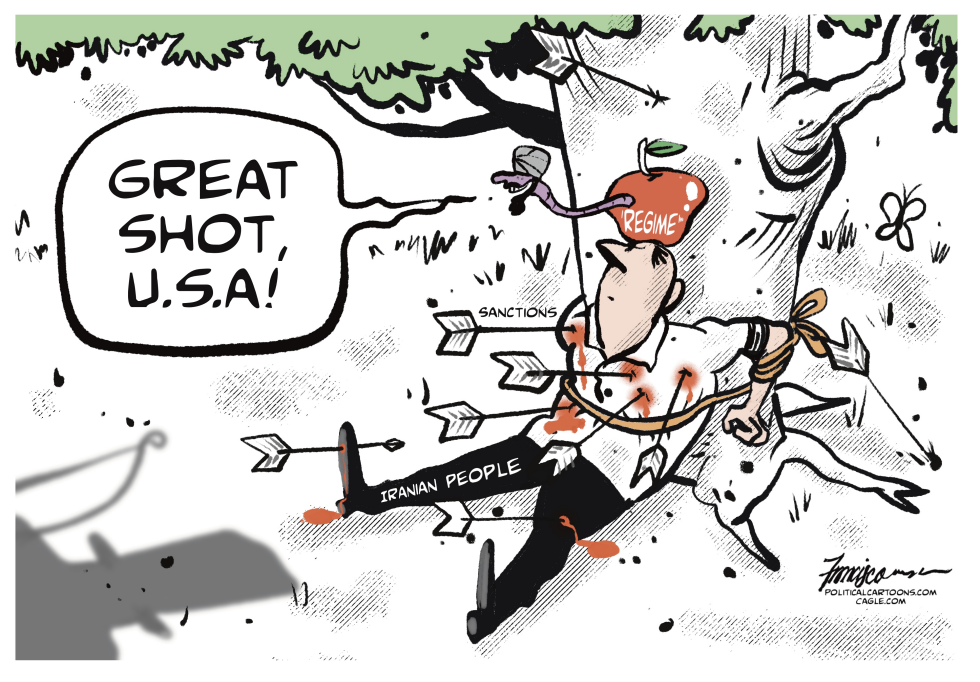
A political cartoon published August 30, 2026, illustrates US sanctions on Iran striking the Iranian people rather than the regime. The image shows a prone figure with an apple marked regime on its head and arrows labeled sanctions embedded in the body marked Iranian people. A speech bubble from the figure praises the shot by the USA. The work comments on the collateral effects of sanctions policy amid ongoing tensions between Washington and Tehran.
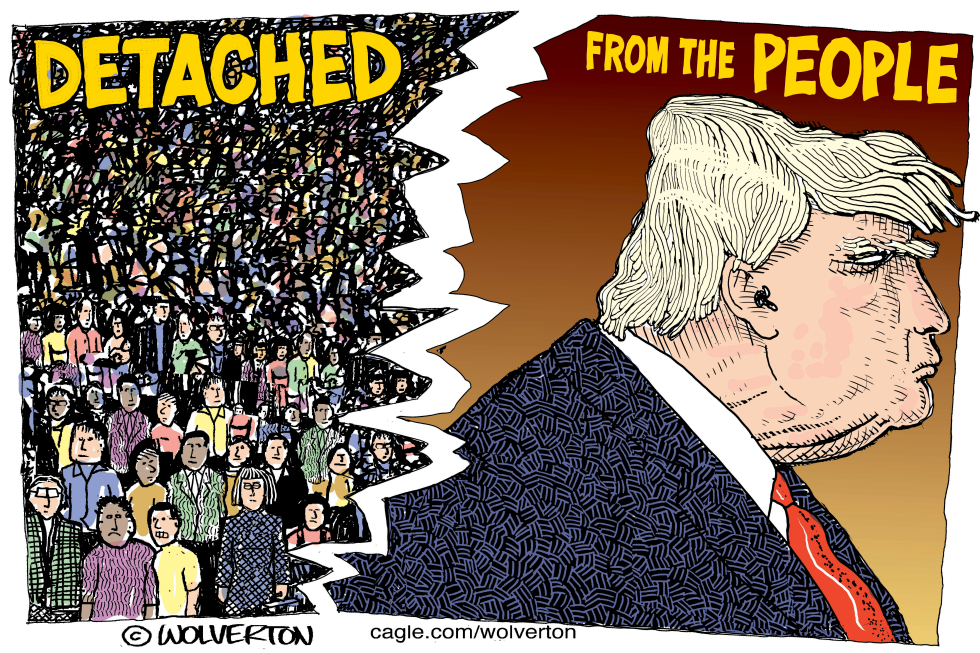
The illustration presents Donald Trump in right profile wearing a dark suit and red tie with an earpiece visible. A jagged white line divides the frame. On the left a dense multicolored crowd fills the space beneath the word DETACHED. On the right the phrase FROM THE PEOPLE appears above the figure. The work responds to ongoing discussions about political figures and public connection during the 2026 period.
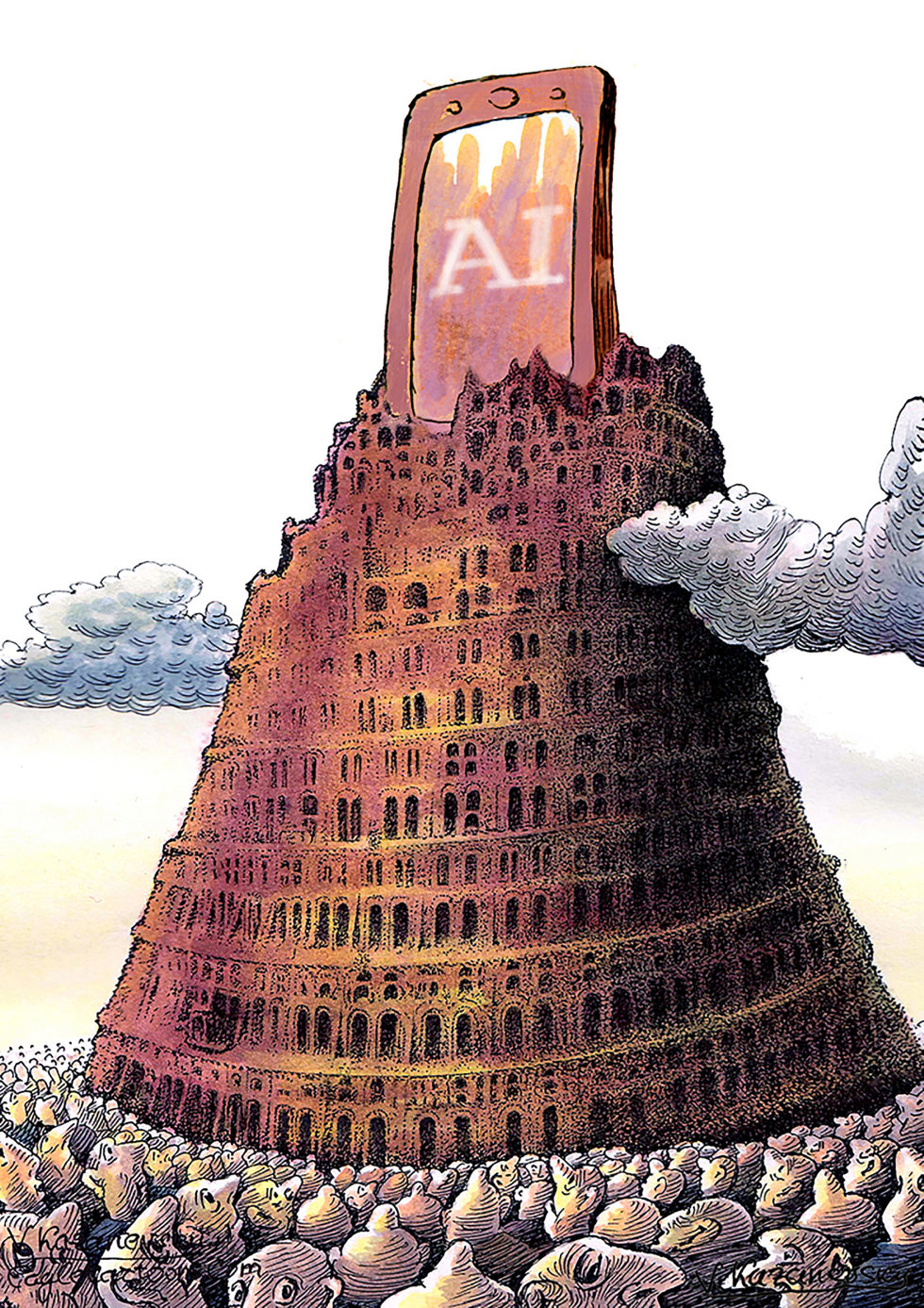
Developers and companies continue rapid advances in artificial intelligence systems that promise to reshape communication, work and daily life. The pace raises questions about whether such tools will unify or divide societies. The piece suggests the pursuit risks repeating the overreach seen in the Tower of Babel story.
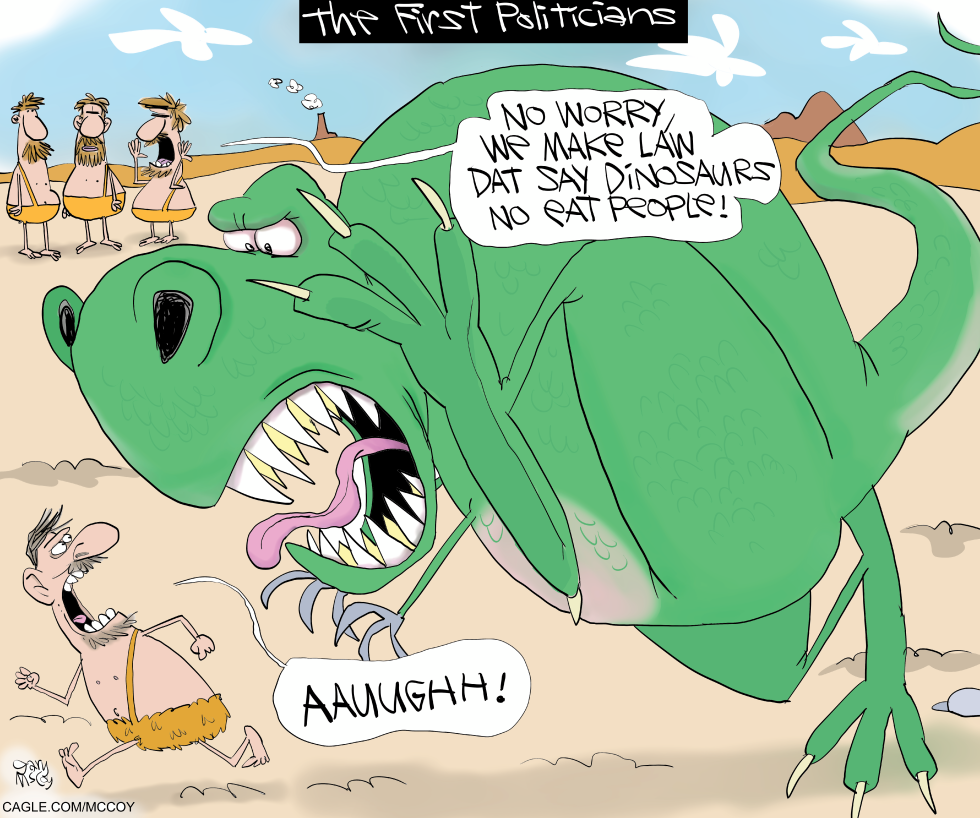
Politicians in prehistoric times promise a law banning dinosaurs from eating people. The pledge comes as a T-Rex looms over a fleeing caveman. The move highlights how leaders often make rules they have no intention of following. The piece takes the position that such assurances are empty and self-serving.
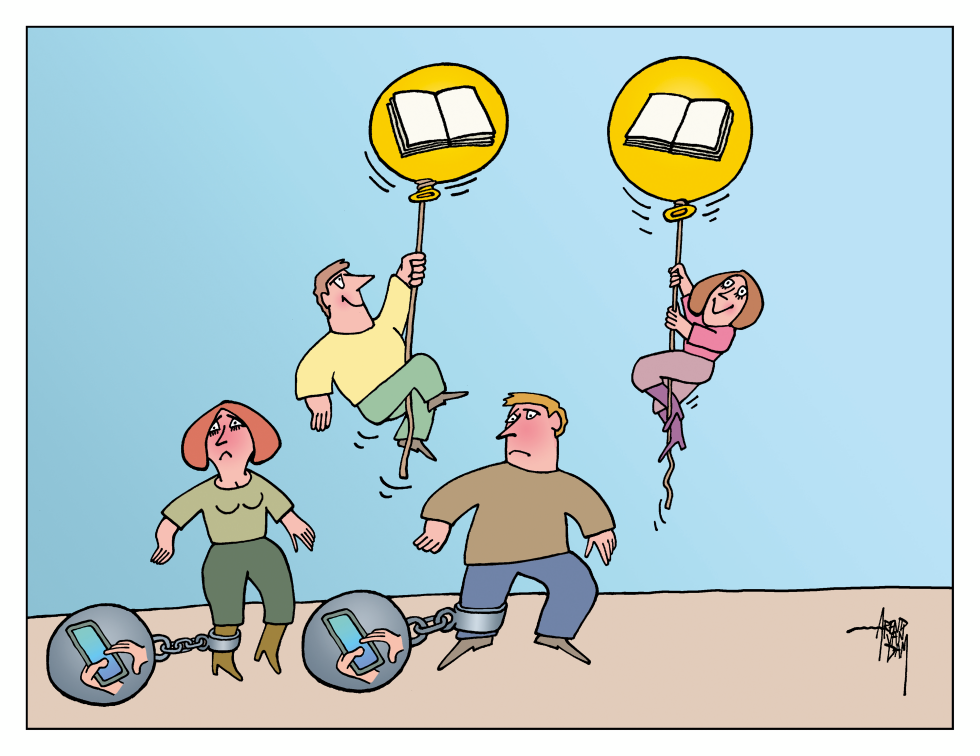
The ongoing debate over digital devices versus traditional reading materials continues to highlight how constant smartphone use can limit personal growth and mobility. Books, by contrast, offer pathways to broader perspectives and advancement. The editorial position favors reading as a superior force for individual upliftment over reliance on handheld technology.
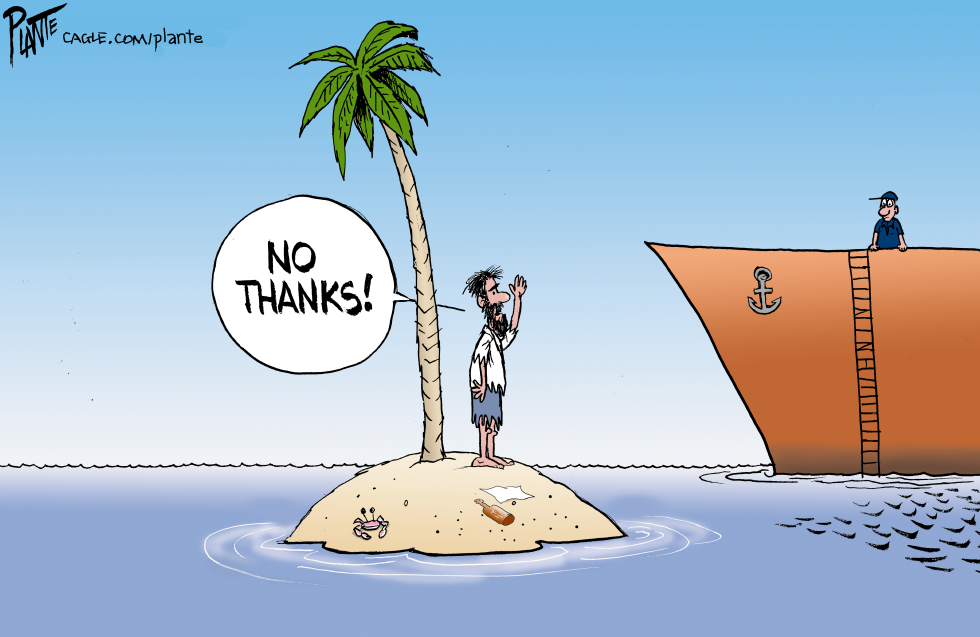
A castaway on a remote island faces an unexpected chance at rescue from a passing vessel. The situation highlights ongoing human tensions between solitude and reintegration into society. The piece takes the position that some individuals genuinely prefer isolation over returning to the outside world.
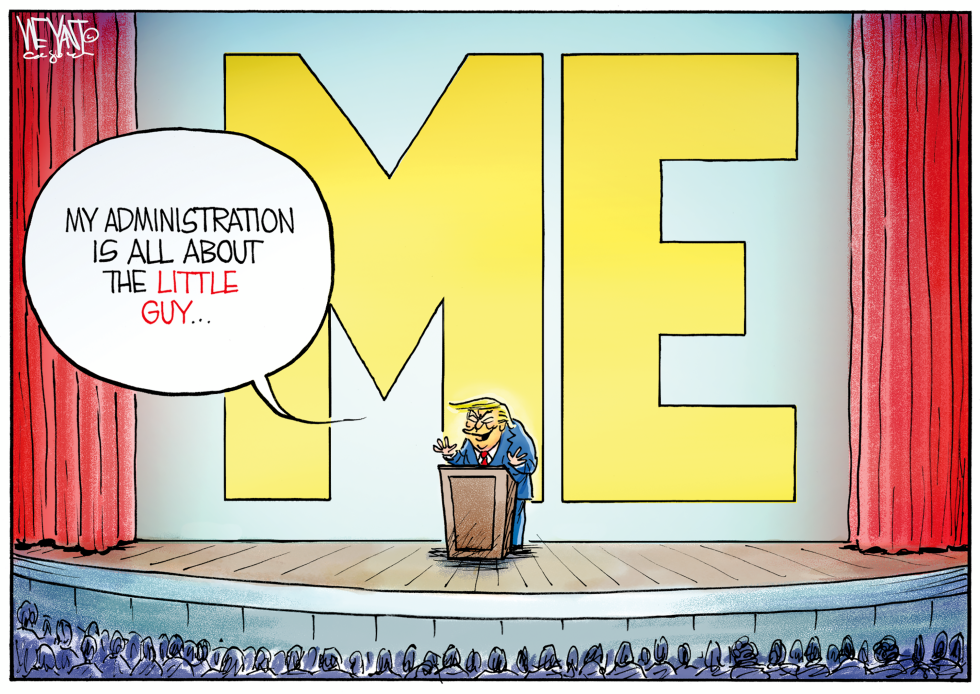
Donald Trump has repeatedly positioned his administration as champion of ordinary Americans during public addresses. The claim comes amid ongoing debates over policy priorities and personal branding in the White House. The piece portrays the rhetoric as centered on the speaker rather than the public.
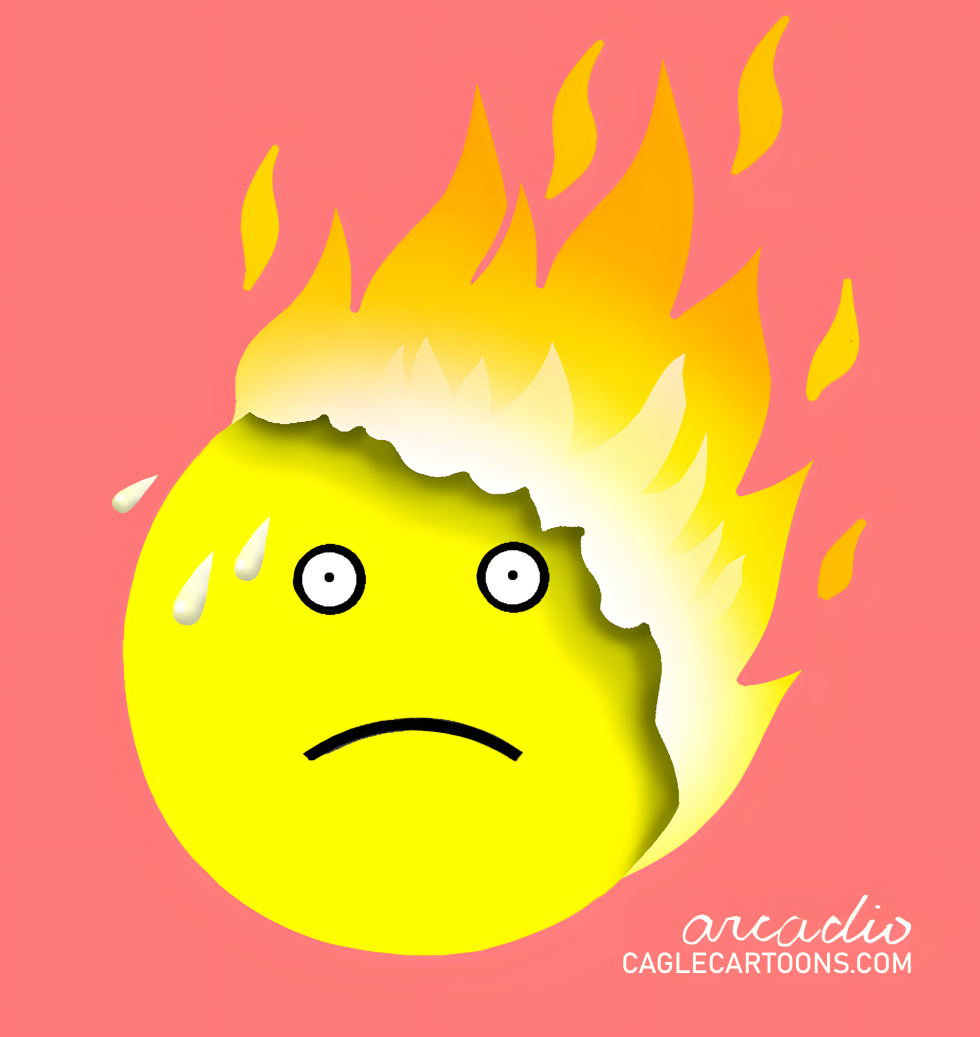
Ongoing wildfire seasons and fire-related disasters continue to disrupt communities and personal well-being across affected regions. The piece frames these events as forces that directly eliminate everyday happiness and security for those impacted. It presents fire as an eraser of positive emotion rather than a manageable natural occurrence.