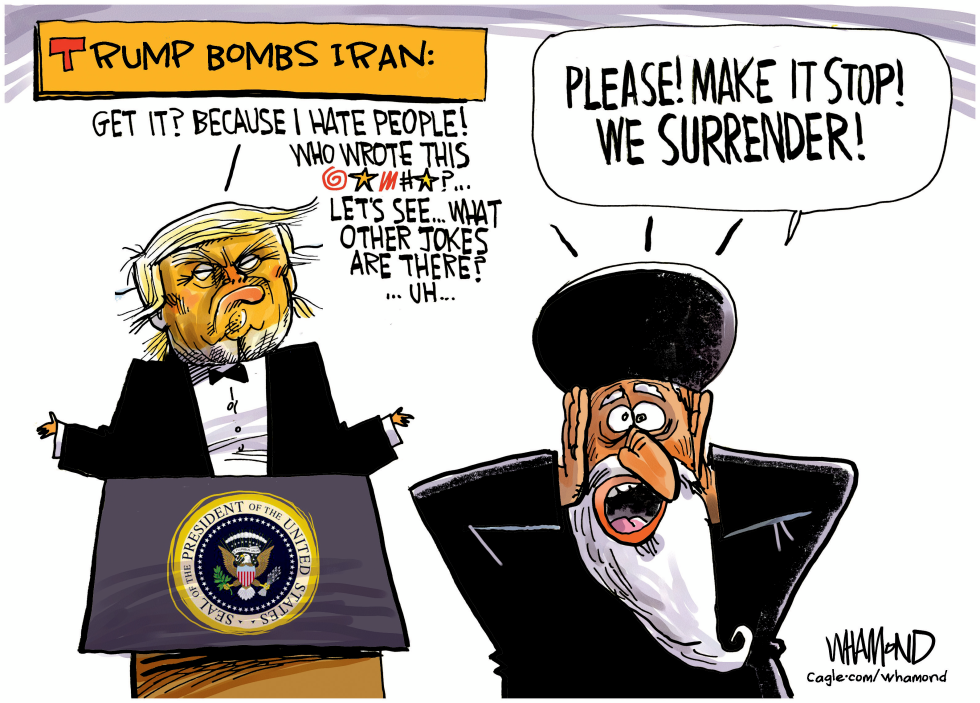
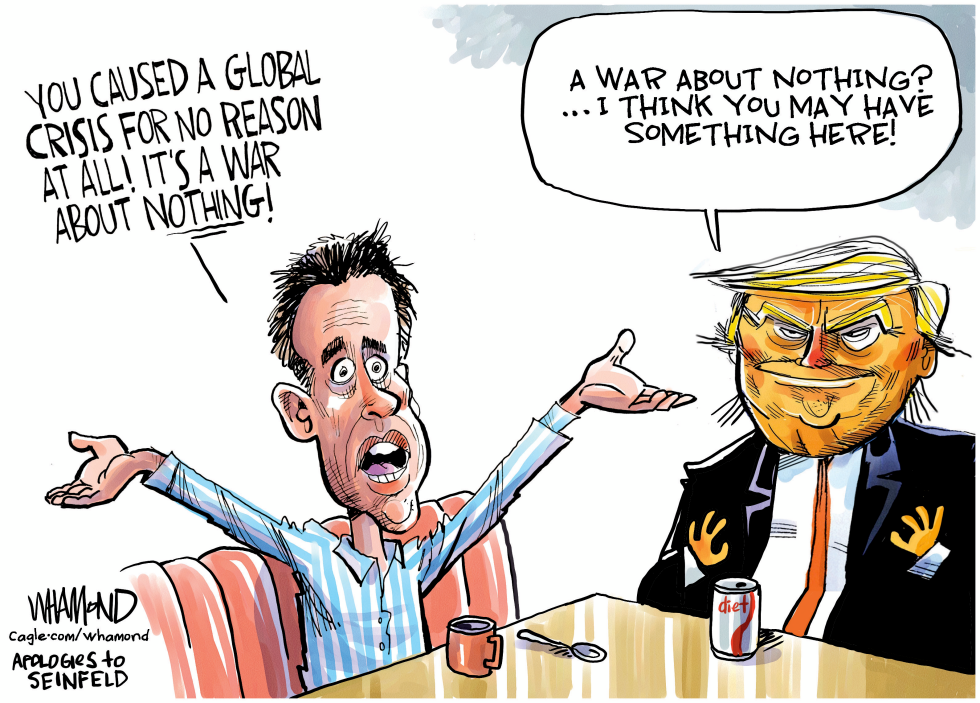
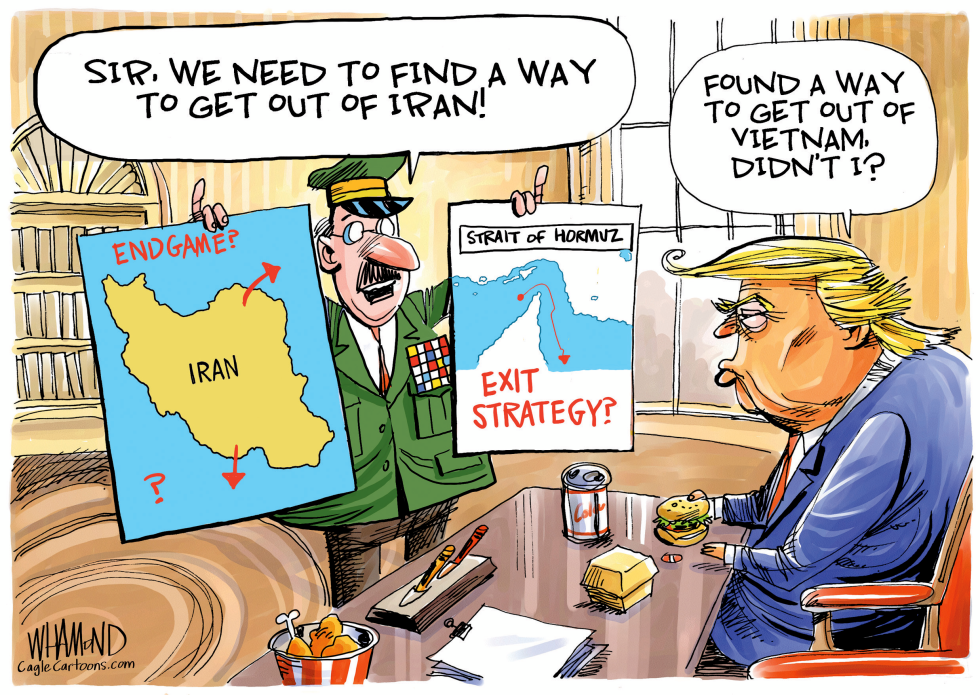
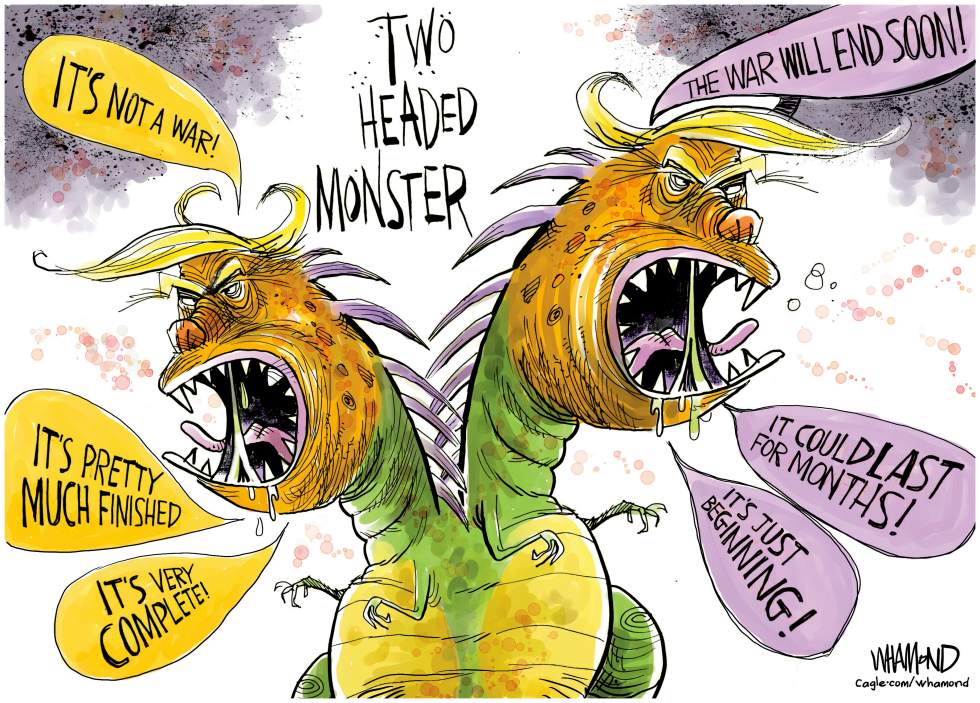
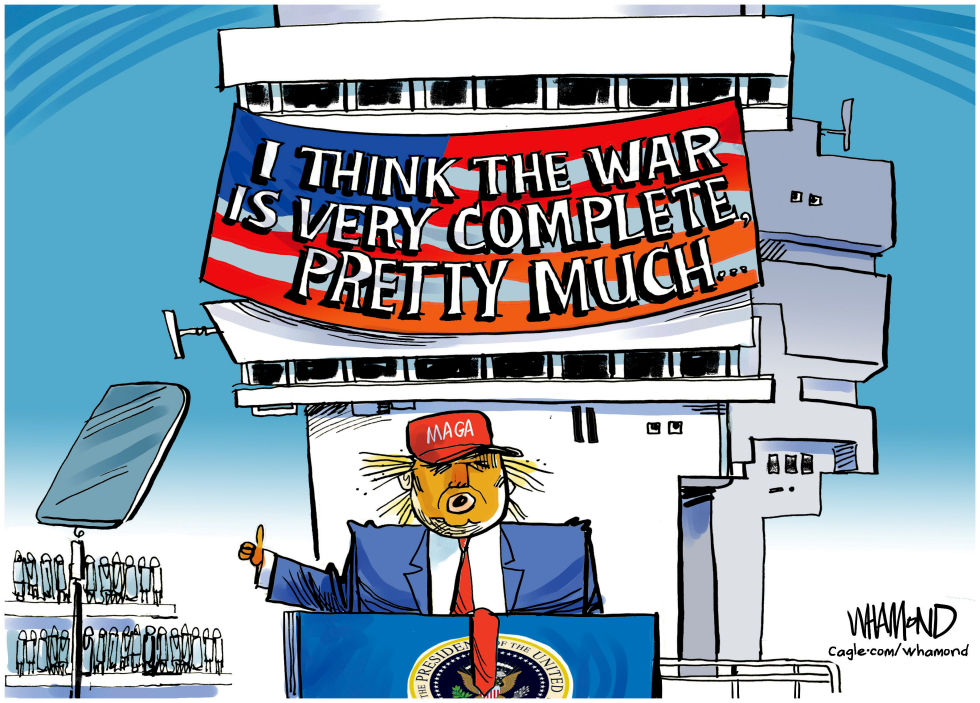
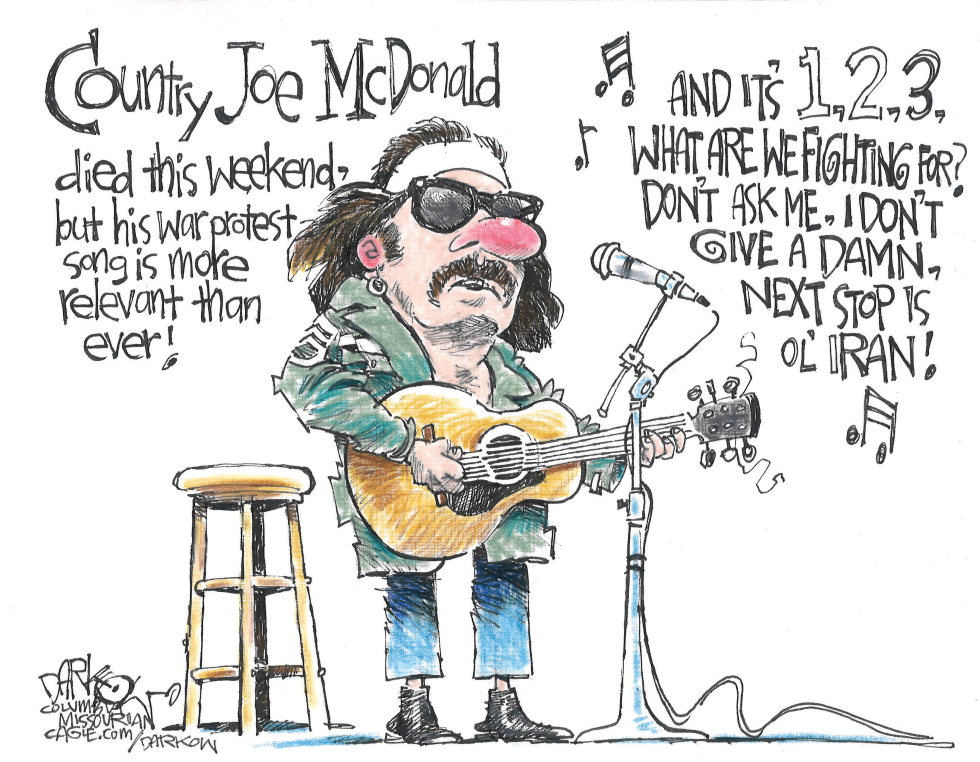
President Trump ordered strikes on Iran in late July 2026, prompting an immediate public plea for surrender from Iranian leadership. The action escalates tensions in the Middle East and raises questions about U.S. military objectives. The editorial takes the position that the strikes reflect personal animus rather than strategic necessity and mocks the president's framing of the operation.
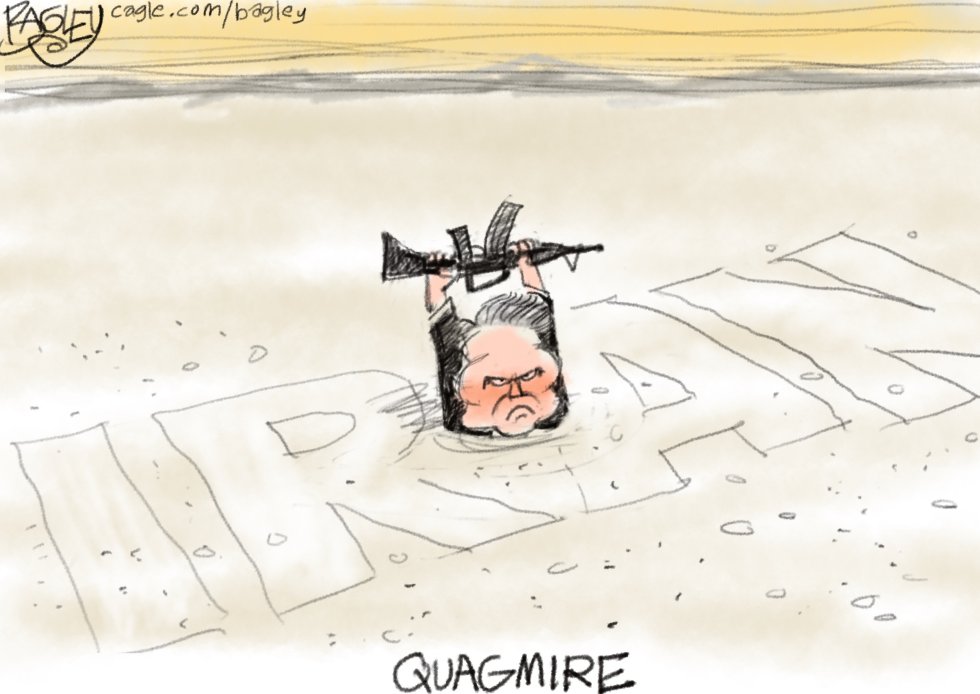
Donald Trump faces mounting difficulties tied to military engagements as of late July 2026. The situation underscores risks of prolonged involvement abroad. The piece portrays these events as a self-inflicted trap that threatens broader stability.
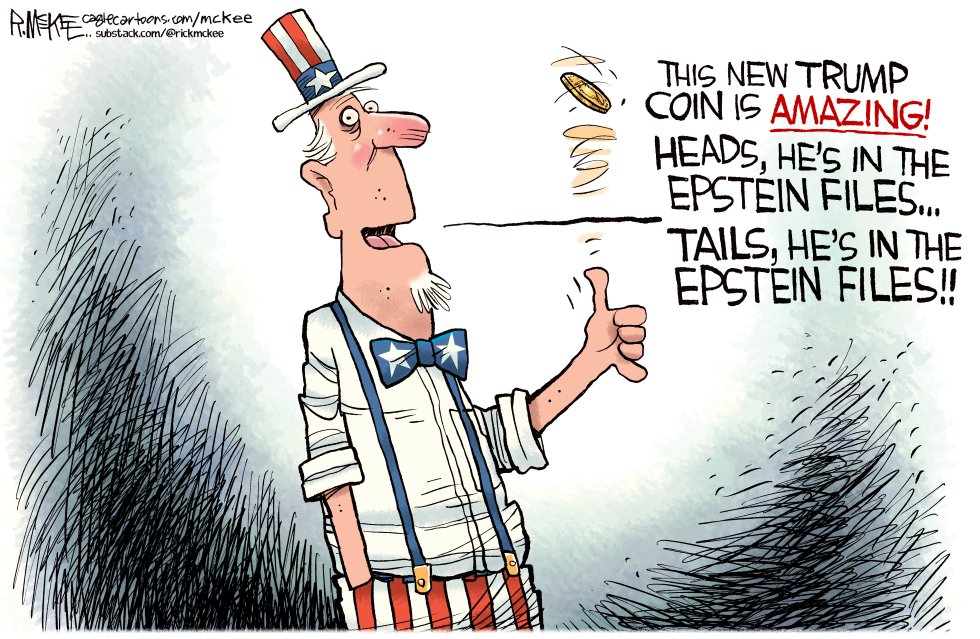
References to Donald Trump appearing in Jeffrey Epstein files have resurfaced in political discourse. The cartoon uses a coin flip to illustrate that scrutiny persists regardless of the outcome. It critiques the notion that any new development clears the former president.
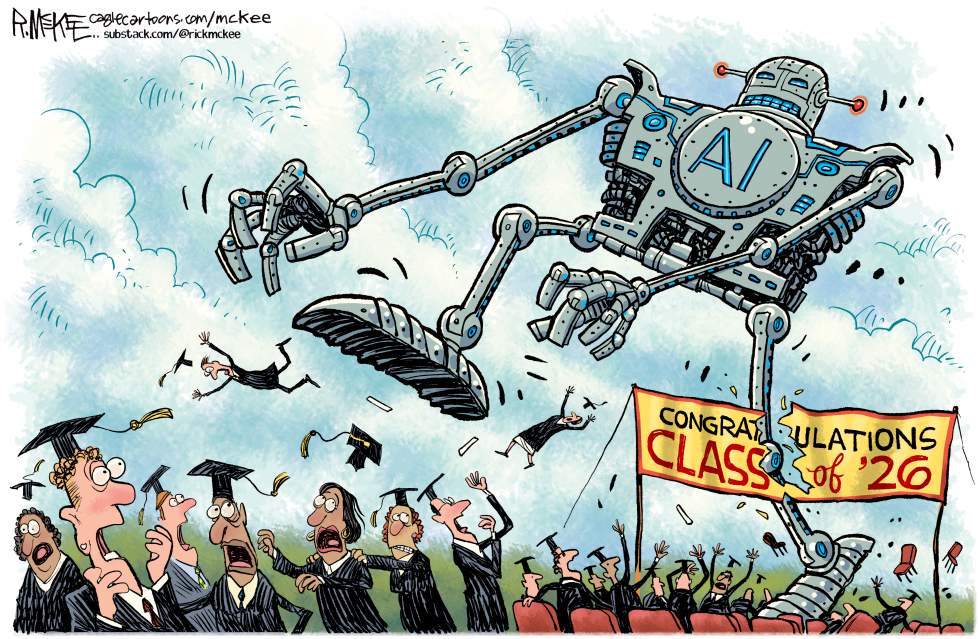
A massive robot marked AI looms over a 2026 graduation ceremony, swatting at fleeing graduates and tearing their congratulations banner. The scene captures growing public anxiety about artificial intelligence displacing human roles in education and the workforce. Graduates in caps and gowns look up in alarm as the mechanical figure dominates the sky above them.
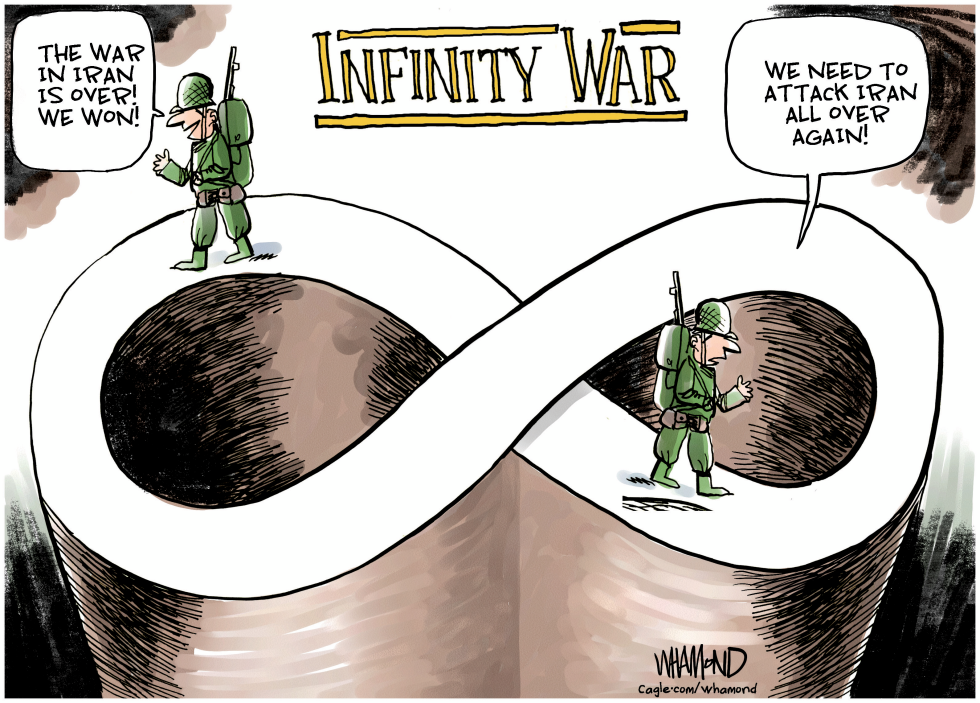
Dave Whamond's cartoon features two soldiers positioned on a large infinity symbol, one announcing victory in the Iran war while the other insists on attacking again, highlighting the perpetual nature of conflict. The title 'Infinity War' parodies endless warfare, with the loop representing cycles of victory and renewed aggression. Tags like iran war cartoon, infinity symbol war, endless conflict satire, military parody, perpetual war illustration, and satirical soldiers emphasize the dry humor in depicting how wars in regions like Iran seem to restart indefinitely, a common theme in political cartoons that resonates with ongoing global tensions.