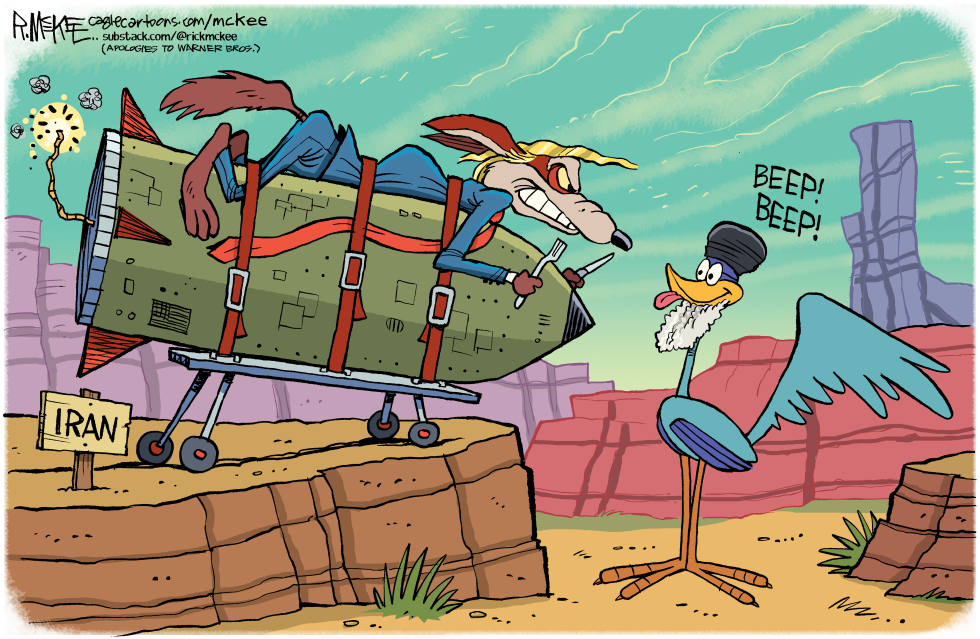
Donald Trump has renewed pressure on Iran through statements and policy signals in recent weeks. The moves come amid ongoing nuclear concerns and regional instability. The piece argues that such aggressive posturing risks backfiring in ways similar to past miscalculations.
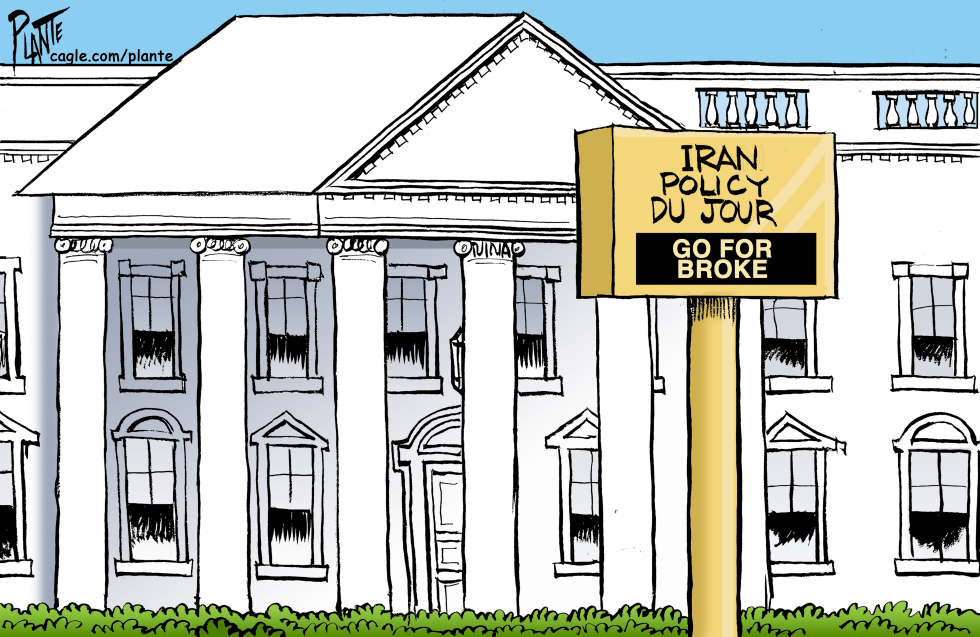
The White House has signaled a more aggressive posture toward Iran through public messaging that emphasizes risk-taking. The move comes amid persistent tensions over nuclear issues and regional influence. The editorial takes the position that such an approach lacks consistency and invites unnecessary escalation.
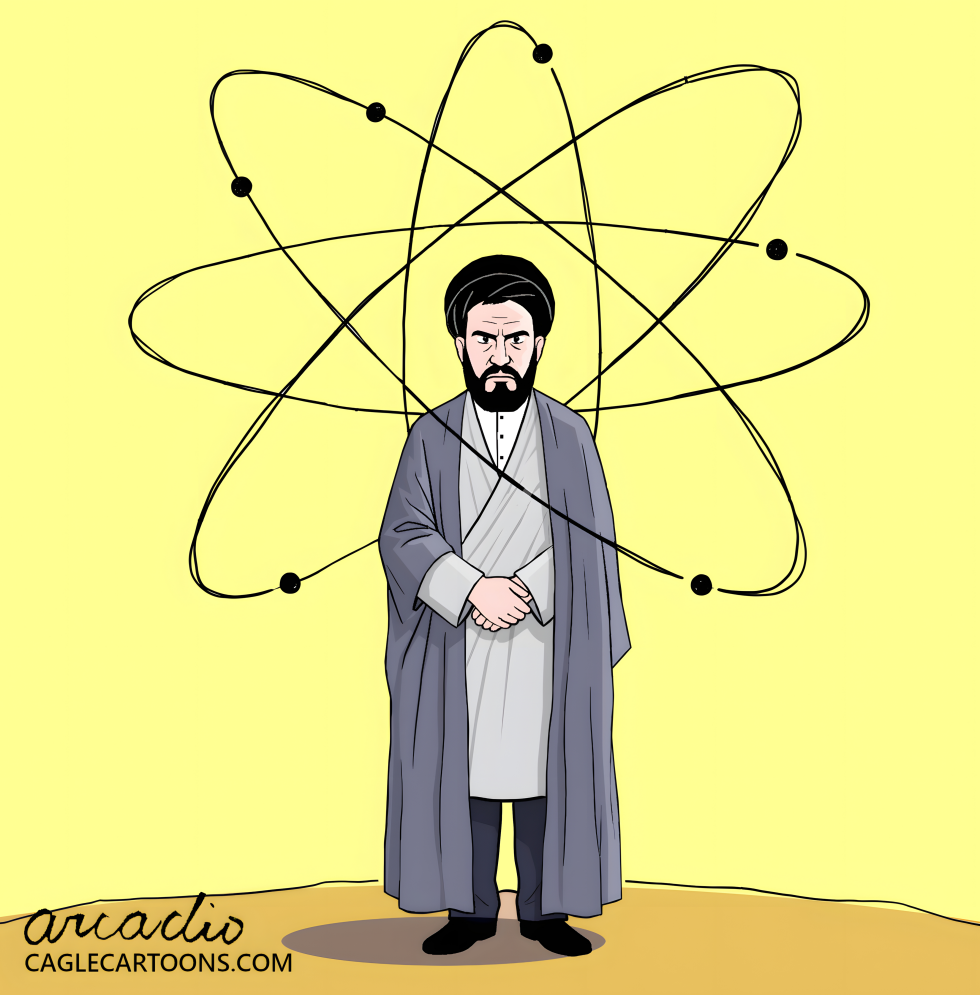
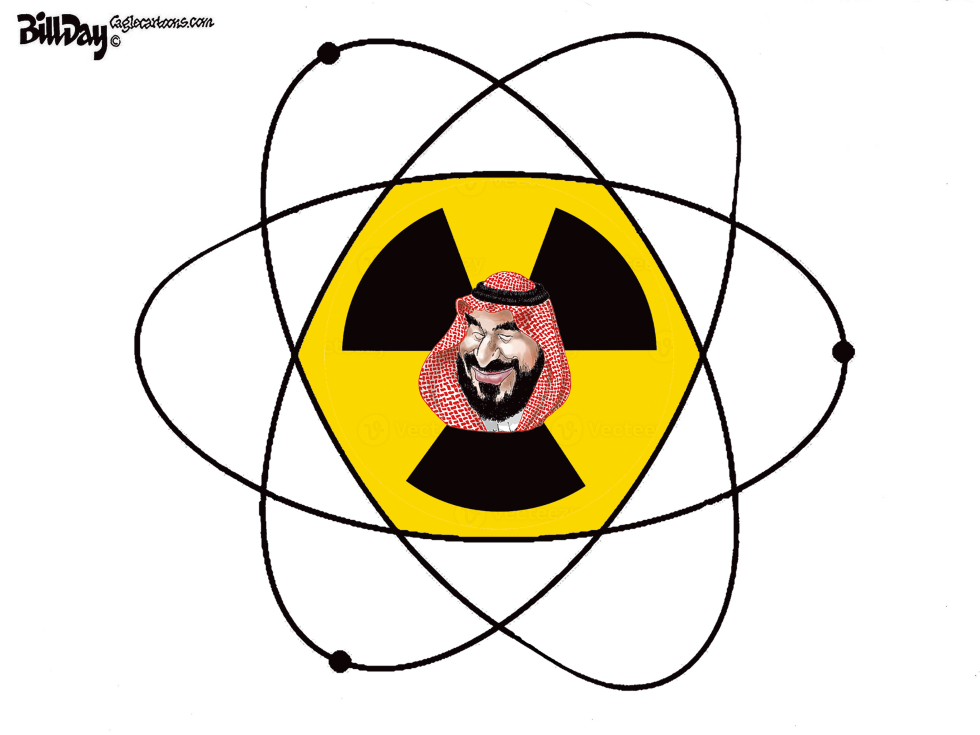
The cartoon shows Iran's supreme leader positioned in front of a large atom symbol. It responds to persistent international concerns over Tehran's nuclear activities as of mid-2026. The visual places the figure directly under the orbiting electrons, underscoring the central role of the nuclear issue in global discussions about the country.
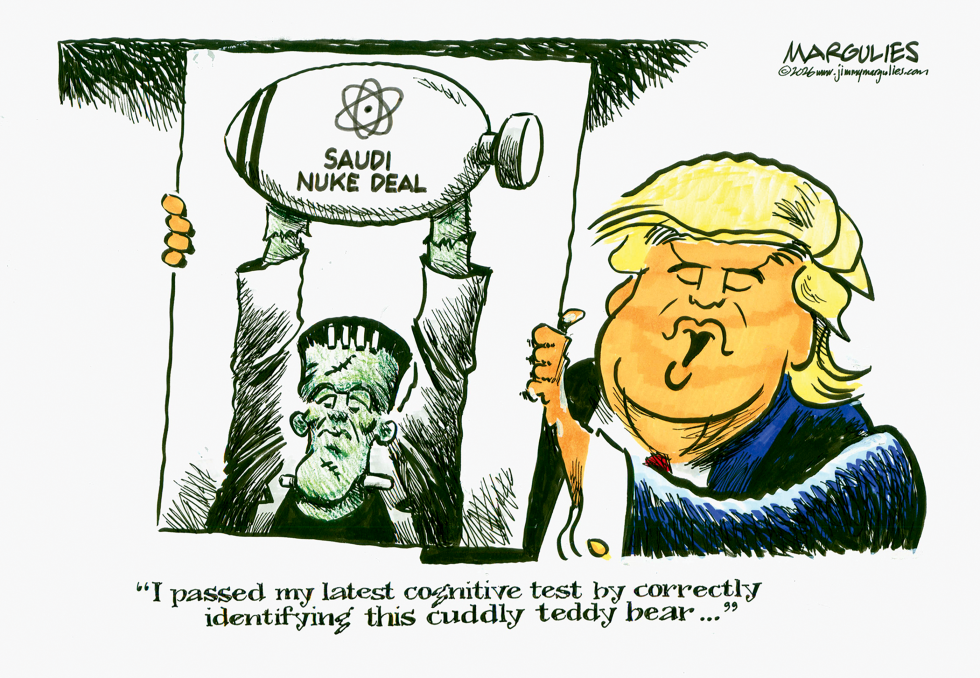
Donald Trump referenced a cognitive test while describing a Saudi nuclear deal in personal terms. The episode occurs against ongoing debates over arms control and Middle East policy. The piece portrays the deal as a dangerous misjudgment.
Concerns over nuclear development by Middle Eastern states have intensified amid ongoing diplomatic tensions and enrichment activities. The editorial argues that such programs pose direct threats to global stability and demand stronger international oversight.
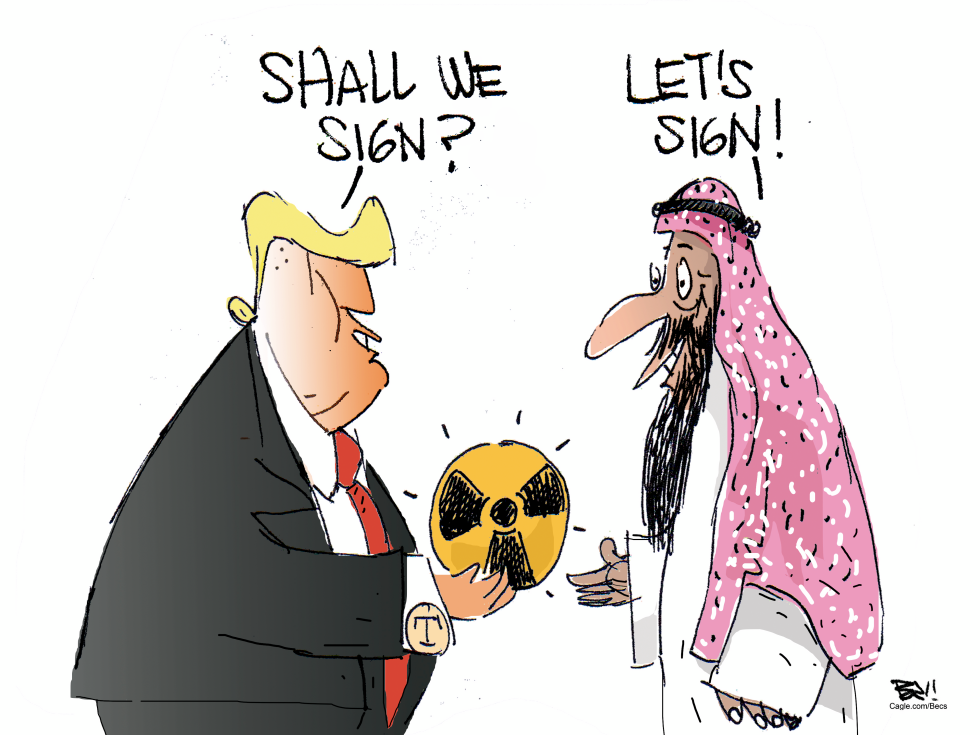
Donald Trump proposed a nuclear cooperation agreement with Saudi Arabia in mid-2026, reviving long-standing talks over civilian atomic energy that critics fear could advance weapons ambitions. The move drew immediate scrutiny from nonproliferation experts who warned that Riyadh has previously signaled interest in matching any Iranian capability. The cartoon frames the overture as reckless, using the radiation symbol to underscore the inherent dangers of such a deal.
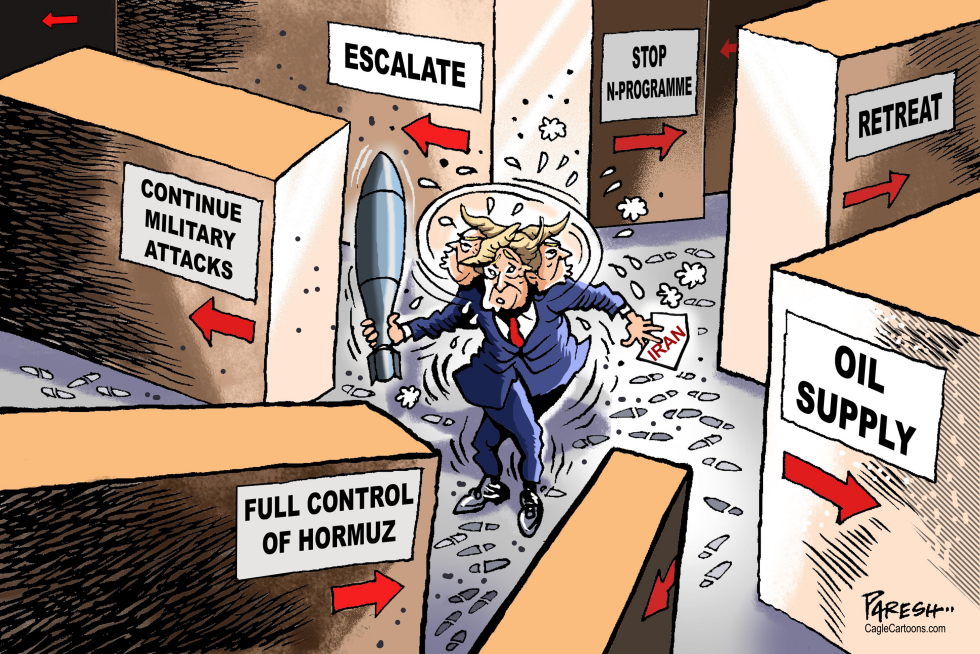
The cartoon shows Donald Trump caught between contradictory policy boxes on Iran, including continuing military attacks, escalating, stopping the nuclear programme, retreating, securing full control of Hormuz and protecting oil supply. Arrows point in conflicting directions while Trump clutches a missile and a paper labeled Iran. Published on July 19, 2026, the image captures the tangled options confronting the administration in the Middle East.
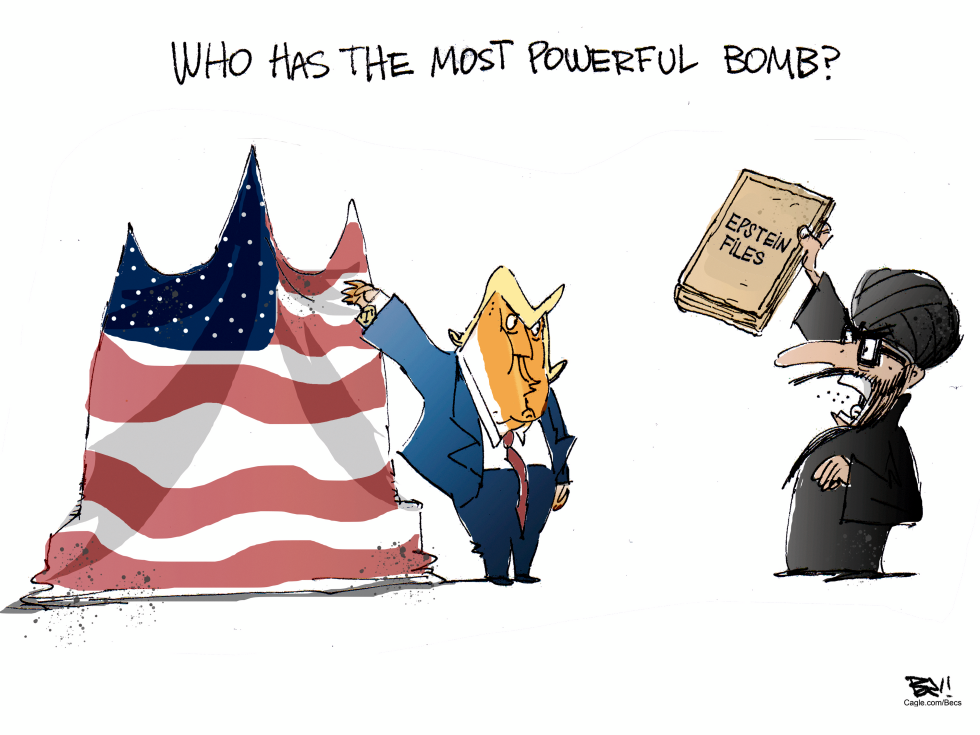
Leverage between the United States and Iran has long centered on nuclear capability and diplomacy. The piece sets that against domestic political pressure from document releases and investigations. It suggests the most damaging weapon in play may not be a military one.
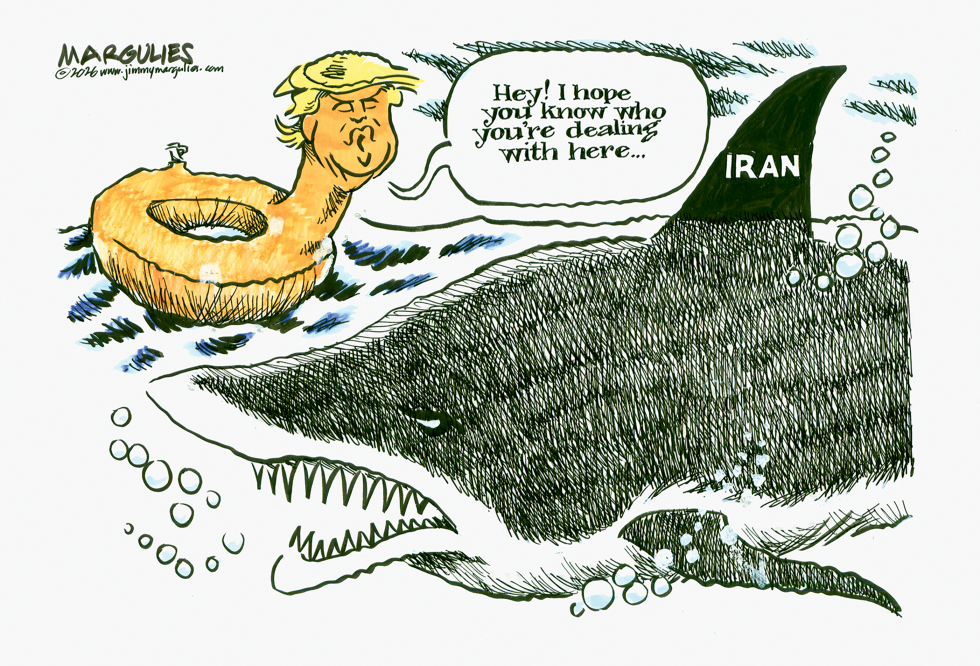
On July 10 2026 Jimmy Margulies depicts Donald Trump floating in an inflatable ring while confronting a large shark fin labeled Iran. The president issues a direct warning through a speech bubble asserting his identity and authority in the confrontation.
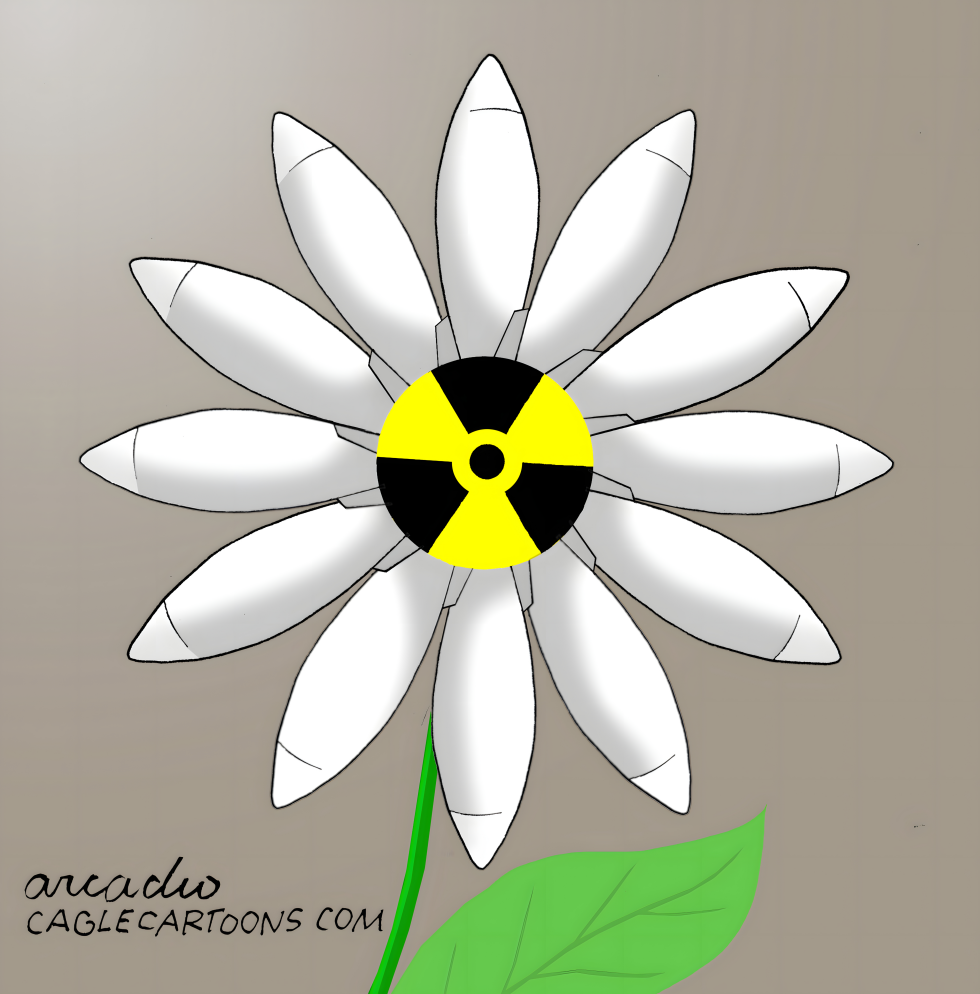
A daisy flower illustration replaces its petals with white missiles arranged around a central radiation warning symbol in yellow and black. The green stem and leaf extend downward from the bloom against a plain background. Artist Arcadio Esquivel signed the work in the lower left with the CagleCartoons.com credit.
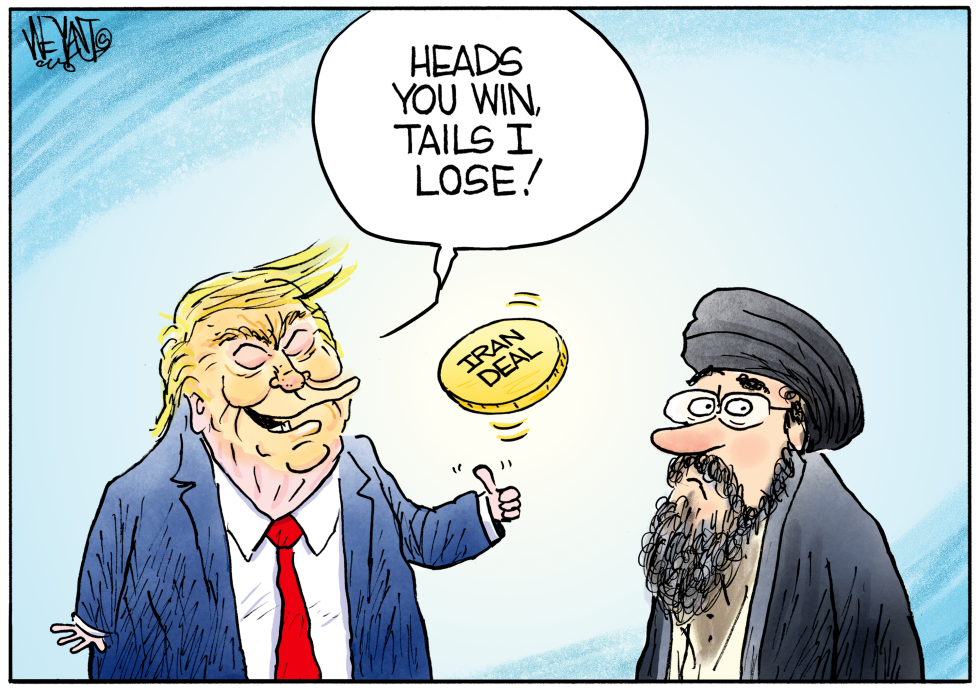
Weyant depicts Donald Trump flipping a coin to determine whether to uphold or abandon the Iran nuclear agreement, satirizing the randomness of his foreign policy decision-making. The coin toss metaphor suggests Trump treats major diplomatic decisions as matters of chance. The cartoon captures diplomatic anxiety about Trump's unpredictability.
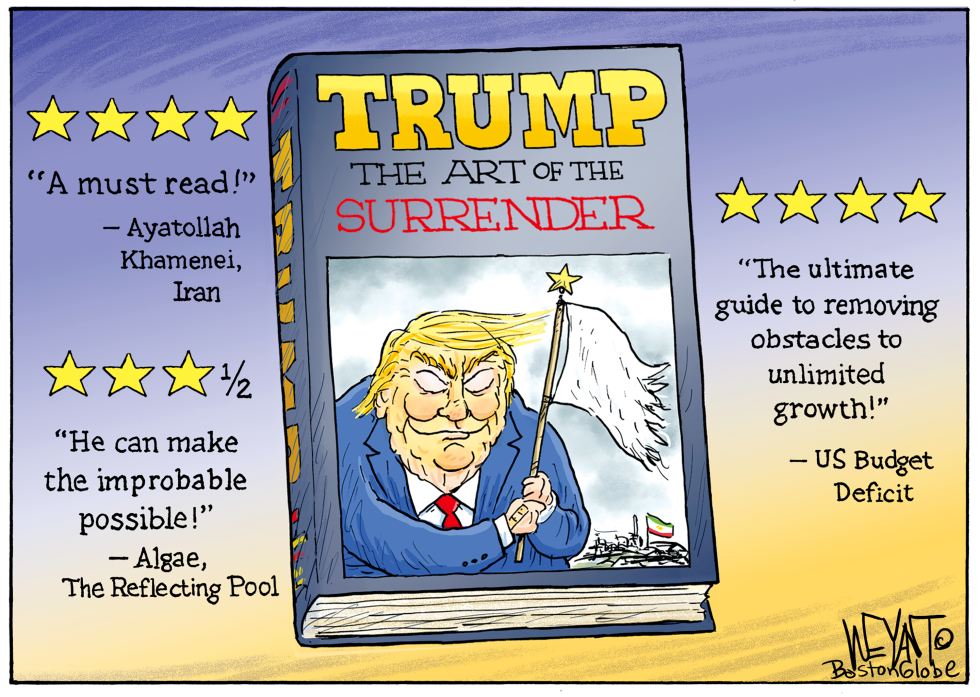
The June 28 2026 cartoon by Christopher Weyant shows a book titled Trump The Art of the Surrender. Donald Trump appears on the cover holding a white flag. Background includes an Iranian flag. Endorsements from Ayatollah Khamenei and the US Budget Deficit appear on either side with star ratings. The image responds to ongoing US Iran tensions and fiscal debates active in late June 2026.
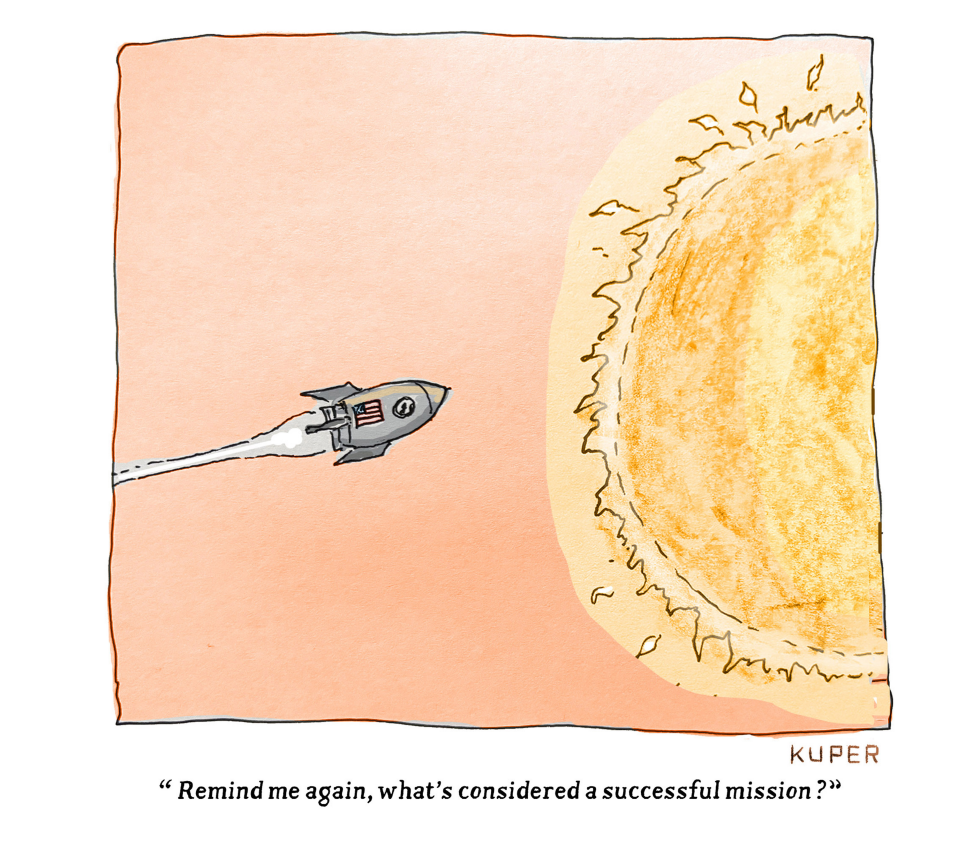
The cartoon shows a US-flagged missile streaking toward a large fiery orb, evoking an ill-defined strike on Iran. The caption questions the meaning of a successful mission. Published amid reports of Iranian nuclear activity and regional tensions, the image critiques the absence of an exit strategy. It references potential economic fallout such as closed shipping lanes and higher oil prices. The work also nods to internal administration finger-pointing involving JD Vance. Overall the piece underscores the hazards of military action without a coherent plan.
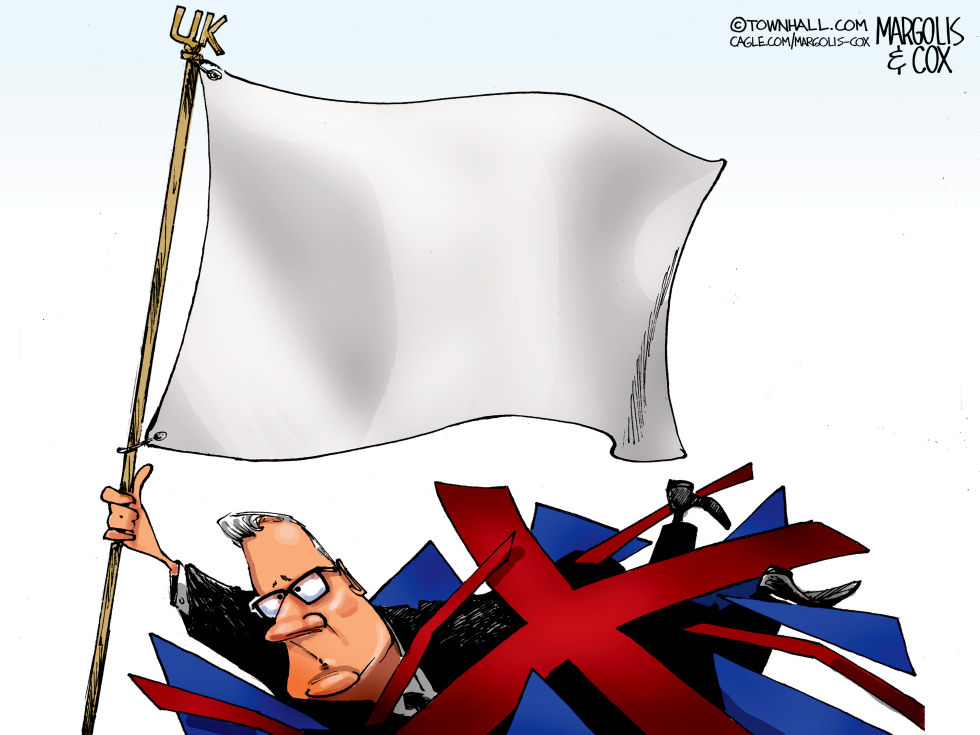
Keir Starmer resigned as UK prime minister on June 23, 2026, marking the end of his tenure amid domestic challenges. The move follows mounting political pressure and signals a shift in British leadership. The editorial takes the position that the resignation represents a capitulation in the face of ongoing national difficulties.