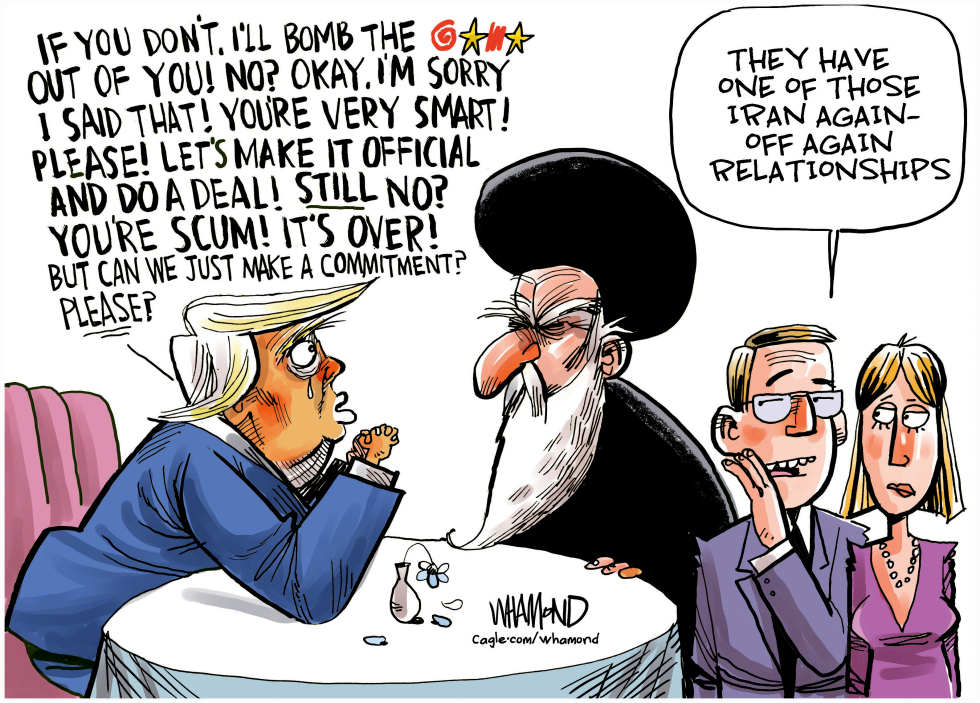
Donald Trump engaged in direct outreach to Iranian Supreme Leader Ayatollah Ali Khamenei amid stalled nuclear talks. The effort mixed ultimatums with appeals for a deal. The cartoon portrays the approach as inconsistent and ineffective.
Donald Trump announced he had called off a major military strike on Iran in favor of a pending nuclear deal. The move drew immediate skepticism from Iranian officials who questioned both the threat and the agreement. The cartoon highlights the disconnect between the announcement and Tehran\'s response.
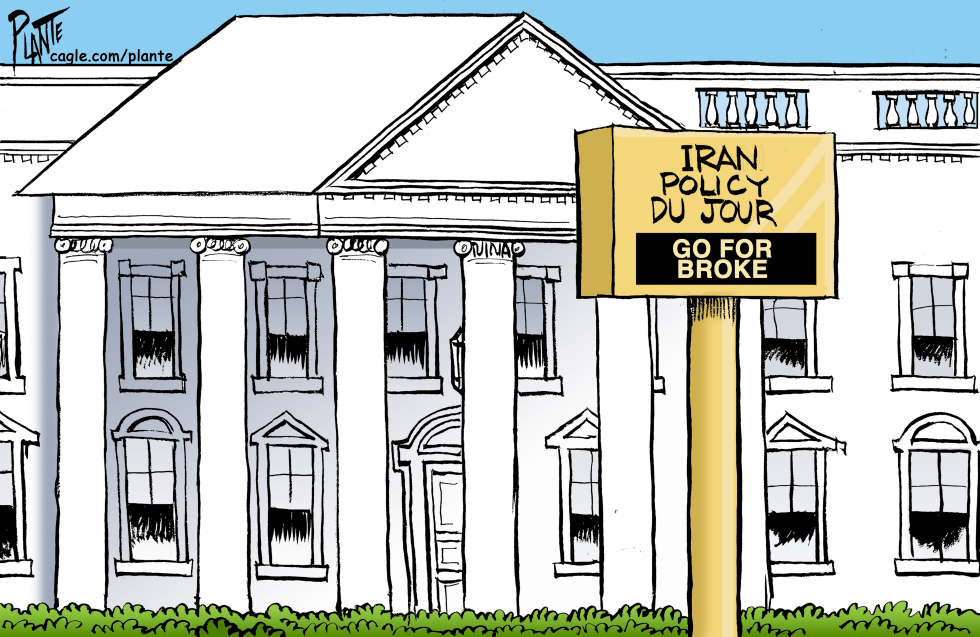
The White House has signaled a more aggressive posture toward Iran through public messaging that emphasizes risk-taking. The move comes amid persistent tensions over nuclear issues and regional influence. The editorial takes the position that such an approach lacks consistency and invites unnecessary escalation.
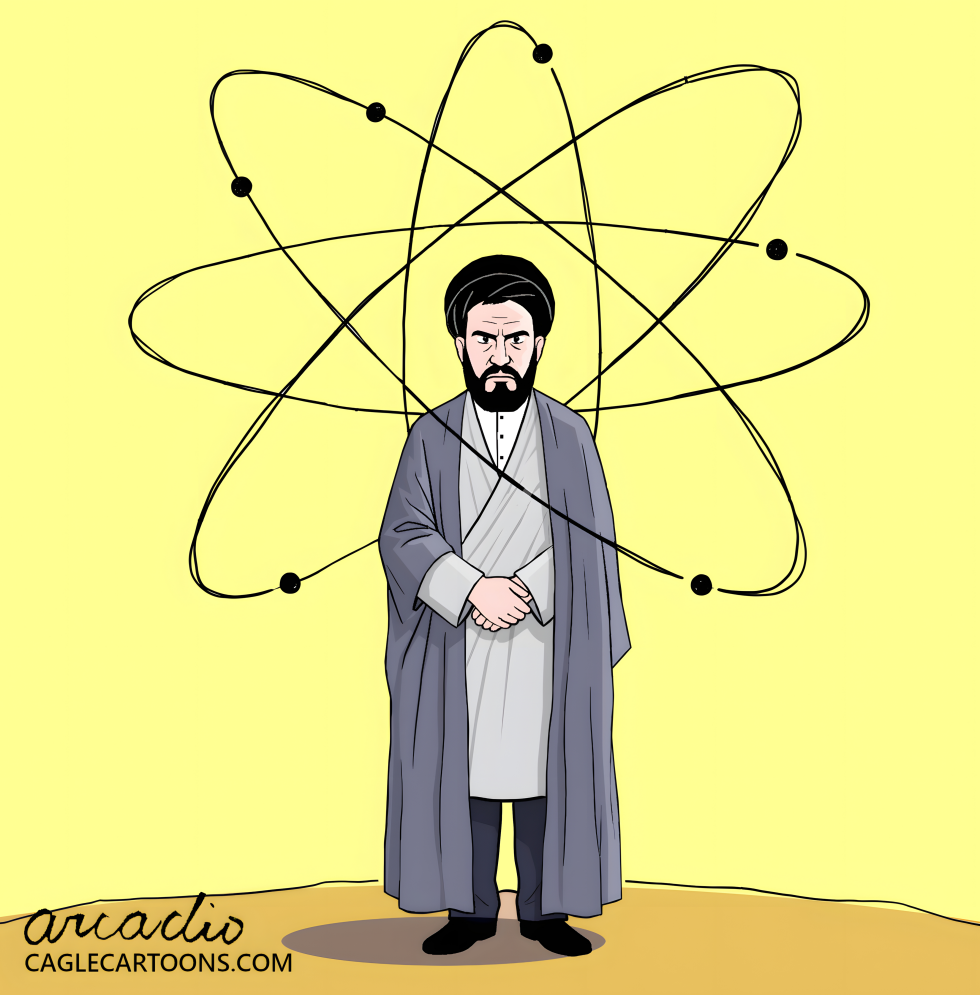
The cartoon shows Iran's supreme leader positioned in front of a large atom symbol. It responds to persistent international concerns over Tehran's nuclear activities as of mid-2026. The visual places the figure directly under the orbiting electrons, underscoring the central role of the nuclear issue in global discussions about the country.
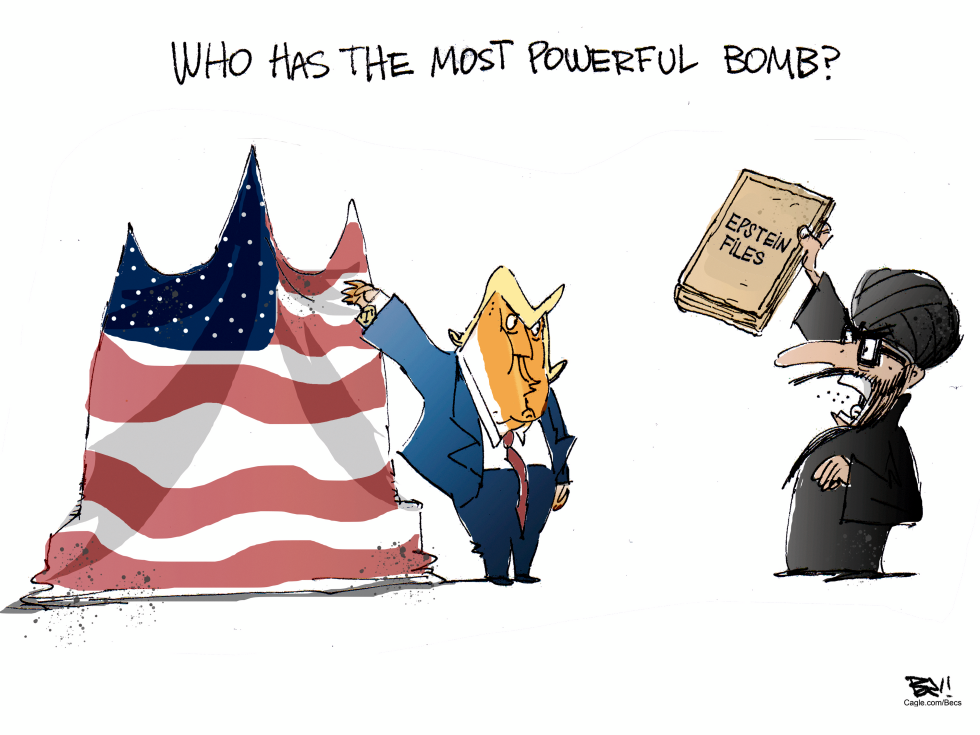
Leverage between the United States and Iran has long centered on nuclear capability and diplomacy. The piece sets that against domestic political pressure from document releases and investigations. It suggests the most damaging weapon in play may not be a military one.
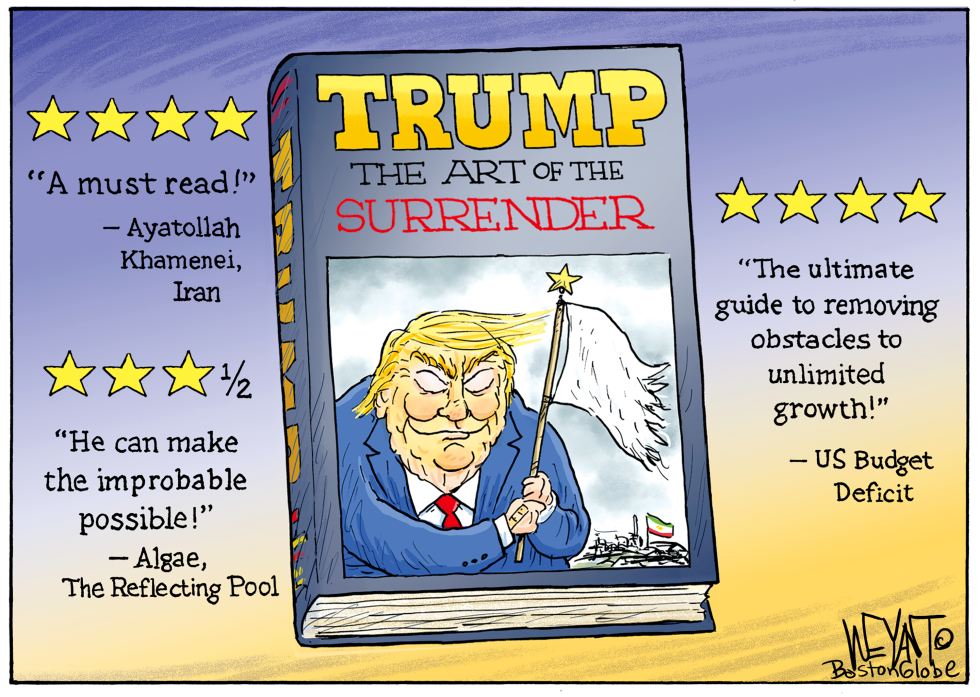
The June 28 2026 cartoon by Christopher Weyant shows a book titled Trump The Art of the Surrender. Donald Trump appears on the cover holding a white flag. Background includes an Iranian flag. Endorsements from Ayatollah Khamenei and the US Budget Deficit appear on either side with star ratings. The image responds to ongoing US Iran tensions and fiscal debates active in late June 2026.
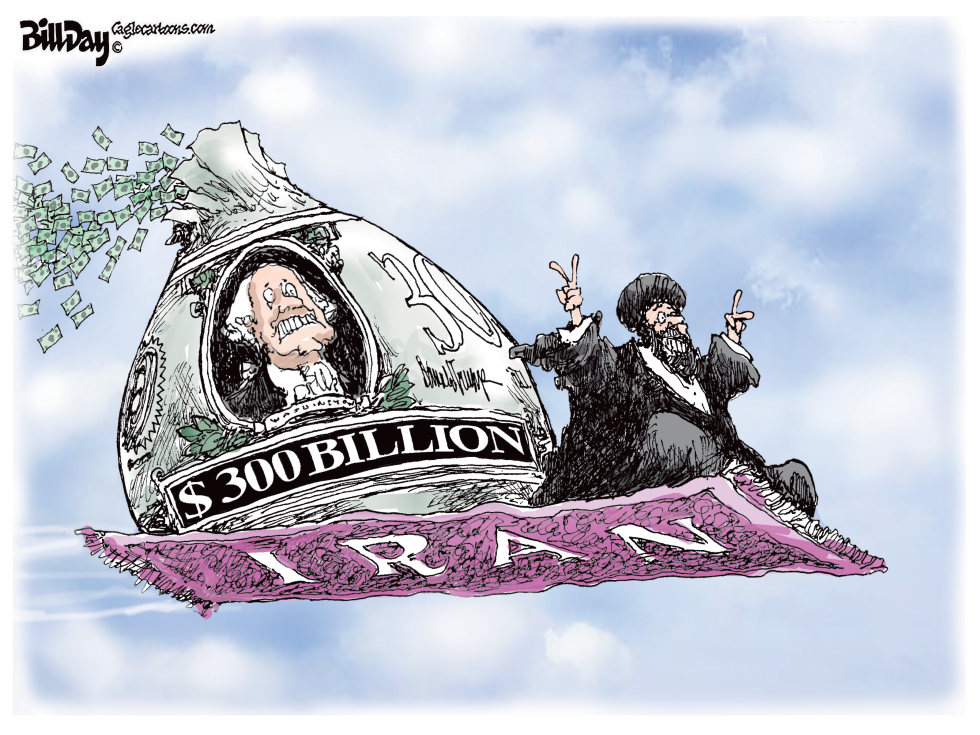
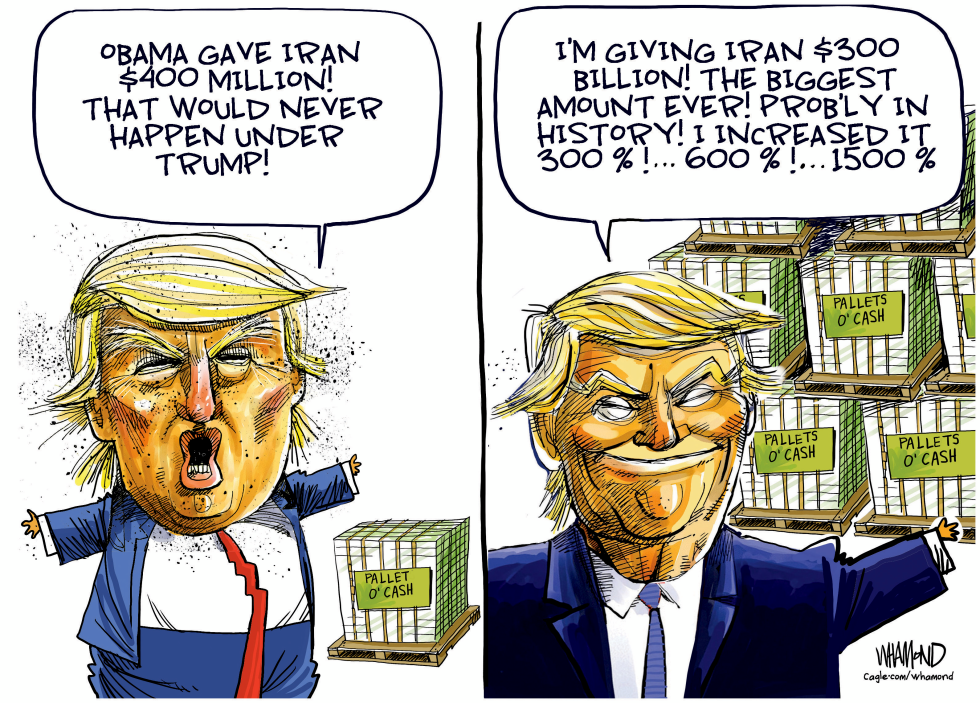
On June 18, 2026, Bill Day's cartoon depicts former President Donald Trump inside a torn $300 billion money bag with cash flying outward. An Iranian cleric figure sits on a purple carpet labeled IRAN, gesturing victory signs. The image responds to ongoing debates over sanctions relief and financial transfers involving Iran during that period.
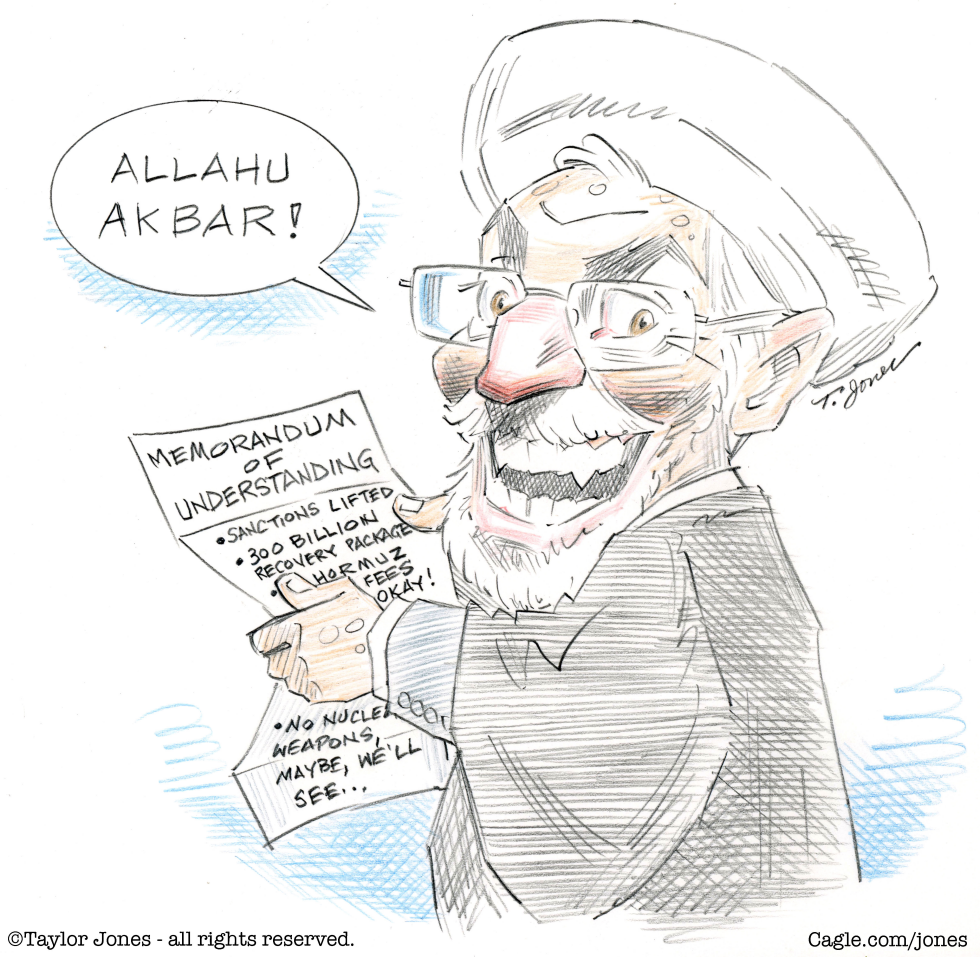
On June 17 2026 a Taylor Jones cartoon shows an Iranian leader grinning over a memorandum of understanding that lifts sanctions and delivers a 300 billion dollar recovery package. A separate note hedges on nuclear weapons. The figure shouts Allahu Akbar as Hormuz fees gain approval.
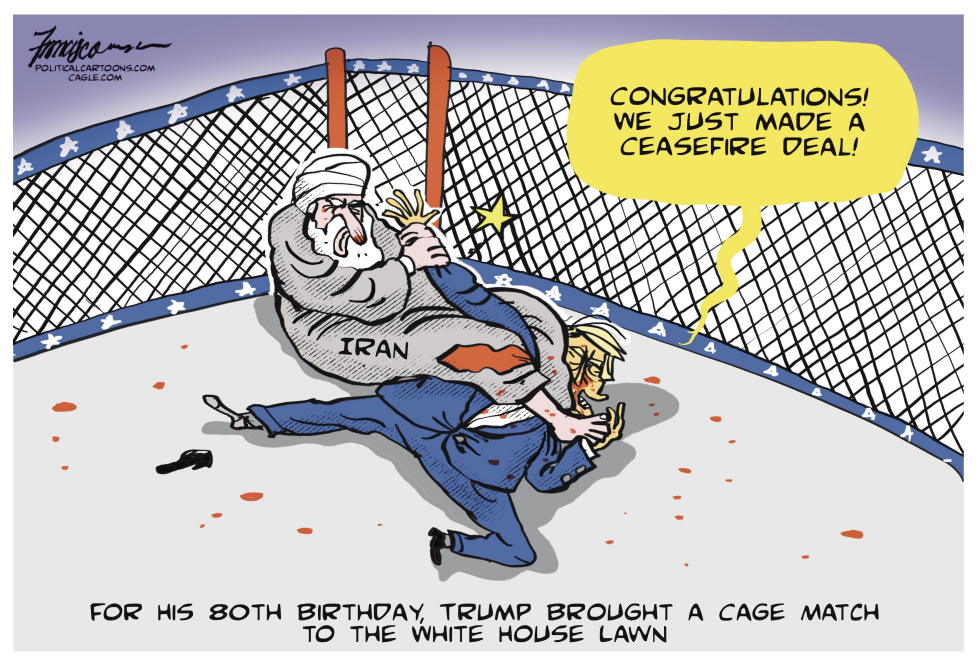
A cage match between the United States and Iran over a potential ceasefire deal has drawn attention amid ongoing Middle East tensions. The confrontation highlights the high stakes of direct engagement between the two nations. The piece portrays the encounter as a chaotic personal brawl rather than a measured diplomatic effort.
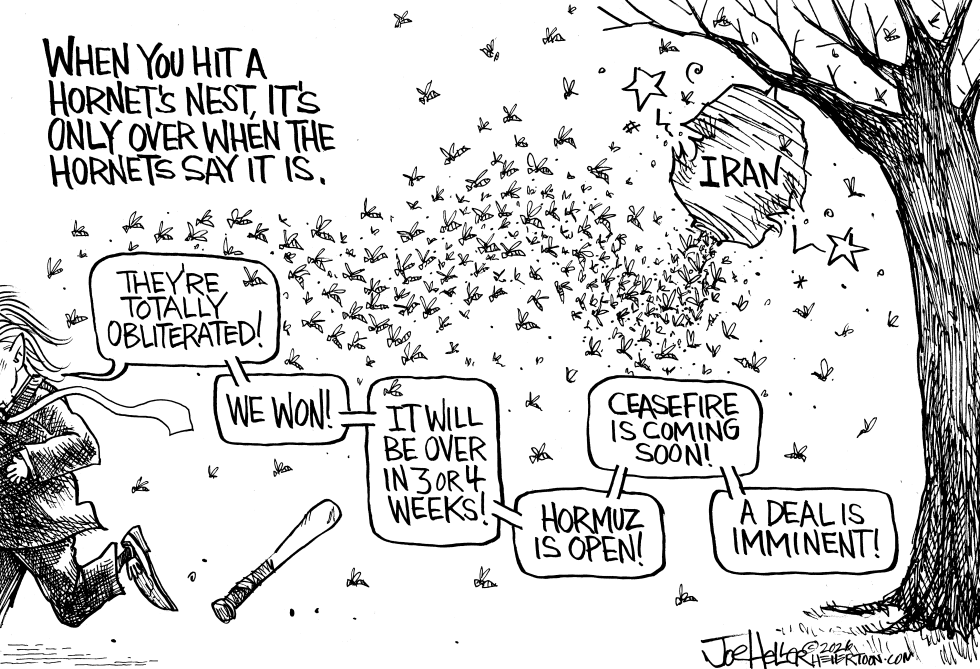
After a strike on an Iran labeled hornet nest, multiple figures issue statements claiming total obliteration, victory, a resolution in weeks, an open Hormuz Strait, an imminent ceasefire, and a deal. The nest hangs from a tree with stars nearby as insects fill the air.
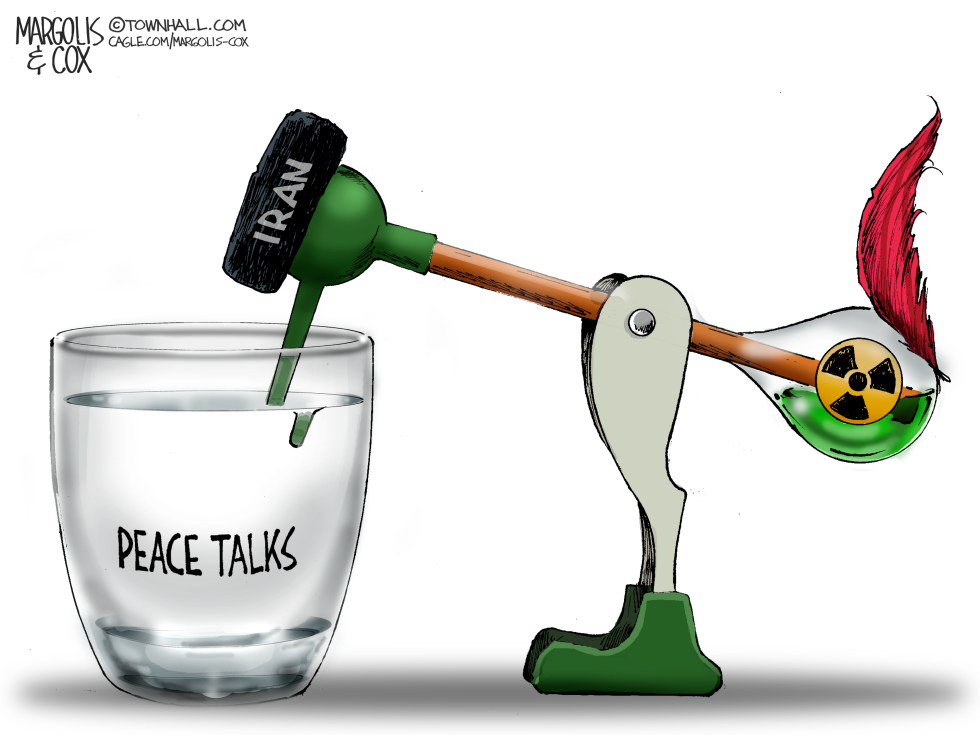
The image displays a glass marked peace talks containing liquid. A drinking bird device with Iran written on the head repeatedly dips its beak into the glass. The balancing arm has a nuclear symbol on a green section and a red element at the end. The base is green and the setup shows the bird in motion toward the glass.
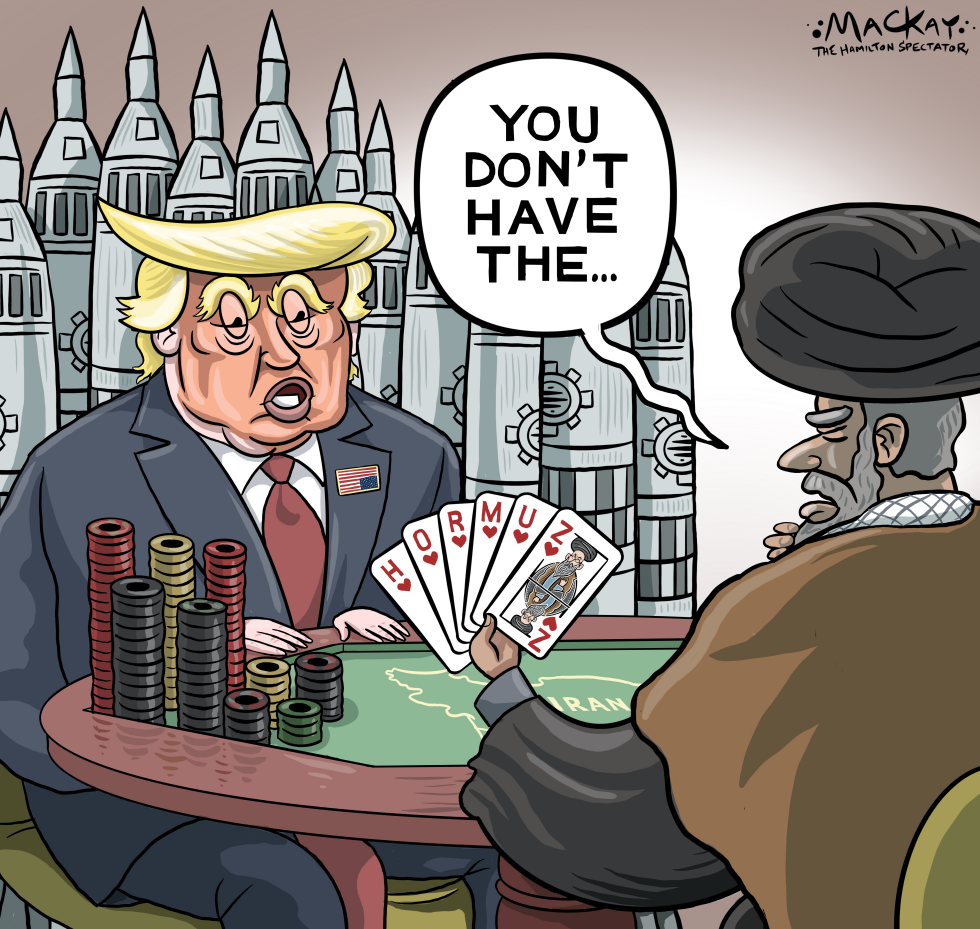
The cartoon shows Donald Trump at a poker table opposite Ayatollah Mojtaba Khamenei, with a background of missiles. Trump speaks the line 'YOU DON'T HAVE THE...' while the Iranian figure holds cards. The scene uses the poker metaphor to suggest the U.S. lacks leverage over Iran on nuclear and energy matters as of the March 2026 publication date.