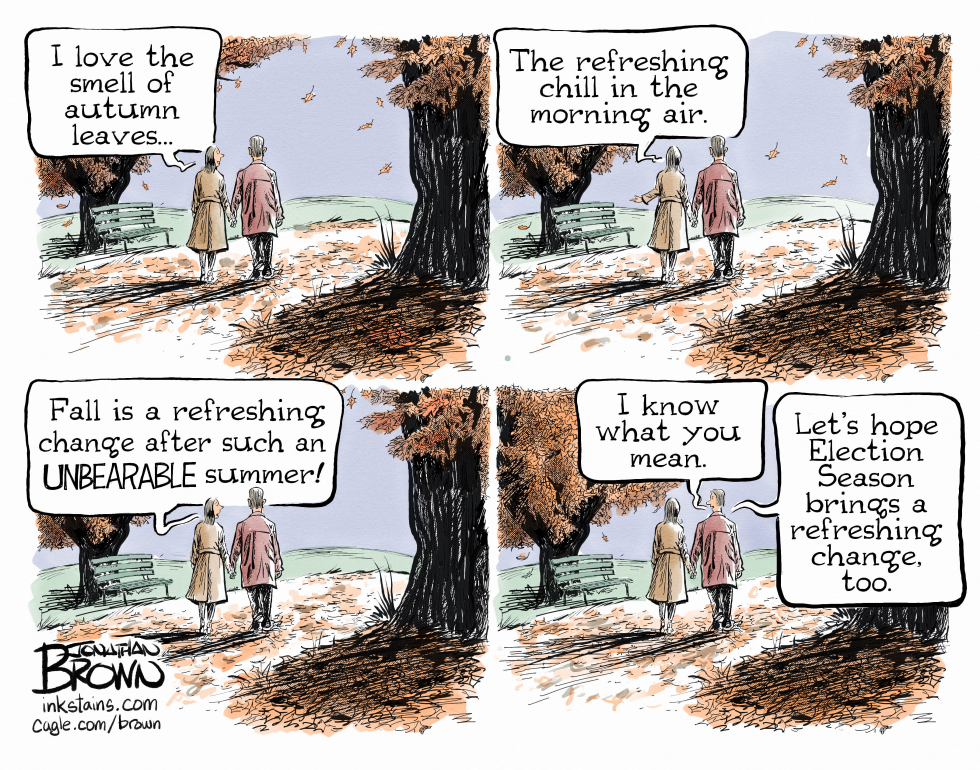
The cartoon depicts a couple strolling through an autumn park and commenting on the season's appeal. Their conversation turns to the election cycle as another potential source of renewal. The work uses the familiar transition from summer to fall to express a common voter sentiment ahead of the 2026 midterms. No specific candidates or policies are named, keeping the focus on the general wish for improvement. The four-panel format builds the parallel gradually before delivering the final line about election season.
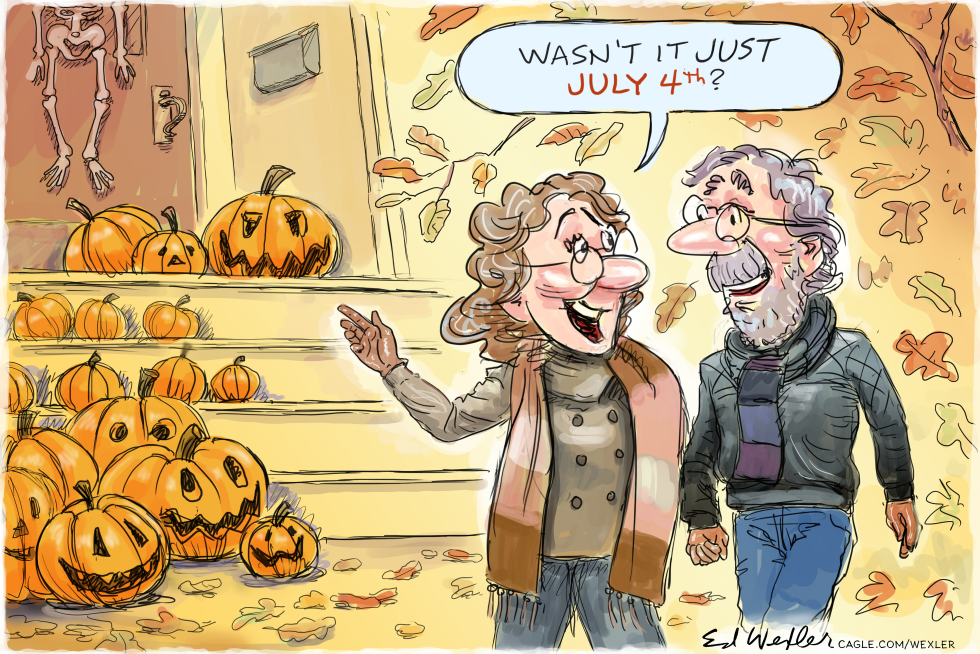
The calendar moves swiftly from Independence Day celebrations to the first signs of fall. Observers often express surprise at how little time seems to have passed between the two. The piece captures that common reaction to the accelerating pace of the year. It offers a light observation on how seasons blend together without clear boundaries. The editorial stance is gently amused rather than critical of any policy or figure.
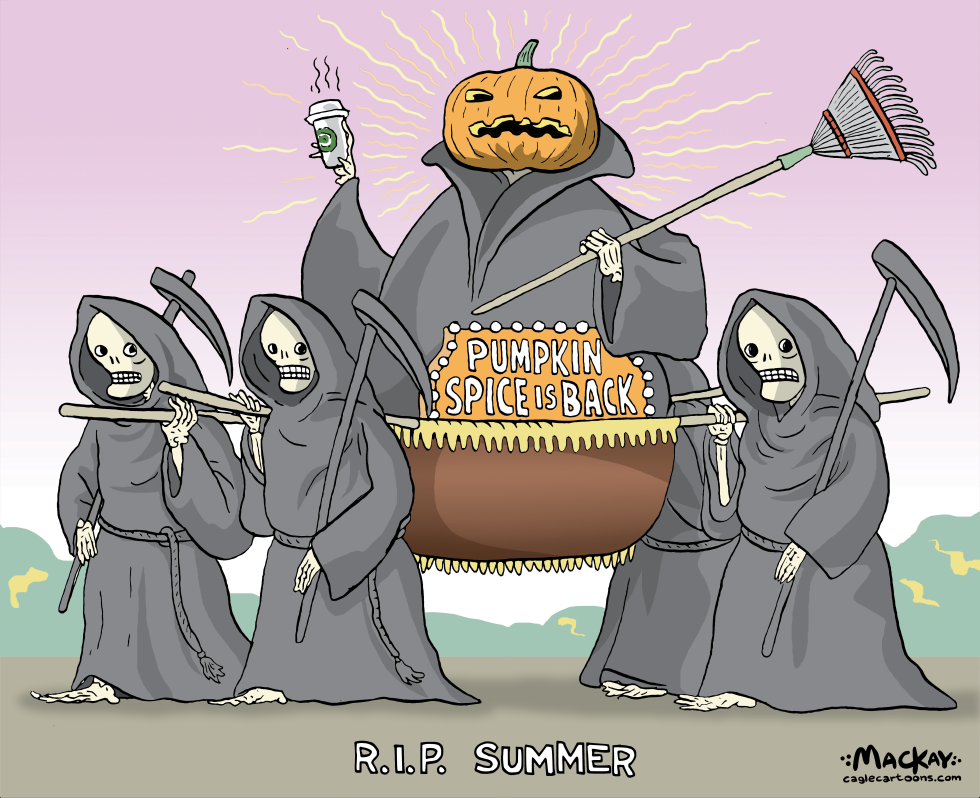
The cartoon shows a large pumpkin-headed figure in a gray robe leading smaller grim reapers who carry a banner reading Pumpkin Spice Is Back. The group marches under a pink sky with the large figure holding a rake and a PSL coffee cup. Text at the bottom reads R.I.P. Summer. Published on September 4 2026 the image marks the annual shift from summer to fall. It uses the grim reaper motif to humorously depict the death of summer and the arrival of pumpkin spice products. The visual plays on the well-known seasonal marketing push for fall flavors in coffee and other goods.
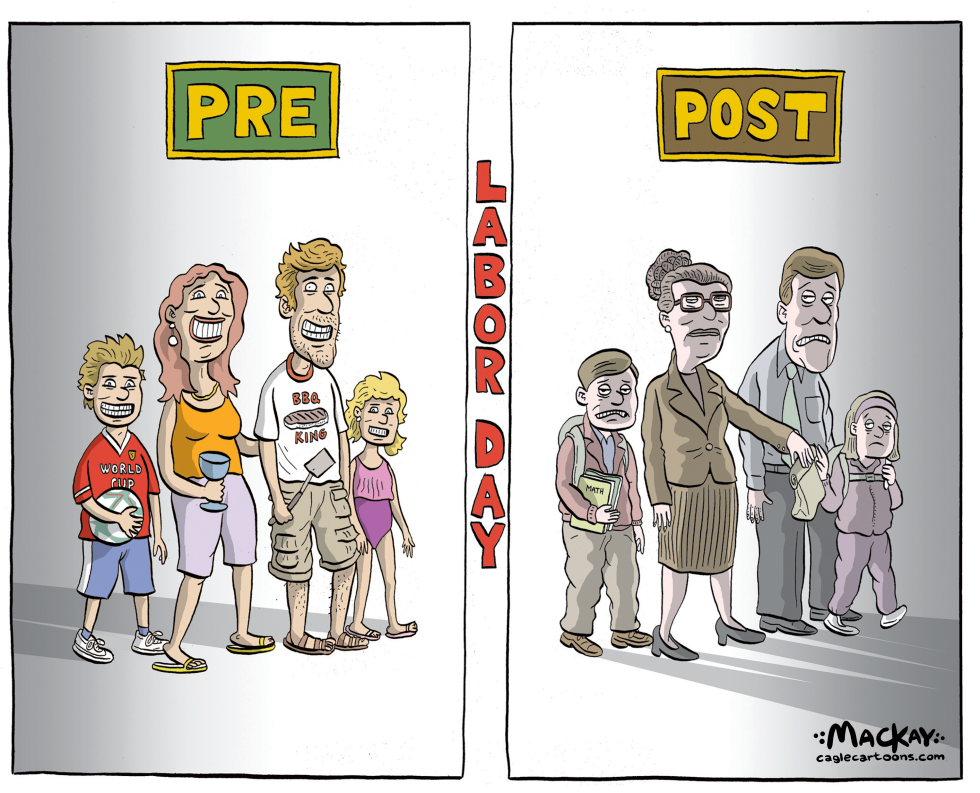
The cartoon by Graeme MacKay contrasts a joyful pre-Labor Day family scene with a weary post-Labor Day version. On the left, parents and children smile in casual summer attire while holding leisure items. On the right, the same family appears drained as they prepare for school and work. The vertical label emphasizes the holiday as the dividing line. This reflects the annual transition many households experience each September. The piece uses simple visual comparison to highlight the end of vacation freedom.
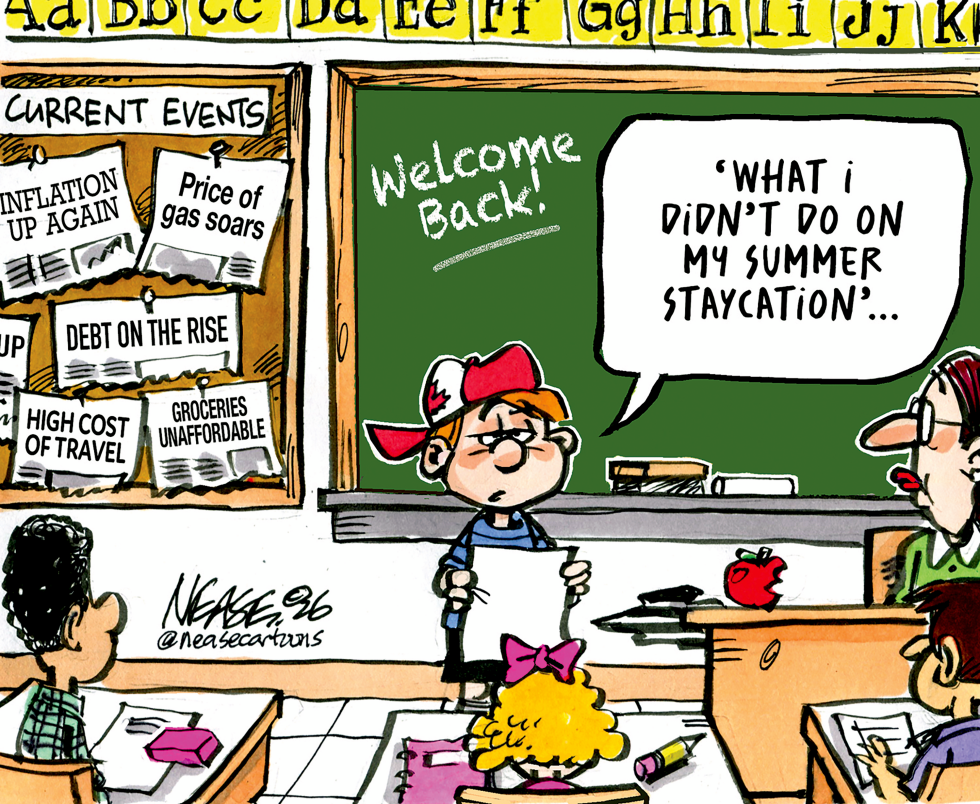
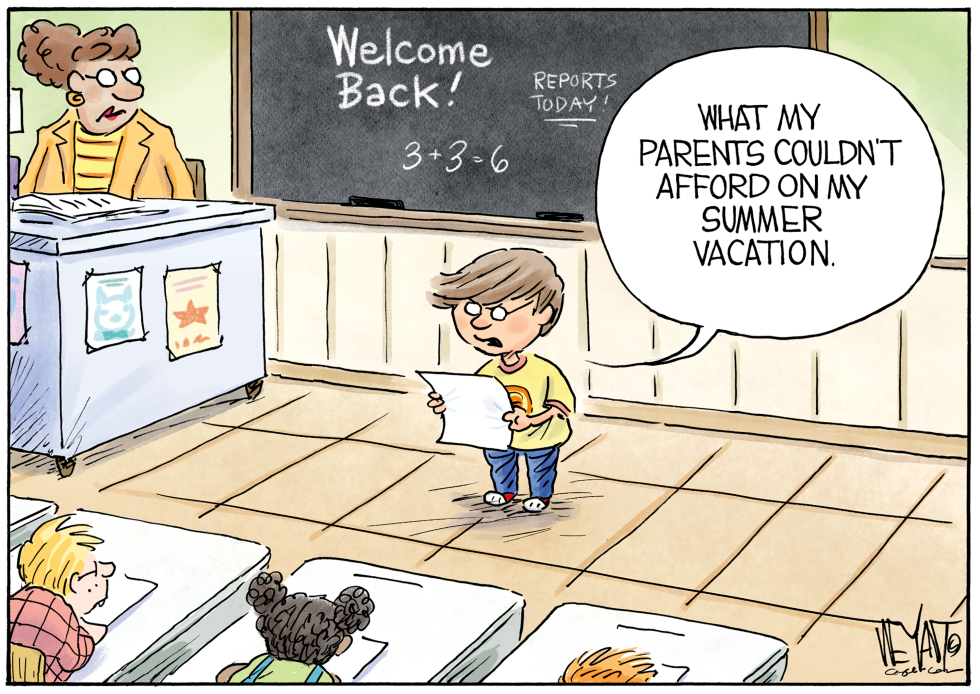
Rising inflation, gas prices, and household debt have made traditional summer vacations unaffordable for many families, leading to increased staycations as the new school year starts. The cartoon captures this cost-of-living squeeze through a classroom presentation on what students did not do over the break. It underscores how everyday expenses now dominate family decisions and limit leisure options.
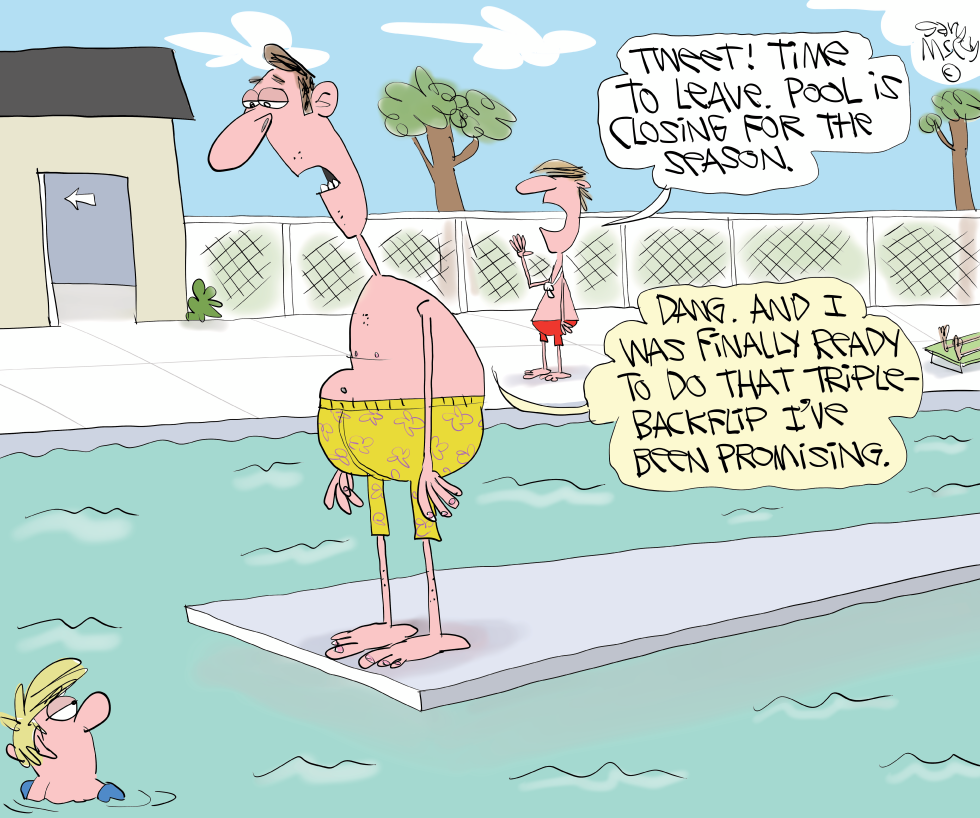
Labor Day brings the annual closure of public pools nationwide, signaling the end of summer swimming. Lifeguards issue final calls as patrons exit, often with unfinished personal goals like a promised dive. The piece captures the routine letdown of seasonal change through a simple missed-opportunity gag.
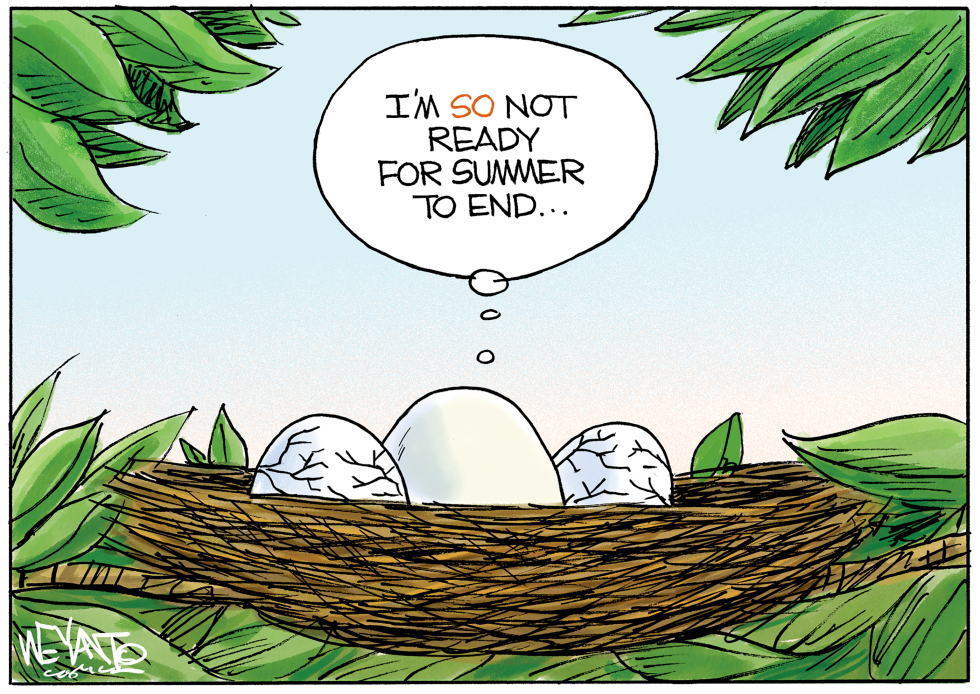
As summer draws to a close in late August, many express reluctance to embrace the coming autumn. The seasonal transition brings cooler weather and shorter days, prompting widespread nostalgia for warm months. This dynamic highlights common human resistance to change and the end of leisure periods. The piece captures that sentiment through a simple natural scene, underscoring the universal desire to prolong summer.
A new illustration depicts three children viewed from behind, each shouldering oversized air conditioning units in place of traditional schoolbags. The central text declares the theme of increasingly heavy schoolbags as students return to class. The visual draws on the weight and cooling function of the units to represent the physical and academic loads placed on young learners. Publication occurs at the end of August, aligning with the annual back-to-school period when families prepare for the new term. The piece uses the air conditioner motif to comment on how school requirements have grown more demanding over time.
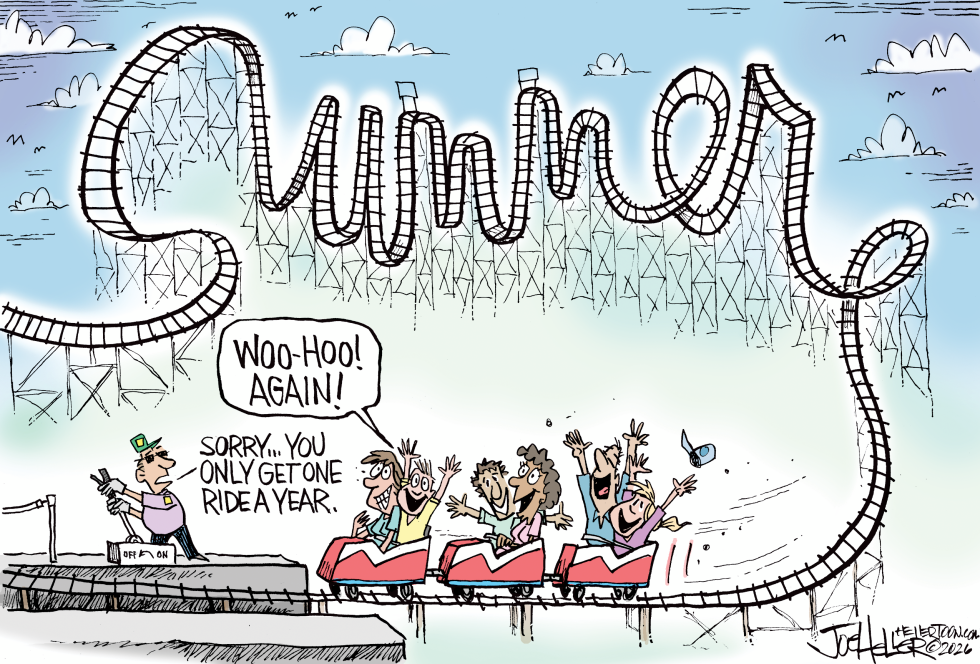
Late August brings the familiar end-of-summer realization that warm weather and leisure time feel fleeting. The cartoon depicts an amusement park enforcing a one-ride-per-year policy on a coaster shaped like the word summer. The editorial position highlights how quickly the season passes and how little time remains for enjoyment.
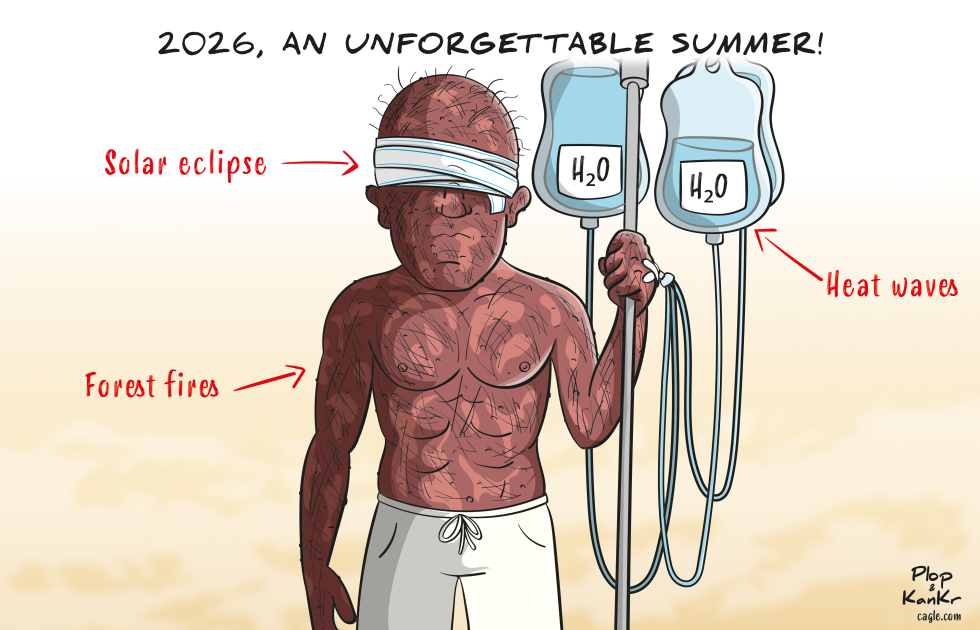
The image shows a shirtless man standing with two IV bags delivering H2O. One bag is labeled heat waves. A blindfold covers his eyes with an arrow from solar eclipse. Another arrow points to forest fires on his arm. The top text reads 2026 an unforgettable summer. The scene places multiple seasonal events on one body at once.
Rising living costs continue to squeeze household budgets as families navigate post-pandemic recovery and persistent price pressures on travel and leisure. A classroom scene captures one student's report on what his parents could not afford during summer break, underscoring how everyday families feel the pinch. The piece frames the issue as a direct consequence of ongoing economic conditions affecting ordinary households.
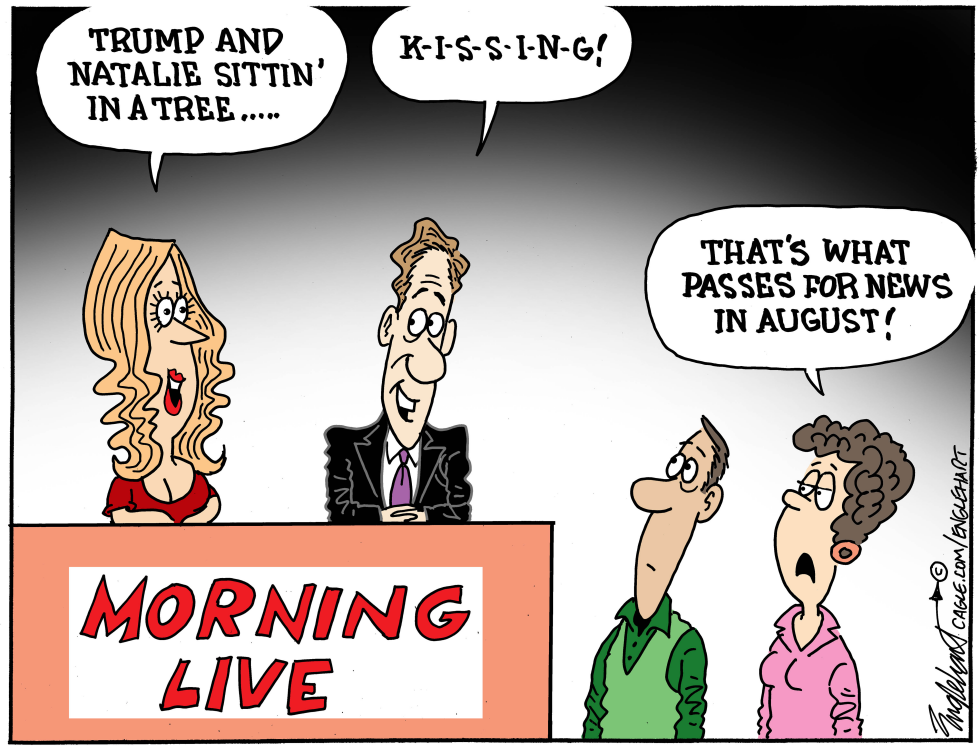
Speculation about Donald Trump and Natalie Harp sharing a kiss surfaced on morning television in August 2026. The story gained traction during a traditionally slow news period. The cartoon portrays the coverage as trivial gossip that passes for reporting when substantive events are scarce.
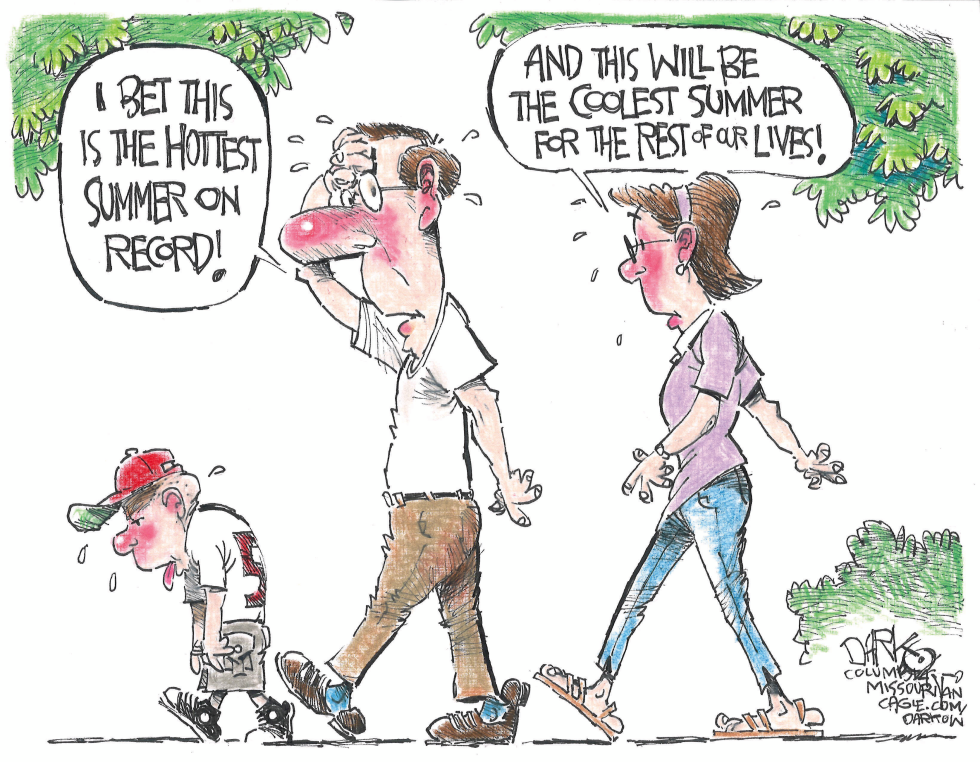
Record summer temperatures in 2026 prompted widespread public discussion of extreme heat events and their link to long-term climate patterns. Families and communities experienced prolonged discomfort as temperatures broke previous benchmarks, underscoring the immediate effects of warming trends. The piece argues that current heat represents only the beginning of progressively harsher conditions unless broader action addresses the underlying causes.
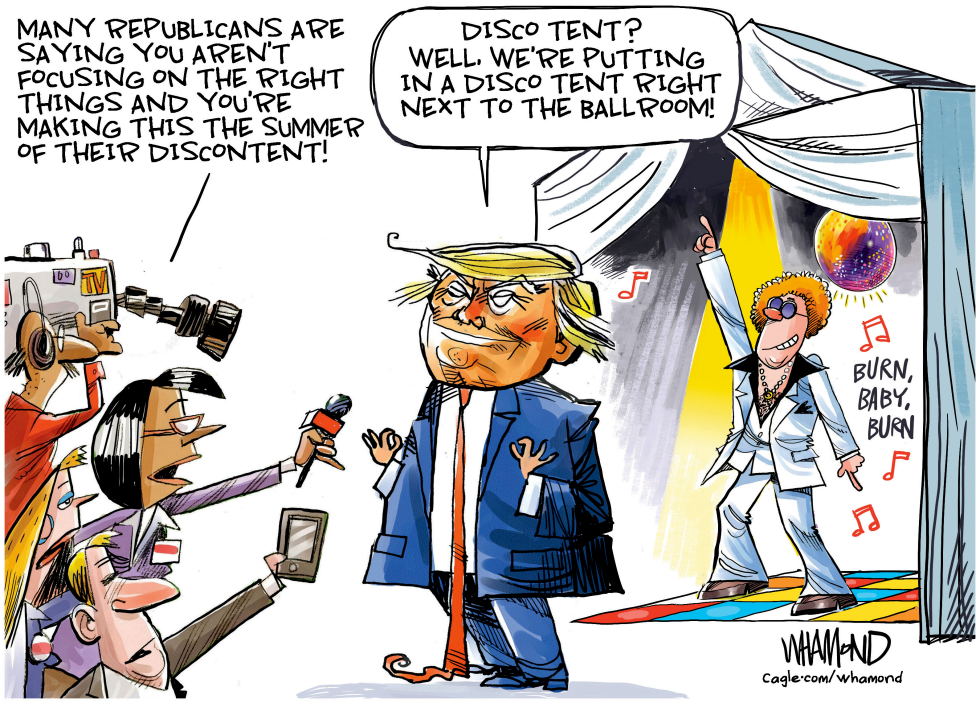
Republicans have publicly criticized Donald Trump for diverting focus from core issues during the summer of 2026, highlighting internal party friction over perceived misplaced priorities. The criticism centers on White House renovation choices that include adding a disco tent adjacent to the ballroom. Trump faces direct questions from the press about these decisions. The editorial position frames the episode as evidence of deepening discontent within the Republican ranks over the president's agenda.
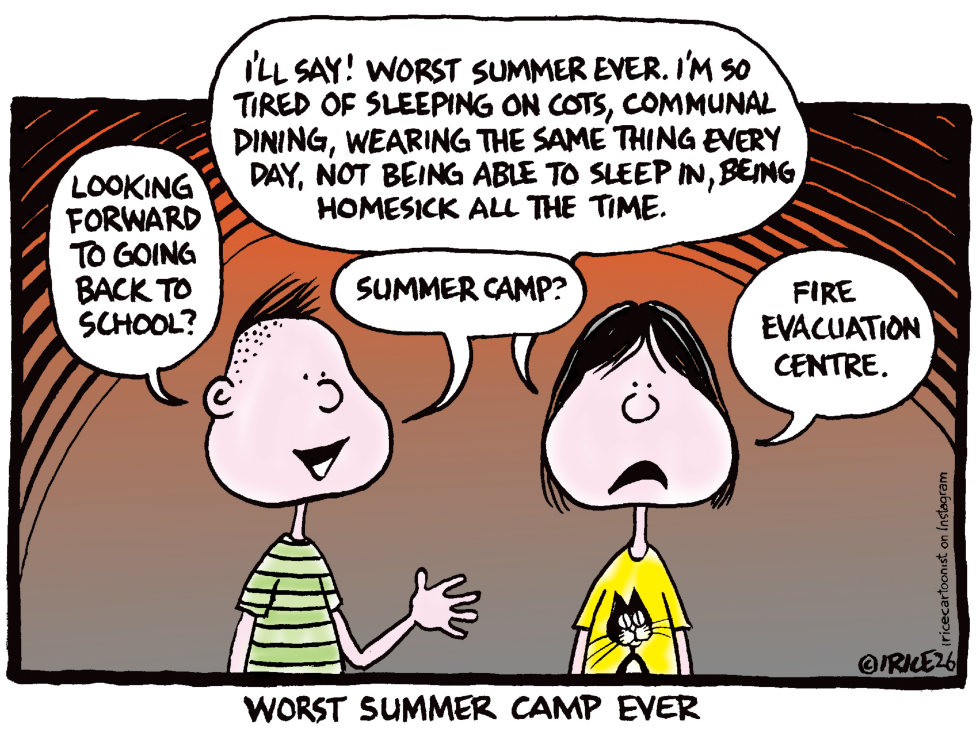
Wildfire evacuations have displaced families across affected regions this summer, forcing many into temporary centres with basic accommodations. The piece uses children's dialogue to underscore how evacuation routines mirror disliked camp conditions, highlighting ongoing disruption from seasonal fires.