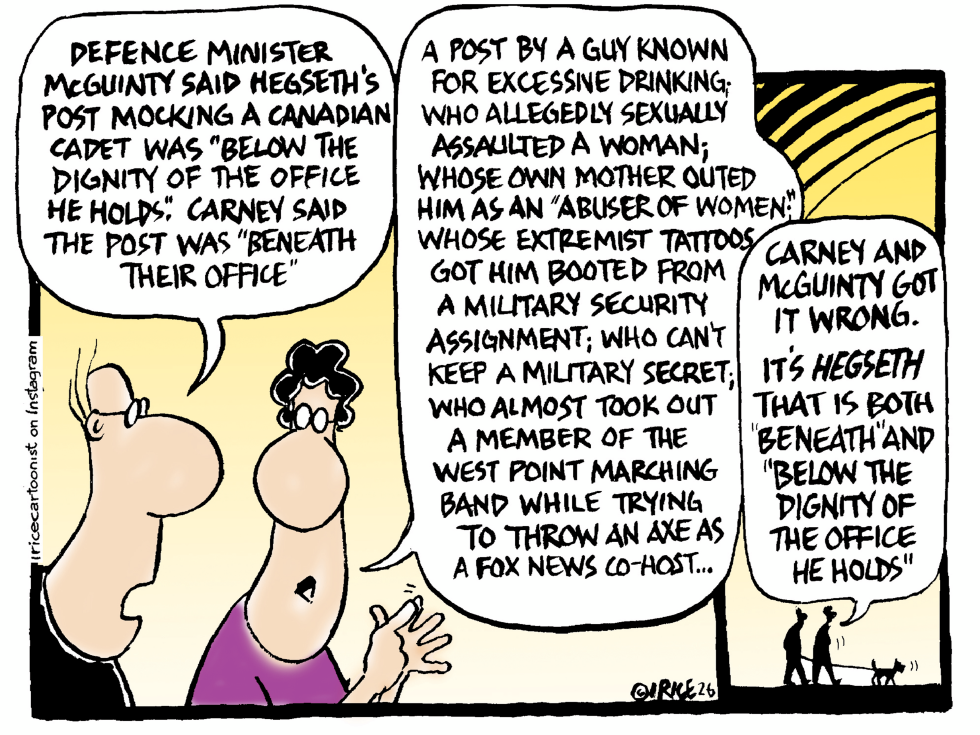
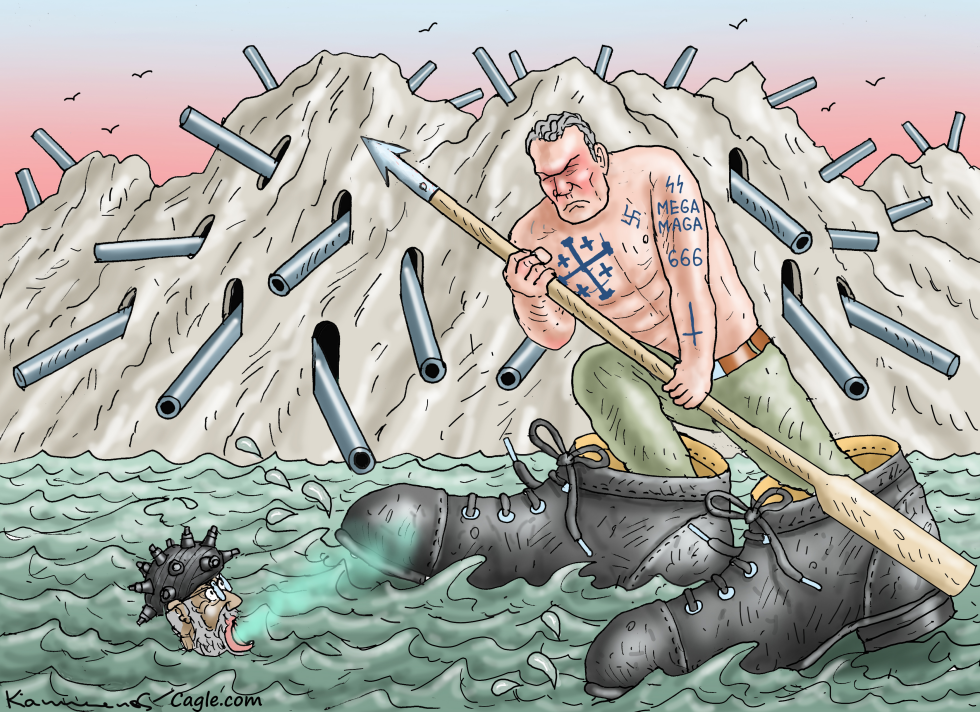
Canadian Defence Minister David McGuinty and Mark Carney publicly condemned a social media post by Pete Hegseth mocking a Canadian cadet, calling it beneath the dignity of the office. The remarks came amid Hegseth's nomination process for a senior U.S. defense position. The cartoon argues the ministers have the assessment backward, pointing instead to Hegseth's history of alleged misconduct, security clearance problems, and public incidents as the true disqualifiers. This reflects ongoing debate over nominee vetting standards and cross-border political commentary on U.S. appointments.
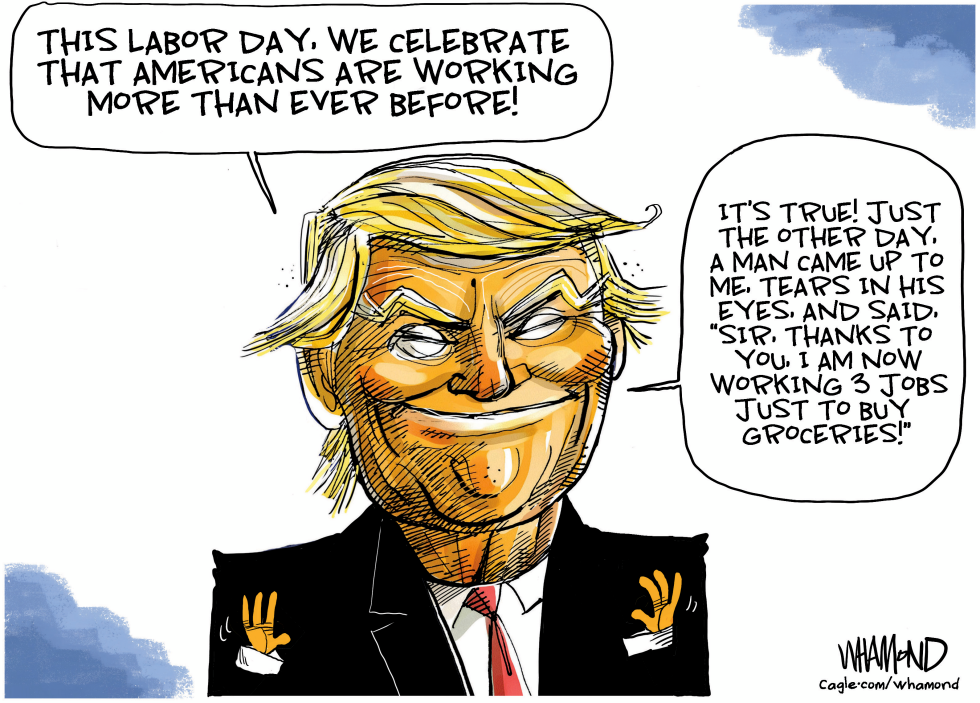
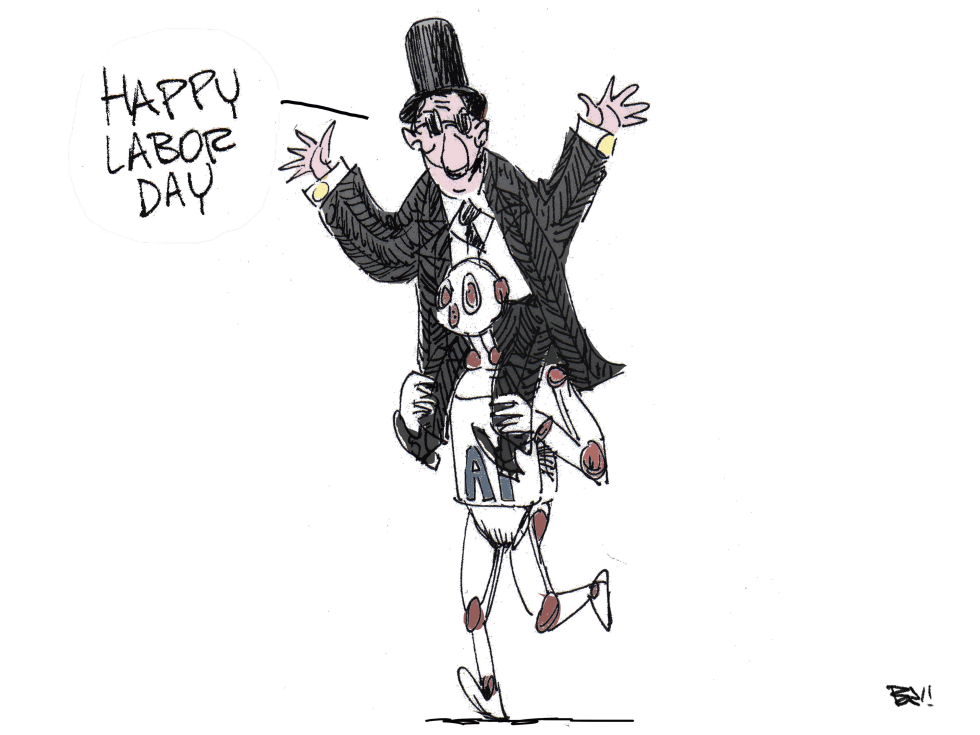
On Labor Day 2026, President Trump highlighted what he described as record employment levels in a public address. He pointed to Americans taking on more work as evidence of economic strength. The remarks come amid ongoing public concern over household costs and wage pressures. Critics argue the comments underscore the gap between official job numbers and the lived experience of workers needing multiple positions to cover basic expenses. The cartoon presents the remarks as tone-deaf to economic strain.
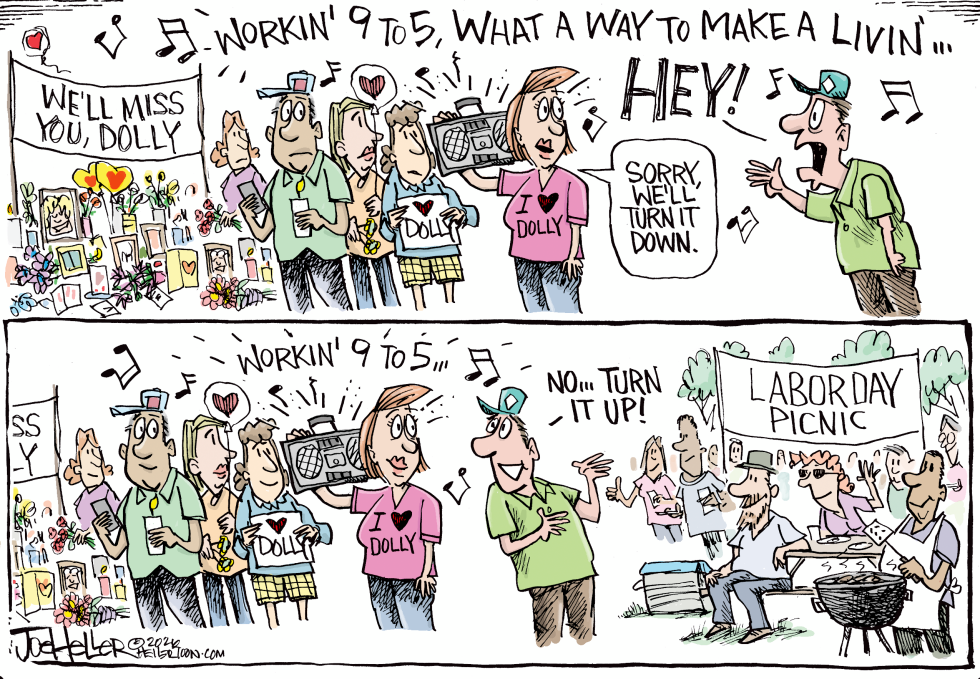
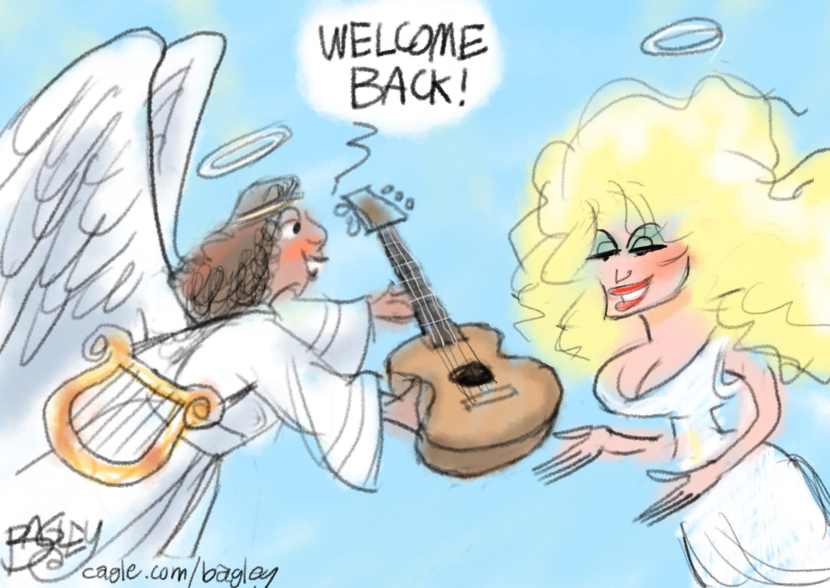
Dolly Parton, the country music icon known for hits like 9 to 5, is remembered at a 2026 Labor Day picnic. The cartoon captures the shift from quiet mourning with flowers and signs to a lively celebration where her music is played louder. It reflects the broad affection for Parton across generations and the way her work resonates at community gatherings. The piece positions her legacy as one that brings people together rather than divides them.
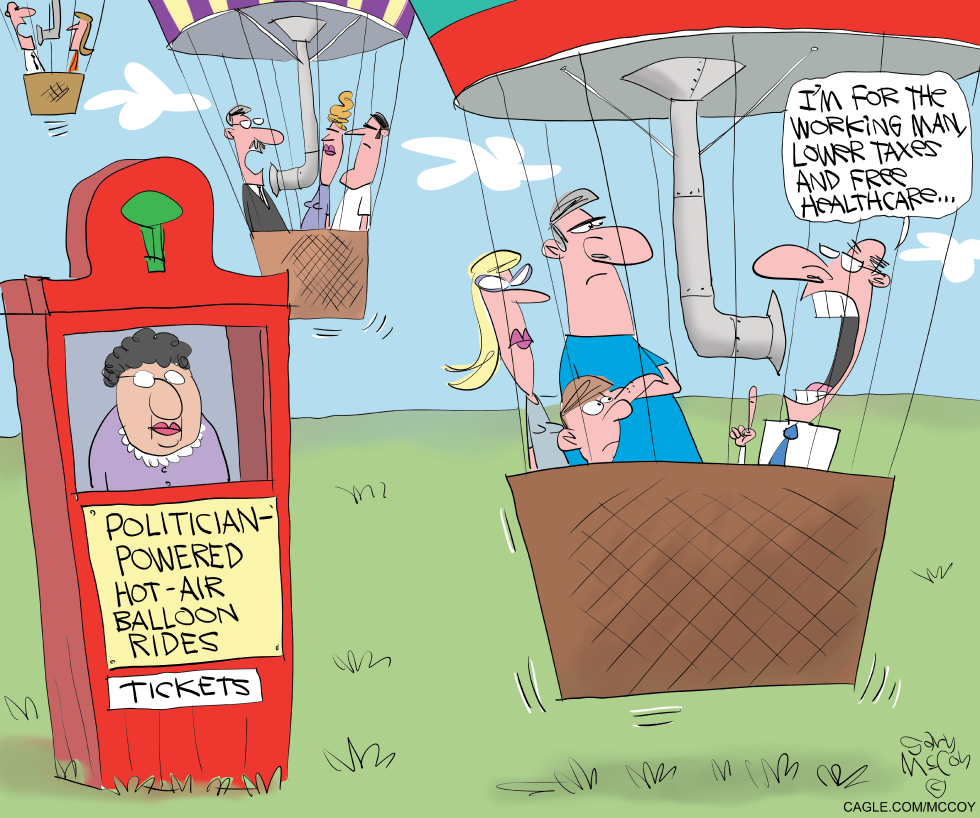
Politicians continue to campaign on lower taxes for workers and free healthcare access. These pledges remain central to attracting voter support ahead of elections. The piece portrays such promises as inflated rhetoric detached from delivery.
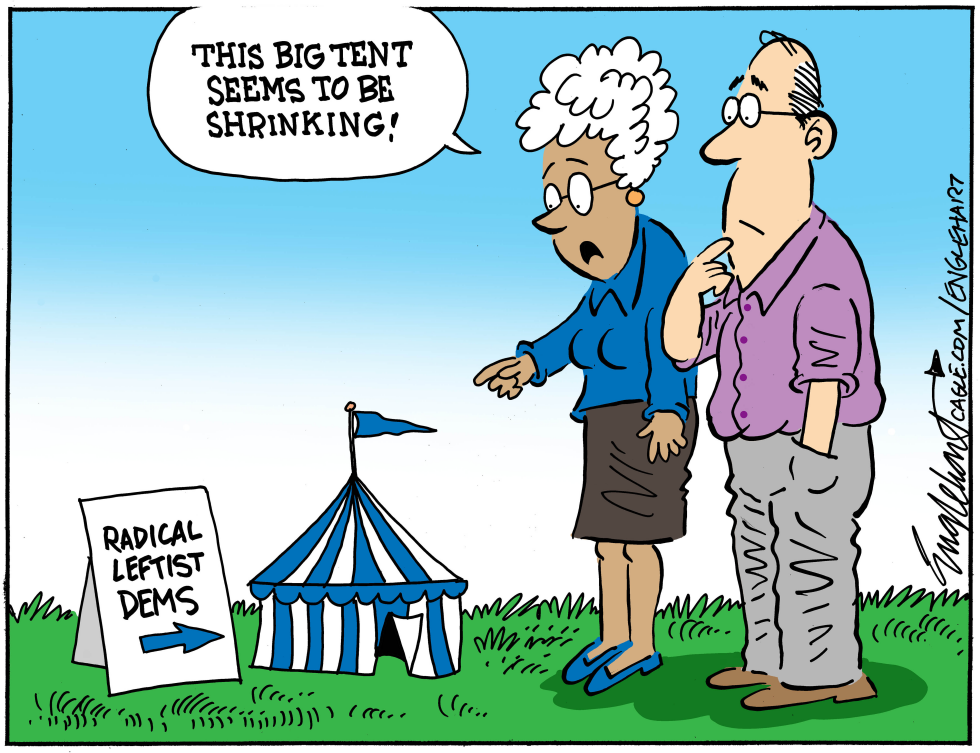
Democratic Party figures have grown concerned that the traditional big tent coalition is contracting as radical leftists consolidate control over the party's direction and messaging. The shift sidelines moderates and narrows the range of acceptable views within the organization. This dynamic raises questions about the party's ability to maintain broad electoral appeal in upcoming cycles. The editorial takes the position that the exclusionary turn is self-defeating and accelerates the party's isolation from mainstream voters.
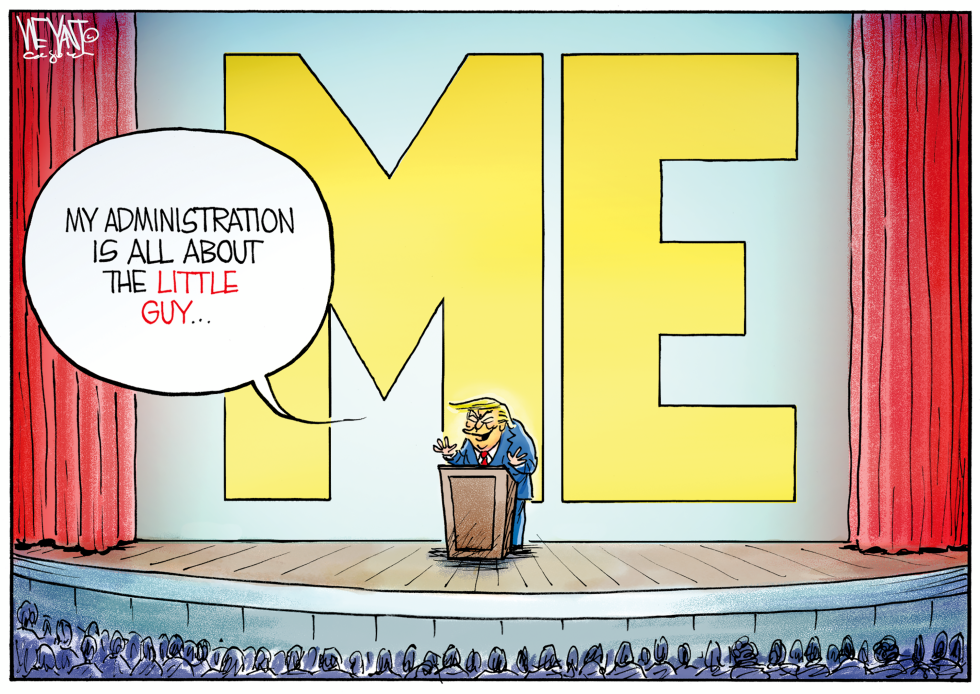
Donald Trump has repeatedly positioned his administration as champion of ordinary Americans during public addresses. The claim comes amid ongoing debates over policy priorities and personal branding in the White House. The piece portrays the rhetoric as centered on the speaker rather than the public.
Rising grocery prices have left many households unable to afford staples like bread in a single purchase. Shoppers increasingly ask retailers for payment plans to cover basic items. The cartoon highlights the strain on family budgets from persistent inflation in food costs.
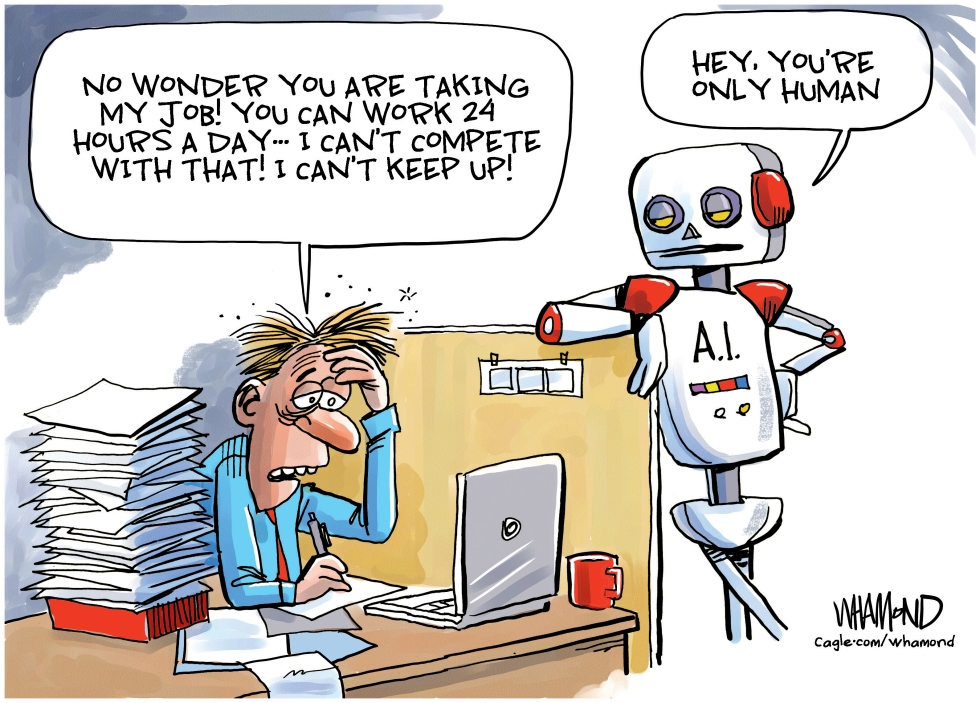
The image shows a man seated at a desk covered with stacked papers and a laptop, appearing overwhelmed while writing. A robot marked A.I. stands to the right with one arm extended. Two speech bubbles contain text about job competition and human limitations. A red coffee mug sits on the desk. The scene includes office elements like a wall outlet and the artist's signature at bottom right.
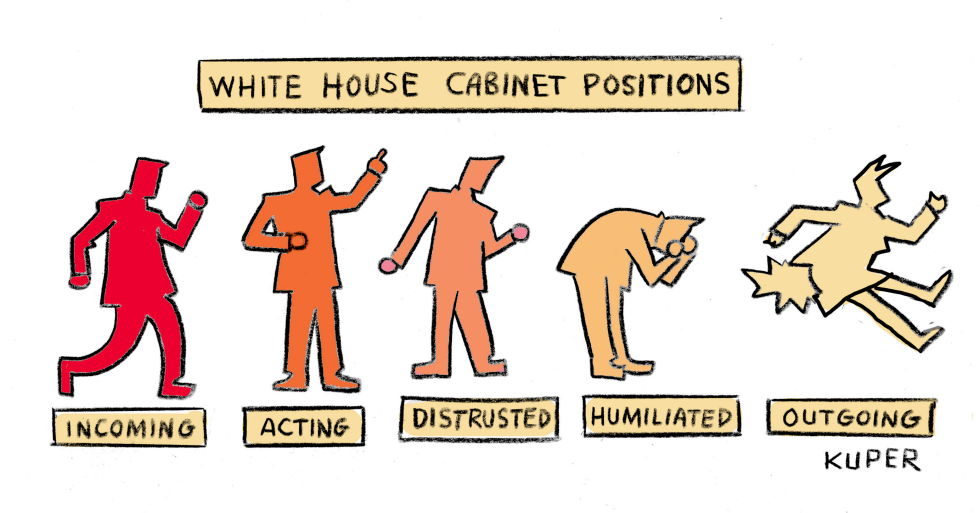
Peter Kuper nails the absurdity of Trump White House cabinet positions in this sharp cartoon. Five stylized figures march through stages: incoming in red, striding confidently; acting with a pointing gesture; distrusted standing still; humiliated bent over in shame; outgoing fleeing with a kick. Labels underscore the progression from promise to humiliation. Tags like cabinet turnover, political satire, administration instability, Trump firings, White House staff cycle, and executive distrust highlight the revolving door of appointments. It's a dry commentary on the chaos, where loyalty meets betrayal in quick succession. The simplicity amplifies the bite, making it perfect for syndication.