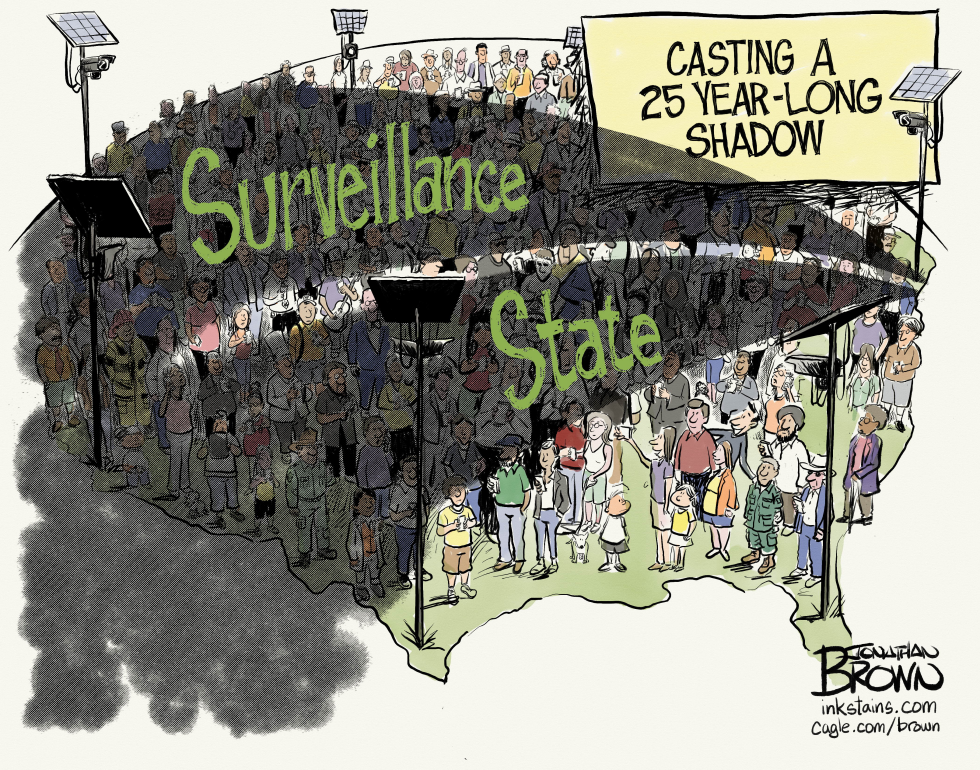
The cartoon depicts a dense crowd of Americans standing on a map of the United States, partially obscured by a large dark shadow cast by surveillance cameras mounted on poles. The words 'Surveillance State' appear prominently in green lettering across the scene, while a sign in the upper right reads 'CASTING A 25 YEAR-LONG SHADOW.' The image comments on the lasting effects of expanded government surveillance programs that began after the September 11 attacks, now spanning a quarter century. It illustrates how these measures continue to influence daily life and public spaces in 2026.
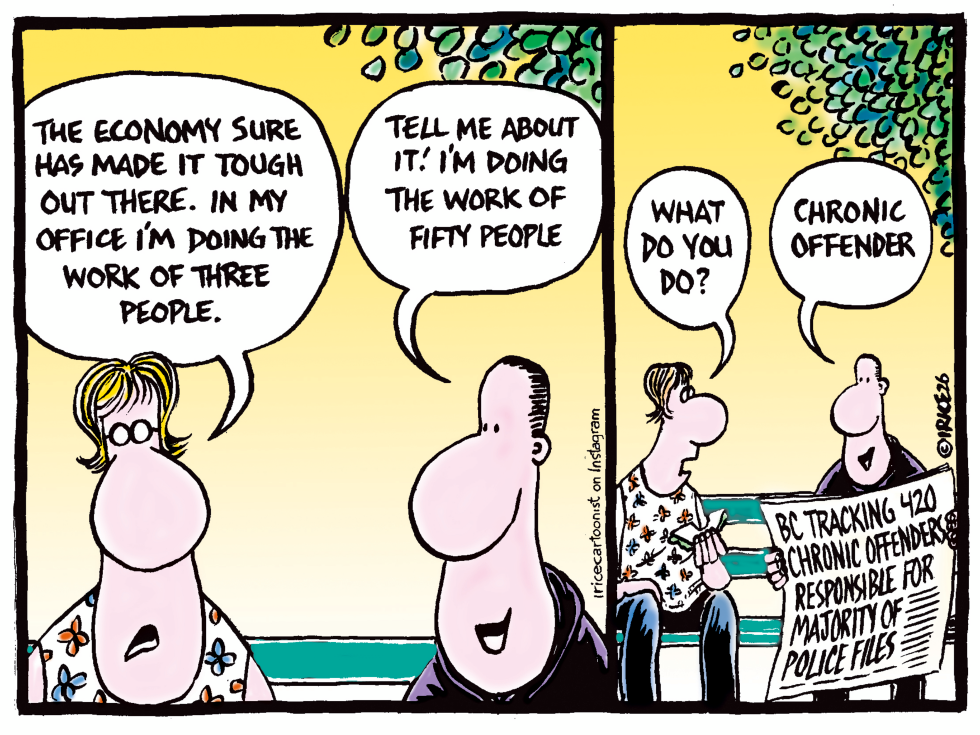
In a two-panel scene dated July 5 2026, office workers discuss heavy workloads caused by economic conditions, with one claiming to handle the work of three people and another fifty. The exchange shifts when a man on a bench identifies himself as a chronic offender, while a nearby newspaper headline reports British Columbia tracking 420 such individuals responsible for the majority of police files.
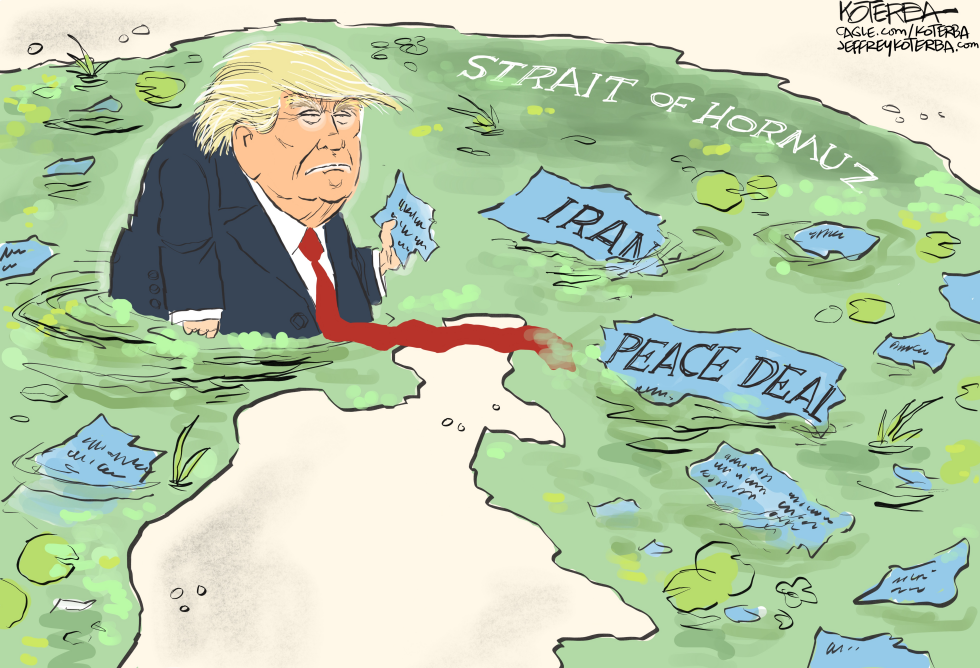
Koterba depicts Trump's Iran peace deal as already decomposing, covered in algae like a sunken shipwreck. The cartoon suggests the deal was hollow or insincere from the start, deteriorating almost immediately. The organic decay imagery implies diplomatic agreements built on false foundations cannot survive.
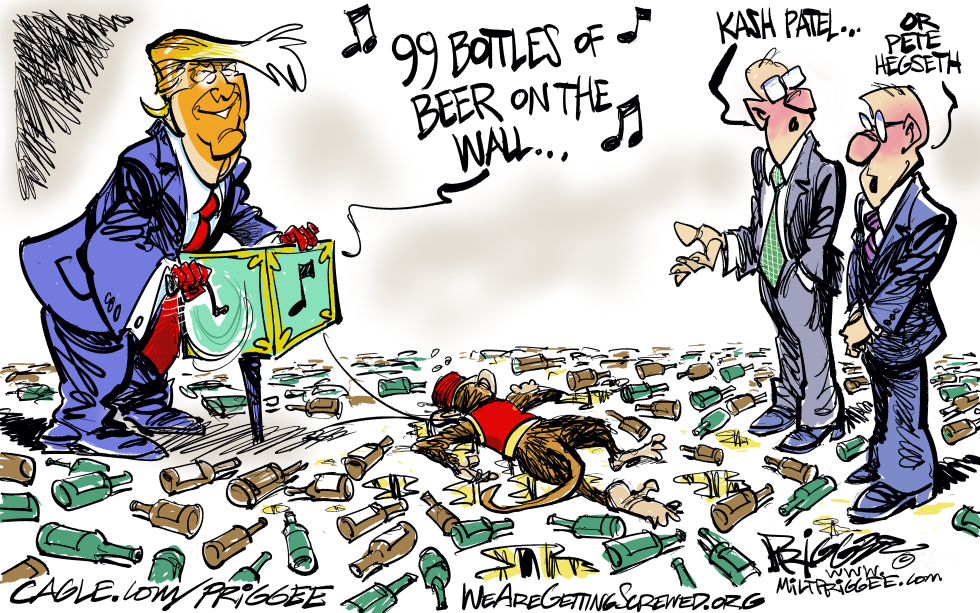
The cartoon shows Trump in a suit, cranking a music box with red gloves, belting out '99 Bottles of Beer on the Wall' amid a floor littered with broken beer bottles. A monkey in a red outfit sprawls drunkenly among the debris, while two suited men on the right discuss 'Kash Patel' or 'Pete Hegseth.' Tags like Trump, booze, drunk, secretary, and war highlight the satirical take on nominations. The artist's signature and website appear at the bottom, tying into themes of FBI and political chaos. This piece captures a straightforward jab at appointment processes without overcomplicating the visible elements.
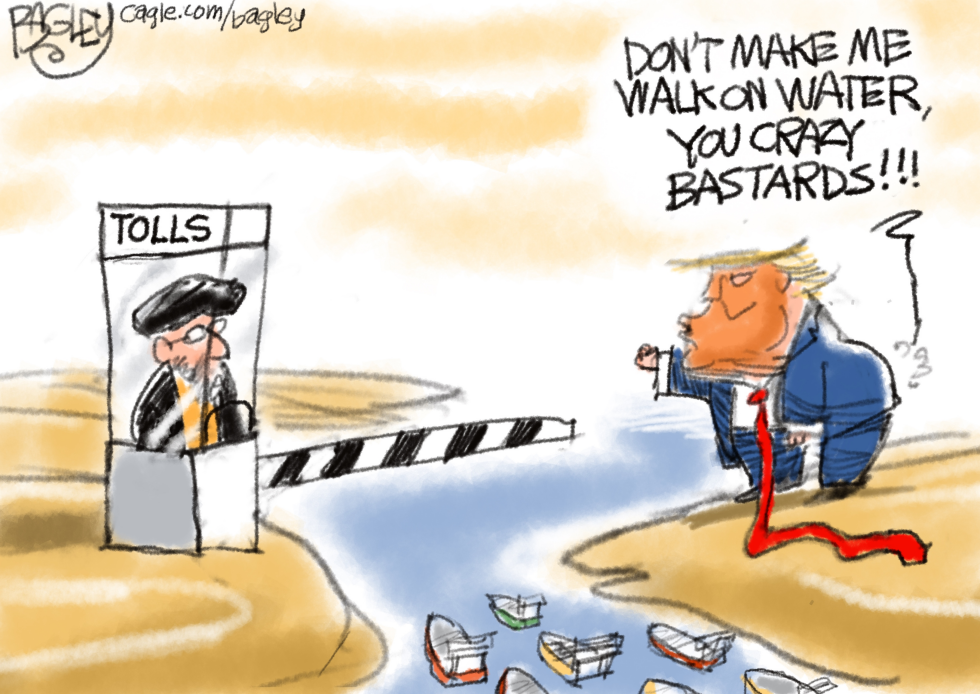
Donald Trump stands at the edge of a body of water confronting a toll booth operated by a figure resembling Ayatollah Khamenei. Small tankers sit in the water below while Trump issues a warning about walking on water. The scene references shipping routes through the Strait of Hormuz and surrounding nations.
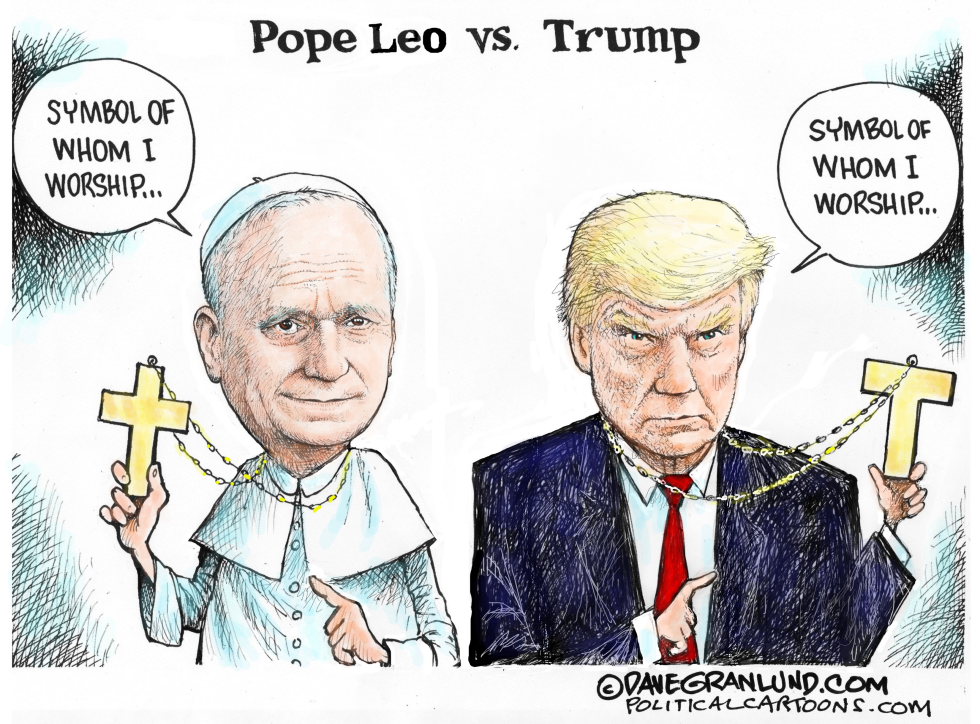
Dave Granlund's cartoon titled 'Pope Leo vs. Trump' features the pontiff holding a cross with the speech bubble 'Symbol of Whom I Worship...', directly contrasting Trump's figure gripping a 'T' pendant and echoing the same phrase. This setup underscores criticism against war, with Pope Leo positioned as a peace advocate facing off against Trump's self-referential symbol. Tags like insults pope, not a fan, Vatican, Catholics, and Christians amplify the satirical jab at political hubris invading religious spheres. The image stays simple, focusing on the two figures and their held items to drive home the point without added clutter.
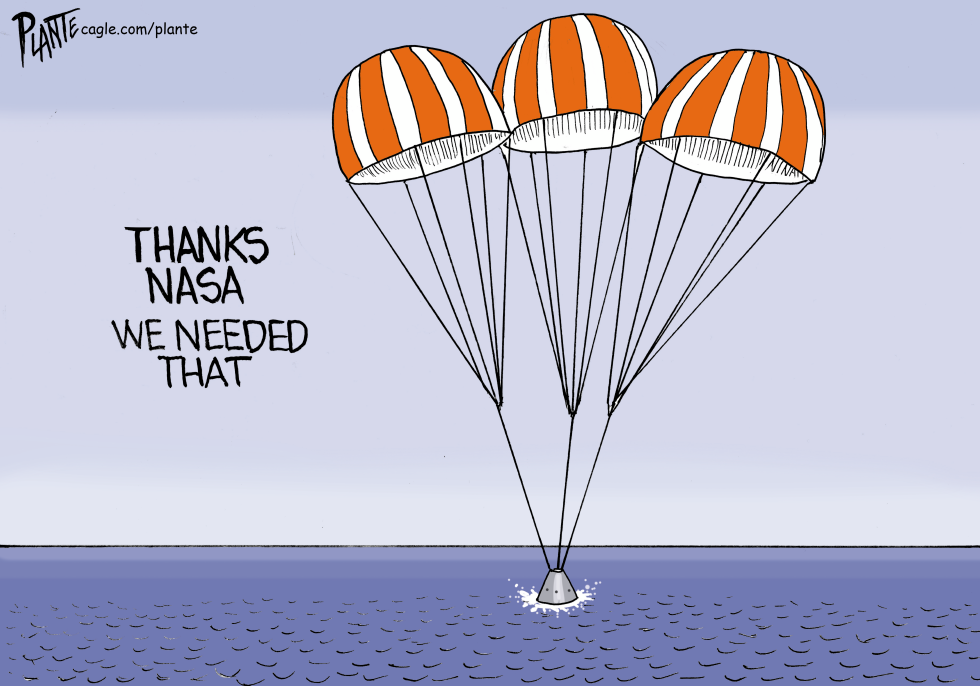
Bruce Plante\'s cartoon captures a space capsule\'s splashdown, complete with three orange and white striped parachutes guiding it to a blue ocean teeming with black fish-like forms. The prominent text \'Thanks NASA We Needed That\' adds a layer of sarcasm, typical in editorial illustrations commenting on high-profile events like the Artemis II mission. The simple composition, with a light blue sky and wavy ocean surface, emphasizes the moment of impact, shown by a small splash at the capsule\'s base. This piece fits into the tradition of political cartoons that highlight public sentiments toward government projects, using minimal elements for maximum impact. The artist\'s signature and website appear in the top left, grounding it in syndicated cartoon style.
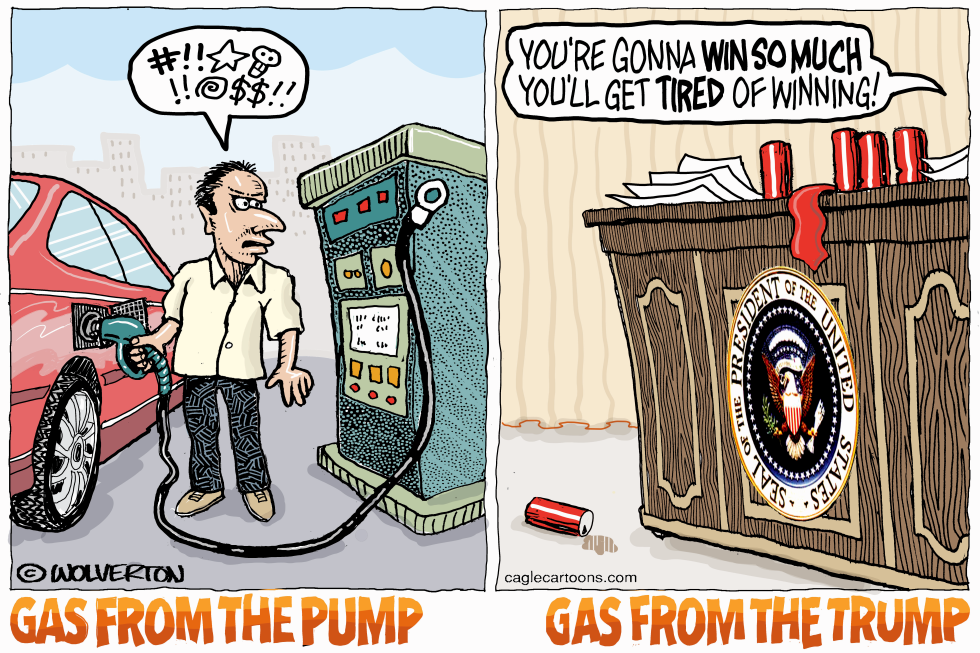
The cartoon splits into two panels: one shows a man at a car at gas pump, angrily reacting with symbols to high gasoline prices labeled as gas from the pump. The other depicts the Resolute Desk with the presidential seal, scattered papers, and coke cans, a speech bubble proclaiming 'You're gonna win so much! You'll get tired of winning!' tagged as gas from Trump. Tags like petrol, tired of winning, and Oval Office highlight the pun on 'gas' as fuel versus bluster. This setup comments on economic pains versus political rhetoric, using elements like the car at gas pump and coke cans for visual punch. The dry humor ties into ongoing debates on gasoline prices and leadership promises.
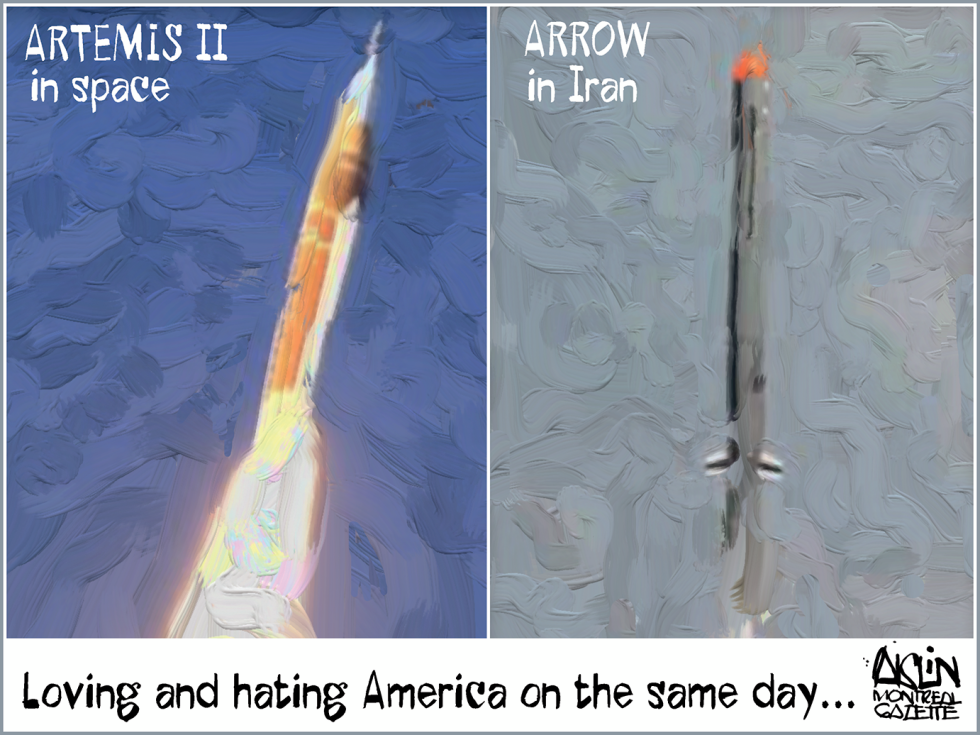
In this irreverent political cartoon, a vibrant Artemis II space launch rockets upward in a blue expanse on the left, symbolizing American innovation and triumph in US space exploration. Contrasting sharply on the right, a stark Arrow in Iran points downward with an orange glow against a gray sky, evoking geopolitical tension and Iranian weaponry. The caption 'Loving and hating America on the same day....' ties it together, offering a humorous take on the bipolar view of America in world news. With its simple yet effective composition, the artwork captures the absurdity of global perceptions, blending satire on international conflict with admiration for NASA's feats. This piece underscores the dichotomy in how the world engages with American power, from awe at space missions to ire over foreign policy frictions.
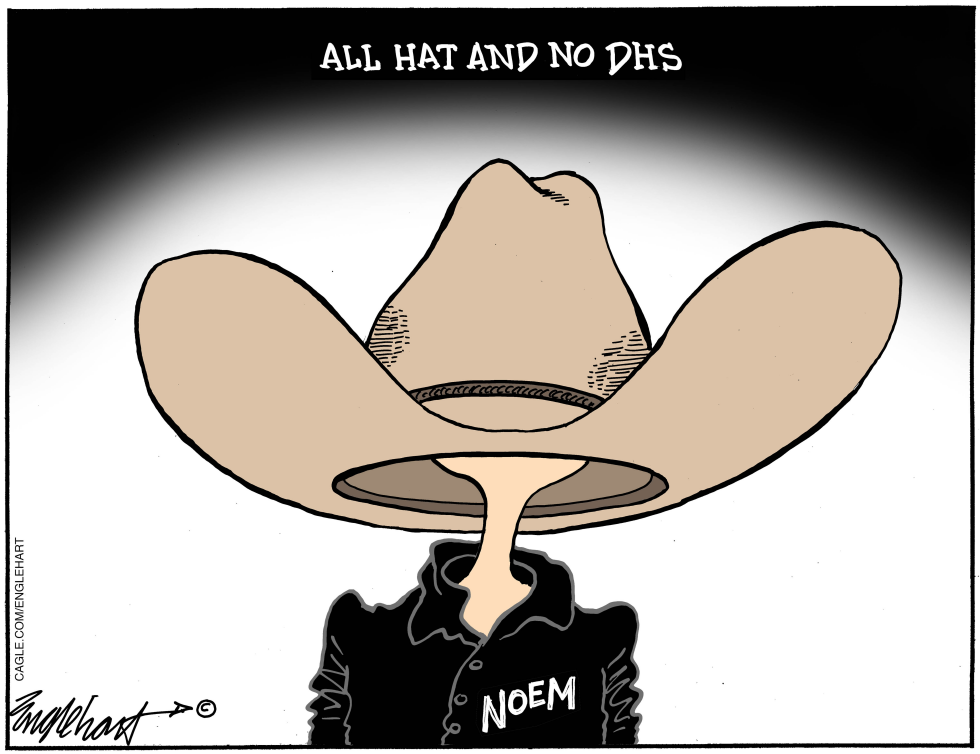
This biting political cartoon depicts Kristi Noem as an oversized cowboy hat swallowing a diminutive figure labeled 'NOEM,' with the punny title 'All Hat And No DHS.' It skewers the South Dakota governor's rumored bid for DHS Secretary in the Trump administration, playing on the idiom 'all hat and no cattle' to suggest she's all style and no substance for homeland security. Amid Republican politics buzz, the satirical art highlights Noem's political ambition clashing with reality, as border security and immigration policy debates rage on. The humorous critique captures the essence of GOP figures jockeying for positions, making it a viral-worthy jab at cabinet rumors and failed aspirations.
This biting political cartoon by Daryl Cagle depicts Donald Trump in his signature suit, his red tie extending into a coil of red tape that binds a furious, bearded figure representing Iran, complete with an 'iRan' hat. The image satirizes US-Iran relations, highlighting how bureaucracy and sanctions create entanglements in foreign policy. Trump's calm demeanor contrasts with Iran's angry struggle, underscoring the Trump administration's approach to Middle East diplomacy. Through clever visual metaphor, it comments on the nuclear deal fallout and ongoing tensions, making it a sharp piece of political humor that's both insightful and irreverent.
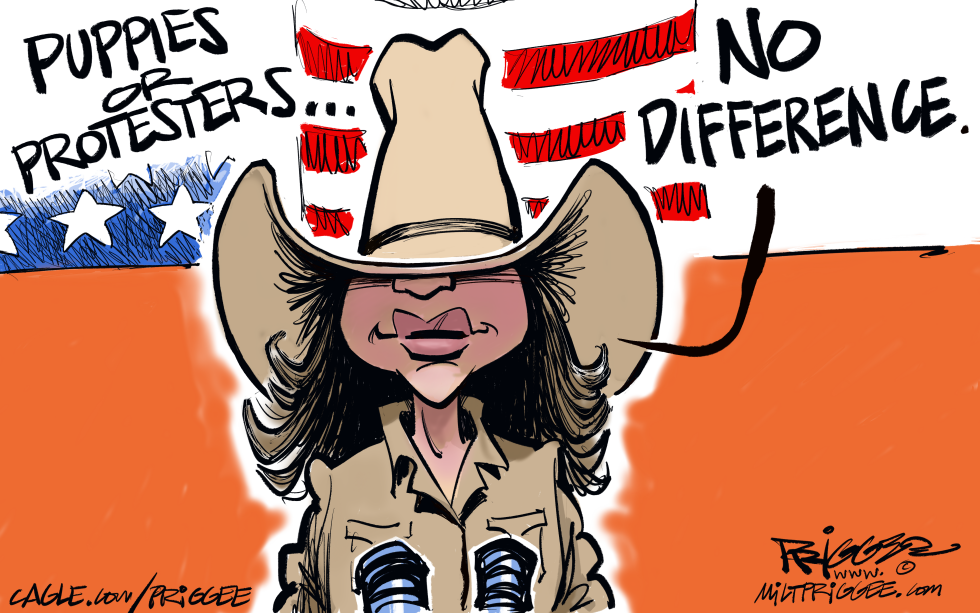
Dive into this irreverent political cartoon where a smirking, cowboy-hatted caricature, reminiscent of South Dakota's Kristi Noem, drawls that there's 'no difference' between puppies and protesters. With an American flag-adorned hat and a backdrop of scribbled disdain, the image skewers the GOP criticism surrounding Noem's infamous puppy shooting controversy. It's a sharp jab at conservative politics, blending animal cruelty debate with protest rights in a way that's both humorous and insightful. The satire underscores how some rancher lifestyle defenders might blur lines between disciplining unruly pets and quelling freedom of speech advocates. Created by Milt Priggee, this viral cartoon captures public outrage and media scandal, potentially eyeing Noem's Trump VP pick ambitions. Overall, it's a witty commentary on the absurdities of political figures who shoot from the hip—literally.
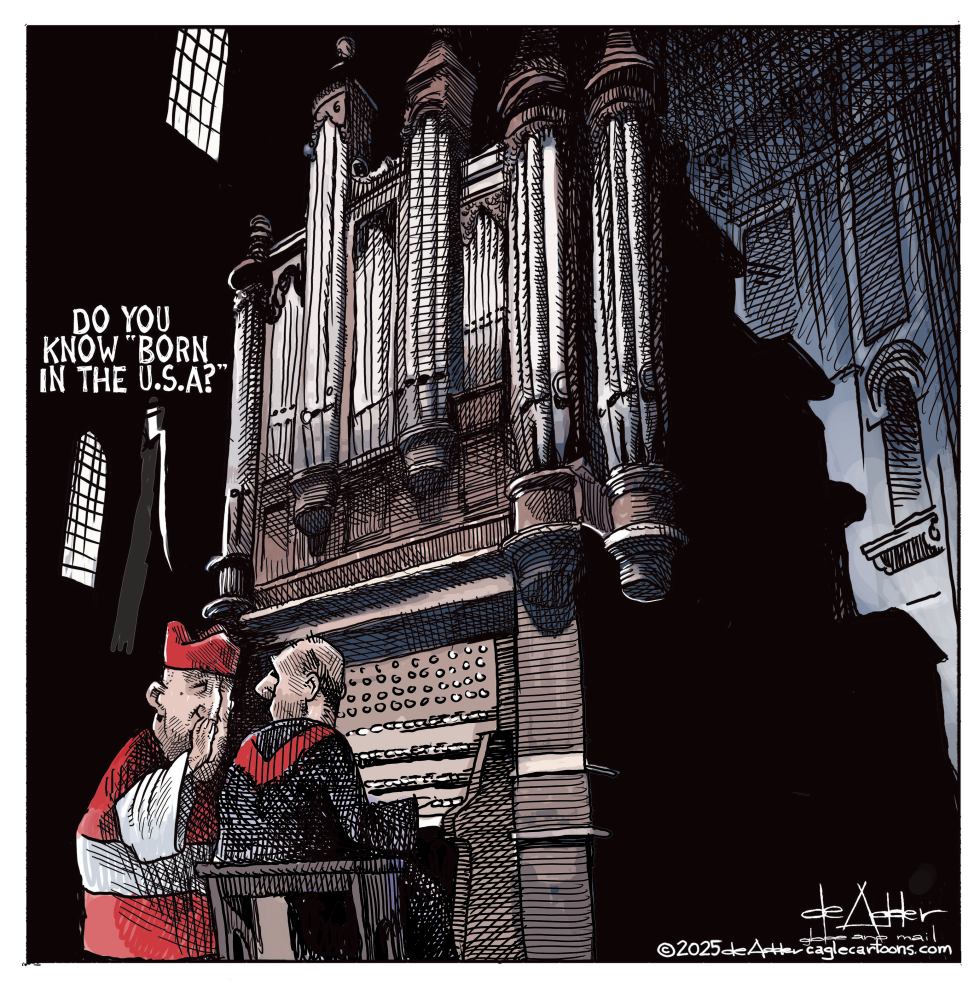
The cartoon depicts Pope Leo XIV leaning toward a seated organist in a darkened church interior. The Pope asks if the organist knows Born in the USA. The large pipe organ dominates the center. The scene references the Vatican and a popular American rock song. Publication occurred on May 13 2025.
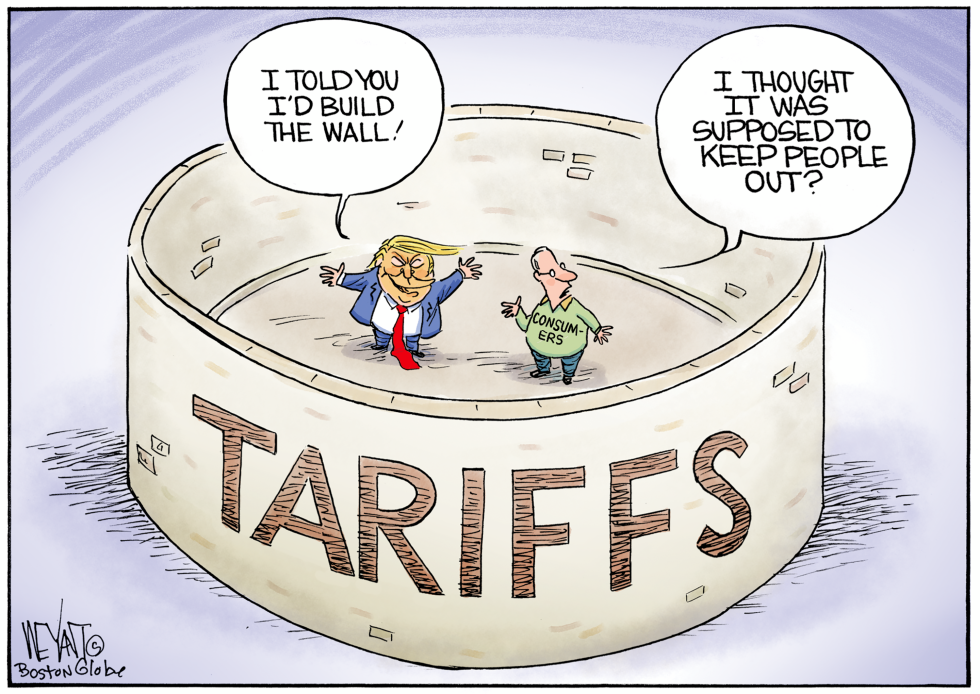
The cartoon shows Trump inside a circular wall labeled 'TARIFFS,' declaring he built the wall, with a figure marked 'CONSUMERS' puzzled that it's supposed to keep people out. Tags like trump, tariffs, threats, Mexico, Canada, China, trade, wall, prisoner, consumers underscore the irony. The image critiques how tariffs meant to protect against foreign threats from Mexico, Canada, and China end up trapping domestic consumers like prisoners. This visual metaphor draws on Trump's famous wall promise, flipping it to show trade policies harming those inside. The dry humor lies in the reversal, where the wall imprisons rather than excludes, commenting on economic fallout.