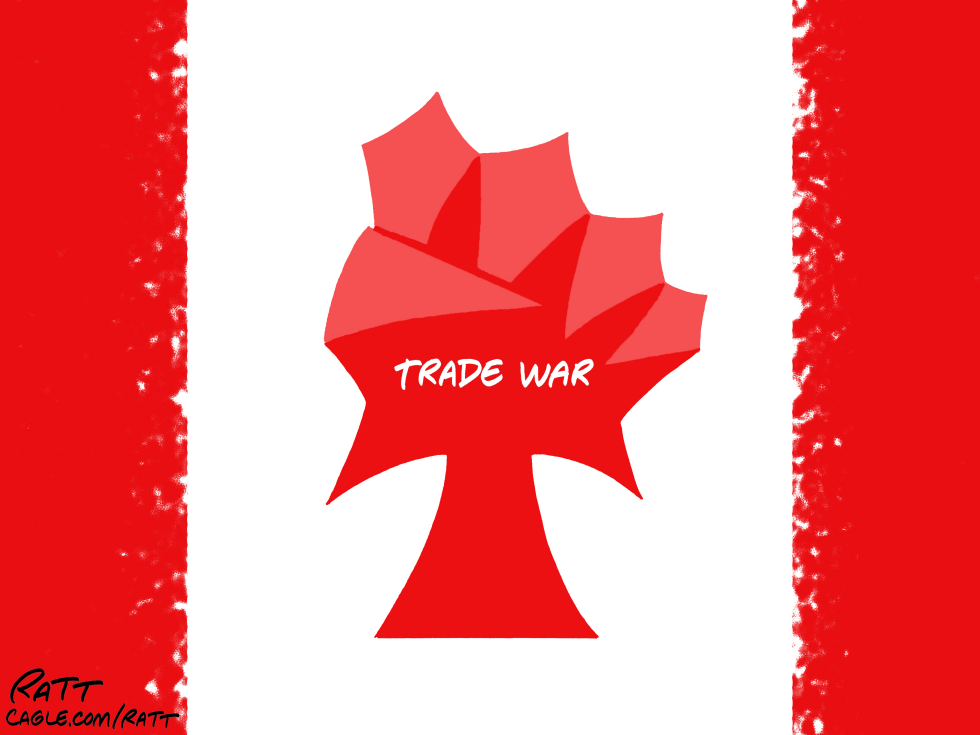
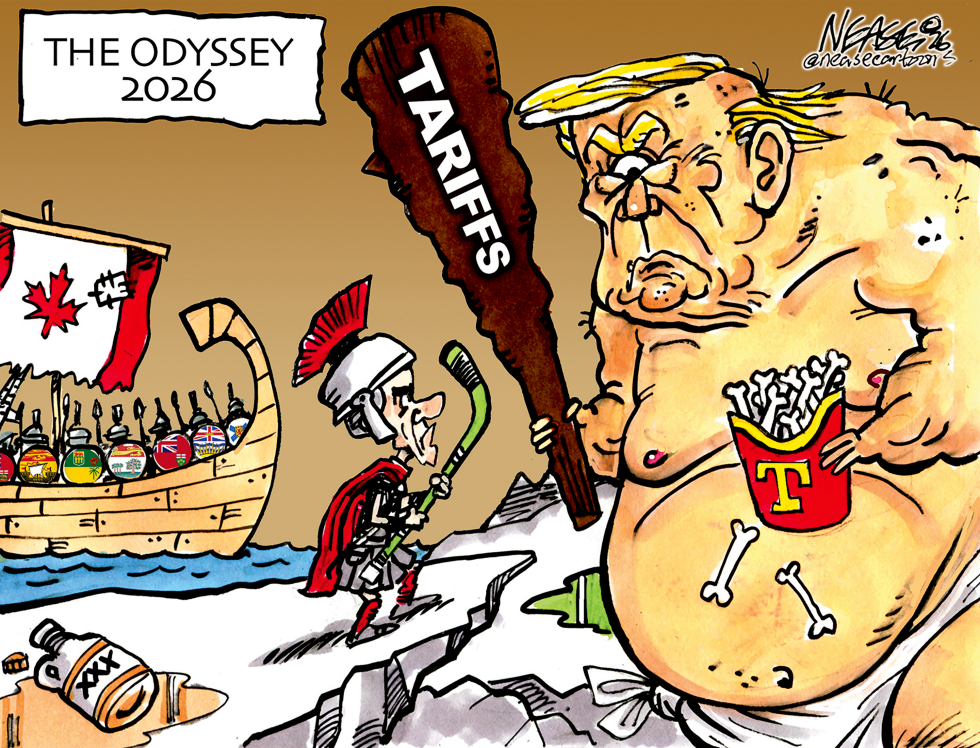
Ongoing US-Canada trade tensions escalated in 2026 with new tariff threats targeting Canadian exports. The dispute threatens key sectors including autos, lumber and agriculture, raising costs for consumers on both sides of the border. Canada has signaled plans to diversify markets and strengthen domestic industry. The cartoon frames the conflict as a direct assault on Canadian sovereignty and economic stability. It portrays the trade war as fracturing national symbols while urging a stronger northern response.
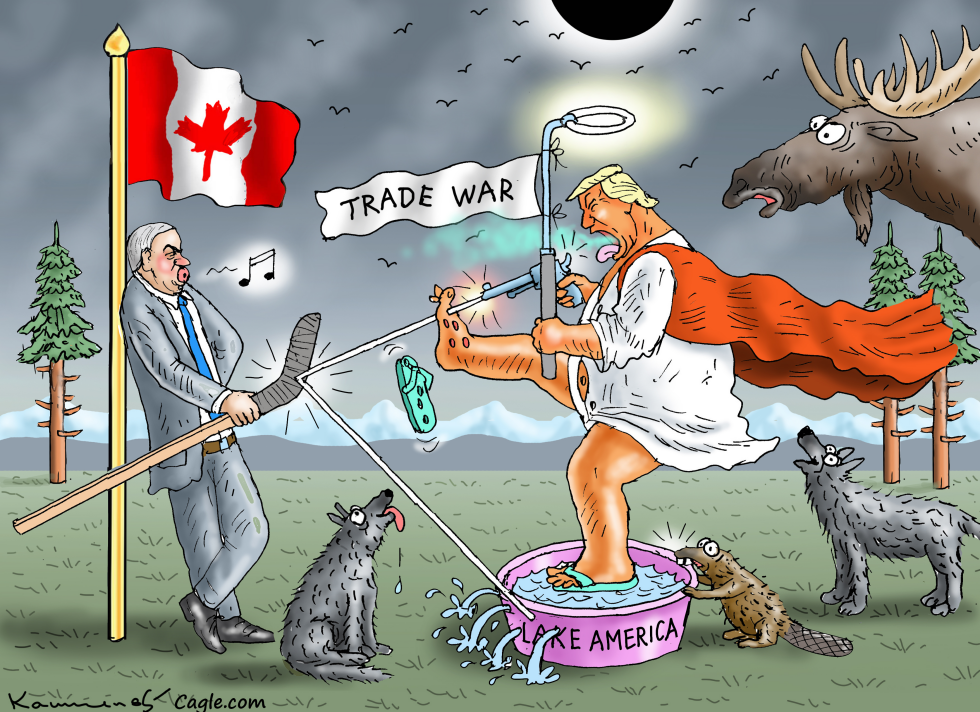
President Trump launched new tariffs on Canadian goods in early September 2026, citing trade imbalances and border issues. The move immediately prompted Canadian countermeasures including duties on US exports. The policy shift disrupts integrated supply chains in autos, energy and agriculture that support millions of jobs on both sides of the border. Markets reacted with volatility as investors weighed the costs of renewed protectionism. The cartoon portrays the tariff campaign as self-inflicted harm that leaves the US exposed to swift Canadian pushback.
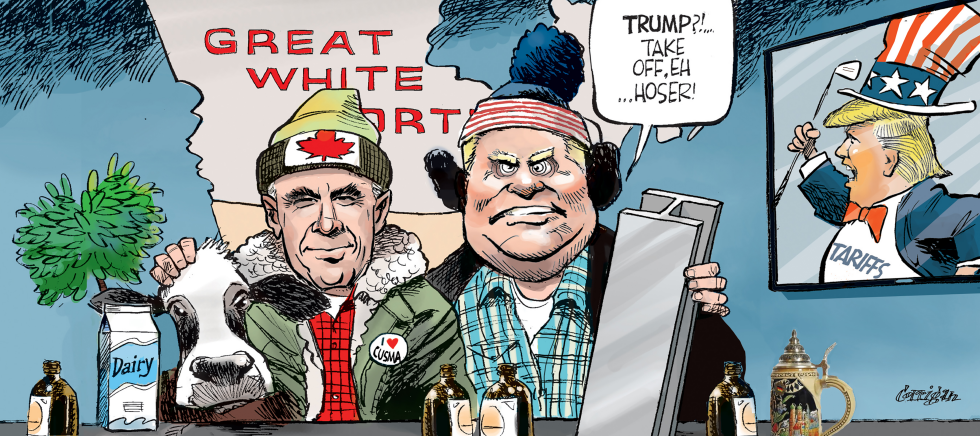
President Trump renewed tariff threats against Canada focused on dairy imports in late August 2026. Canadian leaders responded by highlighting domestic protections and cultural stakes. The move risks straining long-standing trade ties under existing agreements. The cartoon frames the confrontation as a direct challenge to Canadian sovereignty in agriculture. It portrays US policy as aggressive posturing that ignores mutual economic interests.
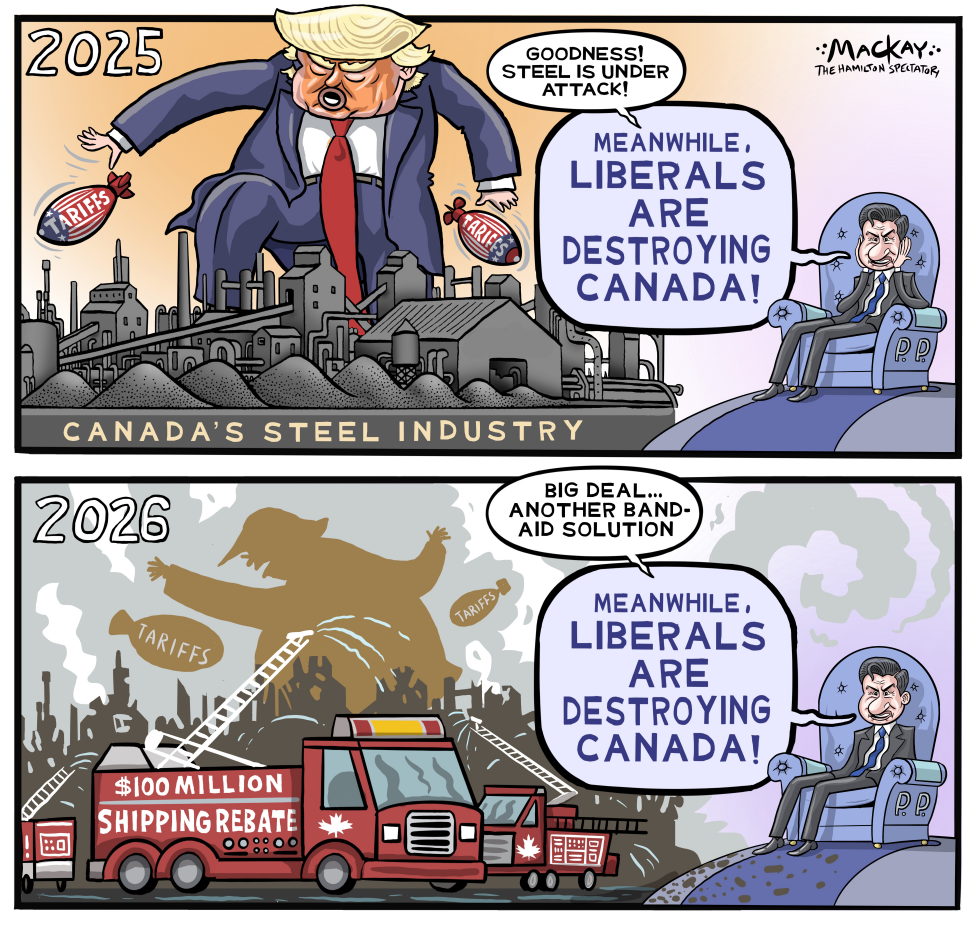
U.S. tariffs imposed on Canadian steel in 2025 triggered sharp declines in the domestic industry by 2026. The federal government responded with a $100 million shipping rebate. Conservative Leader Pierre Poilievre continued to focus attacks on the Liberal government rather than the trade shock. The cartoon argues this stance amounts to a repeated distraction from the core economic damage.
President Trump escalates tariffs on trading partners including Canada in mid-2026. The move targets imports amid ongoing disputes over trade balances and supply chains. Allies respond with coordinated pushback through diplomatic and economic channels. The cartoon casts the confrontation as a one-sided power play by the oversized tariff wielder against smaller coordinated opponents.
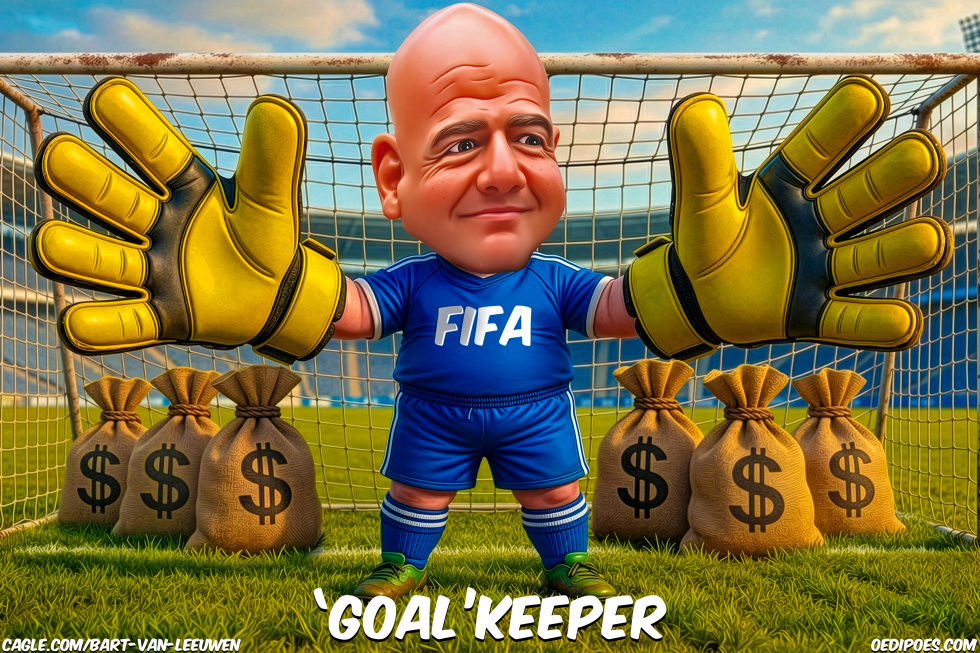
The image presents a bald man wearing a blue FIFA goalkeeper kit and oversized yellow gloves. He stands centered in a soccer goal with multiple burlap sacks printed with dollar signs placed on the field grass nearby. The scene responds to ongoing discussions about FIFA revenue from the upcoming World Cup hosted in the United States. Publication occurs ahead of the 2026 tournament schedule. The visual emphasizes financial flows connected to American soccer markets under current FIFA leadership.
The image depicts the FIFA World Cup trophy transformed with Donald Trump's face as its centerpiece. Gianni Infantino, the FIFA president, holds the base firmly. Several soccer players stand nearby, including figures resembling Kylian Mbappé and others in national kits. The scene references the upcoming 2026 World Cup hosted in part by the United States. Trump's prominent placement on the trophy underscores his outsized role in public discussions around the event.
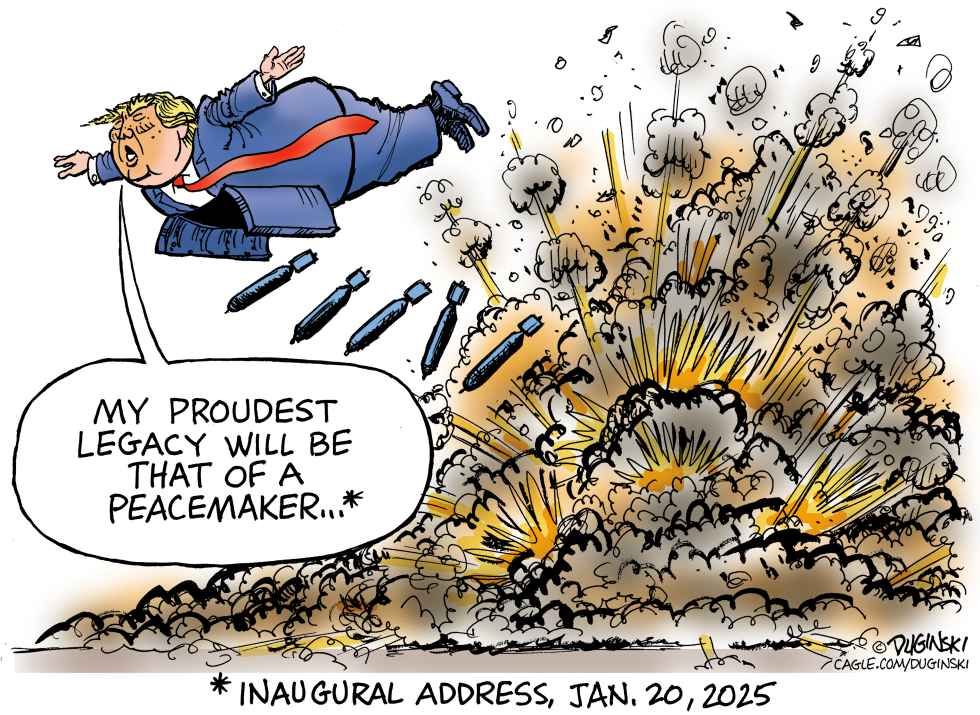
Duginski holds Trump accountable for his campaign promise to end wars within 24 hours of taking office. The Los Angeles Times illustrator catalogs the ongoing conflicts that remain unresolved. The broken promise imagery reflects sustained journalistic skepticism of Trump's foreign policy boasts.
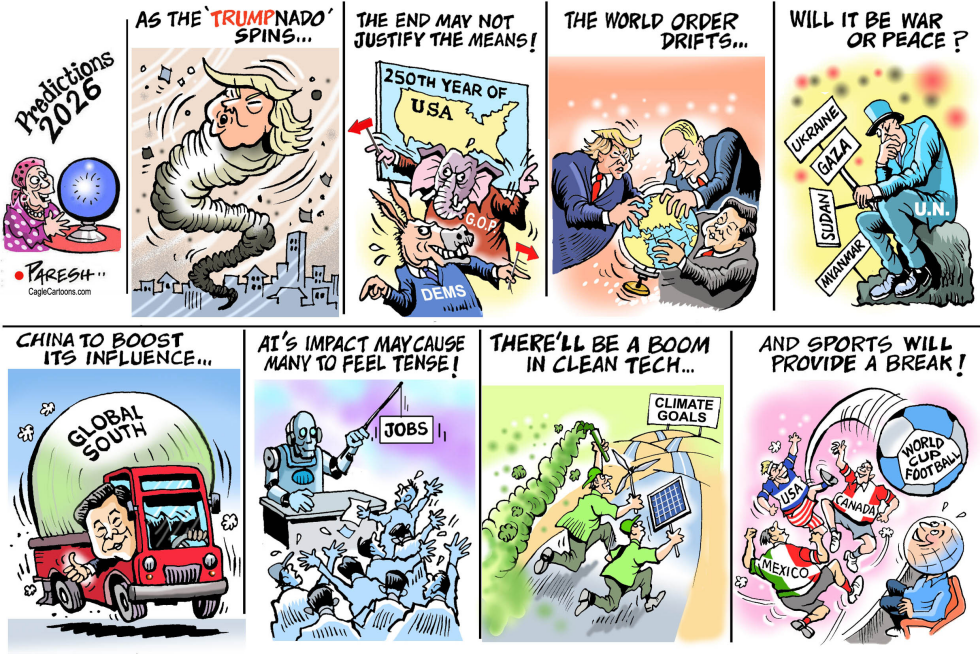
Paresh Nath's January 2026 predictions panel series opens with a fortune teller viewing a crystal ball. Subsequent sections show a Trump tornado, an elephant and donkey arguing over the US 250th anniversary, leaders tugging at a globe, a UN figure pondering conflict zones, China boosting influence in the global south, a robot waving a jobs sign amid chaos, workers chasing clean tech, and athletes from USA, Canada and Mexico scrambling for a World Cup football.
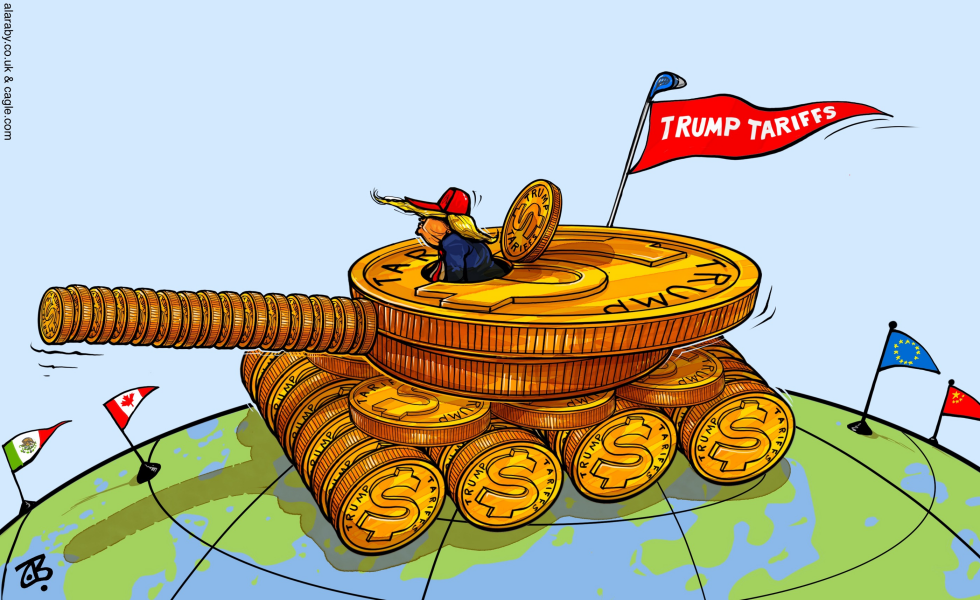
On February 4 2025 the cartoon depicts Donald Trump aboard a tank constructed from gold coins marked with dollar signs and tariff labels. The vehicle advances across a globe bearing flags of Canada Mexico the European Union and China. A red banner proclaims Trump Tariffs as the barrel extends forward.
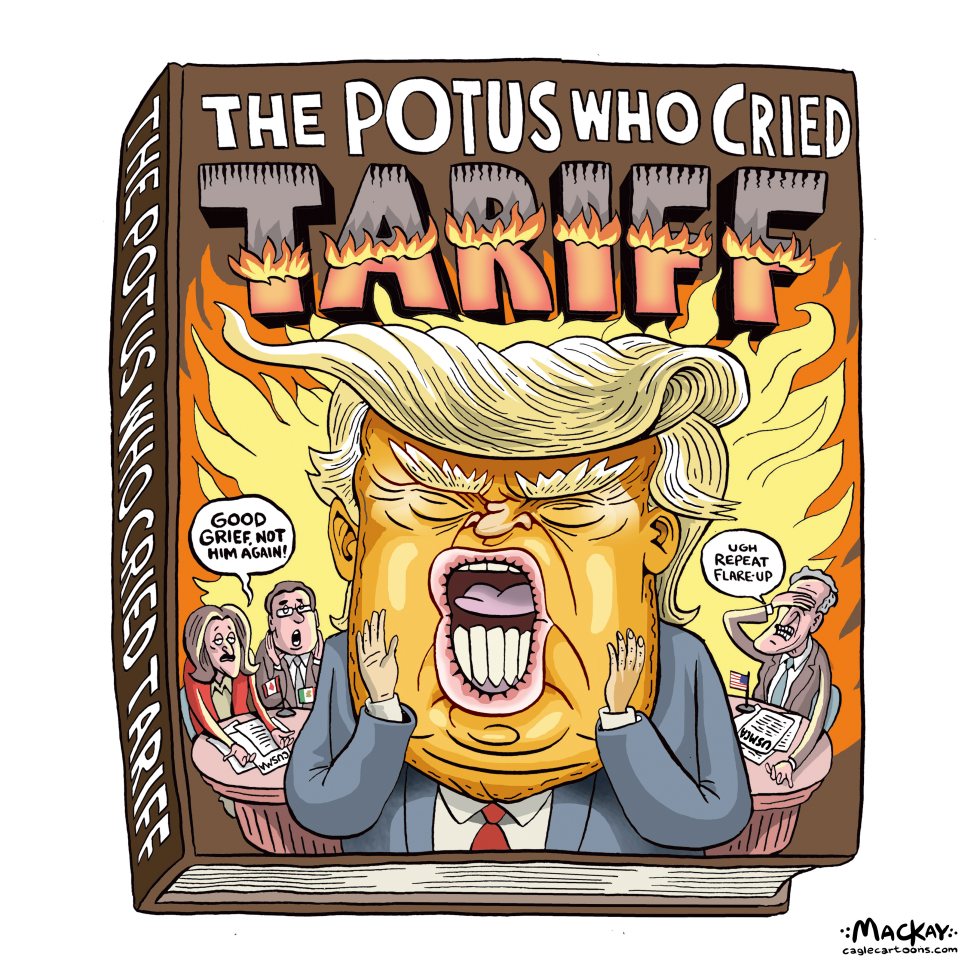
Graeme MacKay's cartoon reimagines Aesop's fable as 'The POTUS Who Cried TARIFF,' with Donald Trump's exaggerated face shouting on a fiery book cover. Representatives from USA, Mexico, and Canada sit at a table, showing exasperation with speech bubbles like 'Good Grief not him again!' and 'Ugh Repeat flare-up?' The tags USA, Mexico, Canada, trade, diplomacy, tariff, Donald Trump, USMCA, NAFTA, The Boy Who Cried Wolf, Aesop, and fable underscore the satire on repeat threats becoming ineffective. This visual pokes at how constant warnings lose impact in international relations.
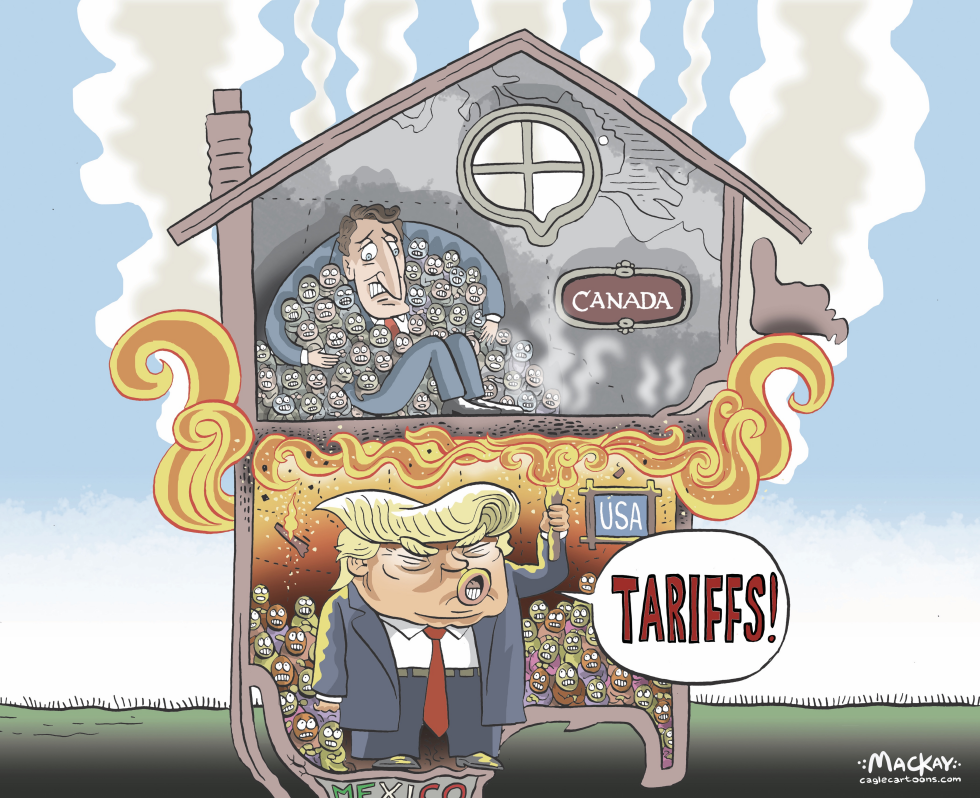
On February 2 2025 President Donald Trump announced new tariffs targeting Canadian and Mexican imports. The move immediately raised concerns in Ottawa about economic fallout and strained relations with close neighbors. Cartoonist Graeme MacKay depicts the three nations as floors in one shaky house with Trump fanning flames from below while Canadians react in alarm above.