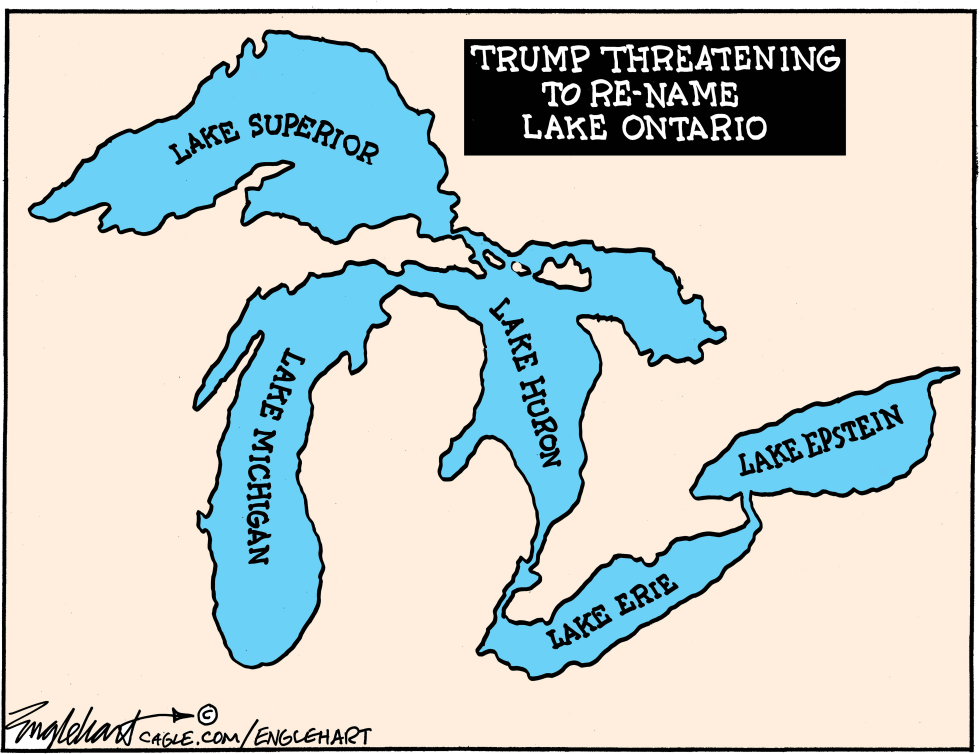
Donald Trump has floated renaming Lake Ontario, prompting fresh debate over presidential authority and decorum. The move echoes past naming controversies and raises questions about using federal power for personal or political statements. The cartoon criticizes the idea as frivolous and inappropriate.
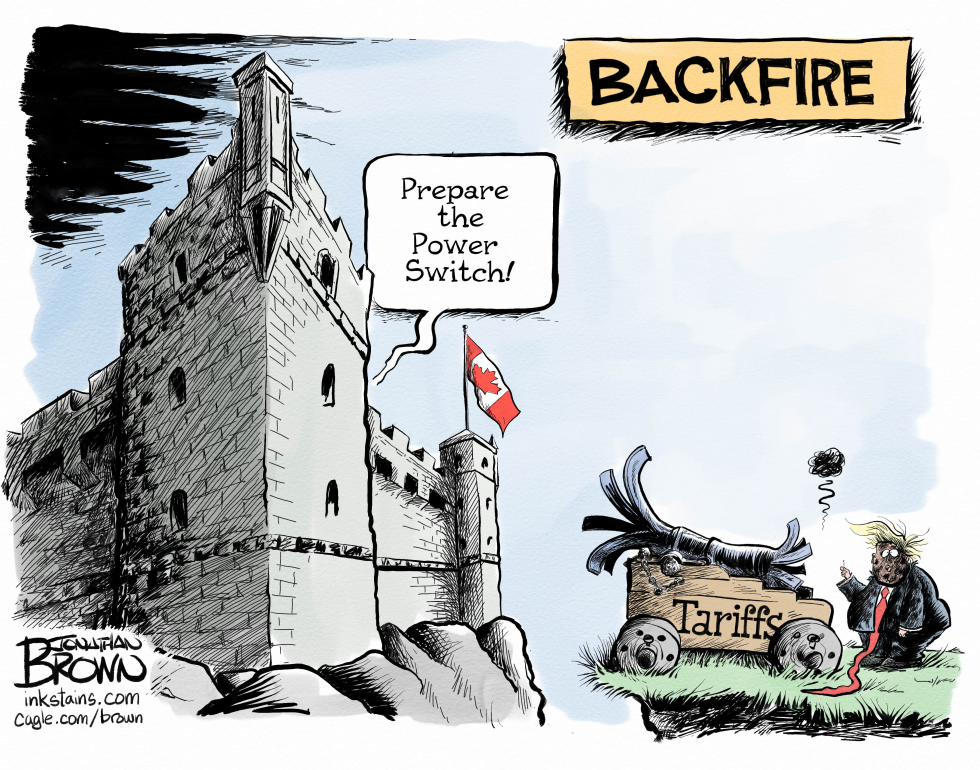
The cartoon shows a Canadian castle flying its flag while a cannon labeled Tariffs explodes backward toward a figure resembling Donald Trump. The scene responds to ongoing trade tensions where U.S. tariffs on Canadian goods prompted retaliatory measures. The visual emphasizes the policy rebounding on its originator rather than achieving intended pressure.
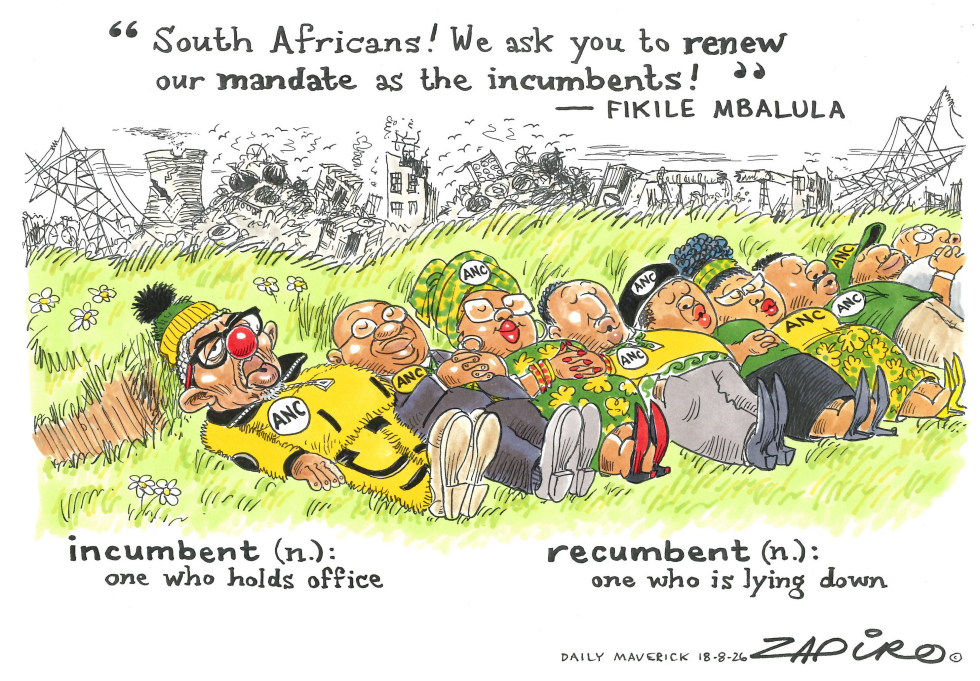
ANC secretary general Fikile Mbalula publicly called for South Africans to renew the party's mandate as incumbents ahead of upcoming elections. The appeal comes as the party faces voter fatigue after years in power marked by infrastructure failures and governance challenges. The editorial position frames the ANC as literally recumbent and disconnected from the decay surrounding them.
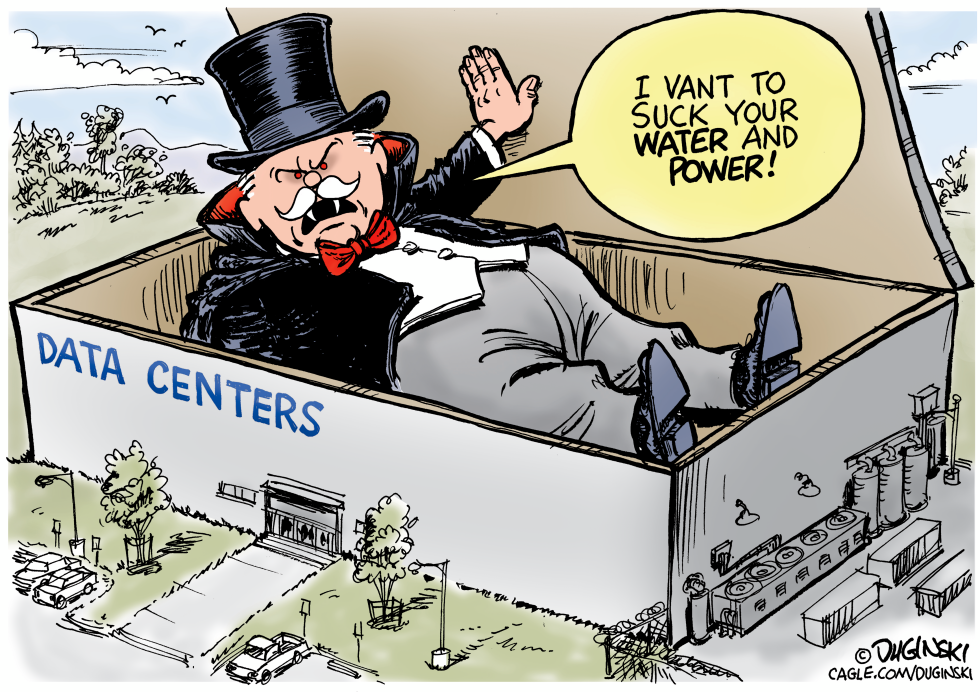
Data center operators continue rapid expansion to support cloud computing and artificial intelligence workloads, driving sharp increases in electricity and water consumption across multiple states. Local utilities report strain on grids and aquifers as facilities require constant cooling and backup power. The editorial takes the position that unchecked growth treats public resources as unlimited, urging stronger oversight before shortages worsen.
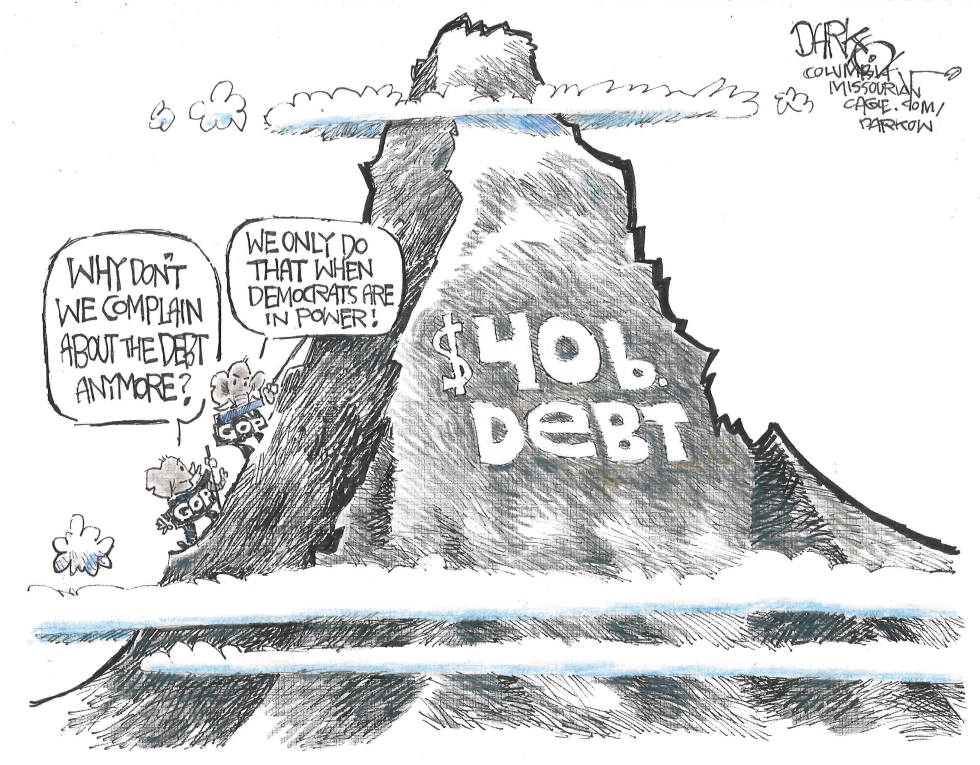
Republicans in power have stopped raising alarms over the national debt, a reversal from their stance during Democratic administrations. The shift highlights how fiscal concerns often serve partisan purposes rather than consistent policy priorities. The piece critiques this selective approach to government spending and borrowing.
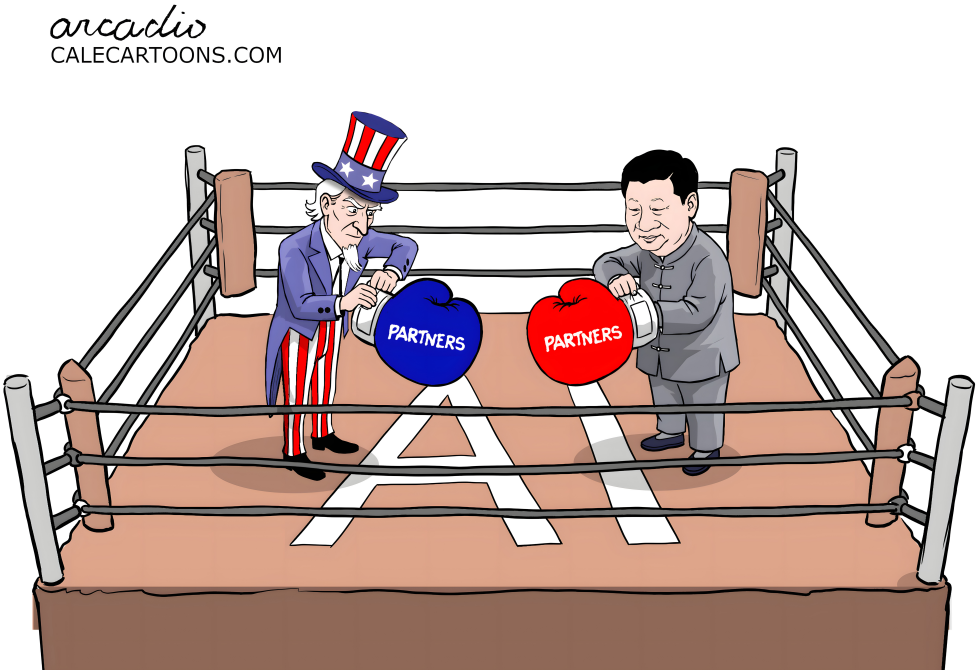
The United States and China continue their contest for leadership in artificial intelligence development. Both nations invest heavily in research and infrastructure to secure advantages in computing power and applications. The competition carries implications for economic growth, military capabilities, and global standards. Recent policy moves on export controls and domestic incentives underscore the stakes. The editorial position frames the dynamic as a direct contest where surface cooperation masks deeper rivalry.
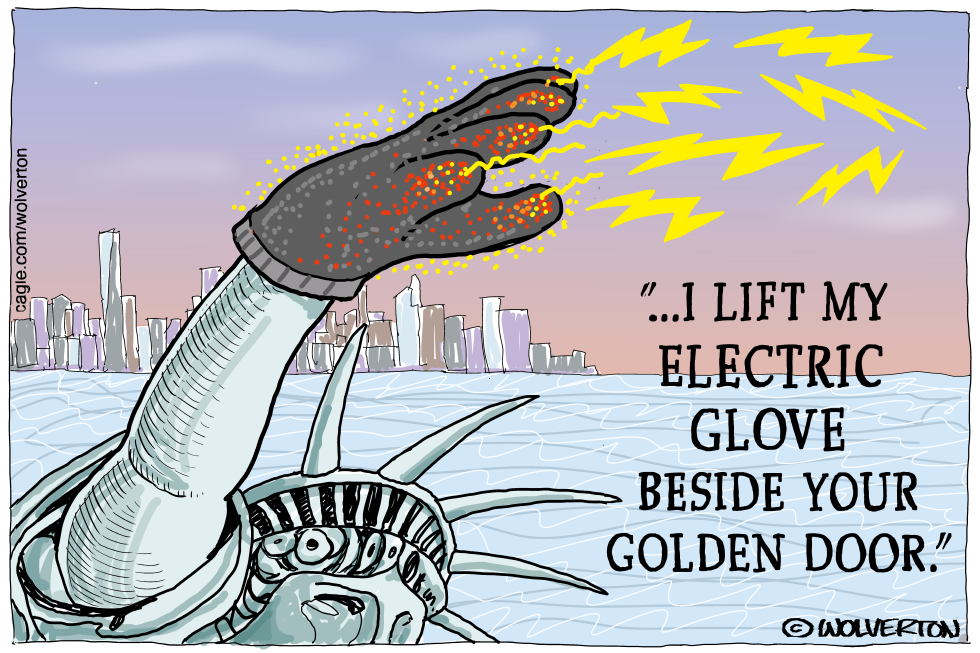
The cartoon depicts the Statue of Liberty with a dark electric glove on its raised arm, emitting yellow lightning bolts and sparks over New York Harbor. The accompanying text alters the Emma Lazarus poem to read I lift my electric glove beside your golden door. The image uses the familiar monument and skyline to present a visual pun on the original lamp reference. Publication occurred on August 17 2026 amid ongoing national debates over border policy and energy infrastructure. The composition places the modified arm against a dusk sky and rippling water to emphasize the glowing effect.
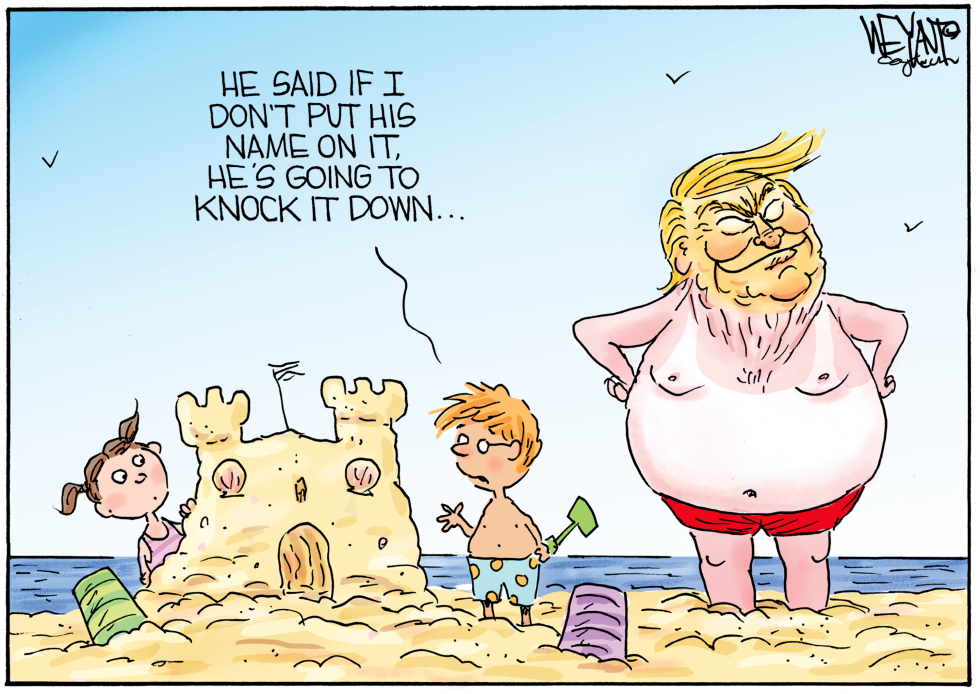
Donald Trump has long pressed for personal credit in public projects and political dealings. The pattern involves demands for recognition that extend even to minor or symbolic matters. This dynamic matters because it reveals how one figure seeks to dominate credit and loyalty across settings. The piece takes the position that such demands reflect an outsized need for acknowledgment that overrides ordinary boundaries.
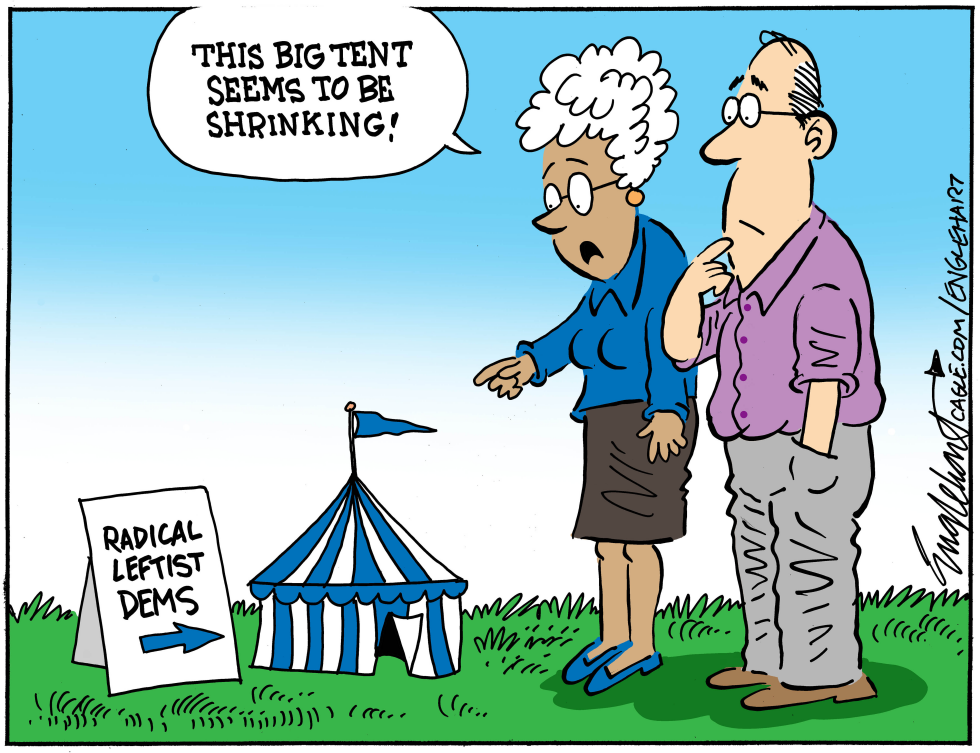
Democratic Party figures have grown concerned that the traditional big tent coalition is contracting as radical leftists consolidate control over the party's direction and messaging. The shift sidelines moderates and narrows the range of acceptable views within the organization. This dynamic raises questions about the party's ability to maintain broad electoral appeal in upcoming cycles. The editorial takes the position that the exclusionary turn is self-defeating and accelerates the party's isolation from mainstream voters.
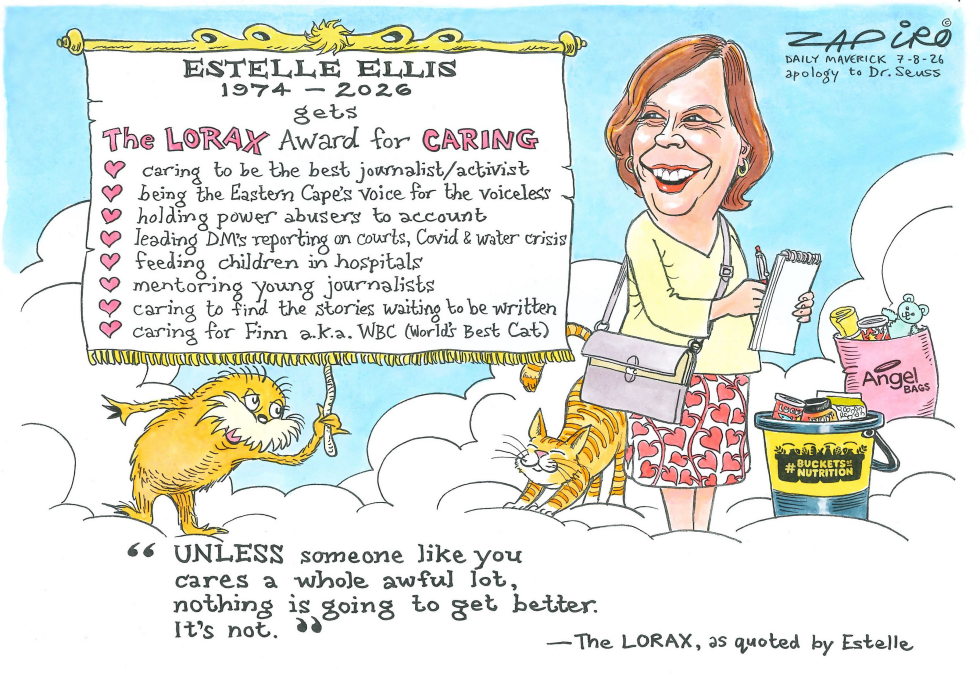
Estelle Ellis, the Eastern Cape journalist known for holding power abusers accountable and feeding children in hospitals, receives the Lorax Caring Award. Her work includes court reporting on DMs, Covid and water issues plus mentoring young journalists. The award recognizes her voice for the voiceless and care for animals. The piece presents her as a model activist journalist whose efforts improve conditions for others.
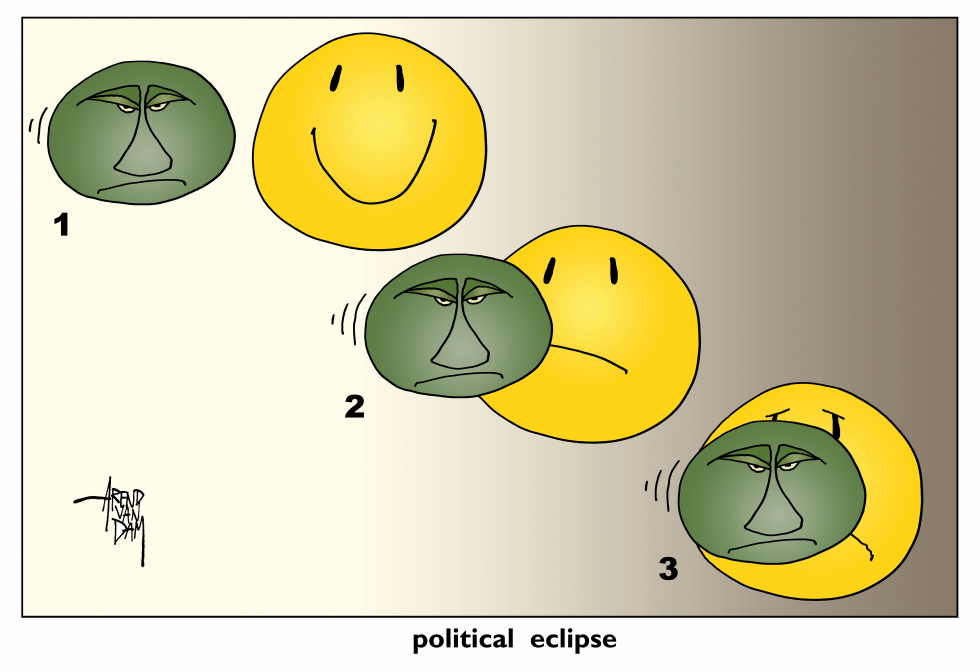
A political figure represented by a green frowning face progressively covers a yellow smiling face across three labeled stages. The interaction illustrates one presence gaining dominance while diminishing the other. The piece comments on the dynamics of political competition and shifting influence between rivals.
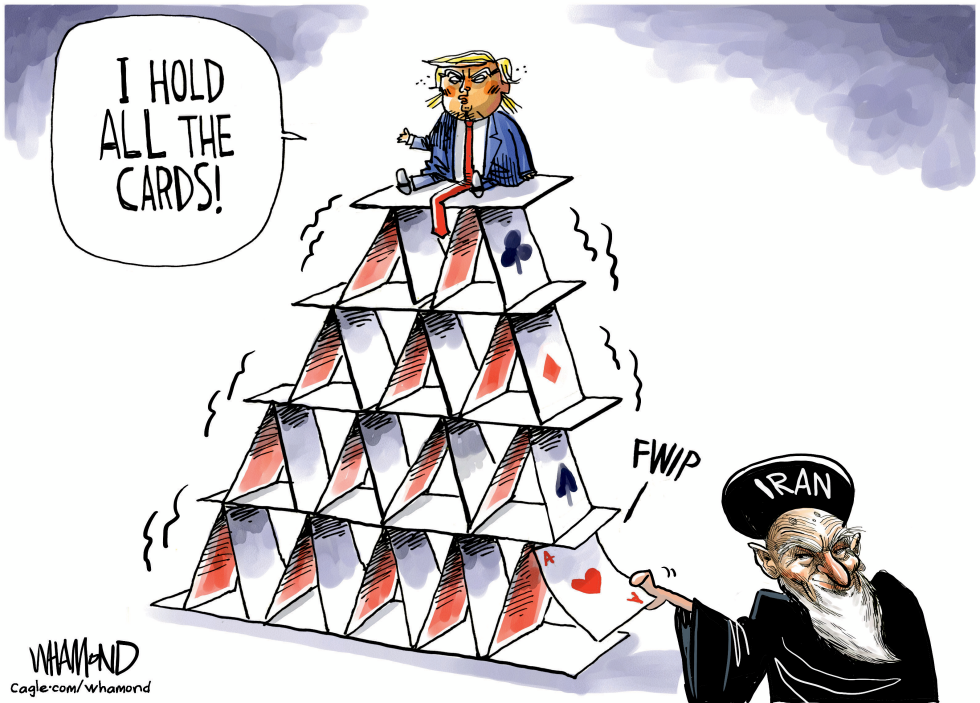
Donald Trump publicly asserted that the United States holds all leverage in dealings with Iran. The claim came amid ongoing tensions over nuclear issues and regional influence. Iran responded with actions that directly challenged that position. The editorial cartoon depicts the assertion as resting on an unstable foundation that Iran can readily disrupt. It frames the dynamic as one where bold statements outpace actual structural strength.
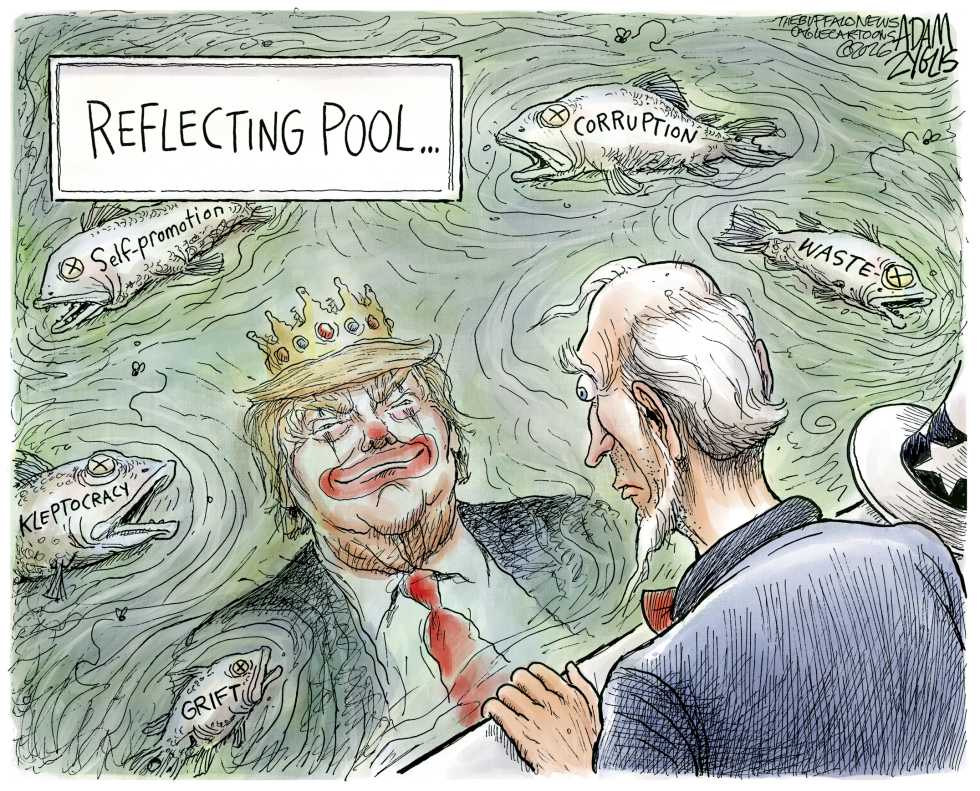
Accusations of kleptocracy and self-dealing have followed Donald Trump through multiple phases of his political career. Critics point to patterns of self-promotion and waste in government dealings. The cartoon frames these issues as dead fish surfacing in a reflecting pool, with Trump depicted wearing a crown and clown makeup while an older observer looks on. The editorial position criticizes Trump as emblematic of corruption and grift.
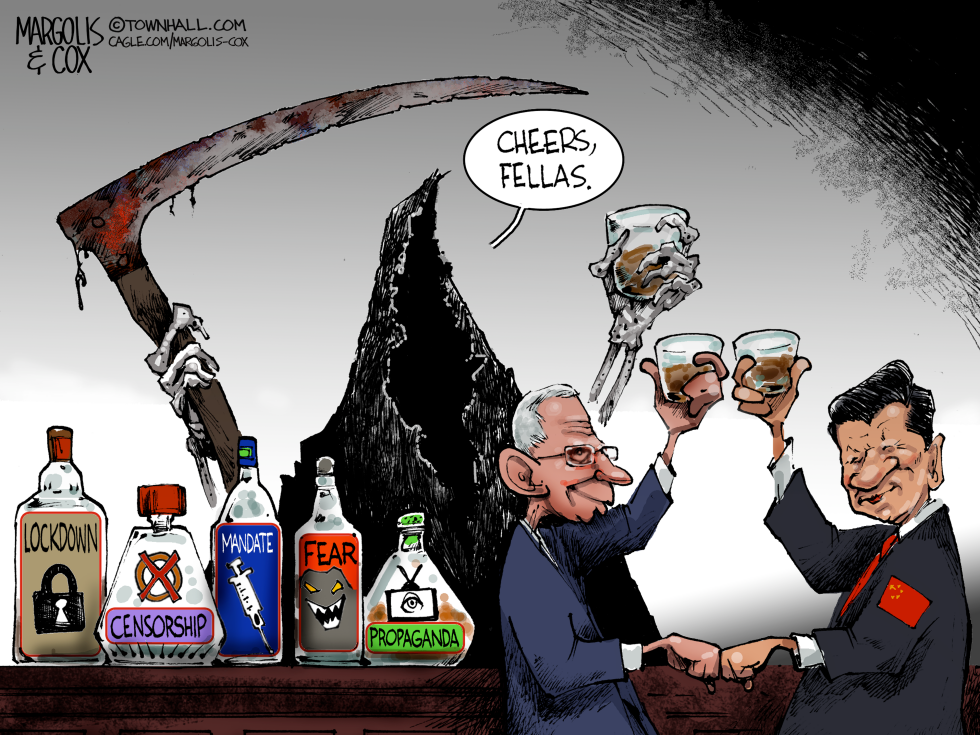
On August 6, 2026, the cartoon responds to lingering debates over COVID-19 policies by depicting former NIAID director Anthony Fauci and Chinese leader Xi Jinping toasting with the Grim Reaper. The image frames pandemic tools as shared instruments of control. The editorial position criticizes both figures for embracing fear-driven measures and information suppression.