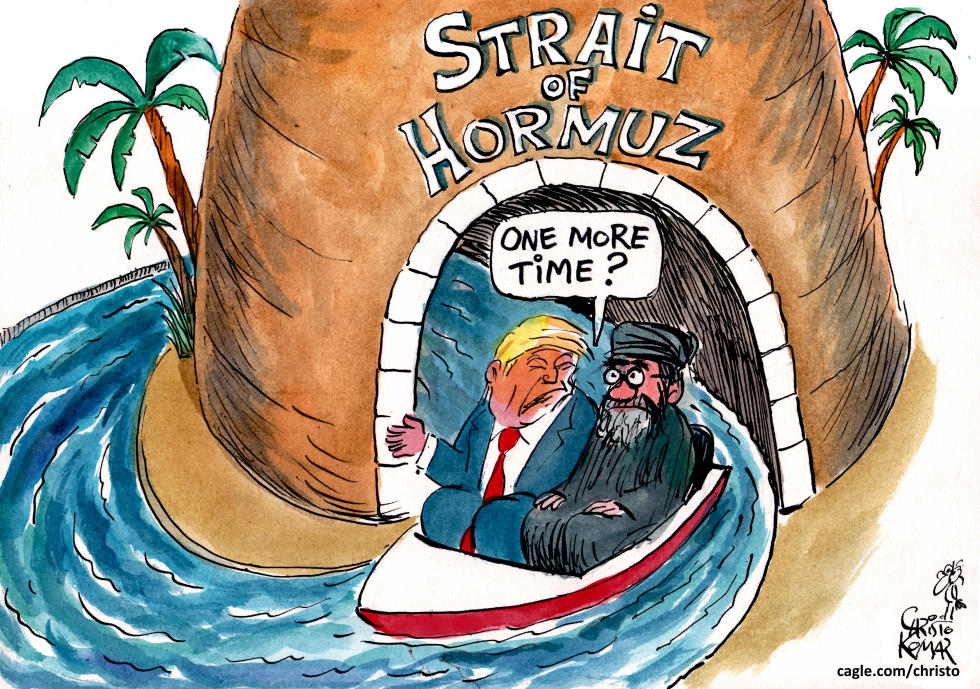
On August 5 2026 renewed friction over shipping lanes in the Strait of Hormuz draws attention as former President Donald Trump appears alongside Iran's Supreme Leader in a symbolic return to the chokepoint. The episode underscores ongoing US-Iran friction over energy exports and naval presence. The piece portrays the pair repeating a risky transit that highlights persistent strategic vulnerabilities in the Persian Gulf.
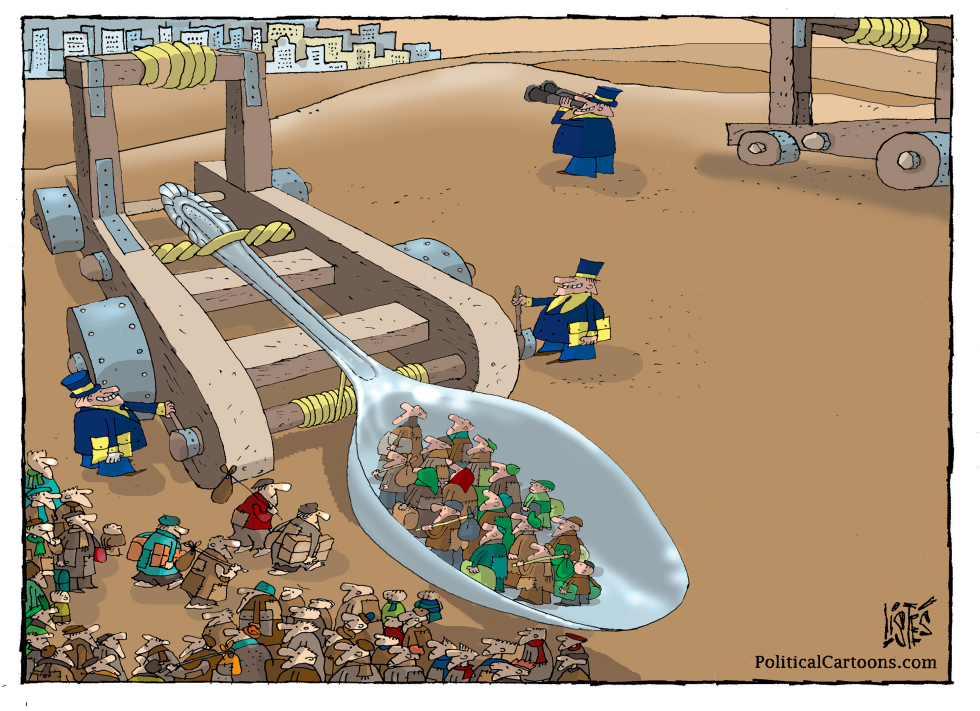
Border authorities continue to manage large inflows of refugees heading into major cities through various channels. The situation highlights ongoing debates over entry methods and urban capacity. Officials monitor the process closely as numbers rise. The piece argues that current approaches resemble mechanical ejection rather than orderly integration.
Donald Trump announced he had called off a major military strike on Iran in favor of a pending nuclear deal. The move drew immediate skepticism from Iranian officials who questioned both the threat and the agreement. The cartoon highlights the disconnect between the announcement and Tehran\'s response.
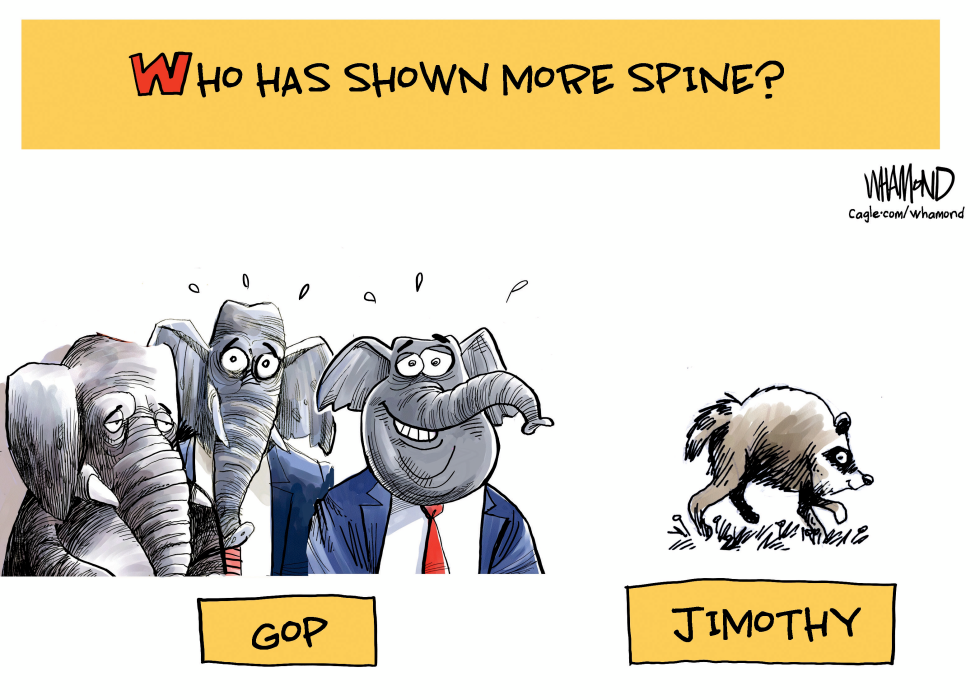
Republicans in Congress continue to face internal divisions over legislative priorities and leadership challenges in mid-2026. Party members have hesitated on key votes involving spending and oversight. The cartoon argues that a lone outsider figure demonstrates greater resolve than the collective GOP.
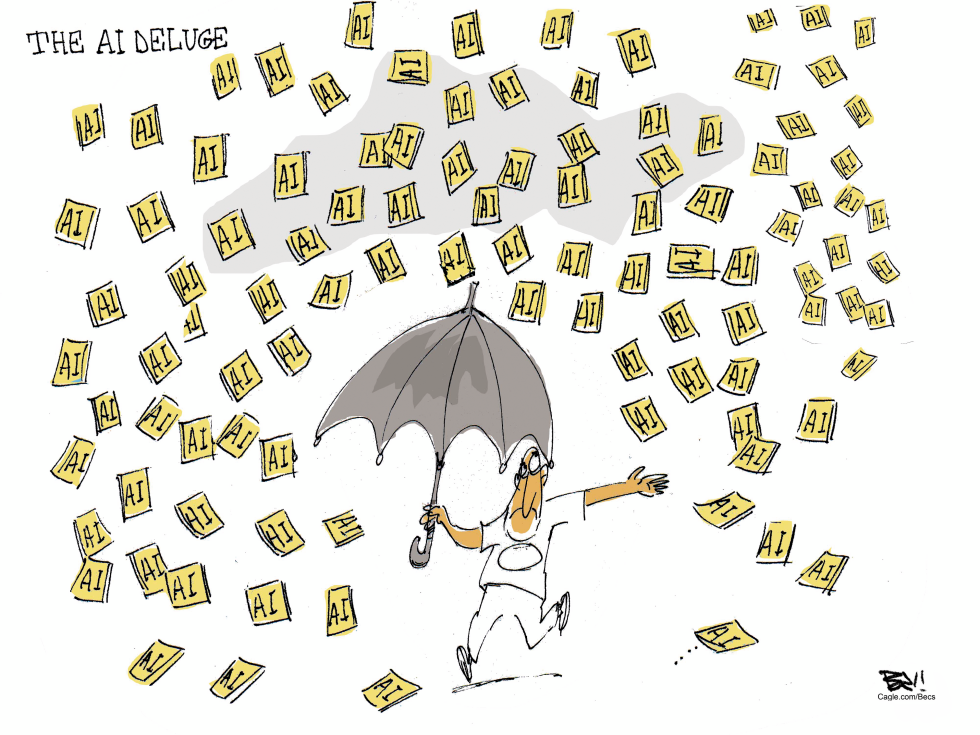
Artificial intelligence has saturated public conversation and workplace planning at an unusual pace. The piece responds to the sheer volume of announcements, tools and claims arriving at once. It suggests shelter rather than comprehension has become the realistic response.
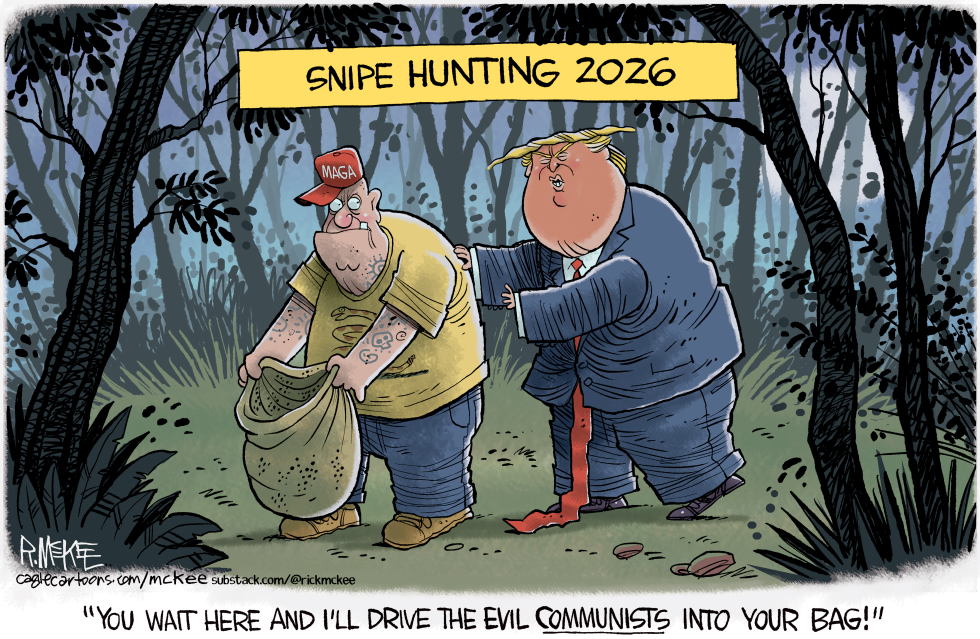
Donald Trump appears in a wooded setting with a MAGA supporter holding an open bag. Trump gestures ahead and vows to drive evil communists into the trap. The image frames the effort as a classic snipe hunt, highlighting the futility of the promised purge.
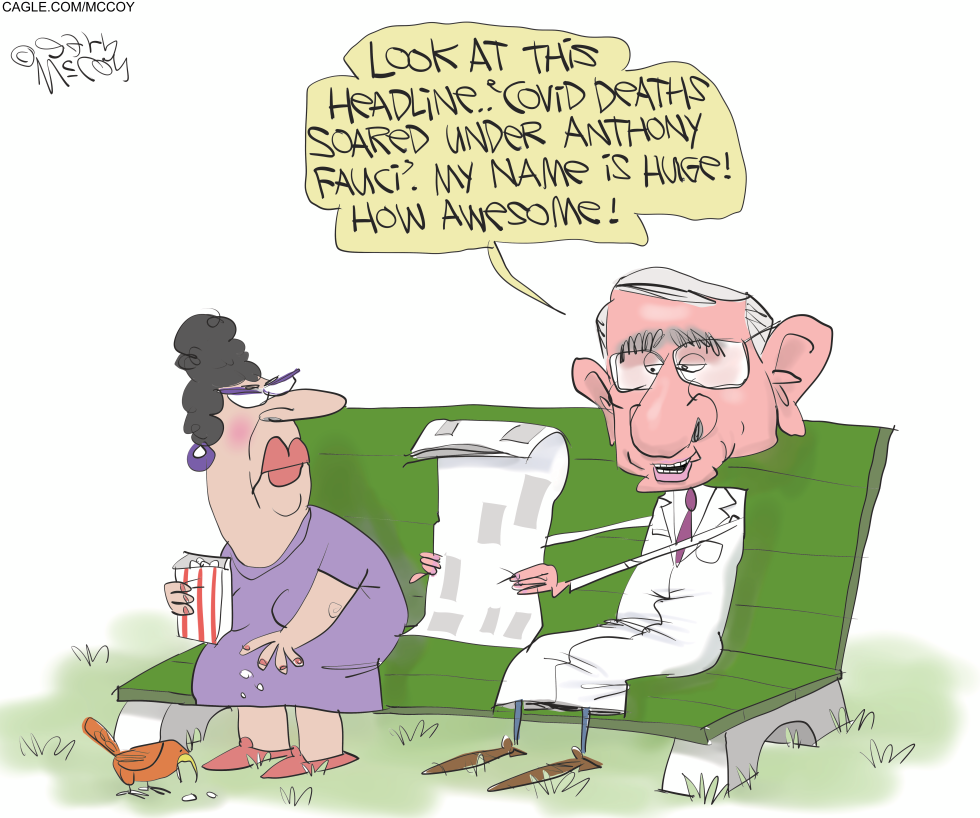
A newspaper headline reports COVID deaths rose under Anthony Fauci. The former health official reacts by celebrating the prominence of his own name in the story. The piece portrays this response as self-absorbed and detached from the human cost of the pandemic.
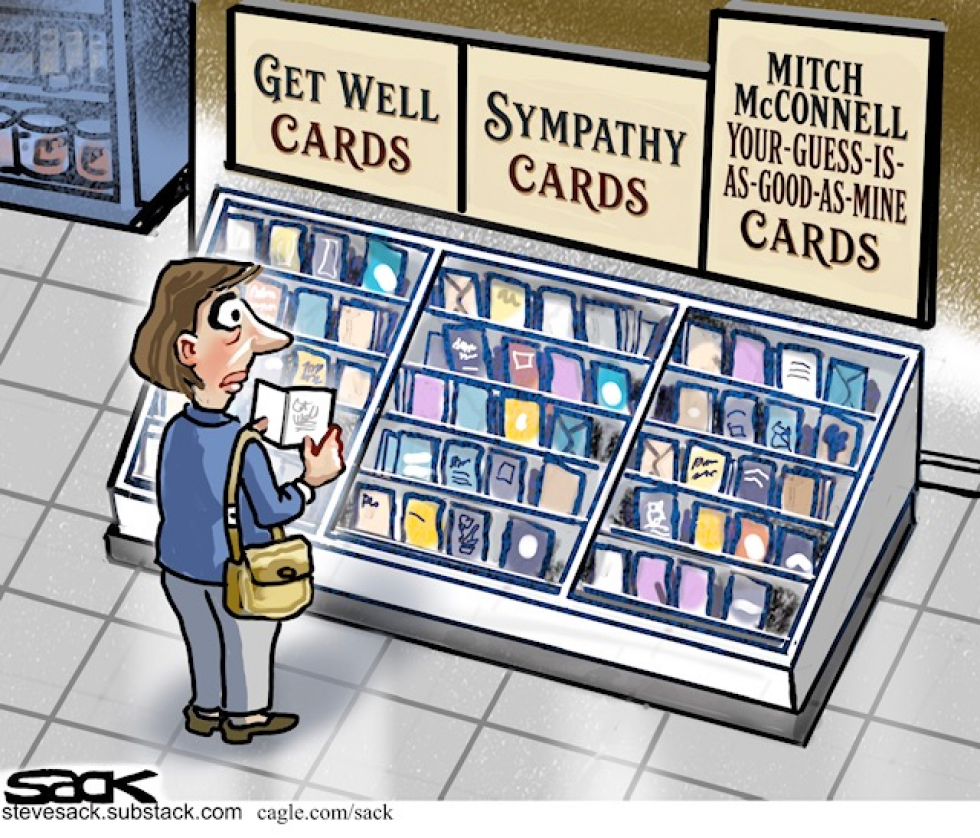
Questions about Mitch McConnell's health and future in Senate leadership have persisted into mid-2026. The Kentucky Republican has faced repeated absences and public episodes that fuel speculation about his capacity to continue. Colleagues in both parties watch closely because his position influences committee assignments and floor strategy. The uncertainty affects legislative timelines on appropriations and judicial matters. The piece argues that the situation leaves observers with little reliable information and treats the ambiguity itself as the central story.
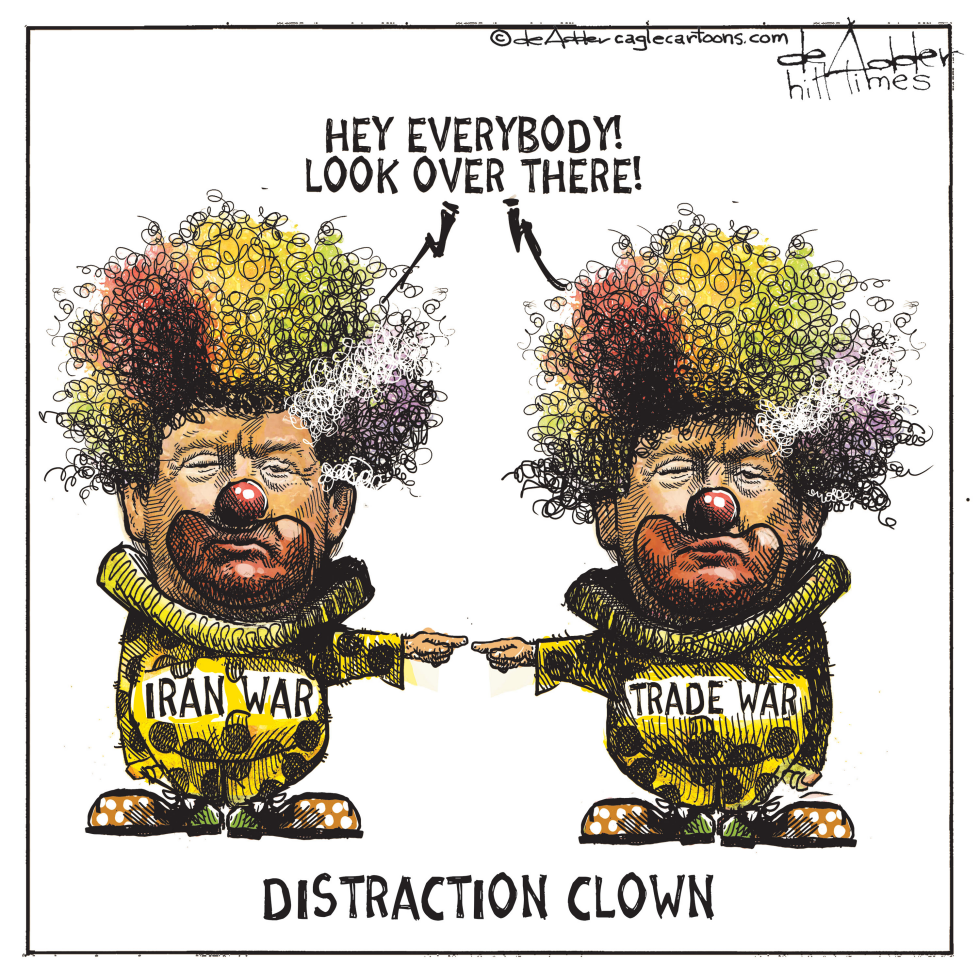
Public attention is being directed toward simultaneous Iran and trade conflicts as potential diversions from other issues. The editorial depicts the two crises as interchangeable distractions promoted by the same source. It argues that leaders are using these flashpoints to shift focus rather than address underlying problems.
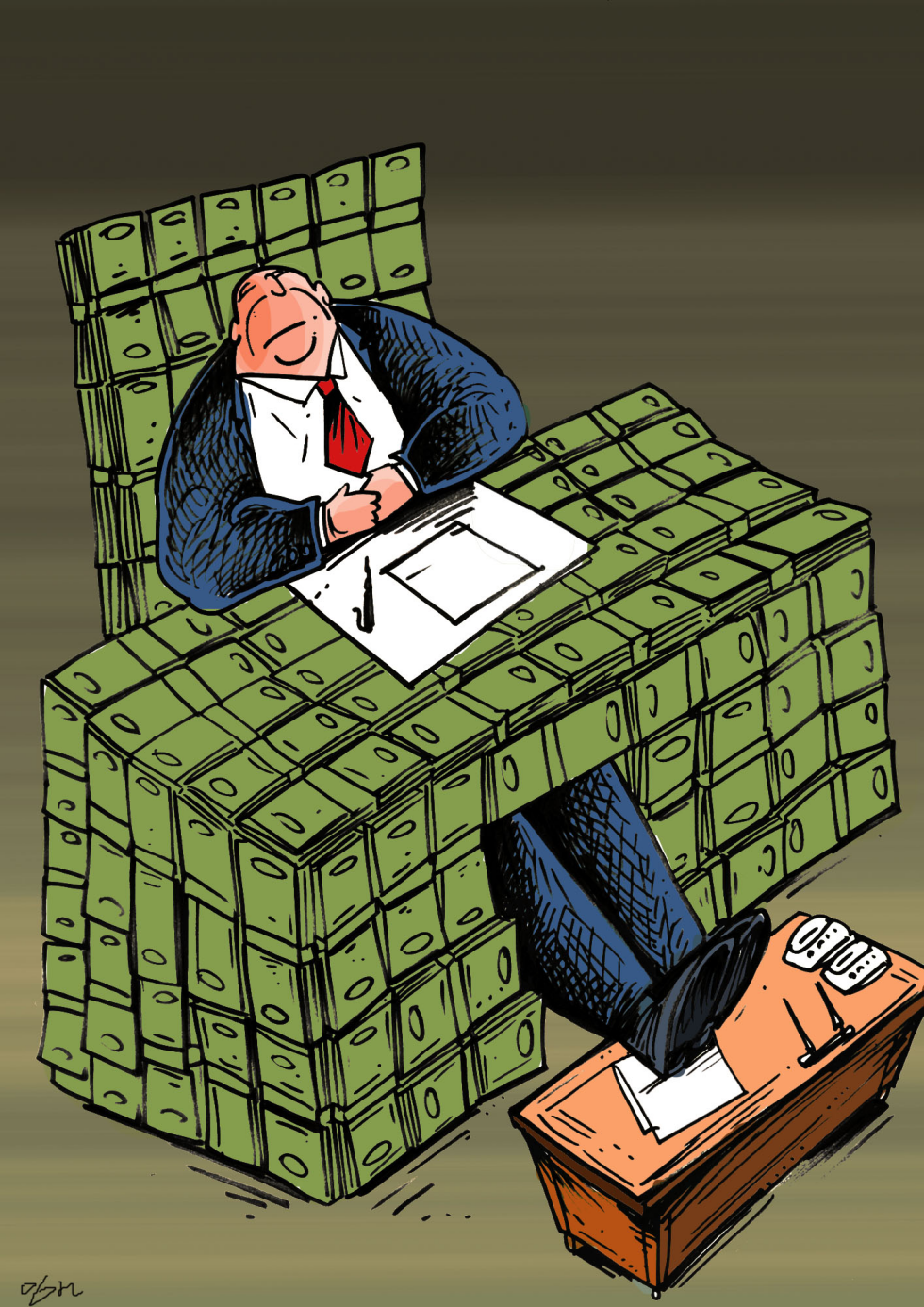
Public officials and business leaders often operate amid substantial financial resources that shape their daily environments and decisions. Recent developments in campaign finance and corporate influence have kept scrutiny on how wealth intersects with governance. The piece portrays an executive fully at ease within a setting constructed entirely from currency, underscoring the normalization of money's central role in positions of authority.
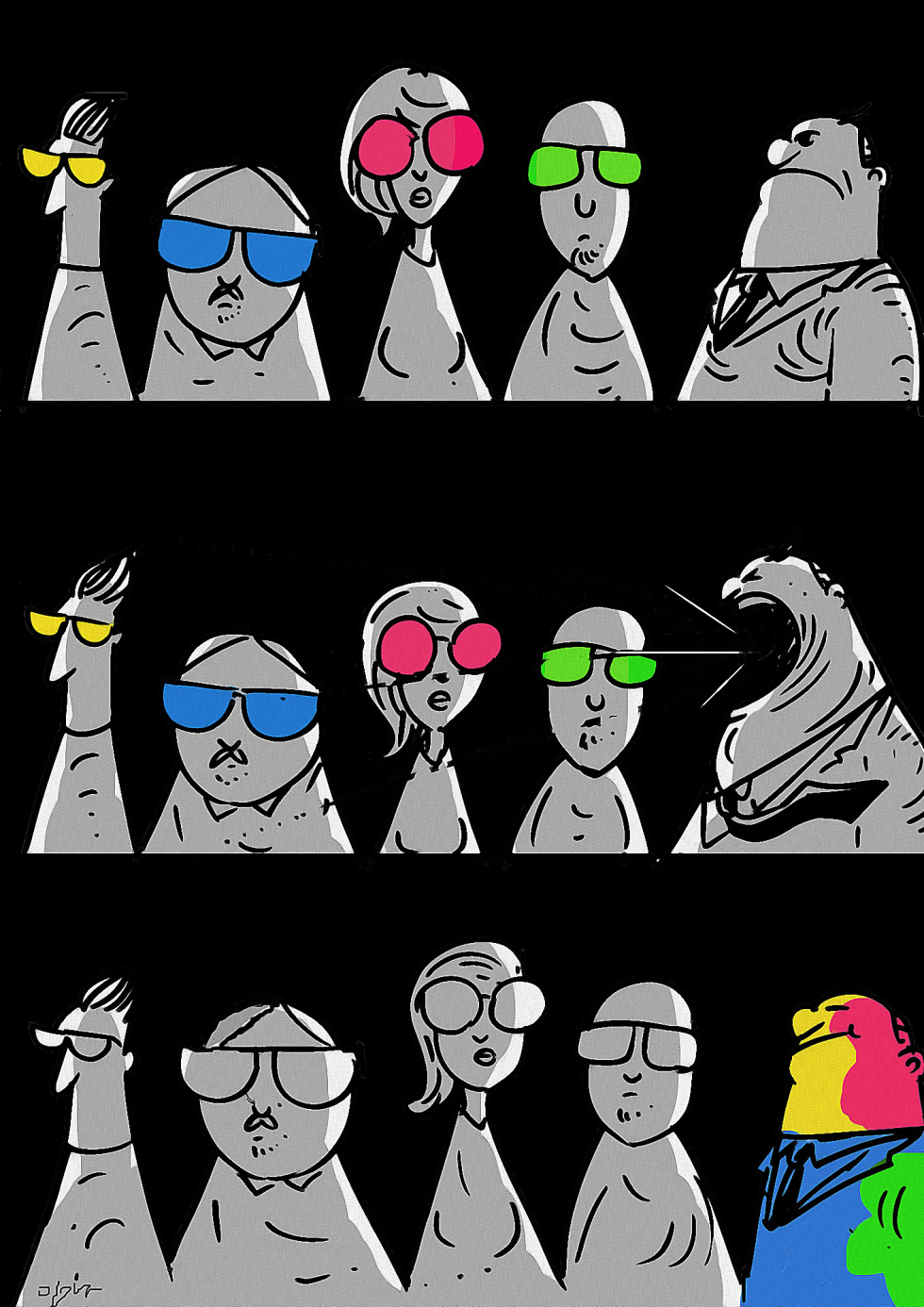
A series of panels depicts rows of figures wearing sunglasses in varying hues. The images suggest that personal filters shape what people see and react to. The final panel introduces a multicolored figure that stands apart from the rest. The work comments on how individual perspectives diverge even within similar groups. It highlights the contrast between uniform appearances and sudden breaks in pattern.
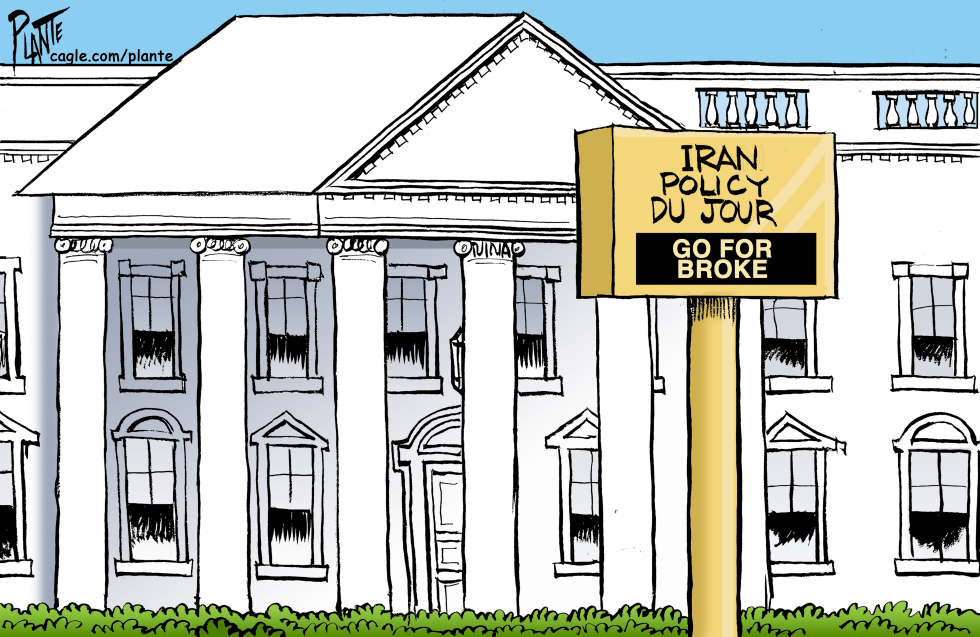
The White House has signaled a more aggressive posture toward Iran through public messaging that emphasizes risk-taking. The move comes amid persistent tensions over nuclear issues and regional influence. The editorial takes the position that such an approach lacks consistency and invites unnecessary escalation.
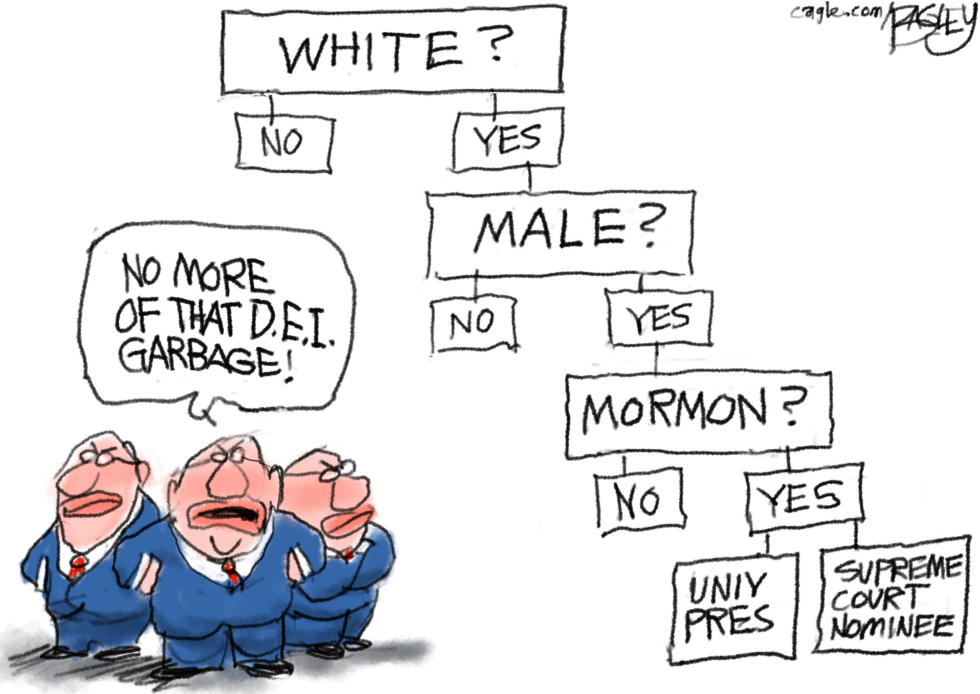
A flowchart circulating in political circles outlines a narrow path to Supreme Court nomination that begins with questions about race, gender and religion. The diagram routes only white male Mormons to the top position while directing others toward university presidencies. Three figures in the image voice opposition to diversity initiatives. The piece responds to ongoing debates over judicial selection standards and identity considerations in appointments. It takes the position that such rigid criteria undermine broader merit-based processes.
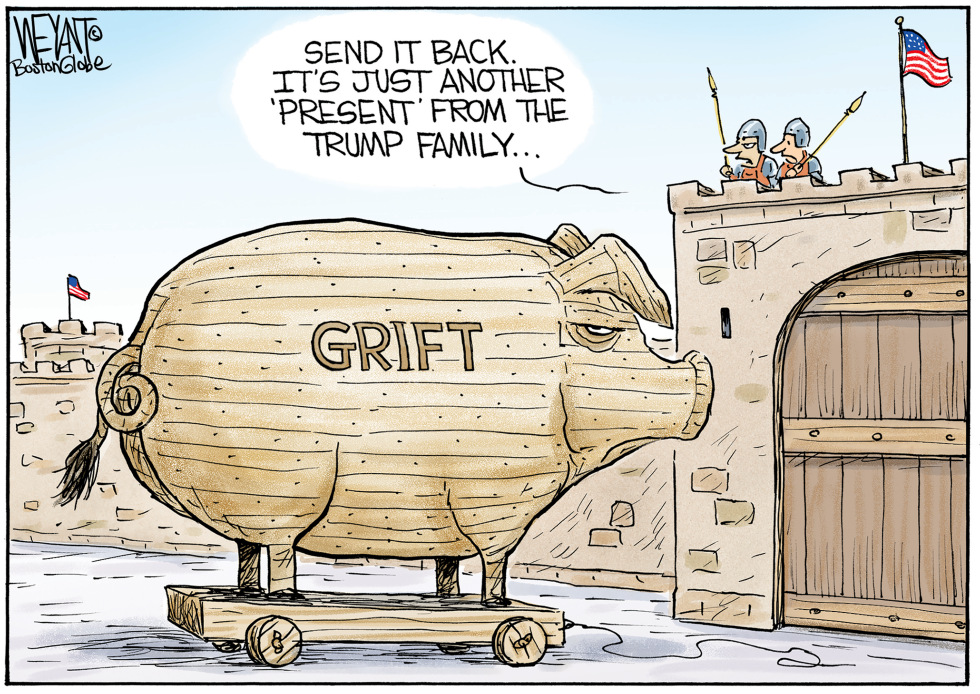
The Trump family faces renewed scrutiny over business dealings and influence peddling. Guards at a symbolic fortress receive a large wooden pig marked grift and immediately demand its return. The episode highlights ongoing concerns about gifts and favors tied to the family name.
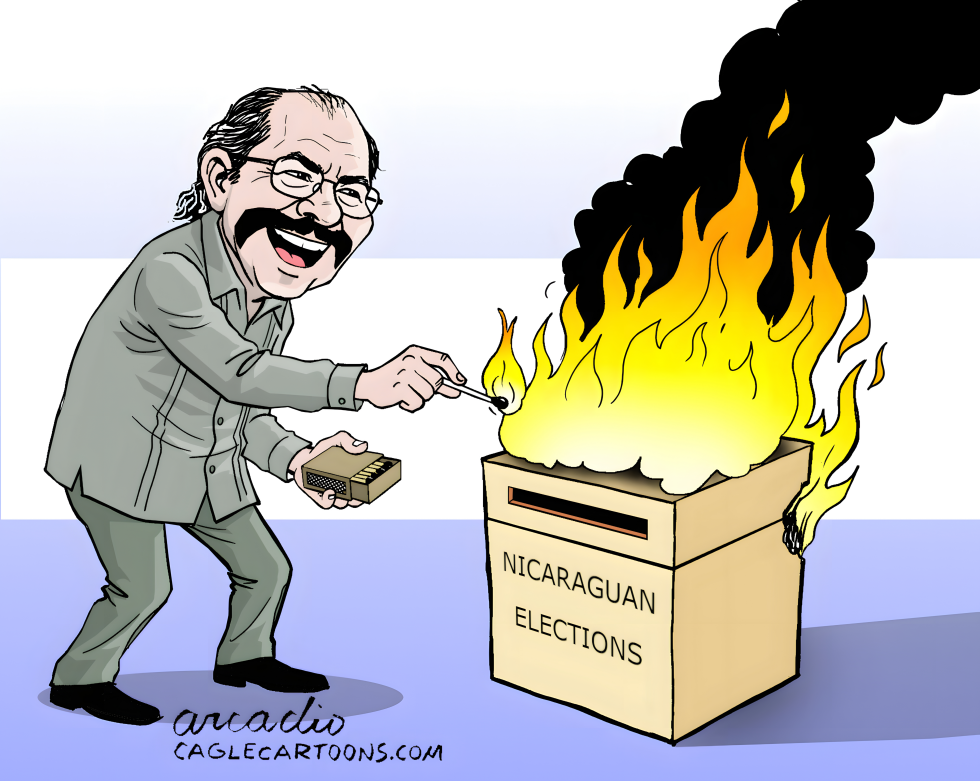
Nicaraguan President Daniel Ortega has publicly stated there will be no more elections, a move that solidifies his long-term grip on power. The declaration comes amid ongoing concerns over democratic backsliding in the Central American nation. This development matters because it removes any remaining avenues for political opposition and citizen participation in governance. The accompanying editorial takes the position that Ortega's action represents a deliberate destruction of democratic institutions rather than a legitimate policy choice.