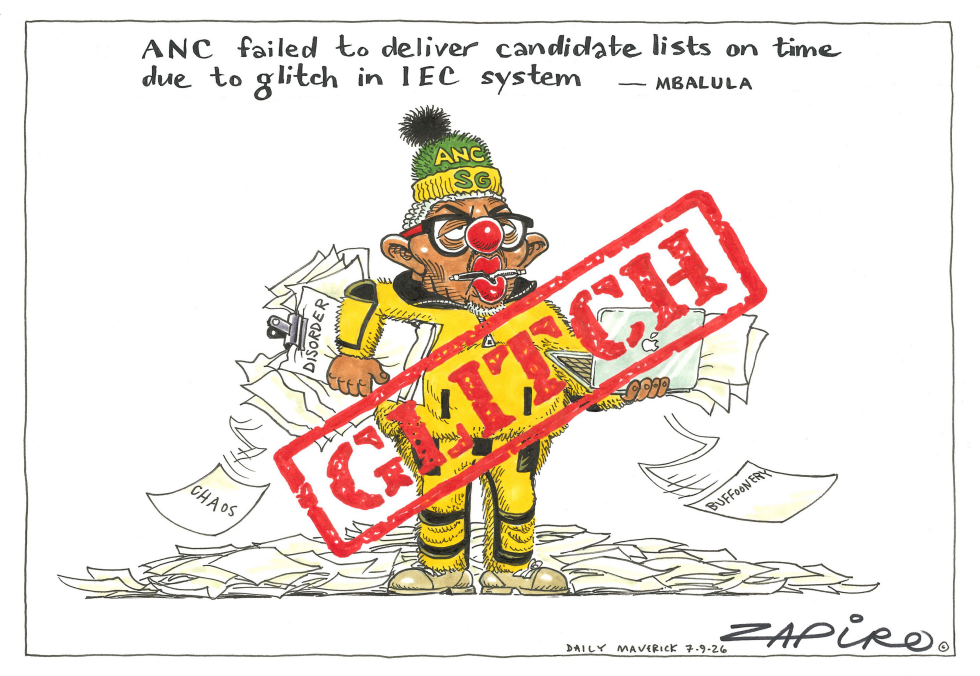
ANC secretary general Fikile Mbalula attributed the party's failure to submit candidate lists on time to a technical glitch in the Independent Electoral Commission system. The claim came as the party faced internal disarray ahead of upcoming elections. The cartoon portrays the excuse as a transparent attempt to mask organizational failure and buffoonery.
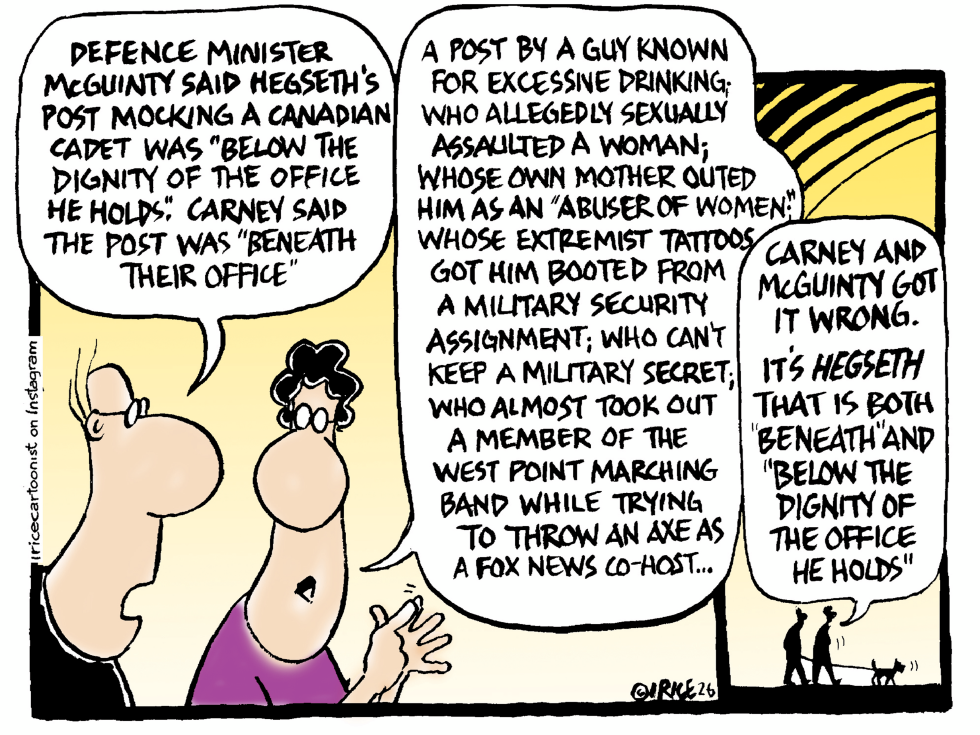
Canadian Defence Minister David McGuinty and Mark Carney publicly condemned a social media post by Pete Hegseth mocking a Canadian cadet, calling it beneath the dignity of the office. The remarks came amid Hegseth's nomination process for a senior U.S. defense position. The cartoon argues the ministers have the assessment backward, pointing instead to Hegseth's history of alleged misconduct, security clearance problems, and public incidents as the true disqualifiers. This reflects ongoing debate over nominee vetting standards and cross-border political commentary on U.S. appointments.
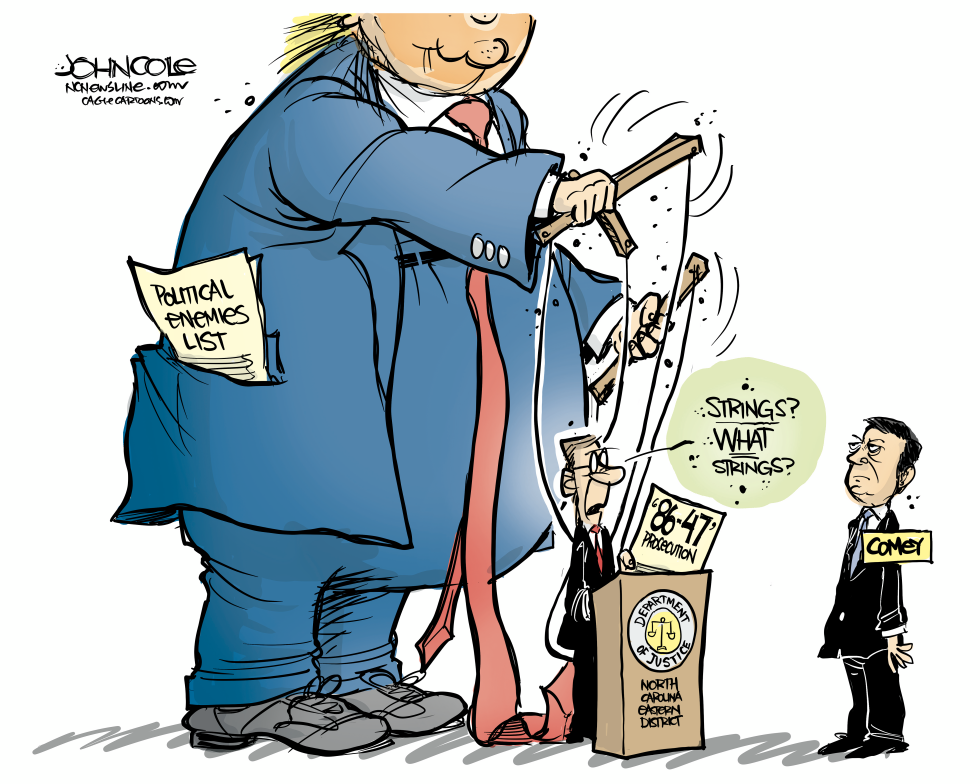
President Trump is shown directing a Department of Justice prosecution of former FBI Director James Comey in the North Carolina Eastern District. The image portrays the president as a puppeteer controlling the case through strings attached to a figure holding an 86-47 prosecution sign. The editorial position criticizes the use of federal prosecutorial power against political opponents.
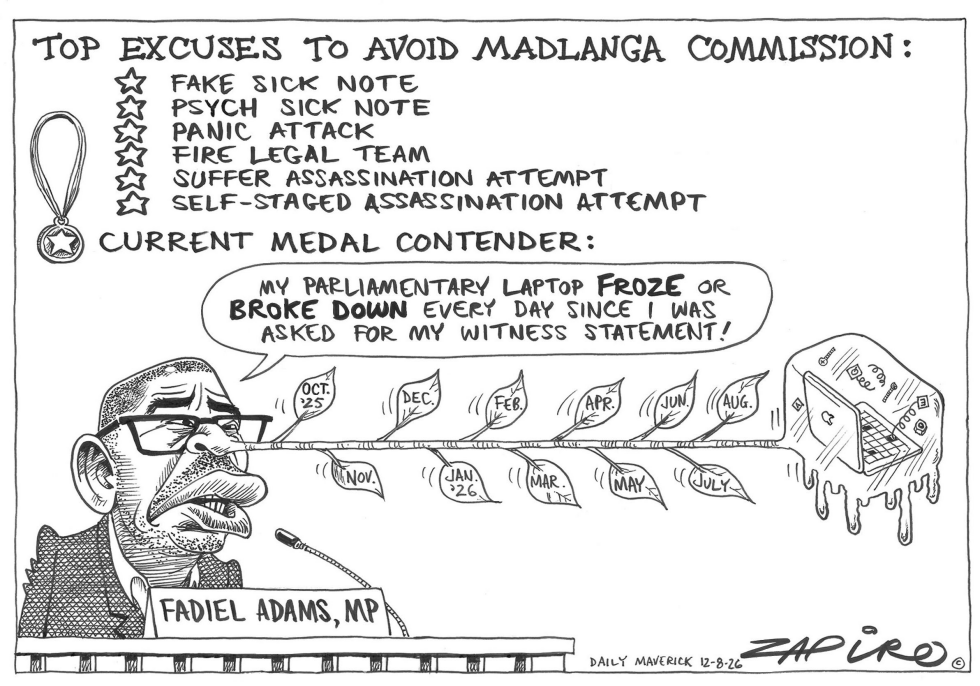
Fadiel Adams, an MP, told the Madlanga Commission his parliamentary laptop froze or broke daily since he received a witness request. The claim follows a pattern of delays in high-profile inquiries involving political figures. The piece highlights the excuse as the latest in a series of avoidance tactics, underscoring skepticism toward repeated claims that stall accountability processes.
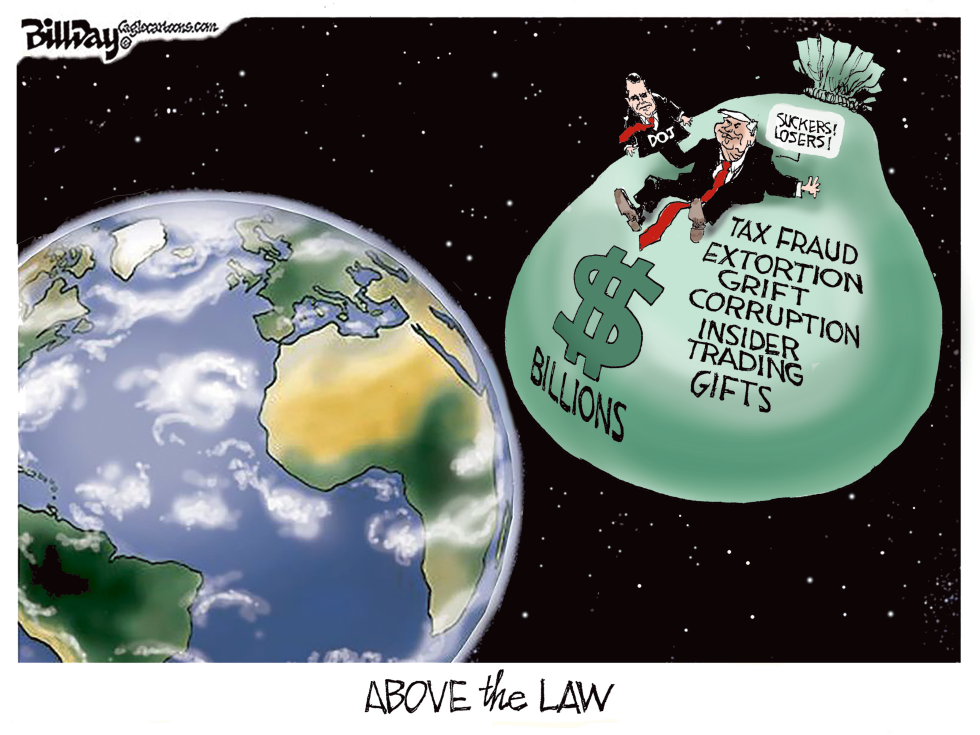
Donald Trump faces ongoing legal scrutiny over business practices and influence as former president. The image responds to persistent allegations of financial misconduct tied to his post-presidency activities and prior office. It portrays him as operating beyond accountability while pushing aside oversight efforts.
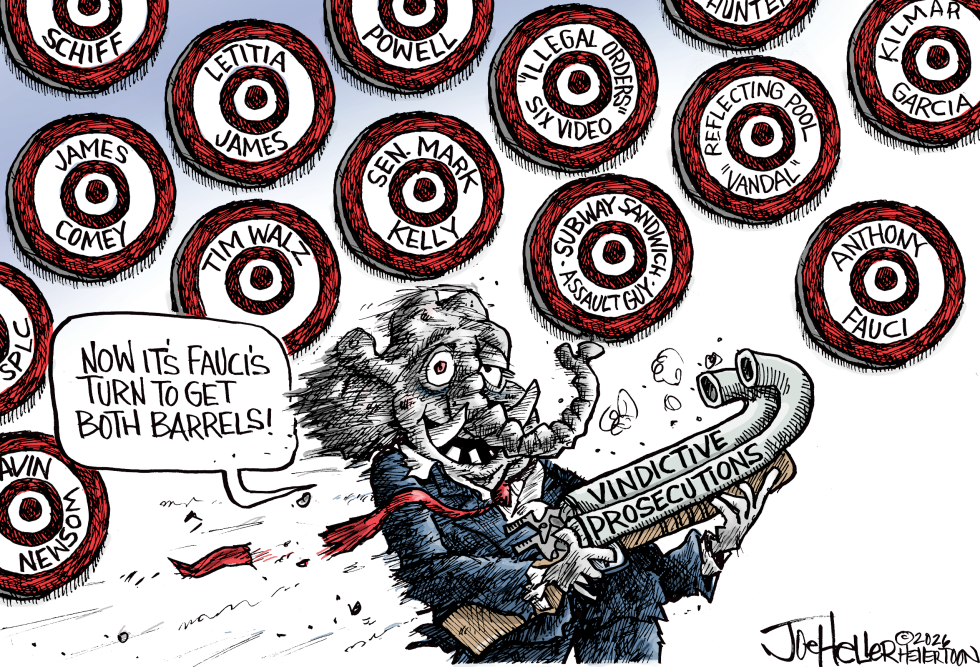
Donald Trump has signaled intent to pursue legal action against Anthony Fauci and other perceived opponents. The move extends a pattern of targeting figures from prior investigations and public disputes. The editorial portrays these actions as personal retribution rather than legitimate accountability.
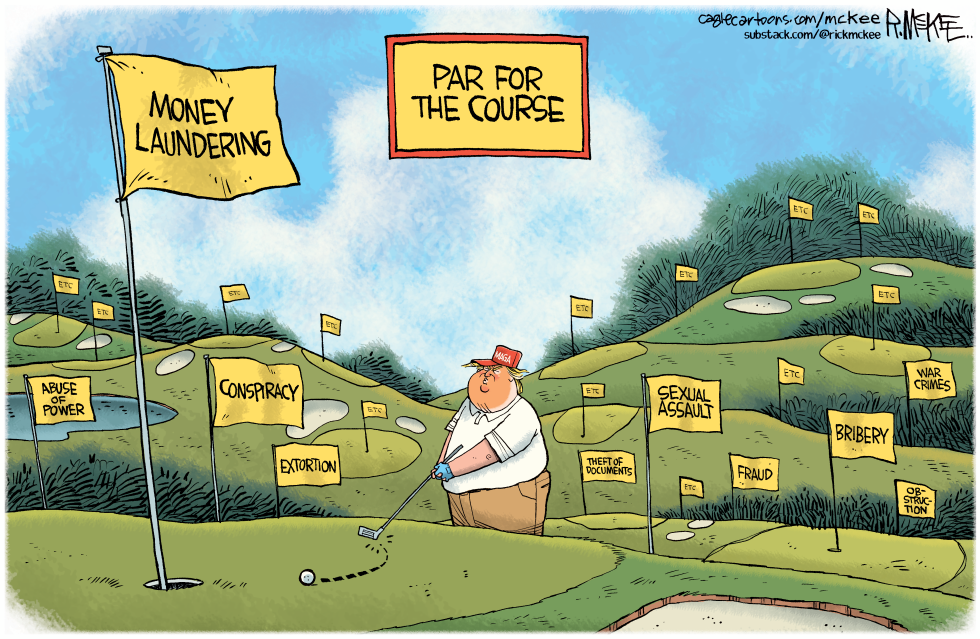
Donald Trump appears on a golf course in an editorial cartoon dated August 6 2026. Multiple yellow flags label alleged offenses including money laundering, conspiracy, extortion, sexual assault, bribery, fraud and obstruction. The piece responds to ongoing legal and political scrutiny of the former president. It frames these issues as routine for Trump through the visual metaphor of a golf course. The editorial position presents the allegations as expected elements of his record.
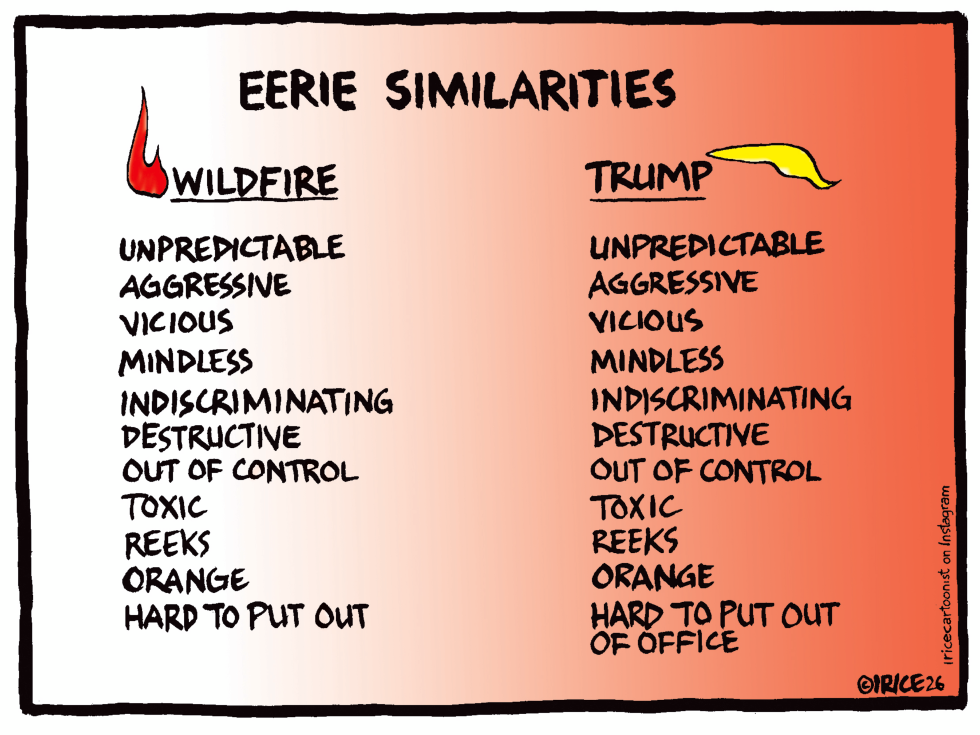
A political cartoon published August 3, 2026, draws direct parallels between a wildfire and Donald Trump by listing identical negative attributes for both. The comparison highlights traits such as being unpredictable, aggressive, vicious, mindless, indiscriminating, destructive, out of control, toxic, reeking, orange and hard to extinguish. The final entry on the Trump side changes to hard to put out of office. The piece advances the argument that Trump exhibits the same uncontrollable and damaging qualities as a wildfire, making his continued political presence a persistent hazard.
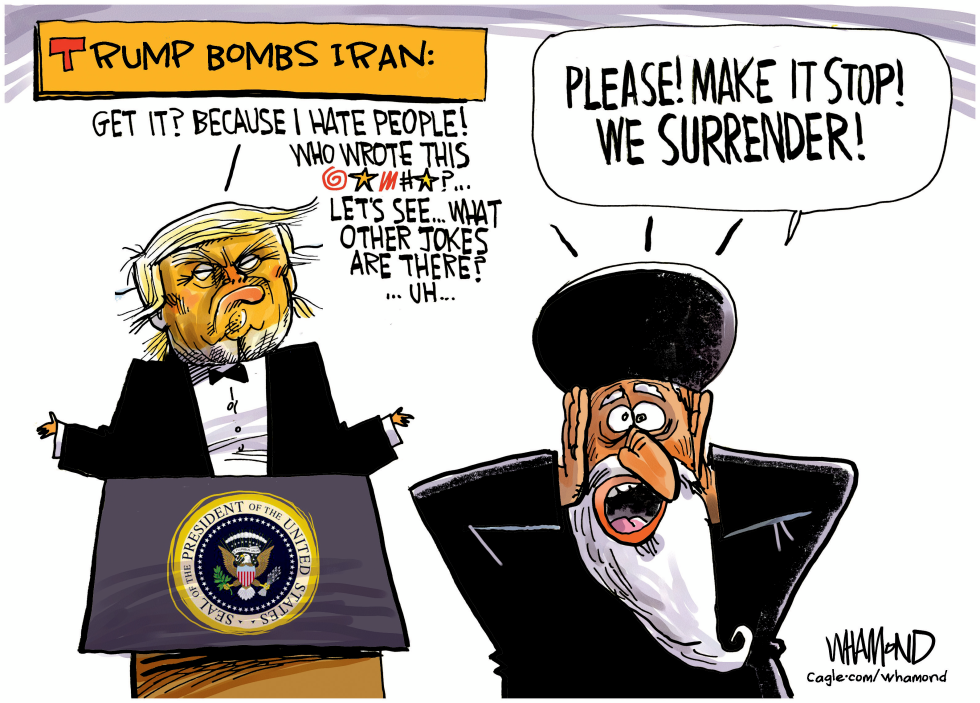
President Trump ordered strikes on Iran in late July 2026, prompting an immediate public plea for surrender from Iranian leadership. The action escalates tensions in the Middle East and raises questions about U.S. military objectives. The editorial takes the position that the strikes reflect personal animus rather than strategic necessity and mocks the president's framing of the operation.
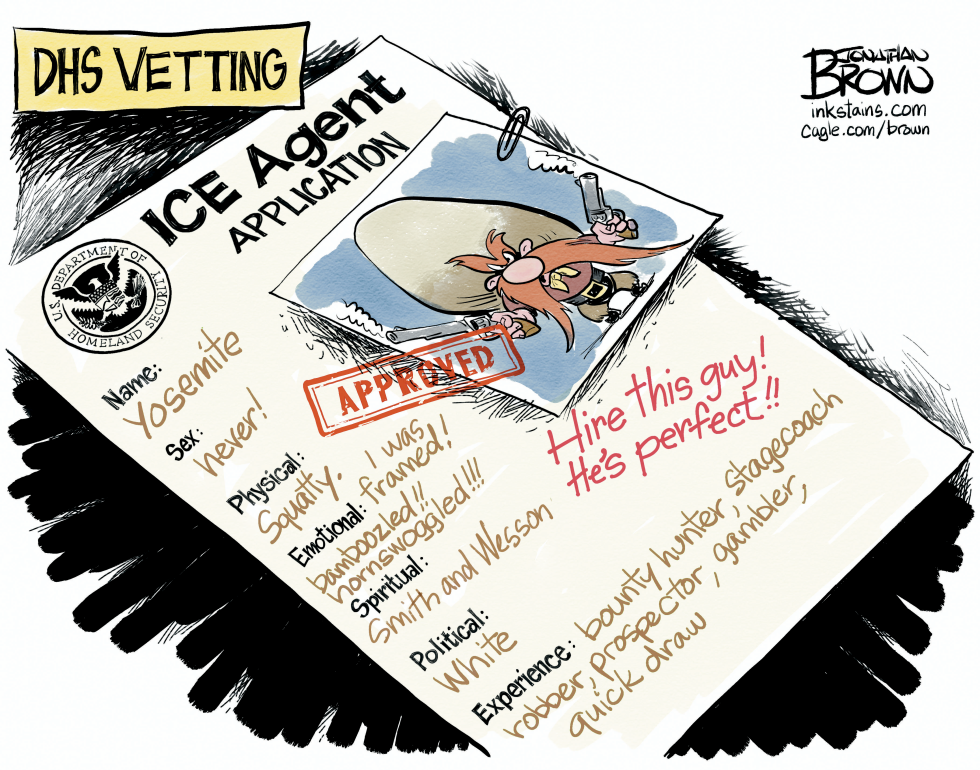
A DHS vetting document for an ICE agent position features Yosemite Sam with an approved stamp. The form lists disqualifying details in physical, emotional and experience sections. Red text urges hiring the figure anyway. The image highlights screening processes within immigration enforcement agencies.
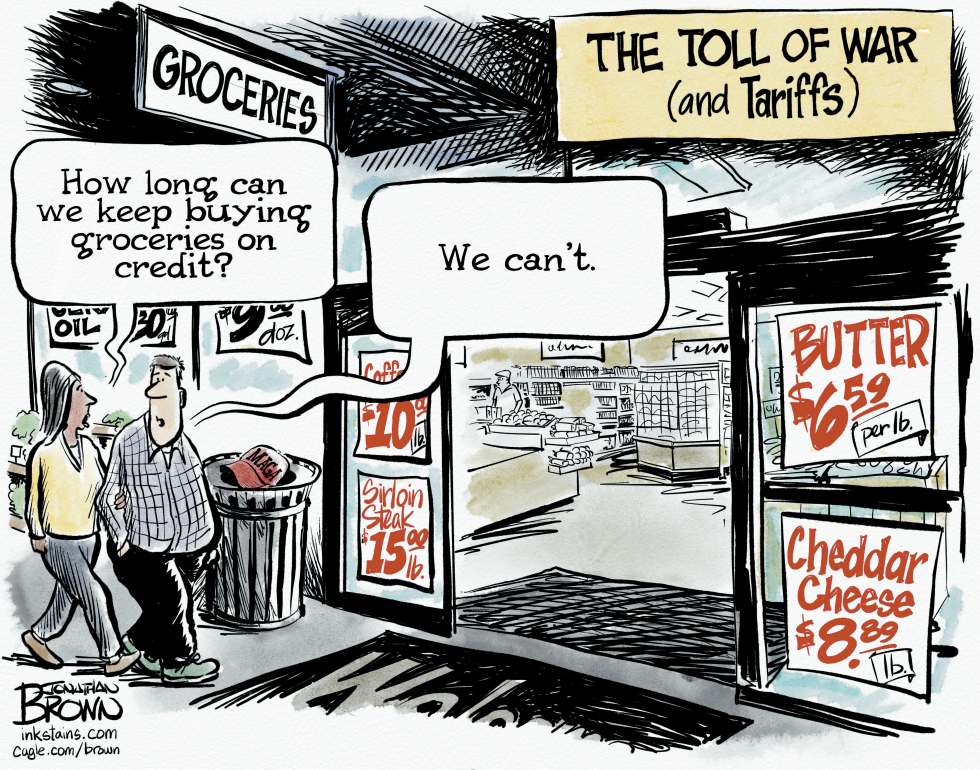
A political cartoon depicts a couple leaving a grocery store after learning they cannot continue buying food on credit. Signs inside show sharply higher prices for butter at $6.59 per pound, cheddar cheese at $8.89 per pound and sirloin steak at $15 per pound. A banner overhead reads The Toll of War (and Tariffs). The scene illustrates how ongoing conflict and trade barriers have driven up everyday food costs leaving households to rely on credit that is no longer sustainable.
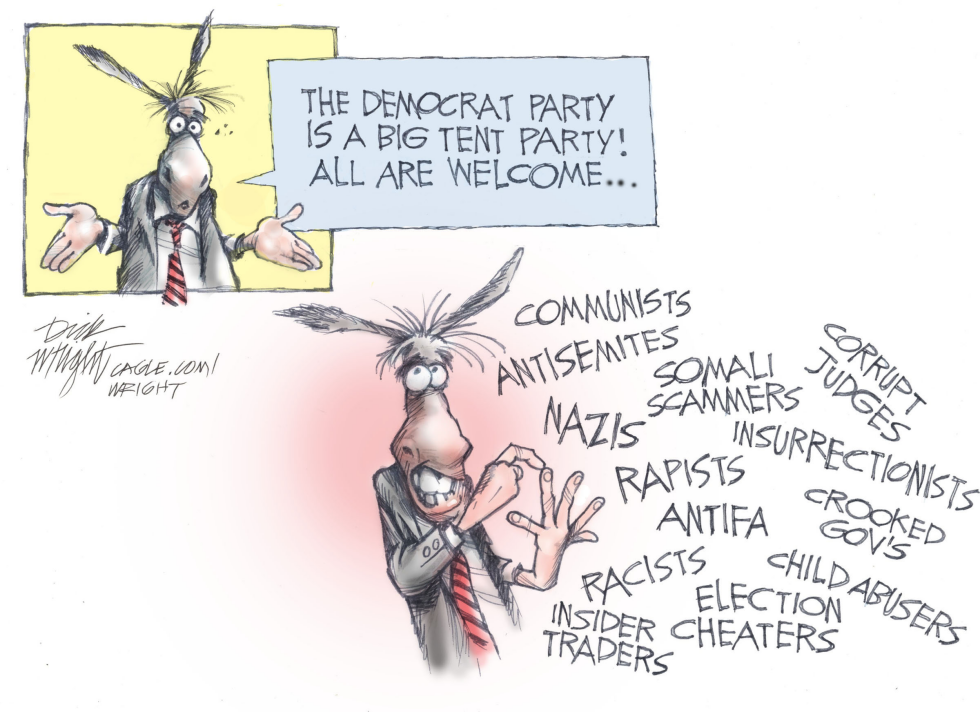
A July 2026 cartoon by Dick Wright depicts the Democrat Party's big tent claim through an inset donkey figure. The main character, also a donkey in a suit, gestures amid a cloud of labels naming groups such as communists, antisemites, Nazis, rapists, Antifa, racists, and election cheaters. The image critiques the party's inclusivity rhetoric by associating it with these categories. Publication occurs amid ongoing partisan debates over party platforms and voter bases.
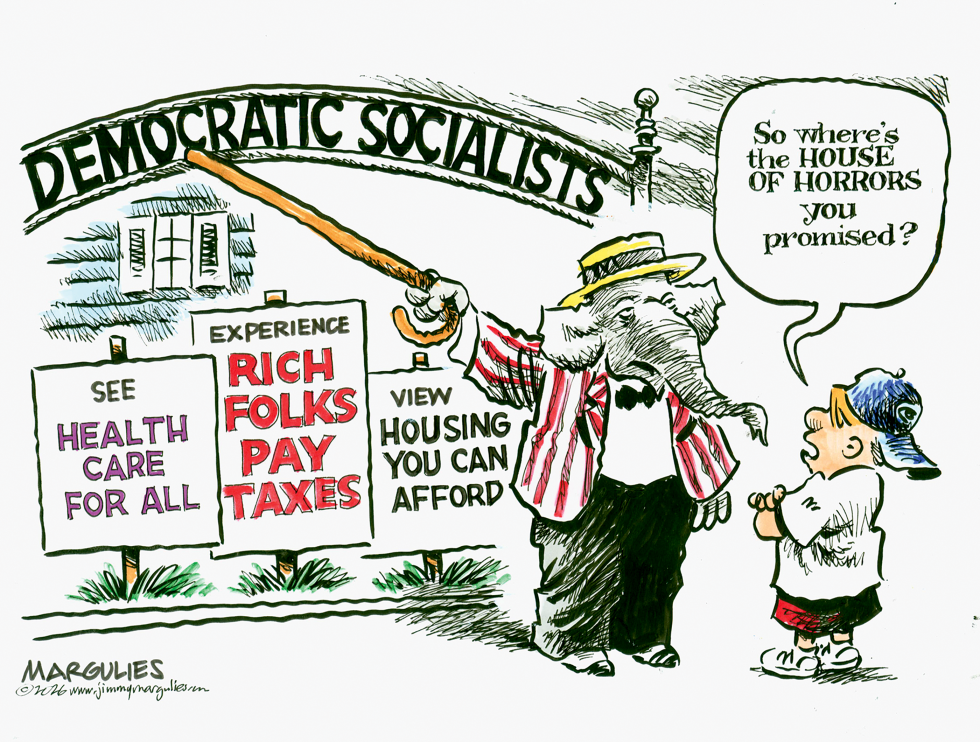
An elephant representing Republicans conducts a tour of attractions labeled Democratic Socialists on July 1 2026. Three signs advertise health care for all, taxes paid by the rich and housing that average people can afford. A young visitor in a cap asks where the house of horrors is that was promised. The scene uses the classic elephant symbol to frame policy offerings as ordinary exhibits rather than frightening outcomes.
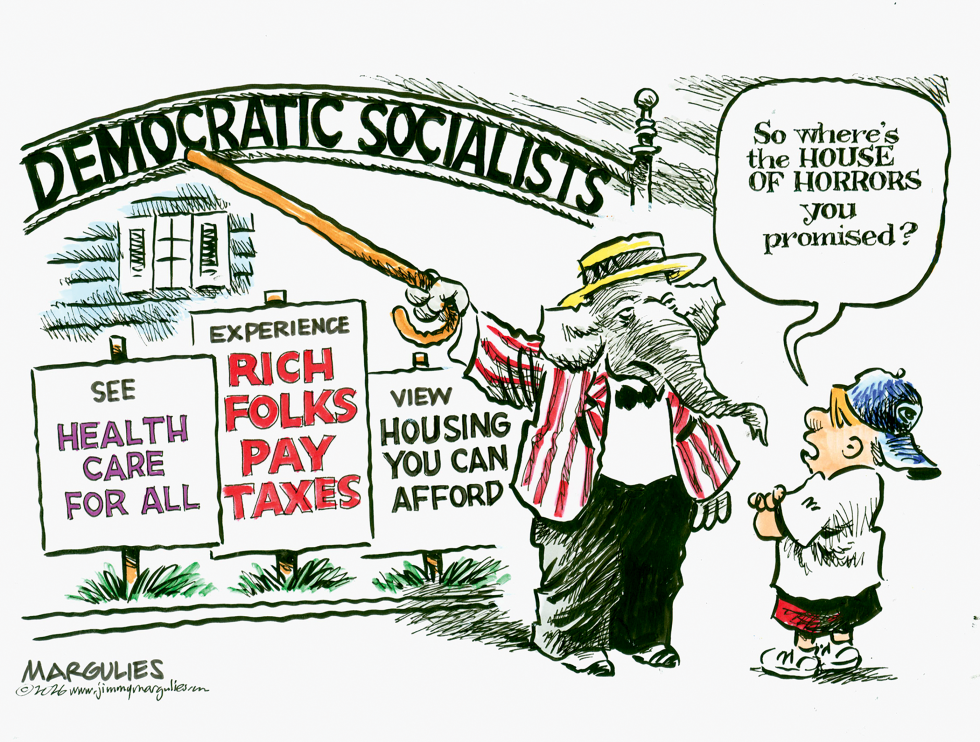
An elephant dressed as a barker stands at a Democratic Socialists booth displaying signs for health care for all, rich folks paying taxes, and housing you can afford. The figure holds a pointer toward the arch and addresses a child visitor. The child asks where the house of horrors is located. The scene is set outdoors with a building facade visible behind the signs. Publication occurred on July 1 2026.