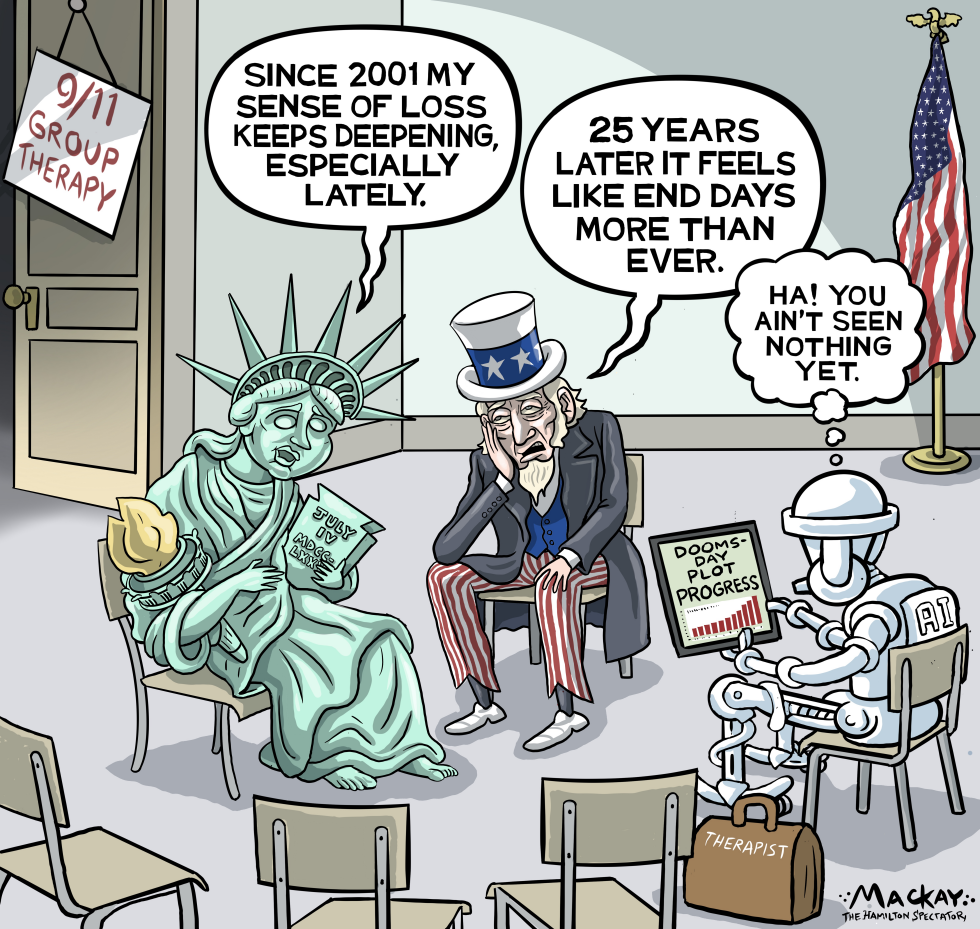
The cartoon depicts the Statue of Liberty, Uncle Sam and an AI robot seated in a 9/11 group therapy session on the 25th anniversary of the attacks. The Statue of Liberty holds a book marked July IV MDCCLXXVI and speaks of deepening loss since 2001. Uncle Sam echoes the sentiment of end days. The AI figure, labeled with a rising doomsday plot progress chart, retorts that the others have seen nothing yet. The scene uses national symbols to reflect persistent national trauma and emerging technological threats two and a half decades after the September 11 attacks.
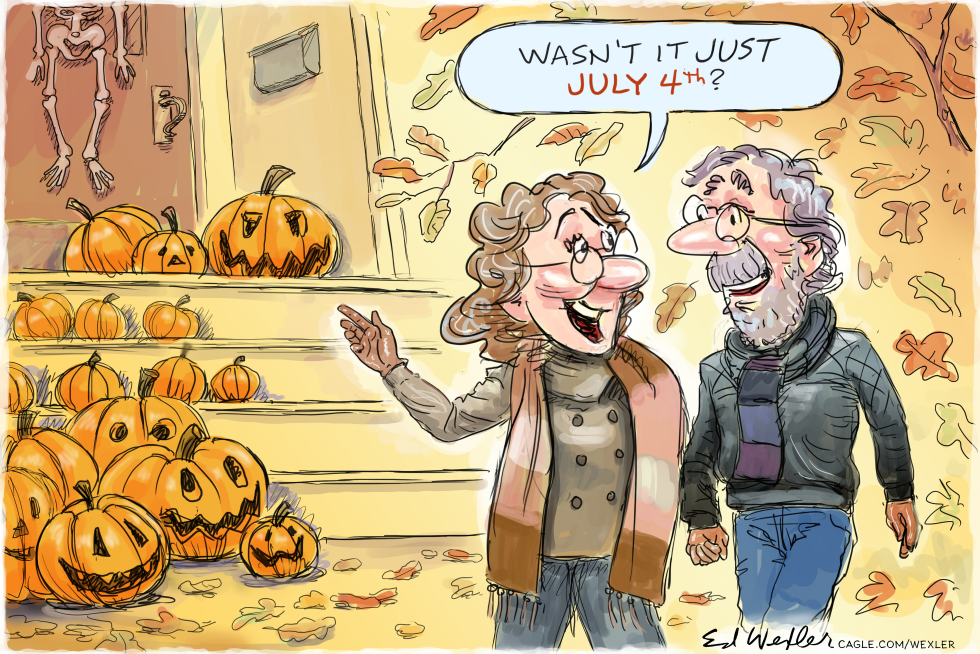
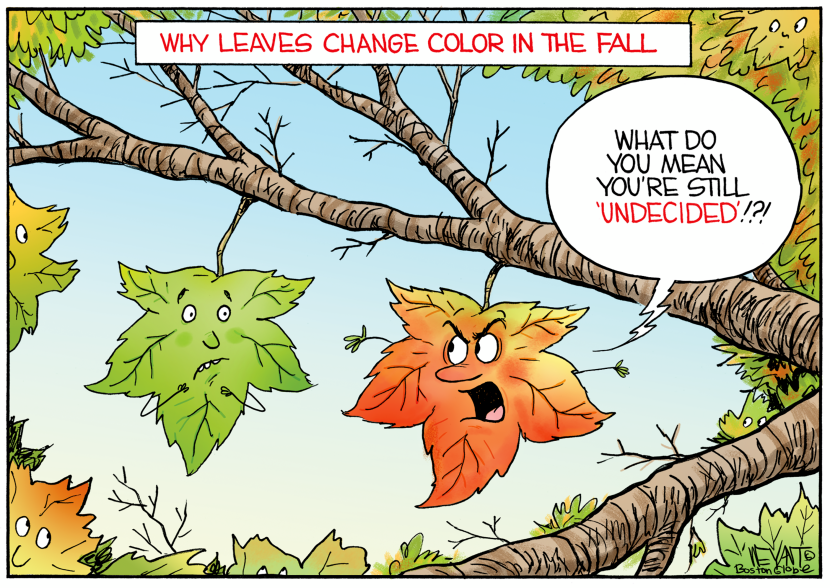
The calendar moves swiftly from Independence Day celebrations to the first signs of fall. Observers often express surprise at how little time seems to have passed between the two. The piece captures that common reaction to the accelerating pace of the year. It offers a light observation on how seasons blend together without clear boundaries. The editorial stance is gently amused rather than critical of any policy or figure.
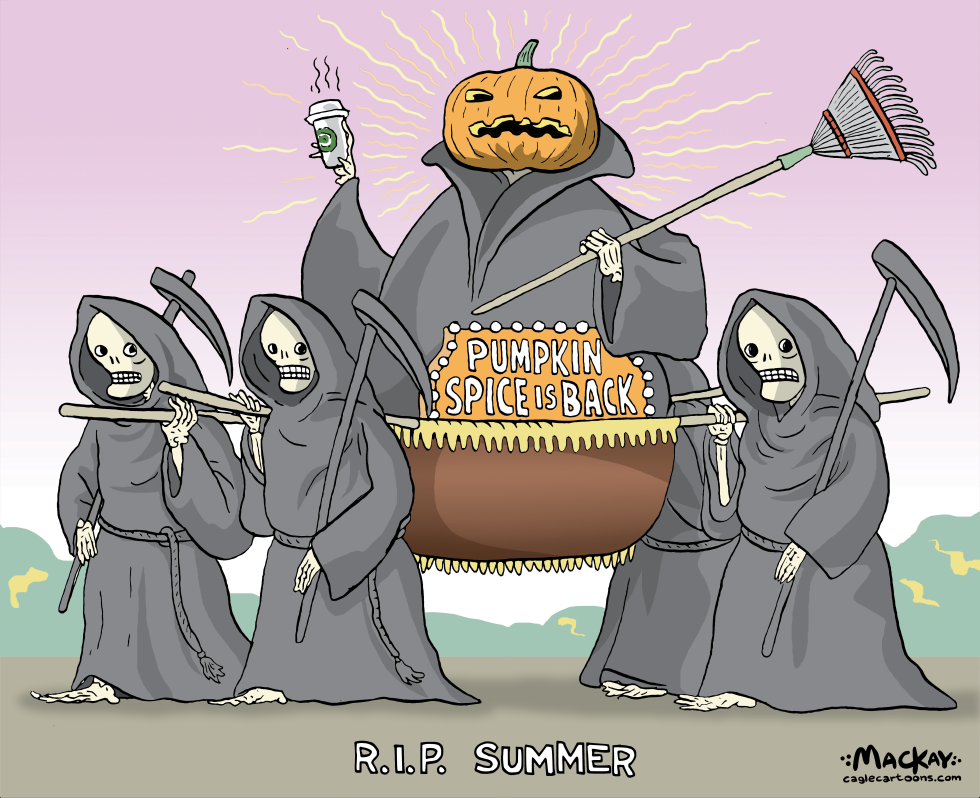
The cartoon shows a large pumpkin-headed figure in a gray robe leading smaller grim reapers who carry a banner reading Pumpkin Spice Is Back. The group marches under a pink sky with the large figure holding a rake and a PSL coffee cup. Text at the bottom reads R.I.P. Summer. Published on September 4 2026 the image marks the annual shift from summer to fall. It uses the grim reaper motif to humorously depict the death of summer and the arrival of pumpkin spice products. The visual plays on the well-known seasonal marketing push for fall flavors in coffee and other goods.
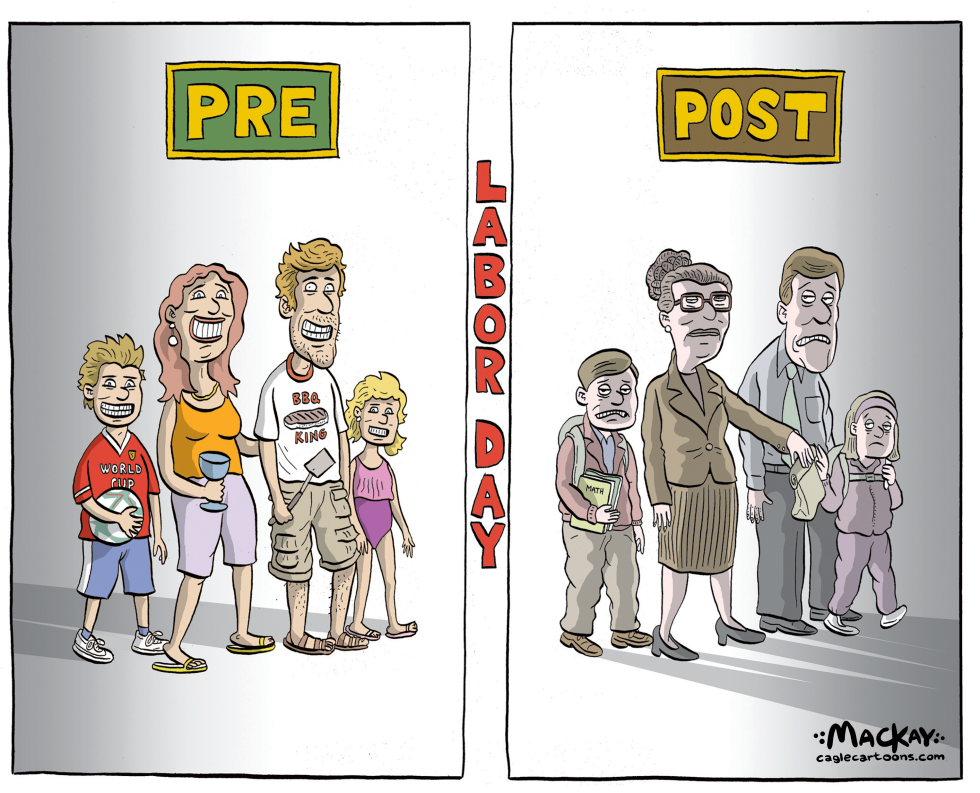
The cartoon by Graeme MacKay contrasts a joyful pre-Labor Day family scene with a weary post-Labor Day version. On the left, parents and children smile in casual summer attire while holding leisure items. On the right, the same family appears drained as they prepare for school and work. The vertical label emphasizes the holiday as the dividing line. This reflects the annual transition many households experience each September. The piece uses simple visual comparison to highlight the end of vacation freedom.
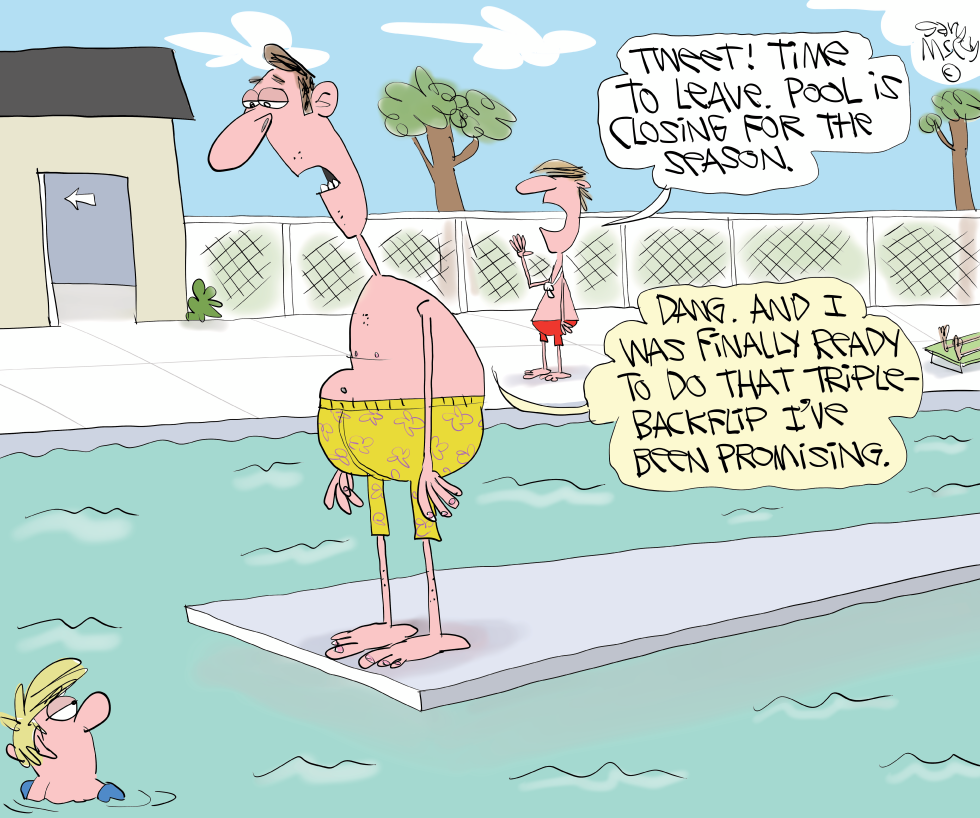
Labor Day brings the annual closure of public pools nationwide, signaling the end of summer swimming. Lifeguards issue final calls as patrons exit, often with unfinished personal goals like a promised dive. The piece captures the routine letdown of seasonal change through a simple missed-opportunity gag.
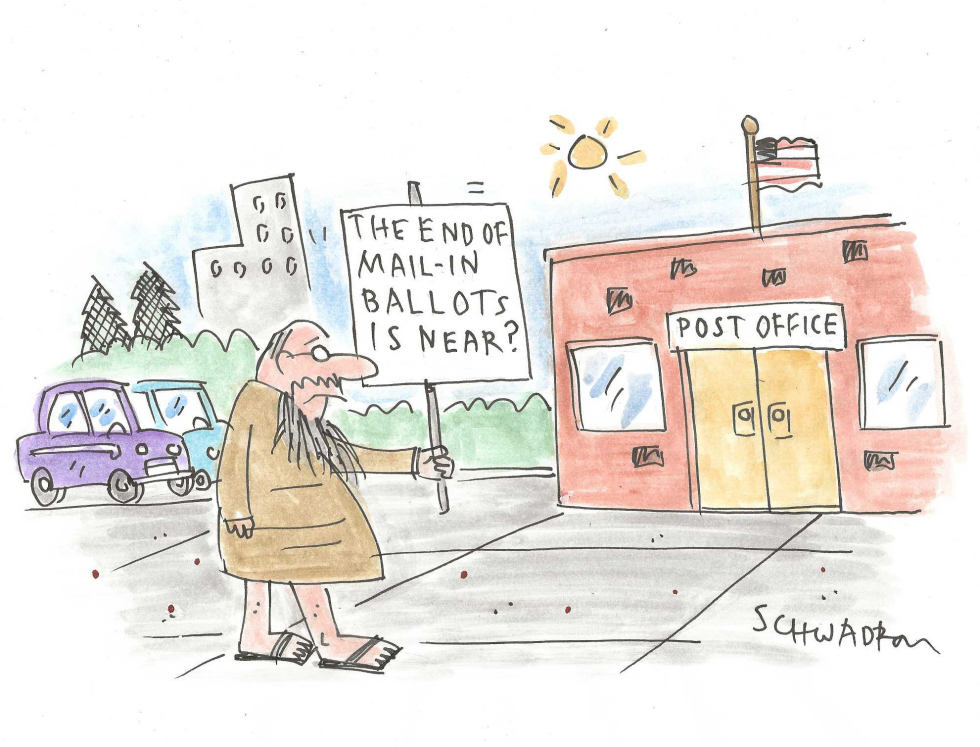
Proposals to restrict or end mail-in ballots have gained traction in several states ahead of upcoming elections, prompting concerns from voting rights advocates about reduced access for elderly, rural, and disabled voters. The post office has long served as a key conduit for absentee ballots. Critics argue the changes prioritize unproven fraud concerns over convenience and turnout. Supporters say tighter rules restore confidence in results. The cartoon frames the debate as an abrupt shift that could sideline a proven voting method.
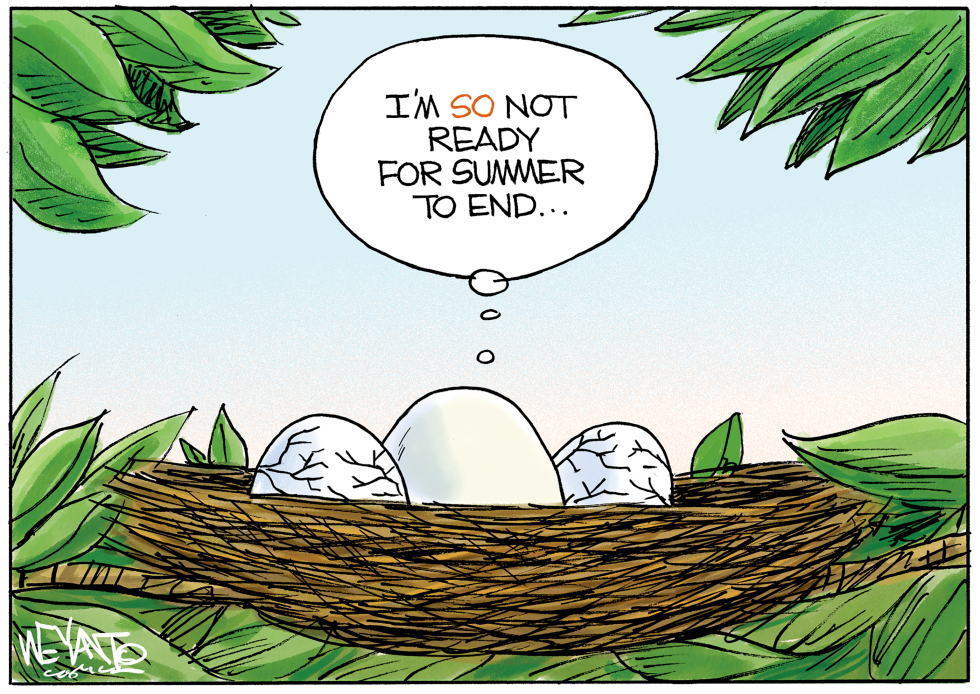
As summer draws to a close in late August, many express reluctance to embrace the coming autumn. The seasonal transition brings cooler weather and shorter days, prompting widespread nostalgia for warm months. This dynamic highlights common human resistance to change and the end of leisure periods. The piece captures that sentiment through a simple natural scene, underscoring the universal desire to prolong summer.
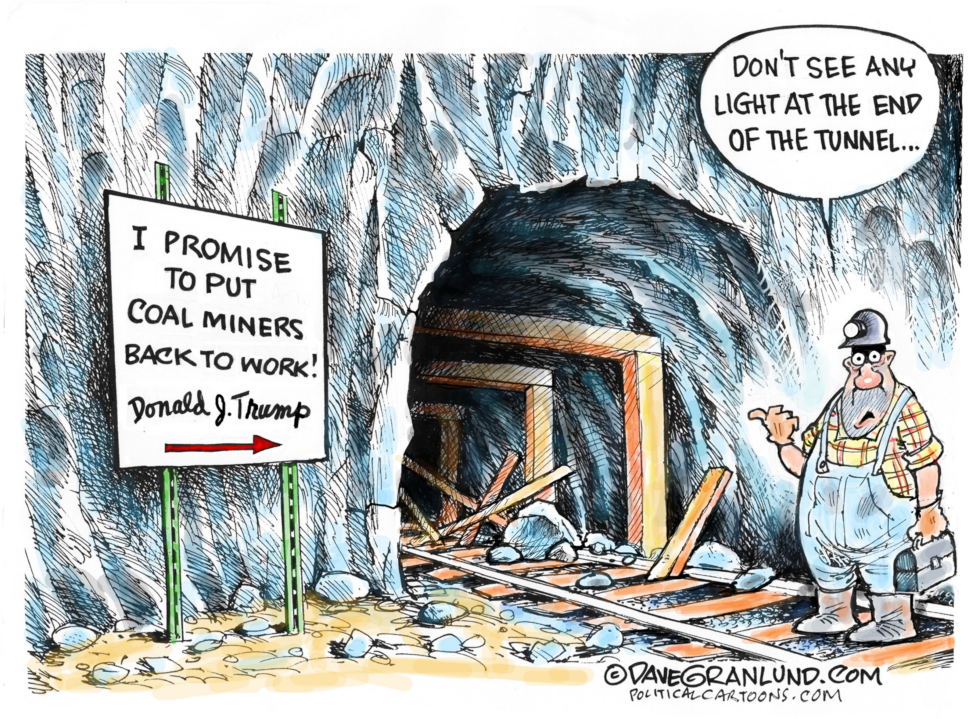
Donald Trump repeatedly pledged during his campaigns and terms to revive coal mining employment by rolling back regulations and boosting domestic production. Those commitments have not translated into sustained job growth for miners amid shifting energy markets and automation. The cartoon underscores the gap between the repeated assurances and the persistent lack of visible progress for workers in the sector.
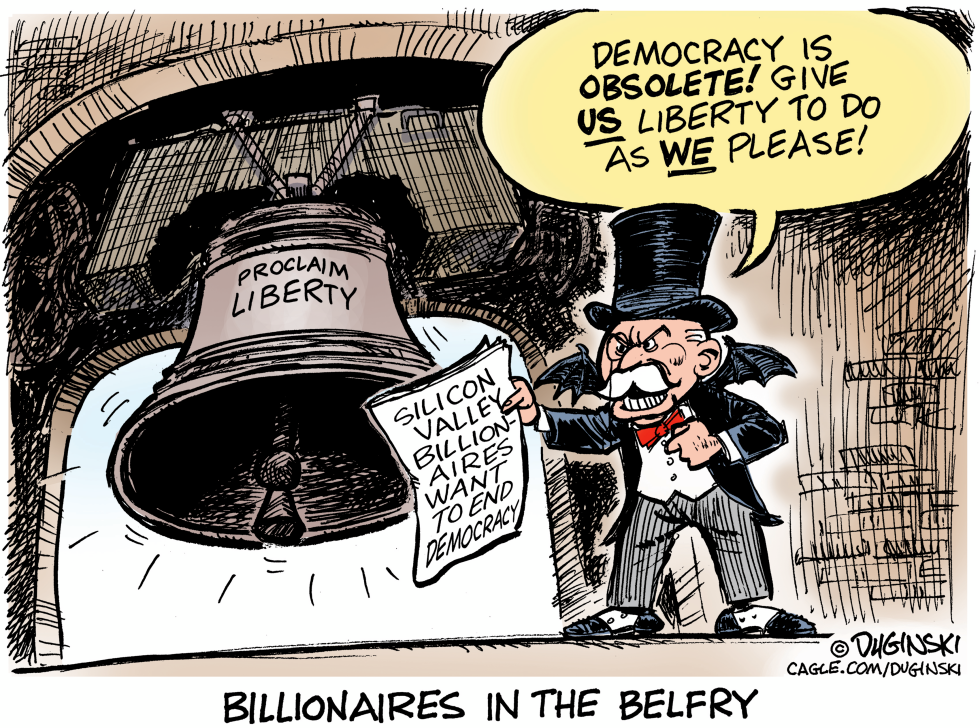
Silicon Valley billionaires have intensified efforts to reshape or bypass traditional democratic institutions in pursuit of greater autonomy for their enterprises. The move raises concerns about concentrated private power overriding public accountability. The cartoon argues that such figures seek to discard democratic constraints in favor of self-serving liberty.
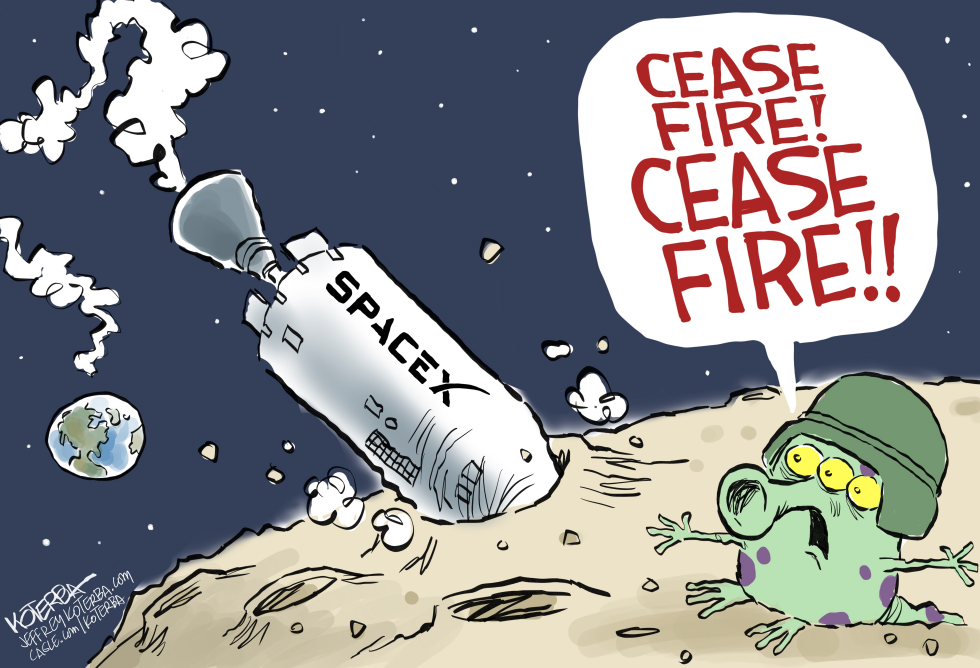
A SpaceX rocket has impacted the lunar surface in this imagined scenario. The event draws an immediate reaction from a local alien resident calling for an end to the activity. The piece uses the mishap to highlight ongoing risks in commercial spaceflight and the expanding human presence beyond Earth.
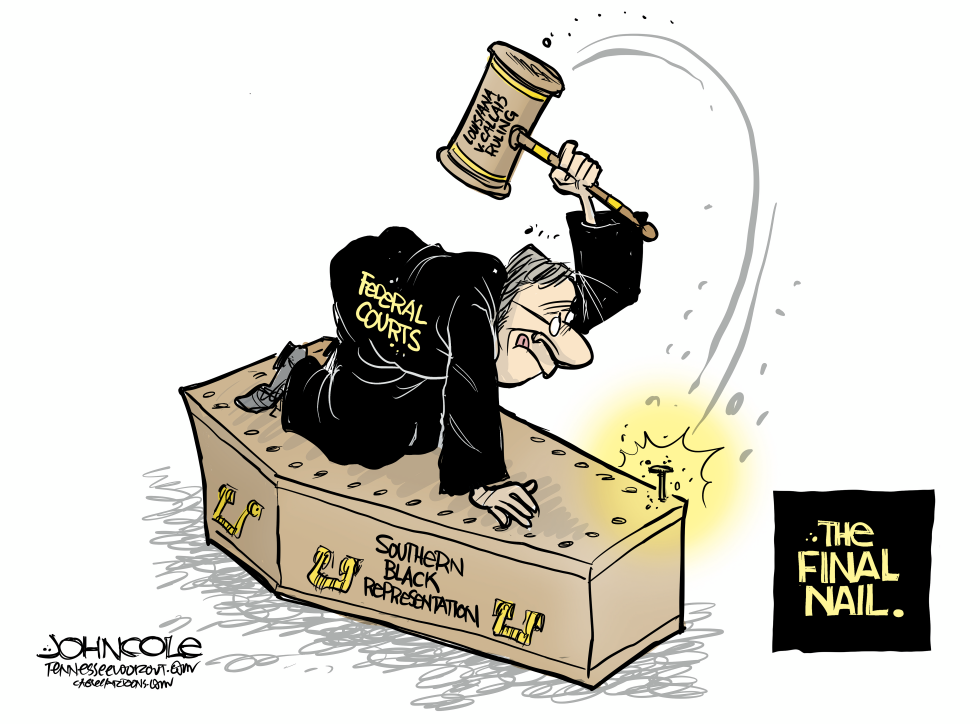
A federal court ruling on Louisiana redistricting has reduced black congressional representation across southern states. The decision follows ongoing litigation over district maps and voting access. It matters because it alters the number of majority-minority seats available in Congress. The piece argues the ruling delivers a decisive setback to those representation gains.
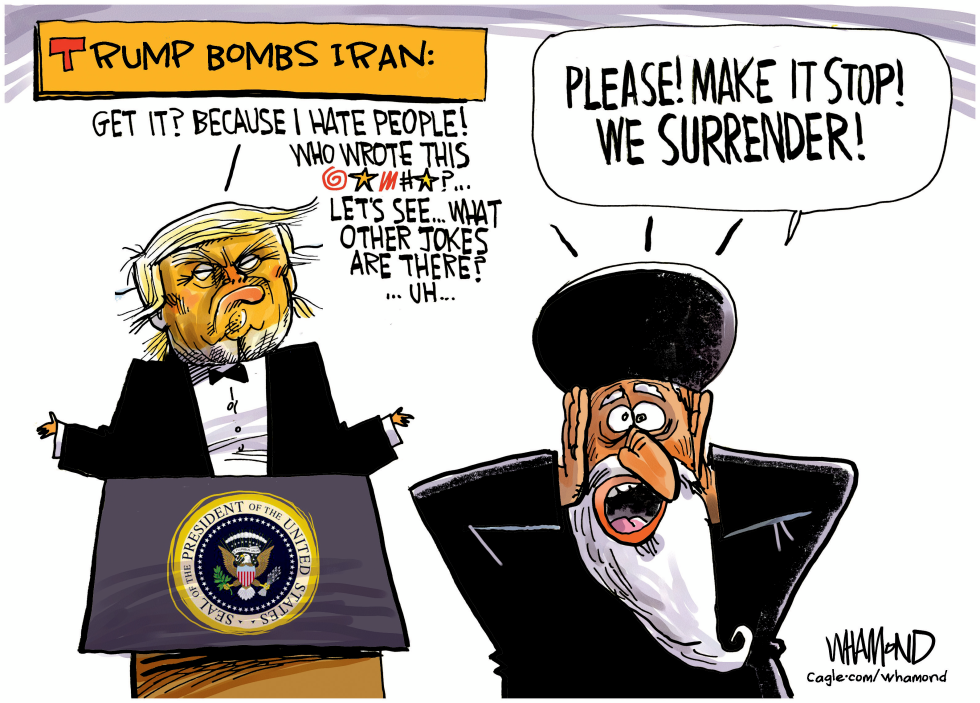
President Trump ordered strikes on Iran in late July 2026, prompting an immediate public plea for surrender from Iranian leadership. The action escalates tensions in the Middle East and raises questions about U.S. military objectives. The editorial takes the position that the strikes reflect personal animus rather than strategic necessity and mocks the president's framing of the operation.
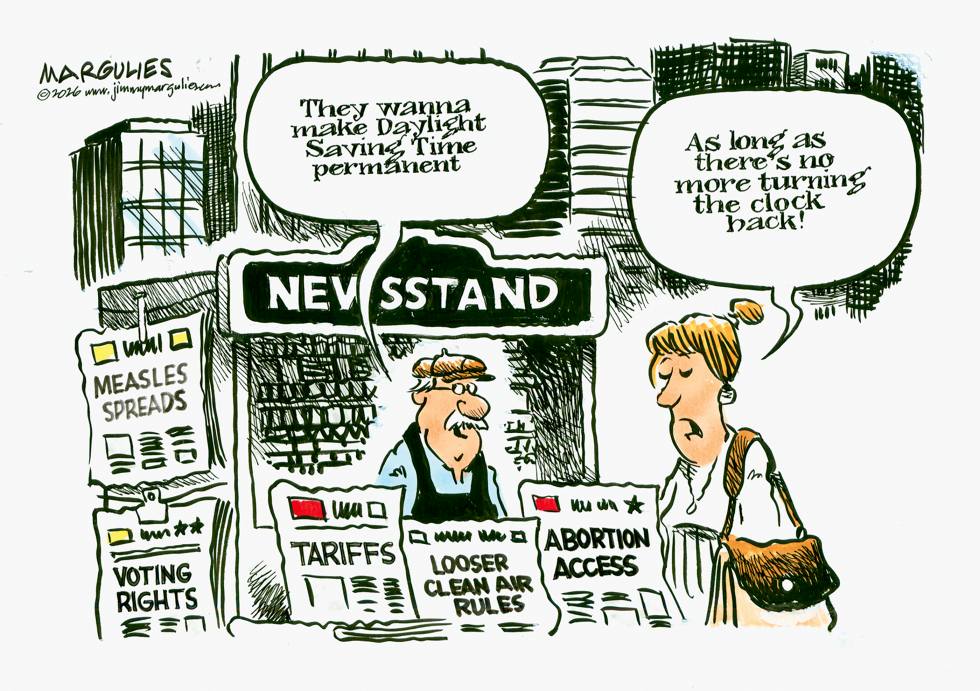
Proposals to make daylight saving time permanent coincide with debates over tariffs, abortion access, voting rights and environmental rules. The cartoon frames these as part of a broader pattern of policy shifts that some view as steps backward.
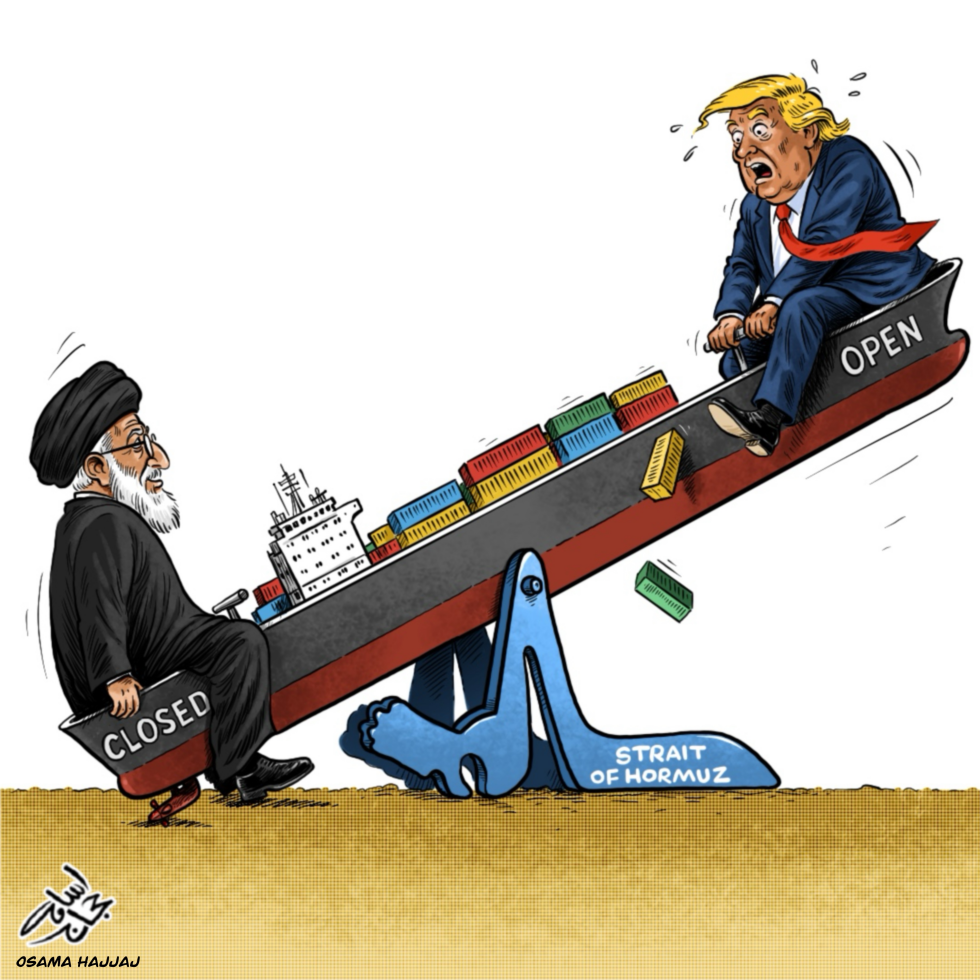
A political cartoon shows Donald Trump and Ayatollah Khamenei on opposite ends of a seesaw labeled Strait of Hormuz. Trump occupies the open side while the Iranian leader sits on the closed side. Colorful shipping containers line the beam with some falling off. The image highlights tensions over the vital oil shipping route. The cartoon uses the seesaw to illustrate competing efforts to control access through the strait.
The image presents Lindsey Graham in an obituary format dated 2026. It lists his birth and death years alongside a quote labeling him a consistent supporter of military engagements. The composition places the figure on the right with text blocks on the left. Publication occurred on July 12 2026. The visual focuses on his senate role and foreign policy positions active in prior years.