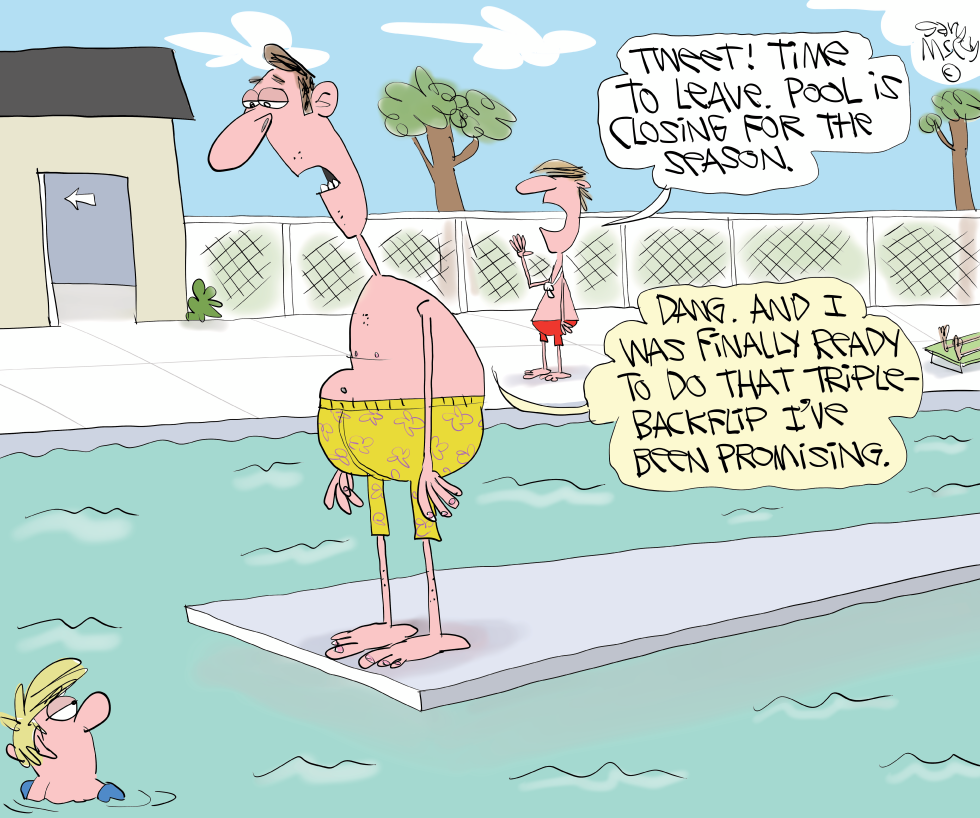
Labor Day brings the annual closure of public pools nationwide, signaling the end of summer swimming. Lifeguards issue final calls as patrons exit, often with unfinished personal goals like a promised dive. The piece captures the routine letdown of seasonal change through a simple missed-opportunity gag.
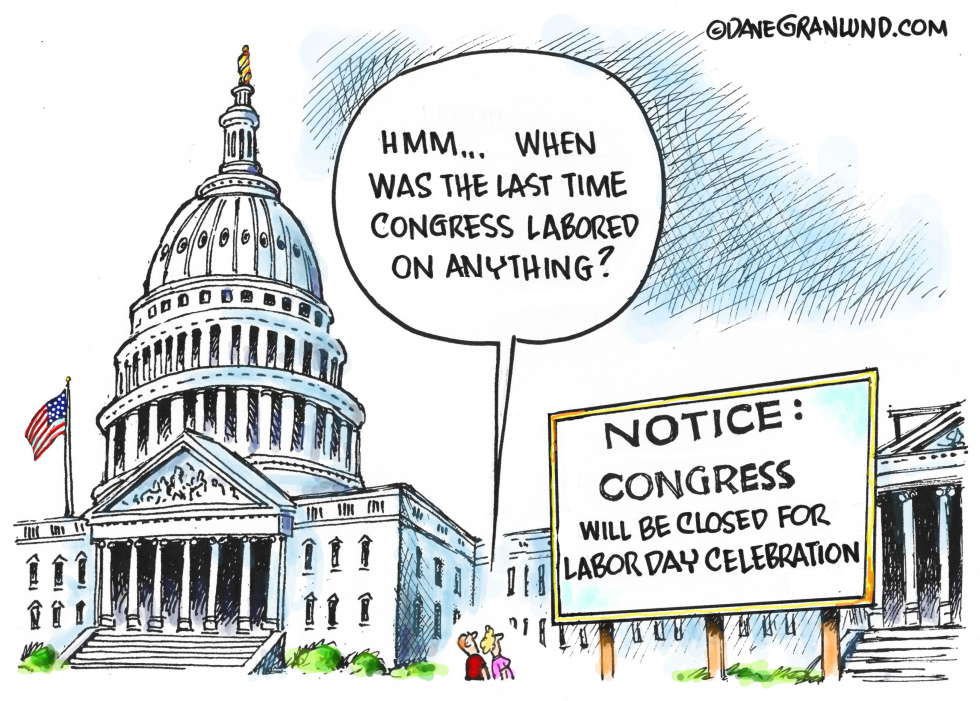
A political cartoon depicts the US Capitol Building with a prominent notice announcing Congress will be closed for Labor Day celebration. A speech bubble from onlookers asks when Congress last labored on anything. The image, dated September 1, 2026, comments on legislative inactivity during a federal holiday. It reflects common public frustration with congressional productivity and frequent recesses. The cartoon uses the holiday to underscore perceptions of limited legislative output in recent sessions.
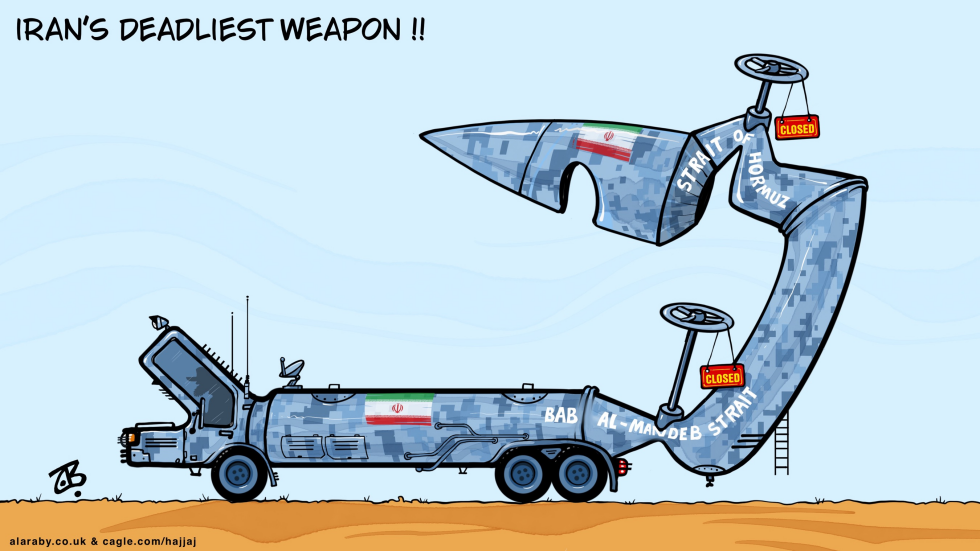
A new cartoon by Emad Hajjaj illustrates Iran's control over the Strait of Hormuz and Bab al-Mandeb Strait as its most potent weapon. The image renders a large camouflaged missile launcher bearing Iranian flags and marked with the two straits, each valve labeled closed. The work responds to ongoing concerns about potential disruptions to global oil shipments through these critical waterways in the Middle East. It emphasizes how Tehran could leverage geographic position to pressure adversaries without direct military engagement. The visual underscores the strategic importance of these passages amid heightened regional tensions.
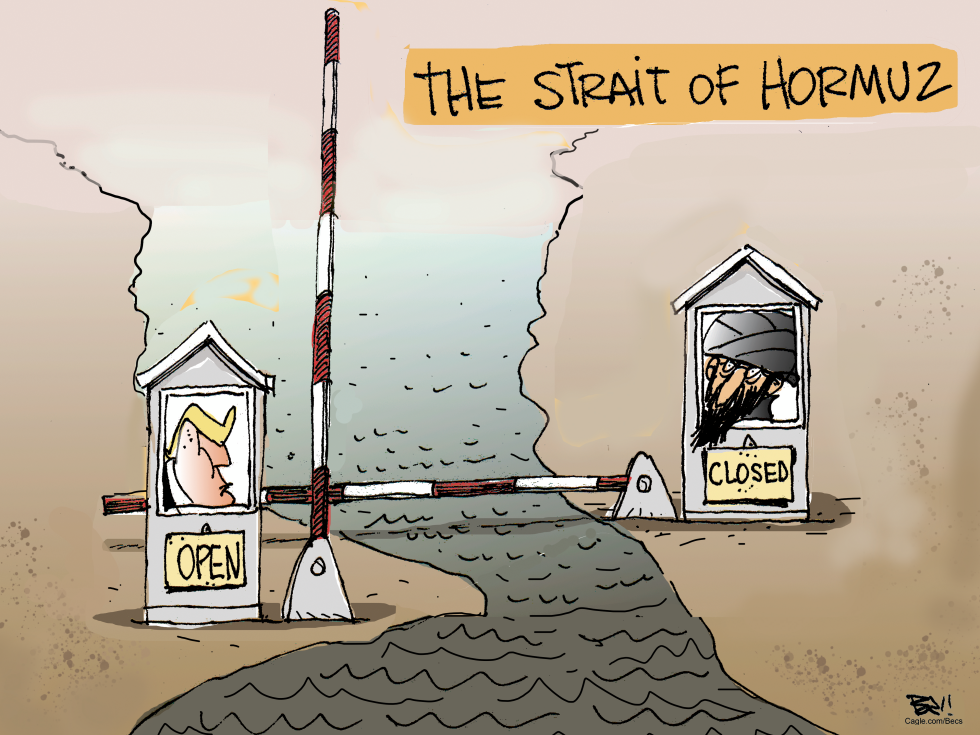
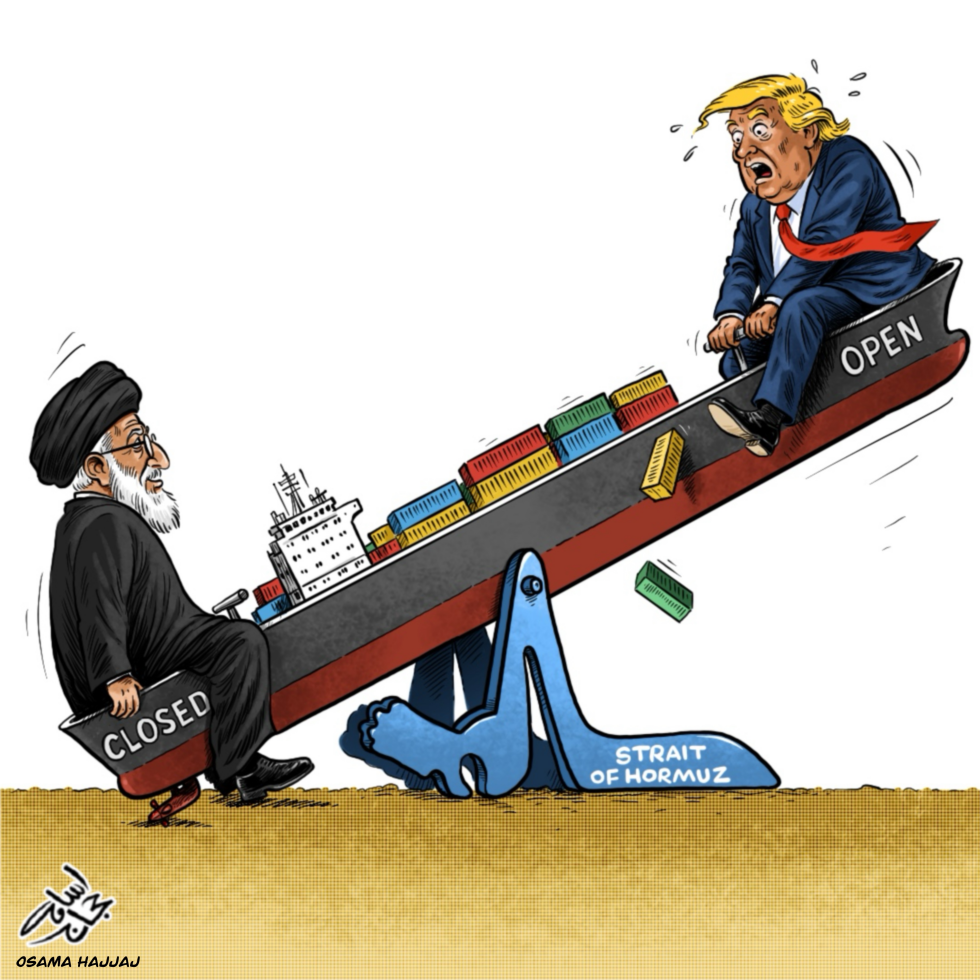
The Strait of Hormuz remains a flashpoint for global oil transit as the United States and Iran maintain opposing stances on access. Donald Trump positions an open checkpoint while an Iranian official signals closure. The editorial highlights the standoff's direct impact on energy markets and shipping security.
A political cartoon shows Donald Trump and Ayatollah Khamenei on opposite ends of a seesaw labeled Strait of Hormuz. Trump occupies the open side while the Iranian leader sits on the closed side. Colorful shipping containers line the beam with some falling off. The image highlights tensions over the vital oil shipping route. The cartoon uses the seesaw to illustrate competing efforts to control access through the strait.
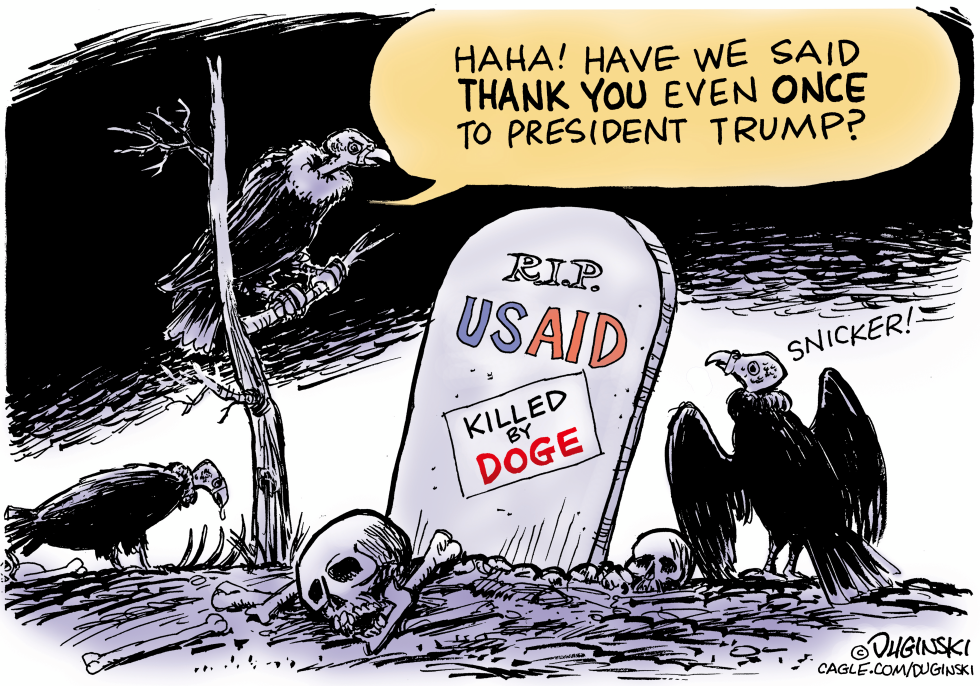
Vultures perch around a tombstone reading R.I.P. USAID killed by DOGE on July 9 2026. One bird in a speech bubble asks if thanks have been given to President Trump while another snickers nearby. Skulls and bones litter the ground beneath the marker. The scene follows recent DOGE actions targeting the aid agency.
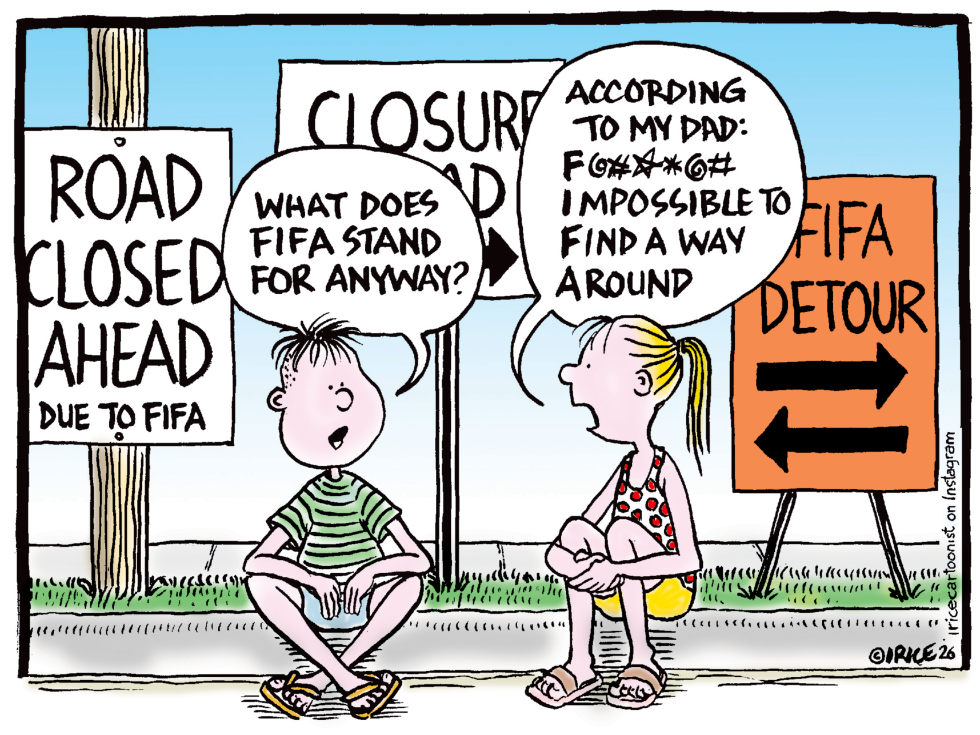
A cartoon shows two children seated beside road closure and detour signs tied to a FIFA event. One child asks what the acronym stands for while the other relays a frustrated, censored remark from a parent about finding alternate routes.
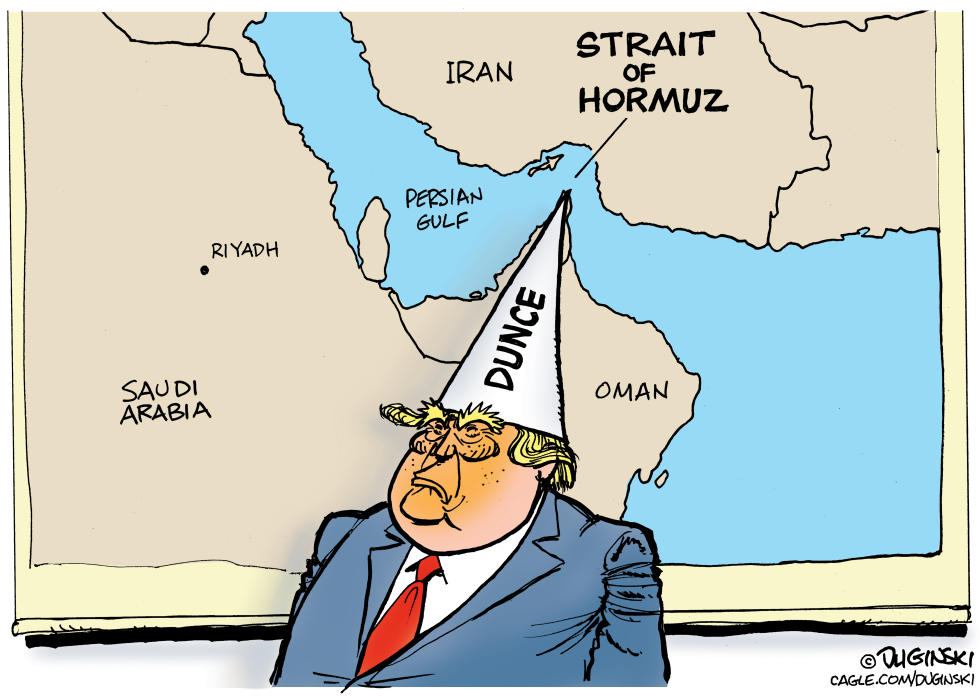
The cartoon depicts a simplified map of the Middle East, including labels for Iran, Saudi Arabia, Oman, Riyadh, and the Persian Gulf. The Strait of Hormuz is prominently marked, with a caricatured man in a suit and red tie wearing a dunce cap labeled \'DUNCE\' positioned over it. This setup uses the strait as a choke point for oil and energy, tying into themes of foreign policy, war, and ignorance. The image critiques handling of Middle East waterway issues, possibly linked to closure threats, tankers, and ceasefire efforts. Artist signature appears in the bottom right.
The cartoon shows the U.S. Capitol wrapped in yellow crime scene tape after GOP Congress passed the Big Beautiful Bill. Body outlines on the ground list consequences including millions losing health coverage, four trillion dollars in new debt, higher taxes on the poor, increased ICE deportations, lost food stamps and axed clean energy programs. All outcomes are attributed to aiding billionaires. The image uses the crime scene motif to highlight the bill's projected effects on vulnerable groups and federal spending priorities as of early July 2025.