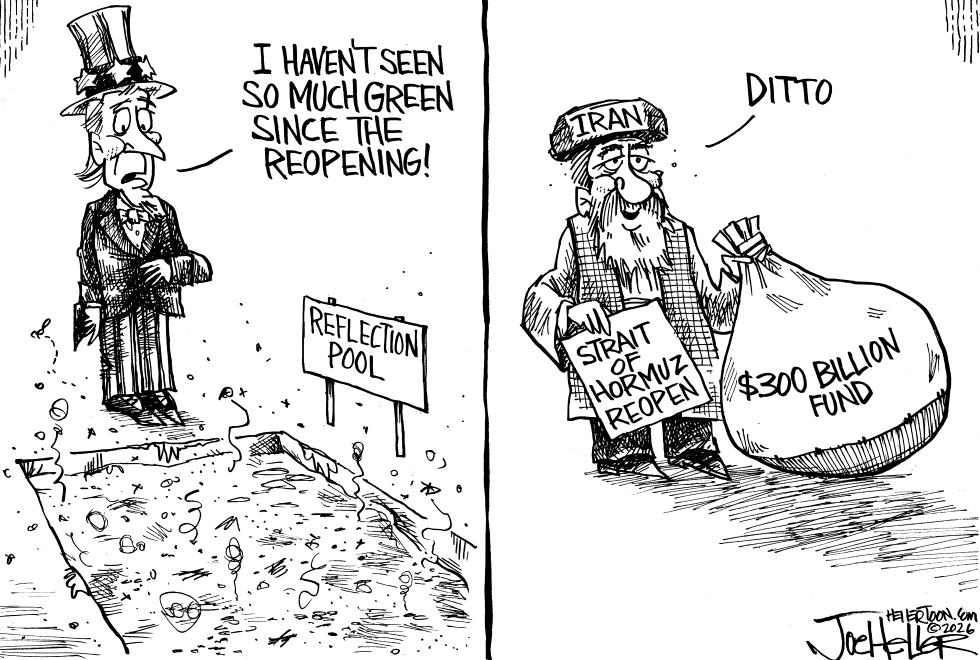
On June 19 2026 Joe Heller depicts Uncle Sam at a green-tinted reflection pool remarking on the color since reopening. In the facing panel a figure labeled Iran echoes the line while displaying a Strait of Hormuz reopen sign and a 300 billion dollar fund bag. The split composition ties the US visual gag to Iran's recent move on the vital waterway and associated financial package.
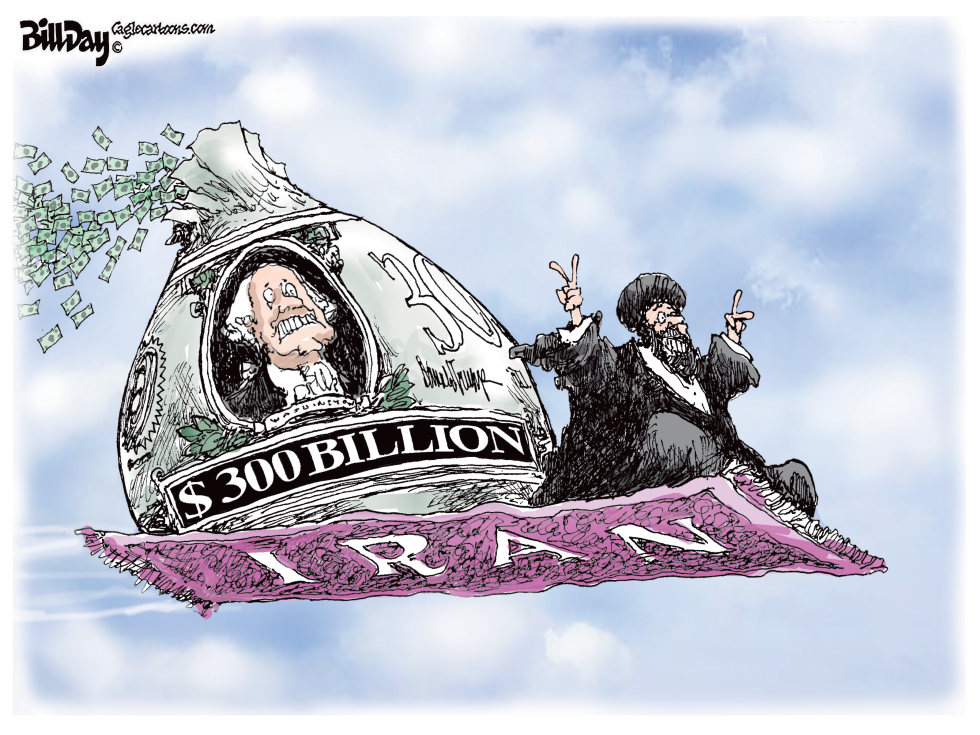
On June 18, 2026, Bill Day's cartoon depicts former President Donald Trump inside a torn $300 billion money bag with cash flying outward. An Iranian cleric figure sits on a purple carpet labeled IRAN, gesturing victory signs. The image responds to ongoing debates over sanctions relief and financial transfers involving Iran during that period.
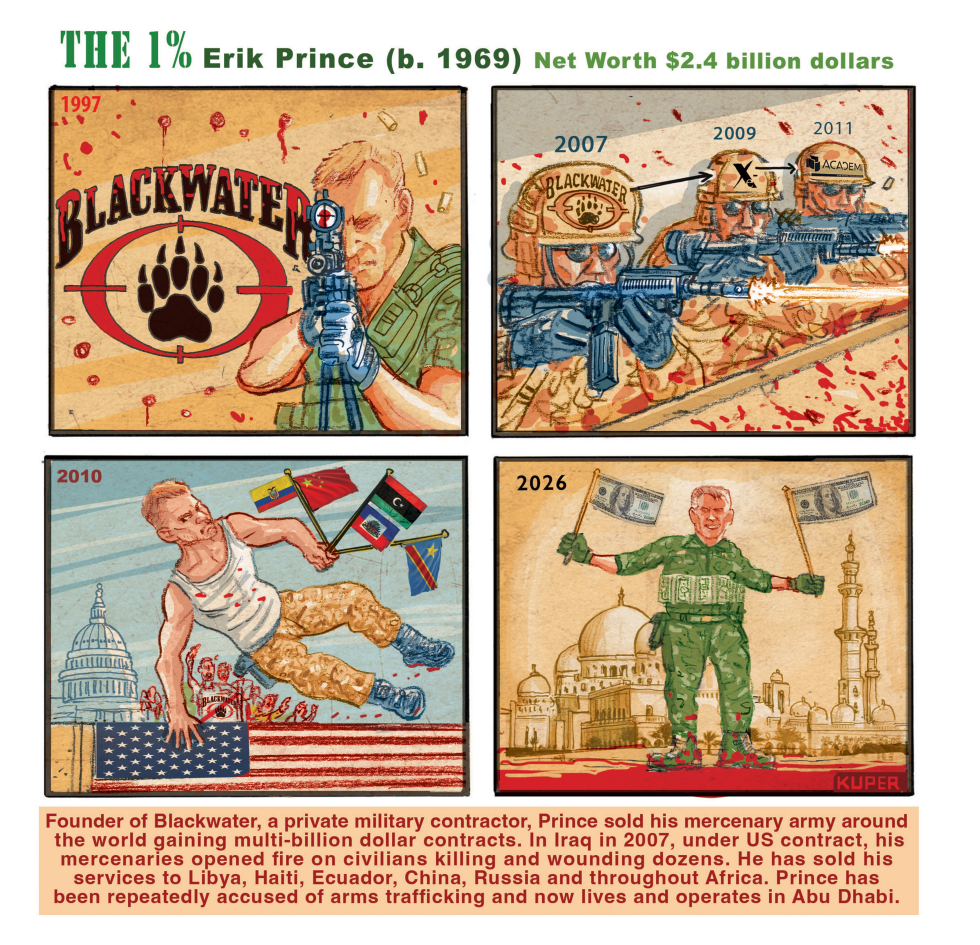
A four-panel illustration tracks Erik Prince from the 1997 launch of Blackwater through 2007 Iraq operations, 2010 foreign flag dealings, and a 2026 portrait of wealth in Abu Dhabi. The sequence highlights repeated accusations of civilian shootings under US contracts and arms trafficking claims while showing rebranding to Academi and continued global sales of paramilitary services.
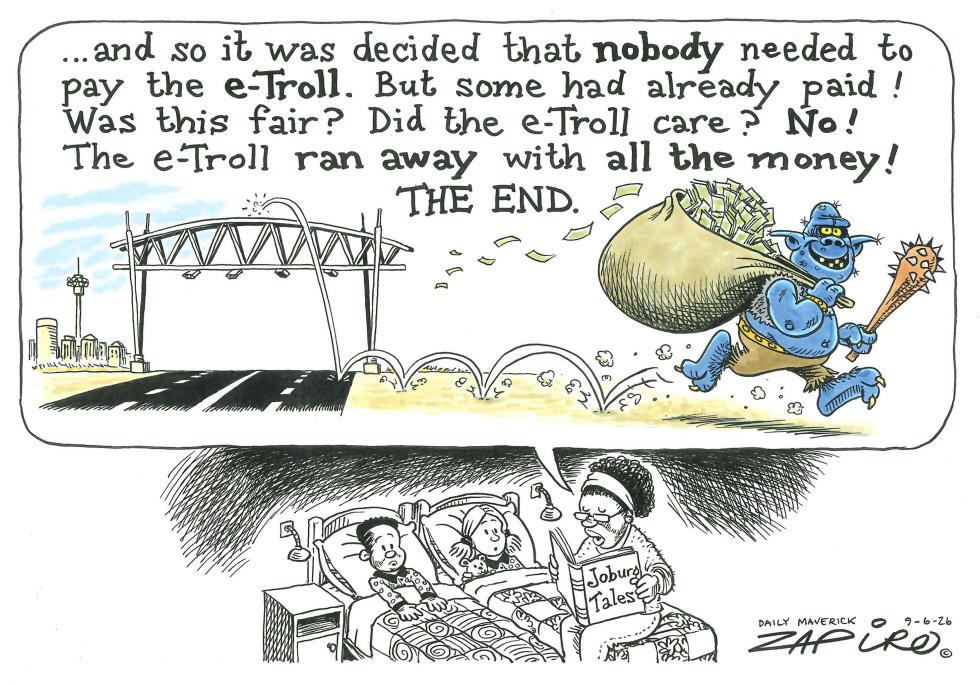
Zapiro's June 2026 cartoon shows an e-troll fleeing a Johannesburg toll plaza with a sack of cash while a grandmother reads the tale to children. The image references ongoing disputes over Gauteng's electronic toll system and missing revenue. The upper panel depicts the toll gantry and city skyline with the troll escaping. The lower panel shows the domestic bedtime scene with the book titled Joburg Tales. The cartoon uses a children's story format to highlight public frustration with the toll collection process.
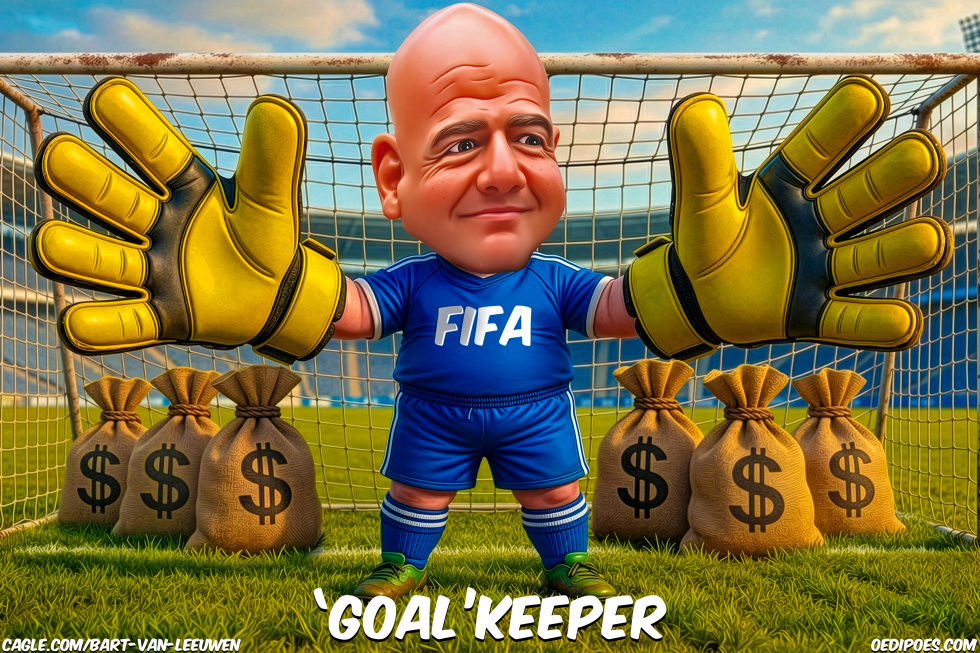
The image presents a bald man wearing a blue FIFA goalkeeper kit and oversized yellow gloves. He stands centered in a soccer goal with multiple burlap sacks printed with dollar signs placed on the field grass nearby. The scene responds to ongoing discussions about FIFA revenue from the upcoming World Cup hosted in the United States. Publication occurs ahead of the 2026 tournament schedule. The visual emphasizes financial flows connected to American soccer markets under current FIFA leadership.
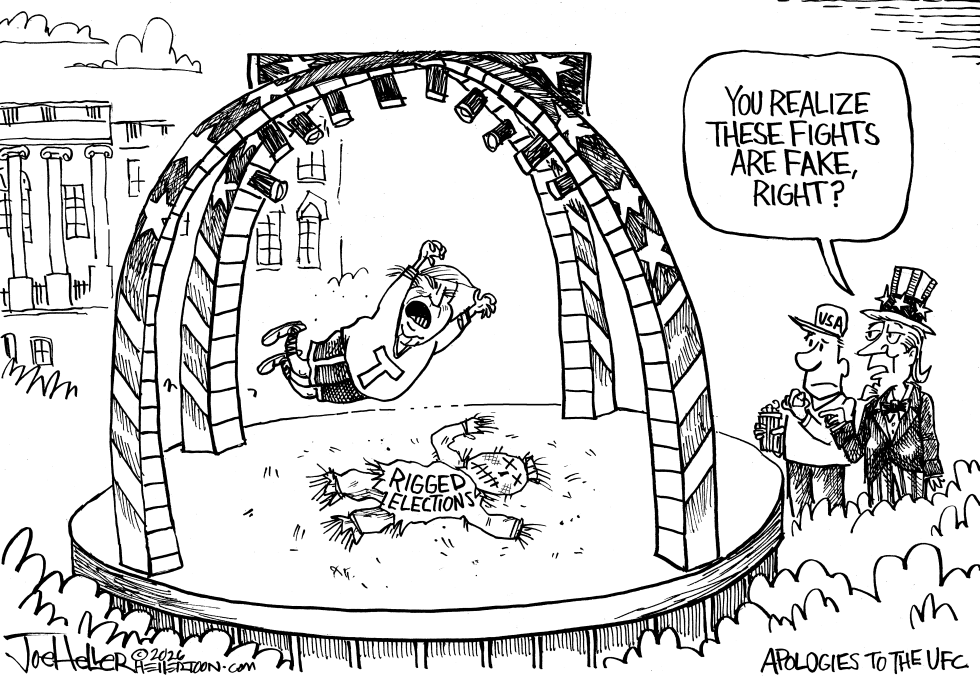
A wrestling ring scene shows a Trump figure thrown onto a mat labeled rigged elections while Uncle Sam remarks that the fights are fake. The image responds to ongoing 2026 election integrity debates with a direct visual comparison to staged matches.
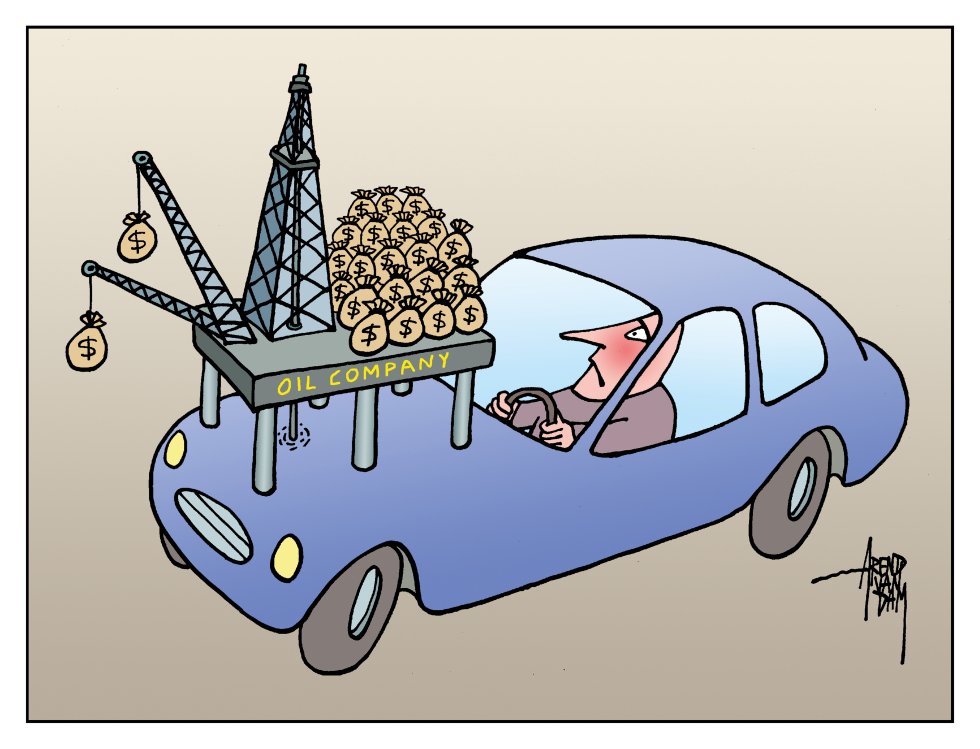
In this pointed political cartoon, an oil company platform sits atop a blue car, loaded with piles of dollar-sign money bags, while cranes dangle more profits. The frustrated motorist grips the wheel, face red with anger, illustrating how excessive profits from oil companies crush consumers at the pump. Tags like excessive profits, motorists, fuel, petrol, and refuel capture the essence, with Iran and Strait of Hormuz hinting at geopolitical tensions driving prices. This visual satire underscores the disparity between corporate windfalls and everyday drivers' pain, a timeless theme in energy politics.
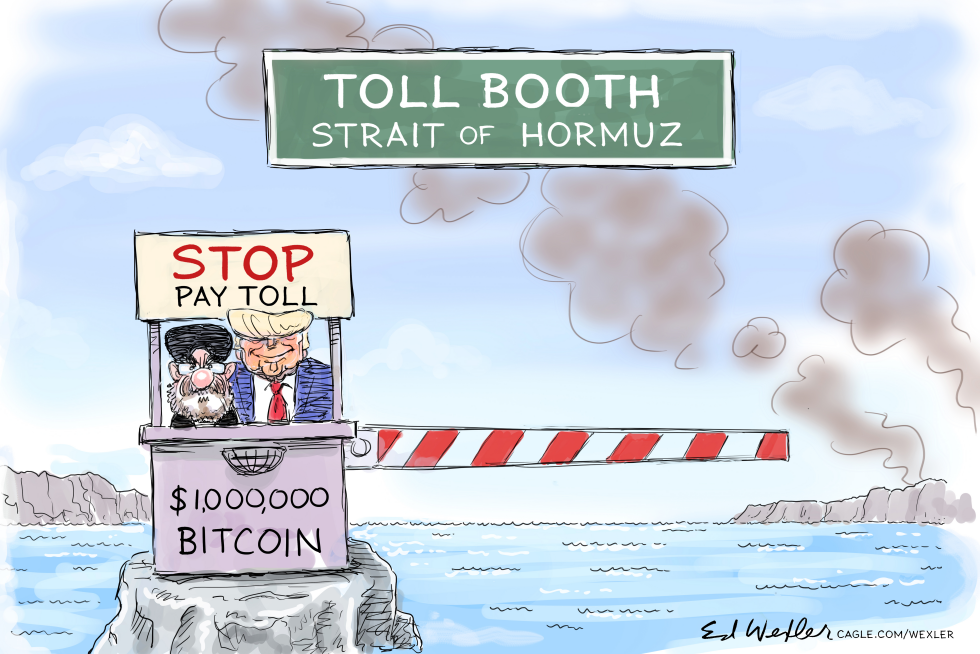
Ed Wexler\\\'s cartoon captures a toll booth in the Strait of Hormuz, where figures resembling Trump and the Ayatollah enforce a $1,000,000 Bitcoin toll. Smoke rises from what look like mines in the water, blending tags like Iran, Strait of Hormuz, tolls, Bitcoin, Trump, Ayatollah, and crypto into a sharp commentary. The barrier arm blocks passage, emphasizing control over this vital shipping lane. It\\\'s a straightforward jab at geopolitical tensions, with the toll sign demanding payment to proceed. No hidden layers here, just clear visuals tying economic pressures to digital currency in a contested area. The dry humor shines through in the absurdity of a Bitcoin booth amid potential explosions.
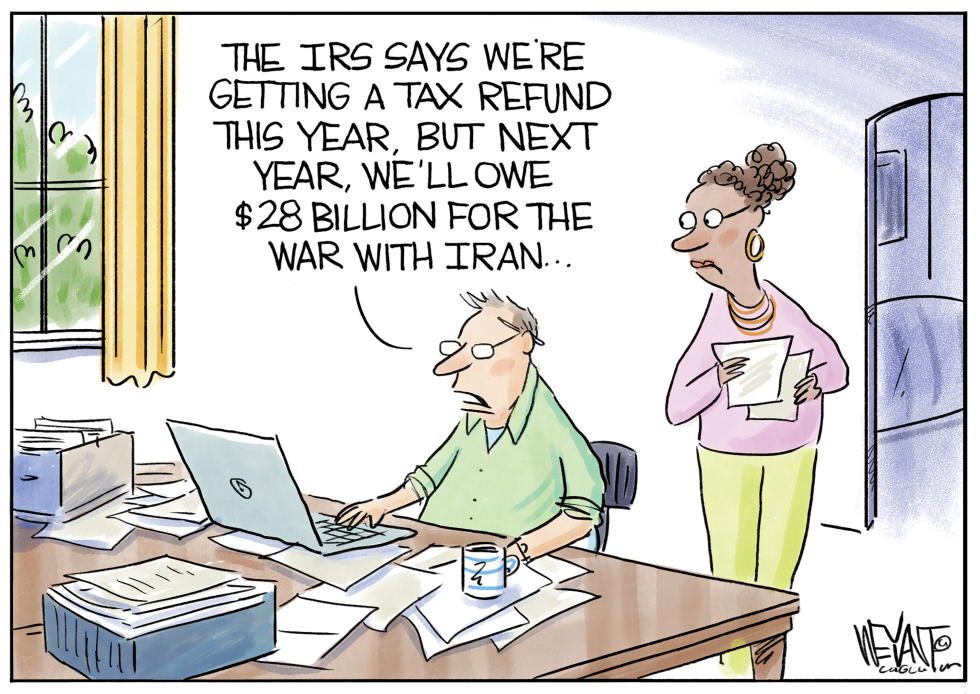
Dive into this biting political cartoon tax refund piece where a woman, holding papers, informs a laptop-working man about their IRS windfall this year, only to drop the bomb of owing $28 billion next for the war with Iran. The satirical cartoon Iran war vibe captures the absurdity of US taxes funding wars, with cluttered desks and exasperated expressions underscoring the humorous take on federal spending. It's a classic taxpayer burden Iran conflict jab, poking fun at government spending satire while illustrating the disconnect between personal finances and massive military expenses. Through cartoon about military expenses, it cleverly critiques fiscal policy in an office setting, making the war with Iran taxpayer joke both relatable and irreverently insightful for viewers pondering editorial cartoon fiscal policy.
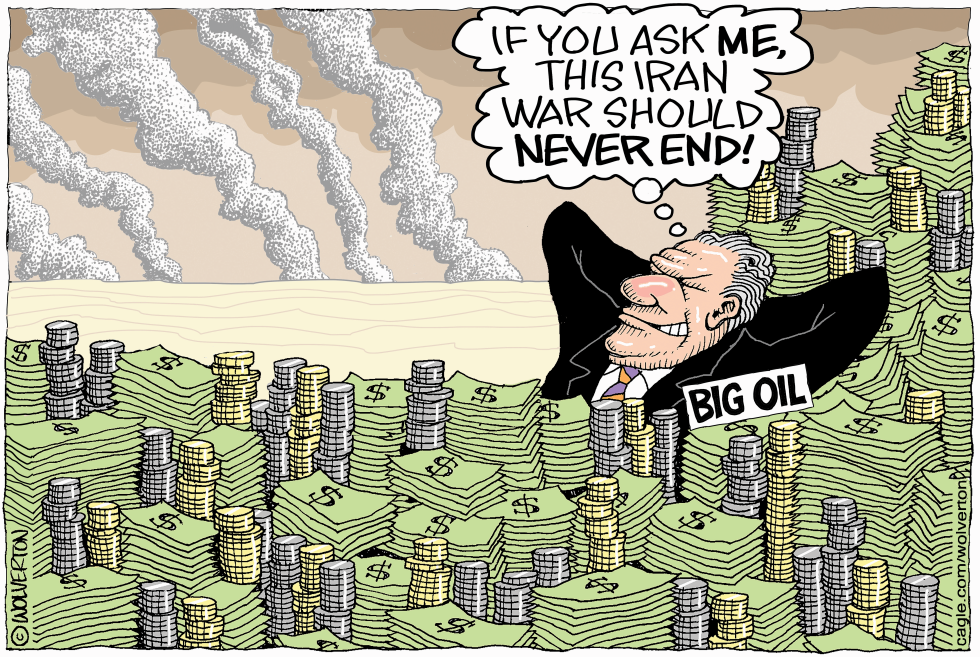
A political cartoon dated March 17, 2026, depicts a Big Oil executive reclining amid stacks of cash and coins. The figure, labeled BIG OIL, thinks that the Iran war should never end. Smoke rises in the background over a landscape of dollar bills. The image responds to ongoing concerns about oil industry gains during Middle East conflicts.