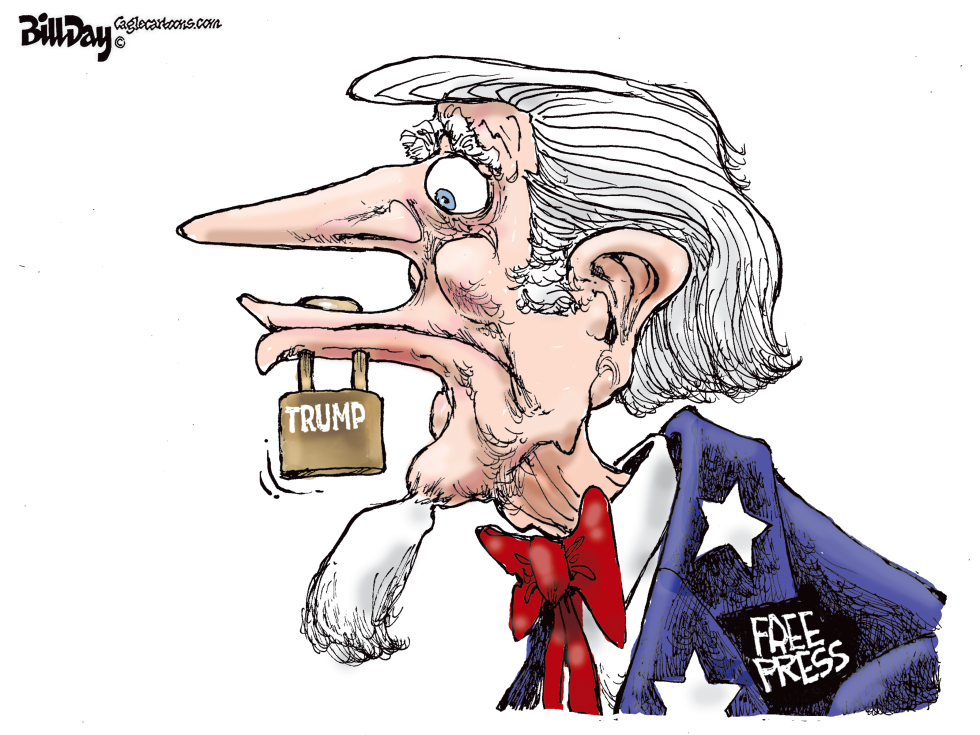
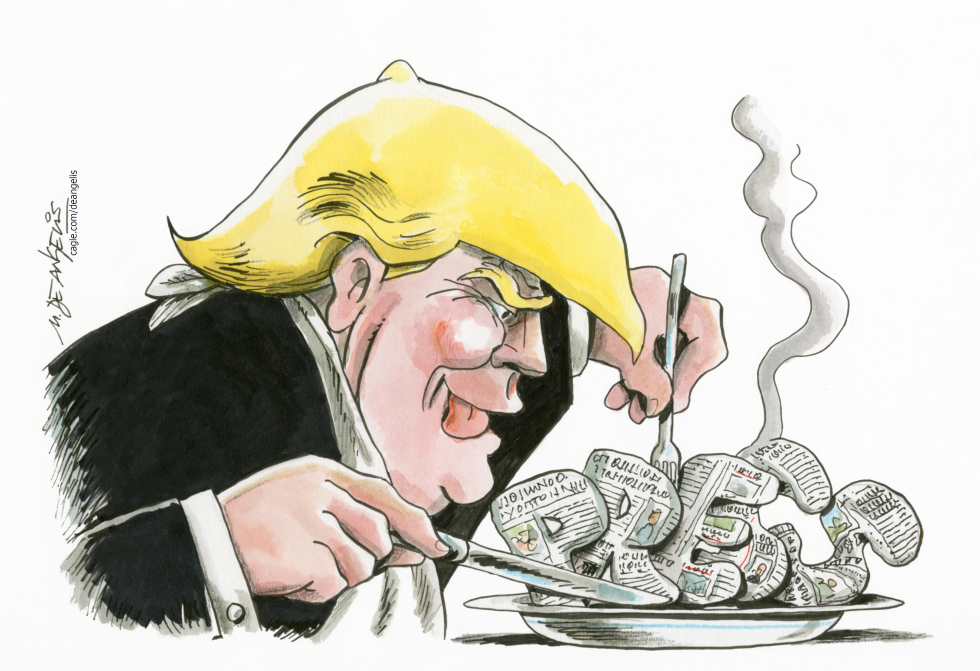
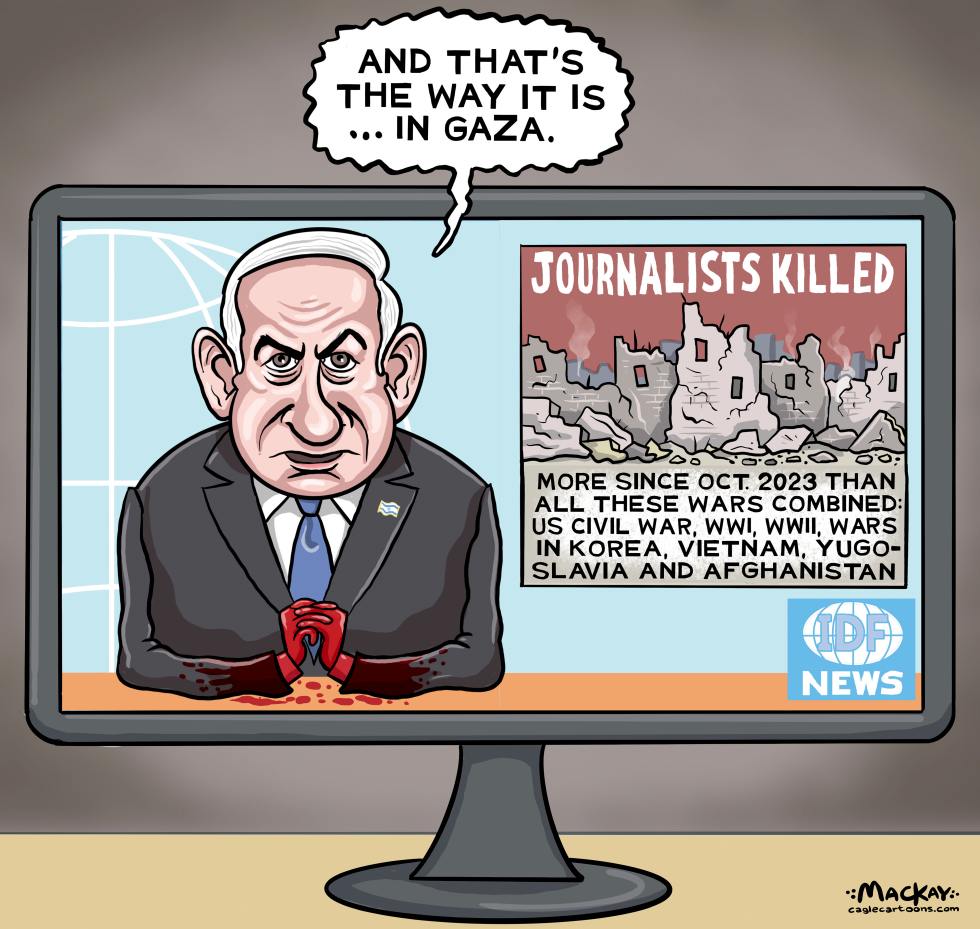
Donald Trump, holding office in 2026, faces renewed scrutiny over efforts to limit press access and information flow. Critics argue these moves undermine democratic oversight. The cartoon portrays the administration as actively securing or restricting the free press through direct control.
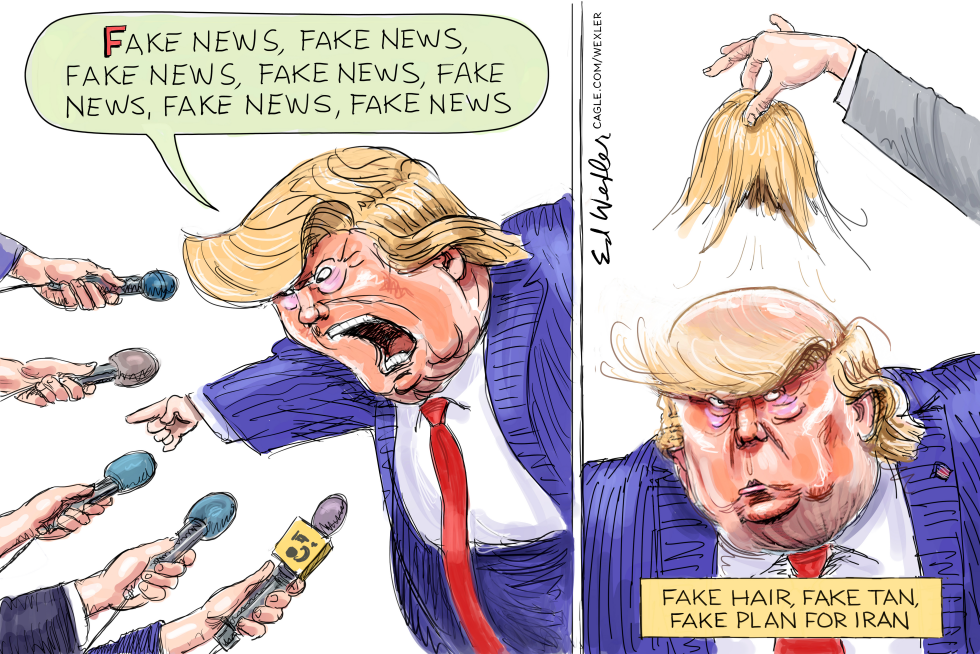
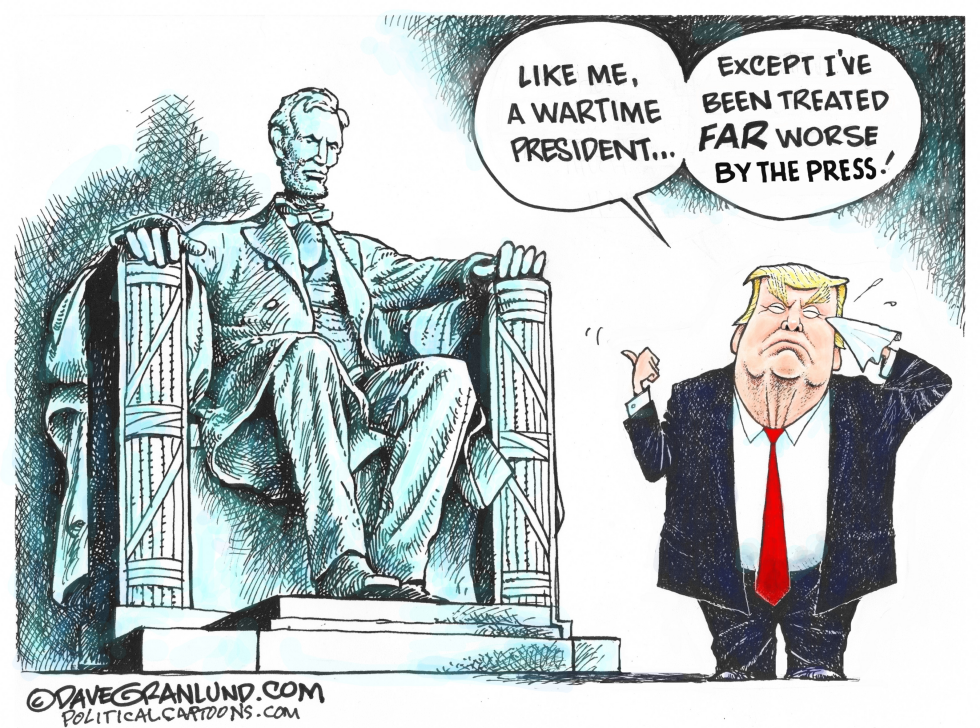
Donald Trump repeatedly labels media coverage as fake news during press encounters. The cartoon responds by questioning the authenticity of his appearance and his approach to Iran policy. It portrays the disconnect between his public statements and underlying realities.
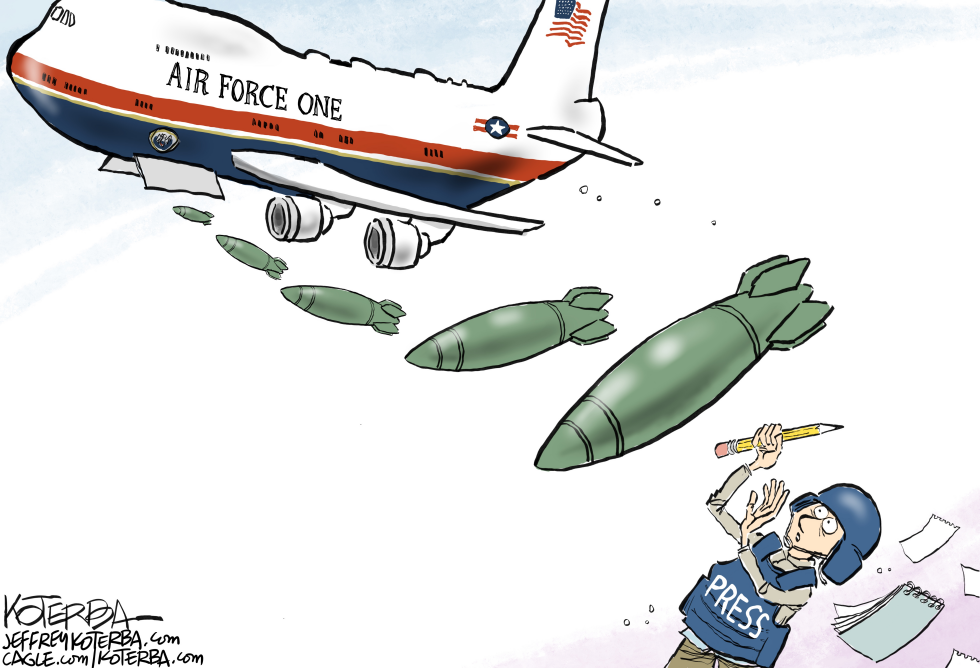
The image shows Air Force One releasing several green missiles from its underside while flying. Below, a person wearing a blue vest labeled PRESS and a helmet raises a pencil overhead with one hand while extending the other palm outward. Papers scatter around the figure. The plane displays the American flag on its tail and standard markings on its fuselage.
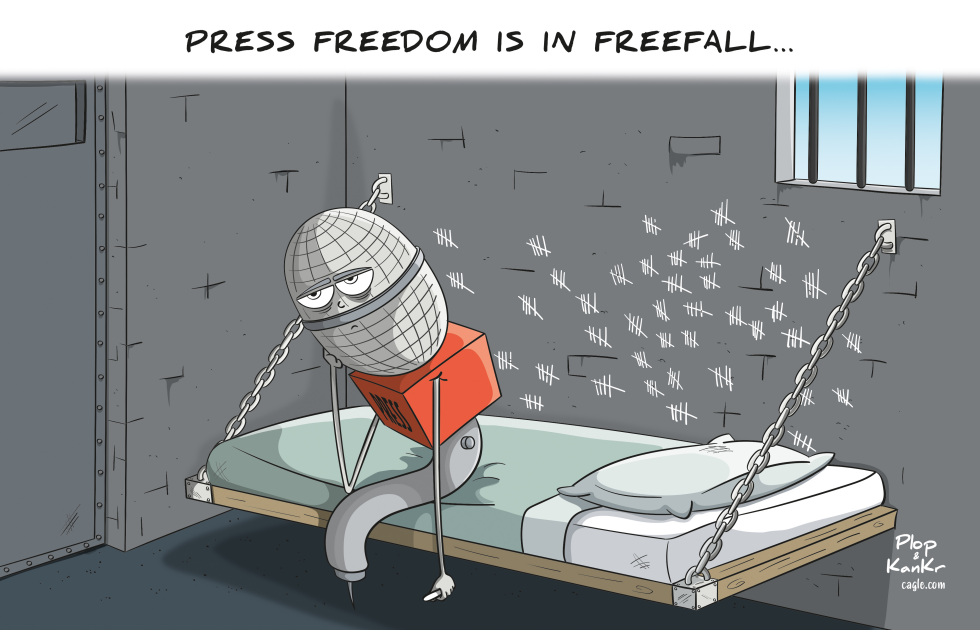
A helmeted figure labeled press sits chained to a bed inside a prison cell. Chains connect the figure to the wall and floor. The scene includes a window with bars and a pillow on the bed. Text above states press freedom is in freefall. The image responds to ongoing concerns about media restrictions by showing the press immobilized and confined.
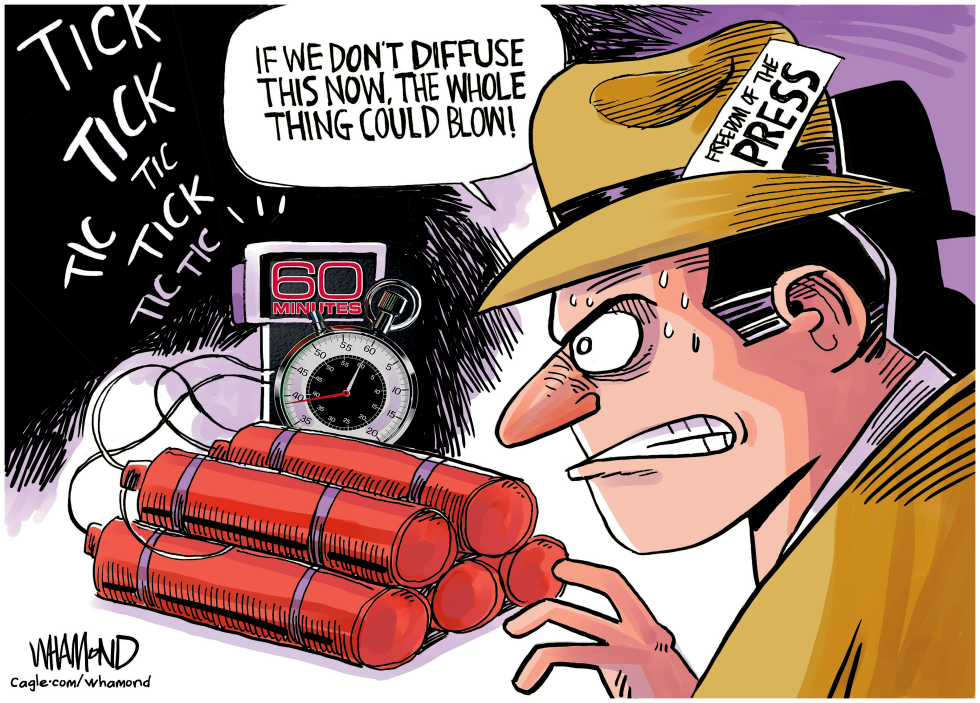
A sweating journalist wearing a Freedom of the Press hat leans over a bundle of dynamite sticks wired to a 60 Minutes timer. The timer ticks loudly as the figure warns in a speech bubble that failure to defuse the crisis will cause everything to blow. The image responds to reported turmoil at CBS News involving 60 Minutes correspondents and leadership changes at Paramount.
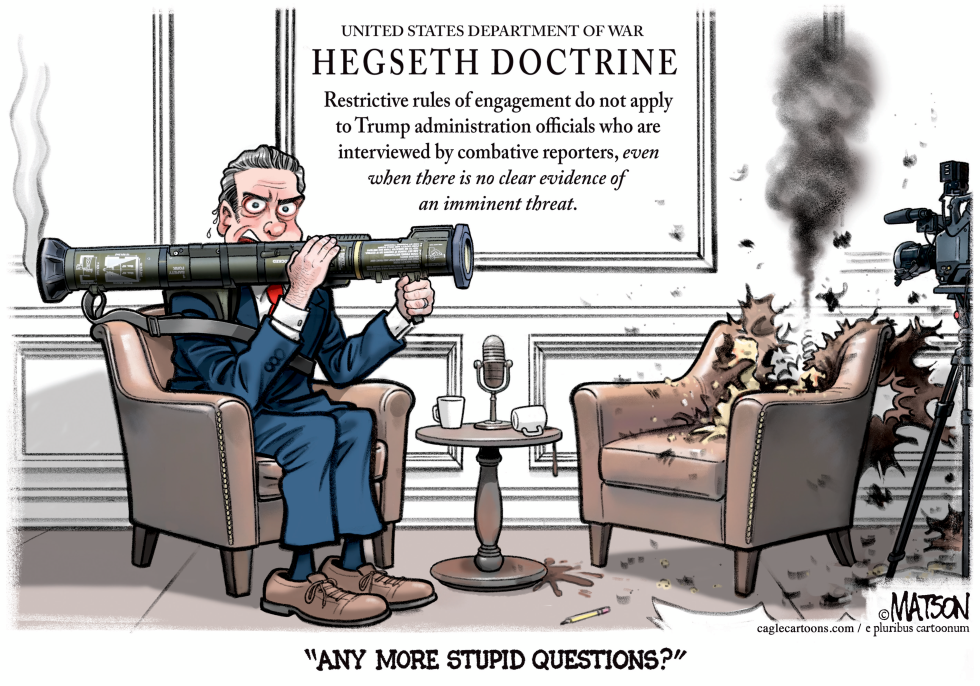
R.J. Matson's cartoon depicts a stern-faced official in a formal setting, wielding a massive rocket launcher that has just obliterated the interviewer's chair, smoke billowing from the debris. The header proclaims the 'Hegseth Doctrine' under the 'United States Department of War,' stating that restrictive rules of engagement don't apply to Trump administration officials facing combative reporters, even without clear evidence of an imminent threat. The official snarls, 'Any more stupid questions?' as a camera topples amid the chaos. This setup skewers the notion of overreactive defenses in political interviews, blending dry humor with sharp commentary on media relations. Tags like Hegseth Doctrine, Trump administration satire, press interview violence, combative reporters parody, imminent threat joke, and political cartoon Matson capture the essence of this visually punchy critique.
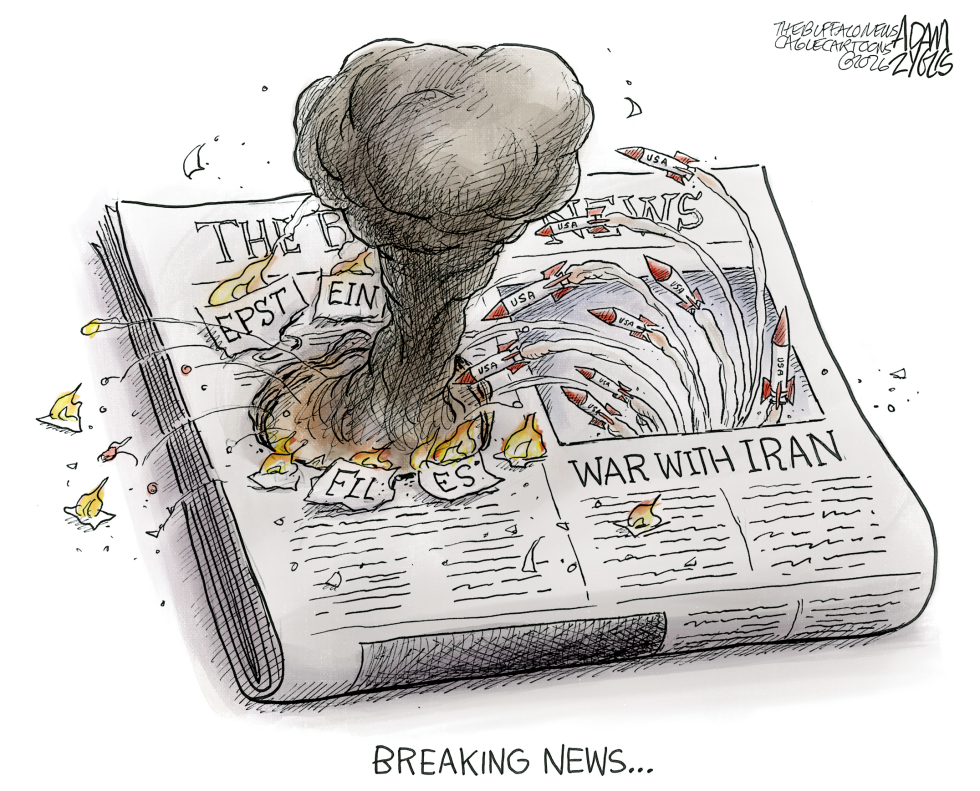
Dive into Adam Zyglis's political cartoon where breaking news morphs into a nuclear explosion, symbolizing media sensationalism around the Epstein files and war with Iran. USA missiles and Iran conflict visuals underscore geopolitical tension, while the exploding headlines serve as a sharp journalism critique. This satirical illustration captures the chaos of fake news explosion, reminding us how sensational stories can overshadow substance in today's fast-paced media landscape. With irreverent humor, it questions the ethics of turning tragedies into spectacles, blending satire with insightful commentary on news consumption.
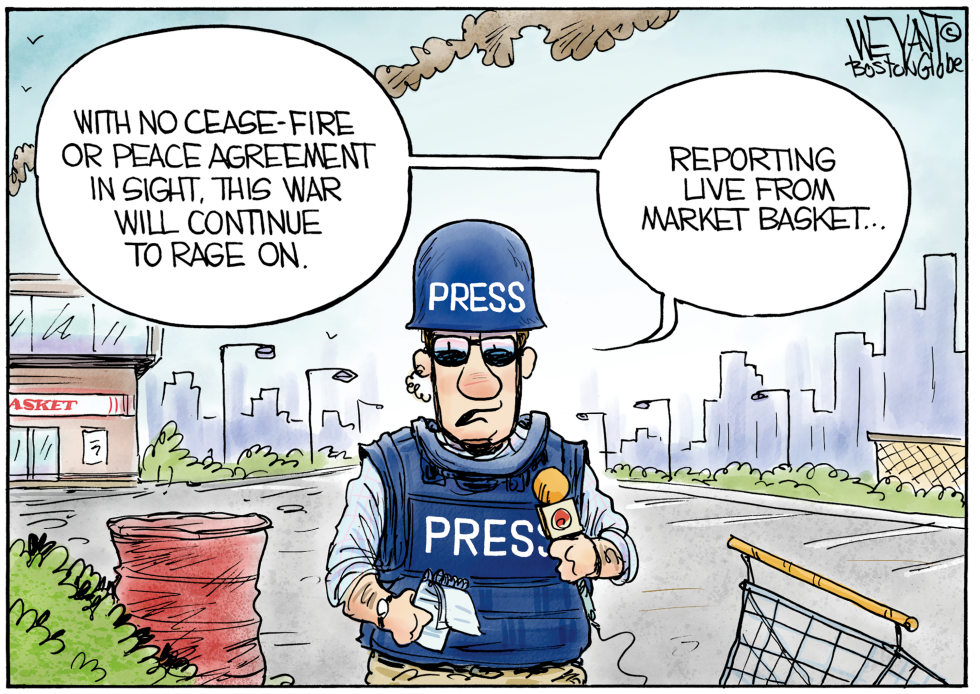
A Boston Globe cartoon shows a reporter in press armor broadcasting live from a Market Basket store. Speech bubbles frame the supermarket scene as an unresolved war with no cease-fire in sight. The image responds to ongoing tensions over ownership, supply chains, and rising prices at the New England chain during August 2025.
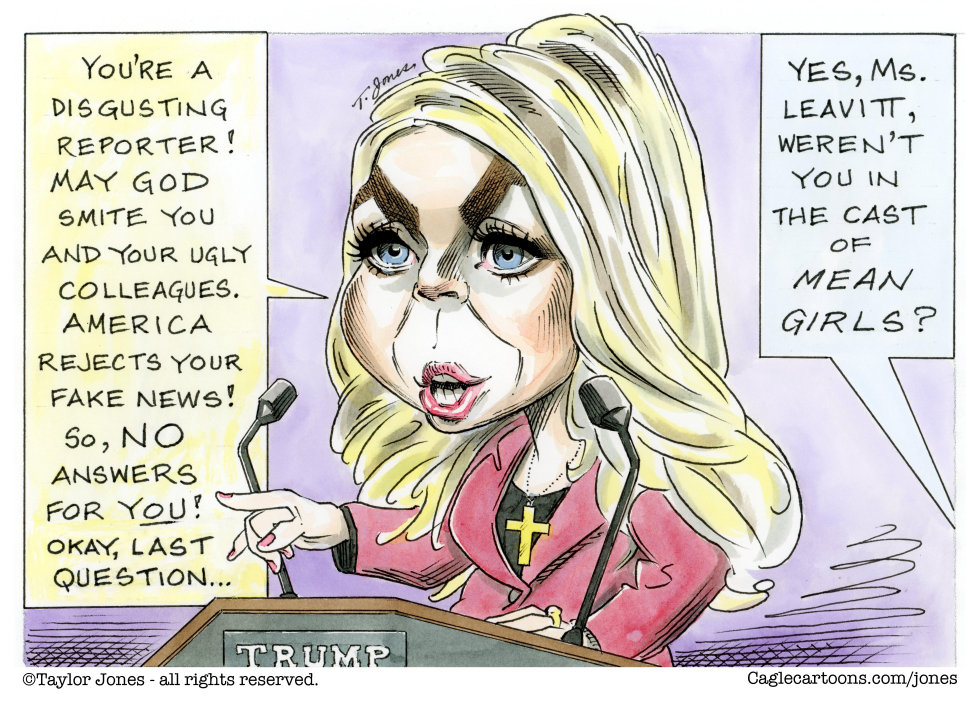
Karoline Leavitt appears at the podium during a White House press session. One speech area shows her directing strong remarks toward a reporter about fake news and divine judgment. A second area poses a question linking her to a film role. The podium carries the Trump name. The scene centers on tensions between the press secretary and journalists covering the administration.