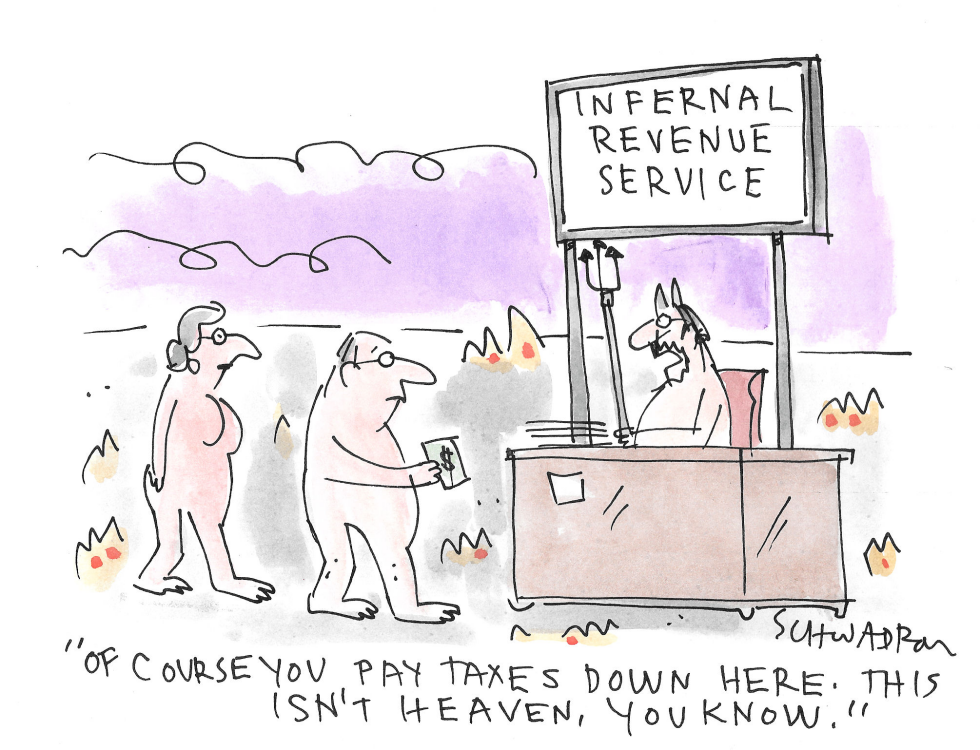
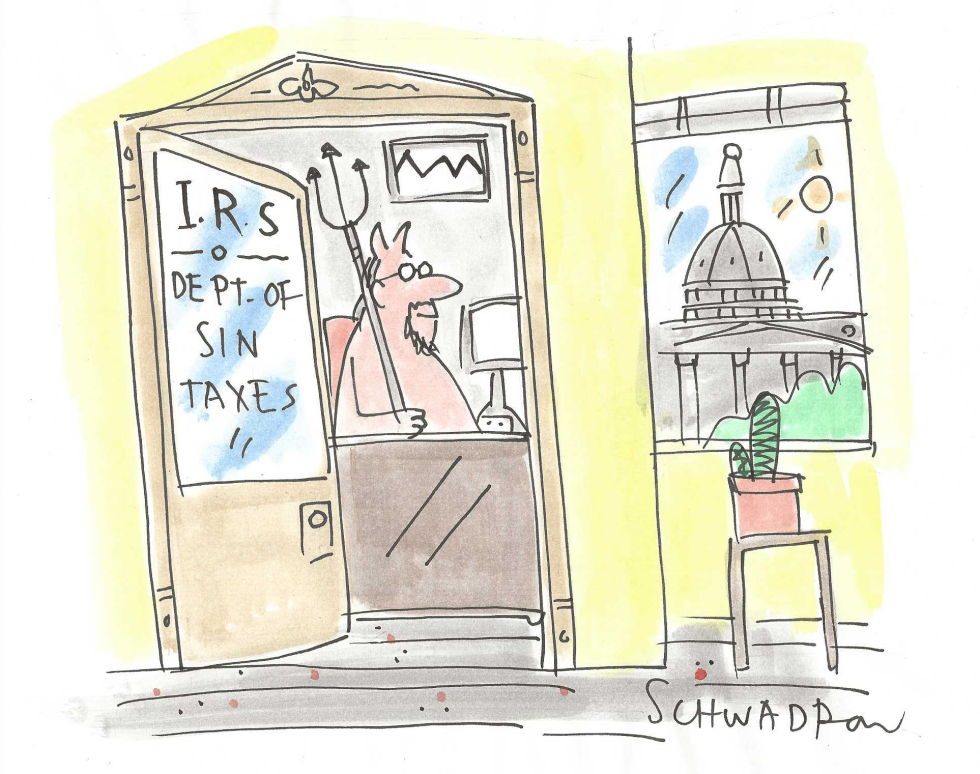
The long-standing adage that only death and taxes are certain receives fresh treatment in a cartoon depicting an IRS outpost operating in hell. No specific policy change or ruling prompted the piece, which instead plays on the enduring public frustration with tax collection as an inescapable force. The editorial stance pokes at bureaucratic persistence, suggesting the tax man follows citizens beyond the grave with the same relentless efficiency seen in life.
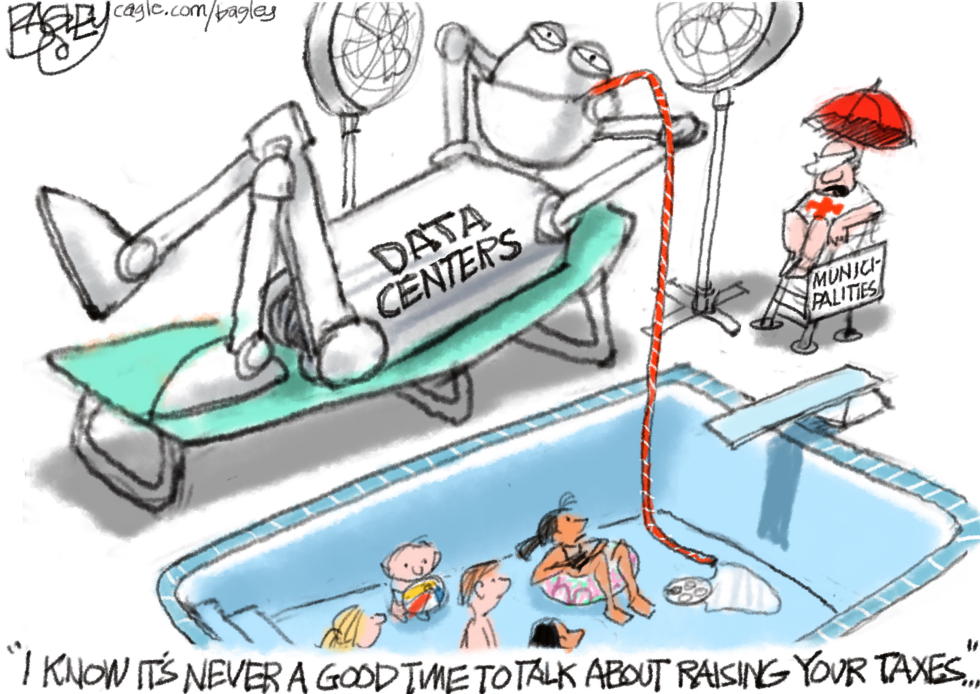
Data centers are expanding rapidly and placing heavy demands on local water and power supplies. Municipalities must decide whether to raise taxes to cover the costs. The piece argues that residents bear the burden while data centers consume resources without contributing enough back.
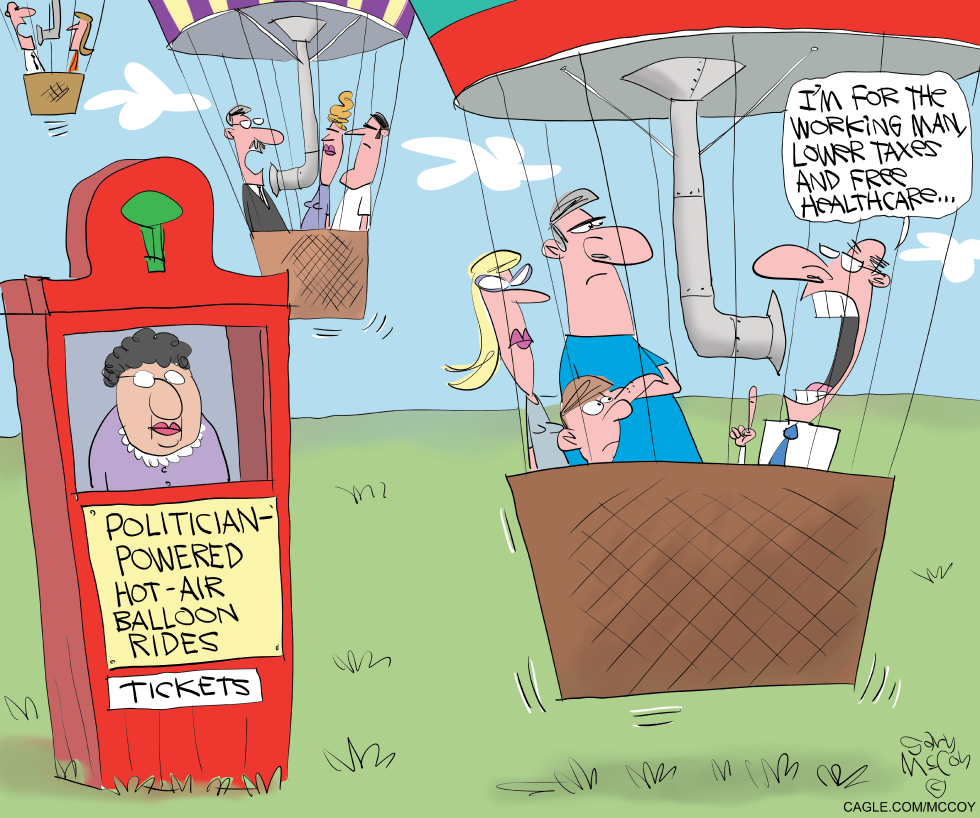
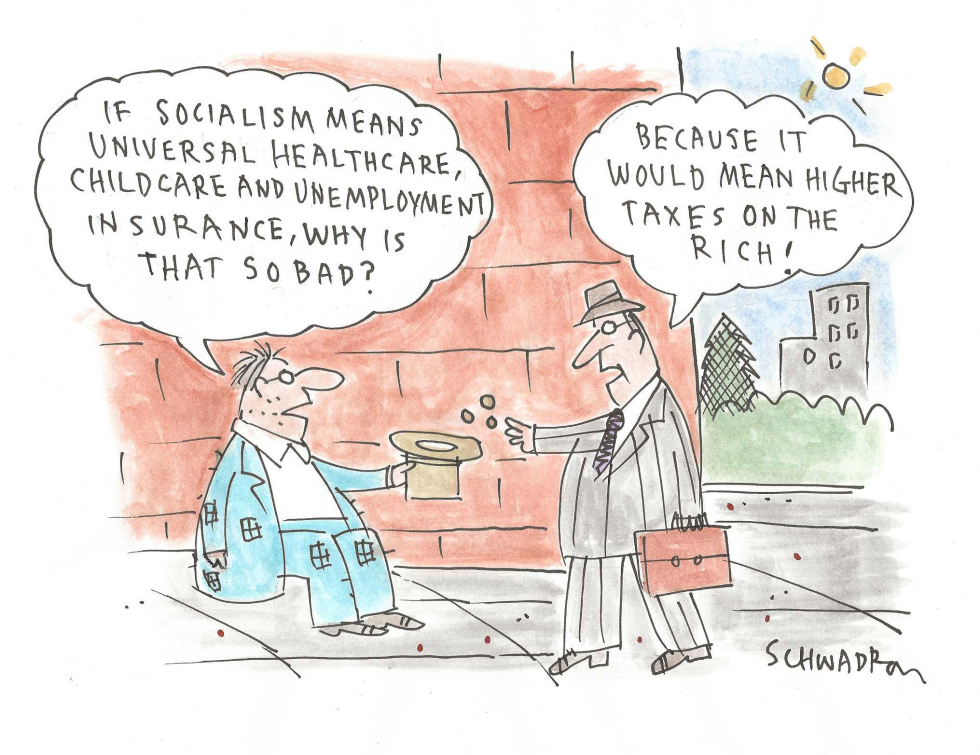
Politicians continue to campaign on lower taxes for workers and free healthcare access. These pledges remain central to attracting voter support ahead of elections. The piece portrays such promises as inflated rhetoric detached from delivery.
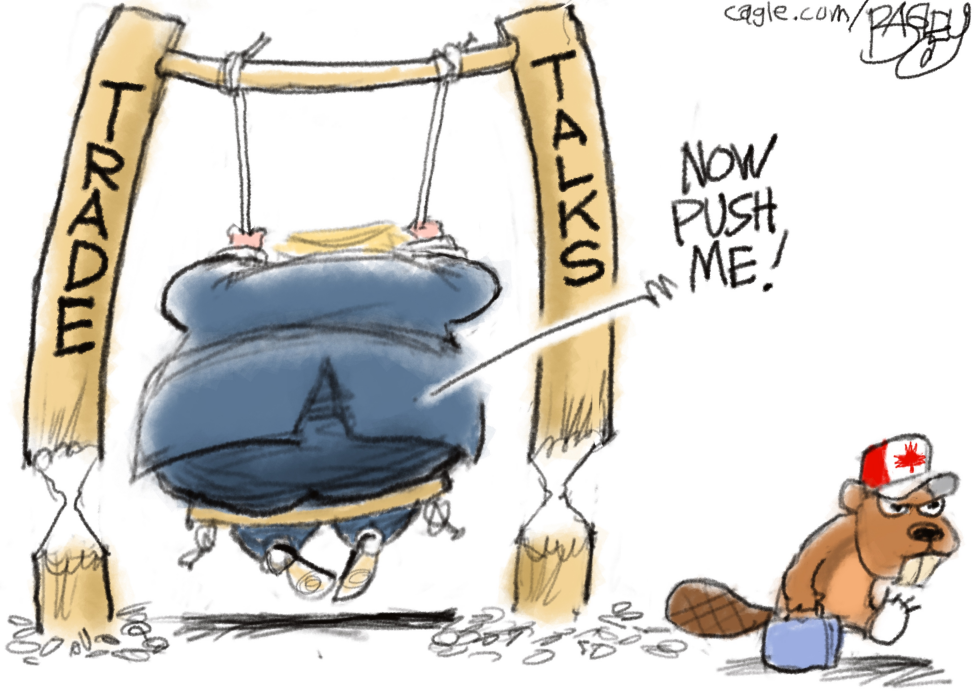
Canada signals intent to advance trade tax measures involving the United States. The move comes amid ongoing bilateral economic friction over tariffs and duties. The development carries weight for cross-border commerce and supply chains. The piece frames the Canadian position as actively pressing the United States forward on the issue.
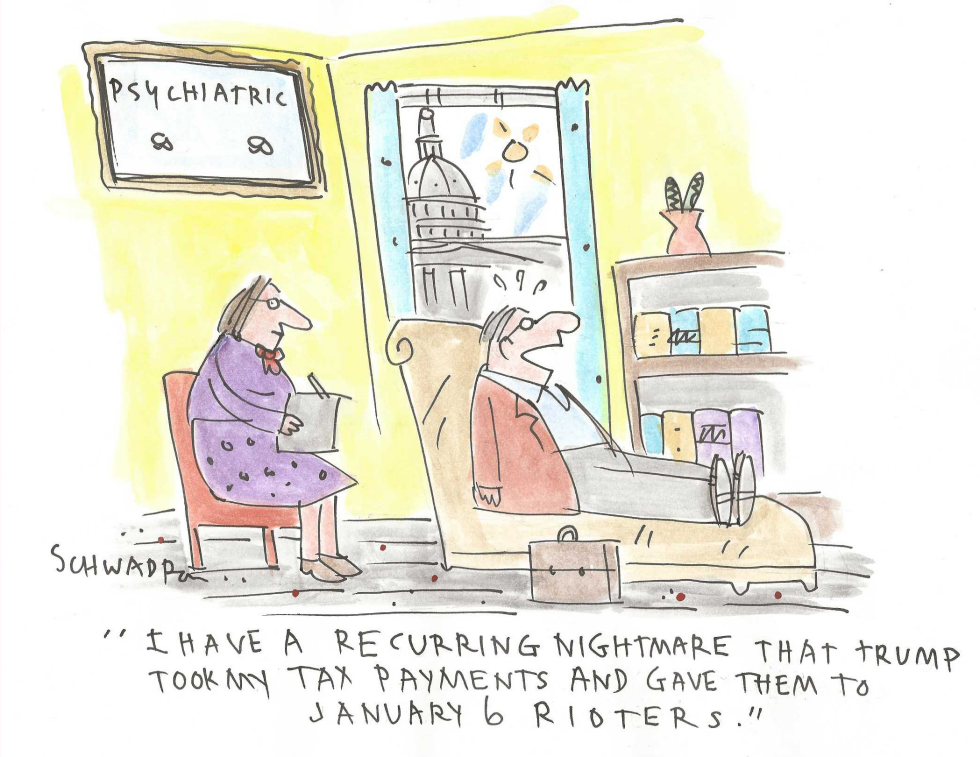
A patient describes a recurring nightmare in which former President Trump diverts tax payments to January 6 rioters. The session reflects persistent public concerns over accountability for the Capitol events and use of public funds. The piece portrays these fears as a continuing source of political unease.
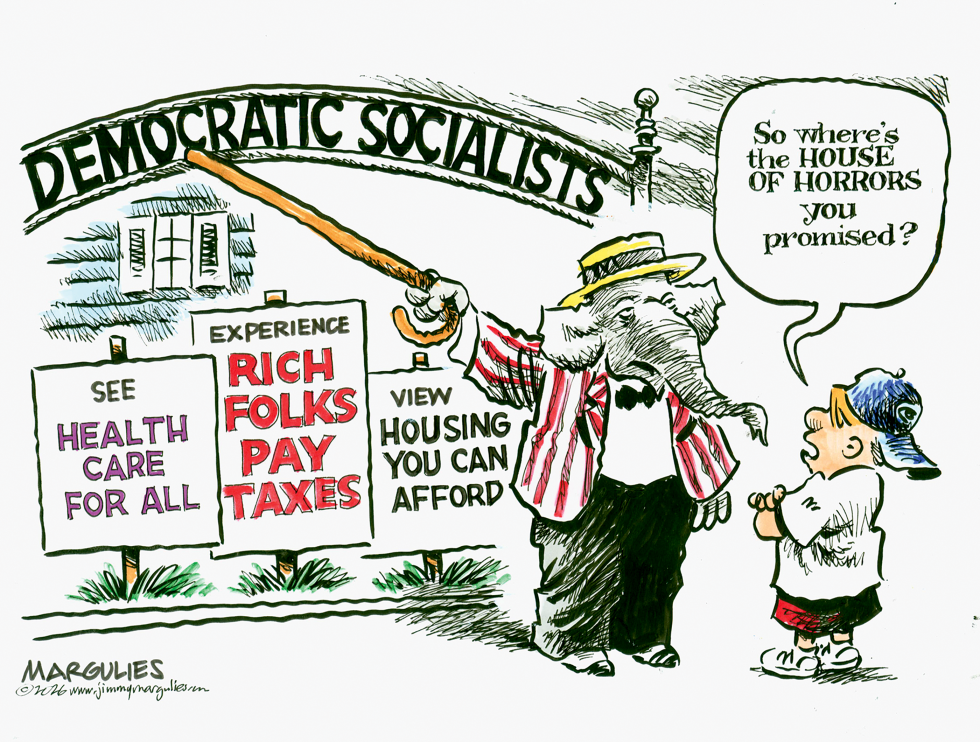
An elephant representing Republicans conducts a tour of attractions labeled Democratic Socialists on July 1 2026. Three signs advertise health care for all, taxes paid by the rich and housing that average people can afford. A young visitor in a cap asks where the house of horrors is that was promised. The scene uses the classic elephant symbol to frame policy offerings as ordinary exhibits rather than frightening outcomes.
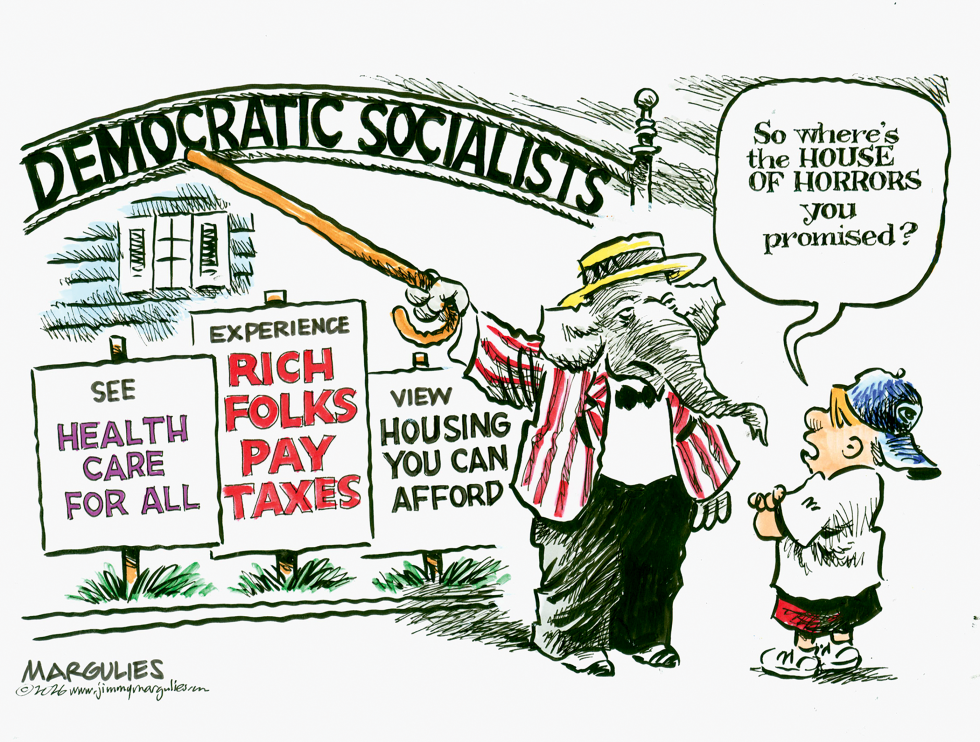
An elephant dressed as a barker stands at a Democratic Socialists booth displaying signs for health care for all, rich folks paying taxes, and housing you can afford. The figure holds a pointer toward the arch and addresses a child visitor. The child asks where the house of horrors is located. The scene is set outdoors with a building facade visible behind the signs. Publication occurred on July 1 2026.
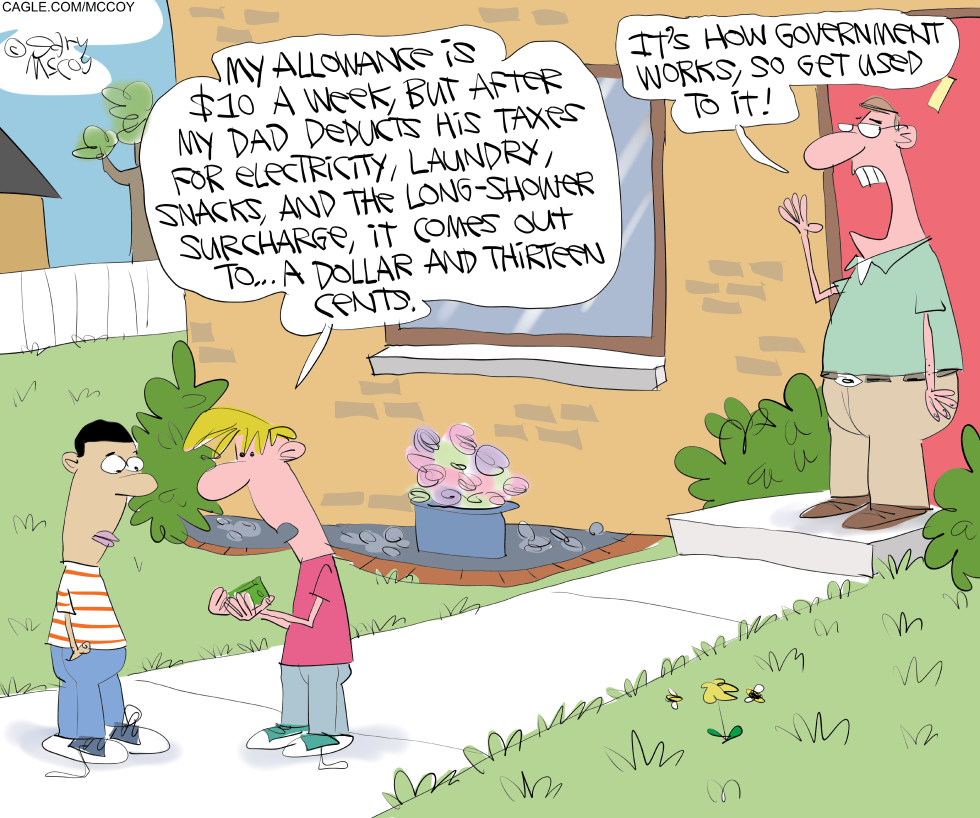
In the cartoon a blond boy in a pink shirt tells a friend in a striped shirt that his ten dollar allowance drops to a dollar thirteen after his dad deducts taxes for electricity laundry snacks and a long shower surcharge. The father stands on the porch in a green shirt and khakis waving one hand while stating that is how government works so get used to it. The scene includes a flower pot a sidewalk and green lawn with the artist signature visible.