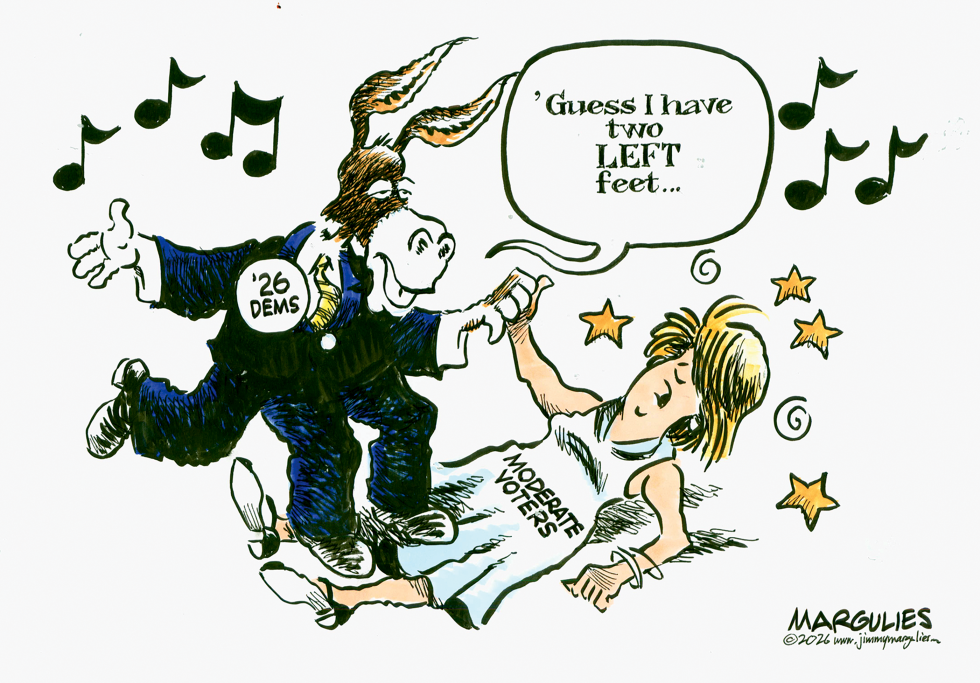
Democrats heading into the 2026 midterms face internal pressure to energize their base with progressive policies, yet this risks further distancing moderate voters essential for broader electoral success. The party has advanced left-leaning positions on issues like spending and social policy in recent cycles. Critics argue this approach prioritizes ideological purity over coalition building. The piece portrays the Democratic donkey as stepping on moderates while acknowledging its own missteps, highlighting the tension between base mobilization and centrist appeal.
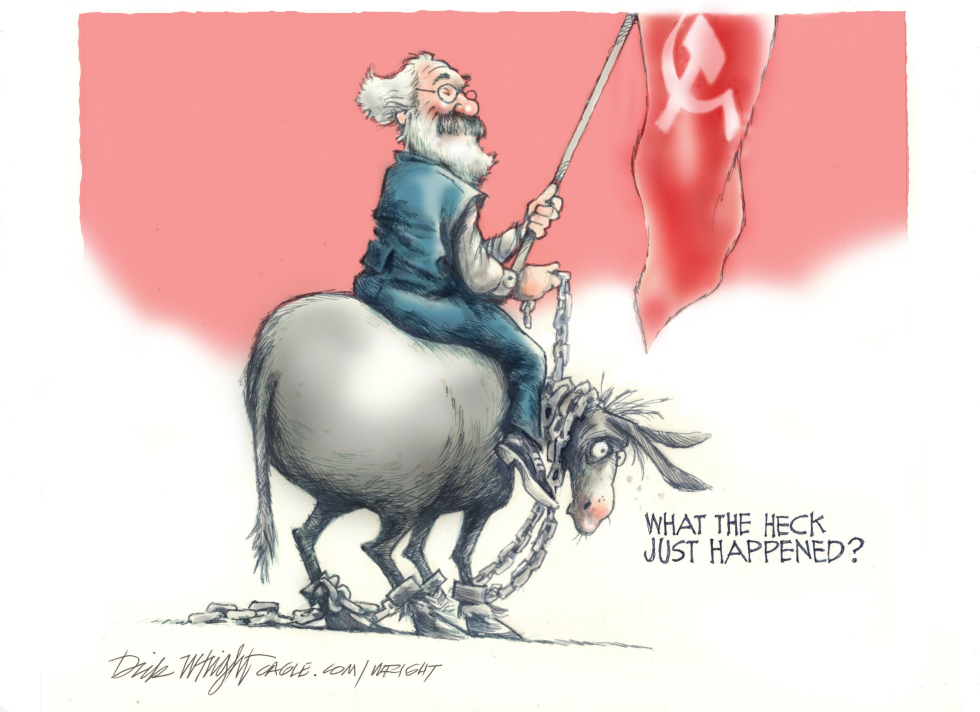
A Marxist figure has taken the reins of the Democratic Party symbol, raising a hammer-and-sickle flag over a donkey bound in chains. The image captures the moment the animal registers the shift in control. The editorial argues that radical communist influence has overtaken the party and left its traditional base bewildered by the abrupt change in direction.
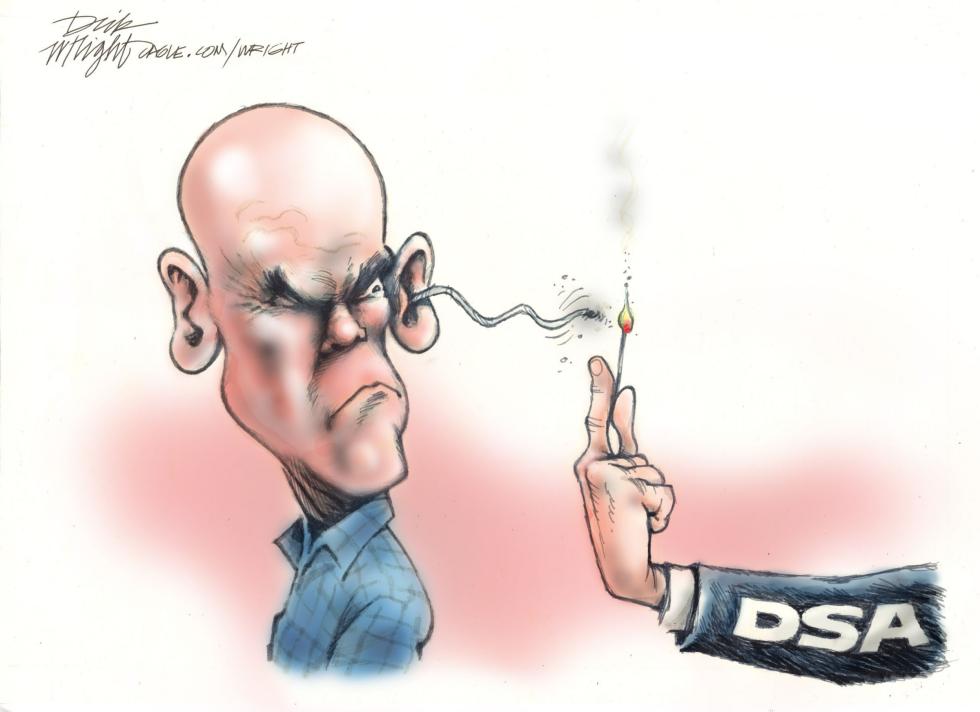
James Carville faces provocation from the Democratic Socialists of America in an ongoing internal party dynamic. The piece portrays DSA actions as directly inflaming tensions with established Democratic figures.
The cartoon shows the Democratic donkey clutching a handgun labeled uncritical Israel support. A box overhead reads Bibi Gun. The donkey wears a suit and tie. The image responds to ongoing debates over US policy toward Israel and Benjamin Netanyahu in June 2026.
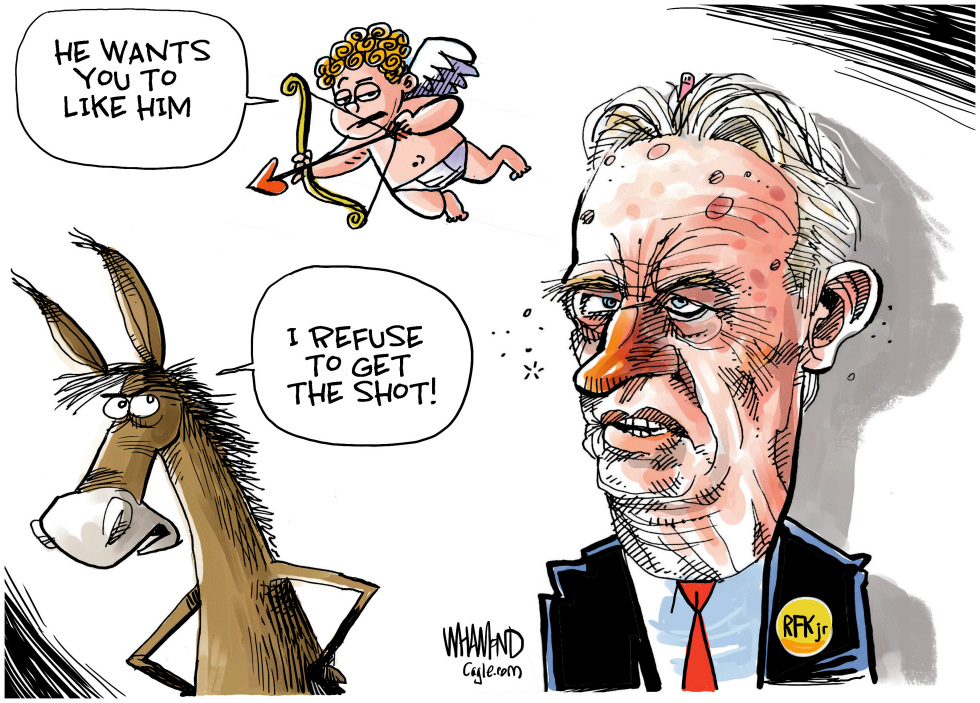
On February 6 2025 Dave Whamond depicts RFK Jr. as the subject of a failed Cupid attempt to win over a Democratic donkey that refuses vaccination. The image coincides with ongoing Senate confirmation hearings for the HHS nominee whose past statements on vaccines have drawn sharp criticism from Democrats. The visual uses the Valentine motif to underscore resistance to the appointment.