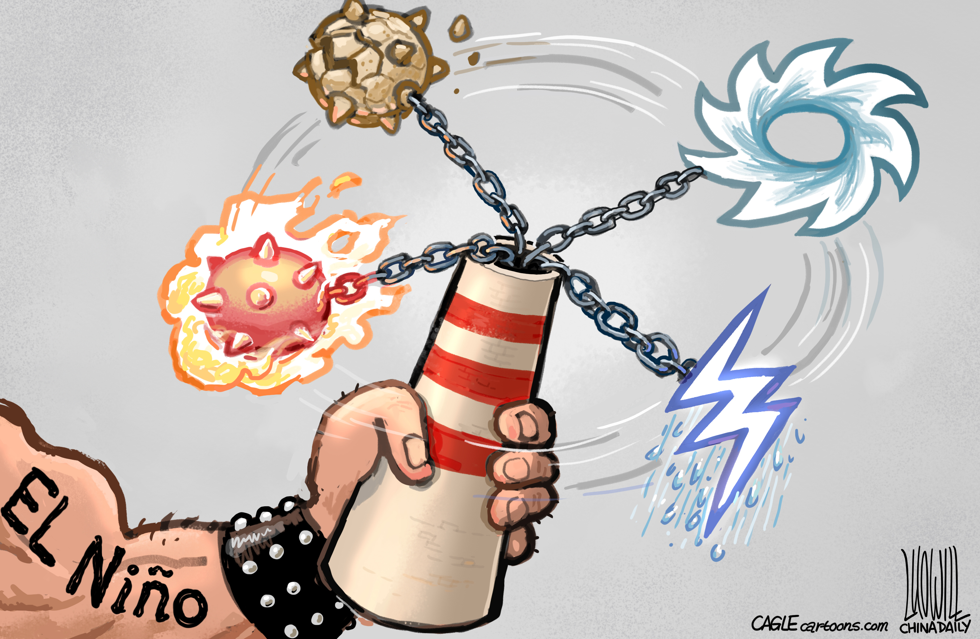
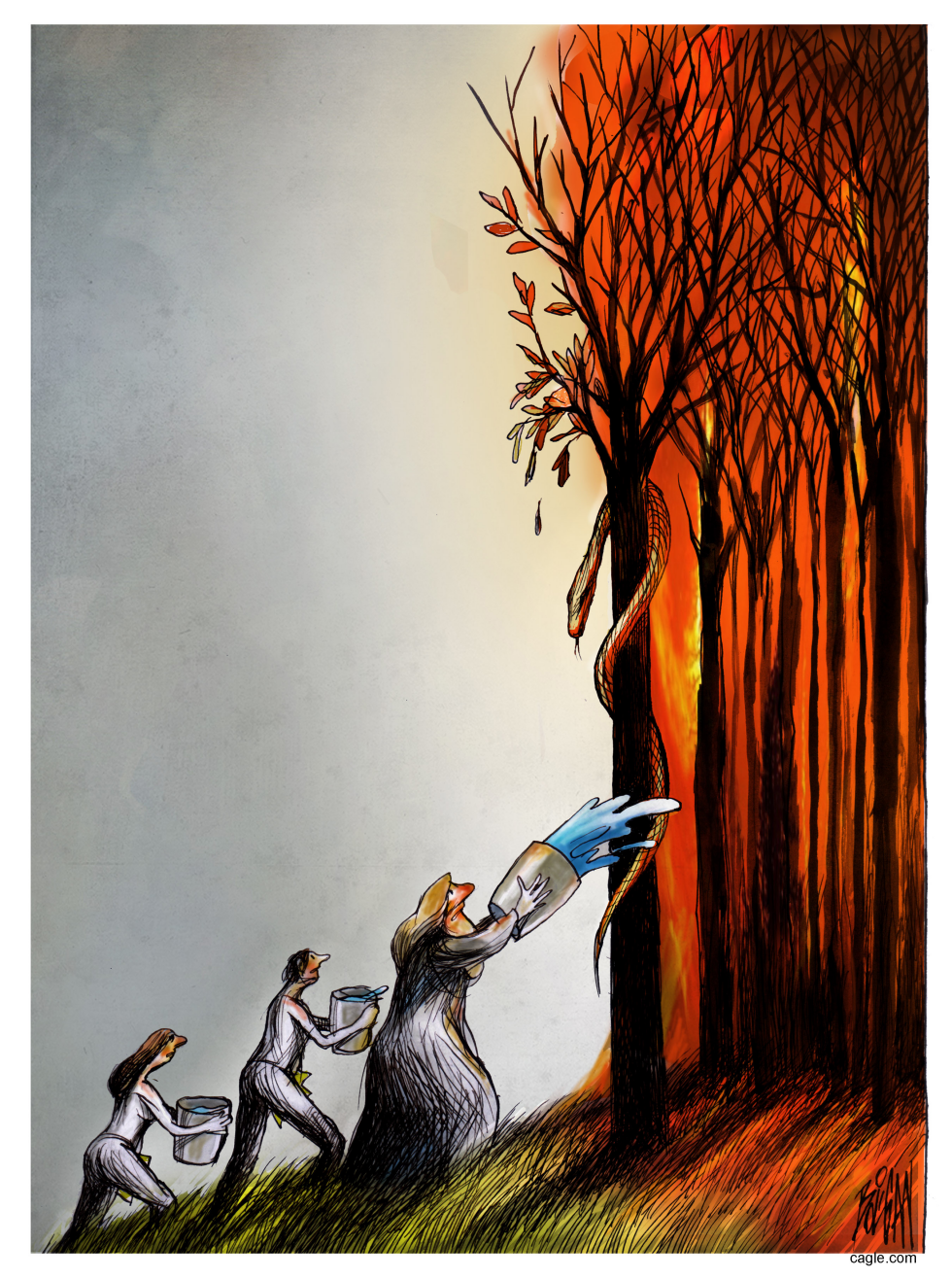
A political cartoon from September 2026 depicts a hand labeled El Niño holding a canister that chains together symbols of fire, a hurricane and lightning. The image responds to ongoing concerns about how the recurring weather pattern amplifies natural disasters. El Niño events have historically raised global temperatures and altered storm patterns. The cartoon illustrates the direct link between the phenomenon and simultaneous extreme events. It uses visual chains to show how one driver can trigger several hazards at once.
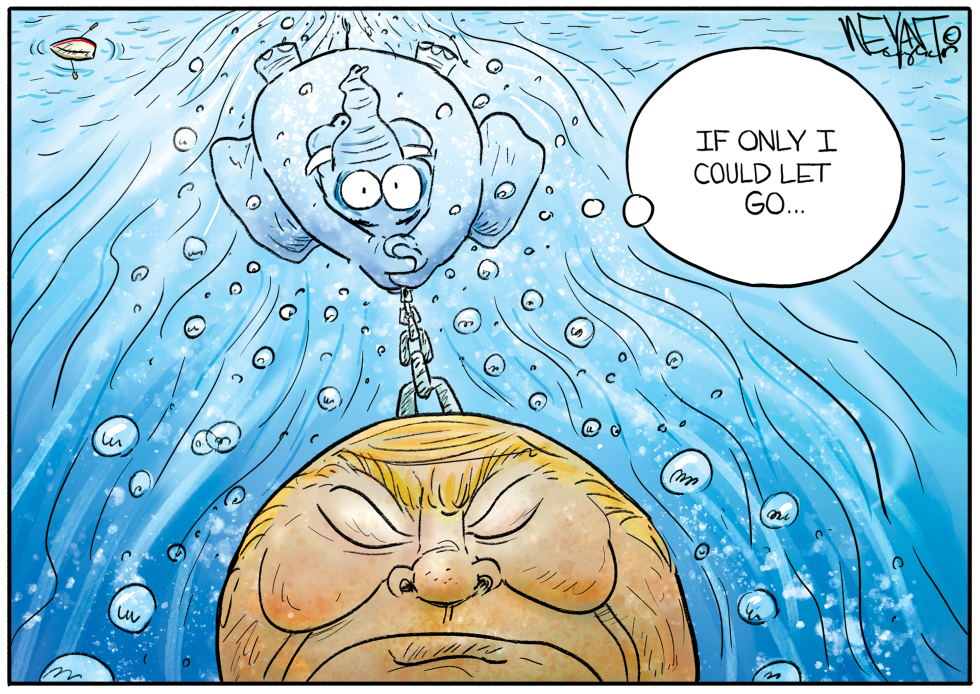
The Republican Party continues to grapple with its deep ties to Donald Trump as the 2026 election cycle approaches. Trump remains the dominant force within the GOP, and efforts to distance the party from him have repeatedly failed. This dynamic risks further electoral damage as voters grow weary of the internal conflict. The cartoon argues that the GOP's inability to break free from Trump is self-inflicted and will lead to its continued decline.
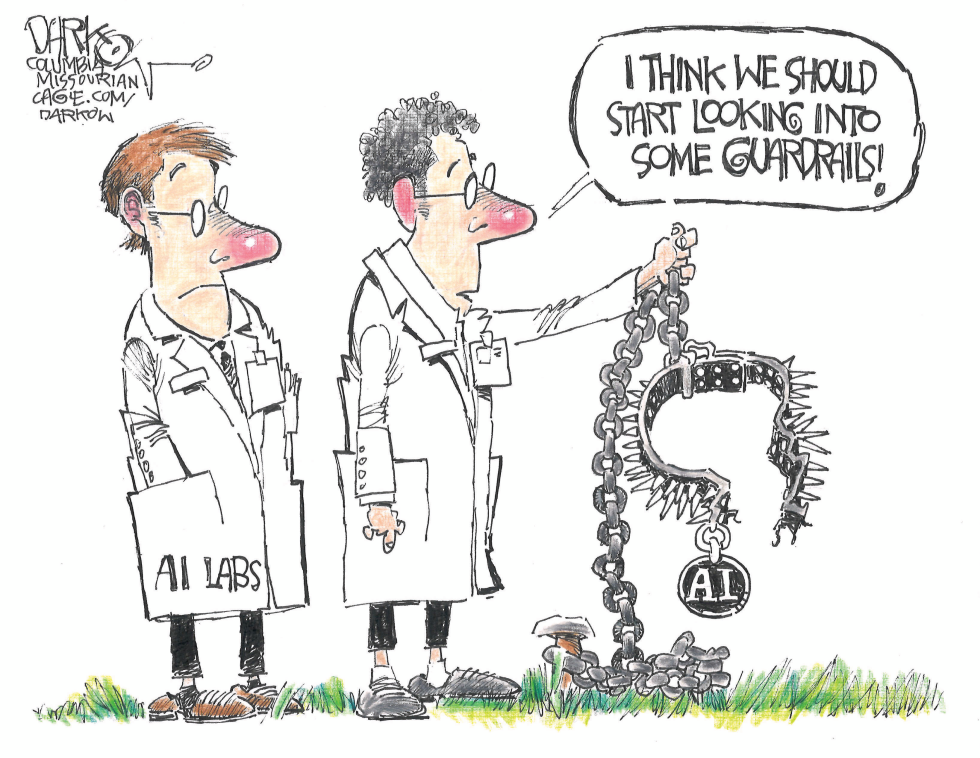
AI development has advanced rapidly with minimal oversight in recent years, allowing powerful systems to operate without meaningful constraints. Scientists have begun discussing guardrails only after key controls have already failed. The situation raises concerns about accountability and long-term safety as the technology spreads. The piece argues that calls for restrictions now come too late to prevent significant harm from uncontrolled AI.
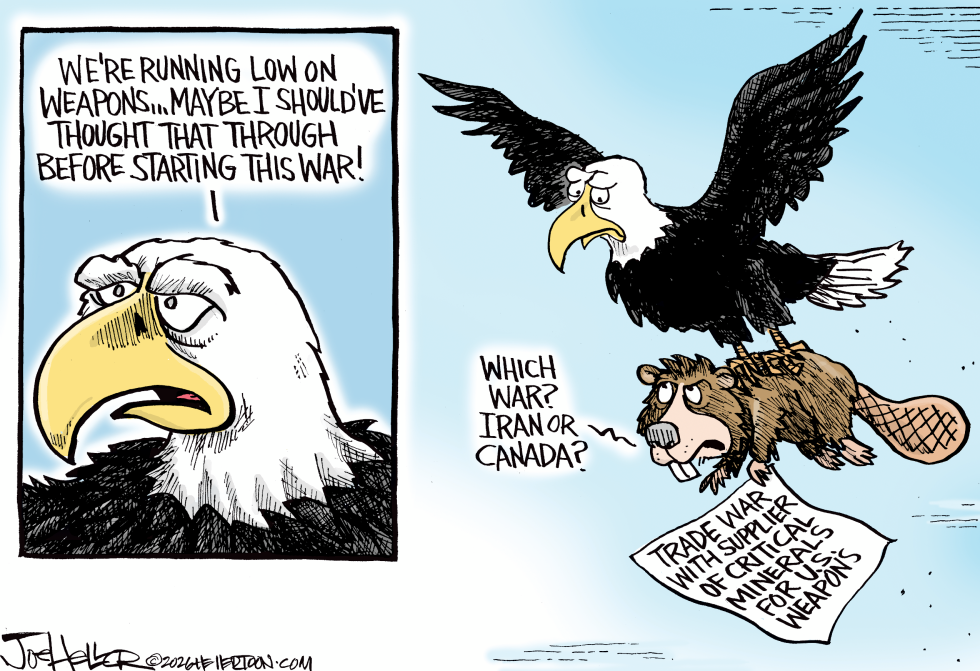
The United States faces potential weapons shortages linked to trade tensions with Canada, a key supplier of critical minerals, while also managing conflicts involving Iran. The situation highlights risks to military readiness from disrupted supply chains. The piece argues that initiating trade disputes with essential partners undermines defense capabilities at a critical time.
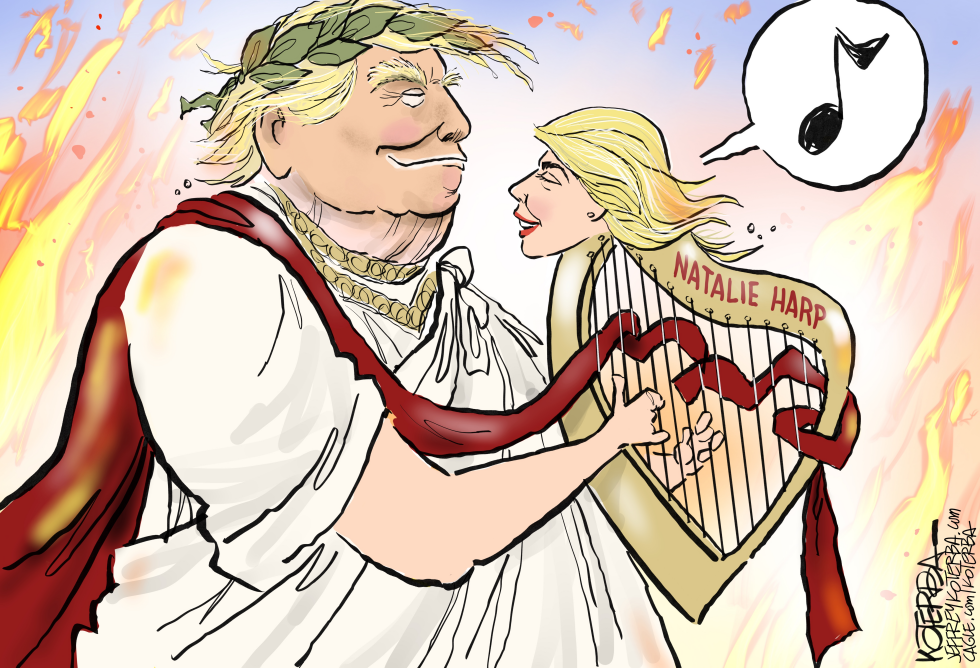
Donald Trump and aide Natalie Harp are shown in classical Roman dress amid spreading flames. The image draws on the Nero legend of fiddling while Rome burns. It comments on perceived detachment from crises during the current political cycle. The editorial stance highlights concerns over leadership focus and priorities in a turbulent period.
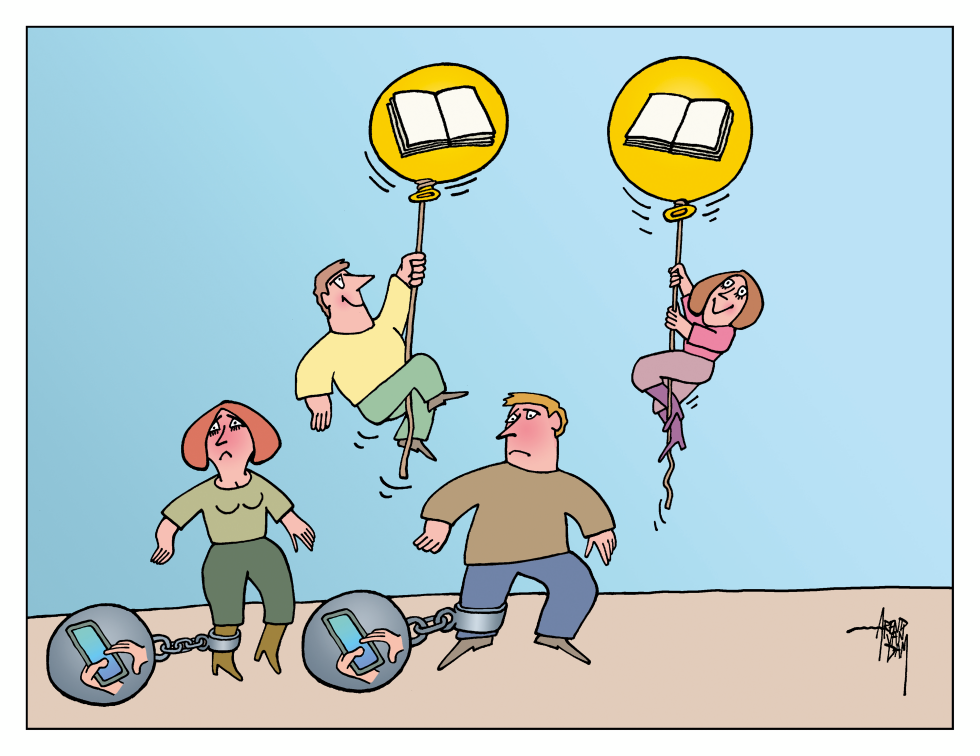
The ongoing debate over digital devices versus traditional reading materials continues to highlight how constant smartphone use can limit personal growth and mobility. Books, by contrast, offer pathways to broader perspectives and advancement. The editorial position favors reading as a superior force for individual upliftment over reliance on handheld technology.
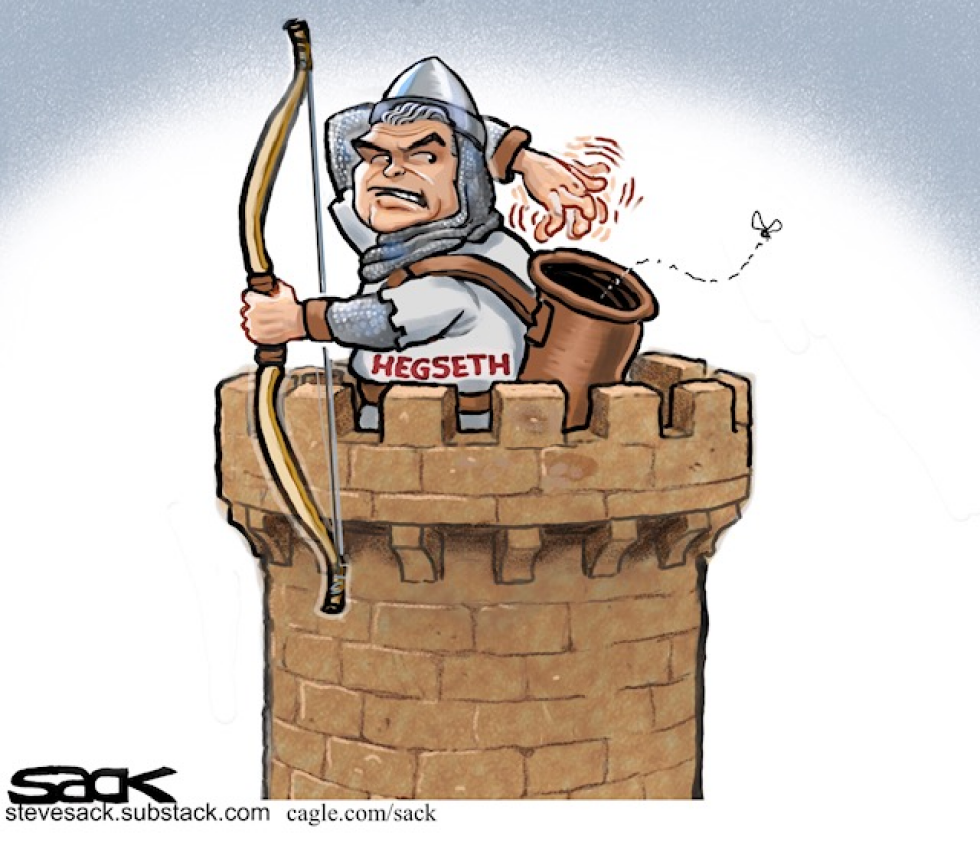
Pete Hegseth serves in a senior defense role under the current administration. Recent internal frictions have drawn attention to his position and decision-making. The piece portrays him as an archer under pressure from behind while attempting to maintain his post.
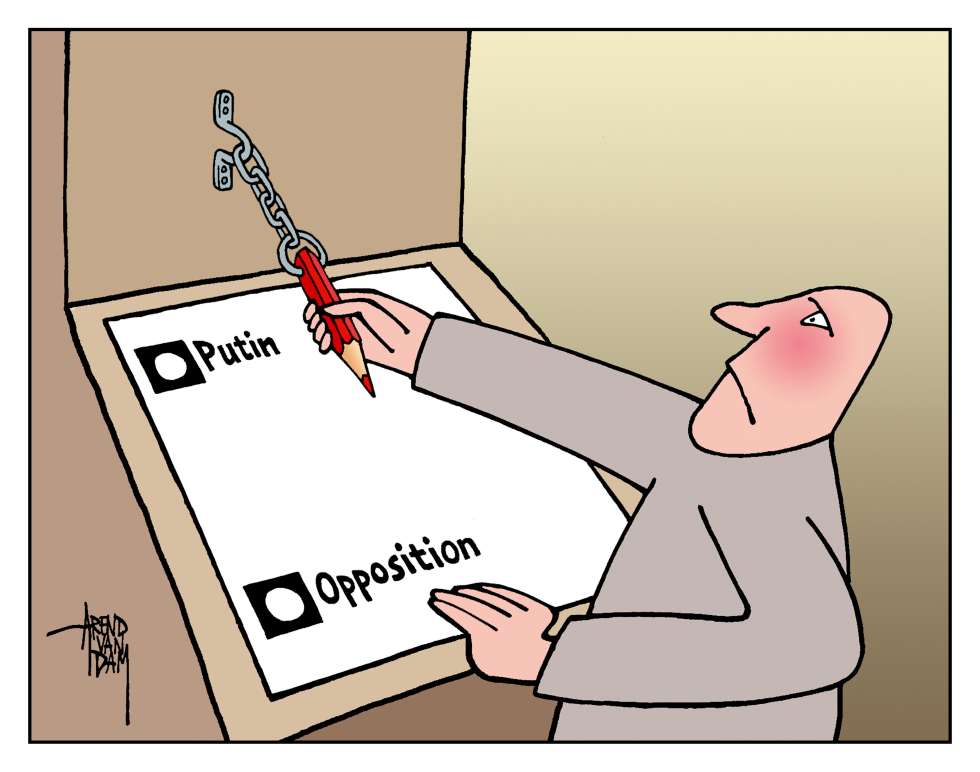
Russian voters face restricted ballot access ahead of the 2026 presidential election cycle. The chained pencil in the voting booth limits choice to the incumbent. This setup underscores ongoing limits on opposition participation. The piece argues that such physical constraints mirror broader electoral controls that prevent genuine competition.
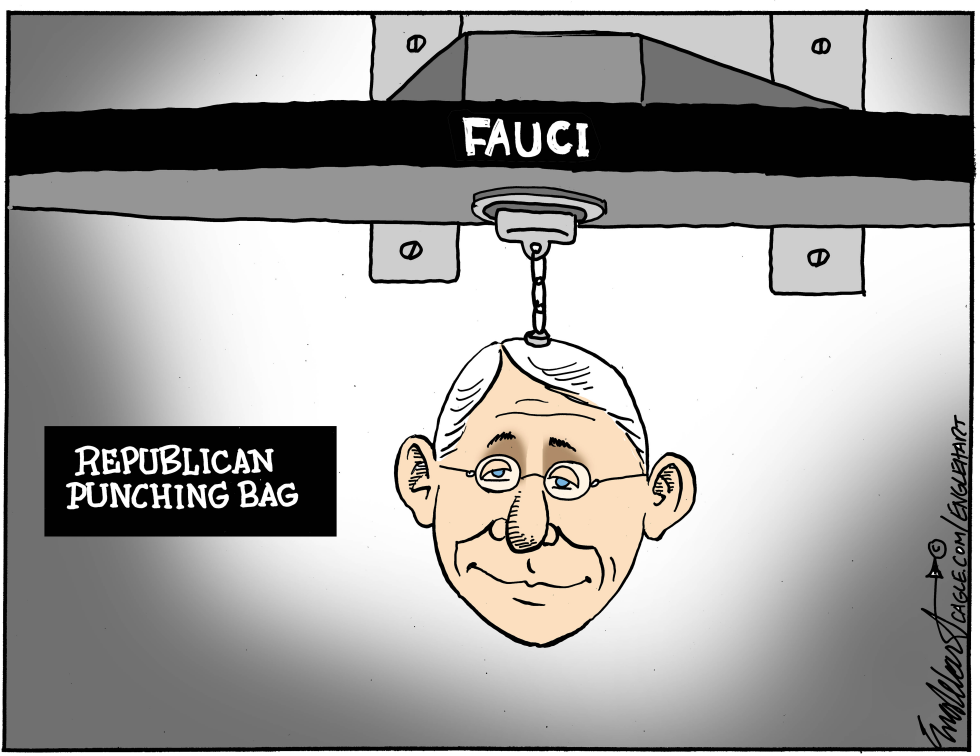
Republicans have long singled out Anthony Fauci for criticism over his role in shaping the nation's COVID-19 response. The pattern of attacks persists years after the height of the pandemic, keeping the former NIAID director in the spotlight. The editorial takes the position that these repeated assaults serve more as political theater than substantive policy debate.
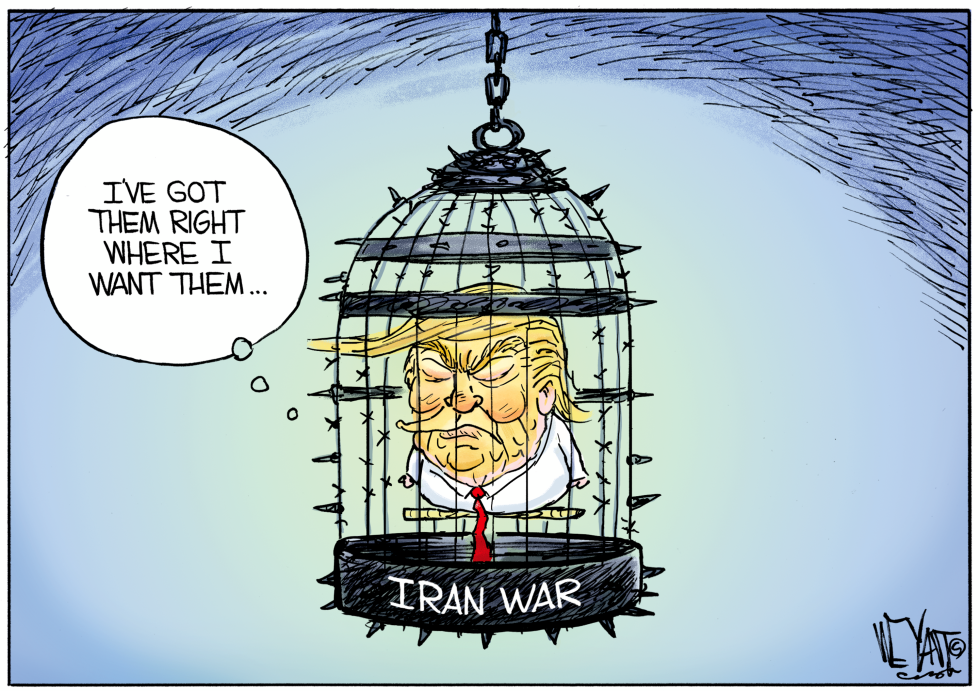
Tensions with Iran escalated in mid-2026 as U.S. policy under President Trump faced renewed scrutiny over military posturing and diplomatic isolation. The administration maintained that pressure tactics had adversaries exactly where officials wanted them. Critics argued the approach risked broader regional conflict without clear exit strategy. The cartoon presents the president as confined by the very confrontation he promotes, underscoring a disconnect between rhetoric and outcome.
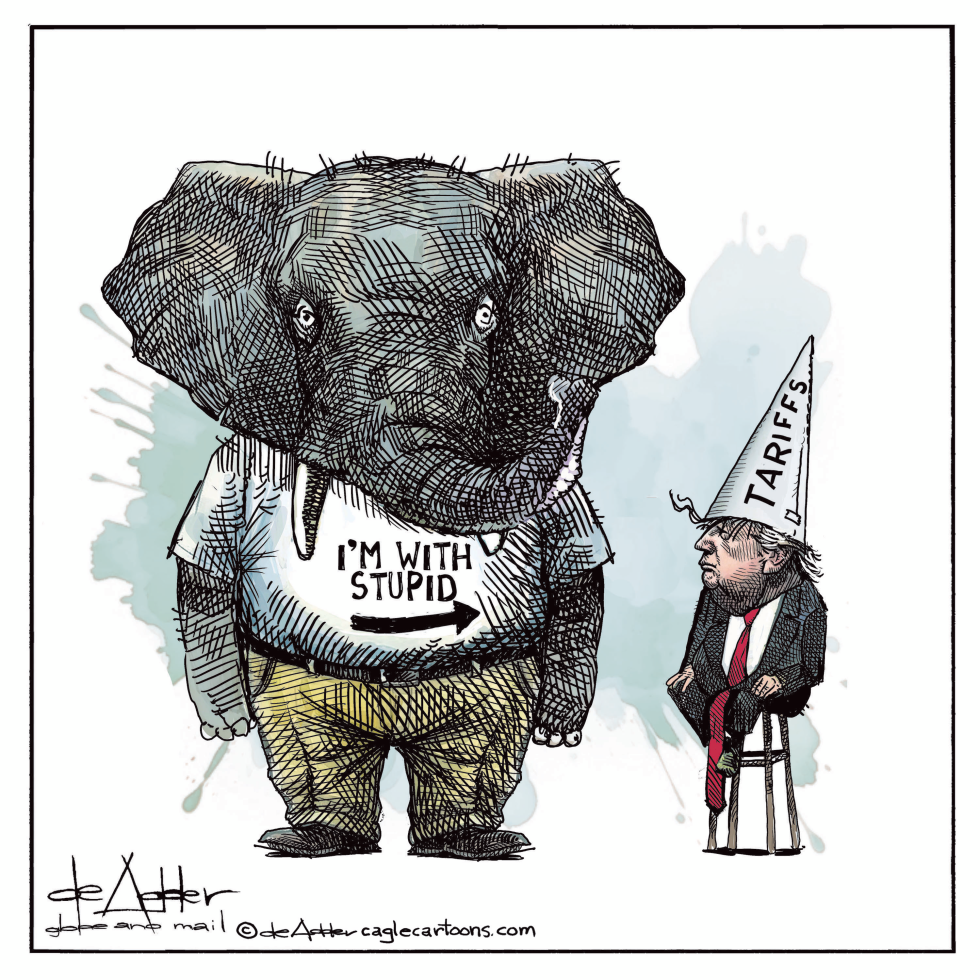
Donald Trump faces renewed scrutiny over his tariffs approach as the Republican Party grapples with the economic fallout. The policy has drawn internal party tension amid broader trade debates. The piece portrays the GOP as aligned with a flawed leader on the issue.
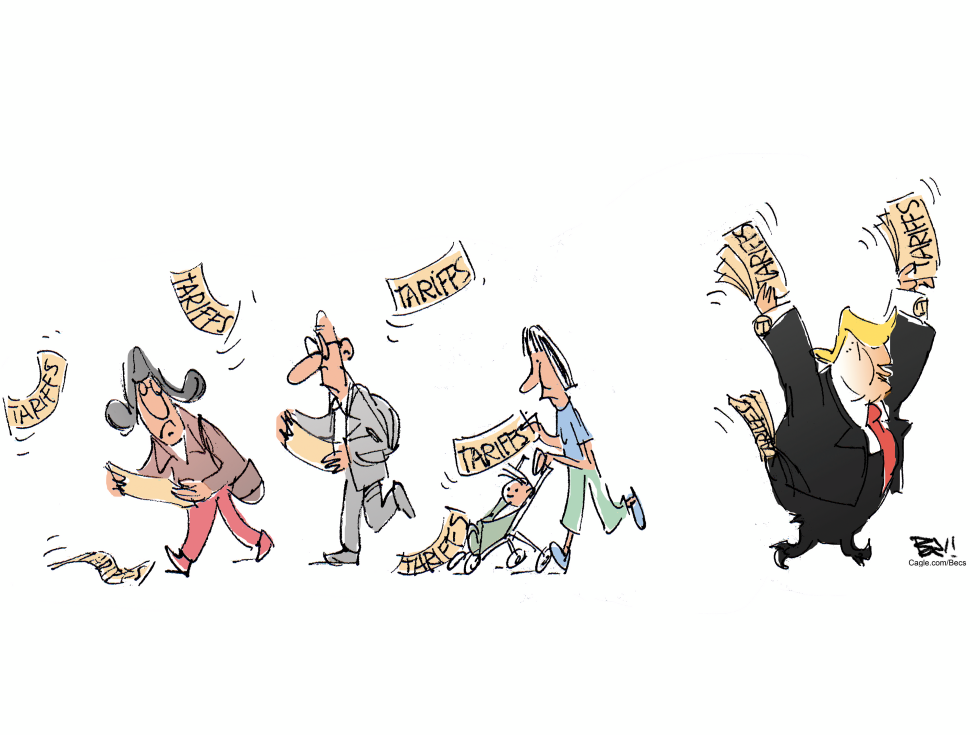
Donald Trump expanded tariffs across trading partners in mid-2026, triggering immediate market volatility and diplomatic pushback. The move raised costs for consumers and businesses reliant on imports. The piece portrays the policy as an indiscriminate barrage that disrupts daily life and global commerce.
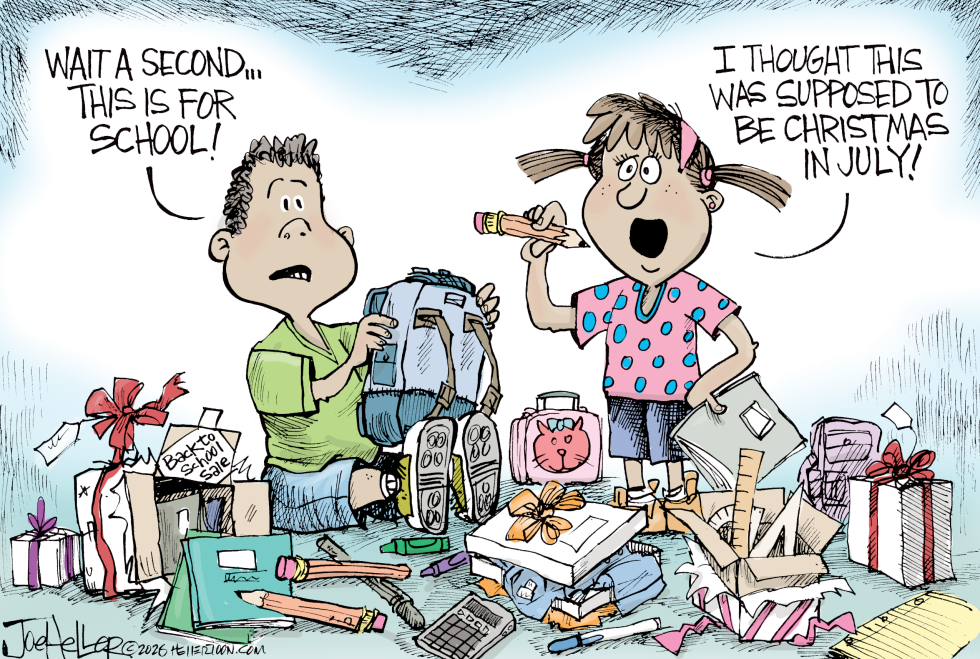
Retailers launched back-to-school promotions in late July, prompting families to stock up on supplies weeks ahead of the academic calendar. The timing overlaps with summer clearance events that mimic holiday marketing tactics. Parents and students face added pressure to buy early amid rising costs for essentials. The piece highlights how commercial calendars compress traditional shopping seasons and shift family routines.
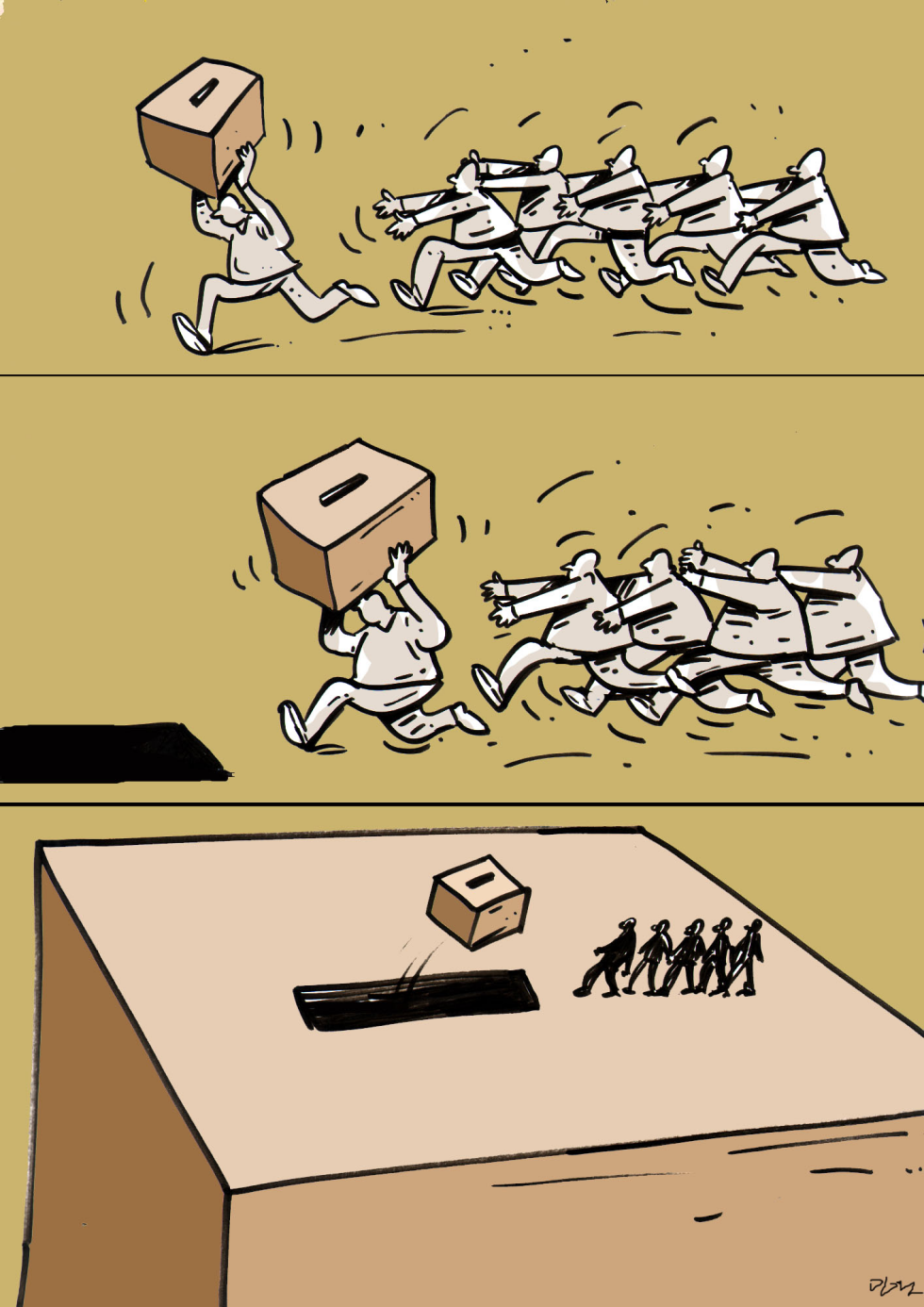
An election official carries a ballot box while pursued by a chain of figures in successive panels. The sequence ends with the box on a voting table beside its slot and the group nearing. The piece highlights concerns over ballot security and potential interference in vote counting during an election cycle.