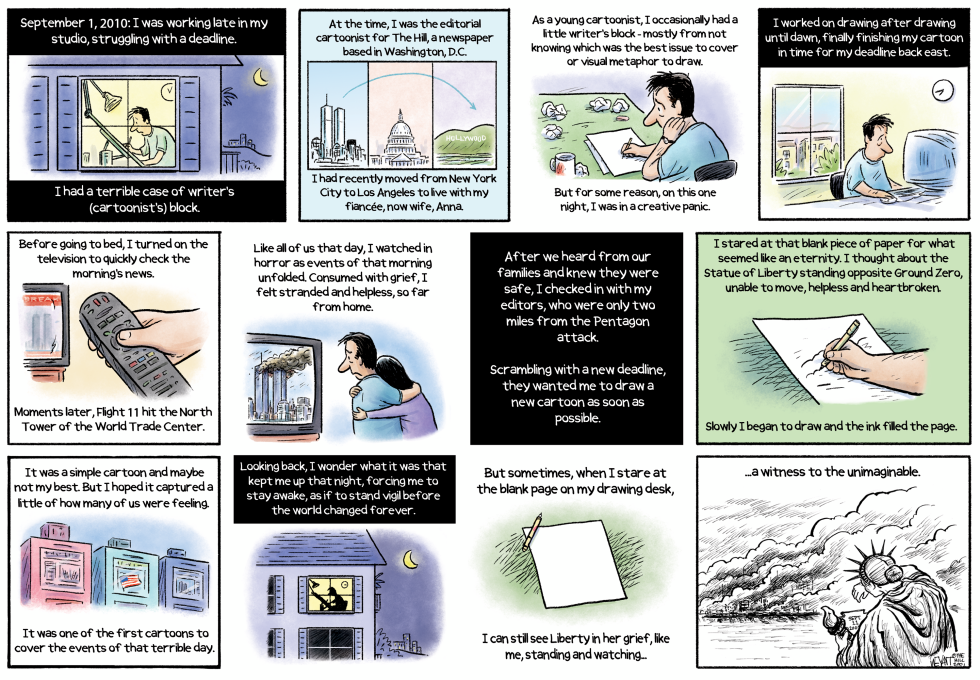
On September 11, 2001, editorial cartoonist Christopher Weyant faced a sudden deadline shift after the attacks on the World Trade Center and Pentagon. Working from Washington, D.C., he checked on family and editors before creating one of the earliest cartoons responding to the events. The piece shows his personal struggle with a blank page that night and the resulting image of the Statue of Liberty standing vigil opposite Ground Zero. The cartoon marks the 25th anniversary by revisiting how the attacks altered the nation and the artist's own sense of purpose.
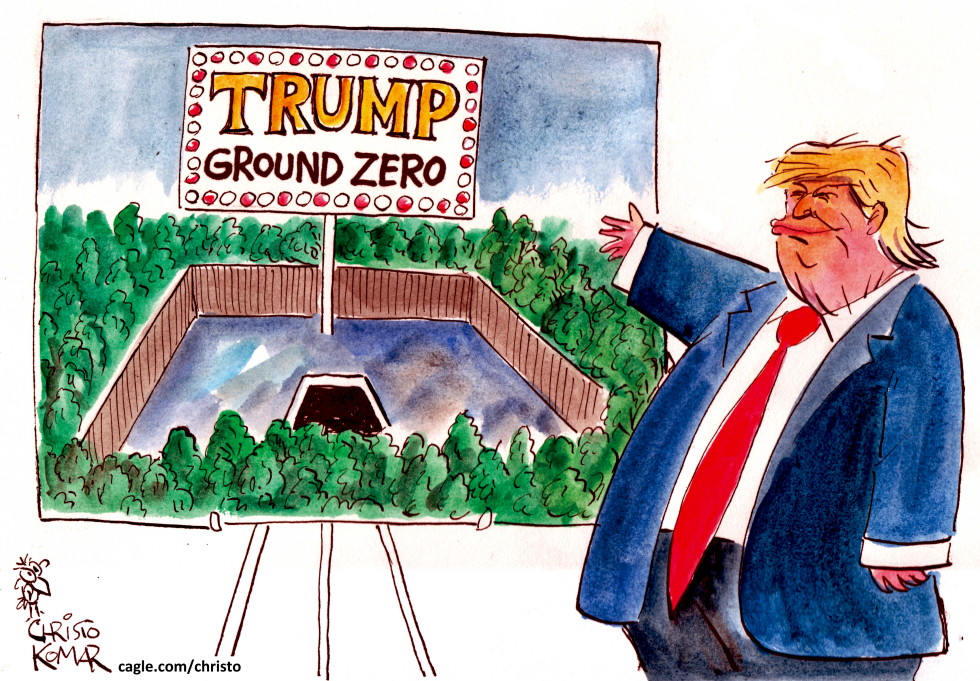
Donald Trump has floated the idea of branding the Ground Zero memorial site with his name. The proposal revives long-standing debates over commercial use of the 9/11 location. Critics argue the move prioritizes personal promotion over solemn remembrance. Supporters see it as consistent with Trump's business approach to public projects. The cartoon depicts the former president enthusiastically presenting the branded sign. It highlights concerns that such branding trivializes a national tragedy for individual gain.
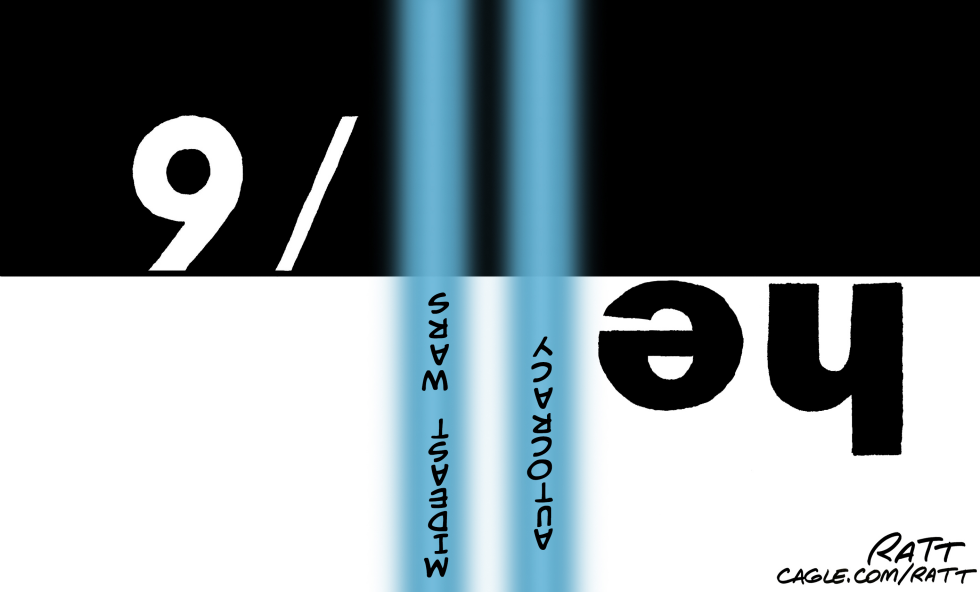
September 11 anniversary observances in 2026 coincide with ongoing debates over the long-term costs of U.S. and European involvement in Middle East conflicts that followed the attacks. The piece underscores how far removed current realities remain from the original site and moment of the 2001 attacks.
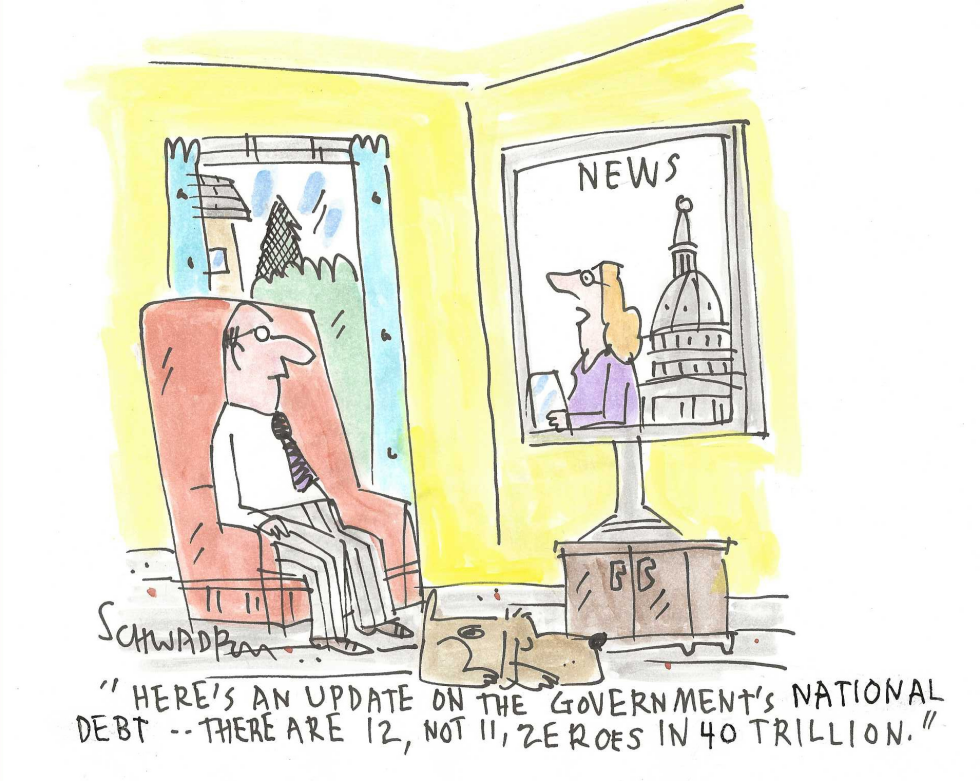
A television news report updates the national debt figure to 40 trillion dollars. The anchor emphasizes that the amount contains twelve zeros rather than eleven. The development underscores ongoing fiscal pressures on federal budgets and public attention to spending totals. The piece presents the correction as a straightforward broadcast detail delivered to a home audience.
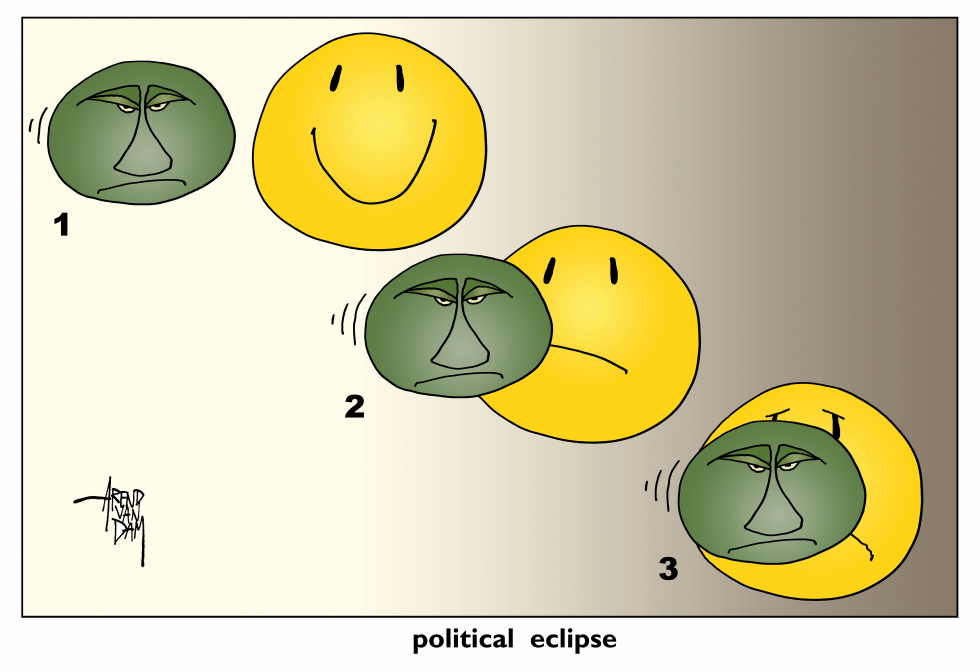
A political figure represented by a green frowning face progressively covers a yellow smiling face across three labeled stages. The interaction illustrates one presence gaining dominance while diminishing the other. The piece comments on the dynamics of political competition and shifting influence between rivals.
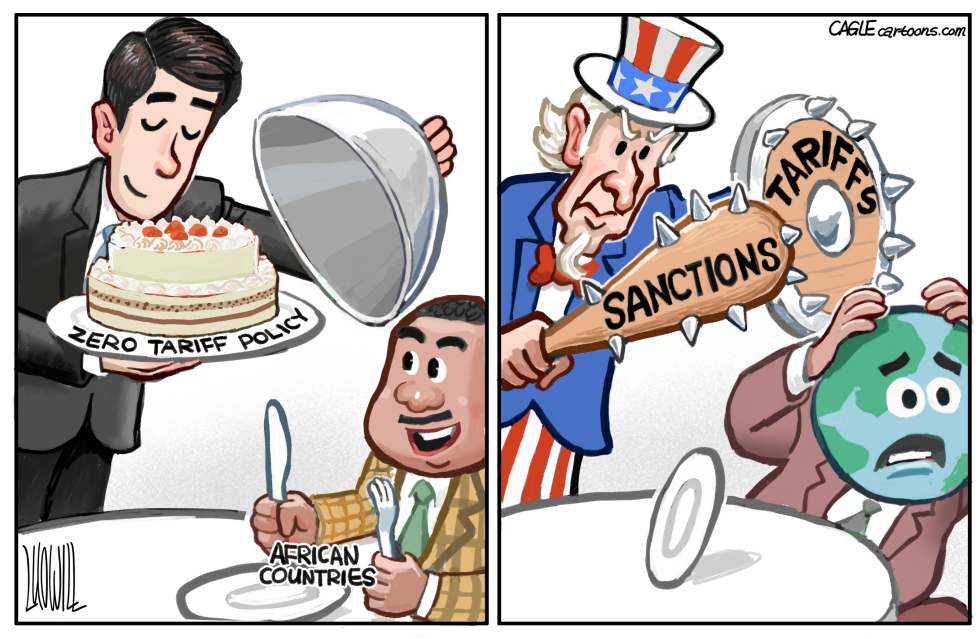
The United States has extended a zero-tariff policy offer to African nations amid ongoing global trade tensions. This move stands in contrast to simultaneous use of tariffs and sanctions against other trading partners. The policy highlights selective economic engagement by Washington. The editorial position criticizes the inconsistency between the overture to Africa and the punitive approach applied more broadly.
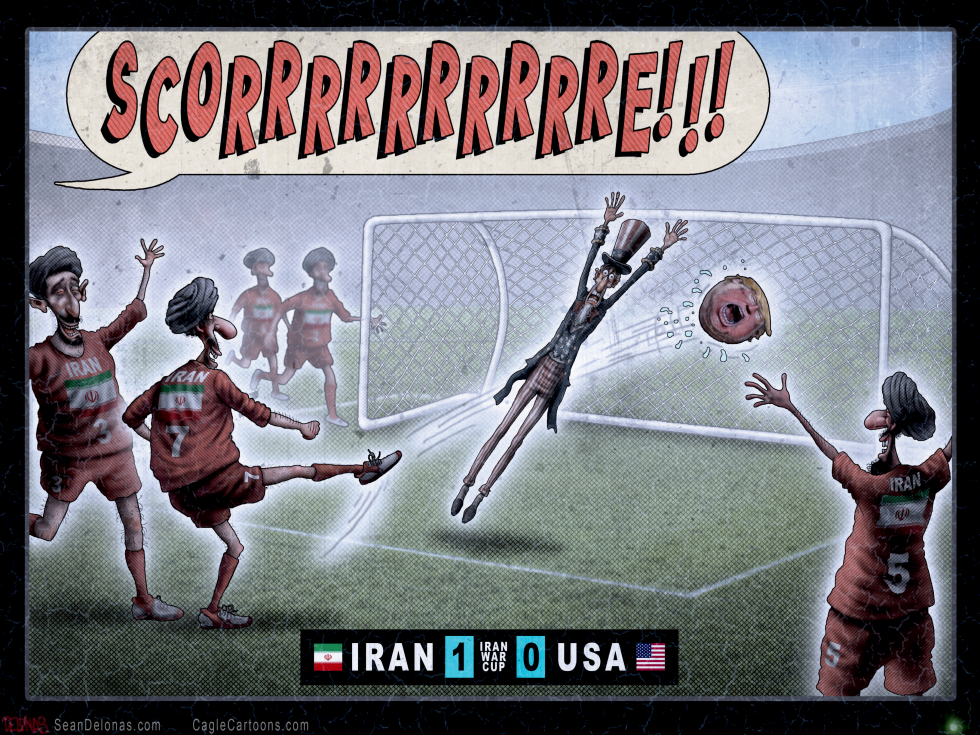
A soccer match on a green field features Iranian players in red jerseys celebrating as a tall figure in a top hat leaps toward the goal with its head detached and flying. The scoreboard reads Iran 1 USA 0 under the Iran War Cup title, with the date set in June 2026 amid ongoing Middle East tensions.
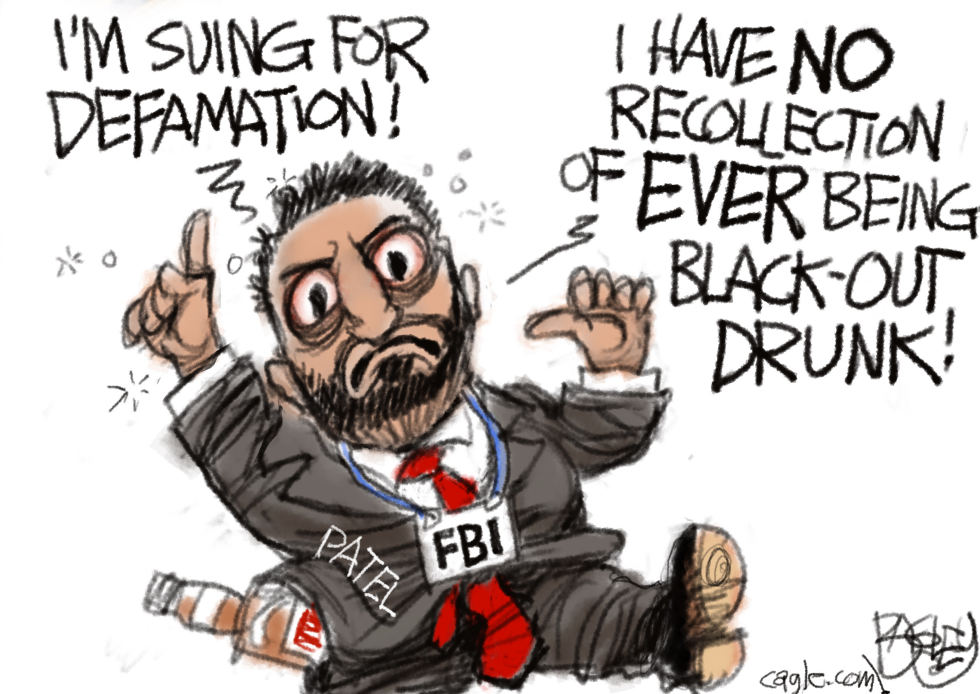
Pat Bagley's cartoon captures a caricatured Kash Patel, sprawled with a liquor bottle, his suit disheveled and FBI badge prominent. He gestures wildly, proclaiming a defamation lawsuit while insisting on no recollection of ever being blackout drunk. The image ties into themes of DUI, corruption, fraud, drinking, drunkenness, alcohol, national security, and terrorism, highlighting irony in a political figure's denial. Such satire underscores the absurdity in public denials, especially for someone eyed for a high-security role. The dry humor pokes at reliability amid scandal tags like Trump, GOP, and MAGA.
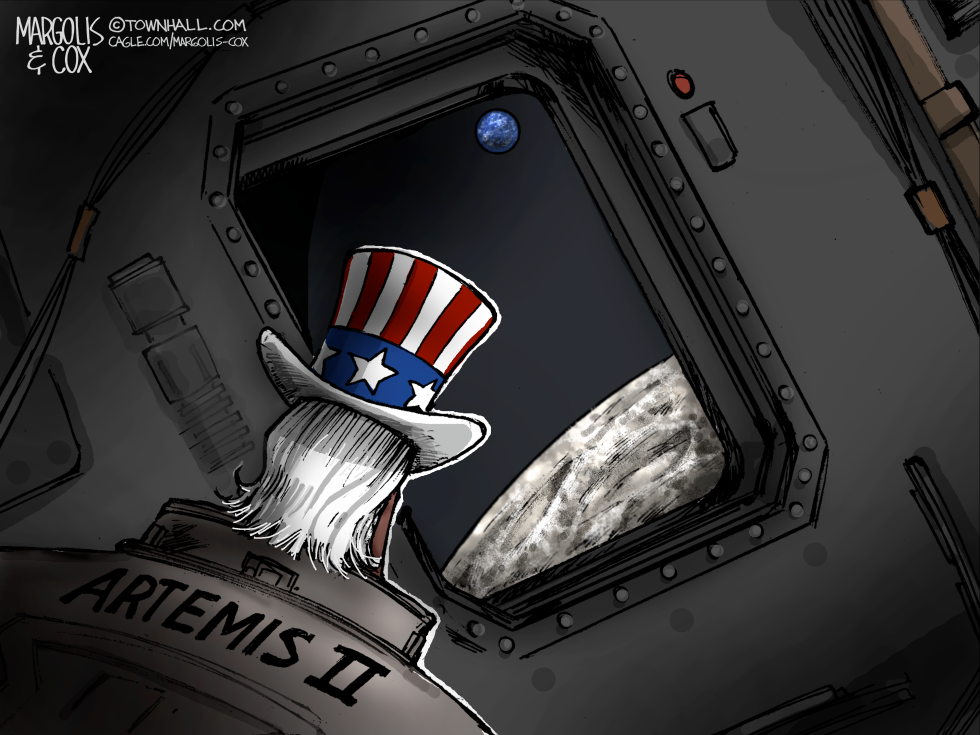
This political cartoon features Uncle Sam, complete with his red-white-blue top hat, inside the Artemis II spacecraft, staring out at the cratered moon surface with Earth visible in the background. The image satirizes American space exploration efforts, highlighting themes of patriotism, lunar missions, NASA programs, humorous commentary, political satire, and the return to moon orbits. It cleverly juxtaposes a classic symbol of America with modern space endeavors, poking fun at the grandeur and perhaps the delays or ambitions of the Artemis II project, all rendered in a dark, shadowy style that emphasizes the vastness of space.
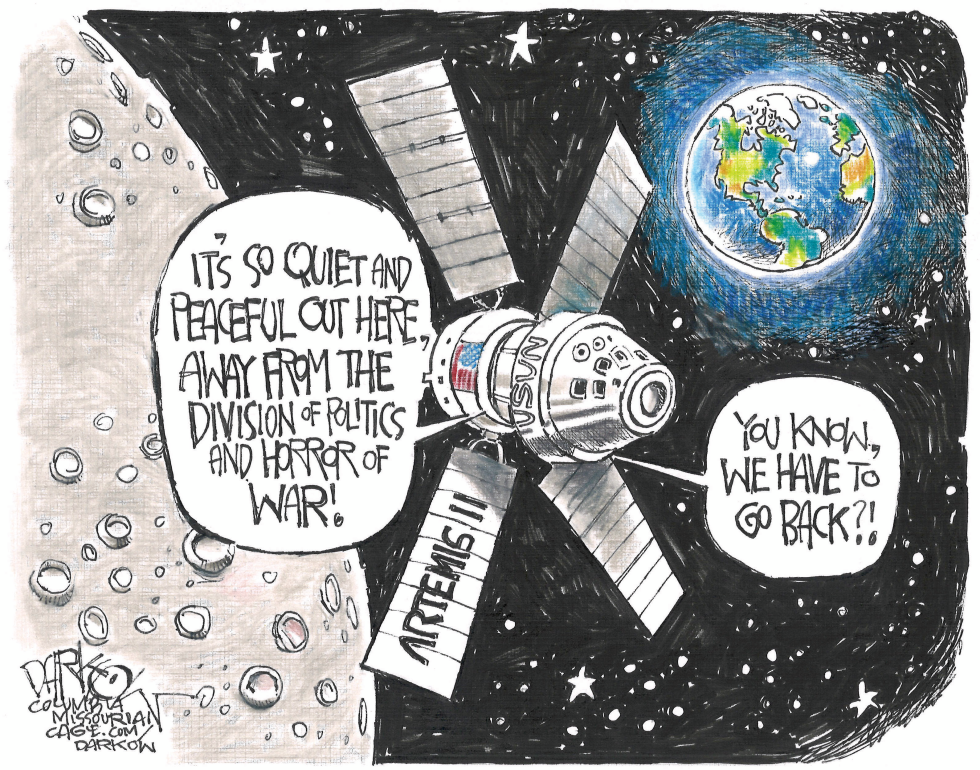
This Daryl Cagle political cartoon analysis features the Artemis II spacecraft floating in serene space, with Earth glowing in the background and the moon nearby. The left speech bubble extols the quiet peace away from division of politics and horror of war, while the right one resignedly notes the need to go back. It's a satirical cartoon on politics and war division, poking fun at how space exploration escaping earthly conflicts offers temporary respite. The NASA Artemis program humor illustration underscores the irony of advanced space missions contrasting with unresolved human divisions on Earth. Through this humorous take on returning to political division, the cartoon cleverly comments on the allure of peaceful space vs chaotic Earth without delving into specifics.
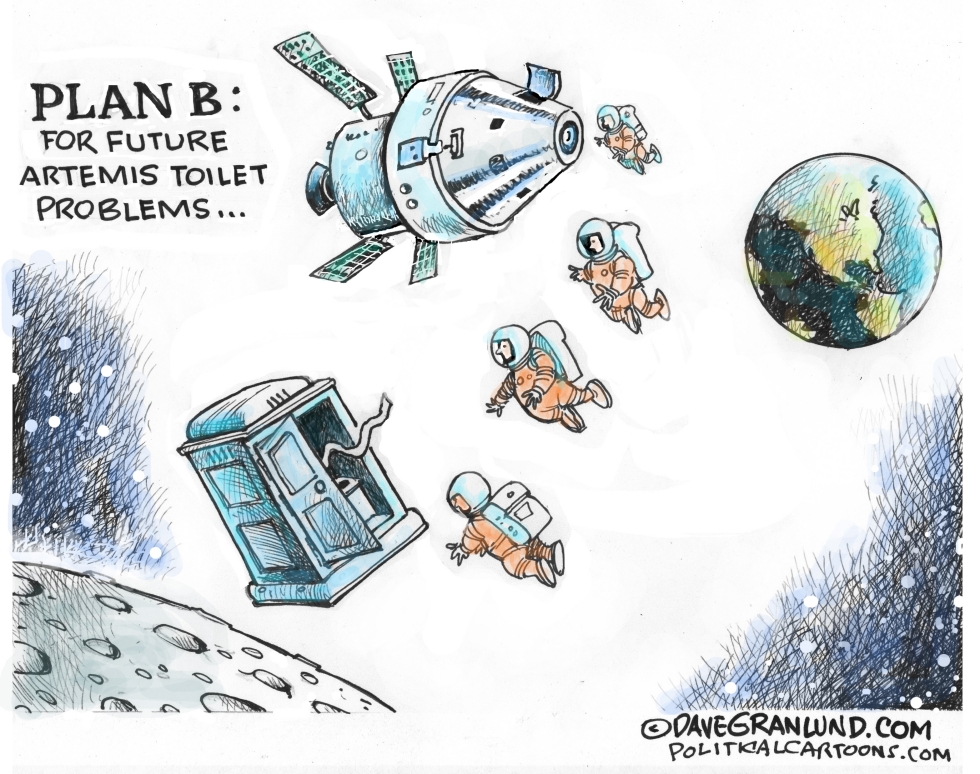
Dave Granlund\'s cartoon captures the absurdity of potential toilet glitch in the Artemis mission around moon, showing astronauts drifting toward a floating porta-potty labeled as Plan B for future Artemis toilet problems. The scene includes a spacecraft, the moon below, and Earth in the background, highlighting backup plan necessities in space travel. With tags like mission around moon, astronauts, toilet glitch, alternate, and one toilet, the image pokes fun at logistical challenges in lunar expeditions. Such humorous takes remind viewers of the everyday hurdles even in high-tech endeavors like NASA\'s Artemis program.
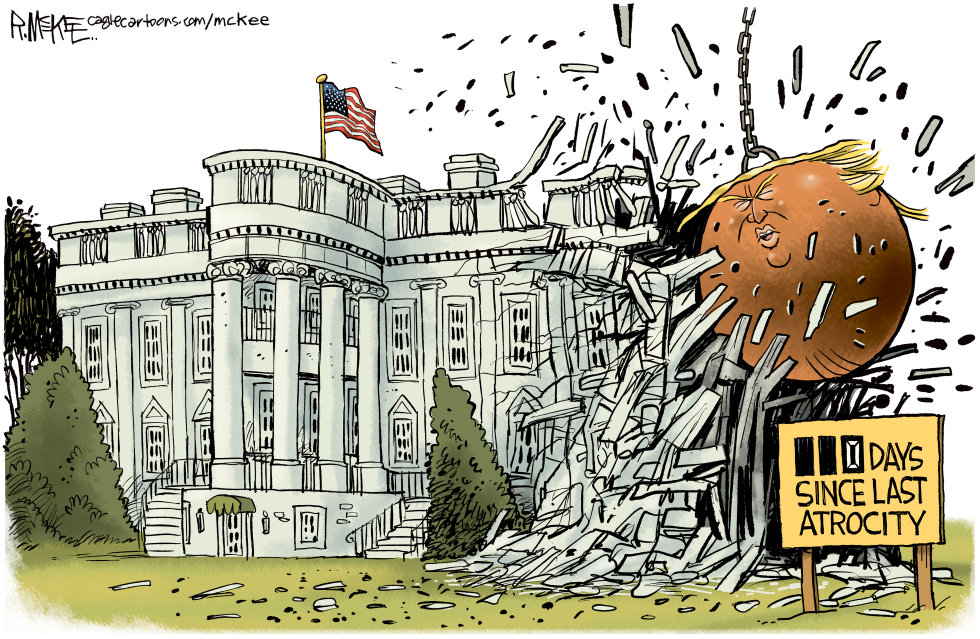
A wrecking ball bearing Donald Trump's features swings into the White House on October 22 2025. Debris scatters across the lawn while a sign records zero days since the last incident. The American flag remains atop the damaged structure.
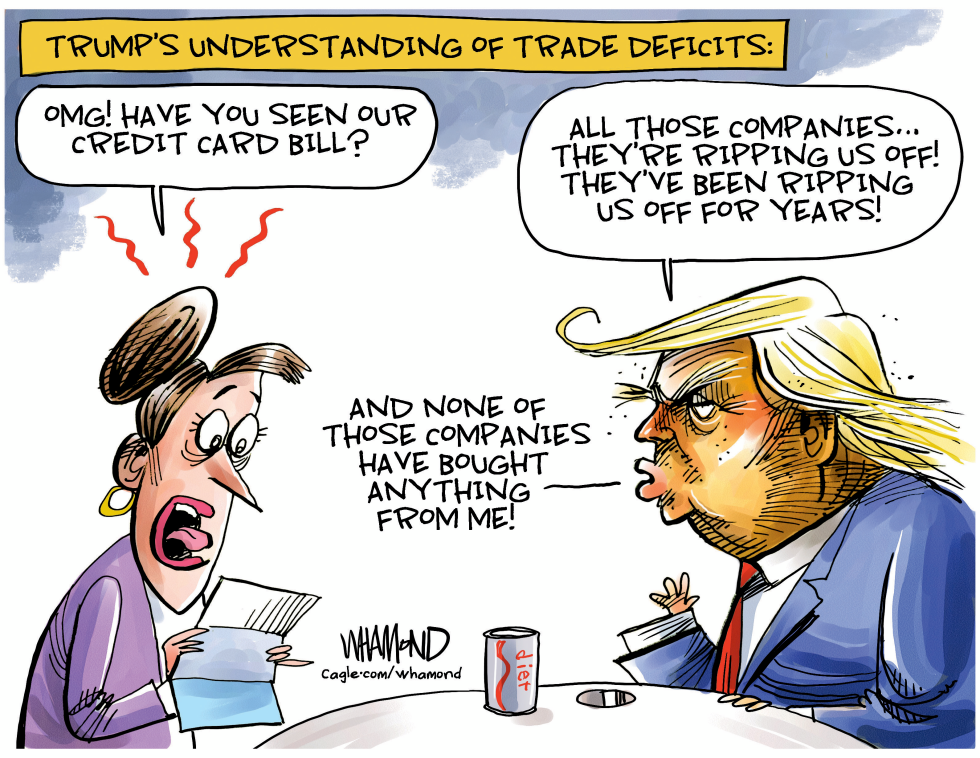
The August 2025 cartoon by Dave Whamond depicts Donald Trump misunderstanding trade deficits by comparing them to an unpaid credit card bill. Trump complains that companies have been ripping the US off for years and none have bought anything from him. The scene uses a domestic table setting to highlight the former president's focus on imports over balanced trade metrics like exports of goods and services.