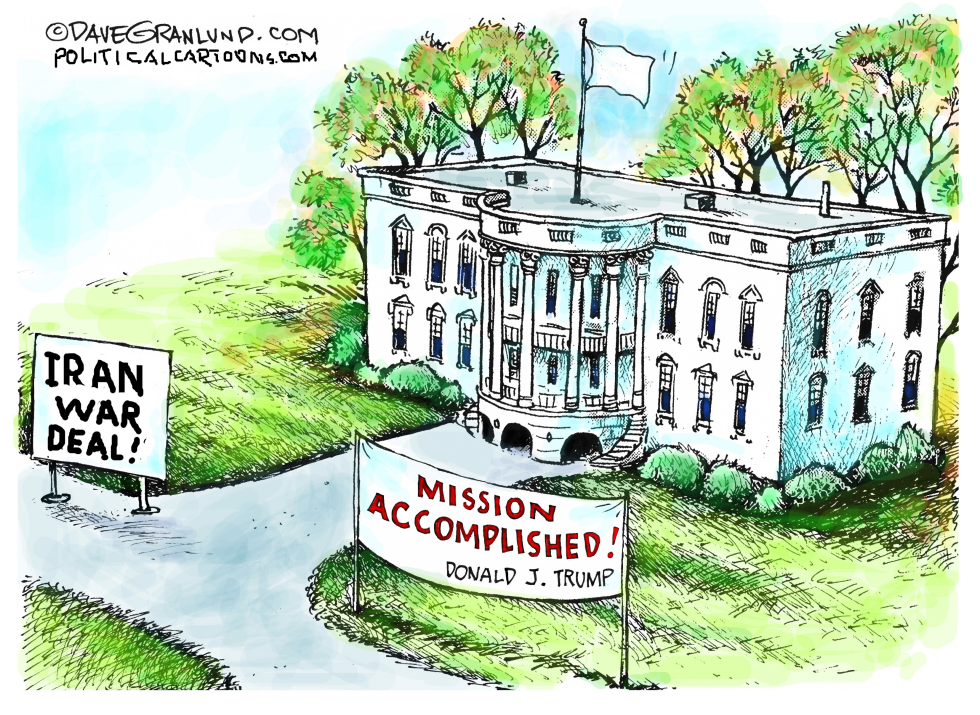
Granlund illustrates the paradox of Donald Trump striking a peace deal with Iran at the same moment US forces were bombing Iranian-backed targets. The cartoon plays on the word "deal," suggesting Trump's Iran policy amounts to coercive diplomacy rather than genuine peace. The visual contrasts handshakes with explosions.
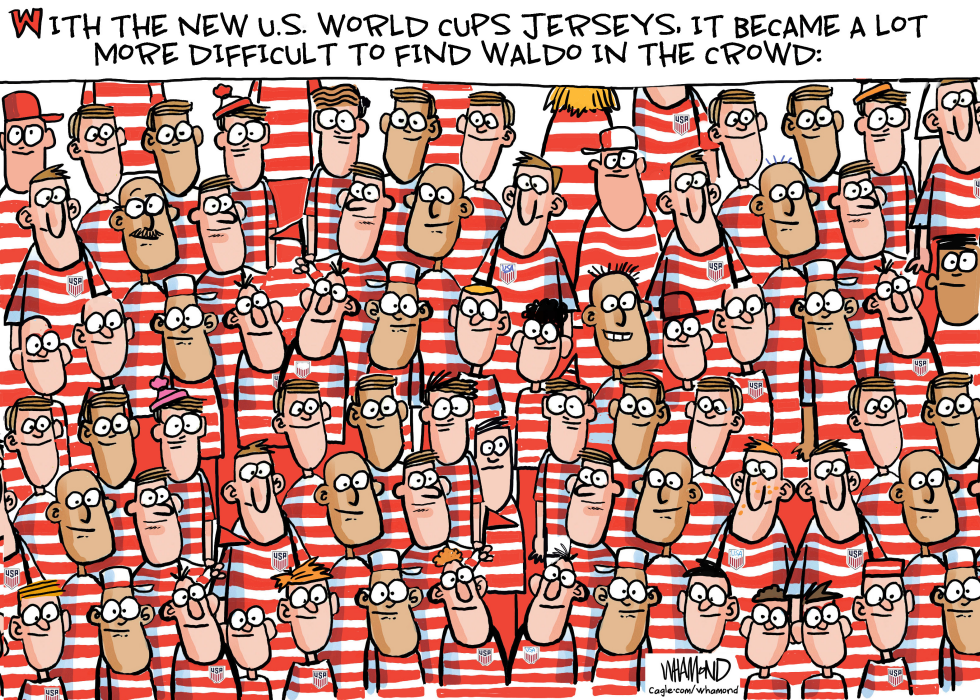
The cartoon shows a dense crowd of spectators wearing the new red and white striped U.S. World Cup jerseys. The top text notes that the uniforms make it much harder to locate Waldo among the fans. The image references the 2026 tournament hosted by the United States, Canada and Mexico. The visual plays on the classic Where's Waldo search books by filling the scene with similar striped shirts. The artist's signature appears in the lower right.
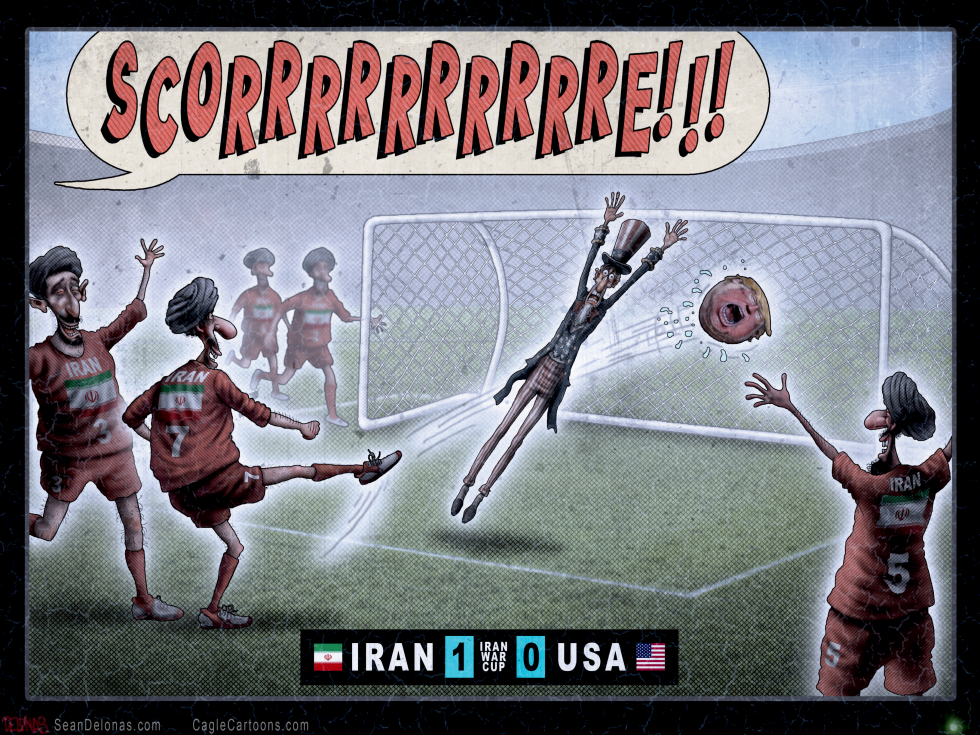
A soccer match on a green field features Iranian players in red jerseys celebrating as a tall figure in a top hat leaps toward the goal with its head detached and flying. The scoreboard reads Iran 1 USA 0 under the Iran War Cup title, with the date set in June 2026 amid ongoing Middle East tensions.
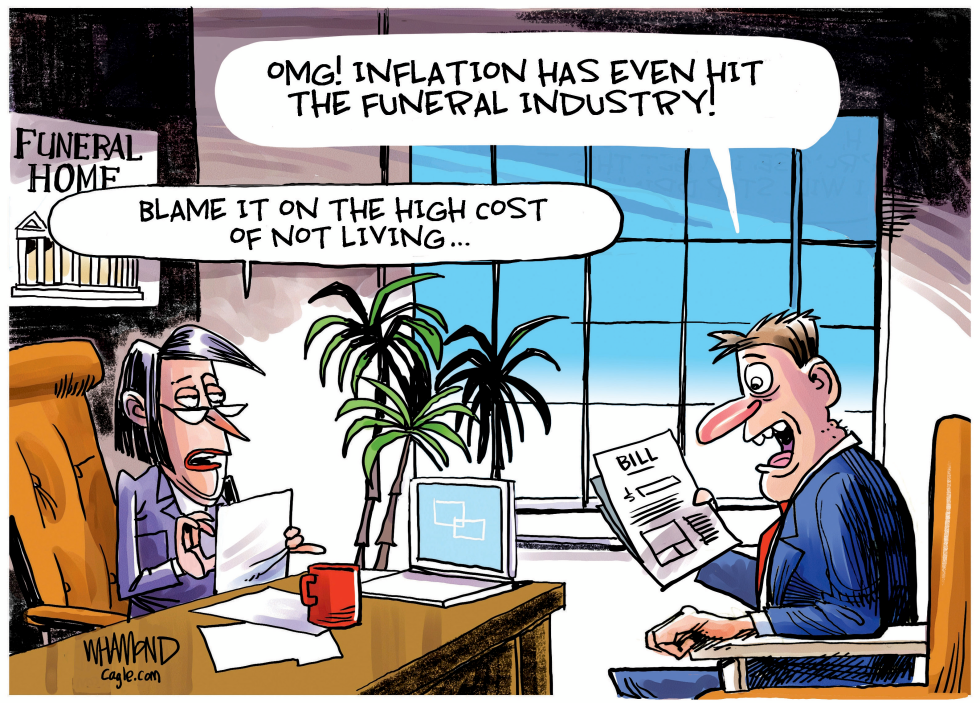
A funeral home director and client react to a high bill in an office setting. The exchange highlights how inflation has extended to the funeral sector. Speech bubbles deliver a pun on the high cost of not living. The scene reflects ongoing economic pressures on consumers including tariffs and rising prices for essentials. Publication occurs amid discussions of affordability challenges tied to recent policy decisions.
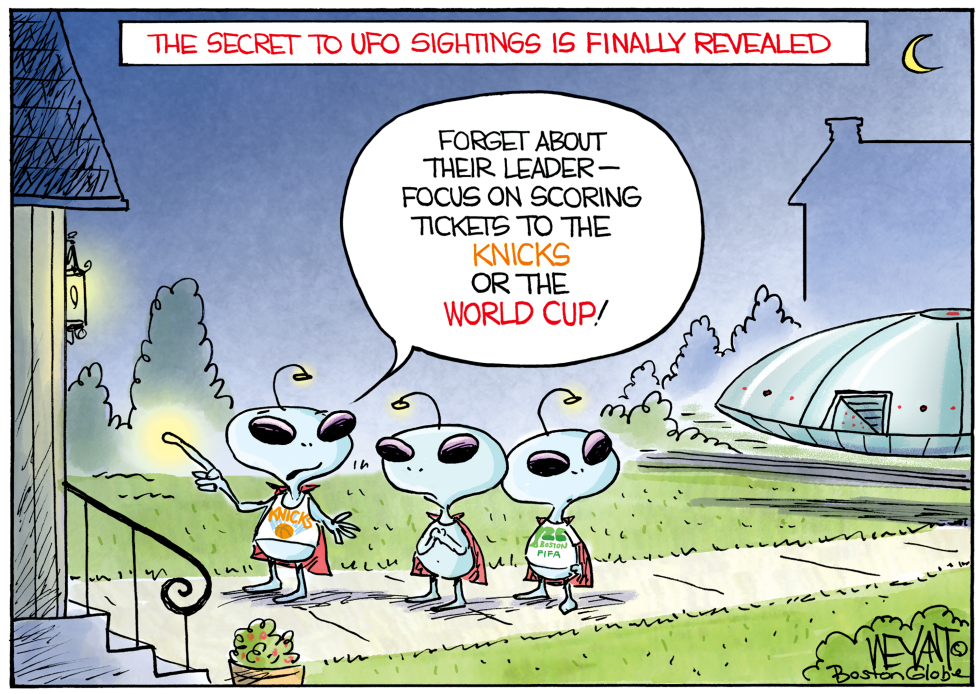
A cartoon published June 8 2026 shows three small aliens on a suburban lawn at night. One points toward a glowing house while a speech bubble urges focus on Knicks or World Cup tickets instead of their leader. A domed UFO rests on the grass nearby. The top banner states the secret to UFO sightings is finally revealed. The scene ties high demand for major sports events to unexplained aerial phenomena.
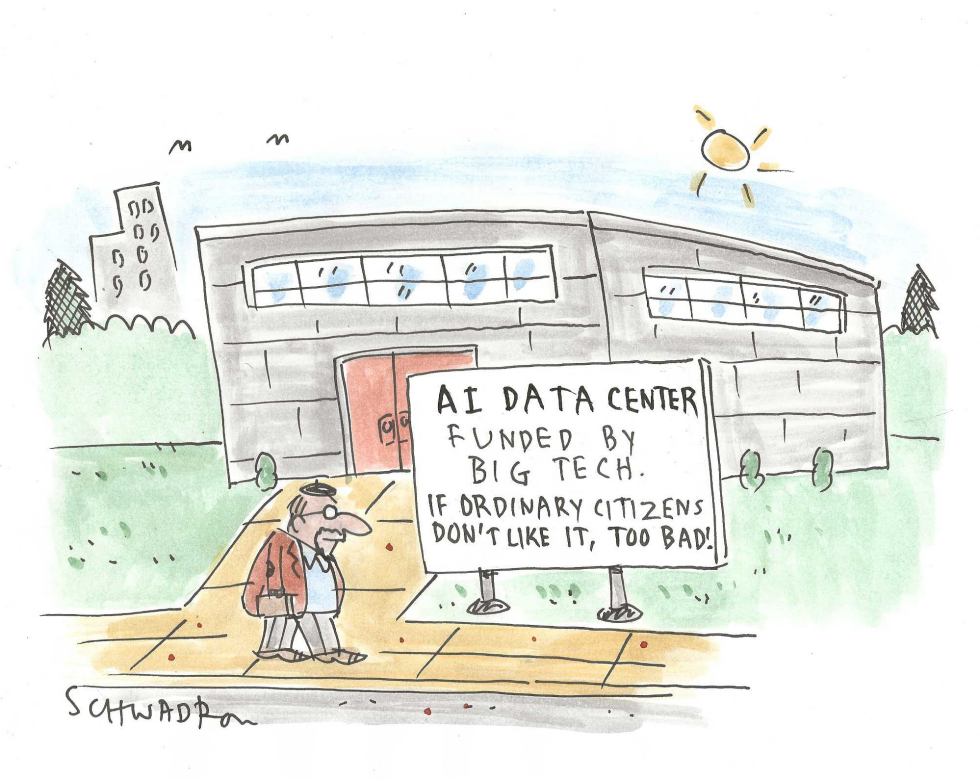
On June 6, 2026, a political cartoon depicts a man approaching an AI data center funded by big tech. The facility's sign bluntly informs ordinary citizens that their objections do not matter. The drawing highlights tensions between rapid AI infrastructure growth and public concerns over environmental consequences such as pollution and resource use. The cartoonist uses the dismissive message to underscore how technology companies often proceed without community consent.
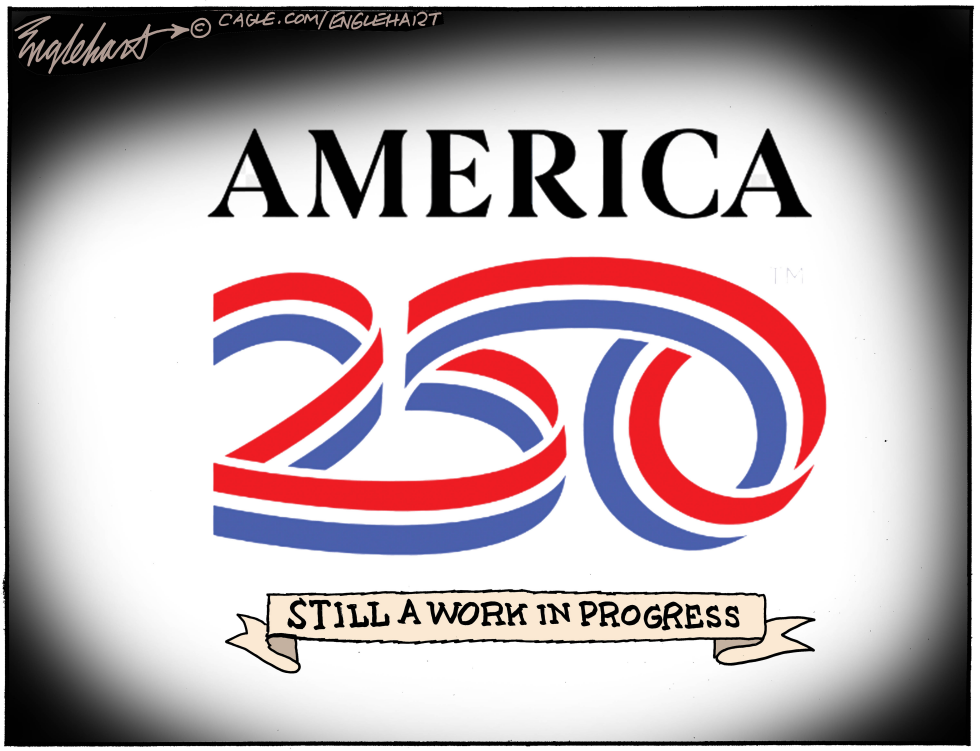
Bob Englehart's June 2026 cartoon marks America's 250th anniversary with a large stylized 250 in patriotic colors under the word AMERICA. A banner across the bottom reads STILL A WORK IN PROGRESS. The image ties directly to the upcoming semiquincentennial on July 4 2026 and offers a simple visual statement about the nation's continuing evolution.
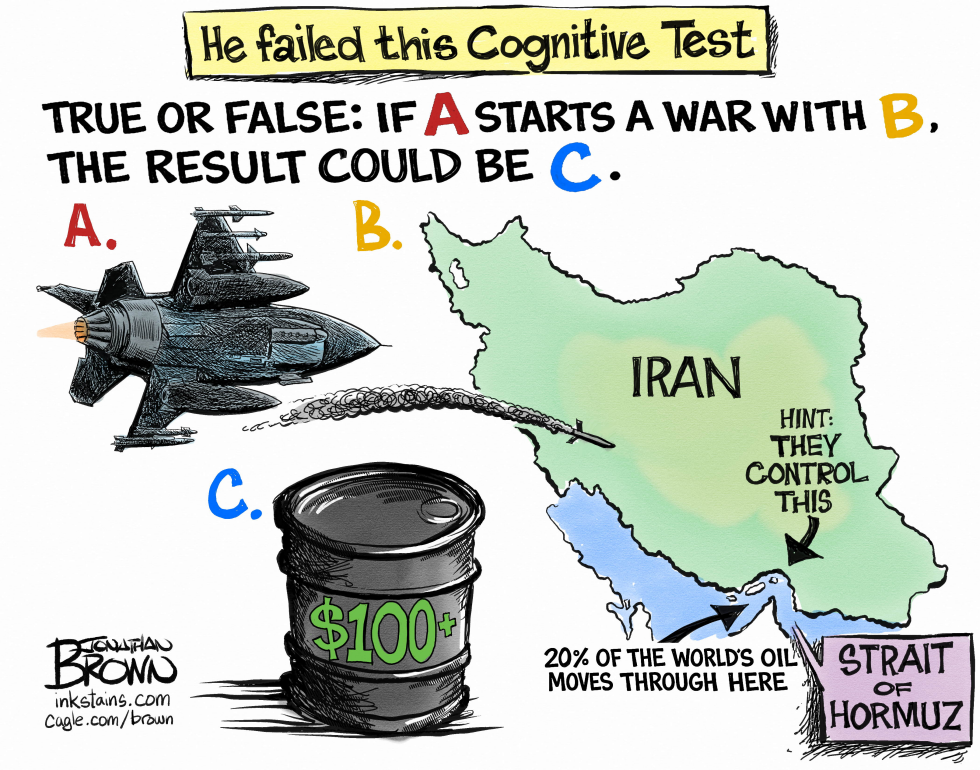
Jonathan Brown's cartoon presents a stark true-or-false cognitive test: if A (a fighter jet) starts a war with B (Iran), the result could be C (an oil barrel marked $100+). The map of Iran includes a hint pointing to the Strait of Hormuz, noting that 20% of the world's oil moves through there, underscoring control over this chokepoint. Tags such as cognitive test, war in Iran, oil prices, Strait of Hormuz, gas prices, and cost of war frame the satire. The artwork warns of economic fallout from conflict, with the jet trailing toward Iran and the oil barrel symbolizing surging costs. This piece captures geopolitical tensions in a simple, visual riddle.
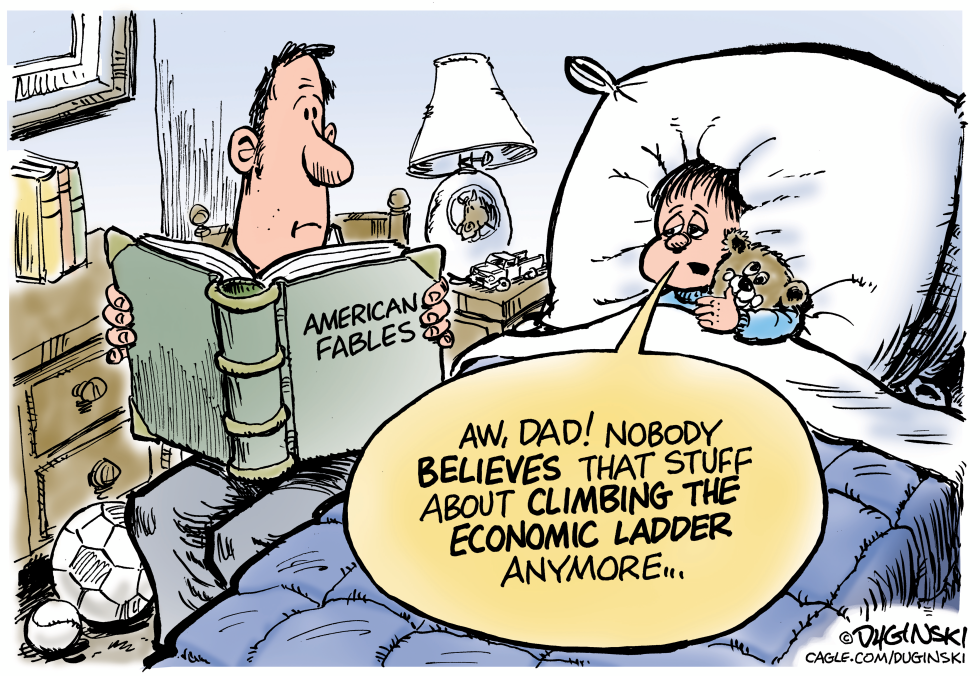
The image shows a father holding an open book titled American Fables beside a child tucked in bed with a teddy bear. The boy speaks from a large speech bubble rejecting the notion of climbing the economic ladder. A soccer ball rests on the floor near stacked books and a nightstand with a lamp and toy train. Tags include American Dream, climbing the economic ladder, upward mobility, cost of living, affordability, and inflation. The scene stays limited to these visible elements without added context.
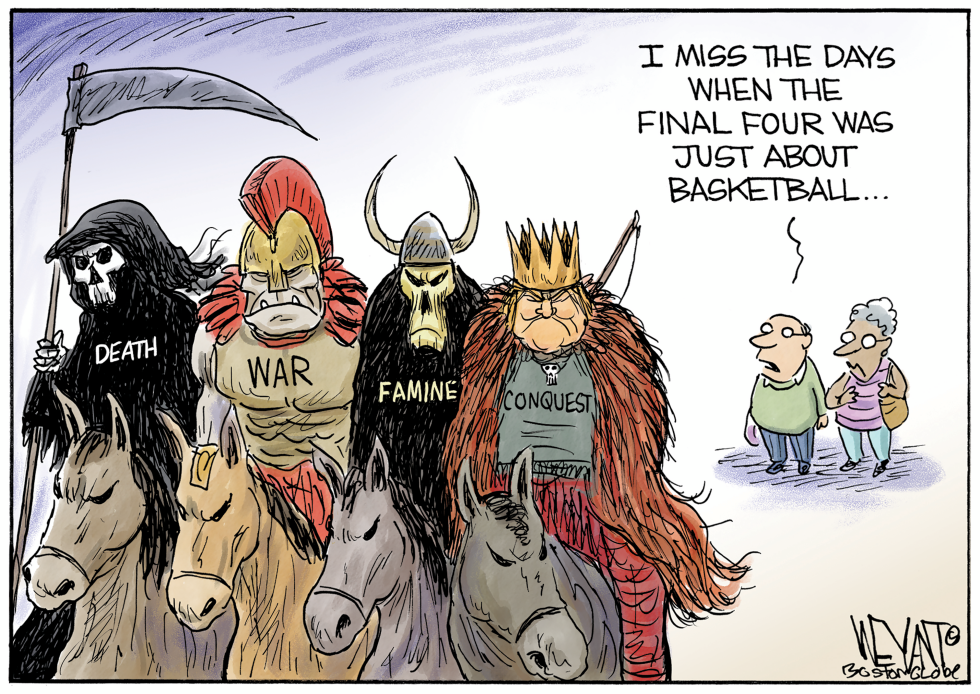
The April 2026 cartoon depicts the Four Horsemen of the Apocalypse marching forward during NCAA Final Four season. Their presence highlights how international conflicts eclipse traditional sports focus. A speech bubble expresses longing for basketball-only coverage while bystanders observe the shift.
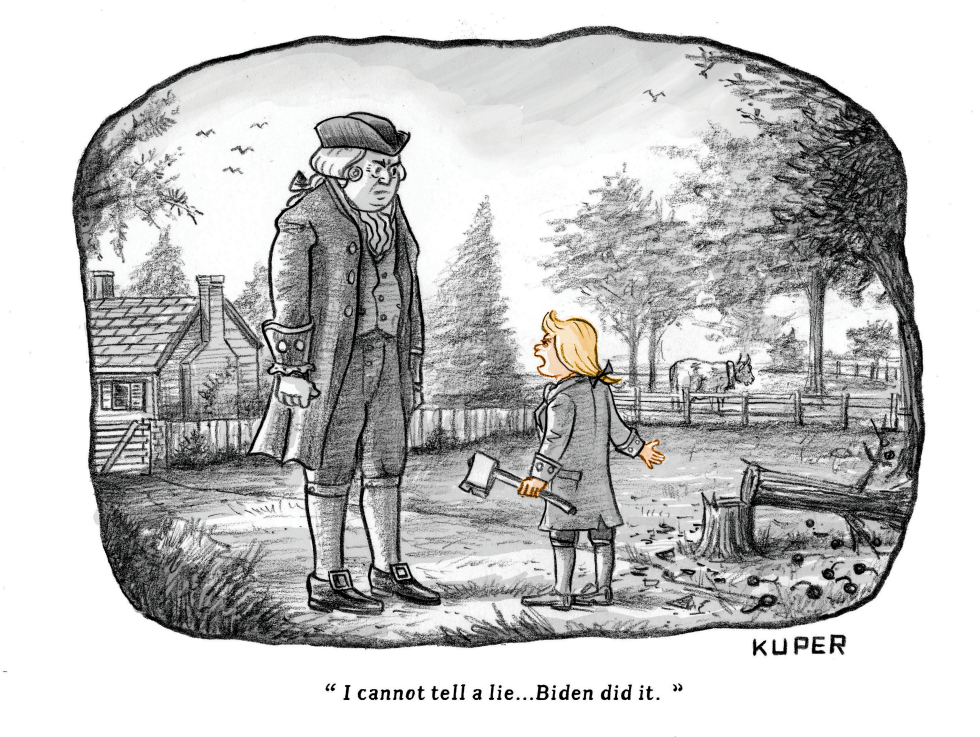
The cartoon reworks the George Washington cherry tree legend with a blonde child resembling Donald Trump holding an axe and declaring Biden responsible for the cut tree. An adult figure in 18th century attire looks on while a horse stands in the background. The scene references ongoing political blame games and recent cabinet tensions involving figures such as Kristi Noem and Pete Hegseth amid rising oil prices and foreign policy friction in the Strait of Hormuz.
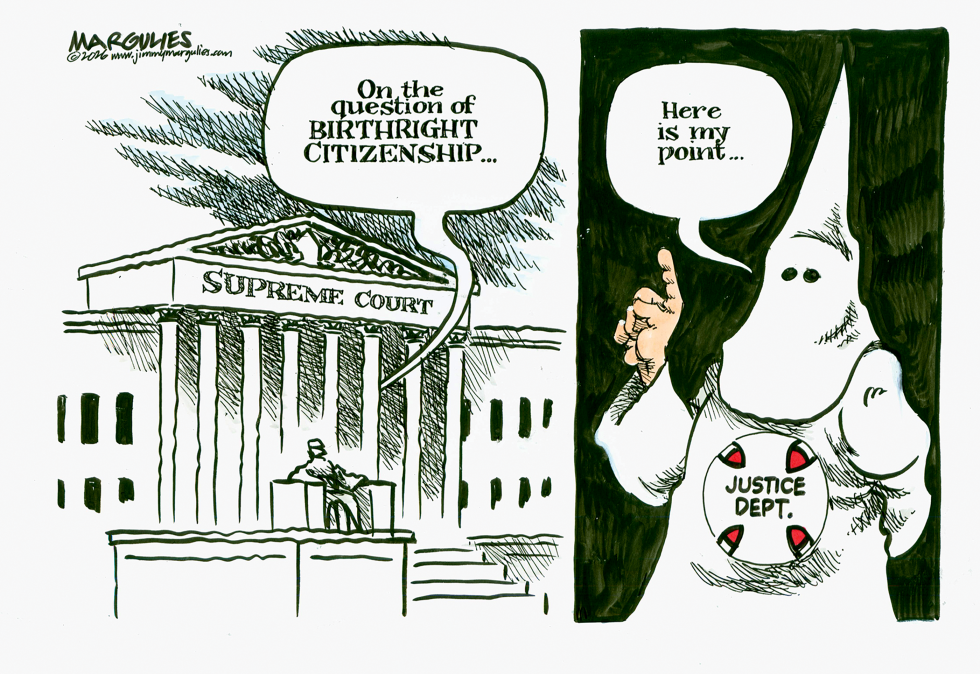
The cartoon depicts the Supreme Court building with a speech bubble raising the question of birthright citizenship under the Fourteenth Amendment. On the right, a hooded figure wearing a Justice Department badge emerges to declare its point. The imagery draws direct parallels to white supremacist groups and Jim Crow practices amid ongoing policy debates.
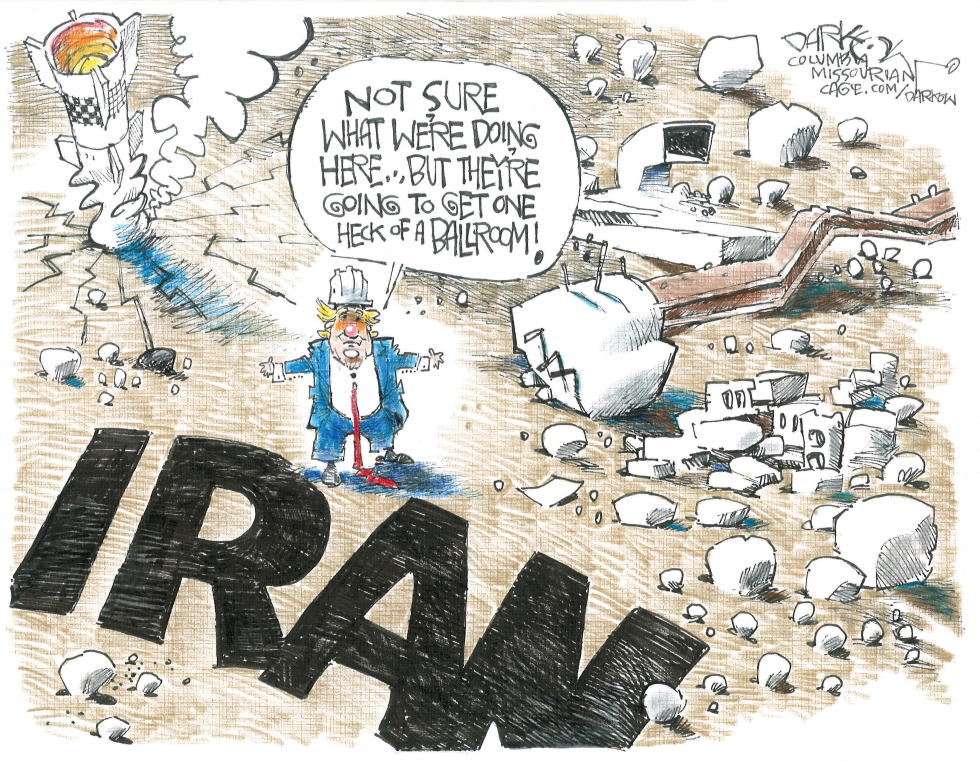
This biting political cartoon features a caricatured Donald Trump in a construction hard hat, overlooking a bombed-out landscape labeled 'IRAN,' with a missile launching in the background. His speech bubble confesses confusion over US actions but promises 'one heck of a ballroom,' a sly pun on Trump's real estate empire clashing with foreign policy blunders. Incorporating tags like political satire, Trump caricature, Iran nuclear program, US-Iran relations, geopolitical humor, and Trump hotel pun, the image mocks the haphazard withdrawal from the nuclear deal, suggesting it paves the way for Iran's nuclear ambitions while Trump envisions luxury redevelopment. The ruined buildings and debris emphasize the destructive fallout, blending humor with insightful critique on Middle East instability.
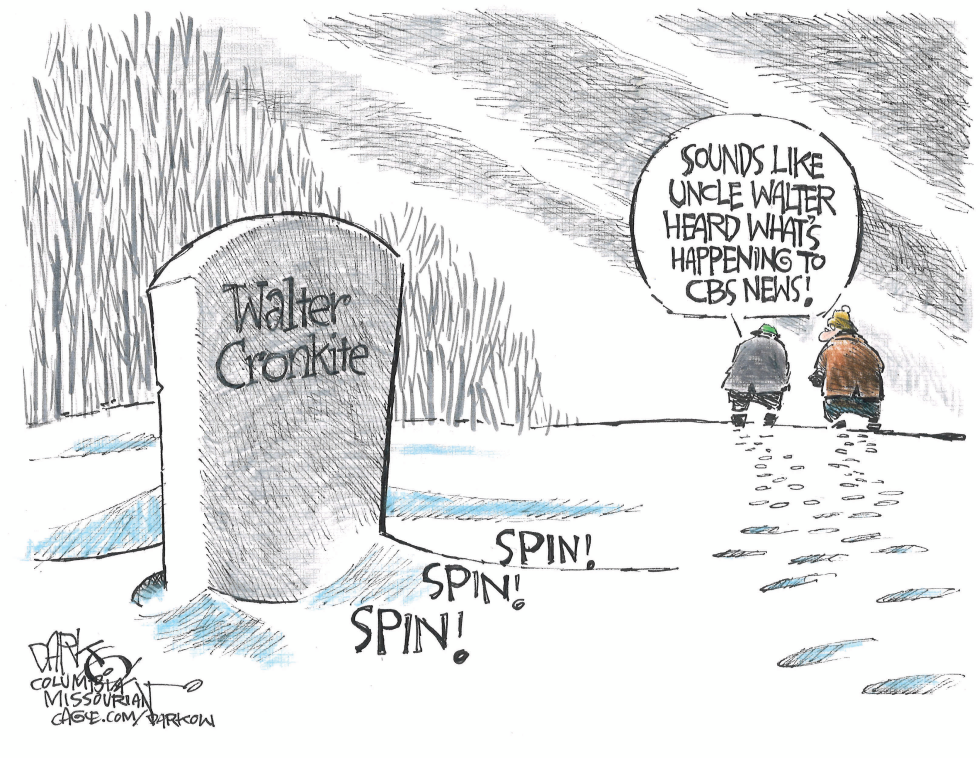
The cartoon depicts Walter Cronkite's gravestone with two observers noting his reaction to developments at CBS News. Footprints labeled spin trail away from the scene, highlighting ongoing media dynamics at the network in late January 2026.
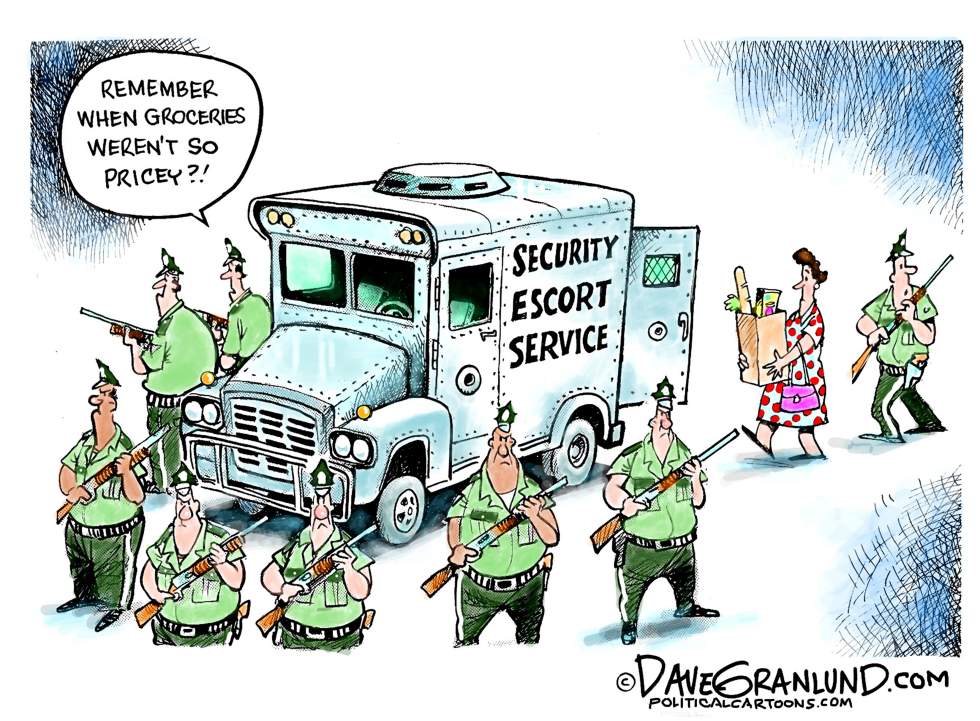
A political cartoon by Dave Granlund depicts an armored security truck labeled Security Escort Service surrounded by uniformed guards with rifles. A woman carries grocery bags past the vehicle while a speech bubble recalls cheaper times. The image responds to recent spikes in grocery prices linked to tariffs. Food costs for items like coffee and meat have jumped sharply. Families face tighter budgets as inflation pressures mount. The cartoon uses the escort motif to highlight how ordinary shopping now requires protection due to high prices.