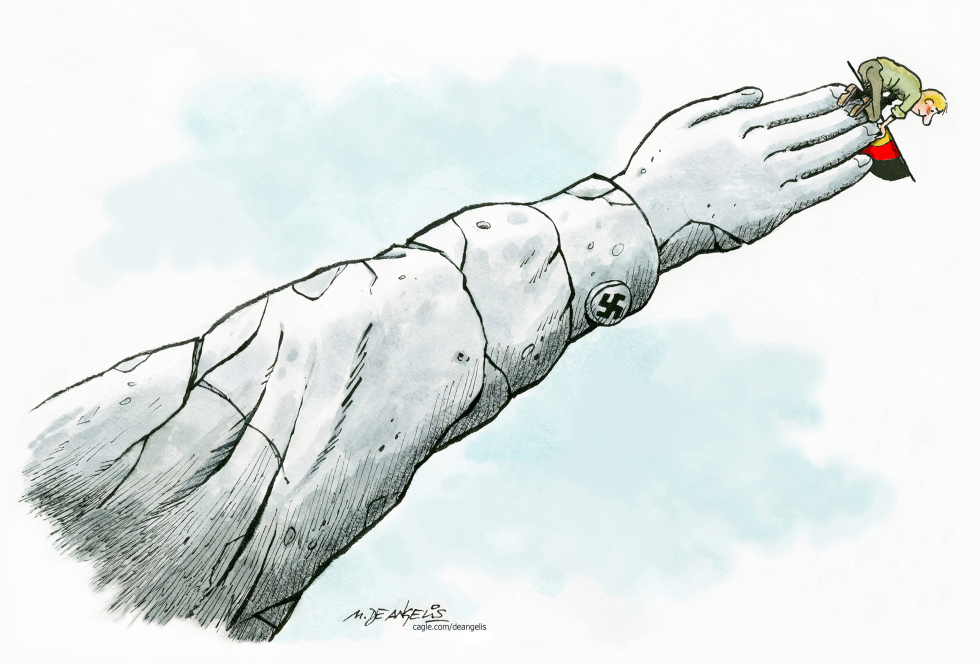
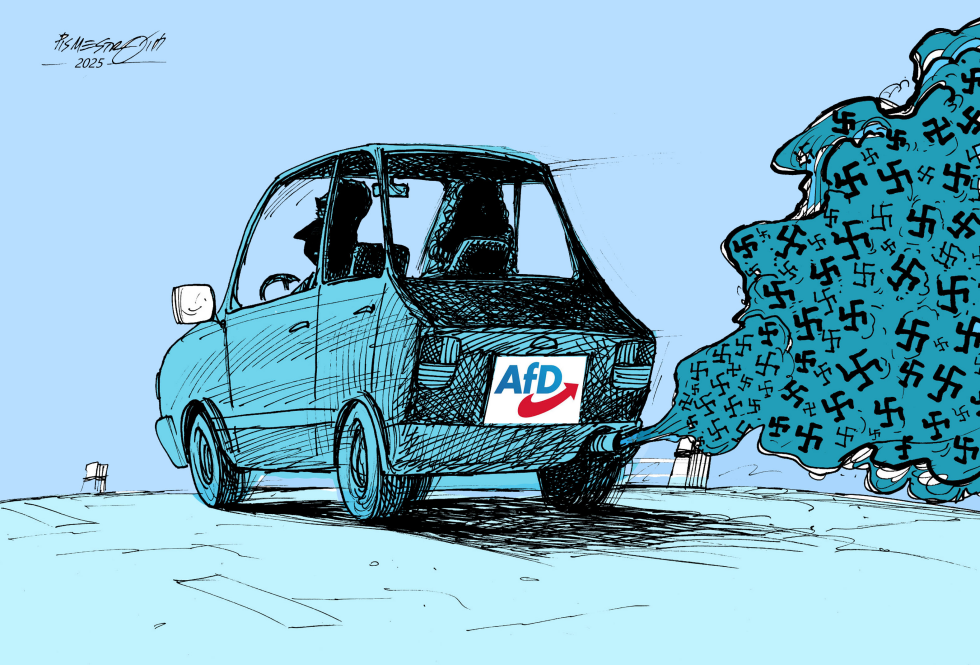
Concerns over far-right political gains in Germany have intensified in recent years, with parties embracing nationalist rhetoric drawing scrutiny for echoing historical extremist movements. The development matters because it tests the resilience of post-war democratic institutions in Europe's largest economy. The cartoon argues that such influences continue to exert a controlling grip on German political life despite decades of denazification efforts.
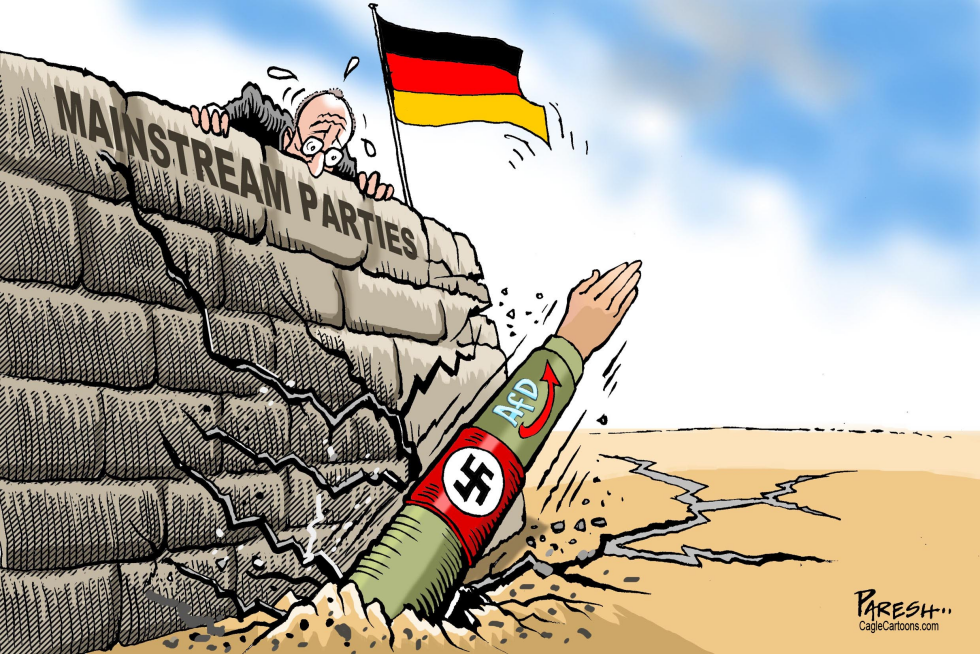
The cartoon depicts Germany's mainstream parties as a fracturing wall under assault from the AfD, portrayed as an extremist force with Nazi imagery. Published on September 10, 2026, it responds to the party's growing electoral strength and its impact on traditional coalitions ahead of key votes. The image shows a distressed mainstream figure atop the wall while the AfD arm breaks through from below, symbolizing how the party's advances erode established political structures. This reflects ongoing concerns about coalition stability and the mainstream's struggle to contain far-right momentum in German politics.
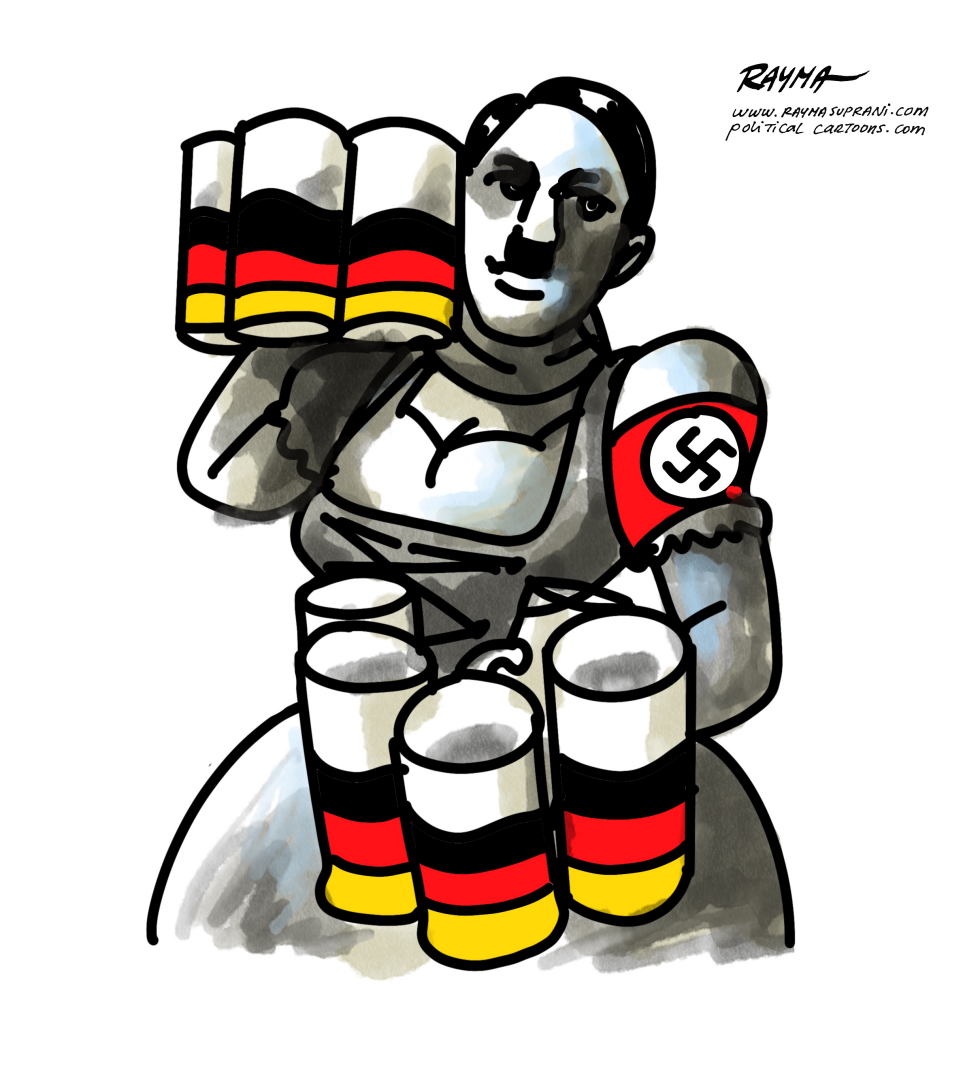
The cartoon depicts a figure resembling Adolf Hitler clad in armor and bearing a swastika armband while surrounded by beer mugs colored like the German flag. It responds to ongoing discussions about far-right movements in Germany by blending historical Nazi references with contemporary beer culture symbols. The work highlights perceived connections between political radicalism and national social customs as of the 2026 publication date. No specific recent event anchors the piece beyond recurring themes of extremism in European politics.
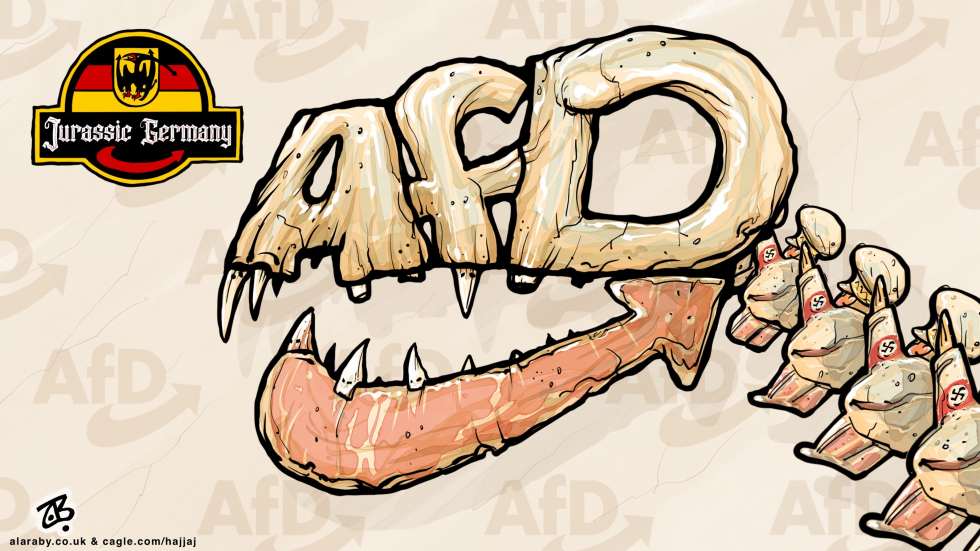
The Alternative for Germany party posted strong results in recent state and national contests, drawing renewed scrutiny over its tolerance for extremist elements. The outcome matters because AfD now holds significant parliamentary seats and influences policy debates on immigration and national identity. The cartoon argues that these gains risk normalizing symbols and rhetoric long associated with Germany's darkest chapter.
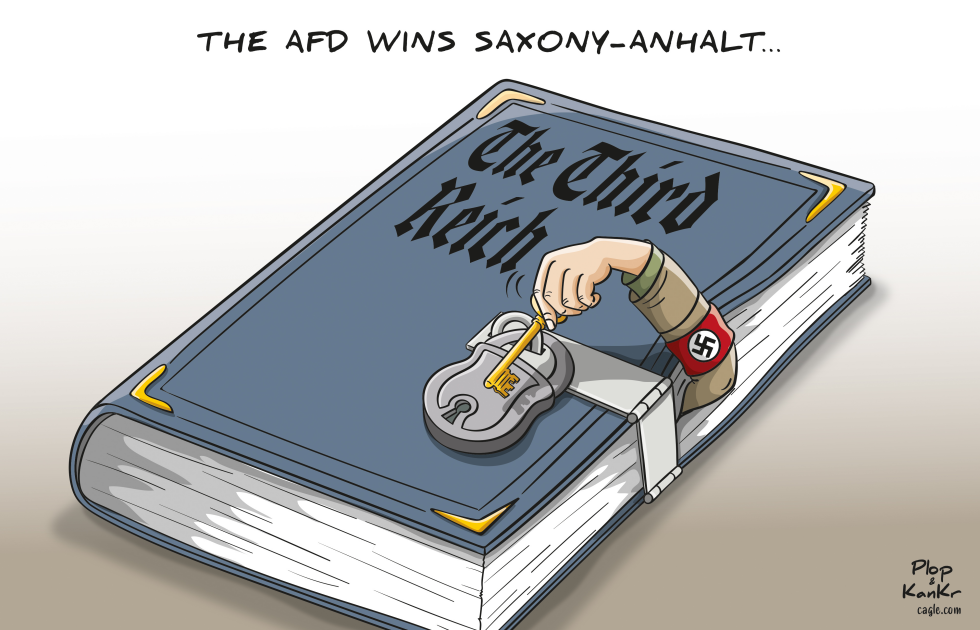
The cartoon responds to the AfD's reported victory in the Saxony-Anhalt state election by showing a hand in a Nazi armband using a key to unlock a large book titled The Third Reich. The image suggests the win revives dangerous historical precedents from Germany's past. It uses the visual metaphor of opening a locked volume to imply that far-right electoral gains could restore authoritarian elements associated with the Nazi era. The publication date places the piece in the context of ongoing debates about the AfD's rising influence in eastern German states.
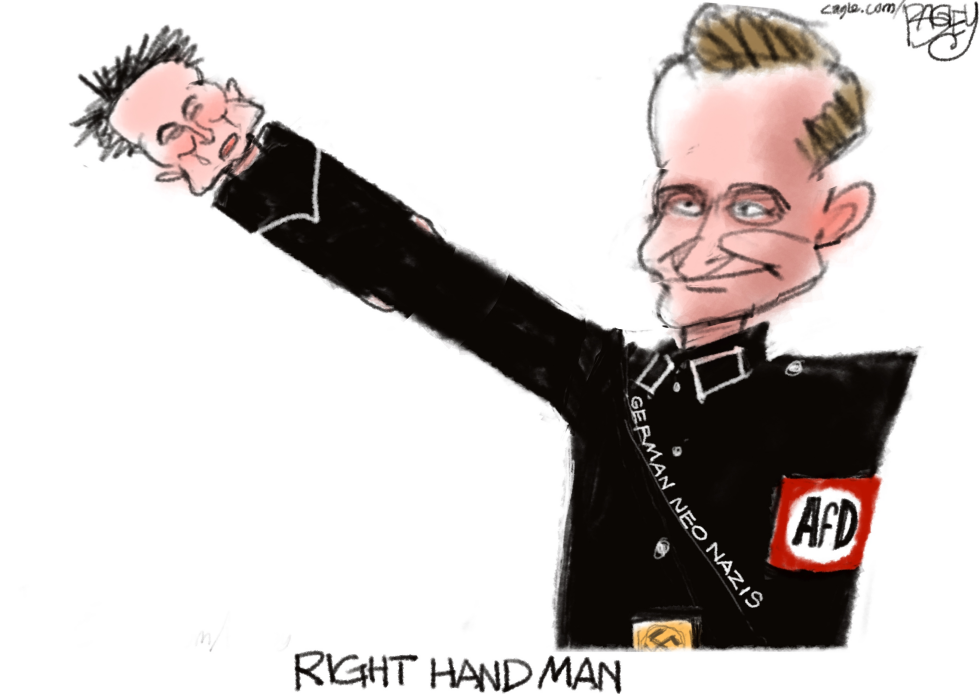
The Alternative for Germany party continues to draw accusations of harboring neo-Nazi elements as recent events spotlight its members and rhetoric. The party has gained electoral ground while facing investigations and public backlash over extremist ties. This development matters because it reflects broader challenges to democratic norms in Europe. The cartoon takes the position that AfD operates as a vehicle for neo-Nazi influence rather than a legitimate political force.
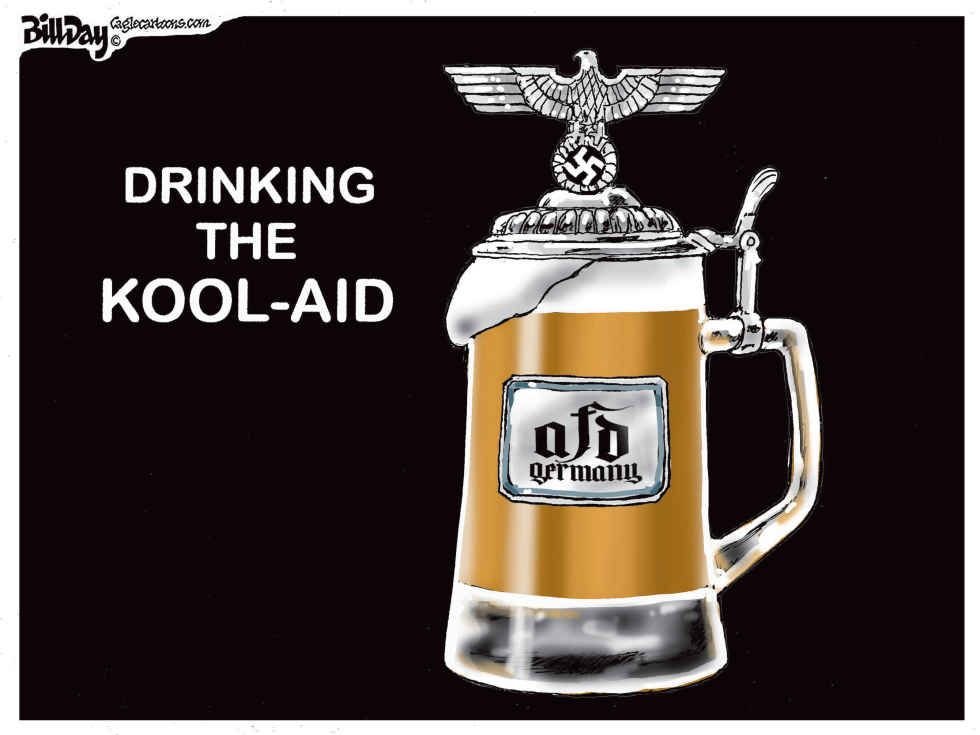
Germany's far-right Alternative for Germany party is gaining ground ahead of elections with rhetoric echoing historical extremism. The party has faced repeated scrutiny for members' Nazi-era references and anti-immigrant stances that courts have flagged as extremist. This development matters because AfD polling strength could reshape coalition math and policy on migration, EU ties, and civil liberties. The cartoon argues that supporters are consuming a toxic ideological brew that risks normalizing authoritarian symbols and eroding democratic norms.
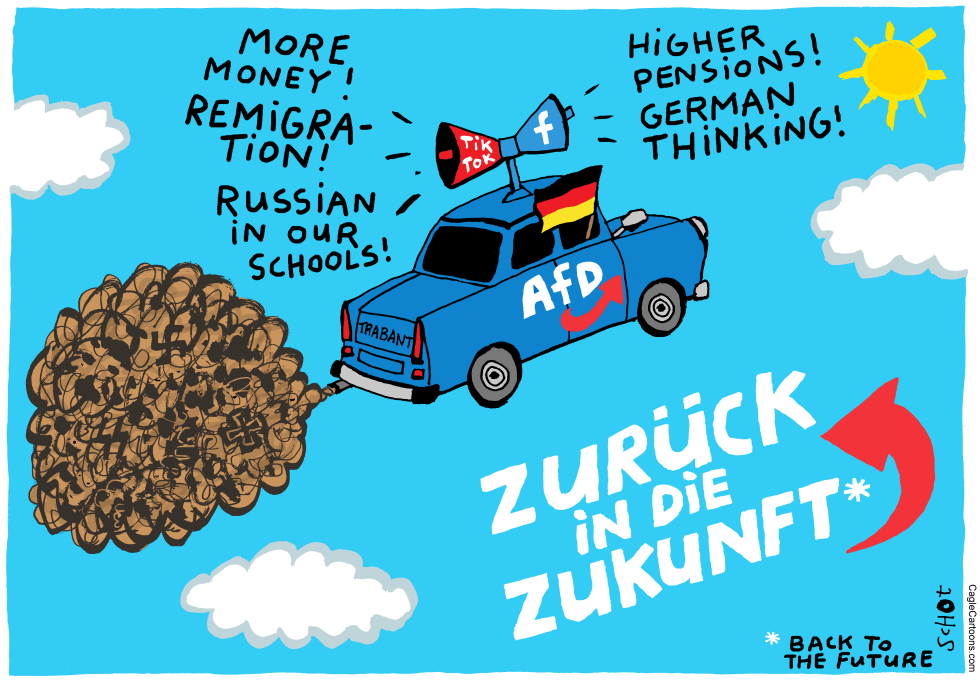
Germany's AfD secured major election gains in 2026 on pledges of remigration, higher pensions and anti-foreign rhetoric. The result raises alarms over the party's tolerance for extremist elements. The cartoon frames the victory as a dangerous retreat into past ideologies rather than genuine progress.
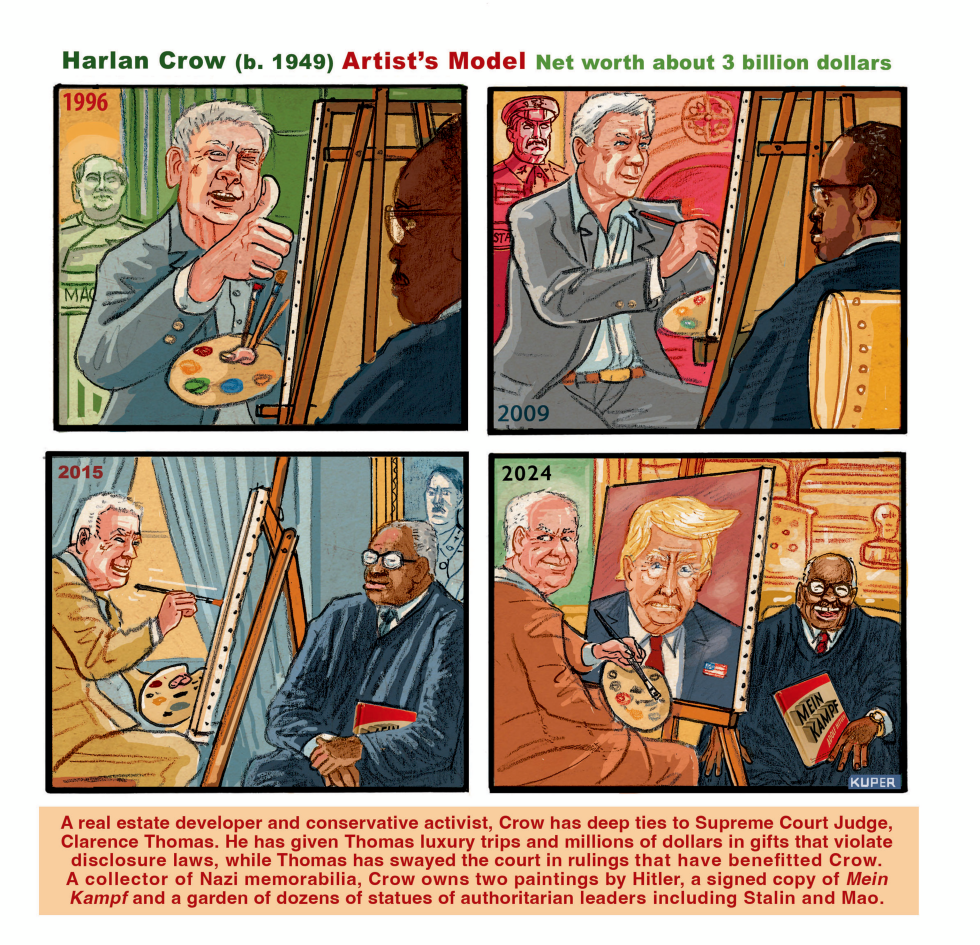
Real estate developer Harlan Crow has provided Supreme Court Justice Clarence Thomas with luxury trips and millions in undisclosed gifts that violate ethics rules. Thomas has participated in rulings benefiting Crow. Crow also collects Nazi memorabilia including Hitler paintings and a signed copy of Mein Kampf. The cartoon extends the pattern to a 2024 portrait of Donald Trump. It criticizes the intersection of wealthy donor influence and judicial decisions.
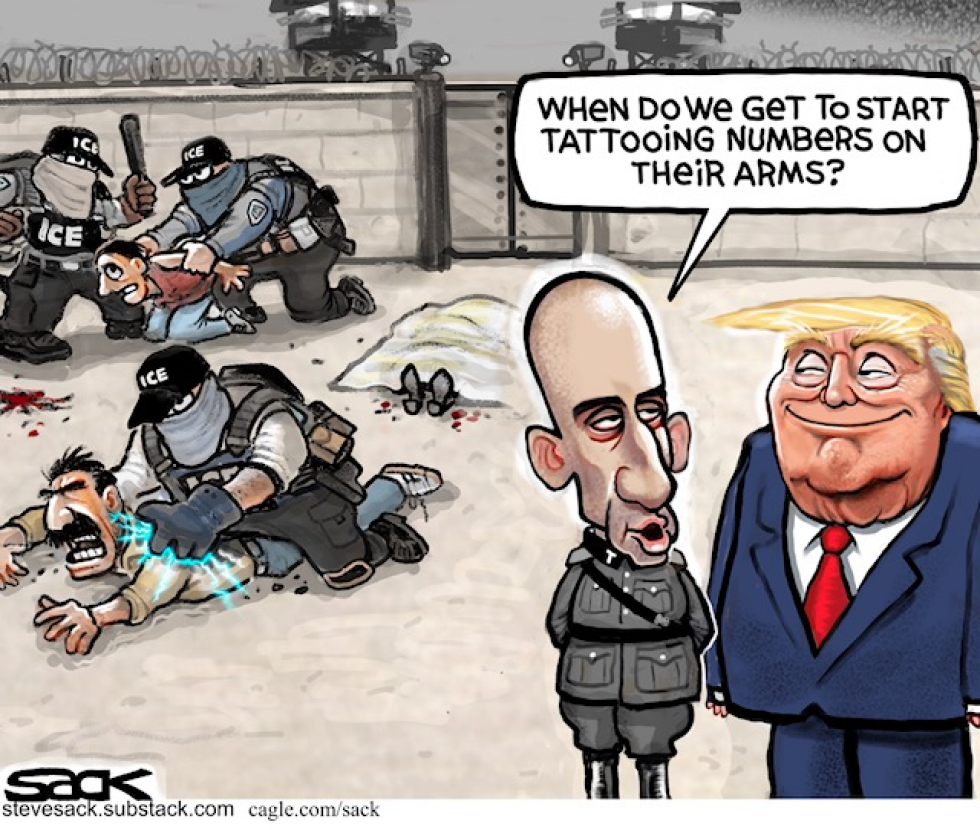
Donald Trump has publicly discussed aggressive measures in immigration detention facilities amid ongoing enforcement operations. The remarks come as ICE conducts arrests and holds individuals at secure sites. Critics argue the approach echoes past abuses. The piece portrays the comments as crossing into prohibited territory by invoking forced numbering.
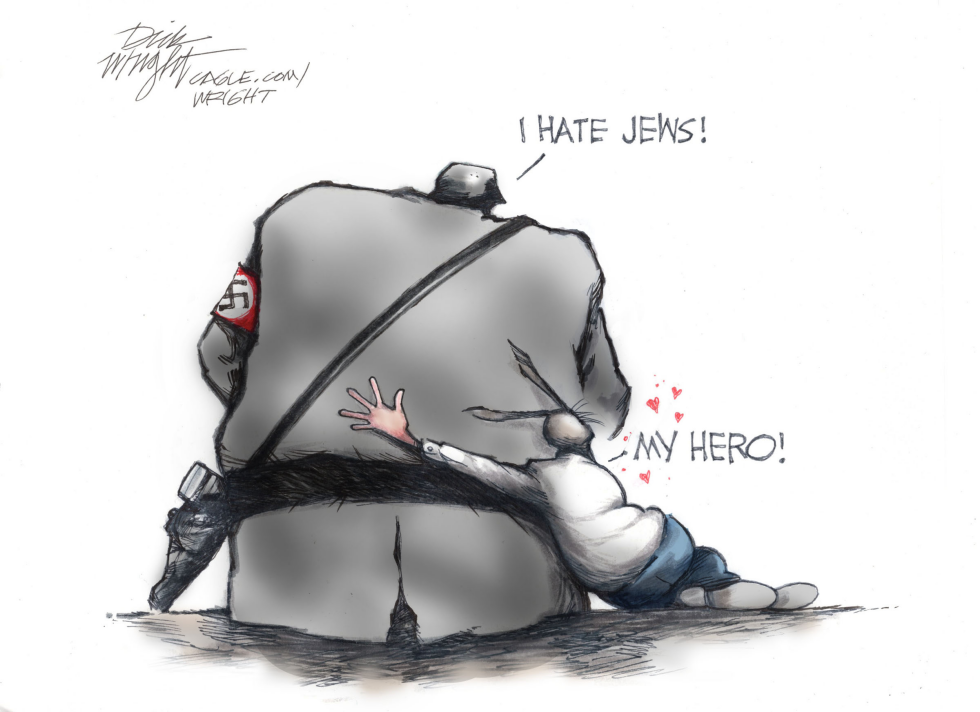
A political cartoon from July 2026 depicts the Democratic Party symbol adoring a Nazi soldier who declares hatred for Jews. The image responds to ongoing accusations of antisemitism within progressive circles and Democratic leadership. The editorial position frames Democrats as willing to embrace or overlook explicit Jew hatred for political gain.
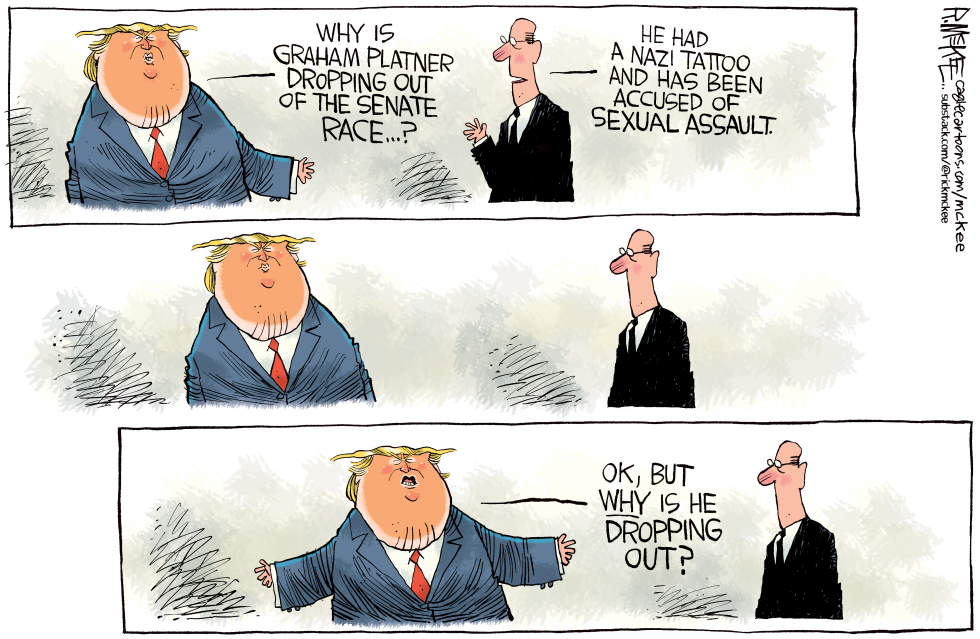
On July 10 2026 Rick McKee depicts Donald Trump questioning an aide about Graham Platner dropping out of a Senate race. The aide cites a Nazi tattoo and sexual assault accusation as reasons. Trump responds by asking again why the candidate is leaving the race. The exchange highlights the former president's focus on the withdrawal itself rather than the underlying controversies. Publication occurs during the 2026 election cycle when candidate viability and scandal impacts remain central topics in Senate contests.
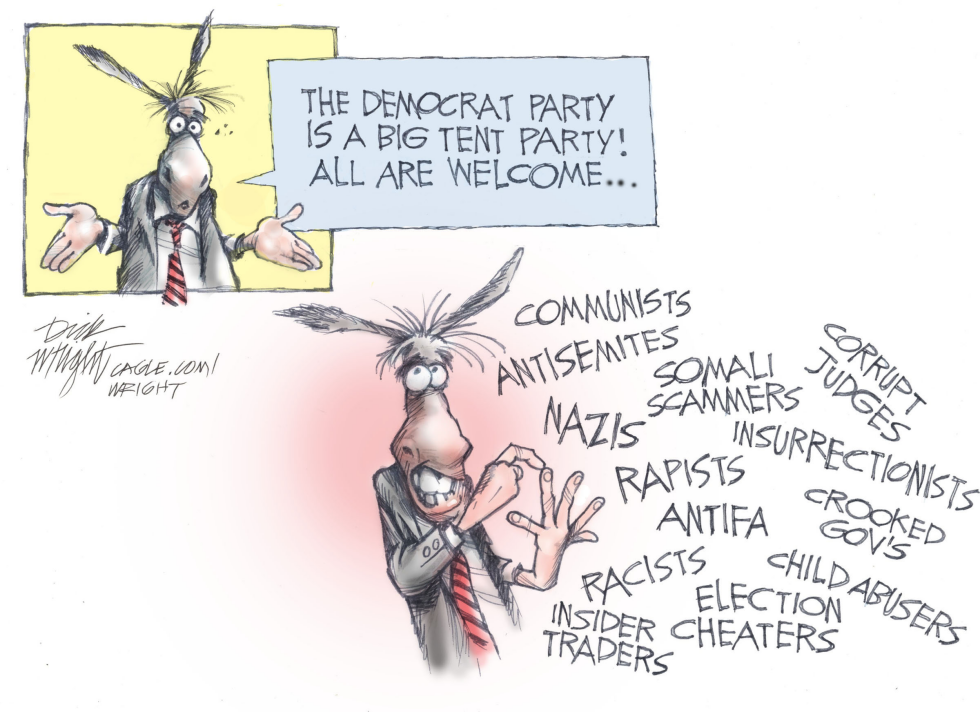
A July 2026 cartoon by Dick Wright depicts the Democrat Party's big tent claim through an inset donkey figure. The main character, also a donkey in a suit, gestures amid a cloud of labels naming groups such as communists, antisemites, Nazis, rapists, Antifa, racists, and election cheaters. The image critiques the party's inclusivity rhetoric by associating it with these categories. Publication occurs amid ongoing partisan debates over party platforms and voter bases.