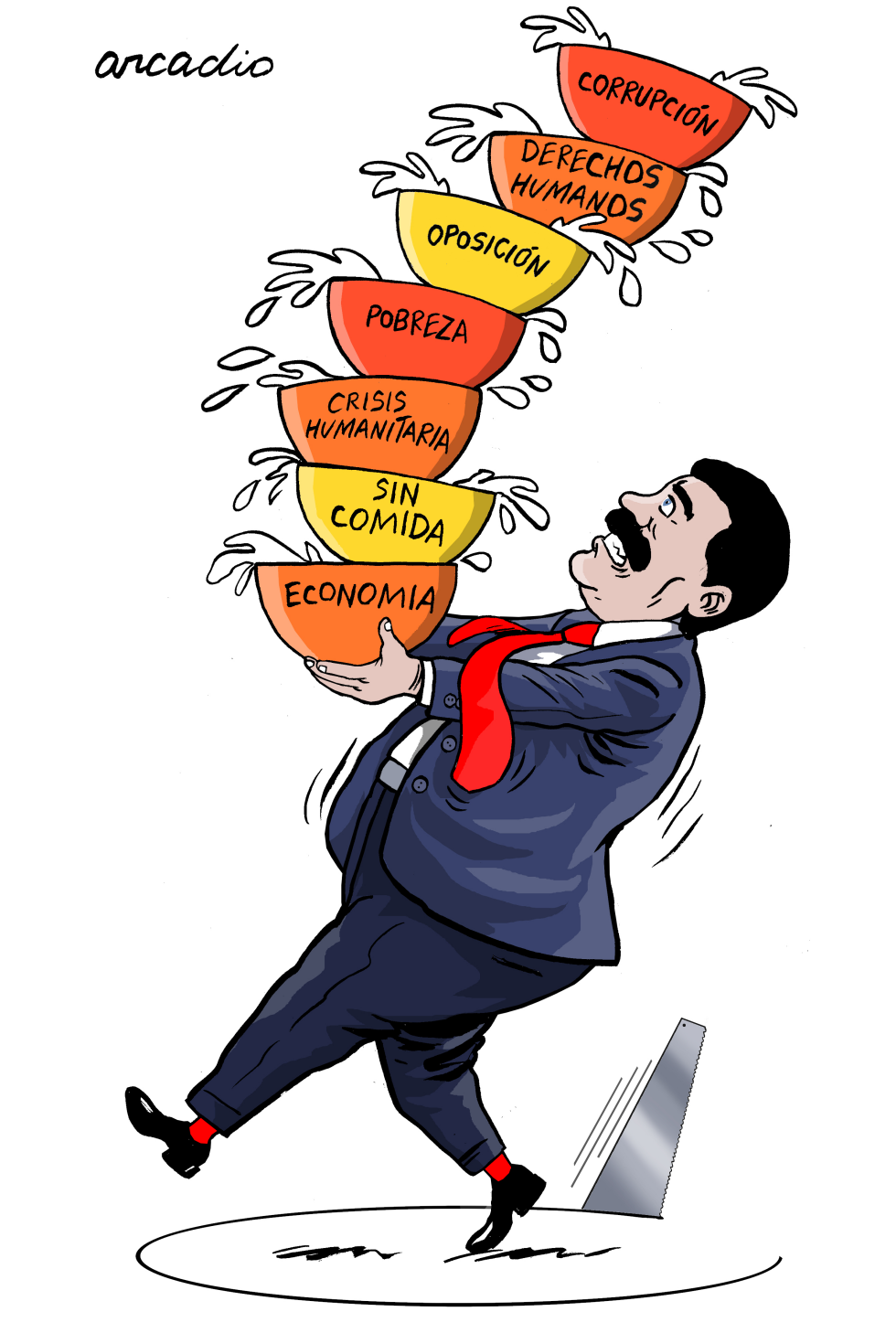
The cartoon shows a mustached man in a blue suit and red tie, balancing a teetering stack of bowls in shades of red, orange, and yellow, each labeled with words like corrupcion, derechos humanos, oposicion, pobreza, crisis humanitaria, sin comida, and economia. Liquid spills from the bowls as he leans forward, one foot raised toward a sharp saw blade on the ground. The image captures a sense of imbalance and impending fall, with the artist's signature 'arcadio' at the top. Tags like Maduro, dictadura, ecomomia, Latino America, and Venezuela frame the visible elements of stacked troubles. No hidden meanings jump out; it's straightforward visual metaphor for overload. Dry humor lies in the absurdity of the juggle.
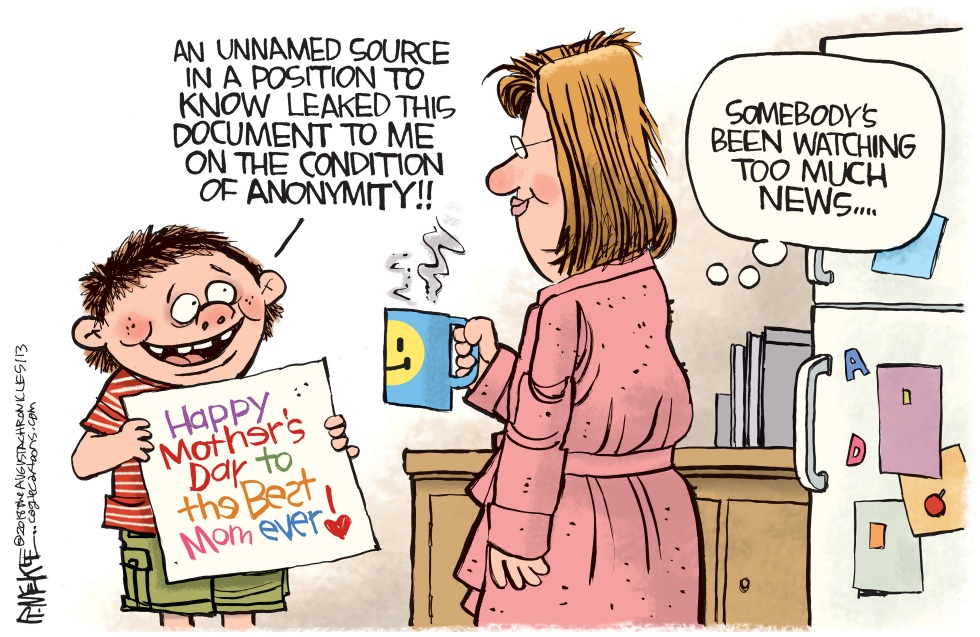
Rick McKee's Mother's Day cartoon shows a young boy in a striped shirt holding a handmade sign that reads 'Happy Mother's Day to the Best Mom Ever' in rainbow letters with a heart. He declares it a leaked document from an unnamed source on condition of anonymity, while the mom in a pink robe holds a blue mug with a yellow smiley face and remarks that somebody's been watching too much news. The scene unfolds in a kitchen with a fridge, books, and magnets visible. This political satire captures media influence on children, blending family holiday with journalistic tropes like anonymous sources and leaks. The dry humor underscores how news permeates everyday life.
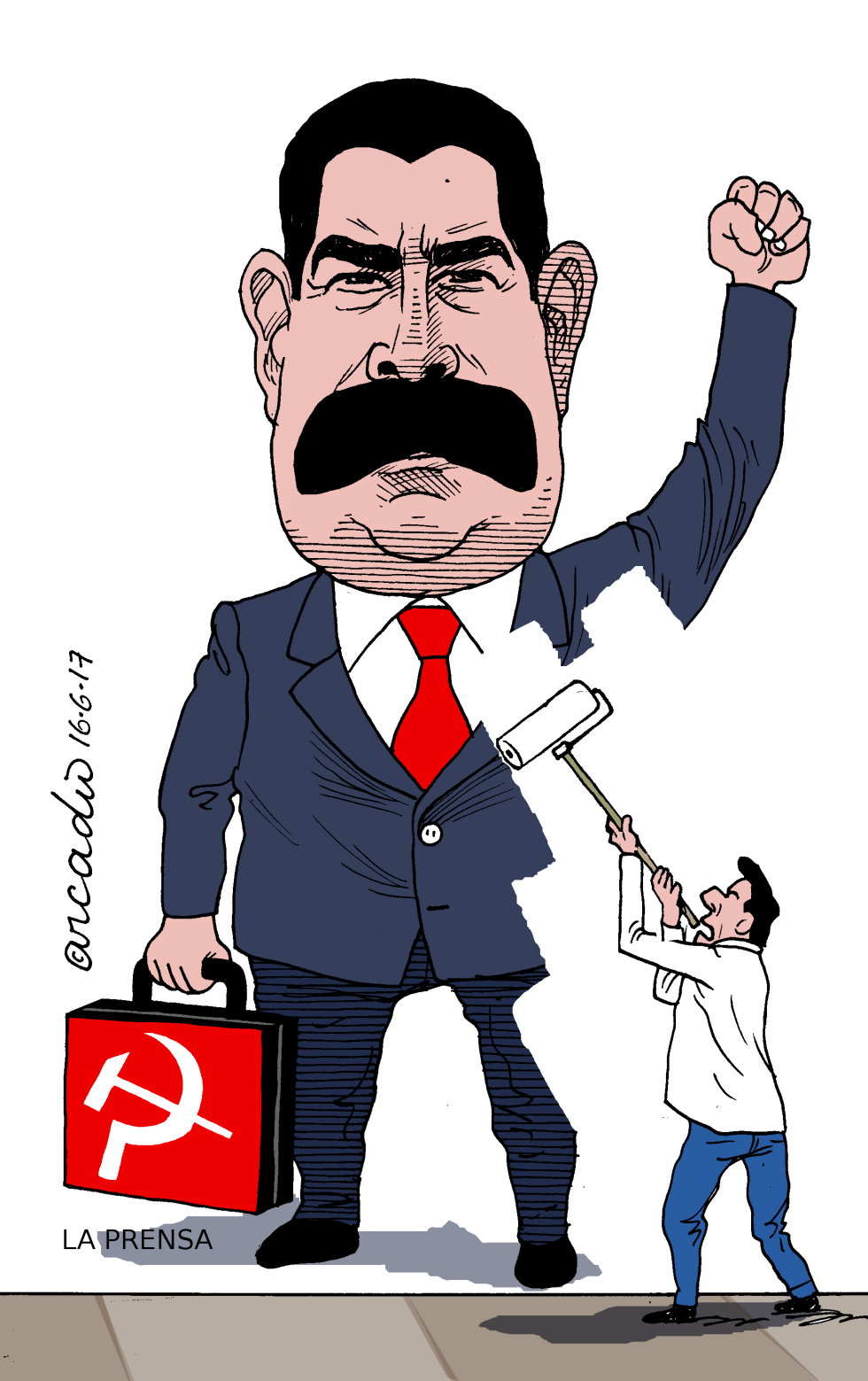
Esquivel's cartoon pits giant Nicolás Maduro, communist briefcase in hand, against a tiny La Prensa painter erasing his leg. Satire highlights Venezuela dictatorship, with dry humor in the authoritarian's fading presence. Tags like South America politics underscore the press's role in diminishing gobierno figures.
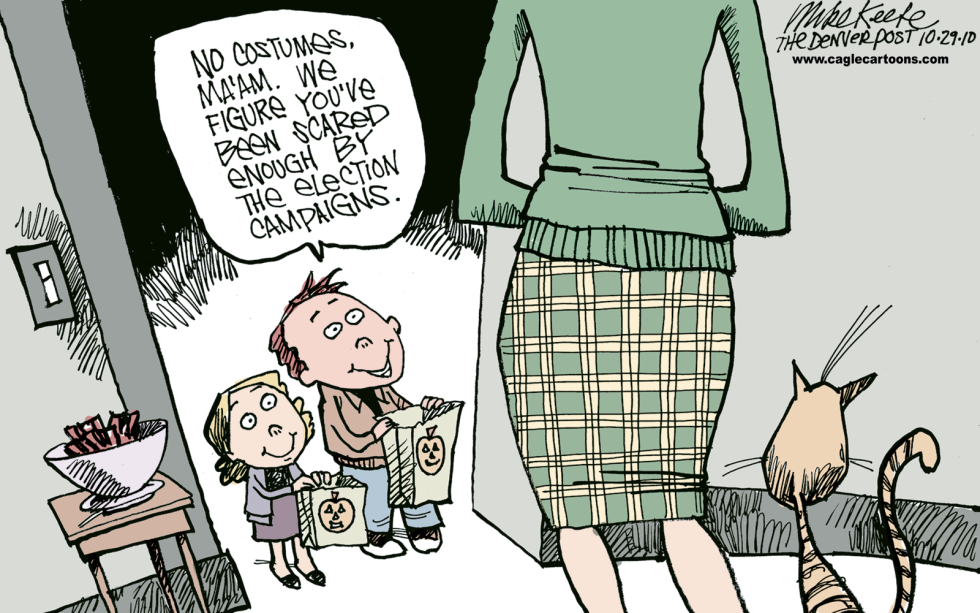
On October 28, 2010, a Denver Post cartoon by Mike Keefe depicts two children at a doorstep during Halloween. They carry pumpkin bags and tell the woman answering the door that no costumes are needed because election campaigns have already scared her enough. A bowl of candy sits nearby and a cat watches from the floor. The image captures the mood of the 2010 midterm elections marked by heavy negative advertising from both parties and the rising Tea Party movement. The cartoon uses the holiday setting to highlight voter fatigue with attack ads.
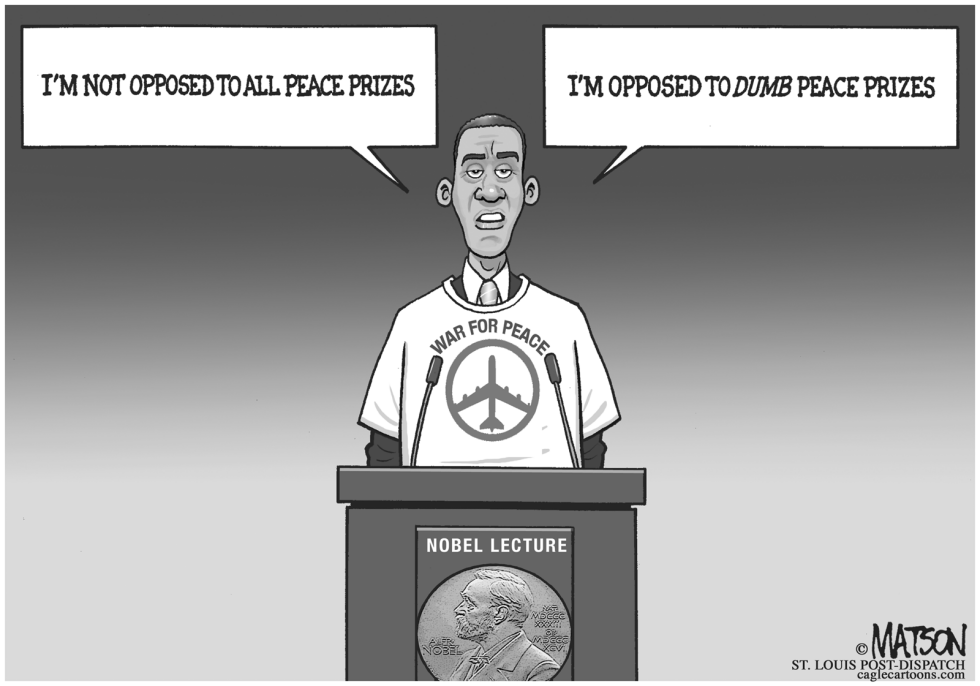
This Obama Nobel Peace Prize cartoon from 2009 captures a moment of political satire on Obama peace prize, with the central figure standing at a podium labeled Nobel lecture, delivering lines in speech bubbles: 'I'm not opposed to all peace prizes' and 'I'm opposed to dumb peace prizes.' The figure wears a t-shirt emblazoned with 'War for Peace' and a modified peace symbol featuring an airplane, emphasizing the irony. Created by R.J. Matson for the St. Louis Post-Dispatch, this piece joins the ranks of Cagle Cartoons Obama satire, highlighting the juxtaposition in the dumb peace prizes Obama speech bubble. The grayscale illustration keeps it simple, focusing on the podium with a medal-like emblem and the artist's signature in the corner, making it a classic example of 2009 Obama Nobel acceptance cartoon.
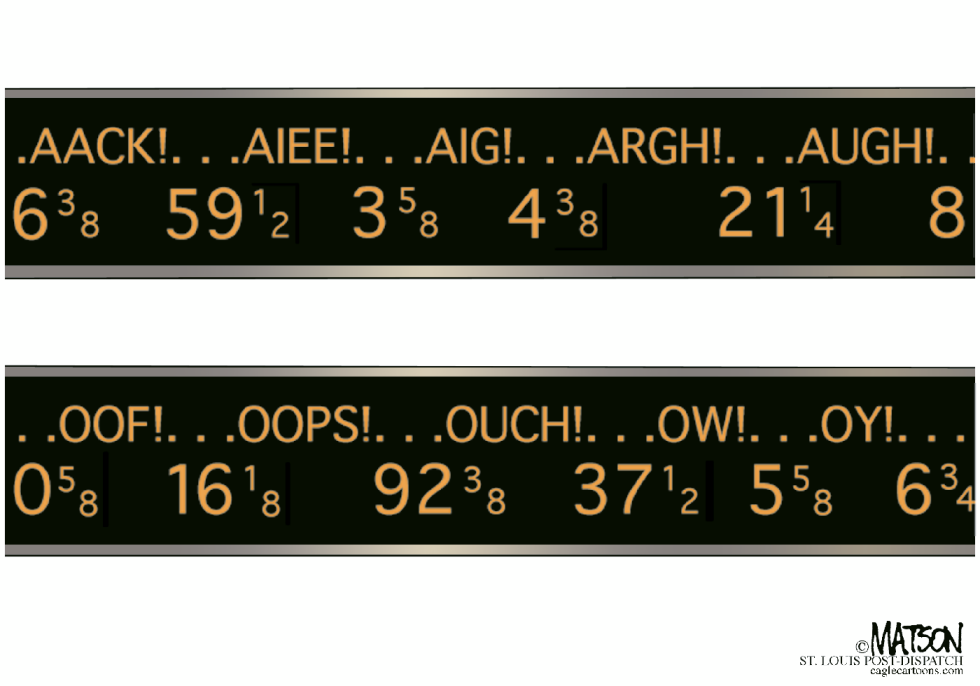
On September 16 2008 the financial markets faced severe turmoil following the Lehman Brothers collapse and AIG intervention. R.J. Matson's cartoon depicts two stock tickers filled with exclamations such as AACK AIEEE AIG ARGH and OOF OOPS OUCH. Fractional numbers appear in decline across both displays. The visual directly references the rapid market drops and investor panic of that week. The St. Louis Post-Dispatch published the piece through Cagle Cartoons.