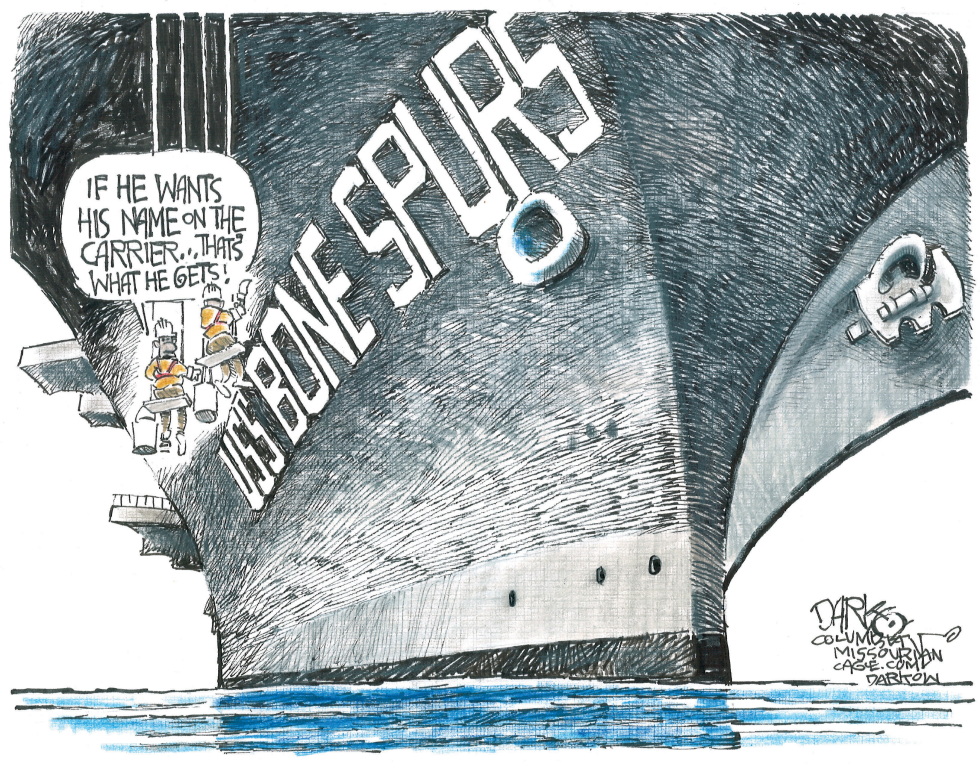
A proposal to rename a U.S. aircraft carrier after Donald Trump has drawn attention to his Vietnam-era draft deferments for bone spurs. The move highlights ongoing debate over military service records of political figures. The piece portrays the renaming as a pointed reminder of those deferments.
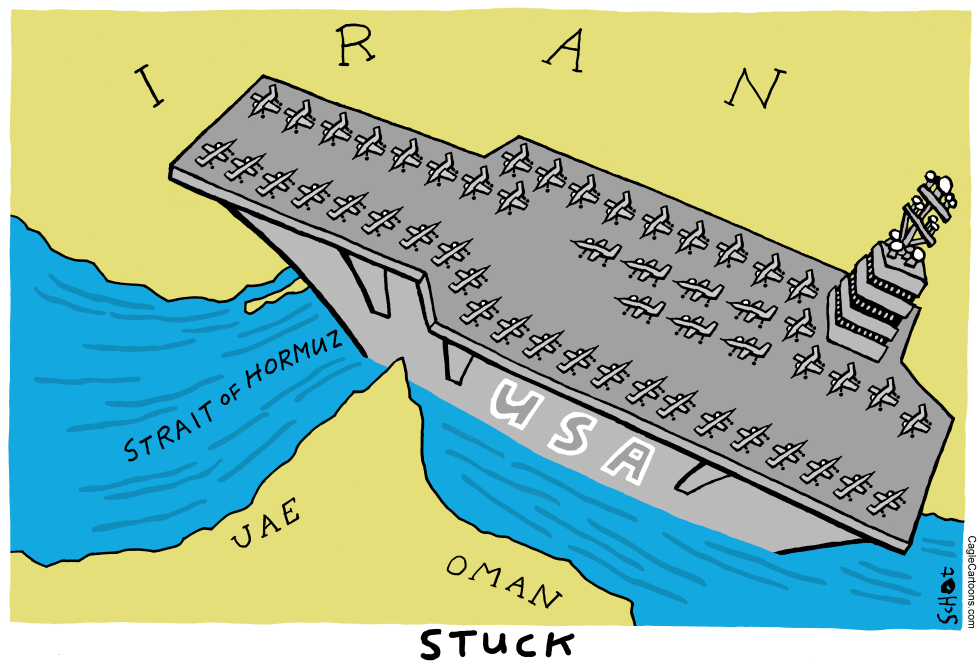
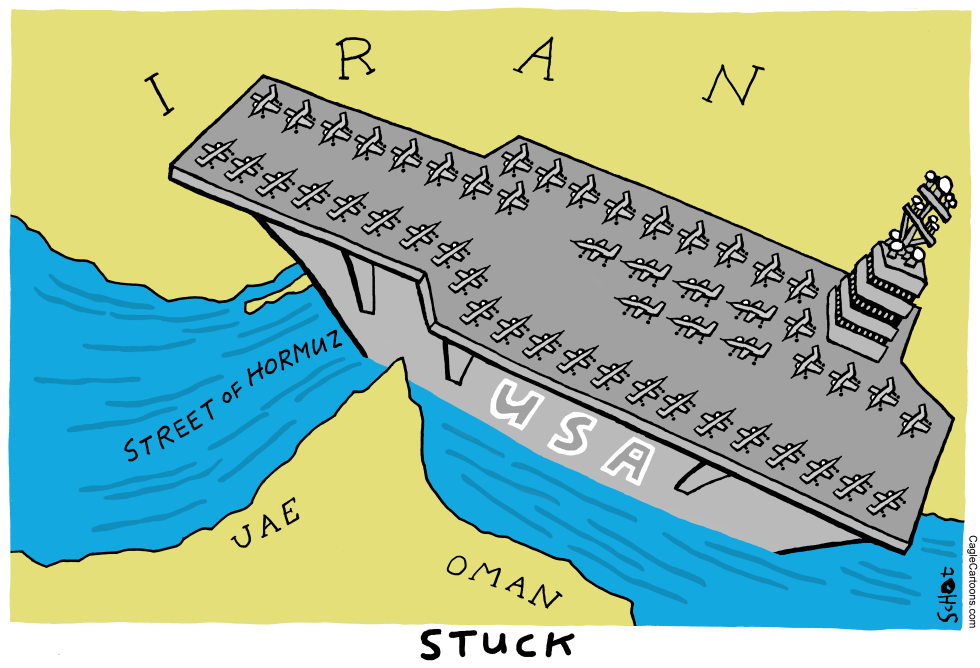
A political cartoon depicts a large US aircraft carrier marked USA jammed in the Strait of Hormuz between land labeled Iran, UAE and Oman. The vessel carries dozens of fighter jets on its deck. The word STUCK appears prominently below the scene. The image responds to persistent concerns over freedom of navigation in the vital oil shipping route. Iran has long threatened to close the strait during conflicts. The cartoon uses the visual of a grounded carrier to illustrate potential US military vulnerability in the narrow passage.
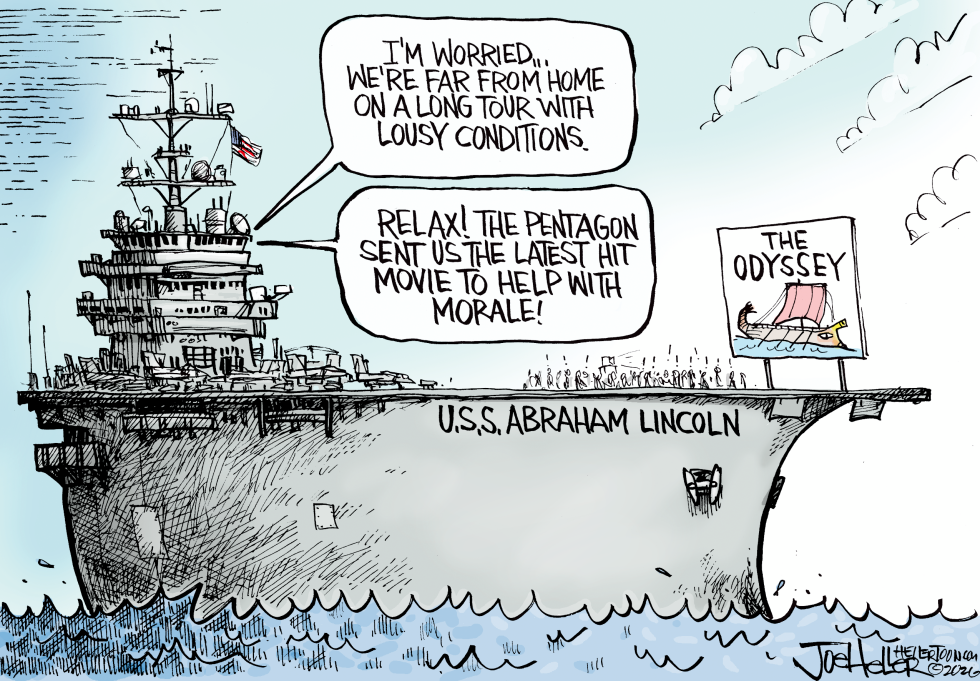
Sailors aboard the USS Abraham Lincoln have raised concerns about extended deployments far from home and substandard living conditions at sea. The Pentagon's response involves screening the film The Odyssey to improve morale among the crew. This approach highlights ongoing challenges in maintaining readiness during prolonged naval operations. The editorial takes the position that such gestures fall short of addressing core issues like crew welfare and rotation schedules.
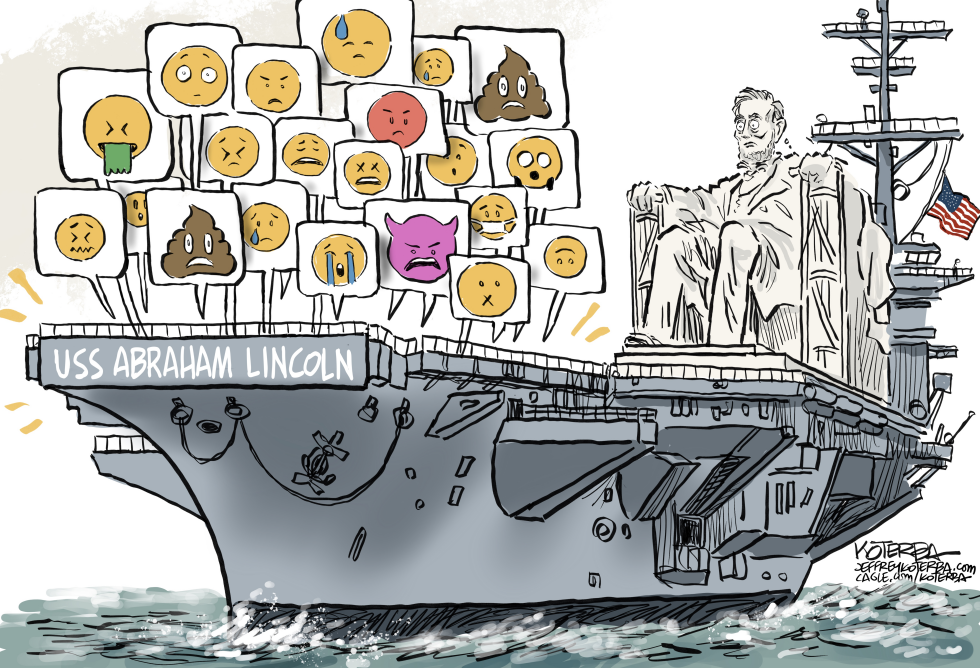
Public reaction to US naval deployments has intensified through social media platforms in recent weeks. Online users have flooded discussions with critical emojis targeting military assets like the USS Abraham Lincoln. The piece portrays this digital deluge as an overwhelming force on longstanding symbols of American leadership and naval power.
Tensions persist in the Strait of Hormuz where US naval forces maintain a presence amid ongoing disputes with Iran over shipping access and regional influence. The narrow waterway remains a critical chokepoint for global oil transit between the Persian Gulf and open seas. No single triggering incident stands out in the days before July 22 2026 yet the strategic standoff continues. The cartoon frames the US carrier as physically immobilized by the surrounding geography and neighboring states.
President Trump has asserted that the United States is prevailing in its confrontation with Iran even as naval assets suffer losses. The claim comes amid reports of escalating maritime engagements in the region. The development raises questions about the direction and cost of the conflict. The editorial takes the position that the optimistic assessment clashes with visible setbacks and the broader risks of deeper involvement.
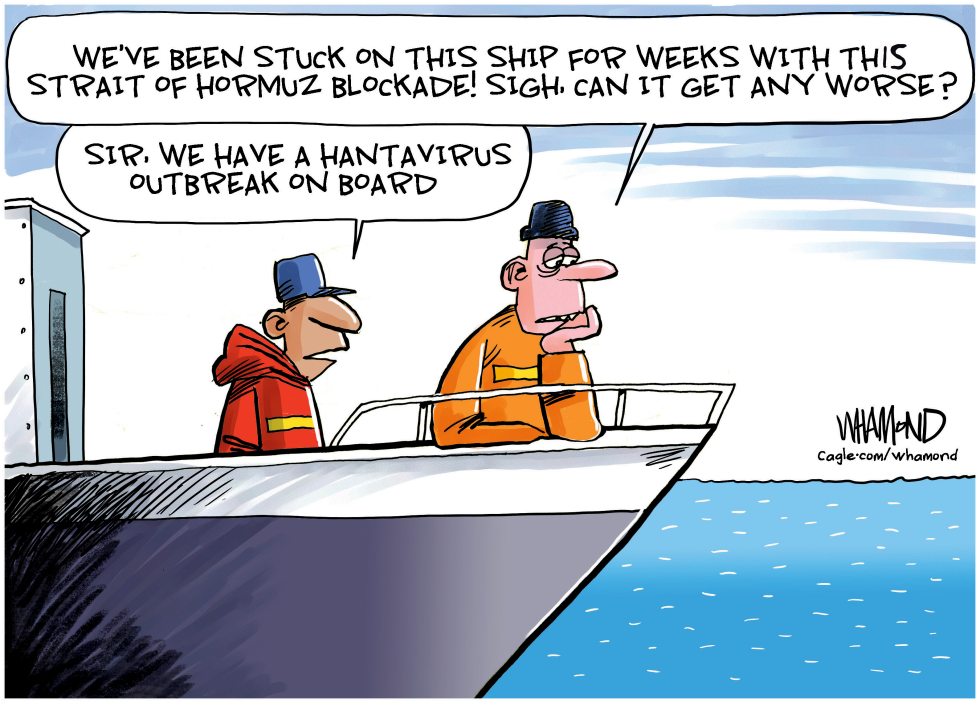
The cartoon depicts two sailors aboard a ship trapped in the Strait of Hormuz due to a naval blockade. One laments the weeks-long delay and wonders if conditions can worsen. The other reports a hantavirus outbreak on board. The image responds to ongoing tensions involving Iran and disruptions to global oil routes. As of the May 2026 publication date, the blockade has halted tanker traffic and strained energy markets. The added health crisis underscores the compounding risks for crews and supply chains. The visual ties geopolitical conflict directly to immediate human and economic consequences.
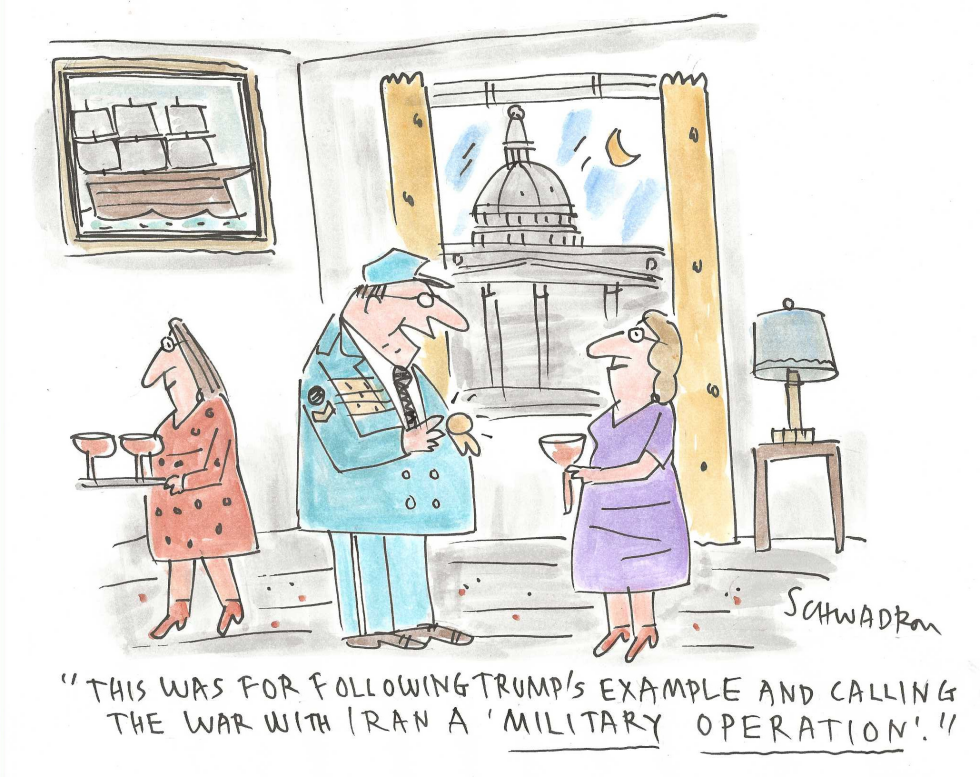
Harley Schwadron's cartoon depicts a cocktail party scene where a military officer toasts with two women, celebrating the decision to follow Trump's example by calling the war with Iran a 'military operation.' The room features a framed ship painting, a window view of the Capitol dome under a crescent moon, and a lamp on a table. Tags such as war, Iran, military, Trump, shipping, and oil underscore the satirical jab at semantic dodges in foreign policy. The dry humor highlights how leaders reframe conflicts to soften public perception, with the officer's uniform and medals emphasizing official endorsement. This piece captures the absurdity in political language, set against a backdrop of potential economic fallout like inflation and gas prices, though peace negotiations remain distant.