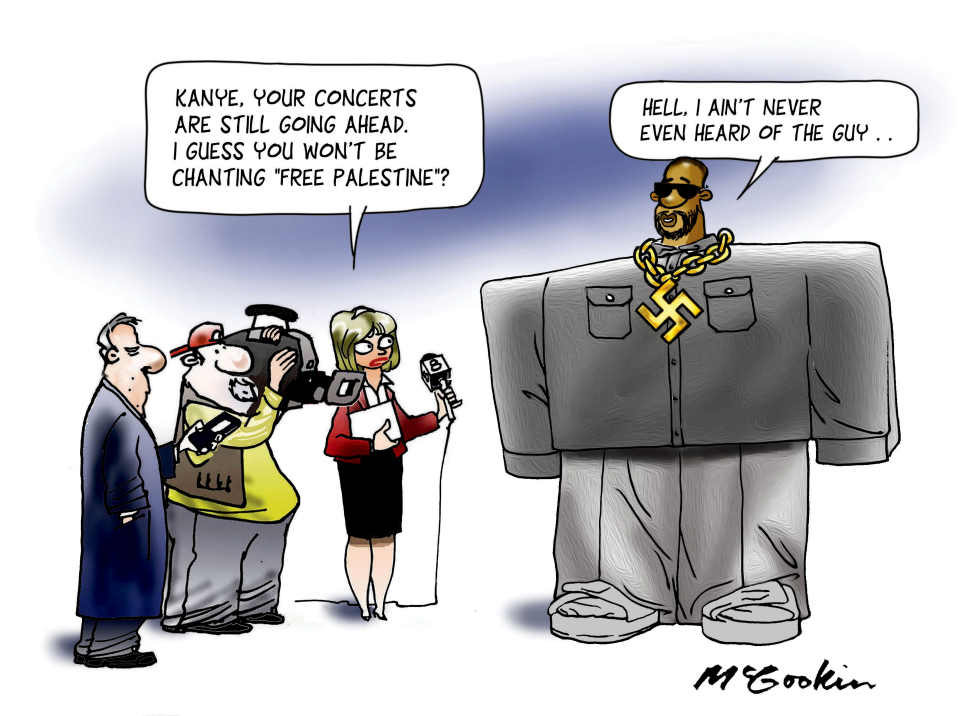
Reports indicate Macklemore faced professional setbacks tied to his expressions of support for Palestinian causes, while Kanye West maintained concert bookings and public appearances despite a documented history of antisemitic remarks. The disparity highlights selective enforcement within entertainment industry and media circles. The piece argues that such inconsistency undermines claims of principled accountability and reveals selective outrage based on the individual's profile rather than the content of the statements.
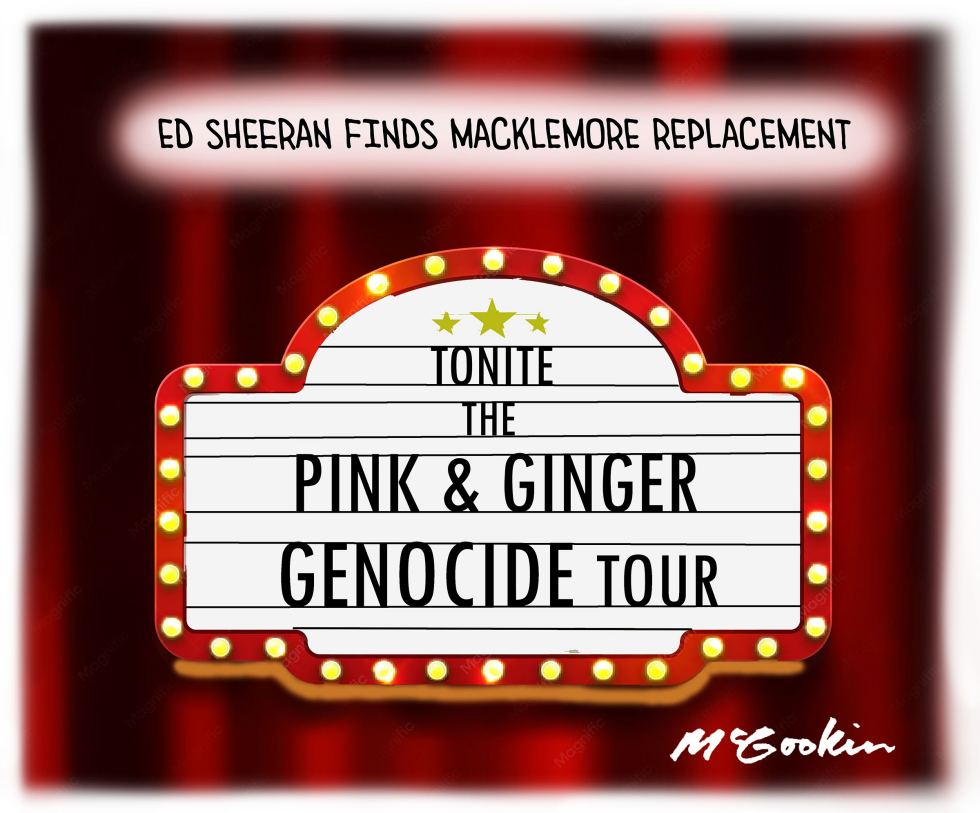
Ed Sheeran has removed Macklemore from his tour lineup. The cartoon frames the replacement as the Pink & Ginger Genocide Tour. The piece criticizes the decision as prioritizing commercial interests over artists who speak out on Gaza.
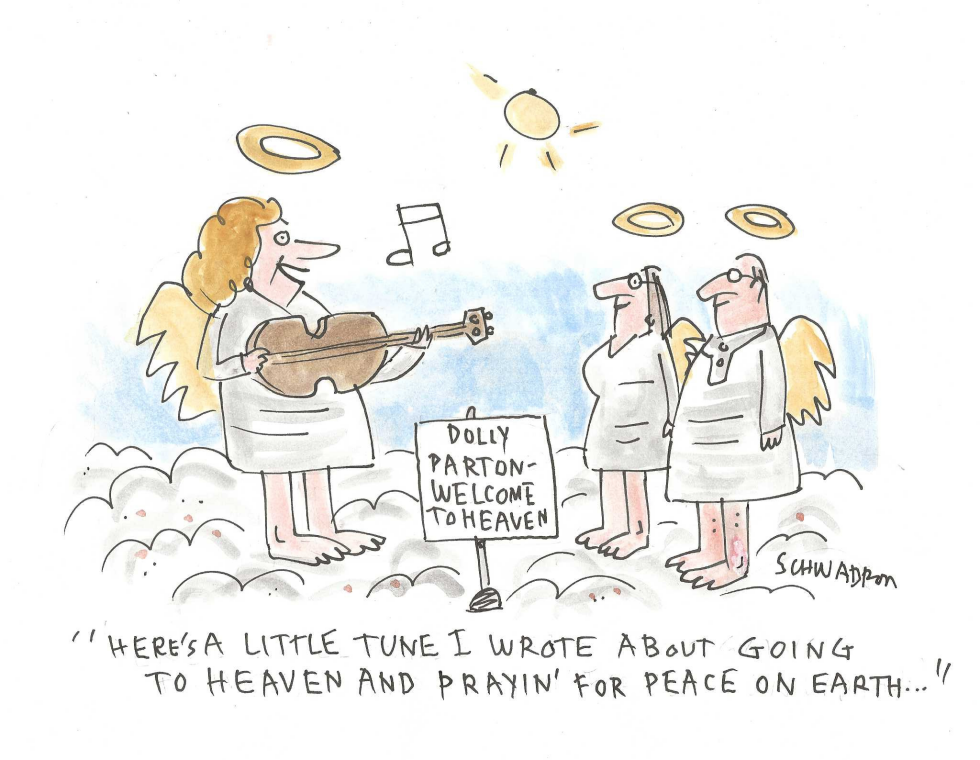
Dolly Parton, the iconic country singer and philanthropist, died in 2026. Her passing prompted widespread tributes highlighting her music, generosity, and advocacy for peace. The cartoon depicts her arrival in heaven as an angel offering a song that links heavenly welcome with prayers for peace on earth, celebrating her life and message.
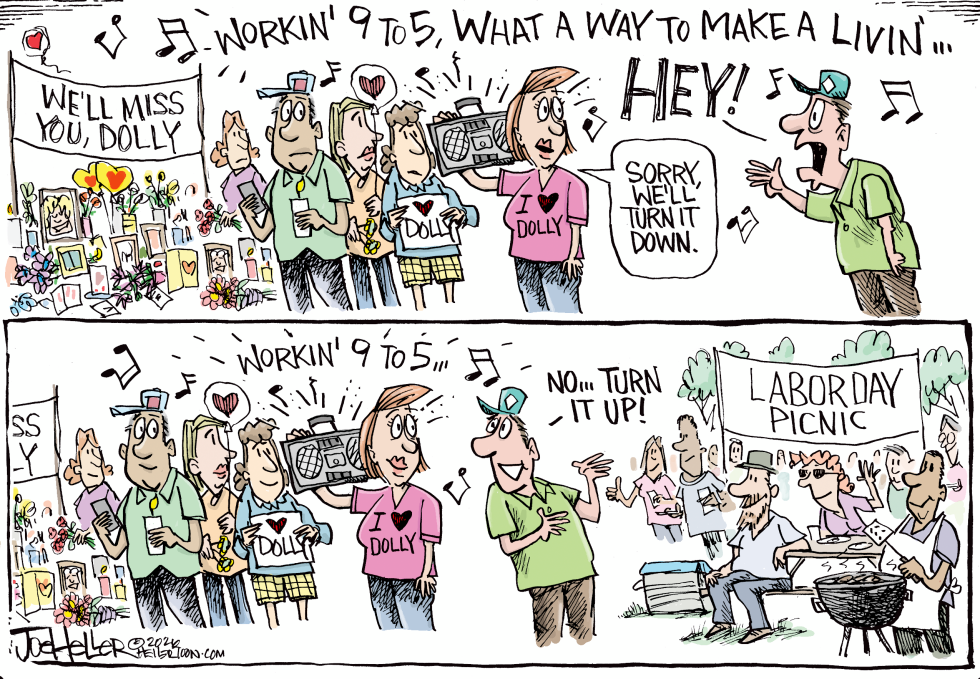
Dolly Parton, the country music icon known for hits like 9 to 5, is remembered at a 2026 Labor Day picnic. The cartoon captures the shift from quiet mourning with flowers and signs to a lively celebration where her music is played louder. It reflects the broad affection for Parton across generations and the way her work resonates at community gatherings. The piece positions her legacy as one that brings people together rather than divides them.
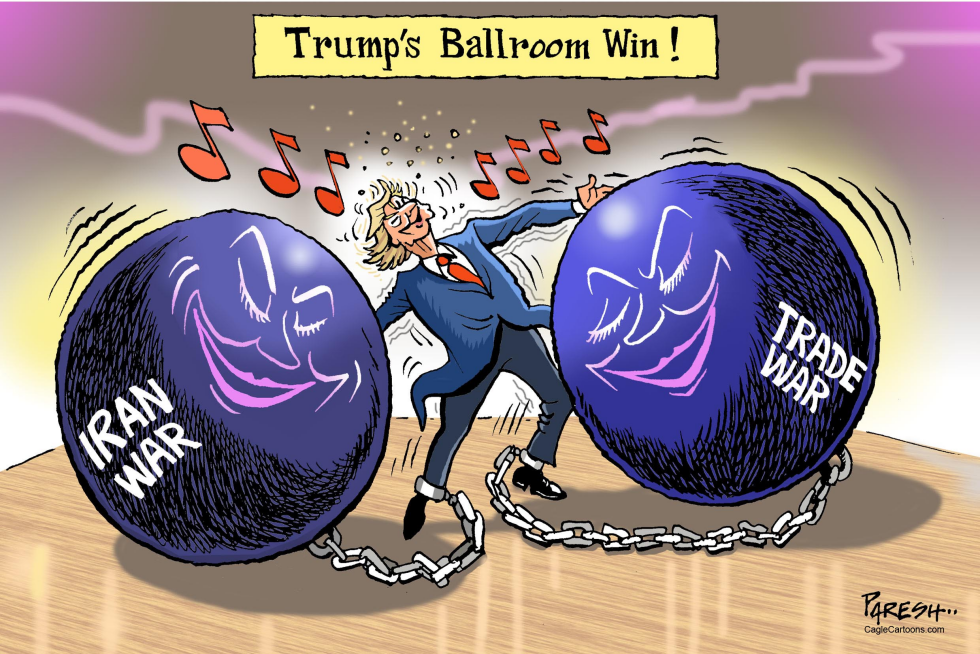
A political cartoon published September 1, 2026, portrays Donald Trump dancing energetically in a ballroom while his ankles are chained to two large balls labeled Iran War and Trade War. The image suggests the president is weighed down by simultaneous foreign policy and economic conflicts. Music notes and a banner reading Trump's Ballroom Win add ironic flair to the scene. The cartoon responds to ongoing tensions involving U.S. relations with Iran and persistent trade disputes. It visually argues that these issues continue to constrain administration actions despite any claimed victories.
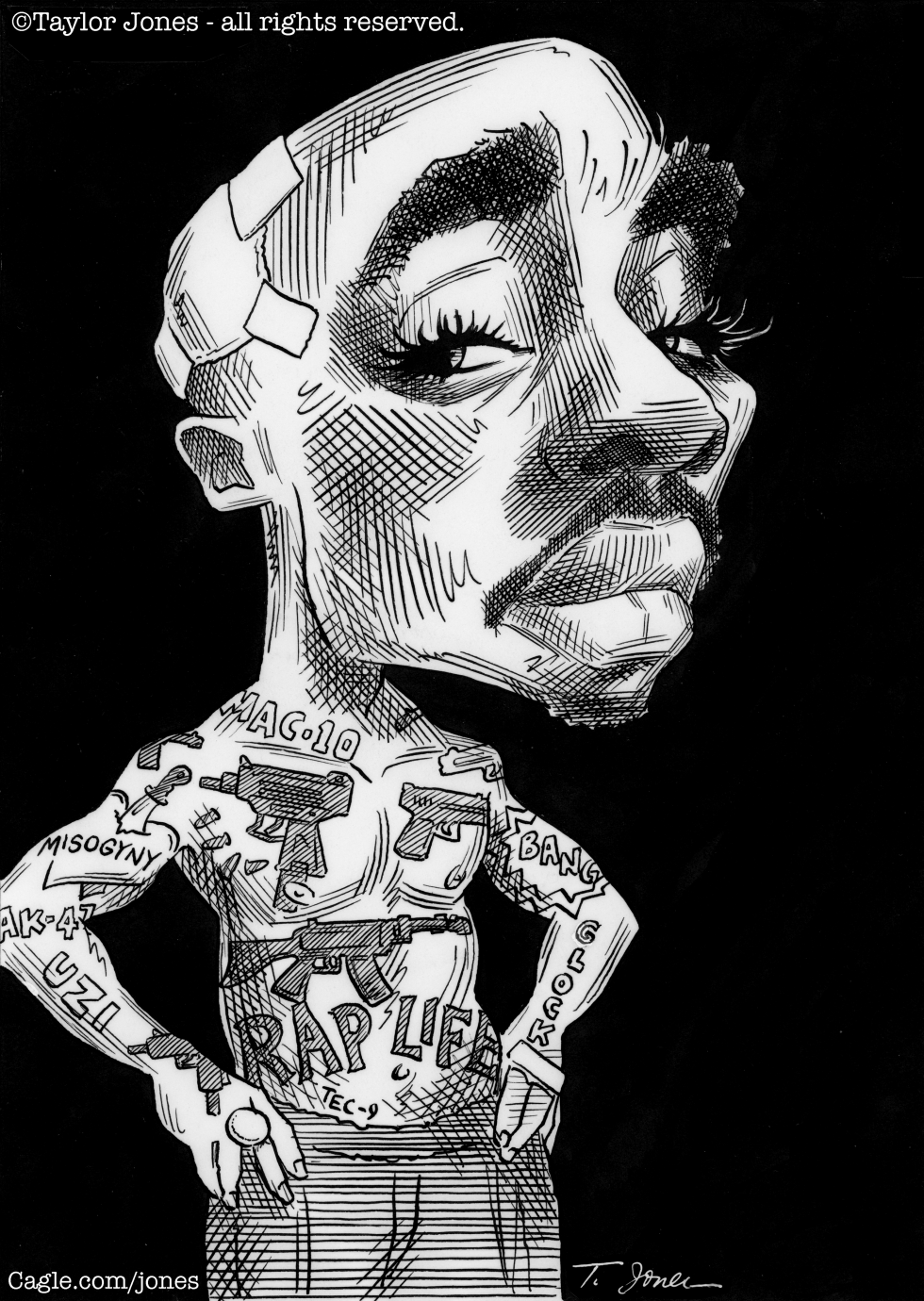
The caricature of Tupac Shakur covered in gun tattoos and the word misogyny responds to the persistent association of rap with firearm imagery and anti-woman themes. It underscores how such elements in hip-hop culture continue to shape public perceptions of the genre and its icons long after Shakur's death. The piece takes the position that these symbols remain central to the rapper's enduring image and the broader problems they represent.
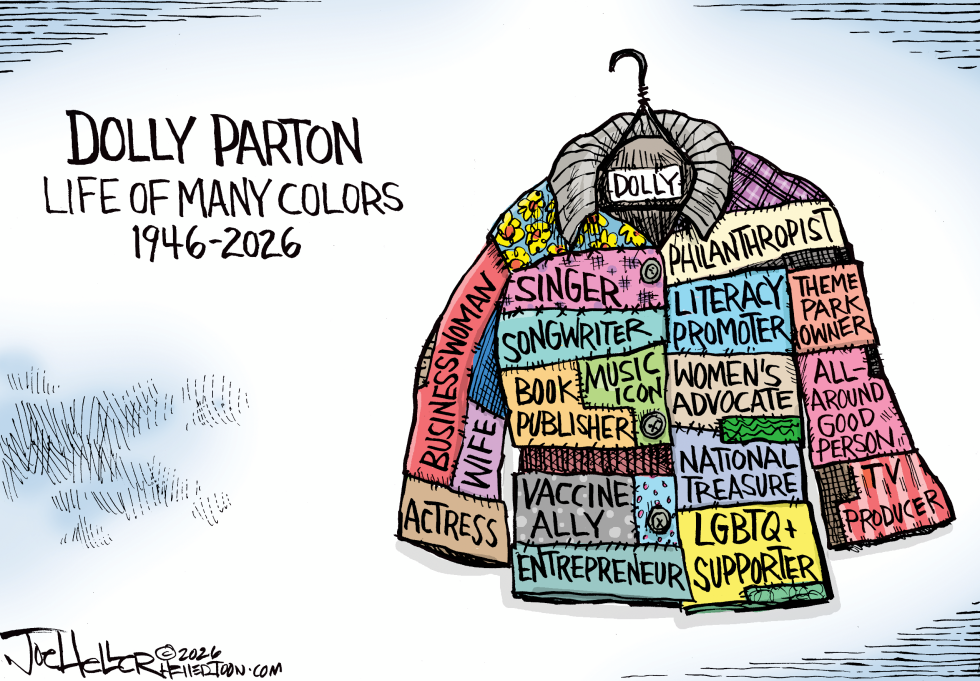
Dolly Parton died in 2026 at age 80. The country music icon built a career spanning singing, songwriting, acting, business and philanthropy while advocating for literacy, women's issues and LGBTQ causes. The tribute highlights her enduring status as a national treasure.
A luminous guitar floats amid stars above a cursive tribute to Polly. The image marks a musical remembrance without tying to any specific recent news event.
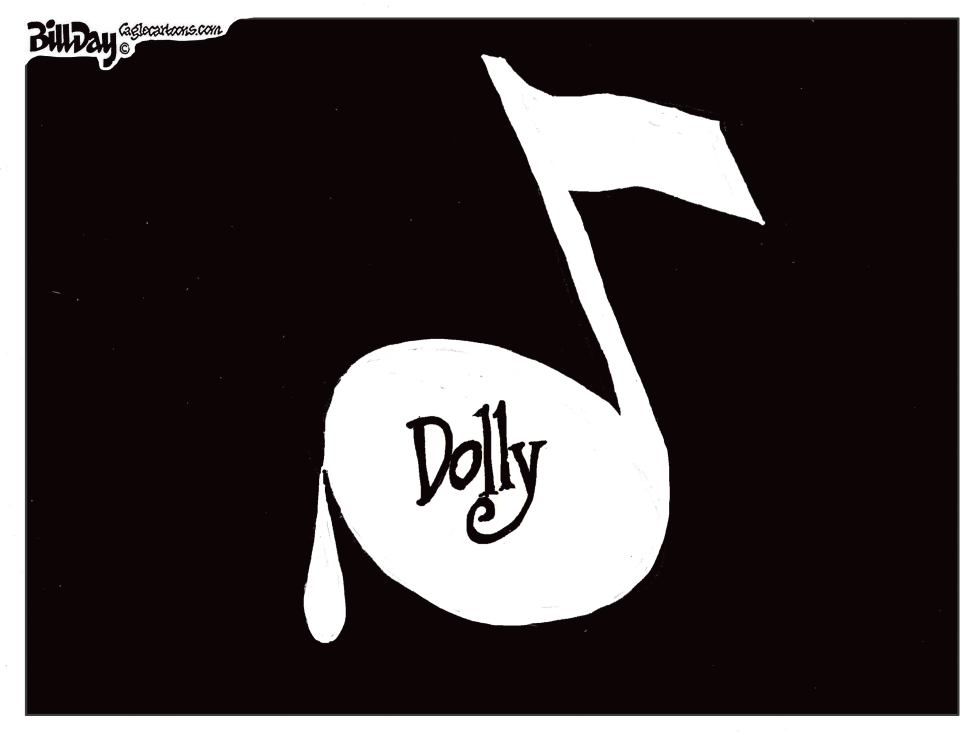
A musical figure named Dolly receives public recognition through a minimalist graphic tribute. The image responds to the ongoing role of music icons in popular culture by marking their passing or legacy with a single symbolic note and tear. The editorial position emphasizes quiet respect over elaborate commentary.
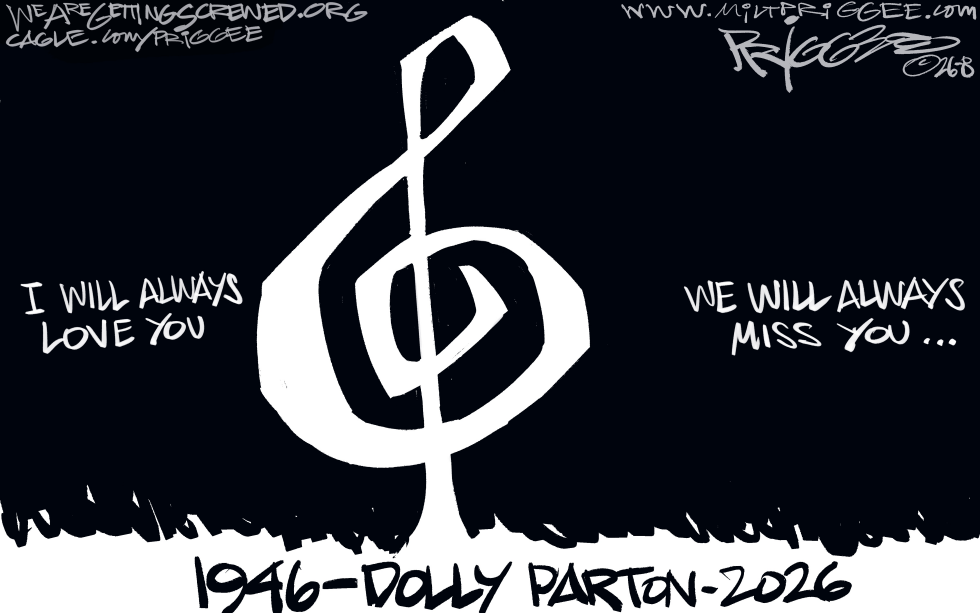
Dolly Parton passed away in 2026 at age 80. Fans and the music industry mourn the loss of a country music icon whose songs reached global audiences. The tribute adapts her signature ballad to mark the occasion. The piece frames her death as the end of an era in American popular music.
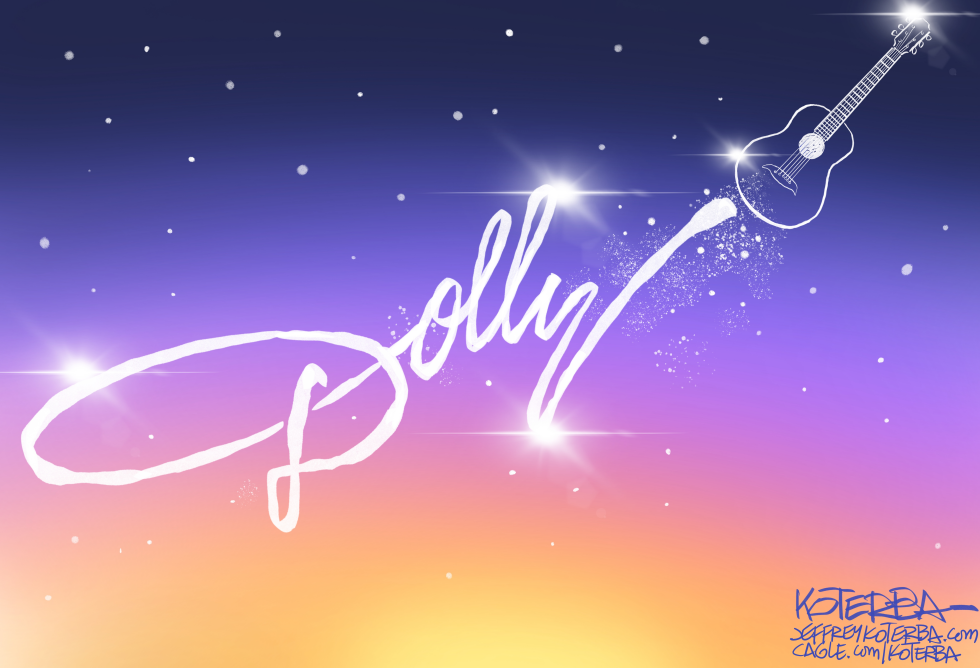
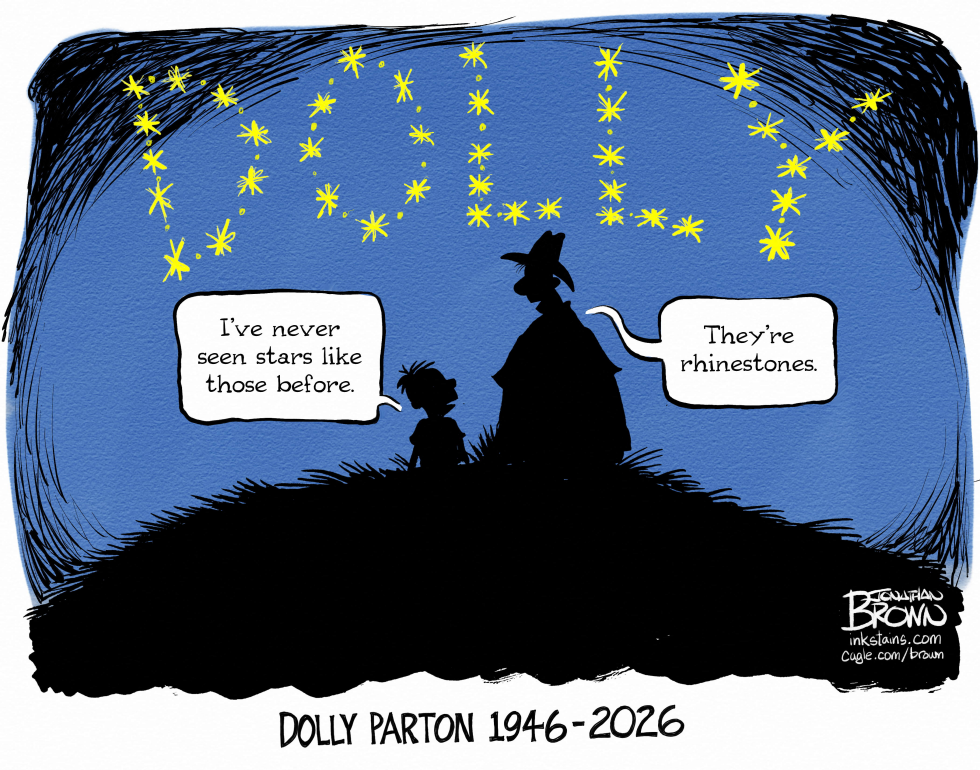
Dolly Parton passed away in 2026 at age 80. Fans and the public mourned the loss of the country music legend known for her rhinestone outfits and charitable work. The tribute highlights her enduring sparkle and cultural impact through a celestial memorial image. The piece positions her legacy as one of warmth, generosity, and unmistakable glamour that continues to shine.
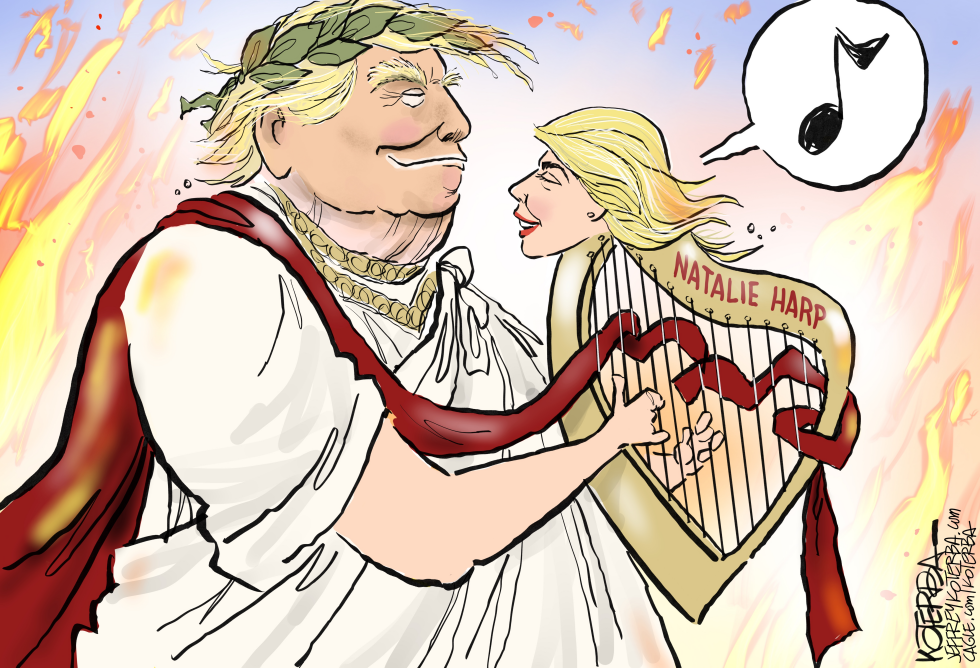
Donald Trump and aide Natalie Harp are shown in classical Roman dress amid spreading flames. The image draws on the Nero legend of fiddling while Rome burns. It comments on perceived detachment from crises during the current political cycle. The editorial stance highlights concerns over leadership focus and priorities in a turbulent period.
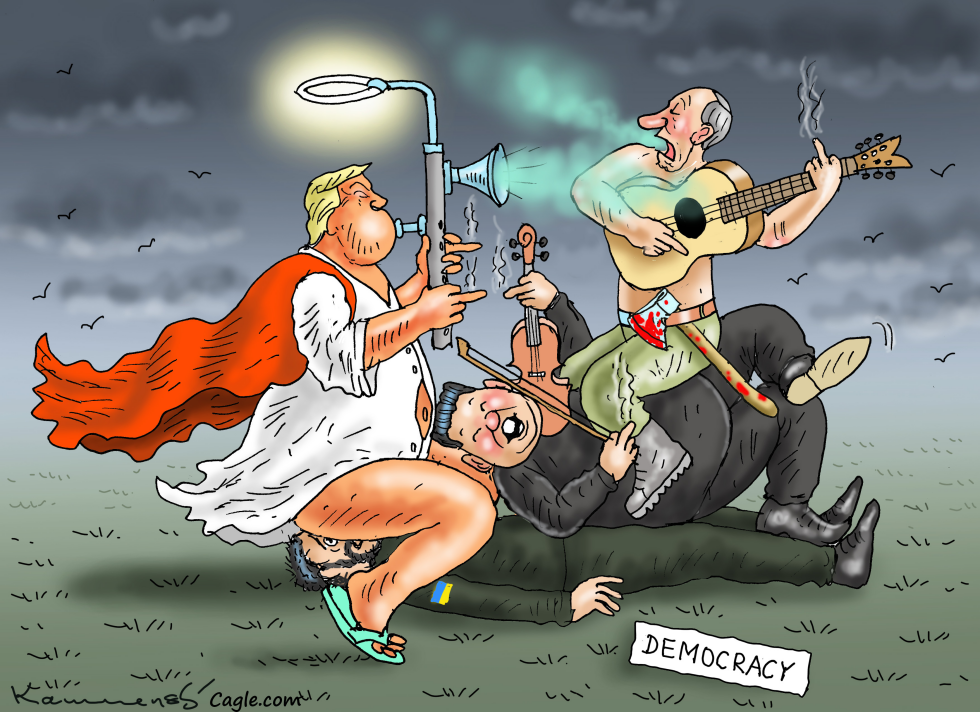
On August 21, 2026, the ongoing Ukraine conflict continued with no resolution in sight as U.S., Russian and Ukrainian leaders remained locked in diplomatic friction. The cartoon responds by depicting the three men as musicians whose finger-pointing and instruments create discord rather than harmony, underscoring the editorial view that personal posturing has overtaken substantive progress toward peace.
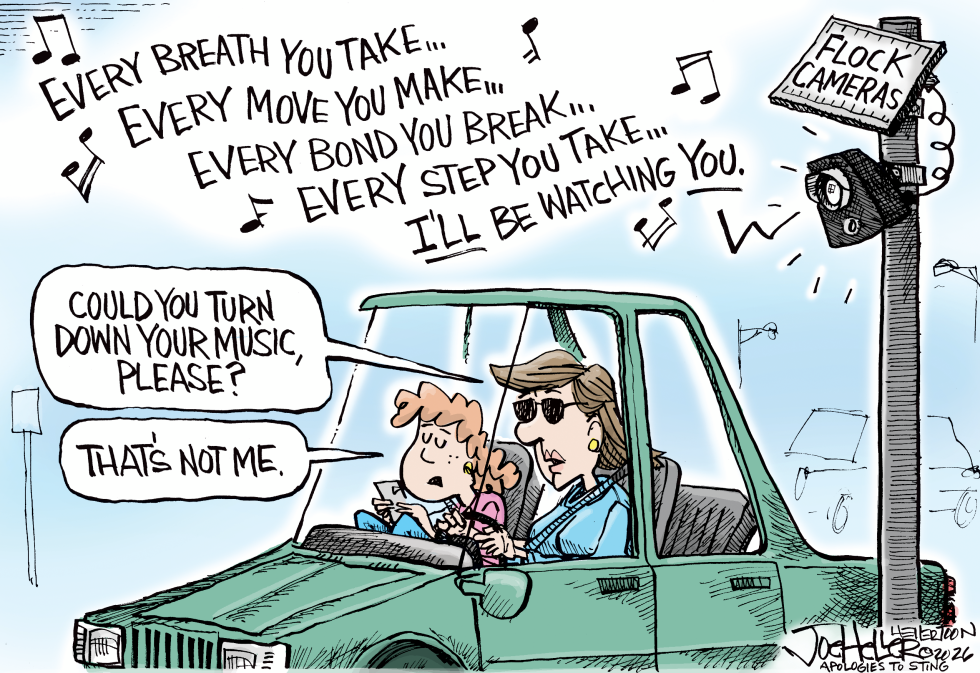
Police departments across the country have expanded use of Flock license-plate readers that capture vehicle movements in real time. The technology raises questions about data retention and warrantless tracking of citizens. The cartoon portrays the cameras as an omnipresent watcher echoing a classic song about surveillance.
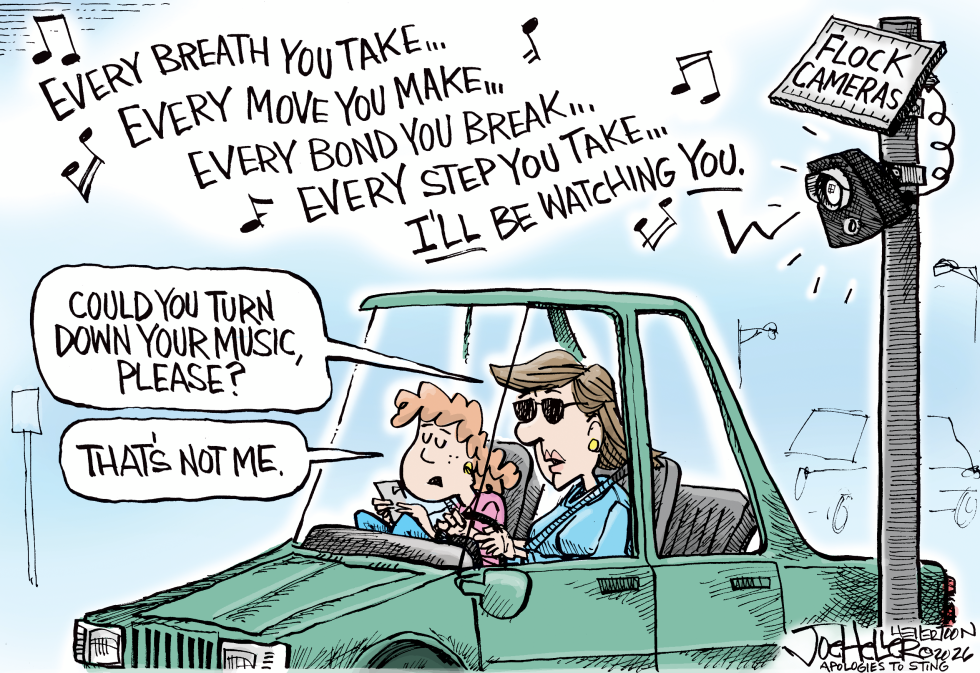
Police departments across the country have expanded use of Flock license plate readers to track vehicles in real time. The technology raises questions about the balance between public safety and individual privacy. The piece argues that such systems create an inescapable watch on everyday movement.