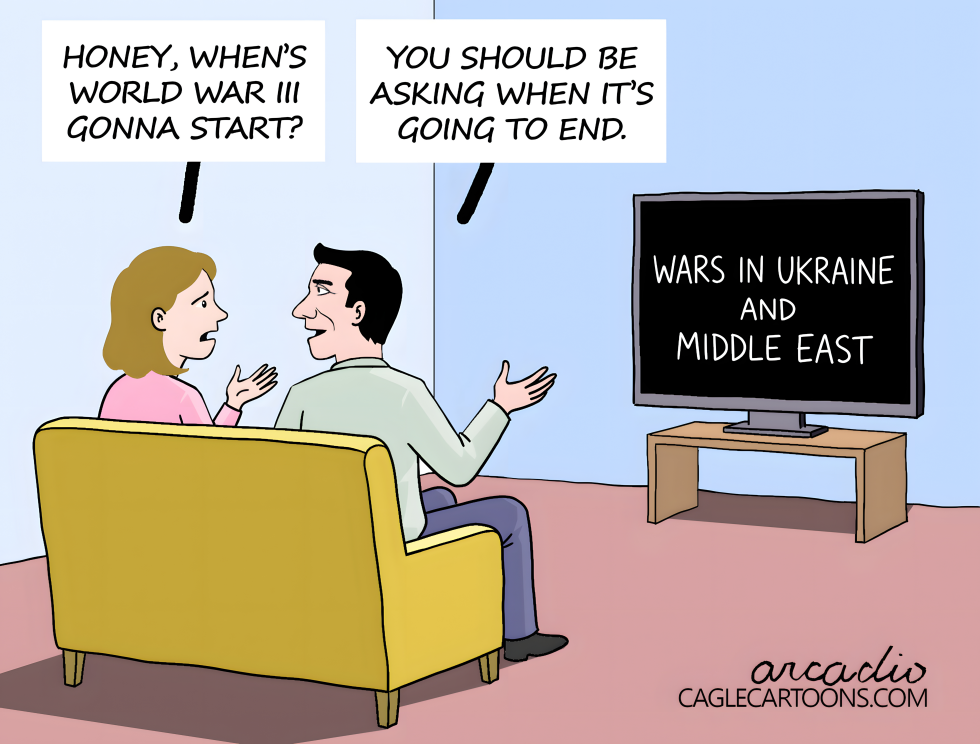
Persistent fighting in Ukraine and the Middle East continues to dominate global attention in September 2026, with no clear end in sight for either theater. The conflicts involve Russia against Ukraine and multiple fronts in the Middle East, raising concerns about wider involvement. Viewers and analysts alike question whether these regional wars risk drawing in additional powers and spiraling into a larger confrontation. The cartoon captures everyday public anxiety over the duration and potential expansion of these wars rather than their origins.
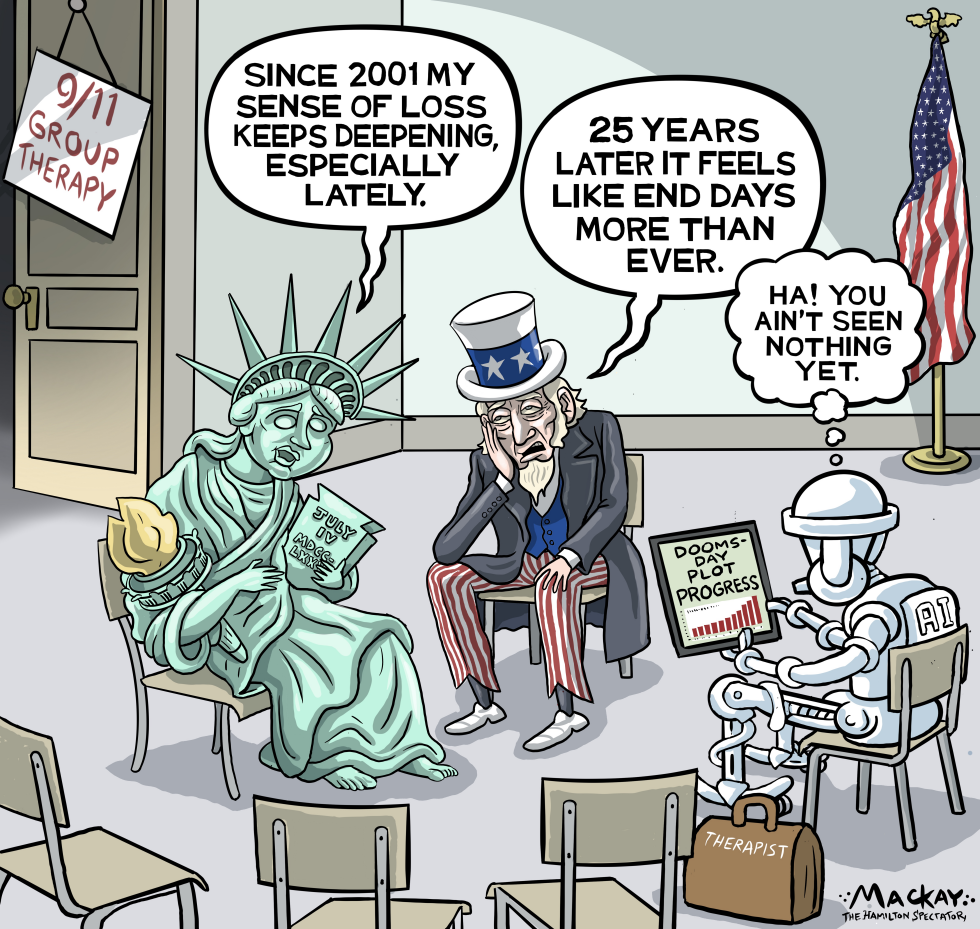
The cartoon depicts the Statue of Liberty, Uncle Sam and an AI robot seated in a 9/11 group therapy session on the 25th anniversary of the attacks. The Statue of Liberty holds a book marked July IV MDCCLXXVI and speaks of deepening loss since 2001. Uncle Sam echoes the sentiment of end days. The AI figure, labeled with a rising doomsday plot progress chart, retorts that the others have seen nothing yet. The scene uses national symbols to reflect persistent national trauma and emerging technological threats two and a half decades after the September 11 attacks.
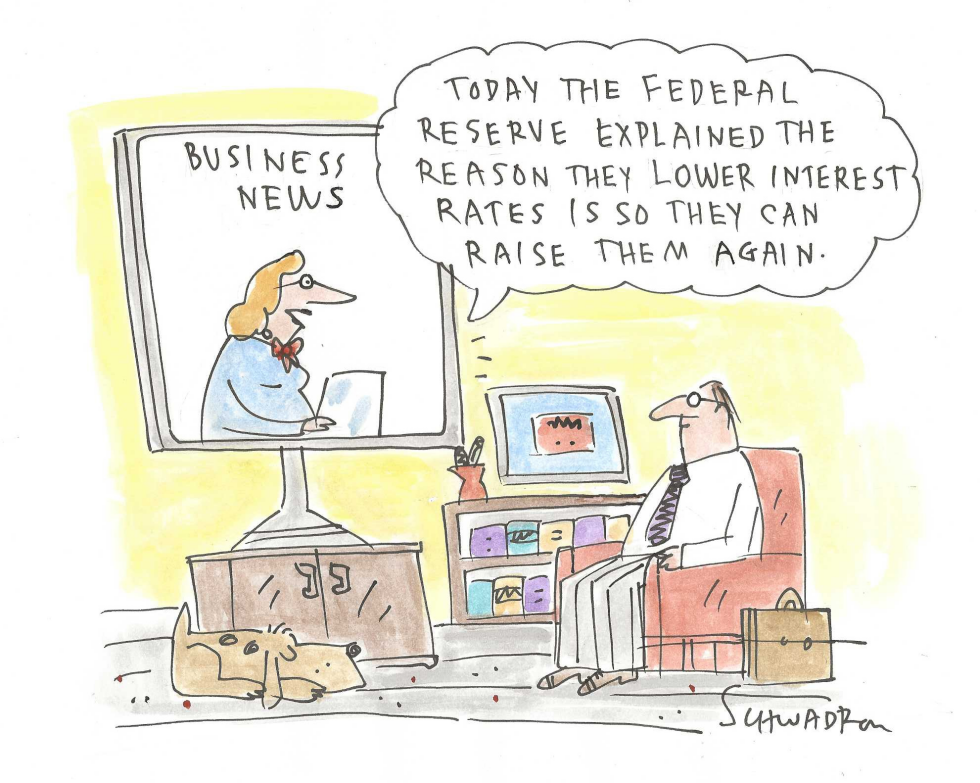
The Federal Reserve announced interest rate reductions in late summer 2026 to support economic conditions. Observers noted the central bank's stated goal of eventual rate increases created confusion about policy direction. The move affects borrowing costs for businesses and households nationwide. Markets reacted with mixed signals on inflation control and growth prospects. The cartoon presents the explanation as self-contradictory, underscoring public doubt about the clarity of Fed communications.
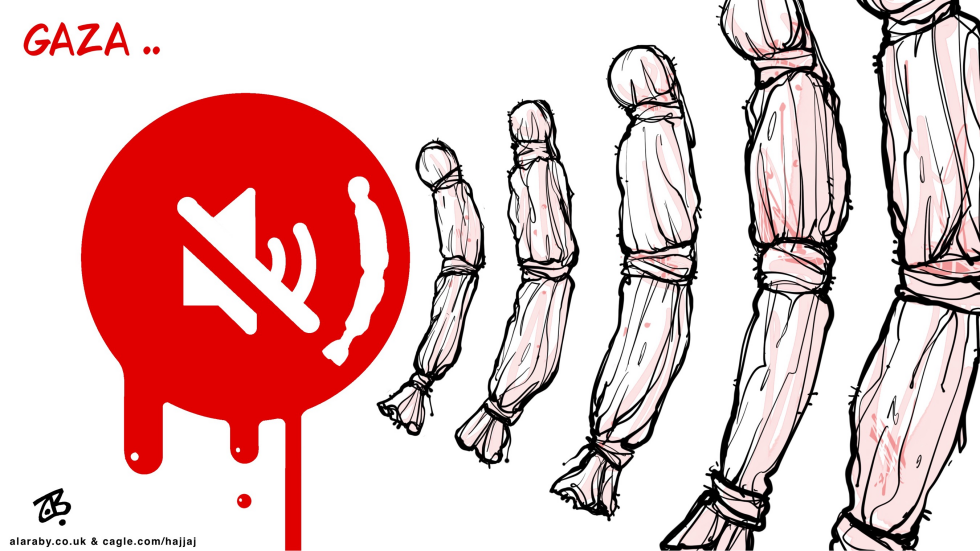
Ongoing conflict in Gaza continues to draw international attention to civilian casualties and restrictions on reporting. The piece responds to persistent calls for attention amid claims of media and global silence. It positions the mute symbol as a direct critique of inaction on reported suffering. The editorial stance emphasizes the need to break that silence and acknowledge the human cost in the region.
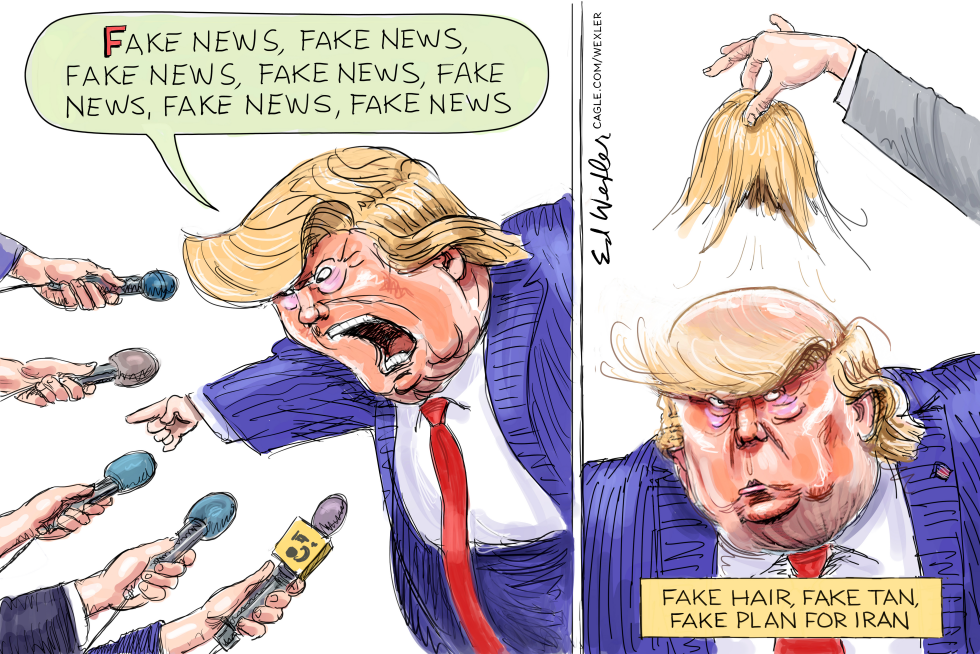
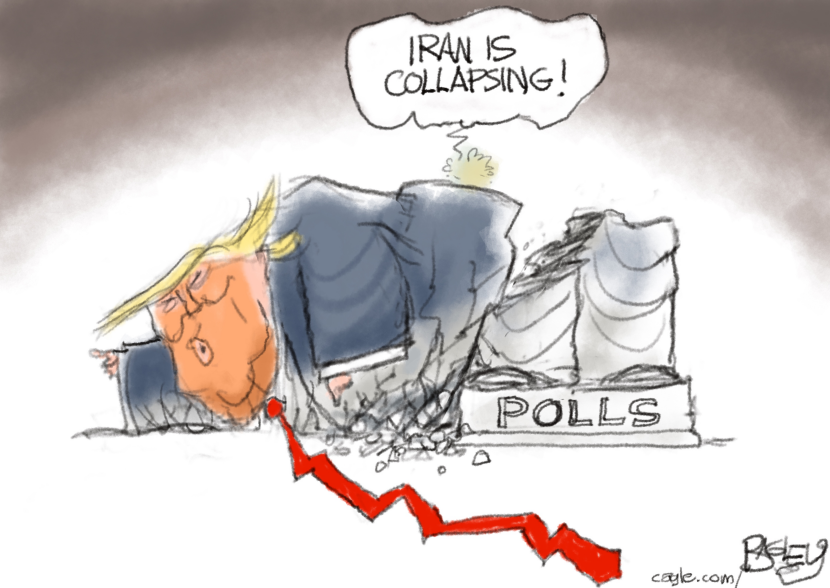
Donald Trump repeatedly labels media coverage as fake news during press encounters. The cartoon responds by questioning the authenticity of his appearance and his approach to Iran policy. It portrays the disconnect between his public statements and underlying realities.
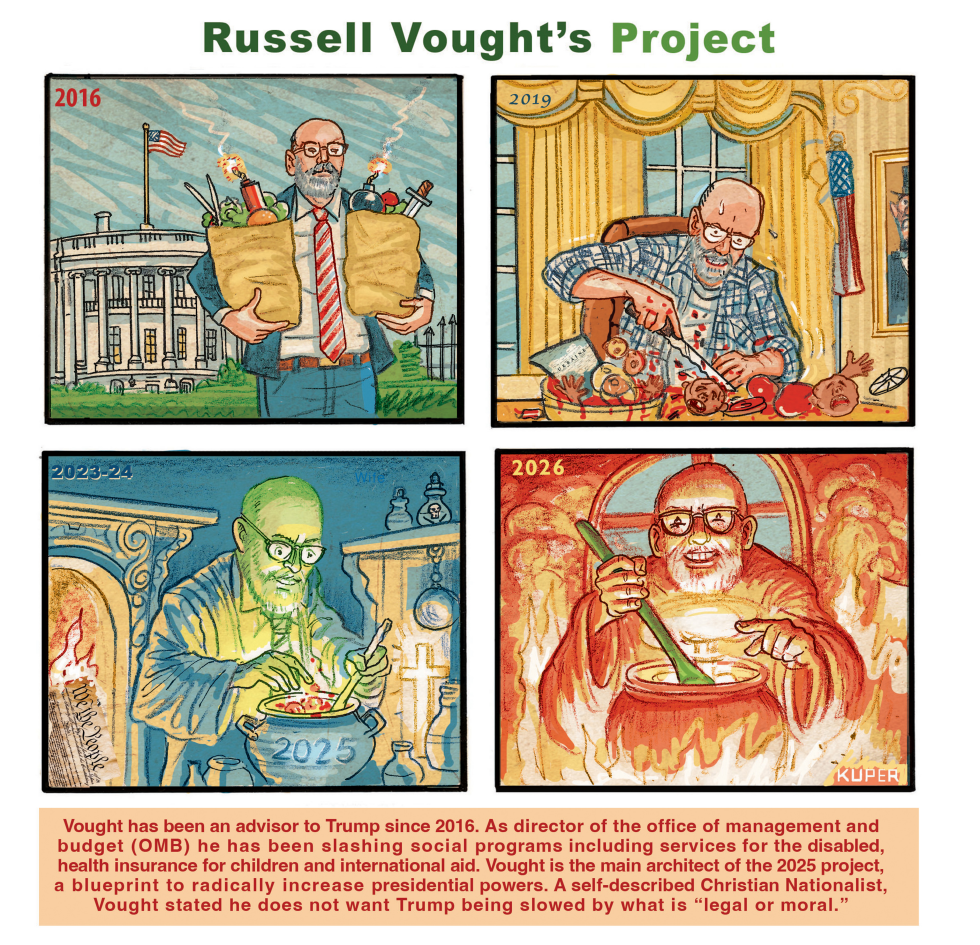
Russell Vought has served as a Trump advisor since 2016 and later directed the Office of Management and Budget, where he cut funding for disability services, children’s health insurance and foreign aid. He is the principal author of Project 2025, a plan to enlarge presidential authority. The cartoon presents his progression from 2016 through 2026 as a deliberate effort to remove legal or moral restraints on executive action.
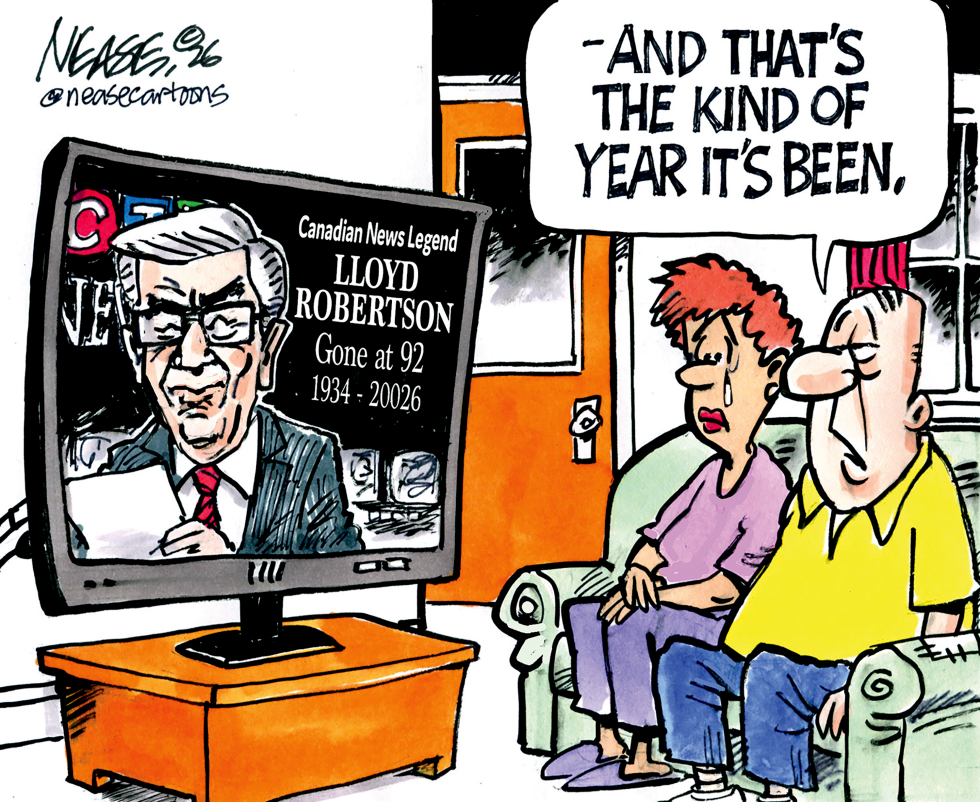
Canadian broadcasting icon Lloyd Robertson died in 2026 at age 92 after a long career as a news anchor. The announcement prompted widespread reflection on a year filled with notable passings and challenges. The editorial takes the position that such losses underscore the cumulative weight of difficult events.
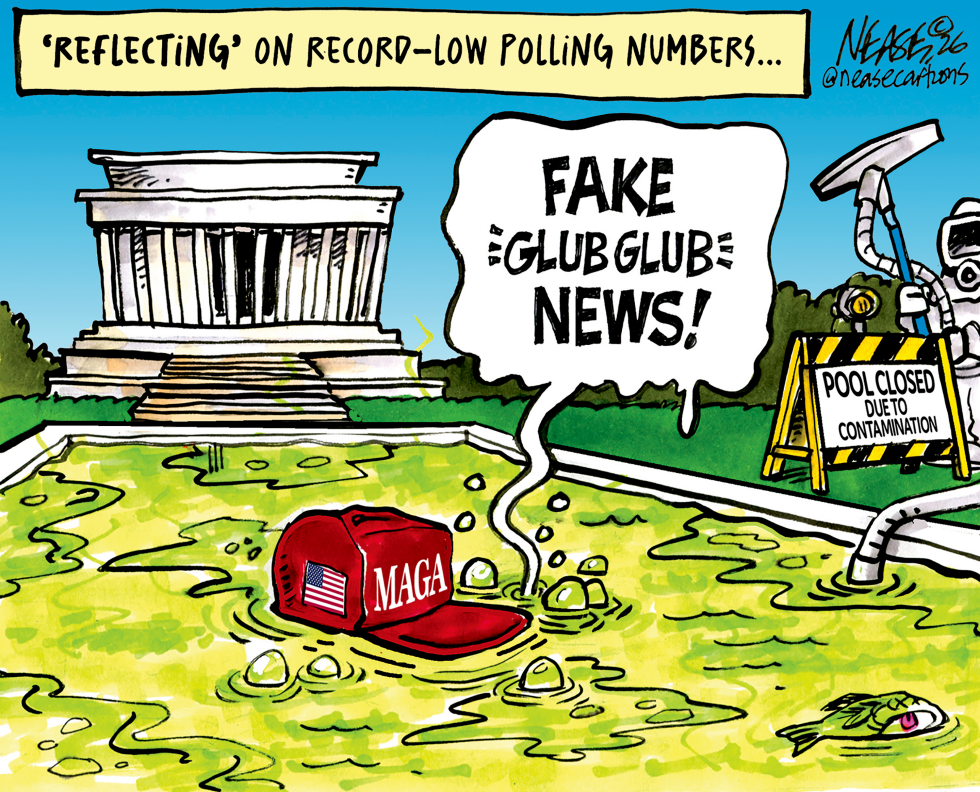
Donald Trump-aligned polling numbers reached record lows in early August 2026. Supporters responded with claims of fake news rather than addressing the data. The piece portrays this denial as occurring in a toxic environment.
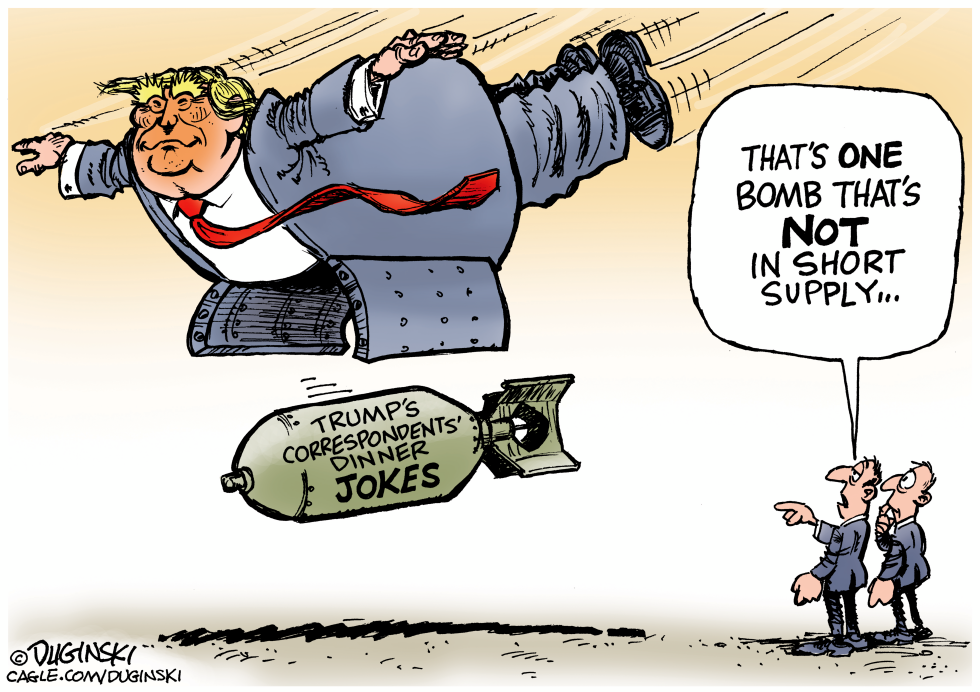
Donald Trump delivered jokes at the 2026 White House Correspondents Dinner that landed poorly with the audience. The event drew attention for the president's comedic missteps amid ongoing tensions with the press. The piece argues the routine exposed a persistent pattern of tone-deaf delivery rather than isolated misfires.
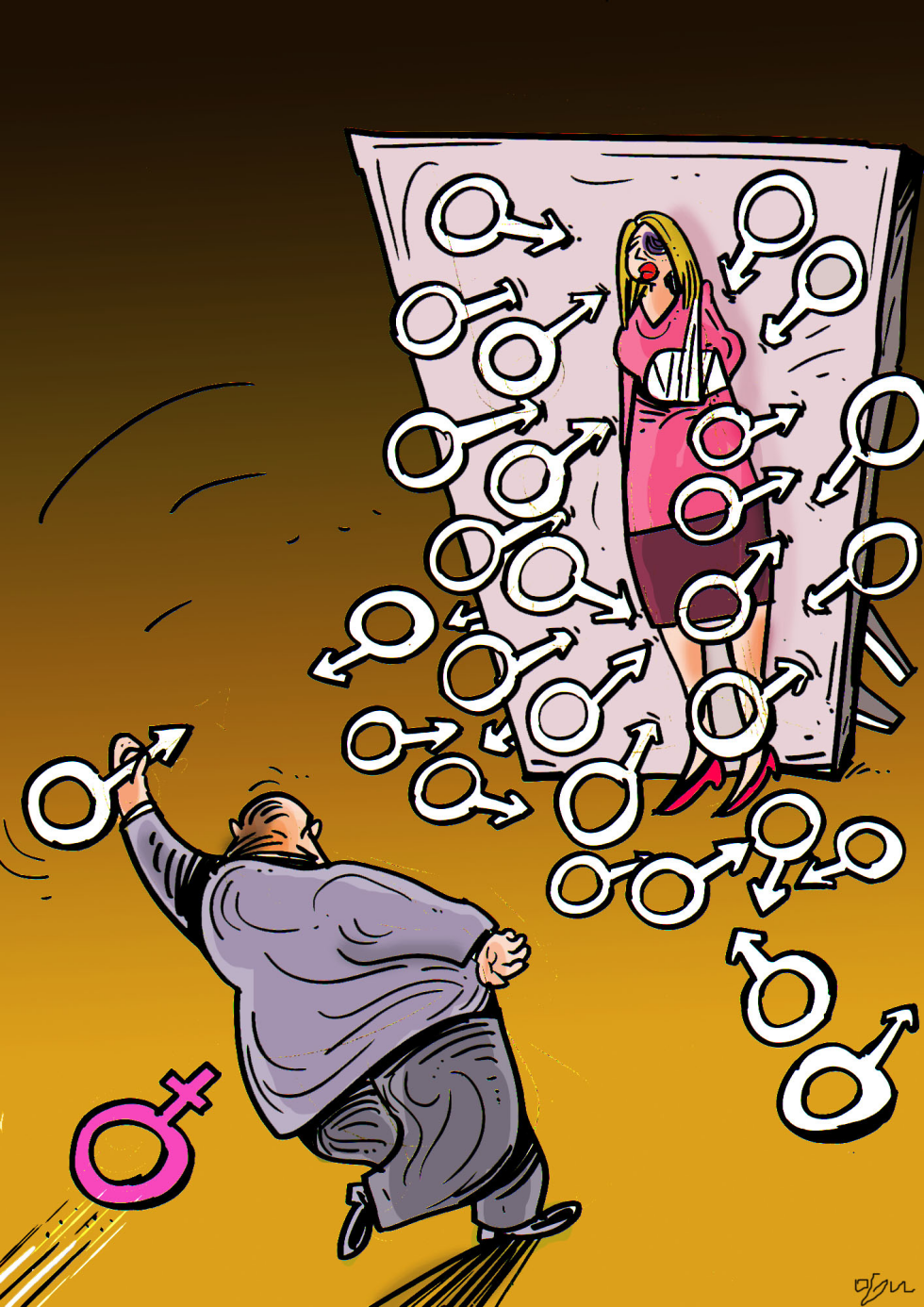
Violence against women remains a persistent social problem, with physical assaults and intimidation continuing in many communities. The piece responds to this ongoing dynamic by showing a male figure directing male symbols at an already injured woman, underscoring the editorial position that such aggression must be confronted directly.
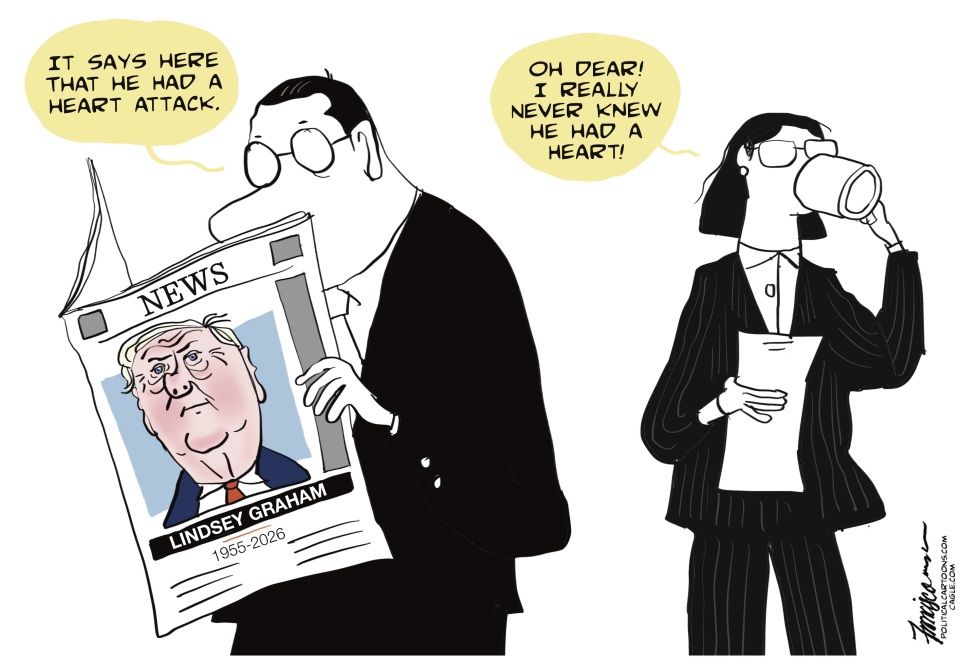
A man reads a newspaper reporting Lindsey Graham's heart attack and death in 2026. A woman standing nearby reacts with surprise that the senator had a heart at all. The exchange highlights the swift and pointed responses from political figures to the obituary.
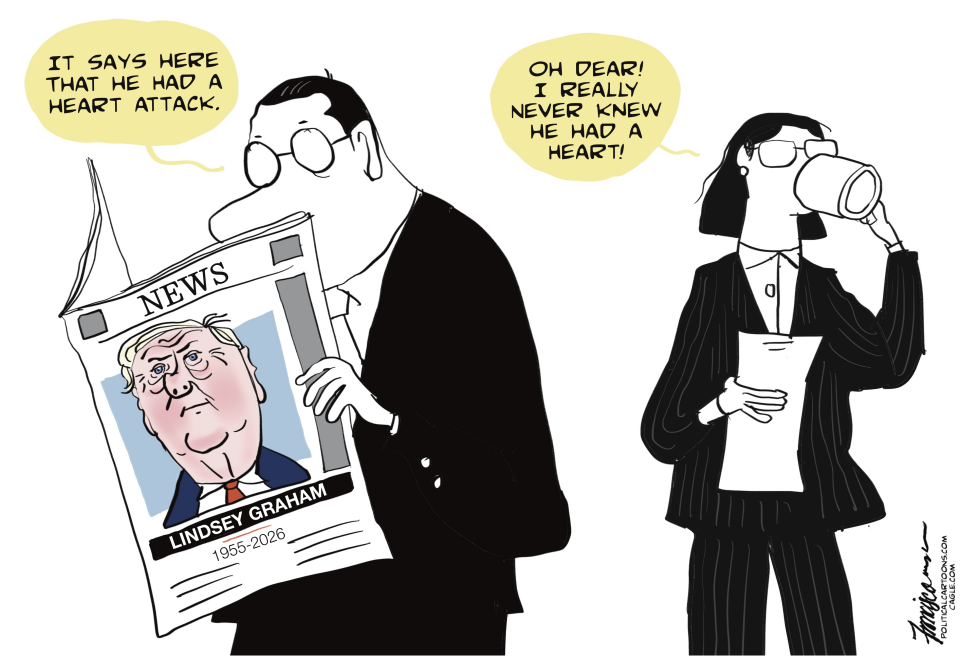
A political cartoon depicts a man reading a newspaper announcing the death of Sen. Lindsey Graham from a heart attack in 2026. A woman standing nearby responds with a pun, stating she never knew he had a heart. The image uses the obituary format and the double meaning of the word heart to highlight perceptions of the senator's demeanor.
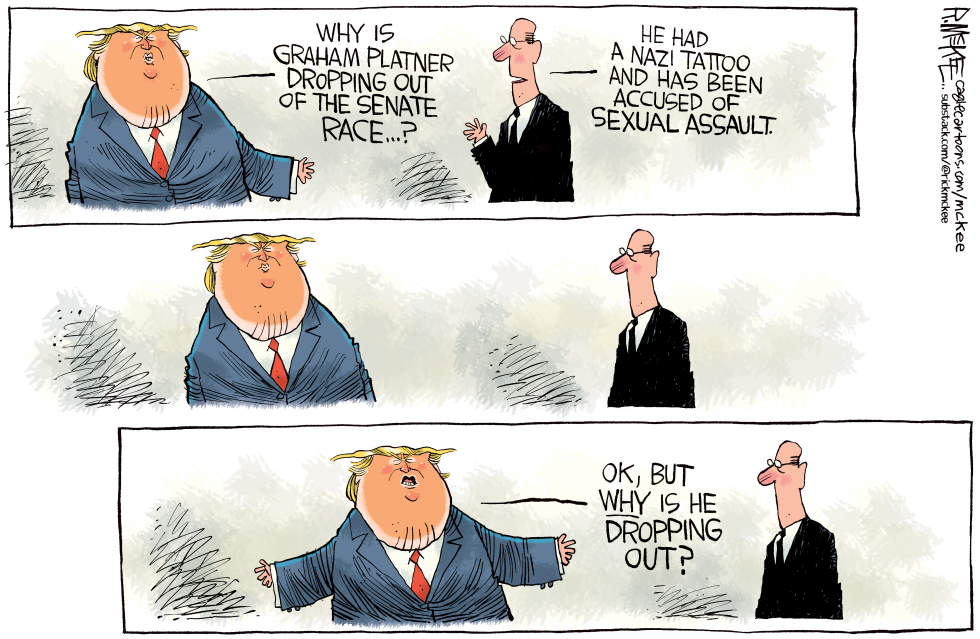
On July 10 2026 Rick McKee depicts Donald Trump questioning an aide about Graham Platner dropping out of a Senate race. The aide cites a Nazi tattoo and sexual assault accusation as reasons. Trump responds by asking again why the candidate is leaving the race. The exchange highlights the former president's focus on the withdrawal itself rather than the underlying controversies. Publication occurs during the 2026 election cycle when candidate viability and scandal impacts remain central topics in Senate contests.
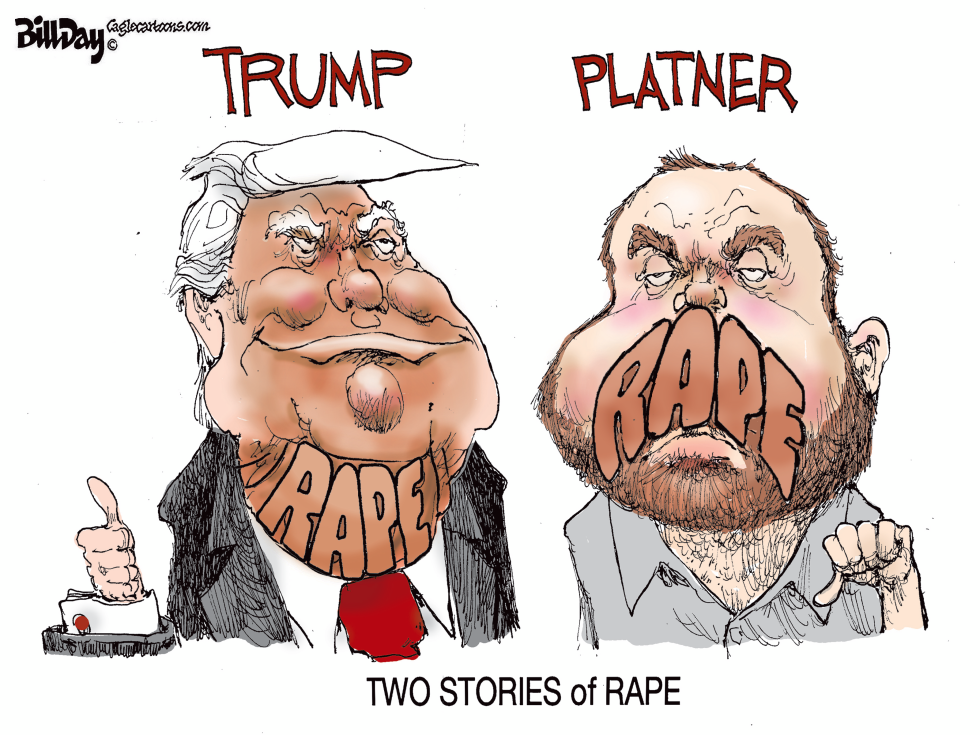
The image presents side by side depictions of Donald Trump and an individual named Platner. Each has the word rape overlaid on the lower face area. Trump extends a thumbs up gesture near papers while Platner extends a thumbs down gesture. Large red text at the bottom reads two stories of rape. The date of July 2026 places this in a period of ongoing public discussion around accusations involving prominent figures.
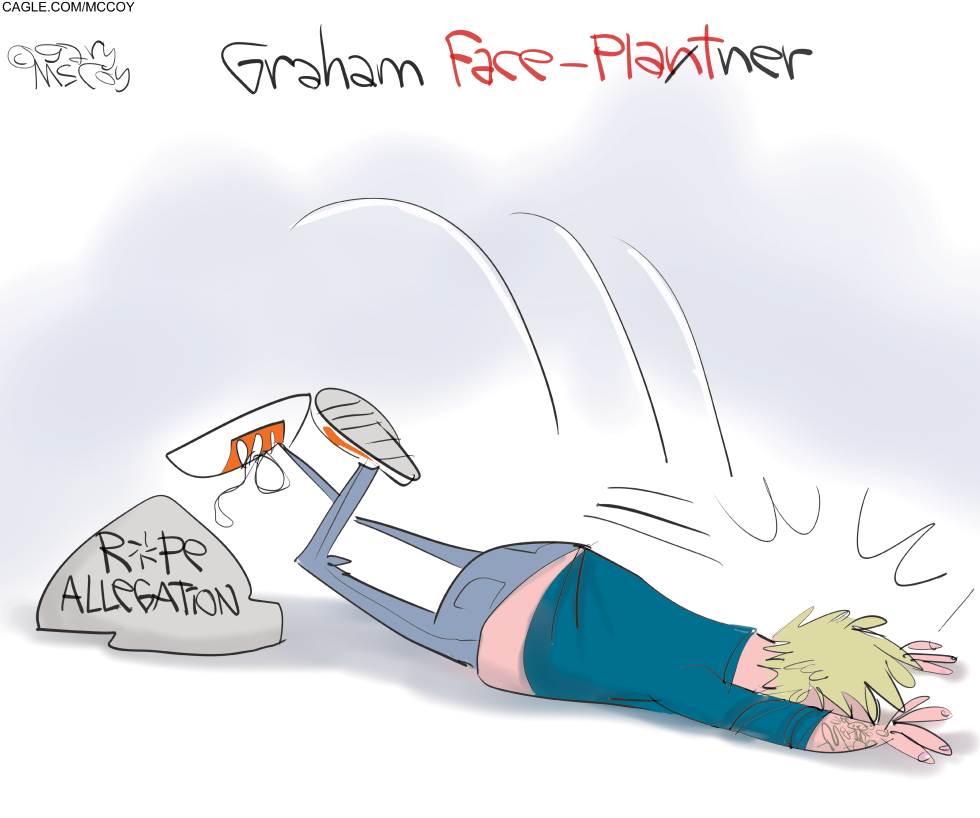
The cartoon depicts a figure identified as Graham sprawled on the ground after tripping over a rock labeled R*PE ALLEGATION. The title plays on face-plant with the word Plantner highlighted in red. Published July 9 2026 the image captures the senator in a prone position with motion lines indicating a fall. The rock sits to the left with one shoe detached nearby.