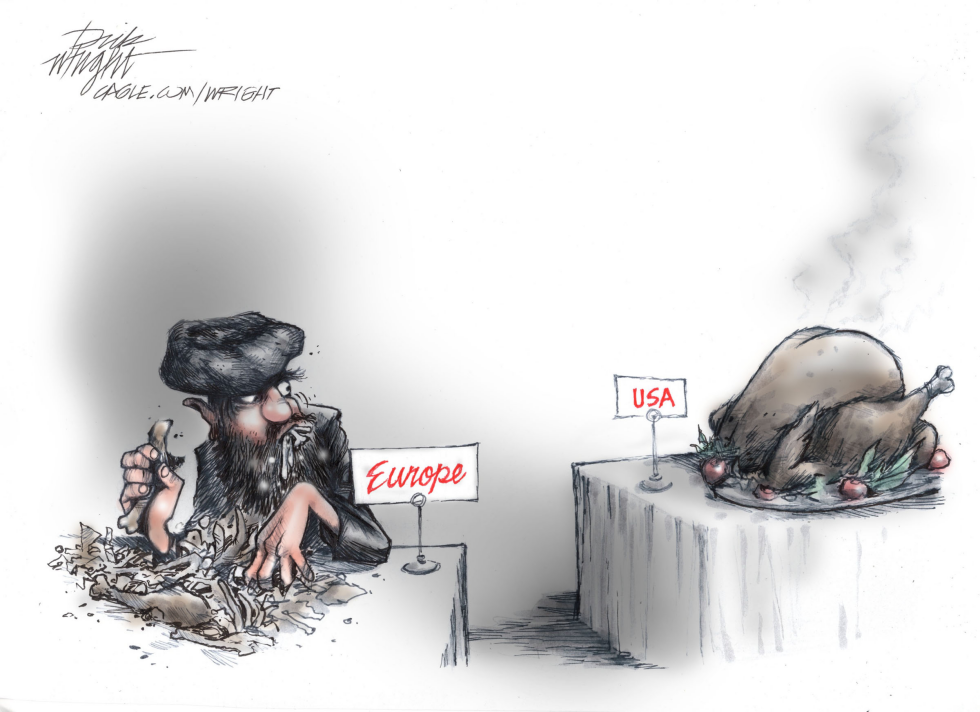
A foreign leader has stripped Europe bare and now eyes the United States as the next prize. The piece argues that unchecked expansionist momentum threatens American security and global stability.
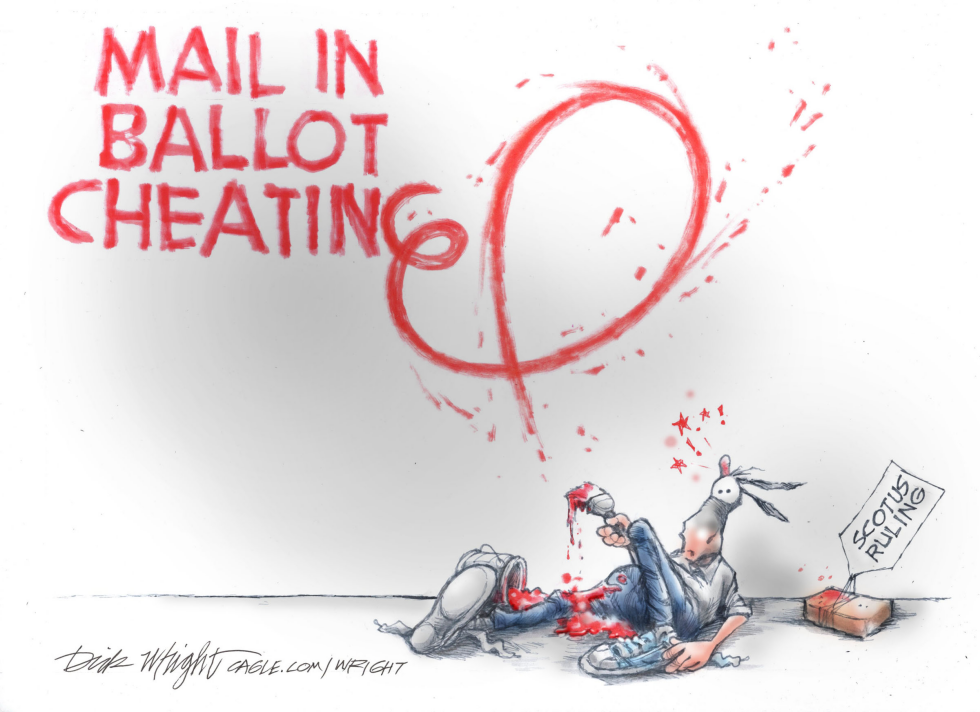
The image depicts the Democratic Party symbol as a donkey lying wounded on the ground with red liquid visible near its body. A large red prohibition symbol covers the words mail in ballot cheating at the top. A sign reading SCOTUS ruling stands nearby next to a box. The composition responds to a Supreme Court decision limiting certain mail-in ballot procedures. The visual argument centers on claims of reduced opportunities for improper voting practices. Publication occurred on August 25 2026. The work uses the party emblem to illustrate the effect of the ruling on one political side. No specific prior case details appear in the image itself.
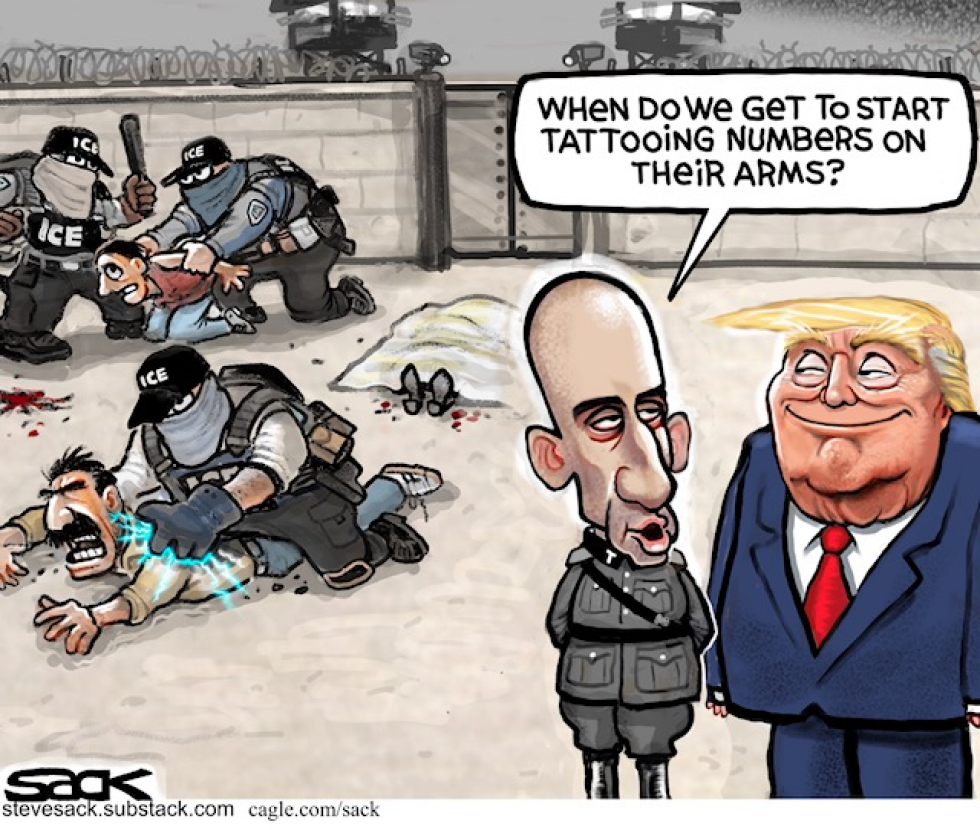
Donald Trump has publicly discussed aggressive measures in immigration detention facilities amid ongoing enforcement operations. The remarks come as ICE conducts arrests and holds individuals at secure sites. Critics argue the approach echoes past abuses. The piece portrays the comments as crossing into prohibited territory by invoking forced numbering.
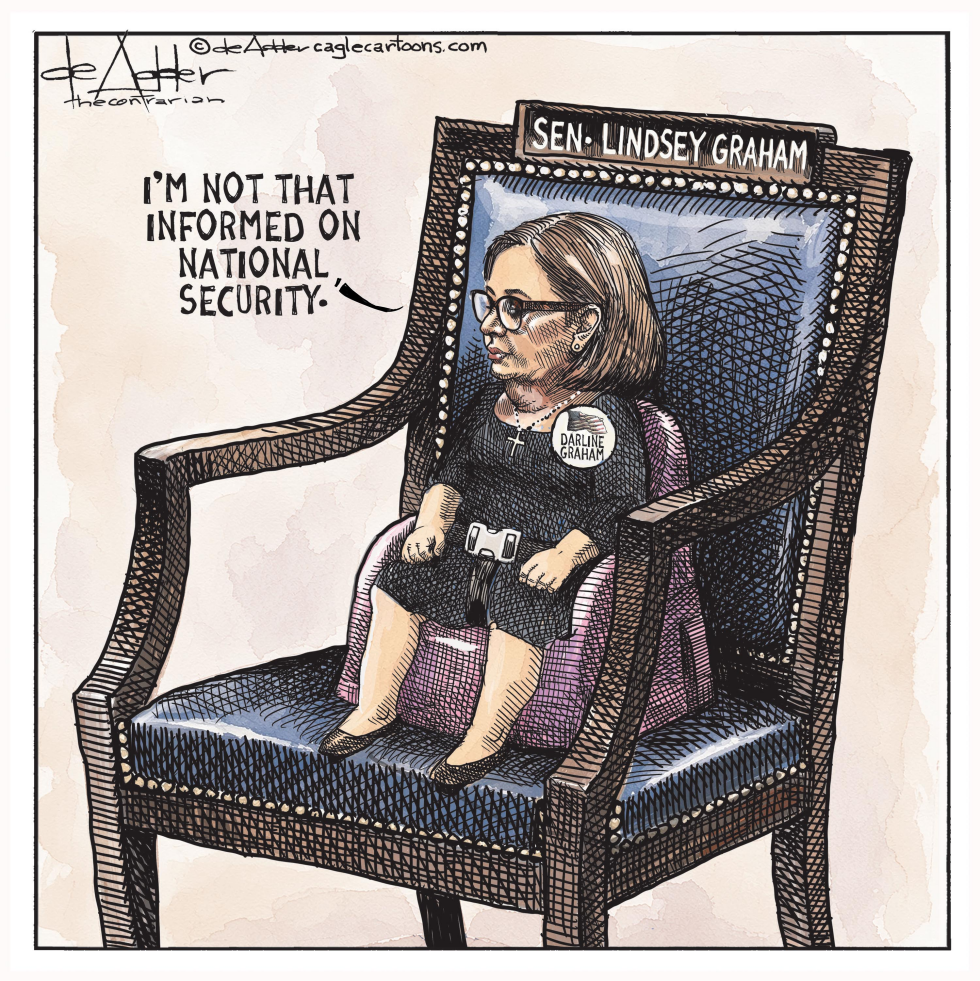
Senator Lindsey Graham stated he is not that informed on national security. The remark comes from a senior member of the Senate with oversight responsibilities in foreign affairs and defense matters. It raises questions about preparedness for committee leadership. The piece portrays the comment as a direct reflection of Graham's self-assessment in his role.
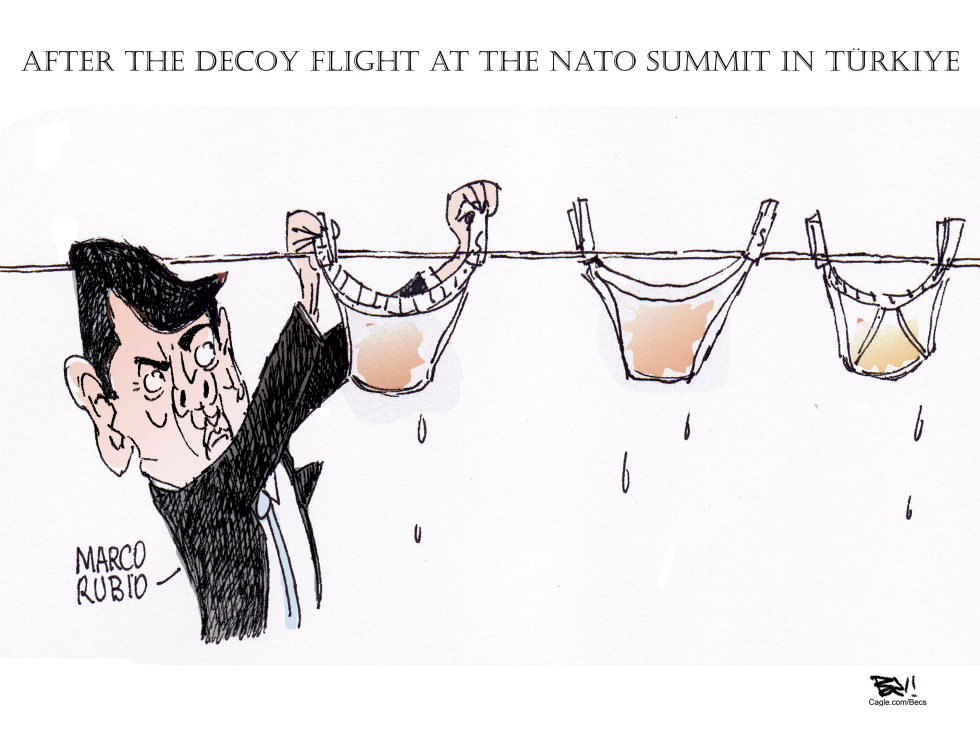
A decoy flight during the NATO summit in Türkiye forced senior U.S. officials including Marco Rubio into damage control over security and optics. The episode highlighted vulnerabilities in summit logistics and personal exposure for attendees. The piece portrays the episode as an embarrassing cleanup task for Rubio.
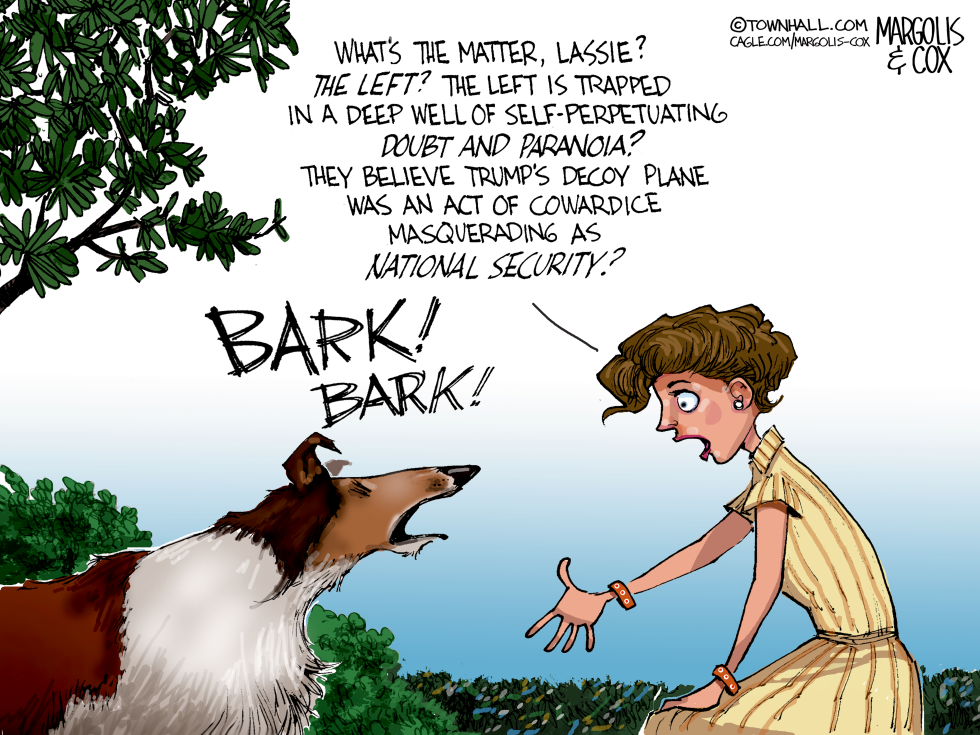
Critics on the left have questioned a decoy plane maneuver tied to Trump security protocols, calling it an act of cowardice. The episode highlights ongoing partisan divides over national security decisions. The piece argues such reactions reflect self-sustaining paranoia rather than substantive policy concerns.
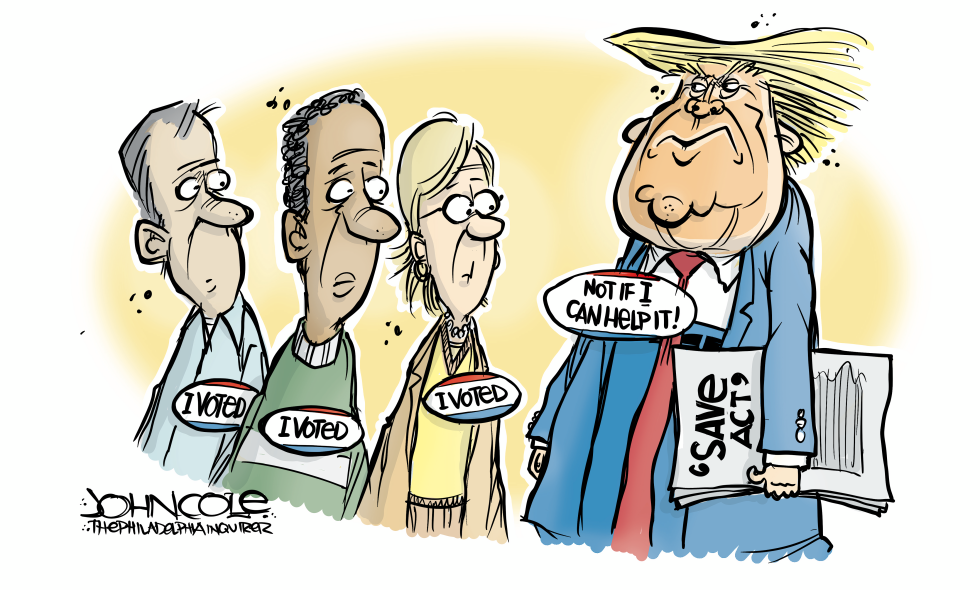
The cartoon shows Donald Trump on the right clutching documents labeled SAVE Act and declaring through a speech bubble, 'NOT IF I CAN HELP IT!' Three voters on the left, an older white man, a Black man and a white woman, each wear prominent I Voted stickers. The composition contrasts the former president's stance against the visible participation of citizens in elections. Published August 16, 2026, the image addresses Trump's resistance to the SAVE Act, a measure aimed at strengthening voter identification requirements. The visual places emphasis on the disconnect between voter engagement and political opposition to related legislation.
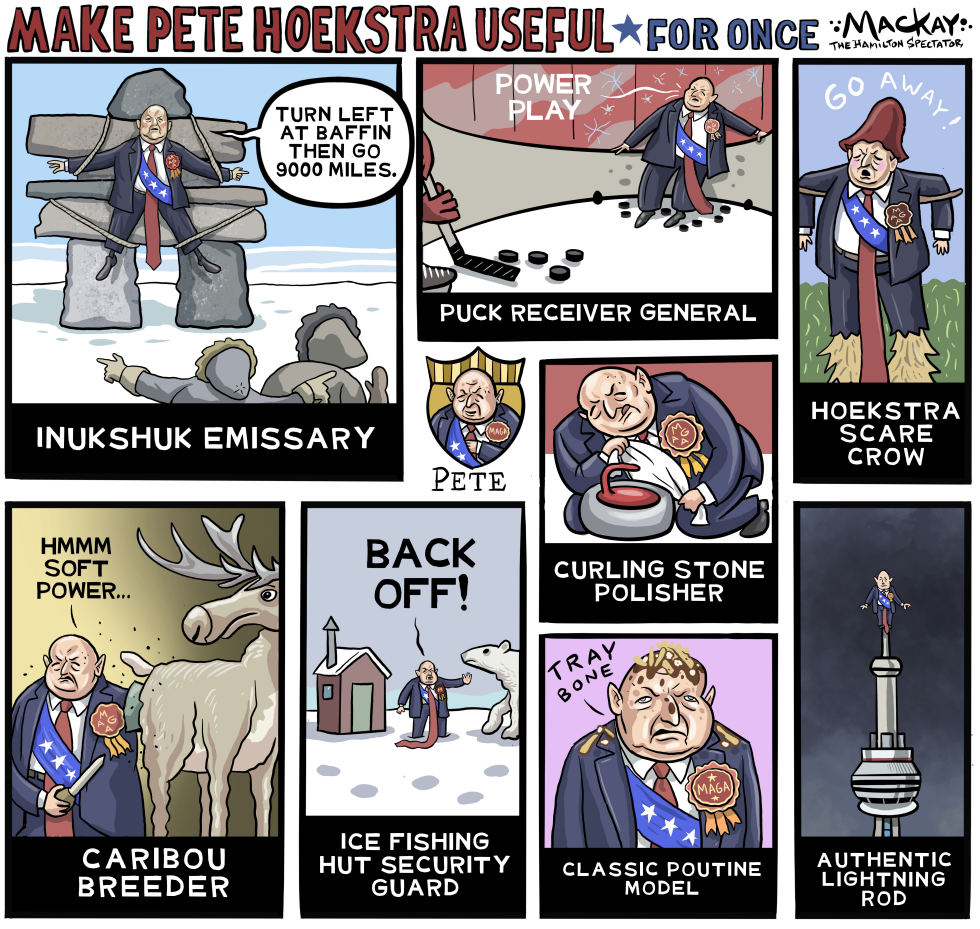
Pete Hoekstra faces scrutiny over a prospective diplomatic posting tied to Canada amid ongoing US trade and Arctic policy tensions. The appointment draws criticism from those who view the nominee as unprepared for cross-border diplomacy. The cartoon argues the selection adds little practical value and leans on outdated cultural clichés instead.
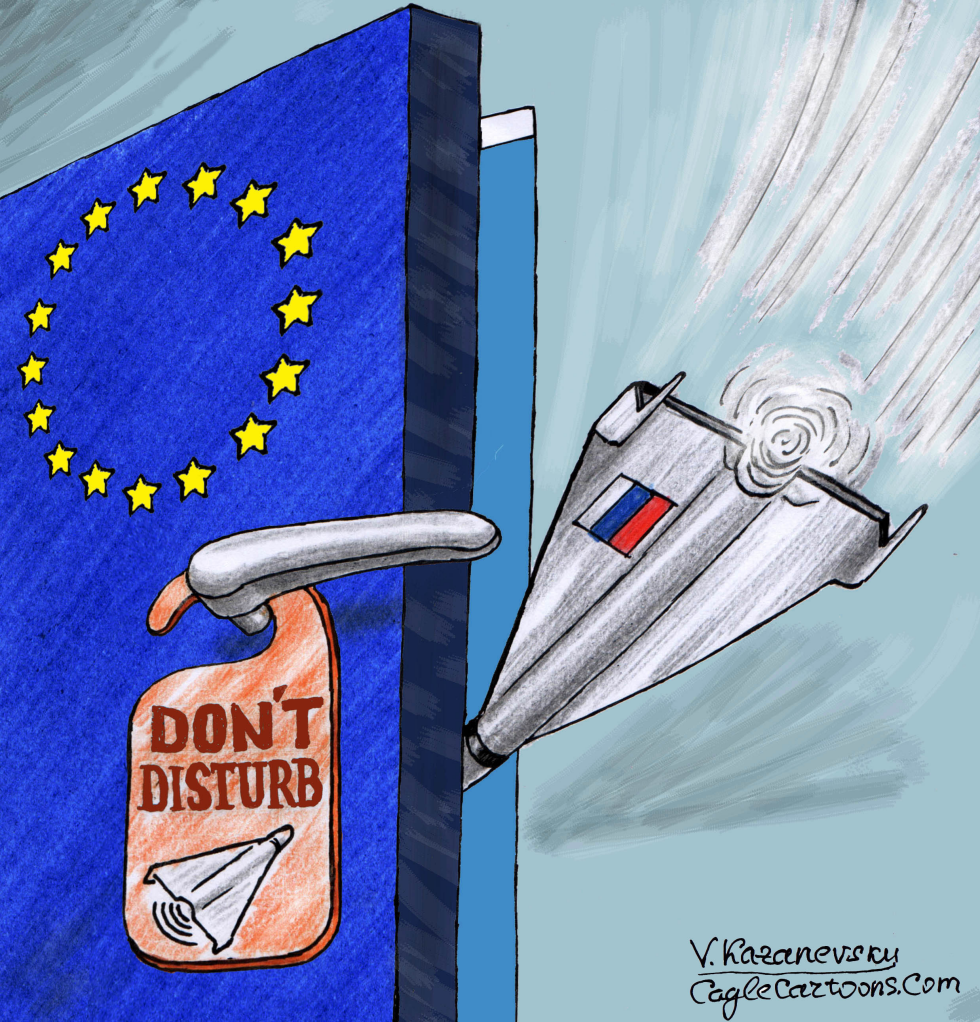
A Russian drone has breached an EU doorway in a symbolic incident highlighting ongoing security concerns from Moscow's actions near European borders. The event underscores vulnerabilities in continental defense amid the protracted Ukraine conflict and repeated airspace violations. The piece argues that EU warnings and isolation measures prove insufficient against persistent Russian incursions.
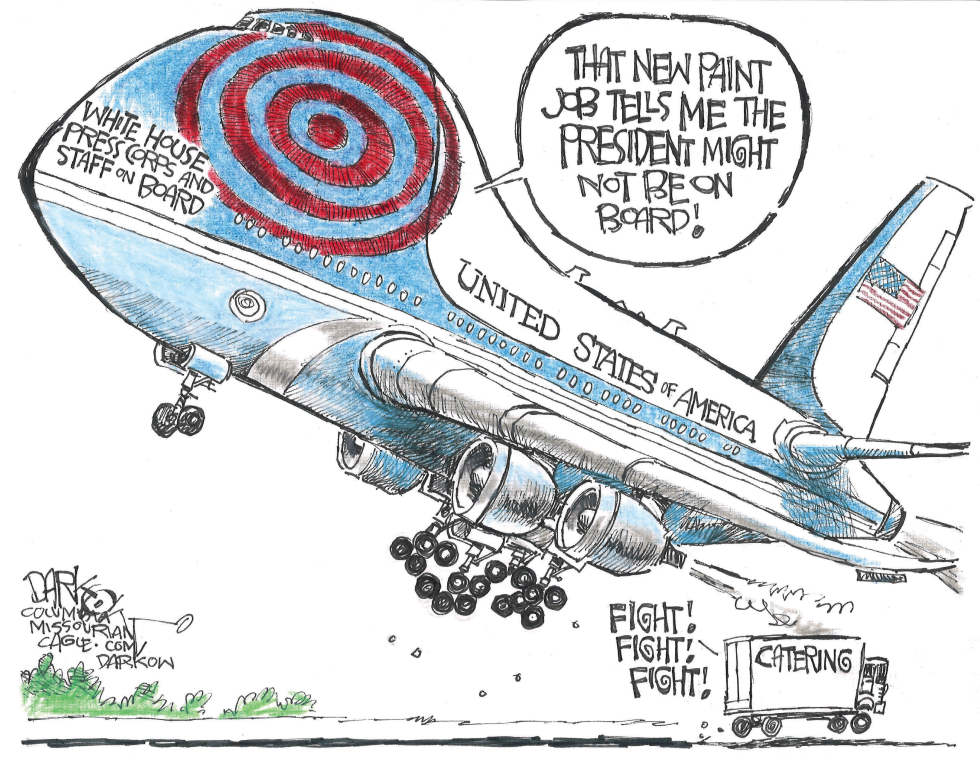
Air Force One appears with a large target painted on its upper fuselage while carrying White House press corps and staff. A nearby catering truck chants fight slogans as the plane descends. The image suggests the president may not be aboard the targeted aircraft. This visual plays on recent tensions surrounding presidential travel and security. The editorial stance highlights perceived risks or distancing from official duties.
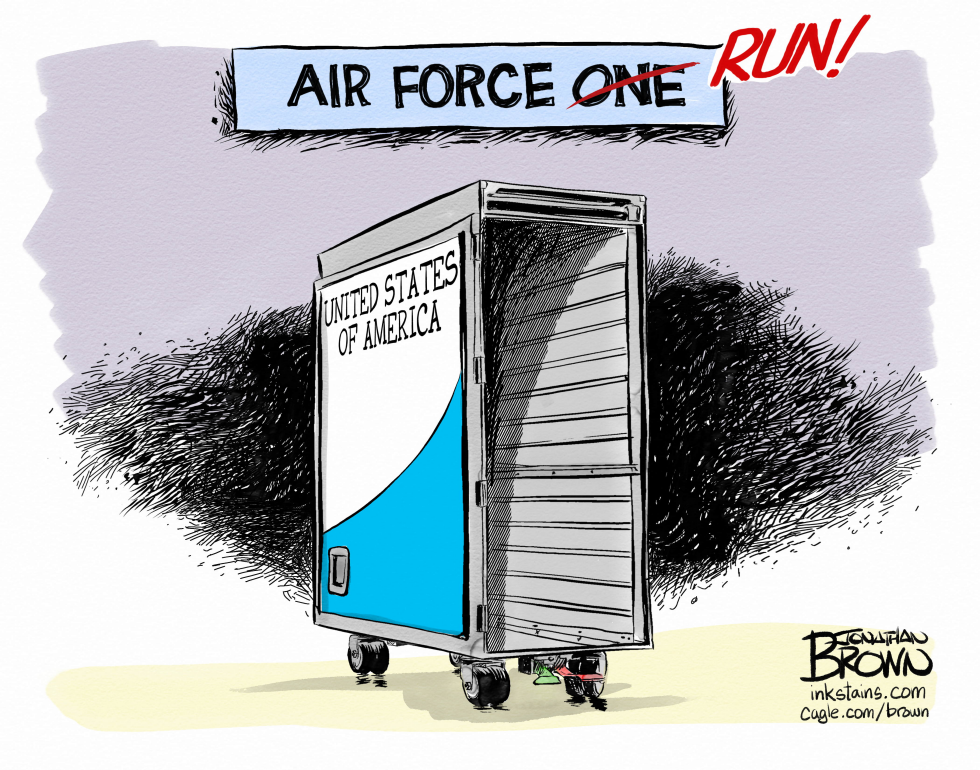
A wheeled airline catering cart occupies the center of the frame, painted in the livery of the presidential aircraft: white upper body, curved blue lower panel, and UNITED STATES OF AMERICA lettered down the side. Its full height door hangs open on empty wire shelving. Above it a pale blue placard reads AIR FORCE ONE, with ONE struck through in red and RUN! added beside that word in the same color. Two neckties poke out from between the casters underneath, one of them the long red tie Donald Trump is known for, the only trace of the men folded up inside. The drawing responds to reports that Trump sheltered in an airline galley cart against an assassination threat traced to Iran, turning the most recognizable branding in presidential aviation into an instruction to flee. Jonathan Brown signed the lower right corner alongside inkstains.com and Cagle.com/brown.
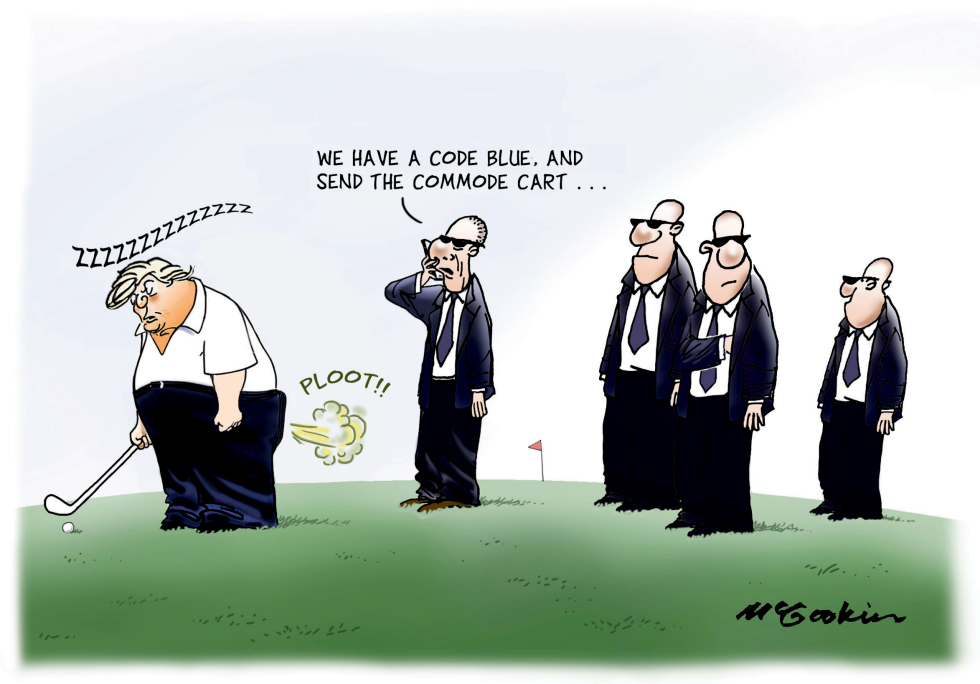
Donald Trump was depicted on a golf course in a scene showing him asleep while standing with a club. Secret Service agents responded to an emission by calling for a commode cart under code blue protocol. The episode highlights ongoing security protocols around the former president during leisure activities. The piece takes the position that such personal moments underscore the constant vigilance required of protective details.
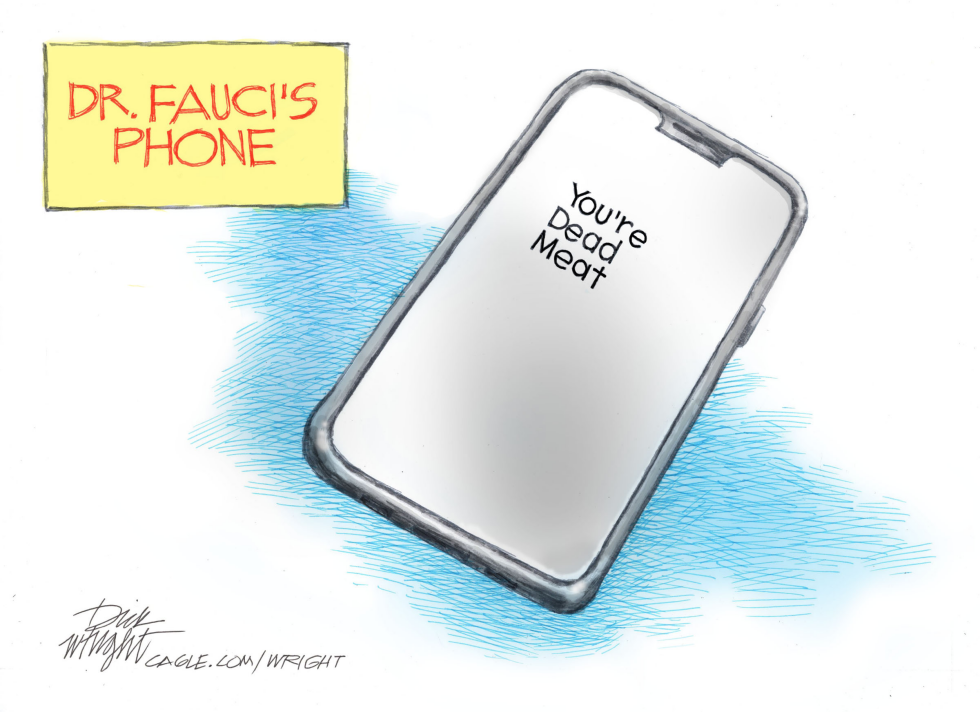
A death threat surfaces on a phone identified as belonging to Dr. Anthony Fauci. The incident underscores persistent security risks faced by high-profile public health figures. Such threats reflect broader tensions over pandemic-era decisions and erode trust in institutions. The piece highlights the personal danger these messages pose and criticizes the climate that encourages them.
Air Force One appears with a prominent target symbol on its fuselage amid questions about an escape vehicle. The image highlights concerns over presidential aircraft security during a period of heightened threats to the presidency. The editorial position critiques vulnerabilities in executive protection protocols.
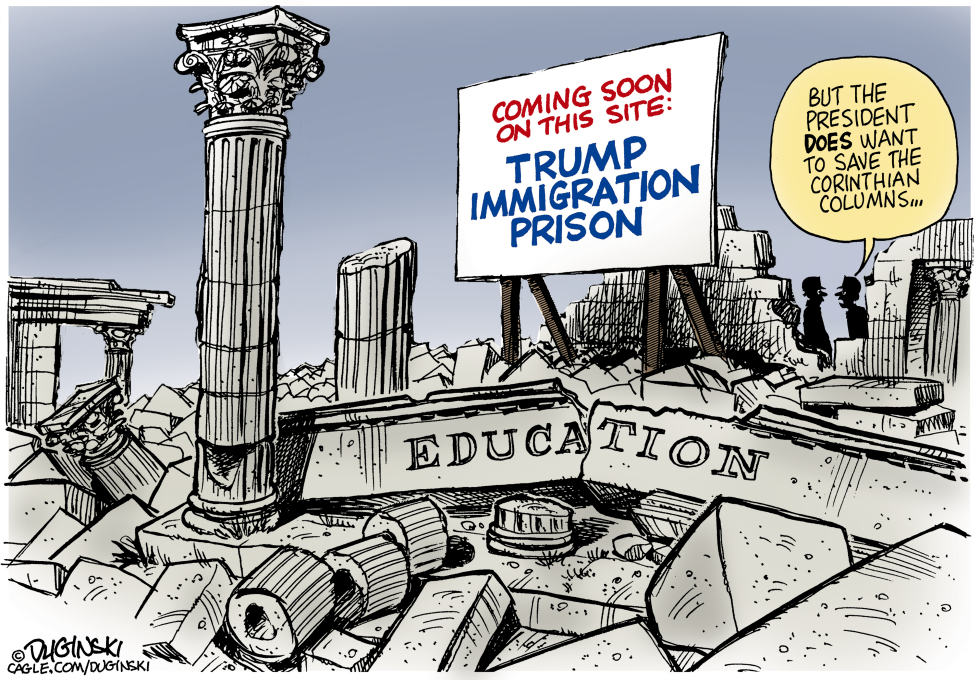
The Trump administration has moved to repurpose a site previously tied to education programs for a new immigration detention facility. The shift reflects ongoing policy emphasis on border enforcement over domestic education support. The piece argues that selective preservation of symbolic elements masks broader institutional damage.