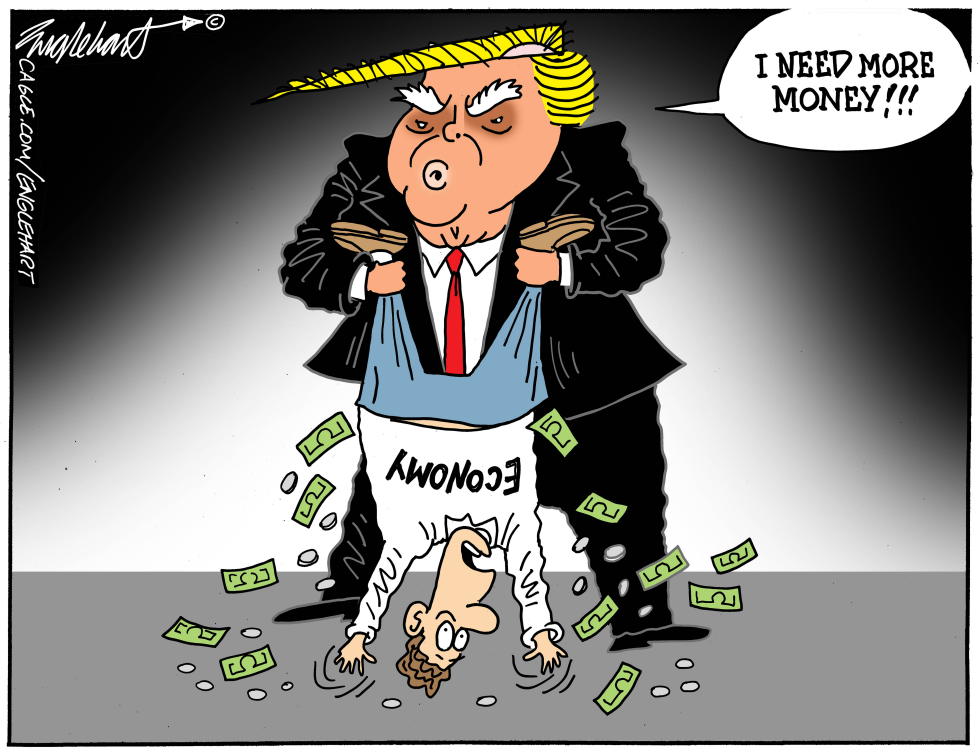
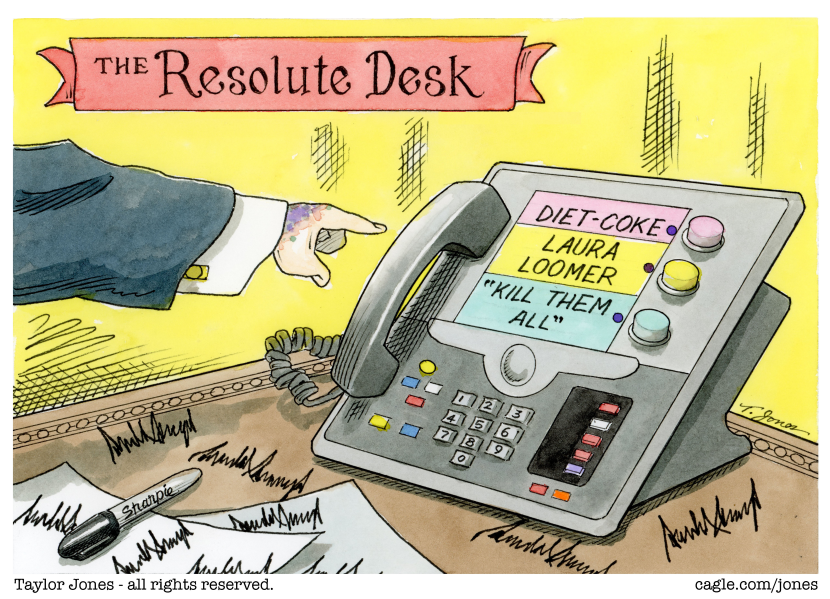
Donald Trump has pressed for additional revenue streams amid ongoing economic pressures. The move highlights tensions over fiscal demands and growth priorities. The piece portrays the action as direct extraction from economic resources.
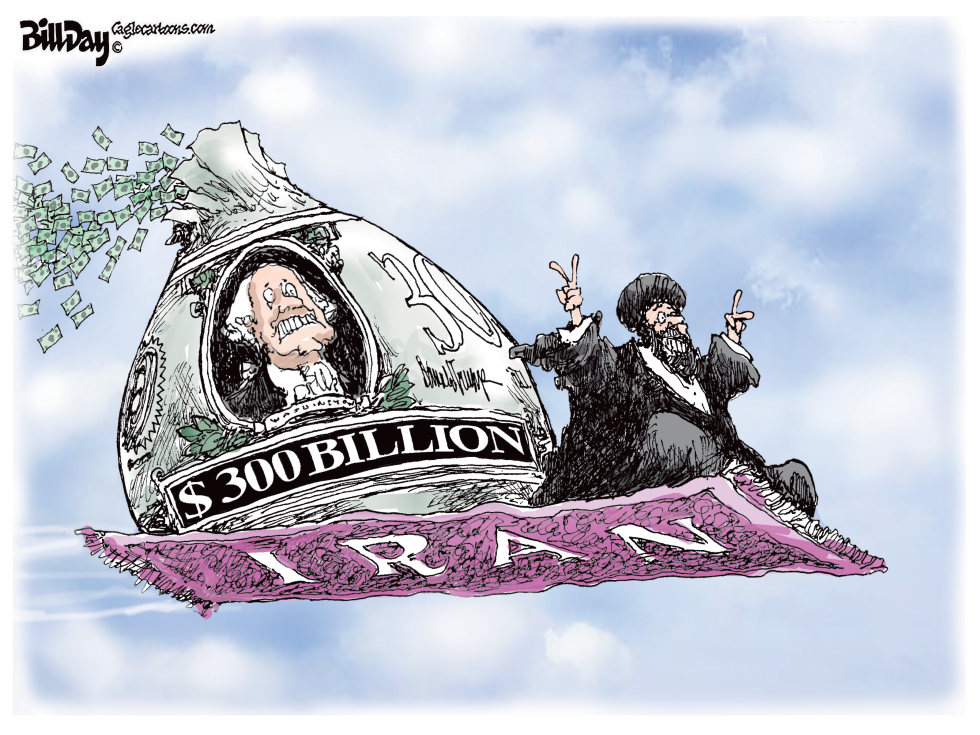
On June 18, 2026, Bill Day's cartoon depicts former President Donald Trump inside a torn $300 billion money bag with cash flying outward. An Iranian cleric figure sits on a purple carpet labeled IRAN, gesturing victory signs. The image responds to ongoing debates over sanctions relief and financial transfers involving Iran during that period.
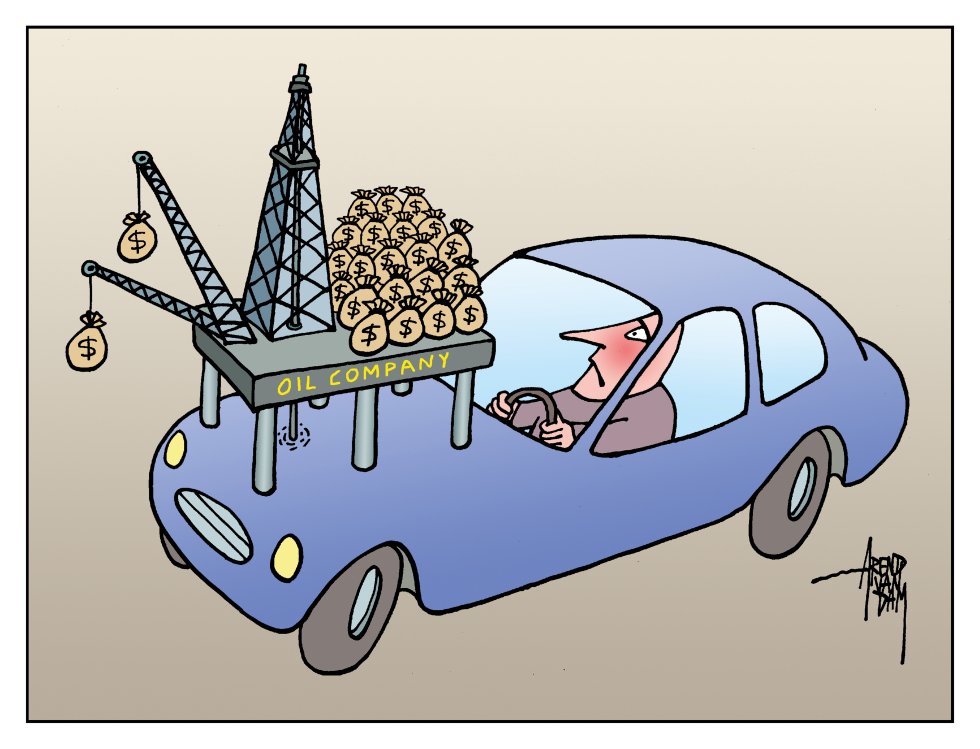
In this pointed political cartoon, an oil company platform sits atop a blue car, loaded with piles of dollar-sign money bags, while cranes dangle more profits. The frustrated motorist grips the wheel, face red with anger, illustrating how excessive profits from oil companies crush consumers at the pump. Tags like excessive profits, motorists, fuel, petrol, and refuel capture the essence, with Iran and Strait of Hormuz hinting at geopolitical tensions driving prices. This visual satire underscores the disparity between corporate windfalls and everyday drivers' pain, a timeless theme in energy politics.
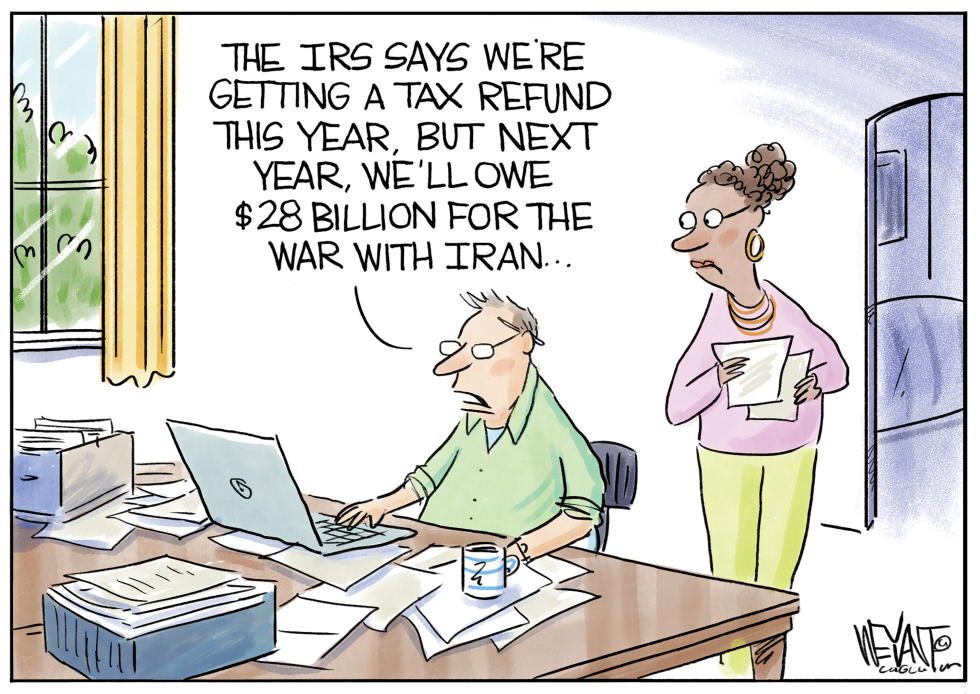
Dive into this biting political cartoon tax refund piece where a woman, holding papers, informs a laptop-working man about their IRS windfall this year, only to drop the bomb of owing $28 billion next for the war with Iran. The satirical cartoon Iran war vibe captures the absurdity of US taxes funding wars, with cluttered desks and exasperated expressions underscoring the humorous take on federal spending. It's a classic taxpayer burden Iran conflict jab, poking fun at government spending satire while illustrating the disconnect between personal finances and massive military expenses. Through cartoon about military expenses, it cleverly critiques fiscal policy in an office setting, making the war with Iran taxpayer joke both relatable and irreverently insightful for viewers pondering editorial cartoon fiscal policy.
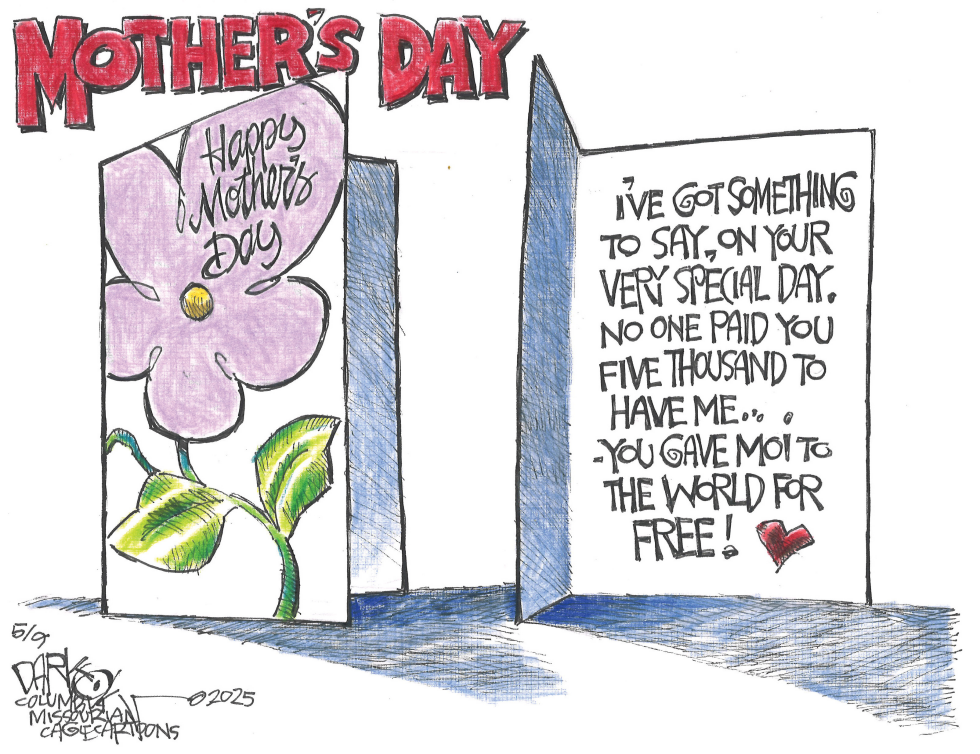
John Darkow's cartoon depicts an open Mother's Day card with a purple flower on the left and a message on the right. The text humorously contrasts modern pronatalism incentives, like a five thousand stipend for boosting birth rates, against traditional unpaid motherhood. The baby declares no one paid mom to have it, emphasizing her free gift to the world. Tags like family planning and mom underscore the satire on declining birth rates and population policies. This piece pokes dry fun at efforts to encourage more babies through financial rewards, reminding readers of motherhood's priceless nature in a straightforward, insider style.
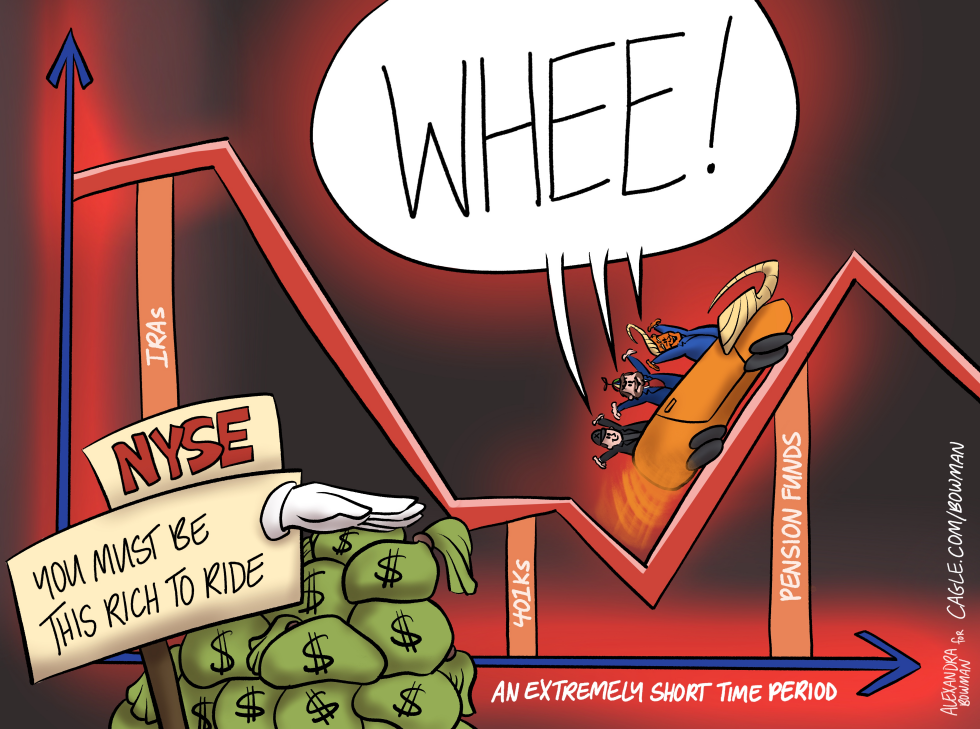
Alexandra Bowman's cartoon captures the stock market turmoil under Trump policies, showing caricatures of Trump, Elon Musk, and JD Vance gleefully riding a rocket down a crashing graph line marked with IRAs, stocks, 401ks, and pension funds. The NYSE sign declares 'You Must Be This Rich to Ride,' piled with money bags, satirizing how tariffs and Republican strategies favor the wealthy while everyday investments and retirement savings take a dive over an extremely short time period. The 'WHEEE!' shout adds dry humor to the volatile Wall Street scene, poking at MAGA's high-risk economic ride.
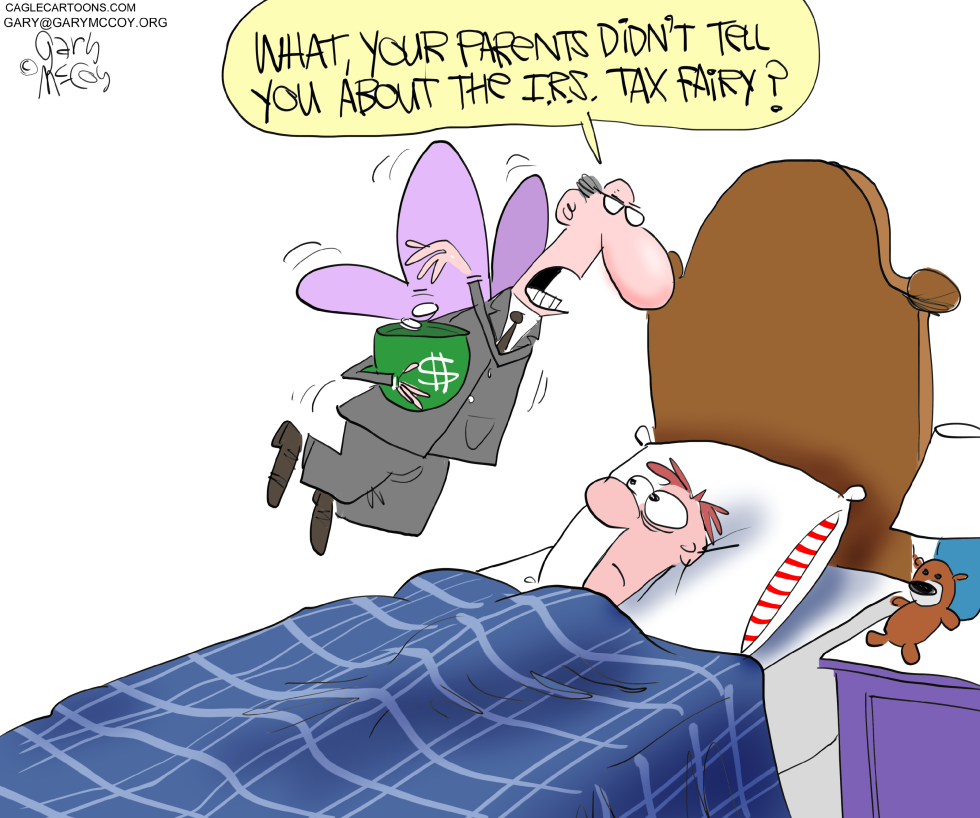
This IRS tax fairy cartoon by Gary McCoy cleverly twists the innocent tooth fairy legend into a humorous IRS satire illustration, showing a flying suited figure with purple wings bursting into a bedroom scene. The surprised person in bed, tucked under a blue blanket with a striped pillow and nearby teddy bear, faces the intruder holding a green dollar bucket. The speech bubble reveals the punchline, equating the IRS to a mythical tax fairy that takes rather than gives. As a political cartoon tax collection fairy, it highlights the dread of taxation in an irreverent way, with the figure's angry expression and dynamic pose emphasizing the intrusion. Elements like the brown chair and nightstand add to the domestic setting, making this taxpayer nightmare tooth fairy parody both relatable and sharable. Overall, it's a witty take on fiscal folklore.