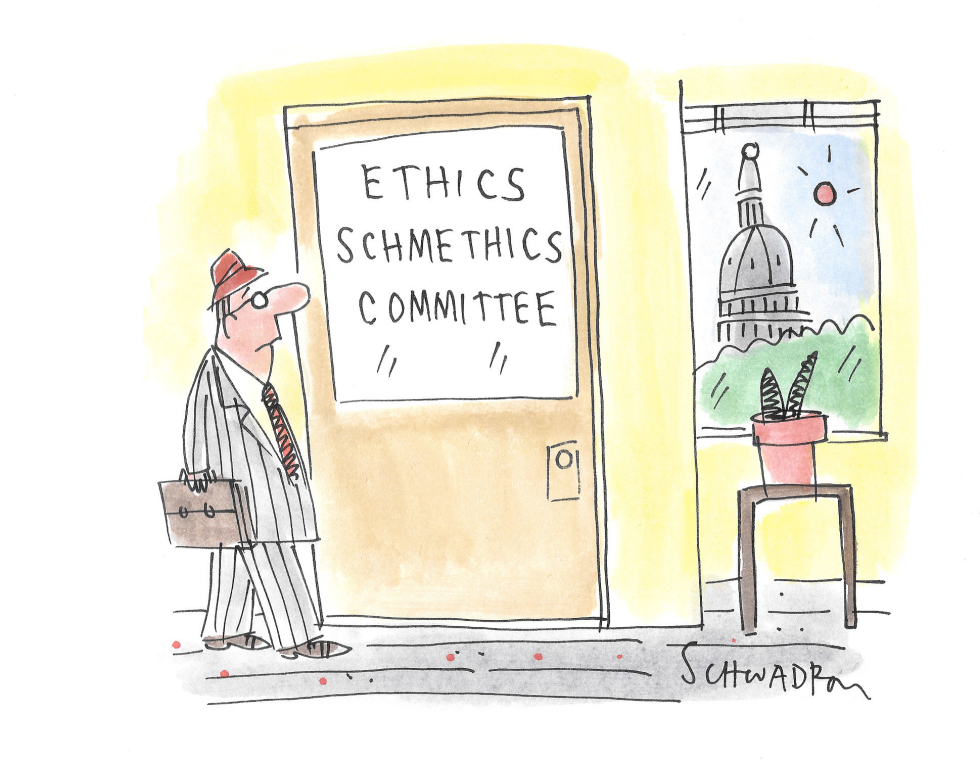
Congress continues to sideline meaningful ethics oversight, with lawmakers showing little interest in strengthening or even respecting the chamber's ethics committee. The panel exists on paper but carries little practical weight in daily operations. This dynamic matters because weak internal standards erode public trust in legislative institutions and invite outside influence. The cartoon captures the prevailing attitude that ethics rules are an afterthought rather than a core responsibility.
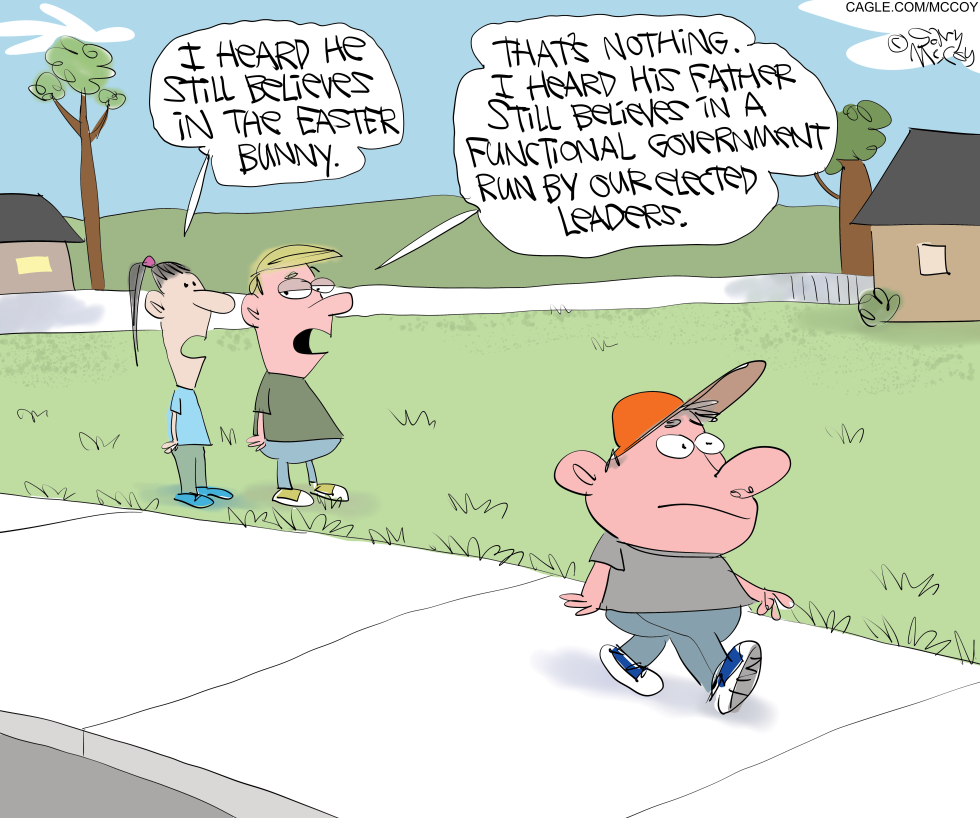
Public distrust in government institutions remains high as citizens question whether elected leaders can deliver effective results. Recent polls show widespread doubt about Congress and the executive branch functioning as intended. The cartoon captures this sentiment by likening such belief to childhood myths. It takes the position that expecting competent governance from current leaders is naive and unrealistic.
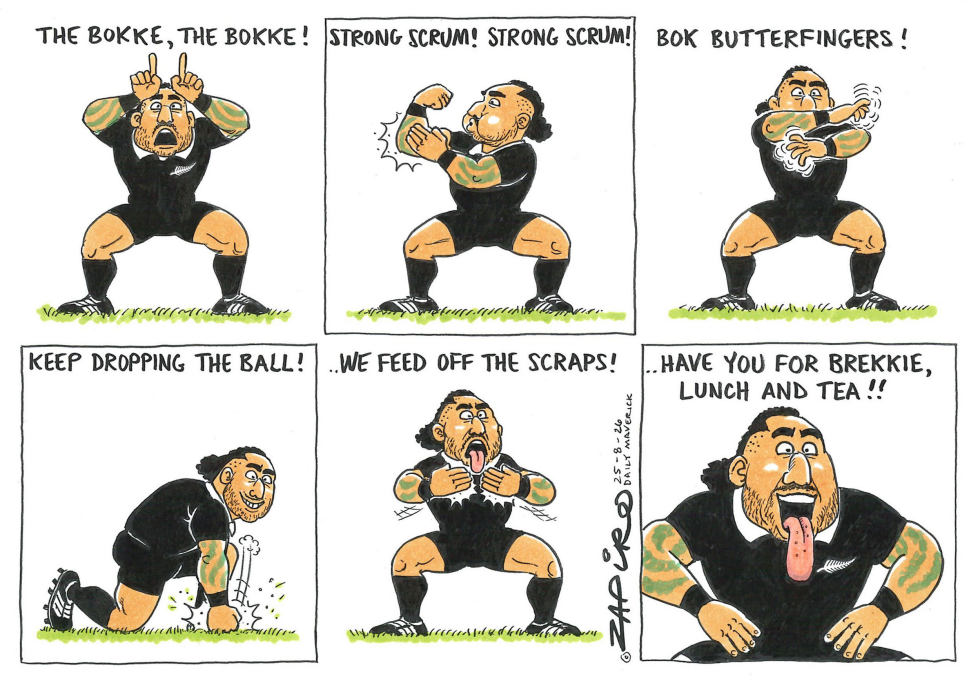
The Springboks rugby team faced ongoing criticism for handling errors and scrum vulnerabilities in matches against strong opponents like the All Blacks. The cartoon uses repeated failure motifs to argue that South African performance has deteriorated into consistent mistakes that opponents exploit easily.
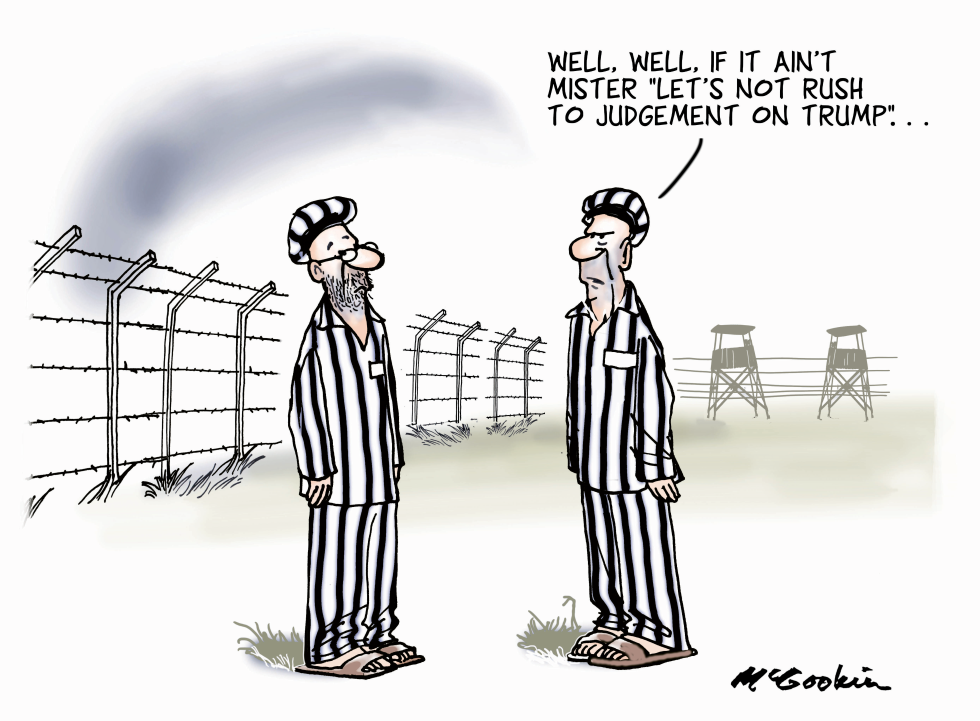
Prisoners in a secure facility highlight reluctance to rush judgment on Donald Trump. The exchange underscores ongoing debate over timing and fairness in evaluating the former president's actions. The piece argues that hesitation to judge reflects inconsistent standards applied to political figures.
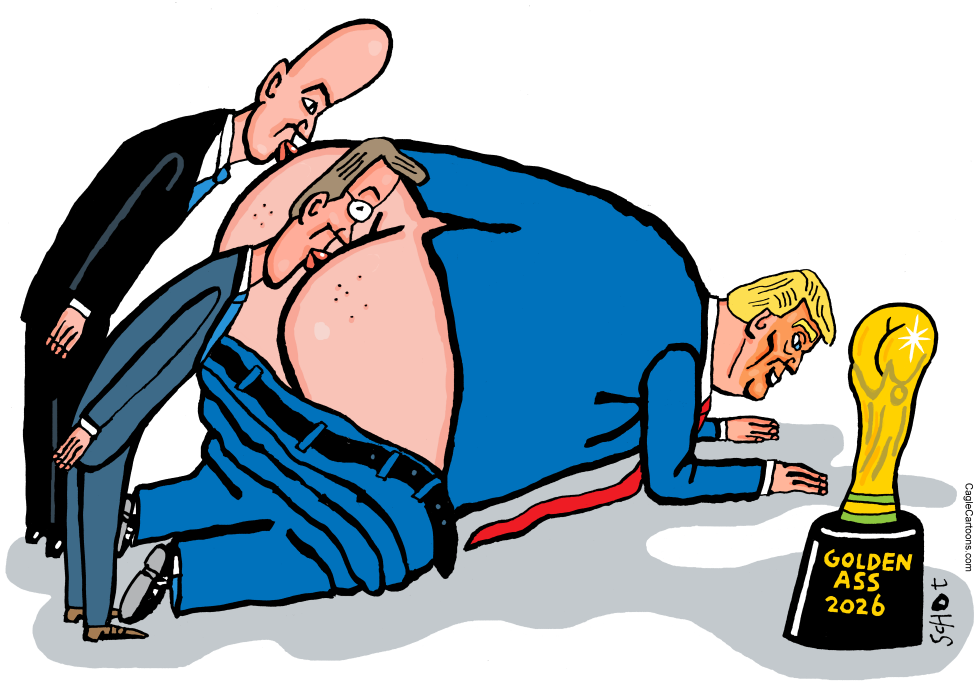
On July 9 2026 Donald Trump is shown crawling across the floor toward a golden trophy marked Golden Ass 2026. Two other men in business attire lean over him with shirts raised exposing their midsections. The scene places the trophy just out of reach as Trump extends one hand forward.
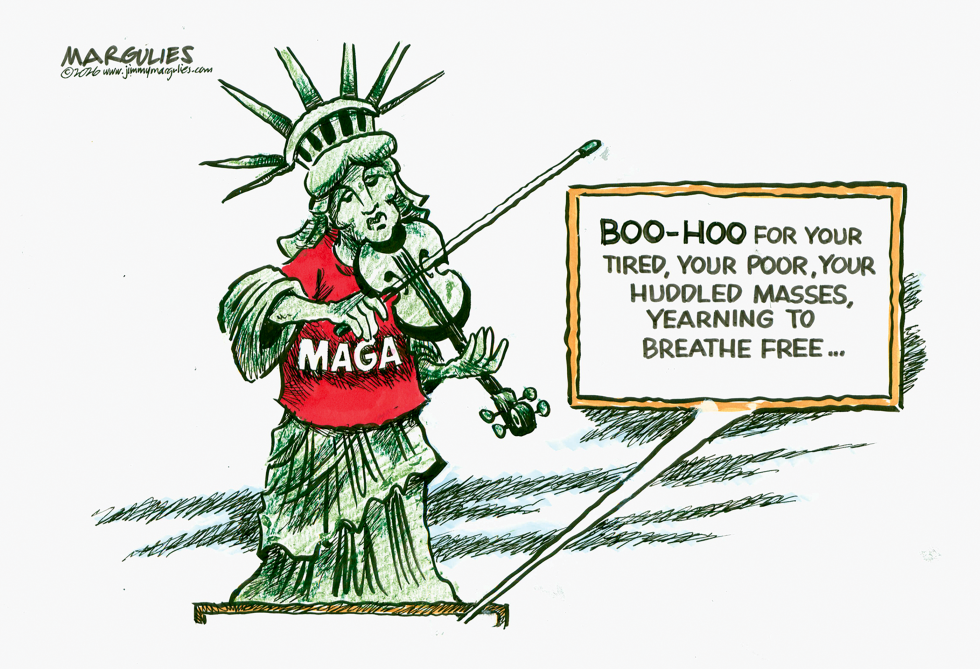
The image shows the Statue of Liberty wearing a red MAGA shirt and playing a violin while pointing to a sign that alters the famous immigration inscription to read boo-hoo for the tired and poor.
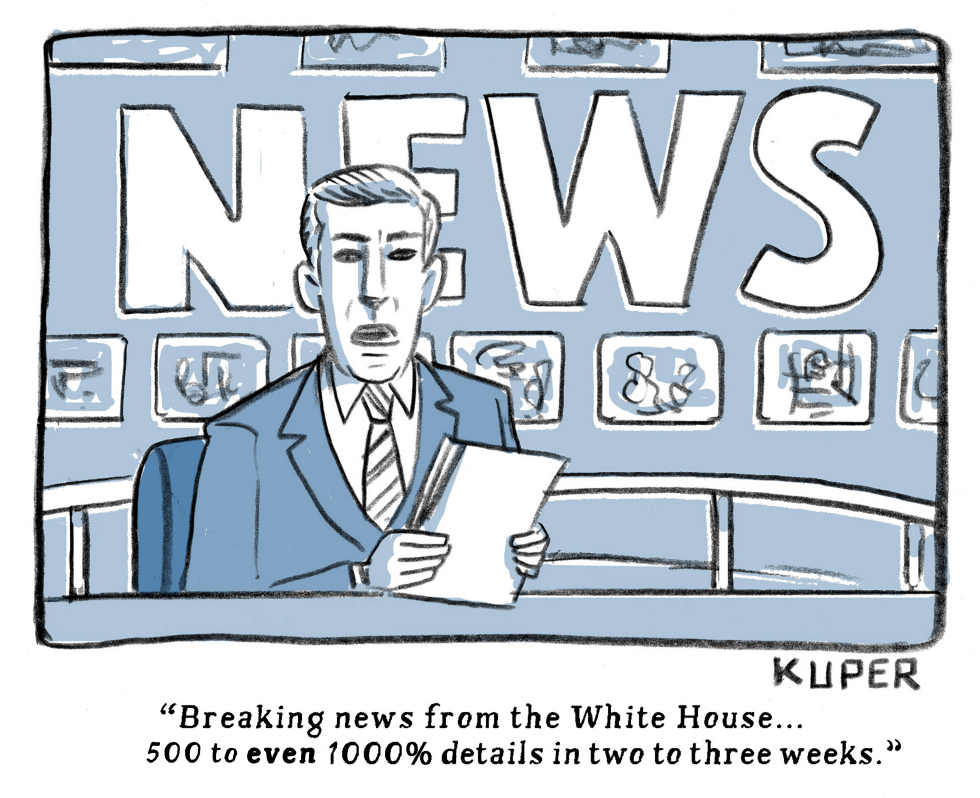
Peter Kuper\'s political cartoon depicts a stern news anchor at a desk under a large \'NEWS\' sign, holding a paper and announcing vague breaking news from the White House with promises of \'500 to even 1000% details in two to three weeks.\' The satire targets flip flopping, white house lies, and promises broken, reflecting on issues like no health care plan, food and drug prices rising, and soaring gas costs. Background elements include indistinct screens, keeping the focus on the anchor\'s absurd statement. This piece highlights distraction tactics amid war in iran continues and strait of hormuz closed, with warships and blockade adding to the billion dollars a day for military. The fbi epstein files tag suggests underlying scandals, but the image stays straightforward in its mockery of delayed truths.
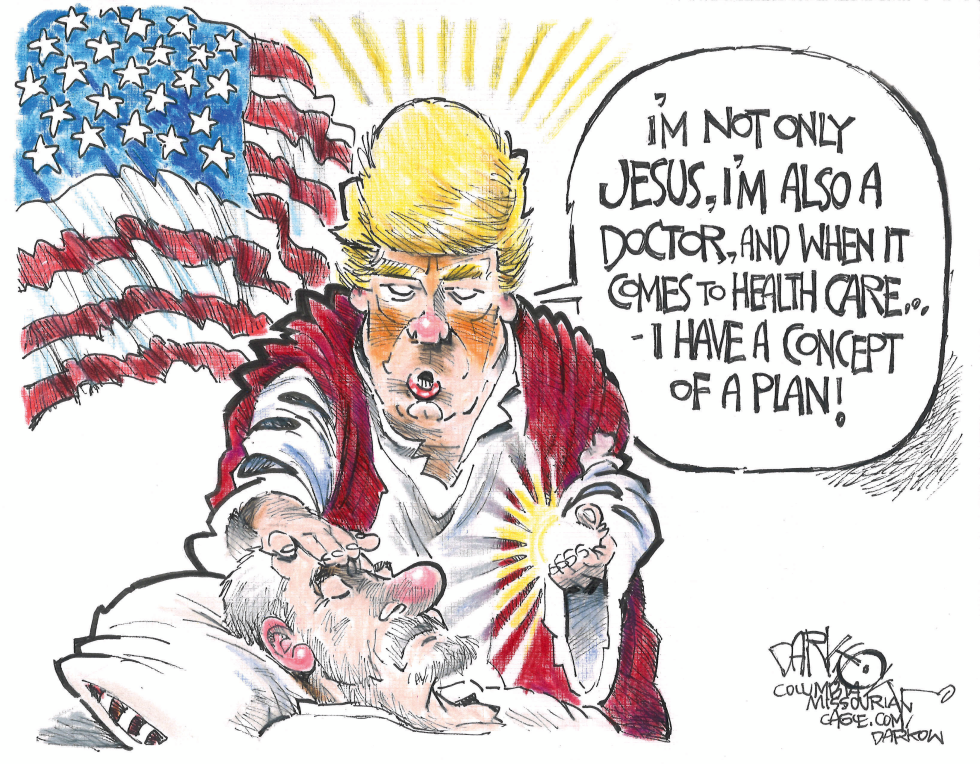
John Darkow's cartoon shows a blonde-haired figure resembling Donald Trump, clad in a red cape and white garment, extending a glowing hand toward an elderly man lying in bed. An American flag waves in the background with radiant beams from above. The speech bubble declares the figure as both Jesus and a doctor, boasting a concept of a health care plan. This setup highlights satirical elements in political imagery. Tags like donald trump political cartoon, trump health care plan satire, jesus doctor parody cartoon, american flag political humor, trump messiah complex illustration, and health care policy cartoon fit the visible components.
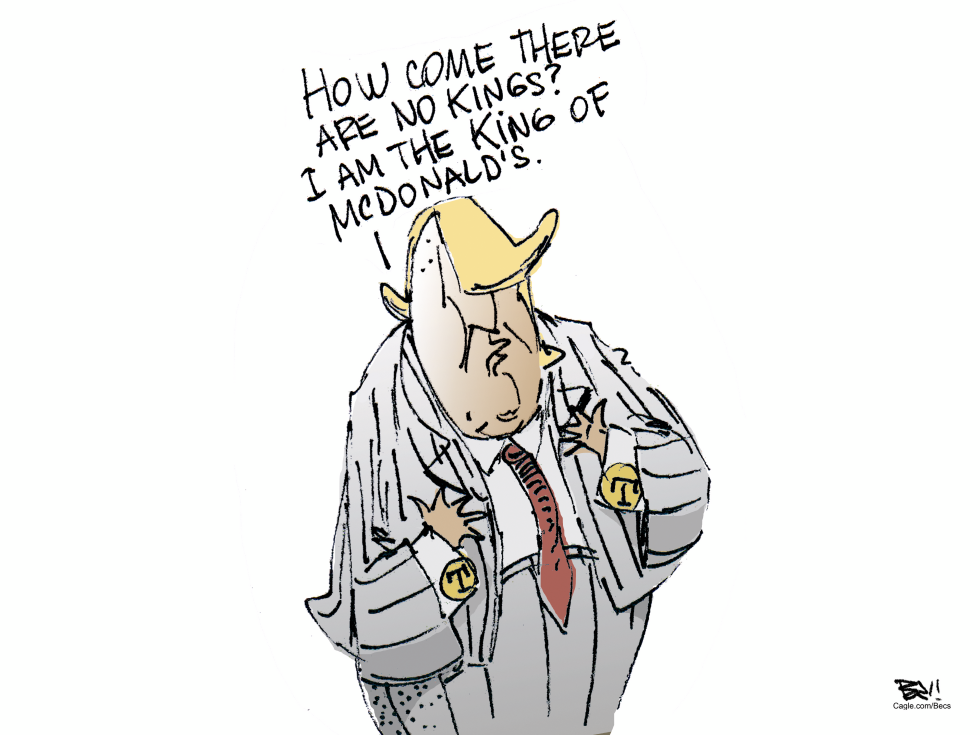
Becs's cartoon from 2026 captures a familiar figure in US politics, dressed in a white suit with yellow hair and hat, gesturing emphatically. The speech bubble reads, 'How come there are no kings? I am the king of McDonald's!' This piece tags into Donald Trump Administration themes, portraying the subject as Not King yet self-proclaimed ruler of McDonalds, emphasizing traits like Glutton, Egomaniac, Bad Guy, Dictator, and Arrogant. It's a straightforward jab at overblown self-importance, common in political satire. The simple line art keeps focus on the absurdity, making it shareable for those tracking Trump-era humor. Cagle.com hosts such works, blending dry wit with insider commentary on power and excess.
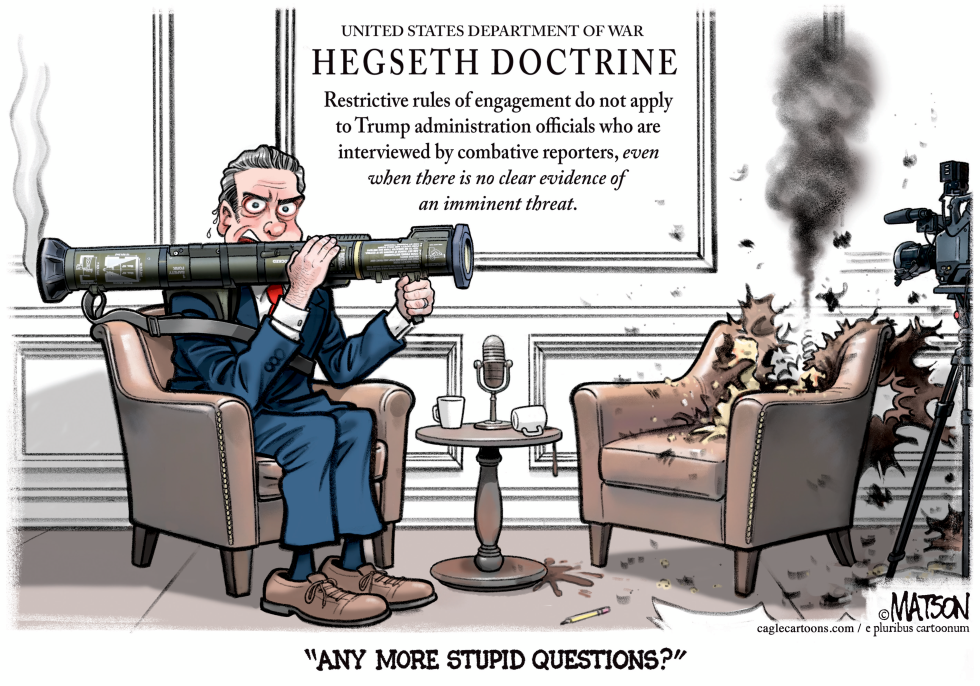
R.J. Matson's cartoon depicts a stern-faced official in a formal setting, wielding a massive rocket launcher that has just obliterated the interviewer's chair, smoke billowing from the debris. The header proclaims the 'Hegseth Doctrine' under the 'United States Department of War,' stating that restrictive rules of engagement don't apply to Trump administration officials facing combative reporters, even without clear evidence of an imminent threat. The official snarls, 'Any more stupid questions?' as a camera topples amid the chaos. This setup skewers the notion of overreactive defenses in political interviews, blending dry humor with sharp commentary on media relations. Tags like Hegseth Doctrine, Trump administration satire, press interview violence, combative reporters parody, imminent threat joke, and political cartoon Matson capture the essence of this visually punchy critique.
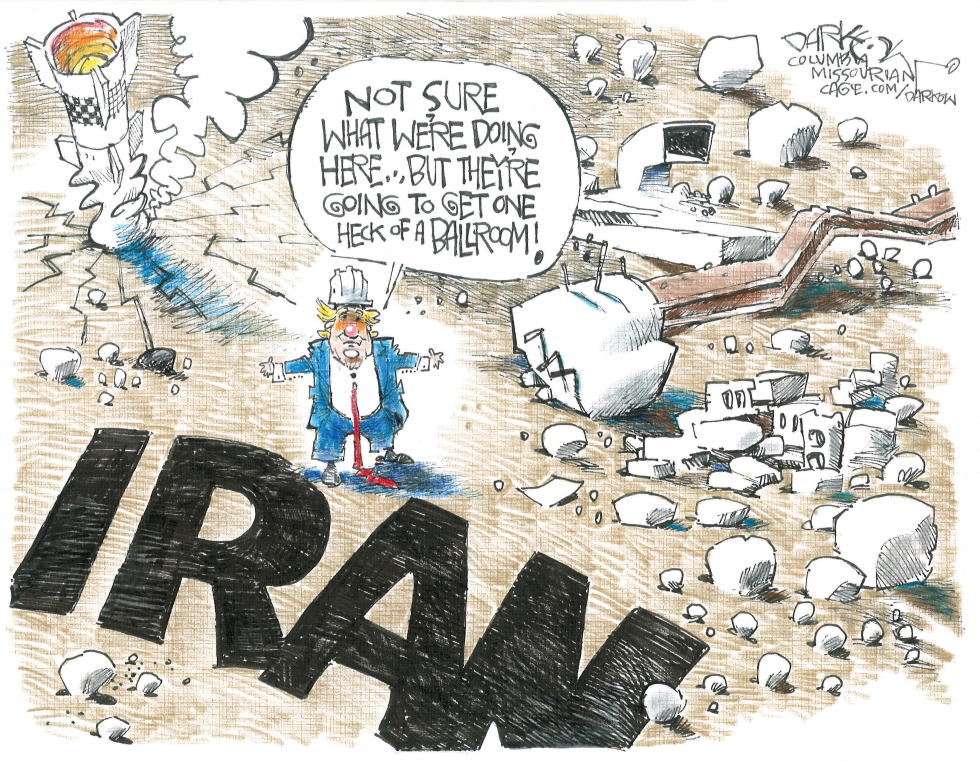
This biting political cartoon features a caricatured Donald Trump in a construction hard hat, overlooking a bombed-out landscape labeled 'IRAN,' with a missile launching in the background. His speech bubble confesses confusion over US actions but promises 'one heck of a ballroom,' a sly pun on Trump's real estate empire clashing with foreign policy blunders. Incorporating tags like political satire, Trump caricature, Iran nuclear program, US-Iran relations, geopolitical humor, and Trump hotel pun, the image mocks the haphazard withdrawal from the nuclear deal, suggesting it paves the way for Iran's nuclear ambitions while Trump envisions luxury redevelopment. The ruined buildings and debris emphasize the destructive fallout, blending humor with insightful critique on Middle East instability.
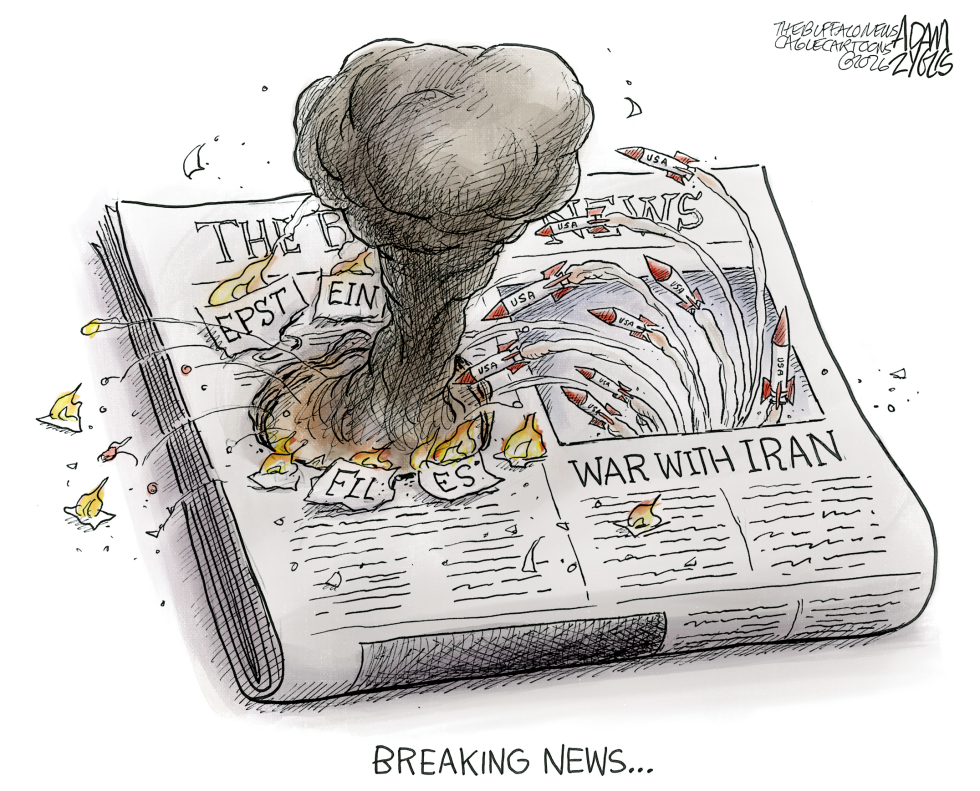
Dive into Adam Zyglis's political cartoon where breaking news morphs into a nuclear explosion, symbolizing media sensationalism around the Epstein files and war with Iran. USA missiles and Iran conflict visuals underscore geopolitical tension, while the exploding headlines serve as a sharp journalism critique. This satirical illustration captures the chaos of fake news explosion, reminding us how sensational stories can overshadow substance in today's fast-paced media landscape. With irreverent humor, it questions the ethics of turning tragedies into spectacles, blending satire with insightful commentary on news consumption.
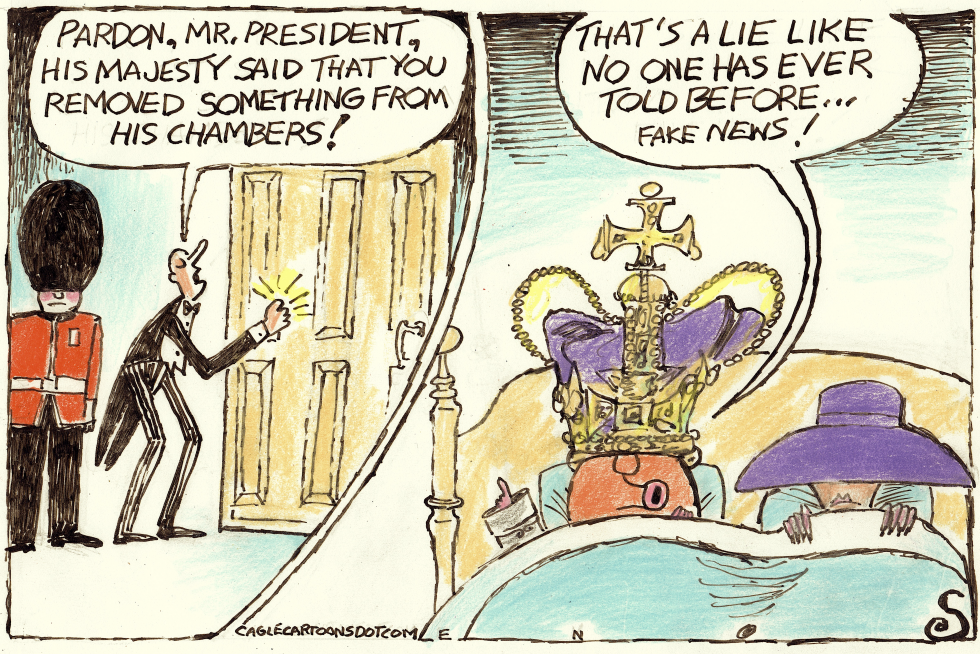
Randall Enos captures Donald Trump in a state visit to England, caricatured as King Trump lounging in bed with Melania, donning a massive crown while dismissing a servant's accusation of removing something from King Charles' chambers as 'fake news.' The cartoon cleverly merges Trump's signature phrases with royal pomp, highlighting the absurdity of his denials in a foreign, majestic context. Tags like state visit, King Charles, and fake news underscore the humor in blending American politics with British monarchy, making it a sharp commentary on Trump's larger-than-life persona.
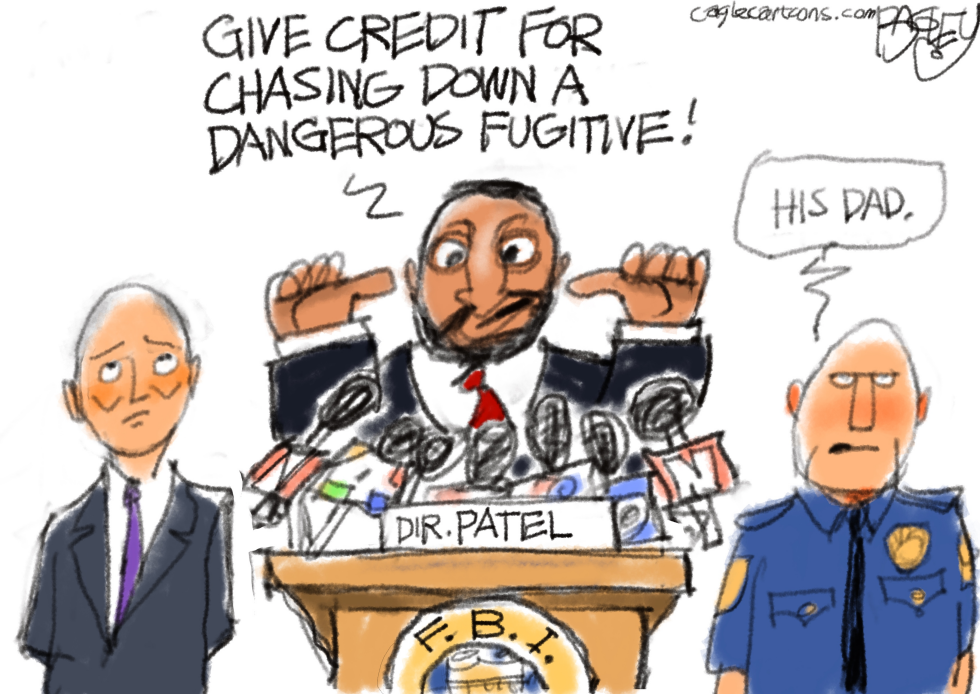
Pat Bagley's cartoon skewers Kash Patel in his imagined role as FBI director, standing at a podium labeled 'DIR. PATEL' and 'F.B.I.,' emphatically demanding 'Give CREDIT FOR CHASING DOWN A DANGEROUS FUGITIVE!' while pointing thumbs at himself. A uniformed officer on the right mutters 'His Dad,' undercutting the boast with simple truth. On the left, another suited figure looks on with a skeptical expression. The scene captures national security bluster in a MAGA GOP context, tying into tags like Charlie Kirk, assassination, and Donald Trump. The dry humor targets elections, government, and social media influences, poking at perceived idiocy and lies in political figures. Caglecartoons.com branding and the artist's signature add authenticity to this satirical take on power and credit-grabbing.