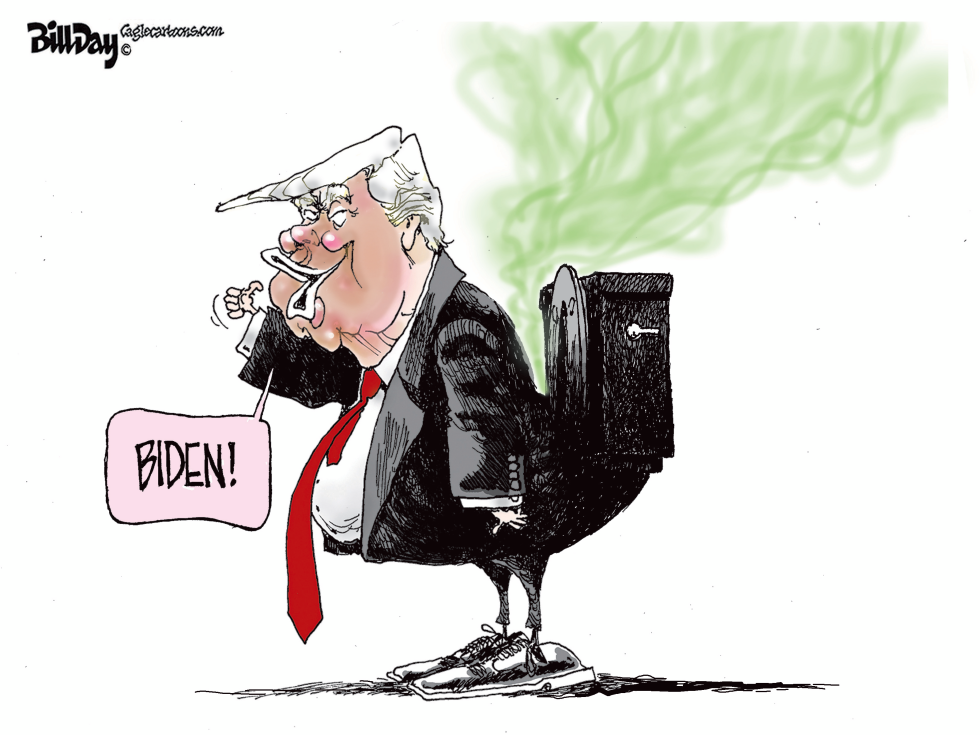
Donald Trump has repeatedly attributed policy shortcomings and political setbacks to his predecessor Joe Biden throughout 2026. This pattern continues a long-standing approach of shifting responsibility rather than addressing current challenges directly. The editorial position criticizes this tactic as evasive and unhelpful for resolving real governance problems.
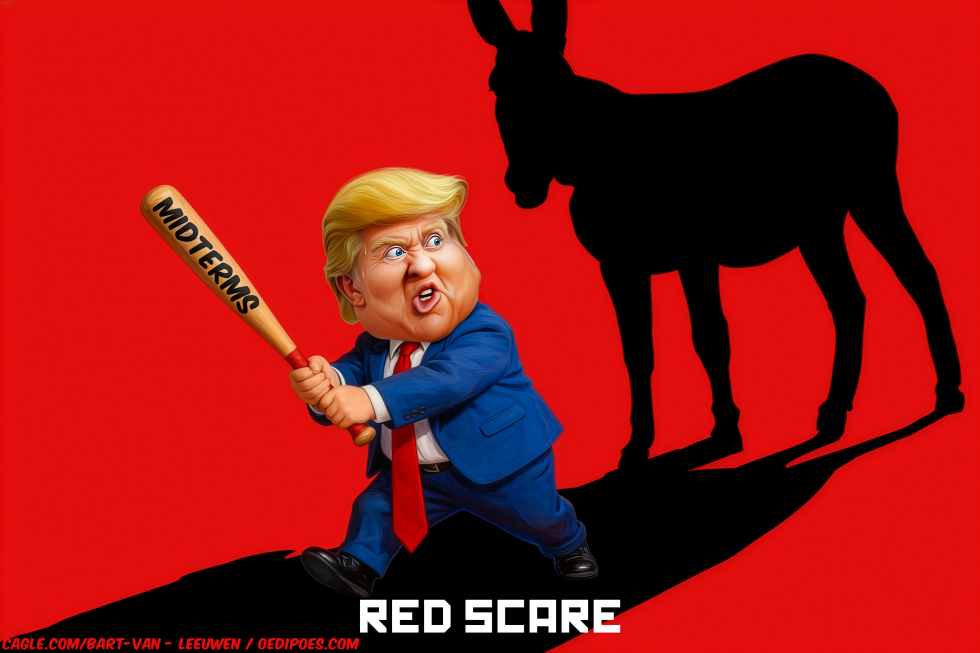
The cartoon shows Donald Trump in a blue suit swinging a baseball bat labeled MIDTERMS toward a black donkey silhouette on a red background. The phrase RED SCARE appears prominently at the bottom. Published on September 14, 2026, the image comments on Trump's approach to the upcoming midterm elections. It portrays the former president as aggressively pursuing Democratic opponents. The visual draws on historical Red Scare imagery to suggest fear-based political tactics. The composition places Trump in the foreground with the donkey shadow looming behind him.
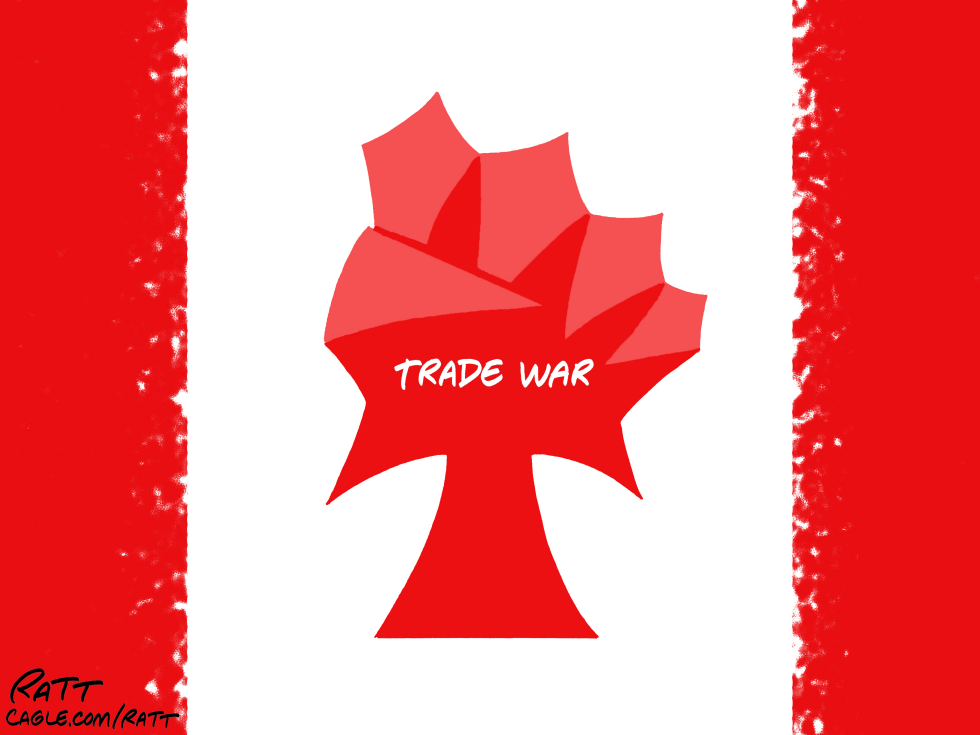
Ongoing US-Canada trade tensions escalated in 2026 with new tariff threats targeting Canadian exports. The dispute threatens key sectors including autos, lumber and agriculture, raising costs for consumers on both sides of the border. Canada has signaled plans to diversify markets and strengthen domestic industry. The cartoon frames the conflict as a direct assault on Canadian sovereignty and economic stability. It portrays the trade war as fracturing national symbols while urging a stronger northern response.
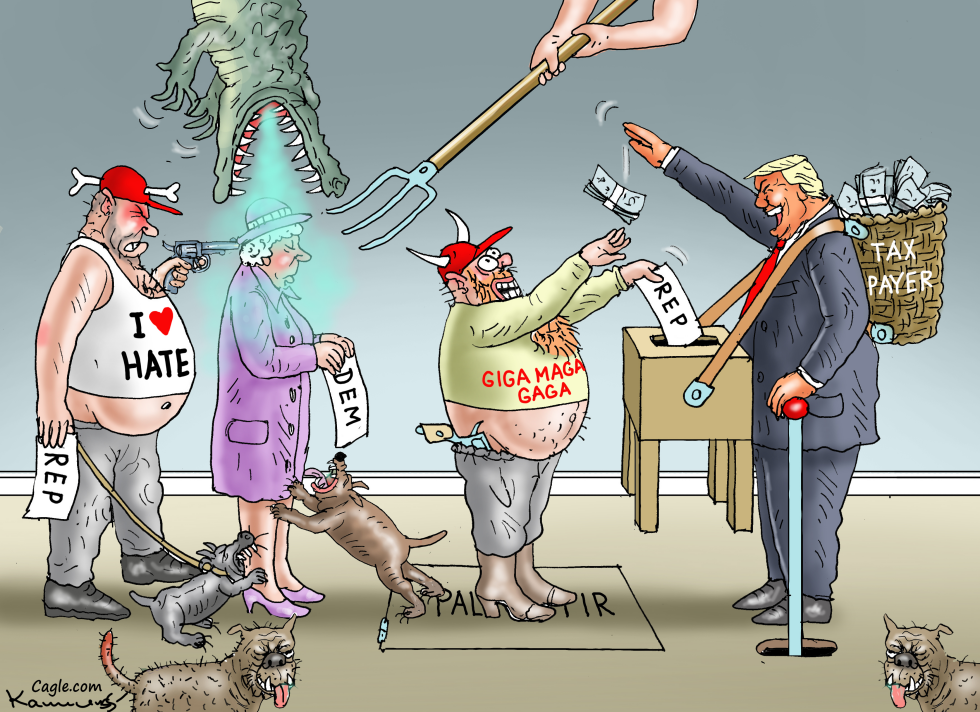
As the 2026 midterm elections approach, former President Trump has positioned himself as a central force in Republican campaigns, directing resources and mobilizing supporters. The cartoon highlights the use of taxpayer money in these efforts and the intense partisan divide, with Democrats portrayed as under attack. It takes the position that such involvement risks undermining fair electoral processes.
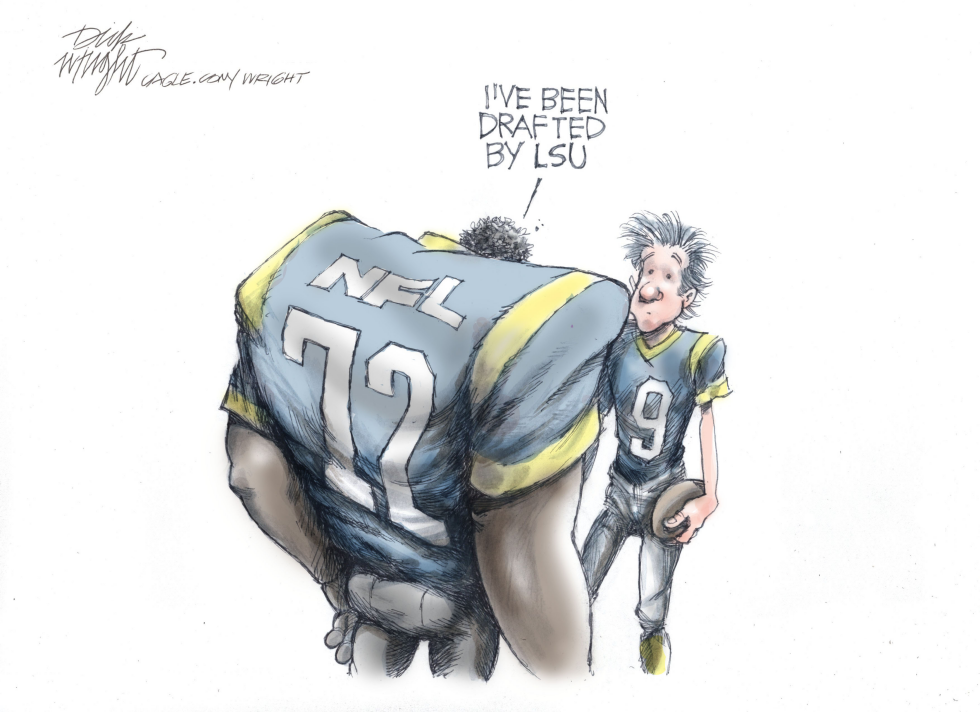
College football programs like LSU face intense pressure to secure top talent each season. With NIL deals and transfer rules reshaping the landscape, some schools push boundaries in pursuit of star power. The cartoon responds to this dynamic by depicting LSU directly targeting NFL players, underscoring the absurdity of ever-escalating recruitment efforts that blur lines between amateur and professional levels.
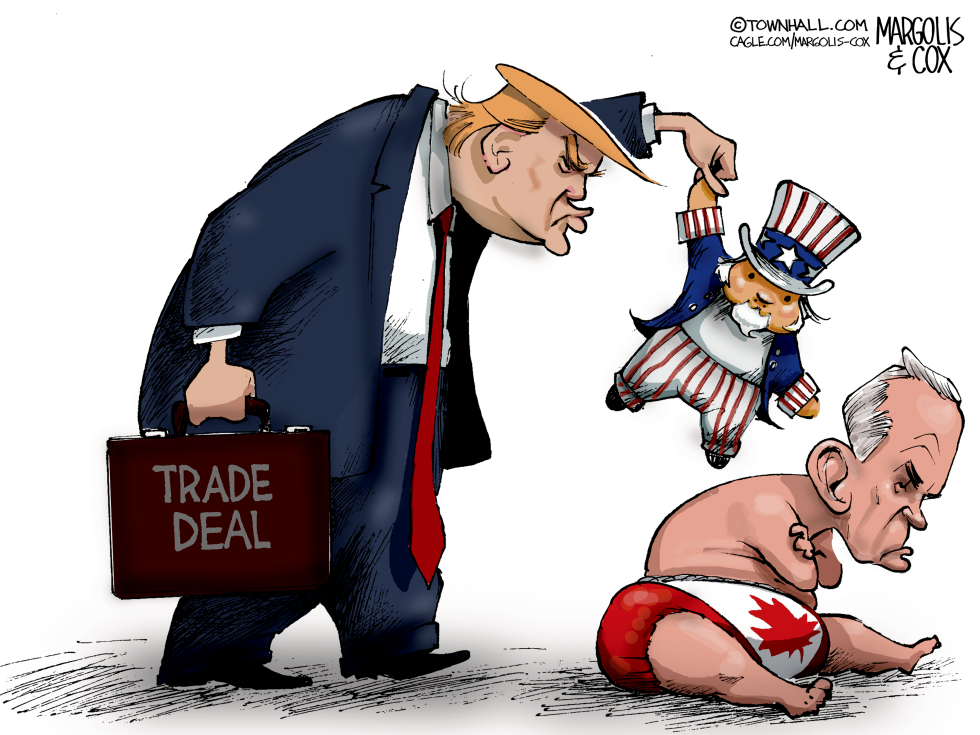
Donald Trump holds a briefcase labeled trade deal while dangling an Uncle Sam puppet above a baby figure wearing a Canadian flag diaper, identified as Mark Carney. The September 2026 cartoon responds to ongoing US-Canada trade tensions under the Trump administration. Carney, a prominent Canadian figure eyed for leadership, faces portrayal as vulnerable in negotiations. The piece argues that Trump exerts direct control over Canadian interests through economic leverage rather than equal partnership.
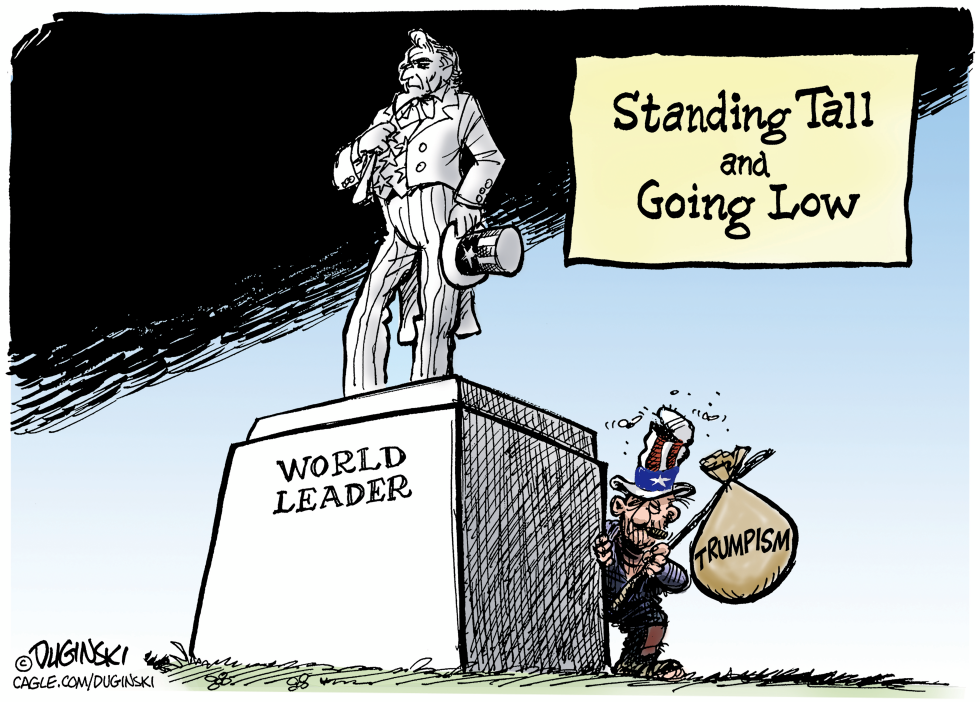
Donald J. Trump’s ideological legacy continues to shape Republican politics and foreign policy debates into 2026. Critics argue that Trumpism’s emphasis on transactional deals and nationalist rhetoric has eroded traditional US alliances and moral authority on the global stage. The cartoon presents this influence as a literal weight pulling the nation downward from its claimed leadership role, underscoring concerns that short-term domestic appeals come at the cost of long-term international credibility.
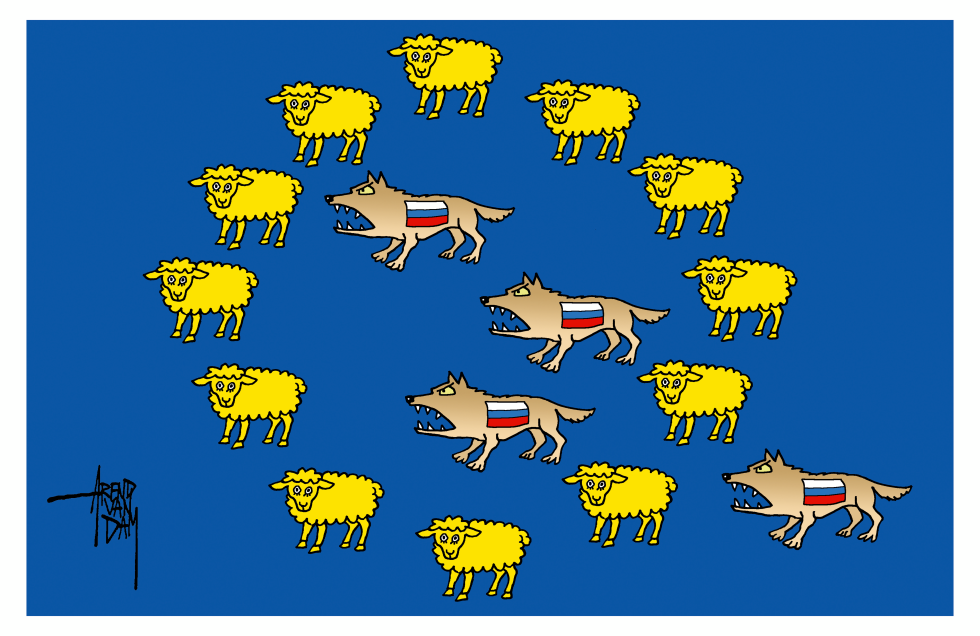
Russian hybrid warfare operations continue to target Eastern European nations through infiltration and influence campaigns. These tactics blend conventional pressure with covert actions to destabilize neighbors without triggering full-scale conflict. The editorial argues that European states must recognize and counter these disguised threats before they erode security further.
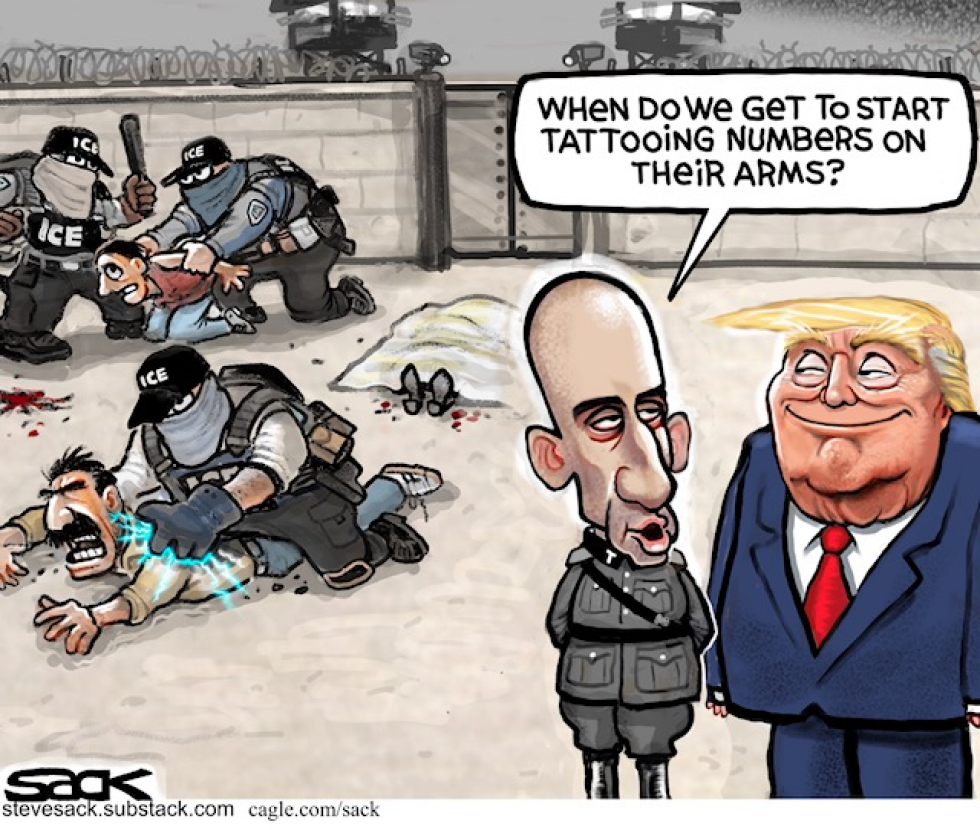
Donald Trump has publicly discussed aggressive measures in immigration detention facilities amid ongoing enforcement operations. The remarks come as ICE conducts arrests and holds individuals at secure sites. Critics argue the approach echoes past abuses. The piece portrays the comments as crossing into prohibited territory by invoking forced numbering.
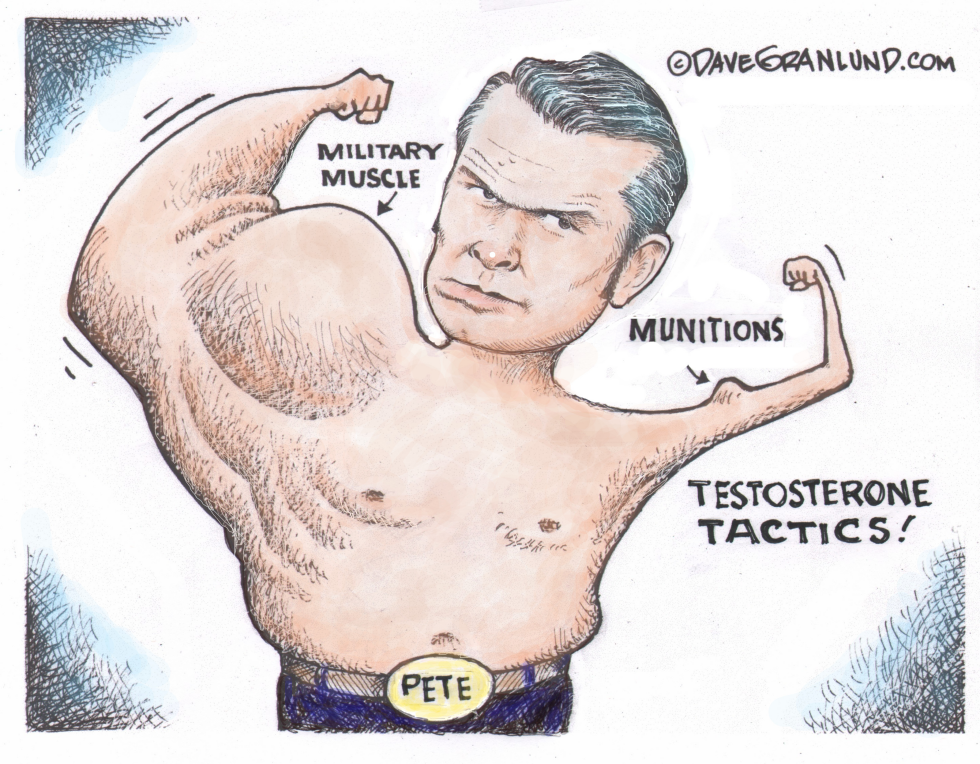
Pete Hegseth, positioned for a senior defense role, has drawn attention for emphasizing robust military capabilities and direct action. The approach signals a shift toward assertive posture in national security planning. The piece portrays this emphasis as centered on physical strength and munitions focus rather than broader strategy.
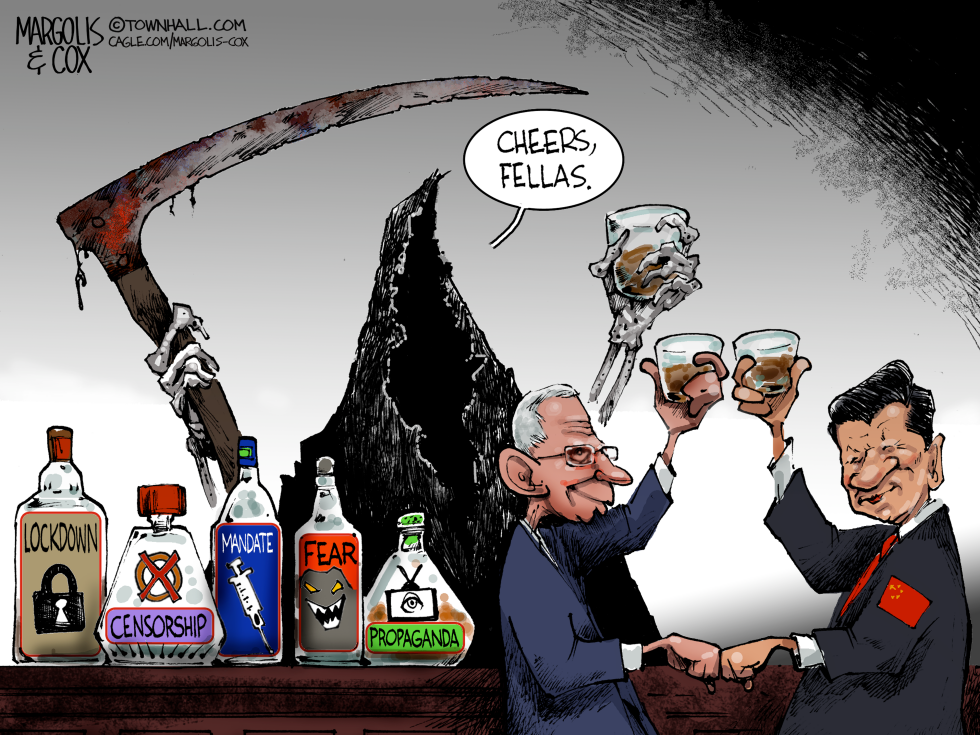
On August 6, 2026, the cartoon responds to lingering debates over COVID-19 policies by depicting former NIAID director Anthony Fauci and Chinese leader Xi Jinping toasting with the Grim Reaper. The image frames pandemic tools as shared instruments of control. The editorial position criticizes both figures for embracing fear-driven measures and information suppression.
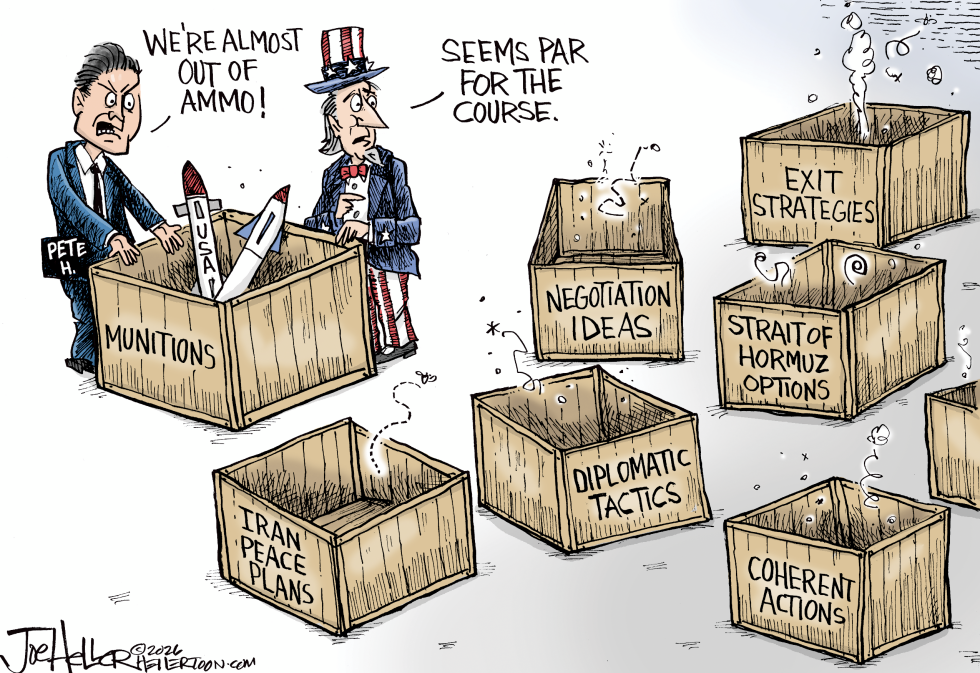
Defense Secretary Pete Hegseth alerts that the United States is nearly out of munitions while pursuing Iran policy options. The cartoon depicts Uncle Sam acknowledging the situation as routine, underscoring limited remaining diplomatic and strategic tools for addressing Iran.
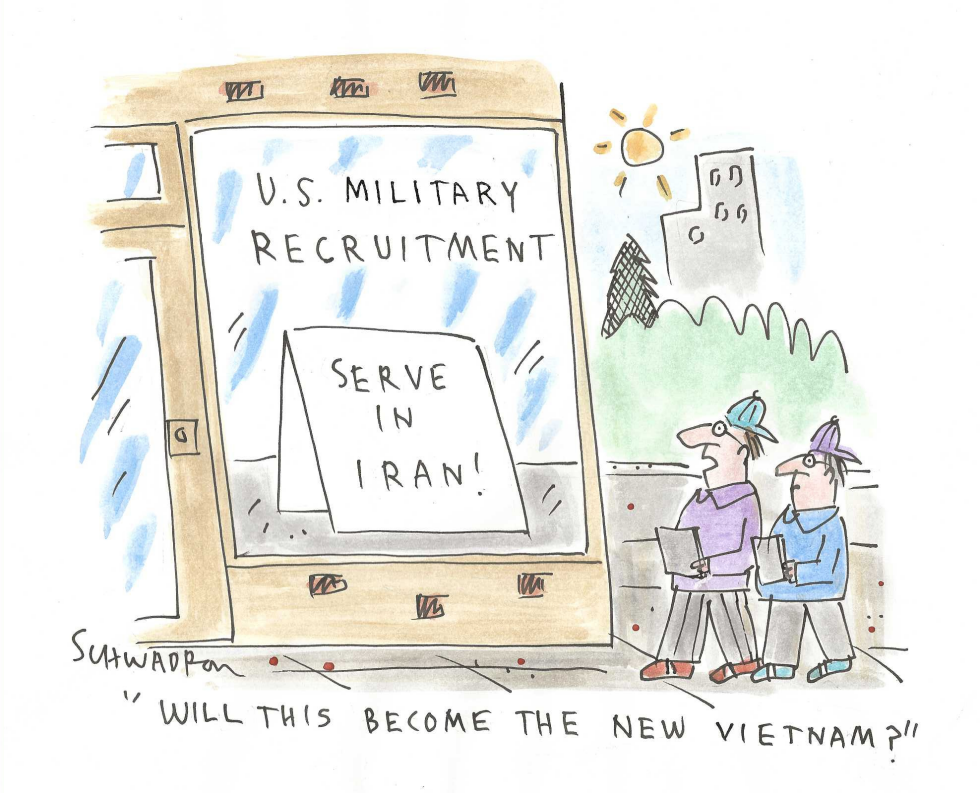
U.S. military recruitment efforts have begun highlighting opportunities to serve in Iran, prompting public questions about potential escalation. The move comes amid ongoing regional tensions and draws direct comparisons to the Vietnam War era. Observers worry the campaign signals a shift toward deeper U.S. military commitments overseas. The editorial takes the position that such recruitment tactics risk repeating past mistakes by underestimating public resistance to prolonged conflicts.
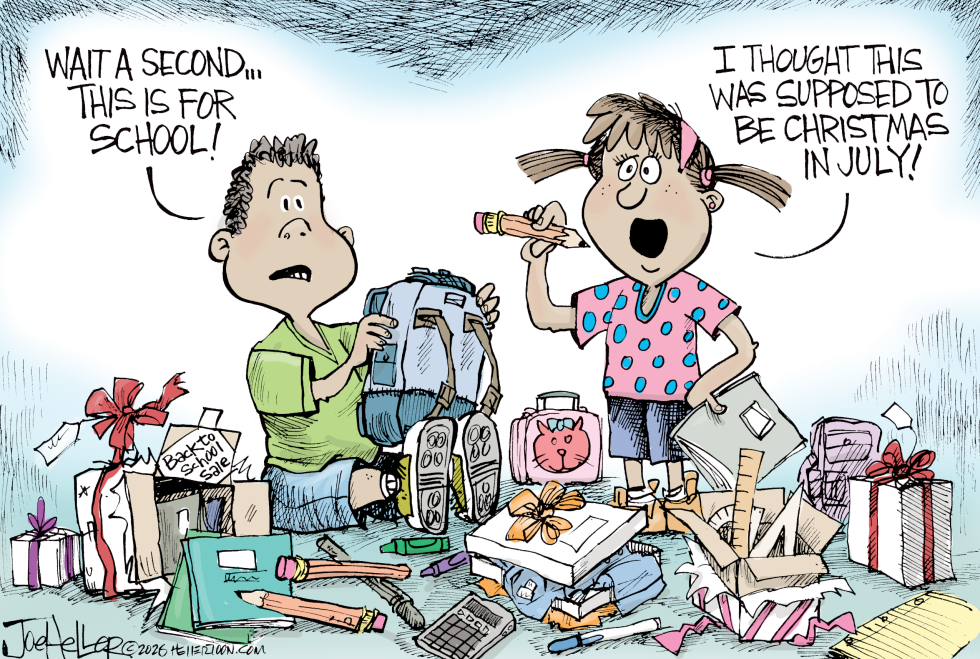
Retailers launched back-to-school promotions in late July, prompting families to stock up on supplies weeks ahead of the academic calendar. The timing overlaps with summer clearance events that mimic holiday marketing tactics. Parents and students face added pressure to buy early amid rising costs for essentials. The piece highlights how commercial calendars compress traditional shopping seasons and shift family routines.
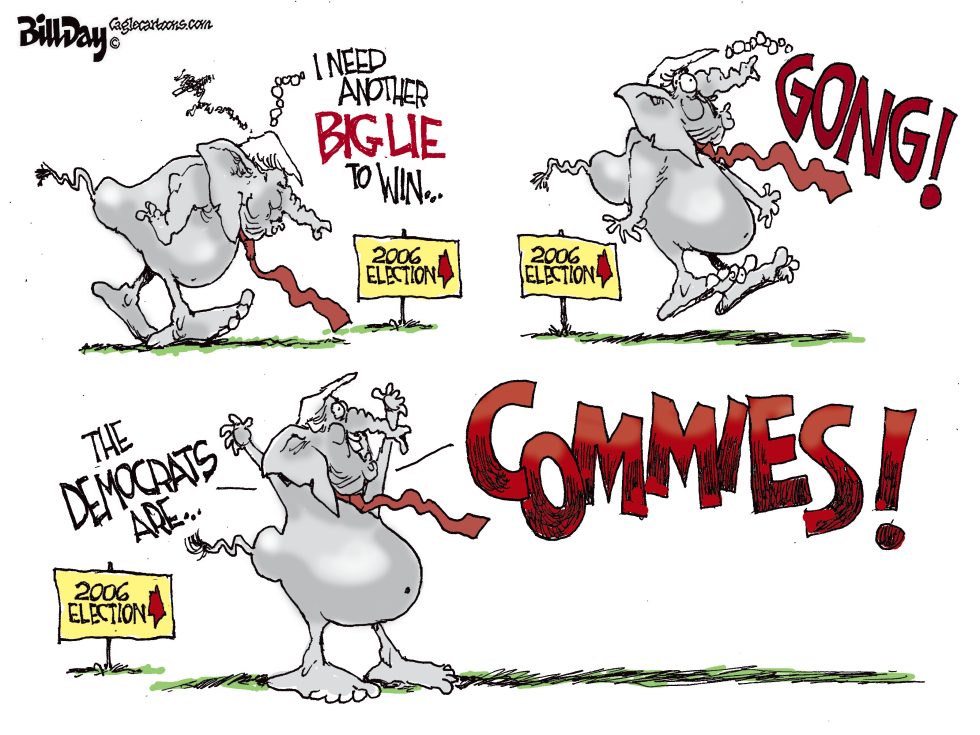
During the 2006 midterm election cycle both major parties traded accusations with Republicans pushing unsubstantiated claims to sway voters and Democrats facing repeated communist labels from opponents. The dynamic reflected long standing partisan efforts to undermine credibility through exaggerated rhetoric rather than policy debate. The piece argues these tactics undermine fair elections and deserve rejection by voters.