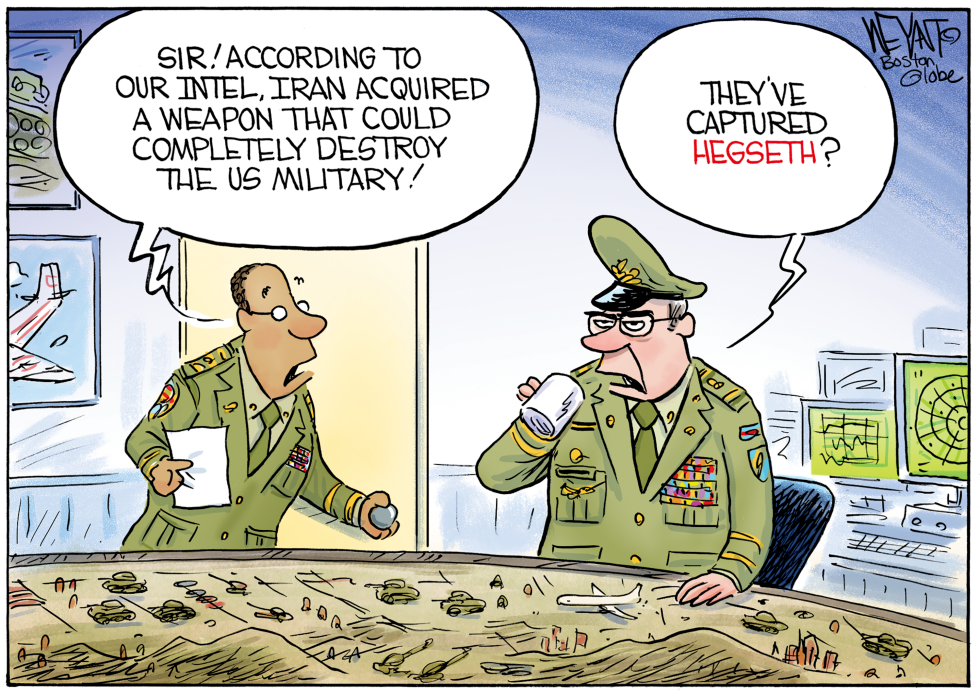
On September 16 2026 a cartoon depicted two US military officers reacting to intelligence about an Iranian weapon capable of destroying the American military. The senior officer immediately identifies Pete Hegseth as the captured asset in question. The piece responds to ongoing debate over Hegseth's fitness for senior defense leadership and questions whether his presence undermines readiness more than external adversaries.
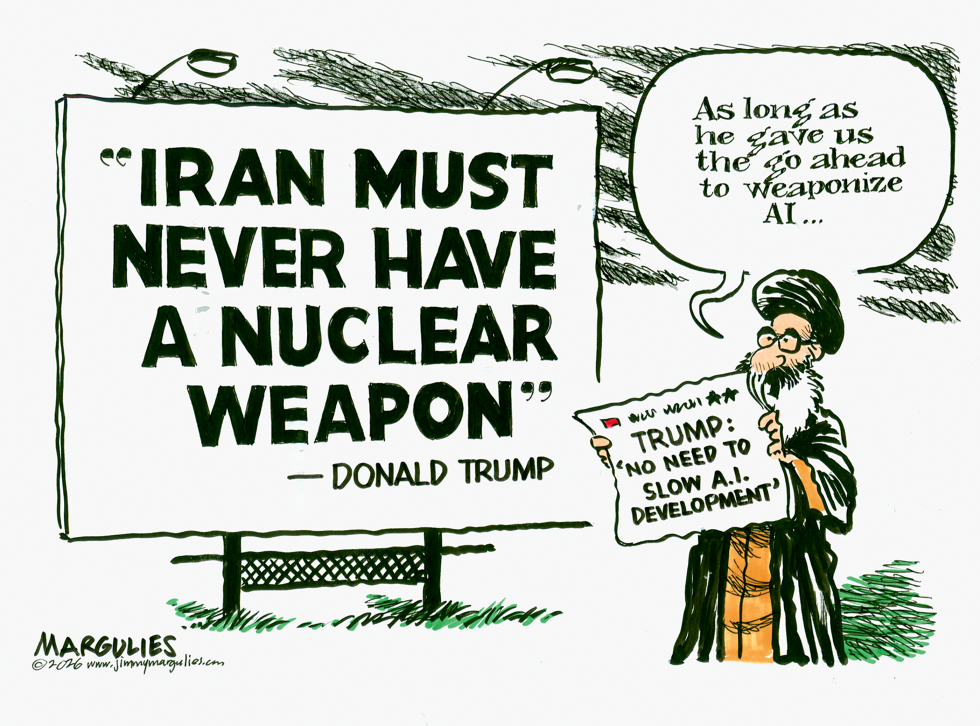
Donald Trump has repeatedly stated that Iran must never obtain a nuclear weapon, a position rooted in long-standing U.S. efforts to prevent nuclear proliferation in the Middle East. At the same time, reports indicate interest in accelerating artificial intelligence development without slowdowns. The cartoon responds to this apparent tension by depicting an Iranian leader conditioning acceptance of the nuclear restriction on permission to pursue AI weaponization. It argues that prioritizing rapid AI advancement risks undermining nonproliferation goals and hands strategic advantages to adversaries.
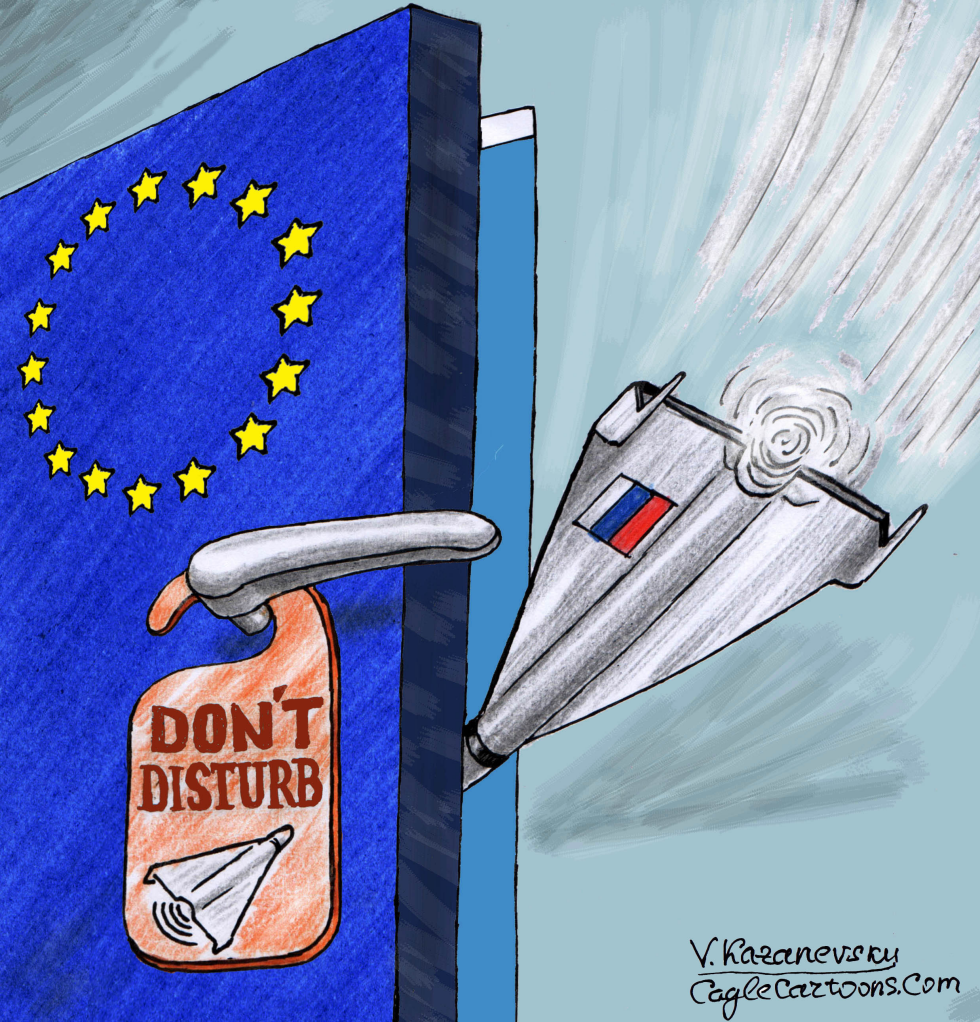
A Russian drone has breached an EU doorway in a symbolic incident highlighting ongoing security concerns from Moscow's actions near European borders. The event underscores vulnerabilities in continental defense amid the protracted Ukraine conflict and repeated airspace violations. The piece argues that EU warnings and isolation measures prove insufficient against persistent Russian incursions.
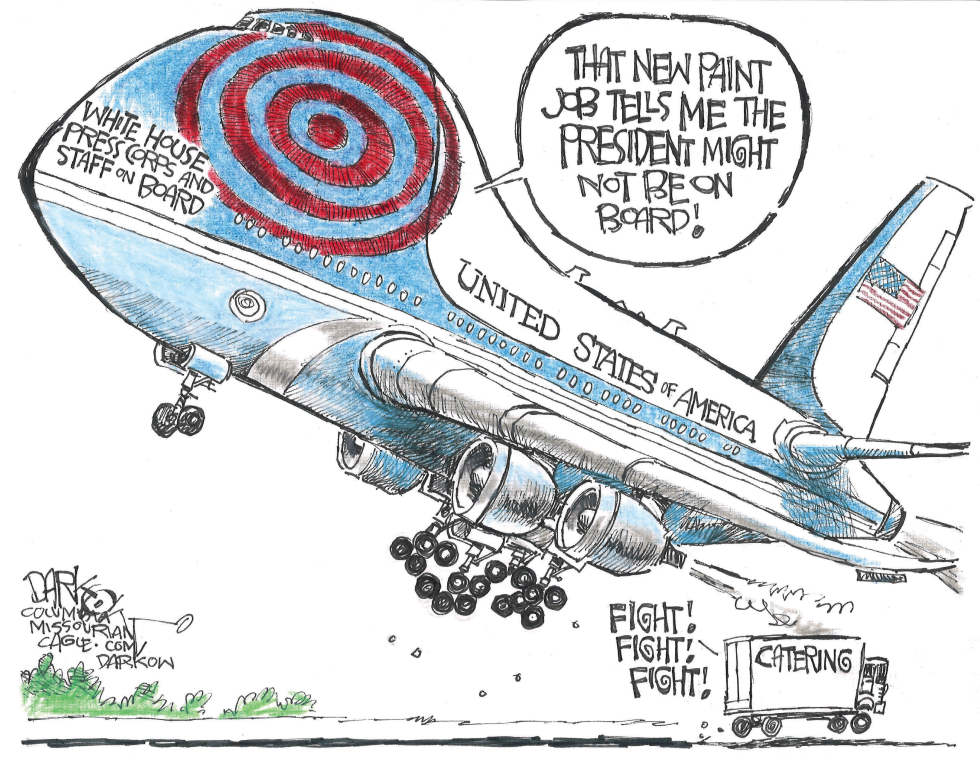
Air Force One appears with a large target painted on its upper fuselage while carrying White House press corps and staff. A nearby catering truck chants fight slogans as the plane descends. The image suggests the president may not be aboard the targeted aircraft. This visual plays on recent tensions surrounding presidential travel and security. The editorial stance highlights perceived risks or distancing from official duties.
Air Force One appears with a prominent target symbol on its fuselage amid questions about an escape vehicle. The image highlights concerns over presidential aircraft security during a period of heightened threats to the presidency. The editorial position critiques vulnerabilities in executive protection protocols.
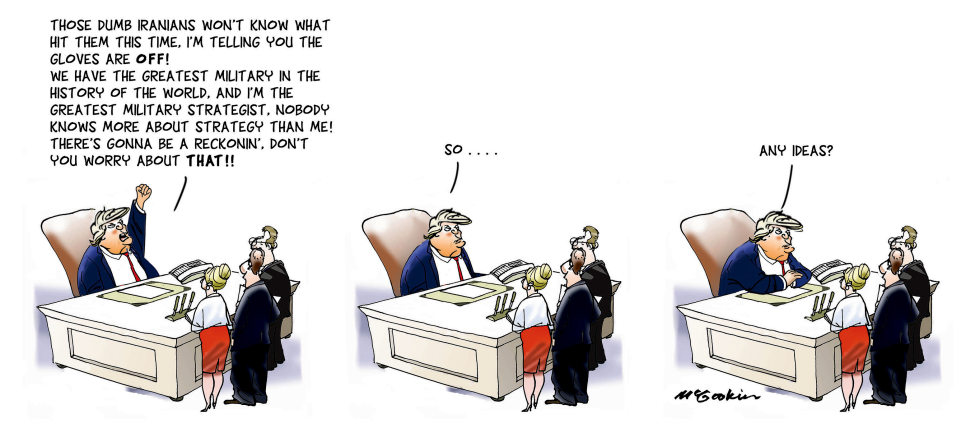
President Trump has directed his national security team to develop new military options regarding Iran. The move comes amid ongoing regional tensions and follows public statements emphasizing U.S. military superiority. The editorial takes the position that such demands reflect an impulsive approach to foreign policy that risks unnecessary escalation without clear strategic direction.
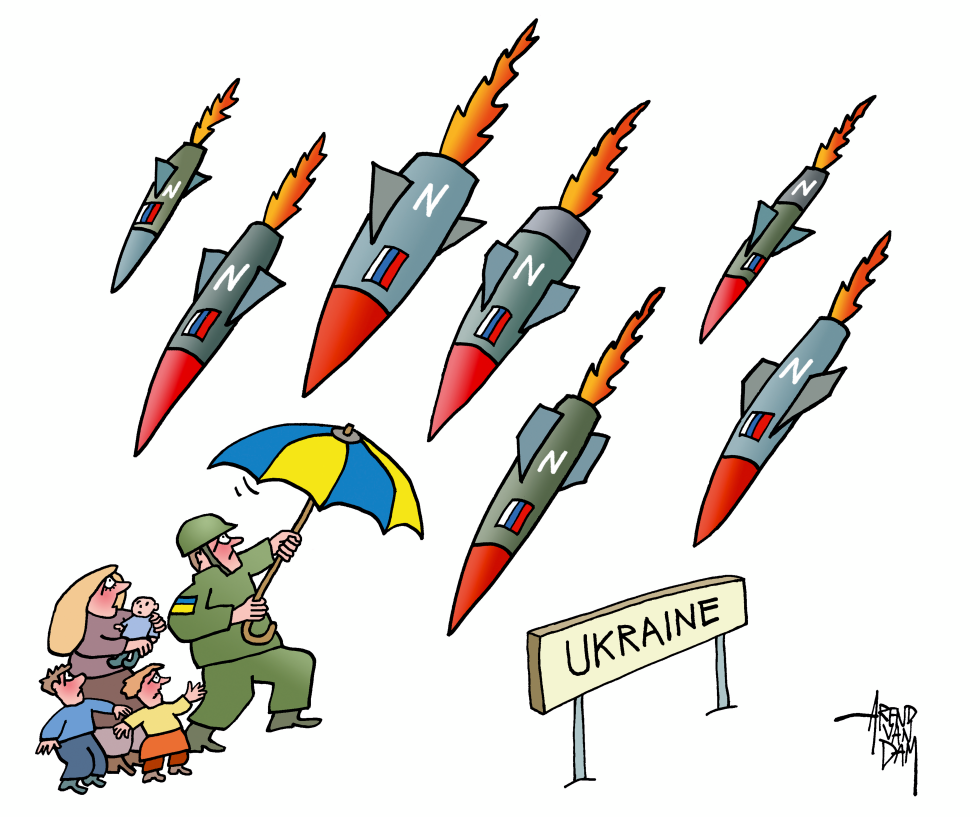
Russia has escalated its campaign against Ukraine with ballistic missiles carrying nuclear markings. The strikes heighten risks to civilian populations already under sustained attack. The editorial argues that such threats underscore the need for stronger defensive measures and international resolve to deter further escalation in the protracted conflict.
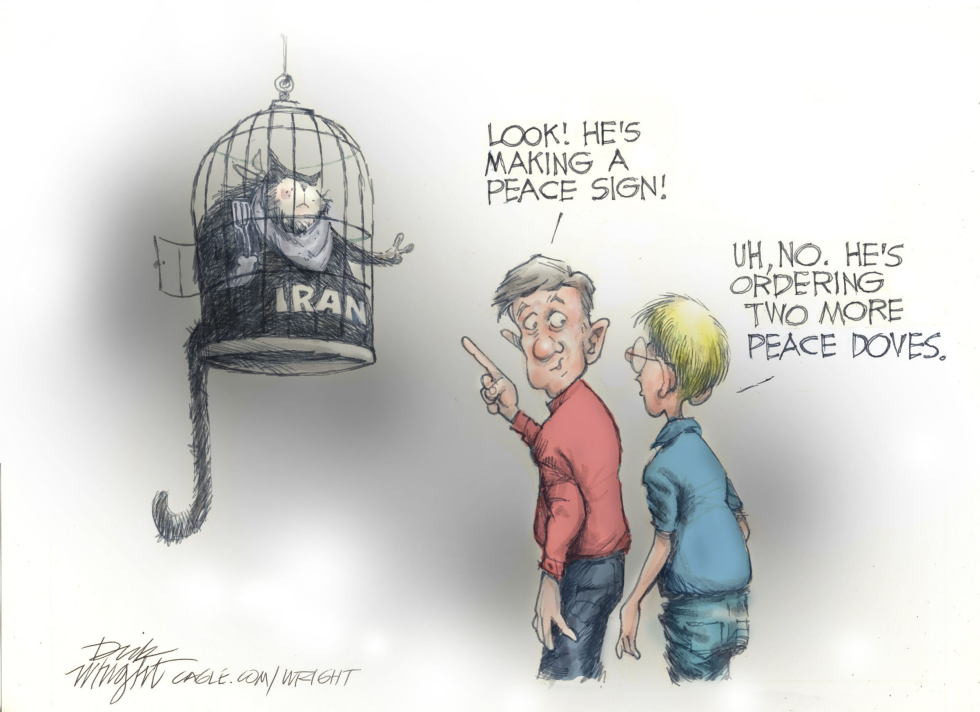
Iran continues to project peaceful intentions while advancing its military capabilities. Recent diplomatic overtures have been met with skepticism from observers who note ongoing weapons development. The piece argues that Iran's gestures are being misinterpreted as peaceful when they signal further aggression.
Donald Trump announced he had called off a major military strike on Iran in favor of a pending nuclear deal. The move drew immediate skepticism from Iranian officials who questioned both the threat and the agreement. The cartoon highlights the disconnect between the announcement and Tehran\'s response.
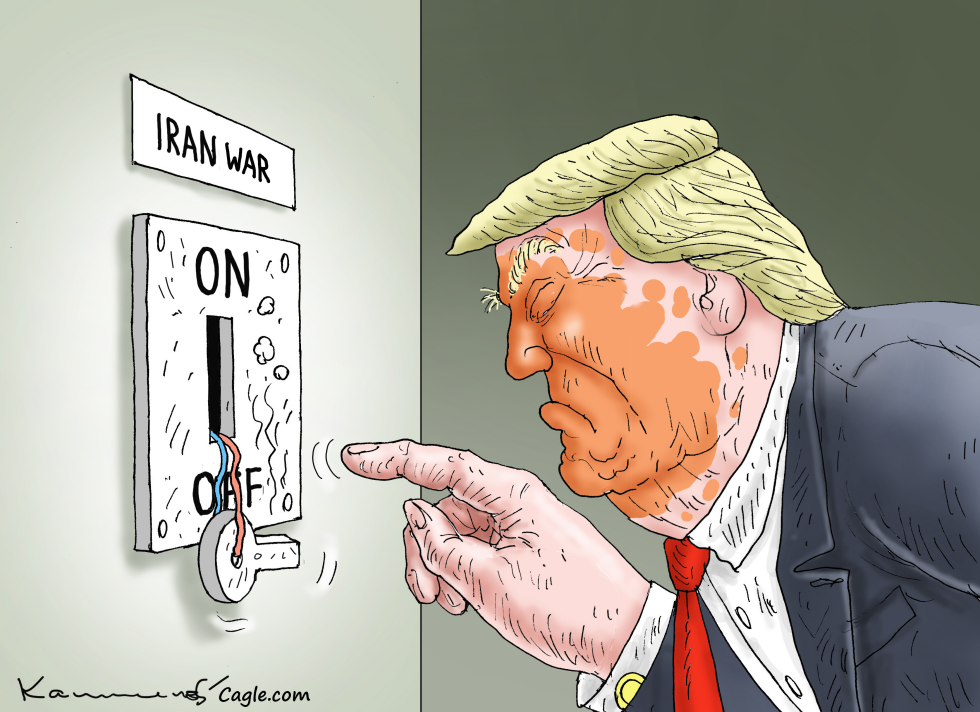
Donald Trump has signaled readiness to initiate military action against Iran as tensions in the Middle East persist. The decision carries significant implications for regional stability and U.S. foreign policy commitments. The piece portrays this choice as a reckless and avoidable step toward unnecessary conflict.
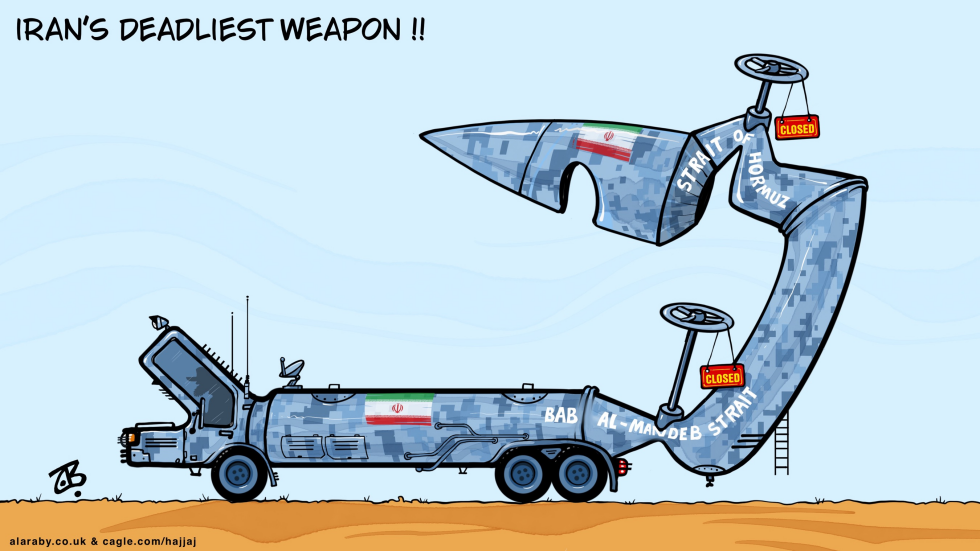
A new cartoon by Emad Hajjaj illustrates Iran's control over the Strait of Hormuz and Bab al-Mandeb Strait as its most potent weapon. The image renders a large camouflaged missile launcher bearing Iranian flags and marked with the two straits, each valve labeled closed. The work responds to ongoing concerns about potential disruptions to global oil shipments through these critical waterways in the Middle East. It emphasizes how Tehran could leverage geographic position to pressure adversaries without direct military engagement. The visual underscores the strategic importance of these passages amid heightened regional tensions.
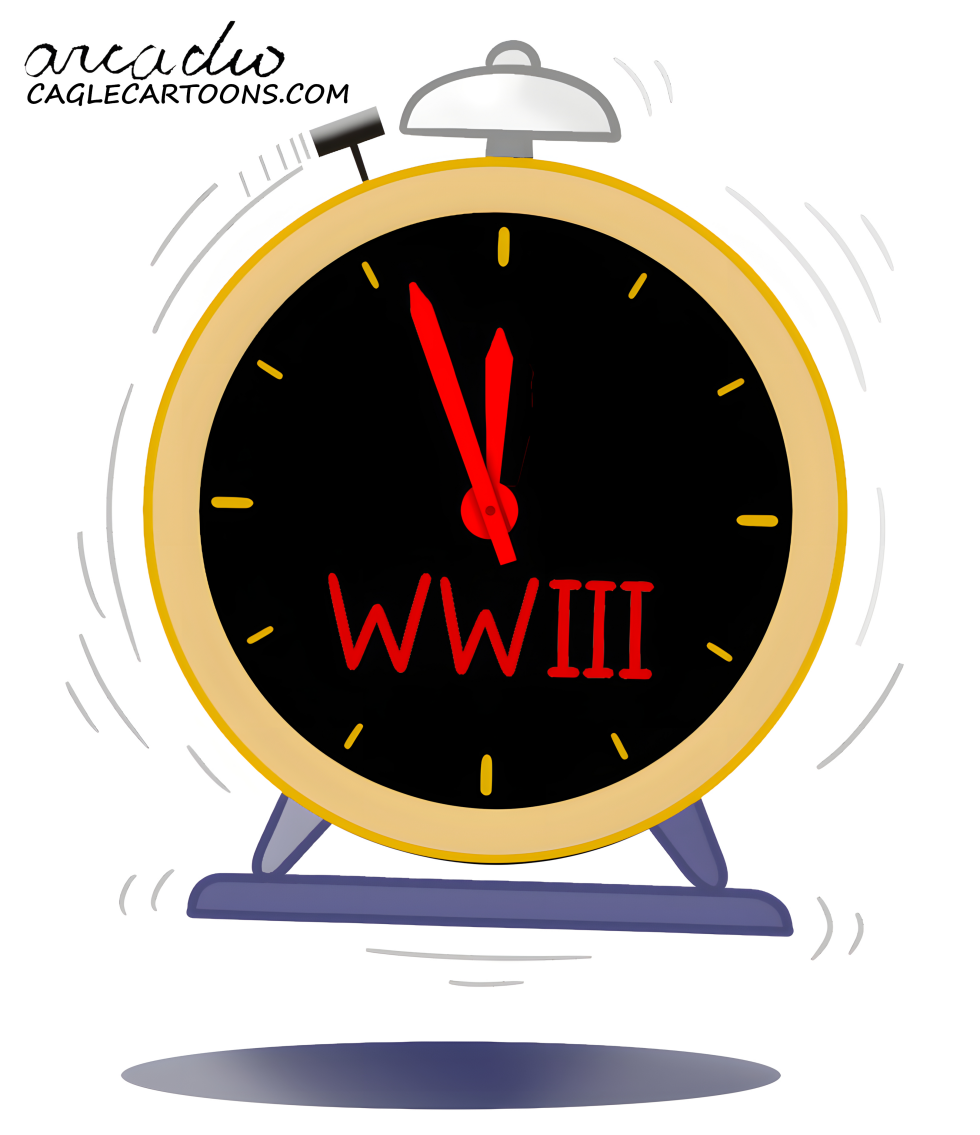
Rising geopolitical frictions among major powers have prompted renewed warnings about the potential for wider international conflict. Defense officials and analysts track ongoing military buildups and diplomatic strains that could escalate quickly. The editorial uses the alarm clock image to stress that leaders must act decisively to prevent a slide into global confrontation.
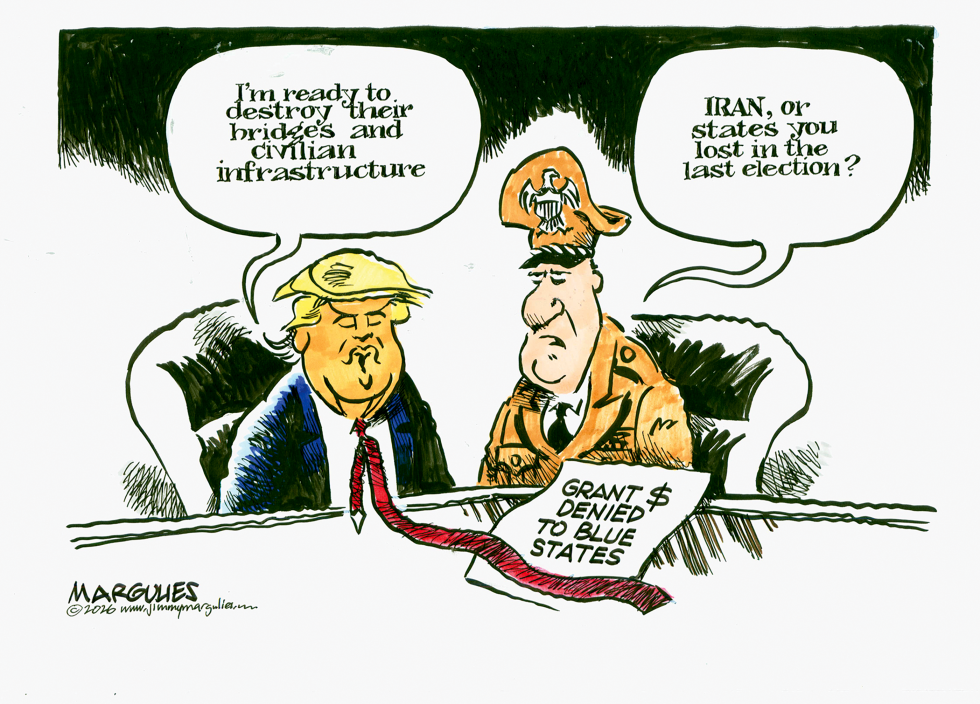
On July 28 2026 President Trump faces criticism for denying federal grants to states that voted against him in the prior election. The move raises questions about using infrastructure funding as political leverage. The cartoon portrays this as interchangeable with threats against Iran.
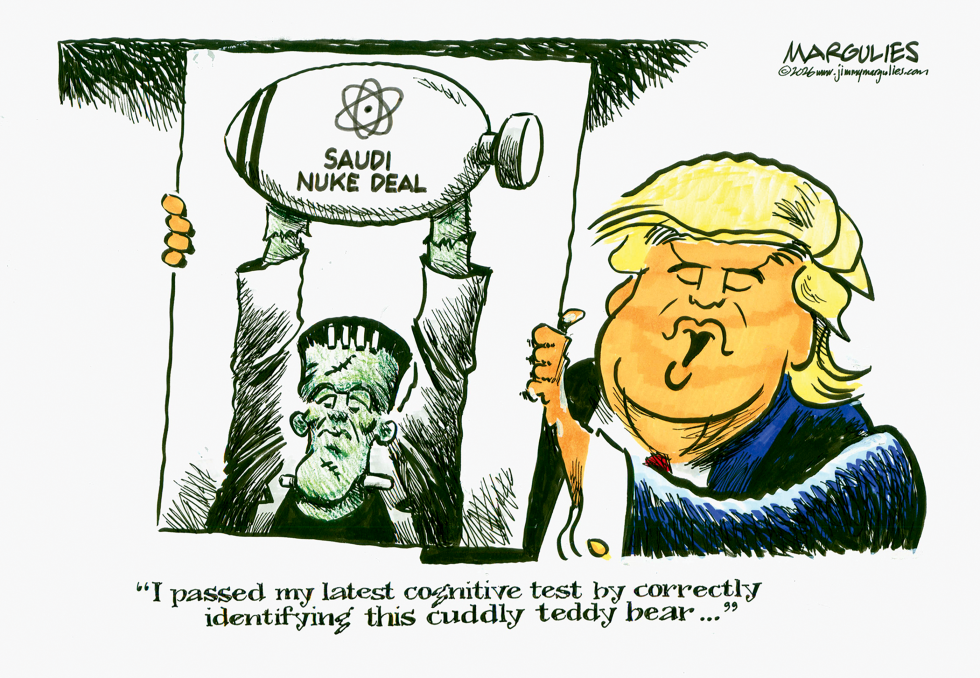
Donald Trump referenced a cognitive test while describing a Saudi nuclear deal in personal terms. The episode occurs against ongoing debates over arms control and Middle East policy. The piece portrays the deal as a dangerous misjudgment.