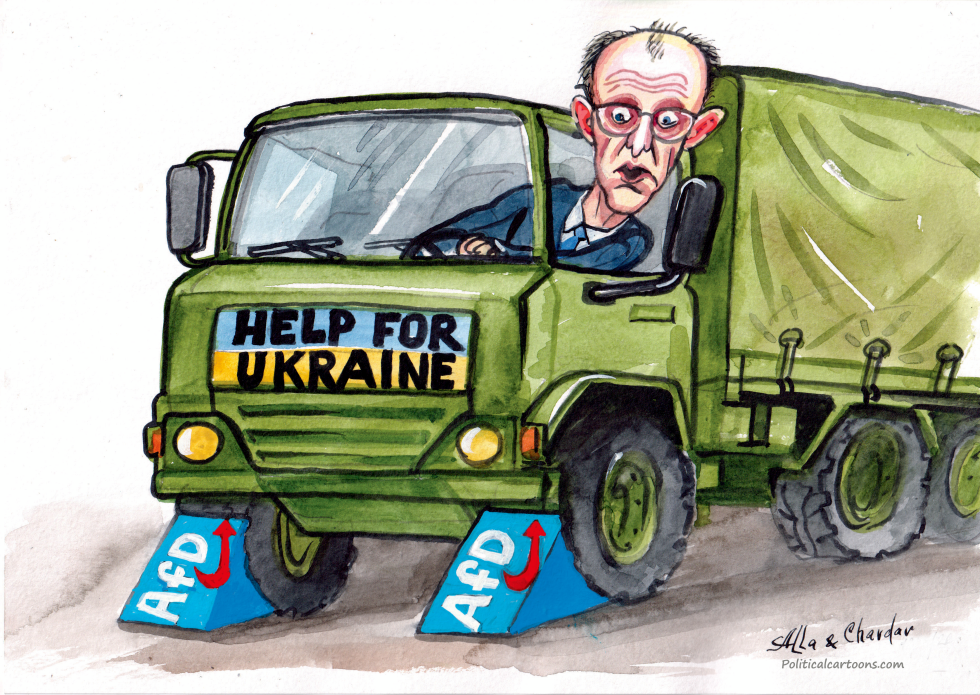
The cartoon depicts a green truck labeled Help for Ukraine stopped by blue AfD wheel chocks. A caricature of an AfD leader sits in the driver's seat. The image comments on the party's opposition to continued German military aid for Ukraine as of September 2026. AfD has consistently voted against additional support packages in the Bundestag. The visual uses the truck and chocks to illustrate the party's blocking role in foreign policy debates.
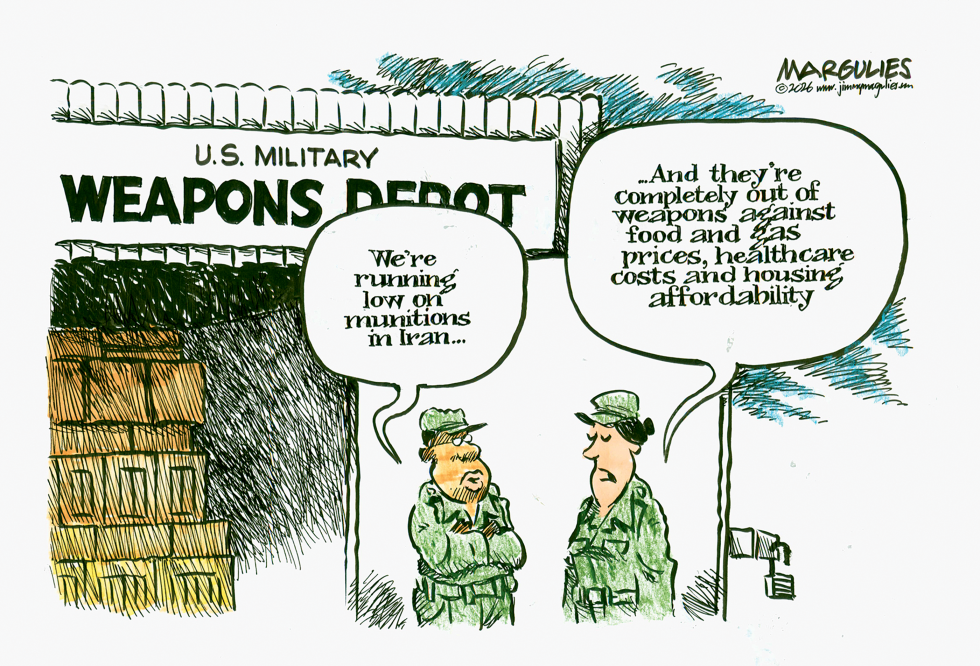
The cartoon depicts two U.S. soldiers outside a weapons depot labeled U.S. Military Weapons Depot. One soldier states the facility is running low on munitions in Iran. The second replies that domestic fronts are out of weapons against food and gas prices, healthcare costs and housing affordability. The image responds to ongoing debates over U.S. military aid commitments abroad and competing budget pressures at home as of the August 2026 publication date. It uses the depot setting and dialogue to contrast foreign military demands with economic challenges facing American households.
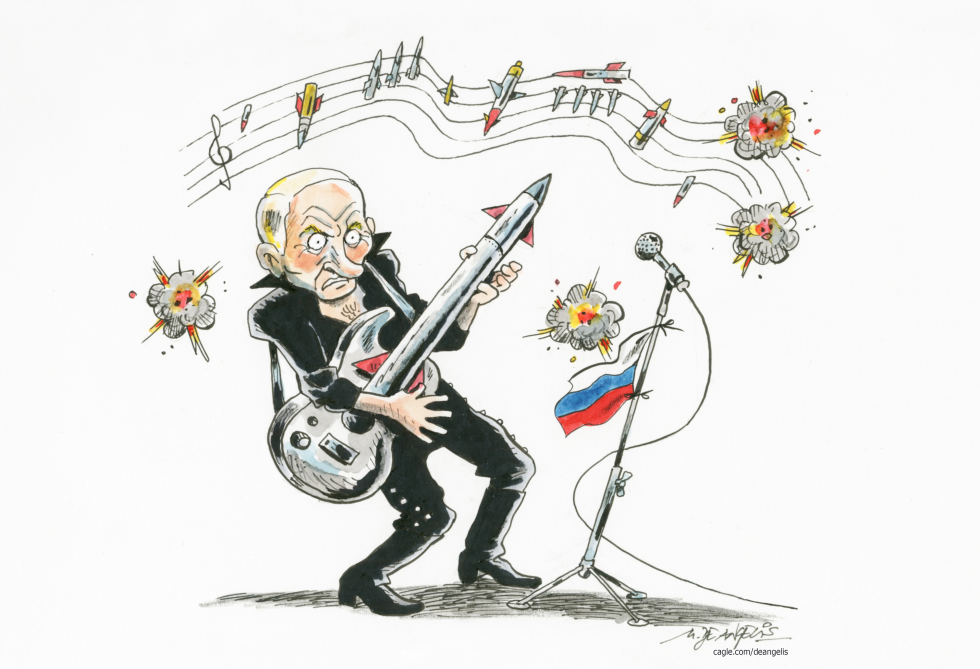
Russian President Vladimir Putin continues directing missile strikes in the Ukraine conflict, maintaining pressure on Kyiv through repeated aerial attacks. The imagery frames this sustained military campaign as a theatrical rock performance. The piece critiques the leader's embrace of destructive weaponry as spectacle rather than strategy.
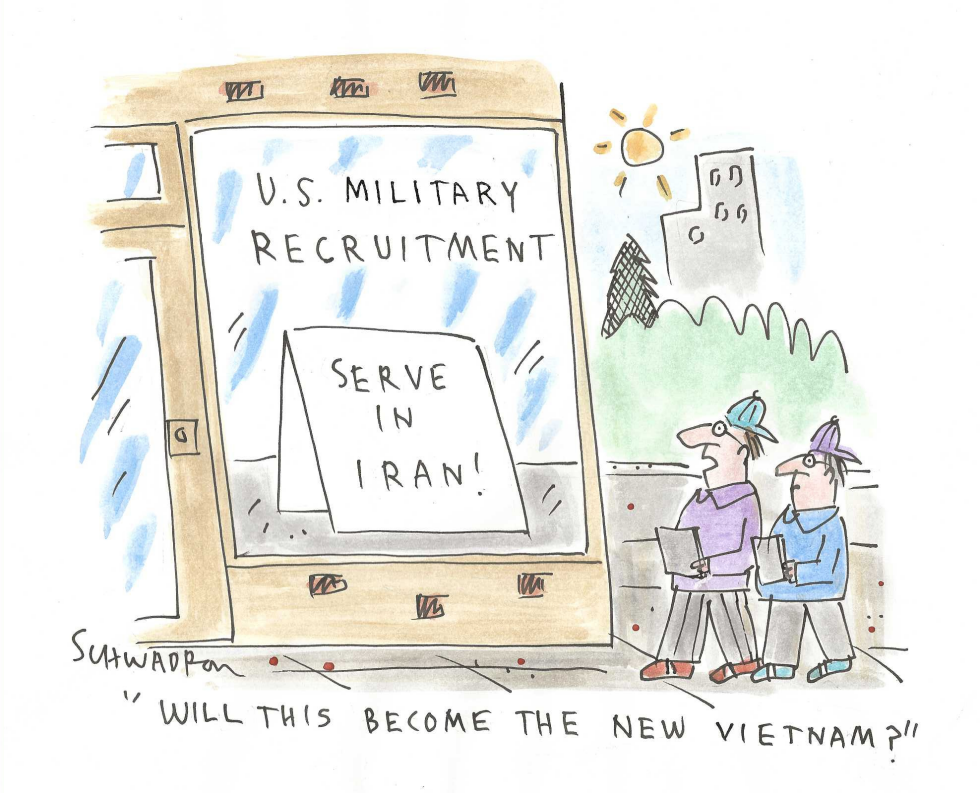
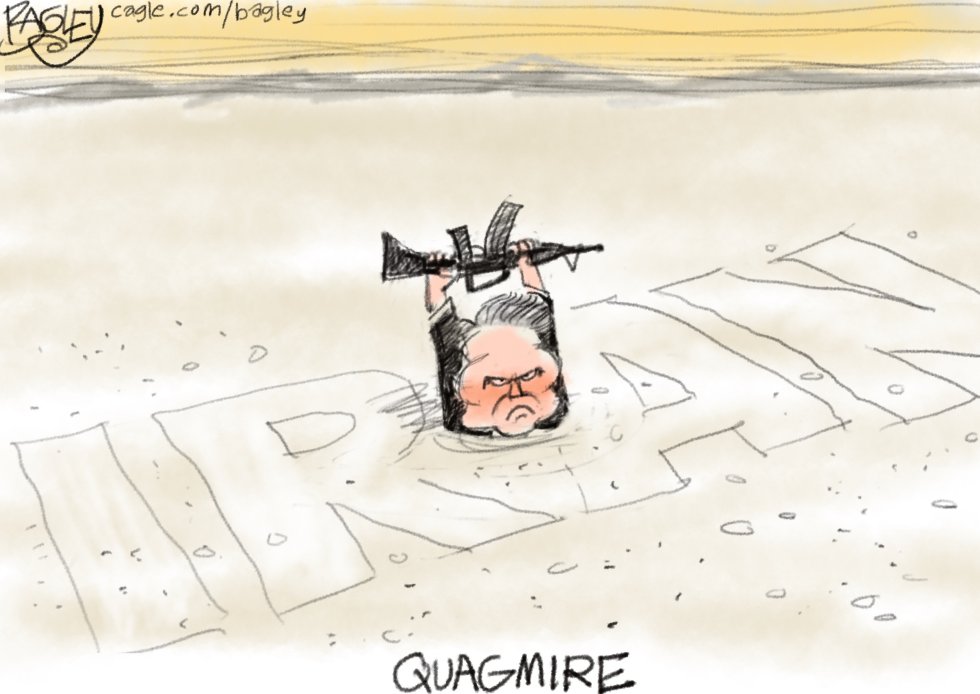
U.S. military recruitment efforts have begun highlighting opportunities to serve in Iran, prompting public questions about potential escalation. The move comes amid ongoing regional tensions and draws direct comparisons to the Vietnam War era. Observers worry the campaign signals a shift toward deeper U.S. military commitments overseas. The editorial takes the position that such recruitment tactics risk repeating past mistakes by underestimating public resistance to prolonged conflicts.
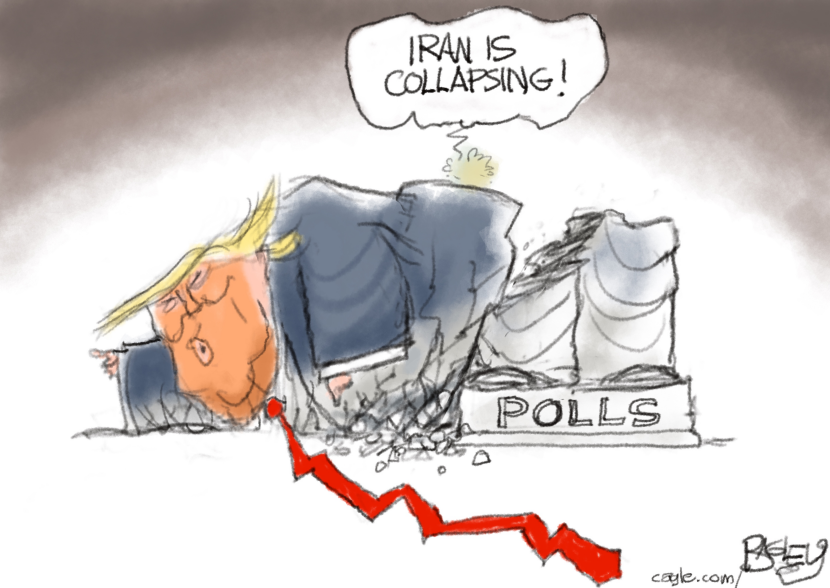
Donald Trump faces mounting difficulties tied to military engagements as of late July 2026. The situation underscores risks of prolonged involvement abroad. The piece portrays these events as a self-inflicted trap that threatens broader stability.
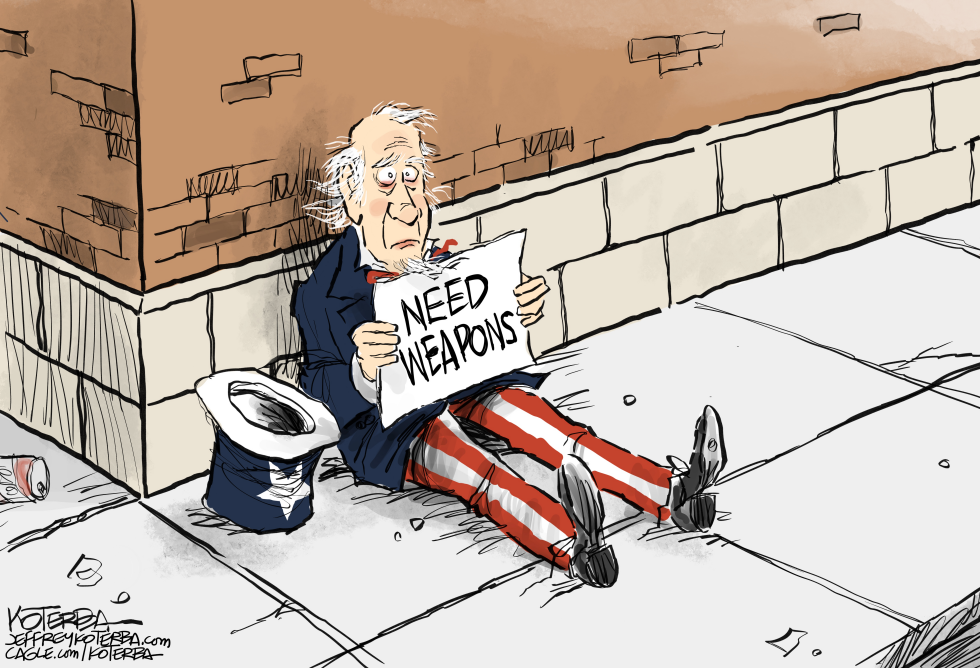
Uncle Sam appears as a disheveled figure on a sidewalk holding a sign requesting weapons. The image captures an ongoing national debate over military resources and international commitments. The editorial stance highlights perceived weakness in current arms policy and funding priorities.
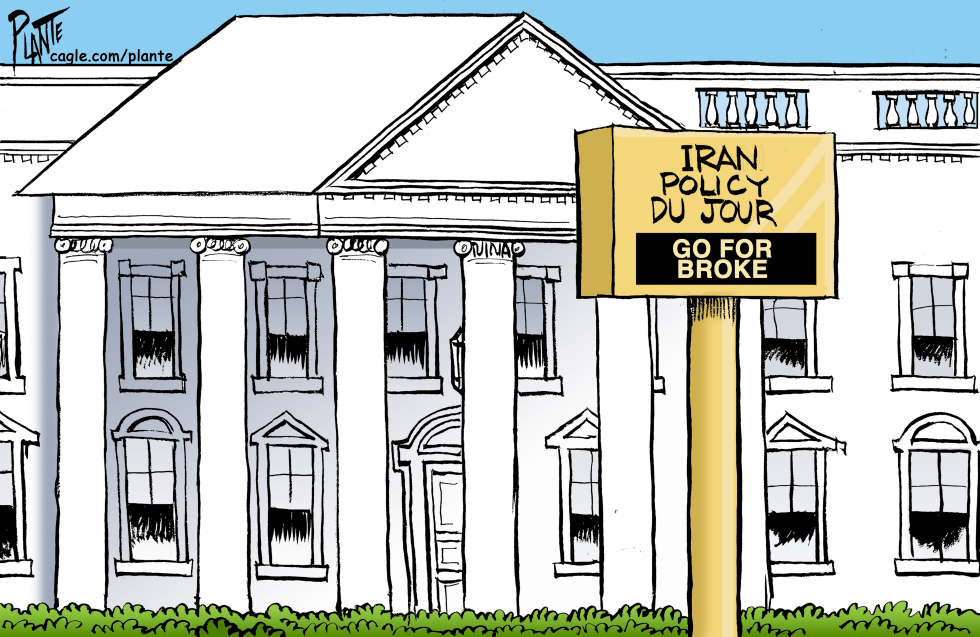
The White House has signaled a more aggressive posture toward Iran through public messaging that emphasizes risk-taking. The move comes amid persistent tensions over nuclear issues and regional influence. The editorial takes the position that such an approach lacks consistency and invites unnecessary escalation.
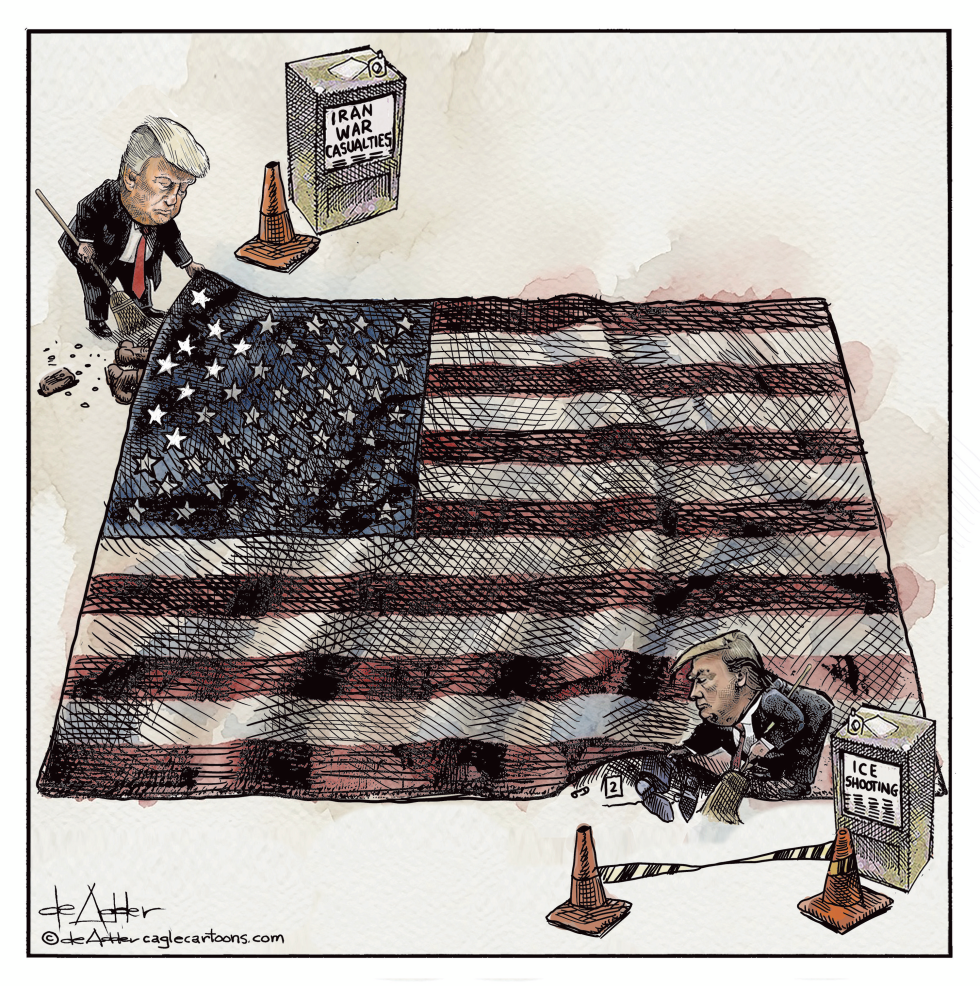
Donald Trump faces scrutiny over reported casualties from potential Iran conflict and an ICE-related shooting incident in mid-2026. The administration's handling of these events draws criticism for downplaying accountability. The piece argues that attempts to minimize these issues undermine public trust in governance.
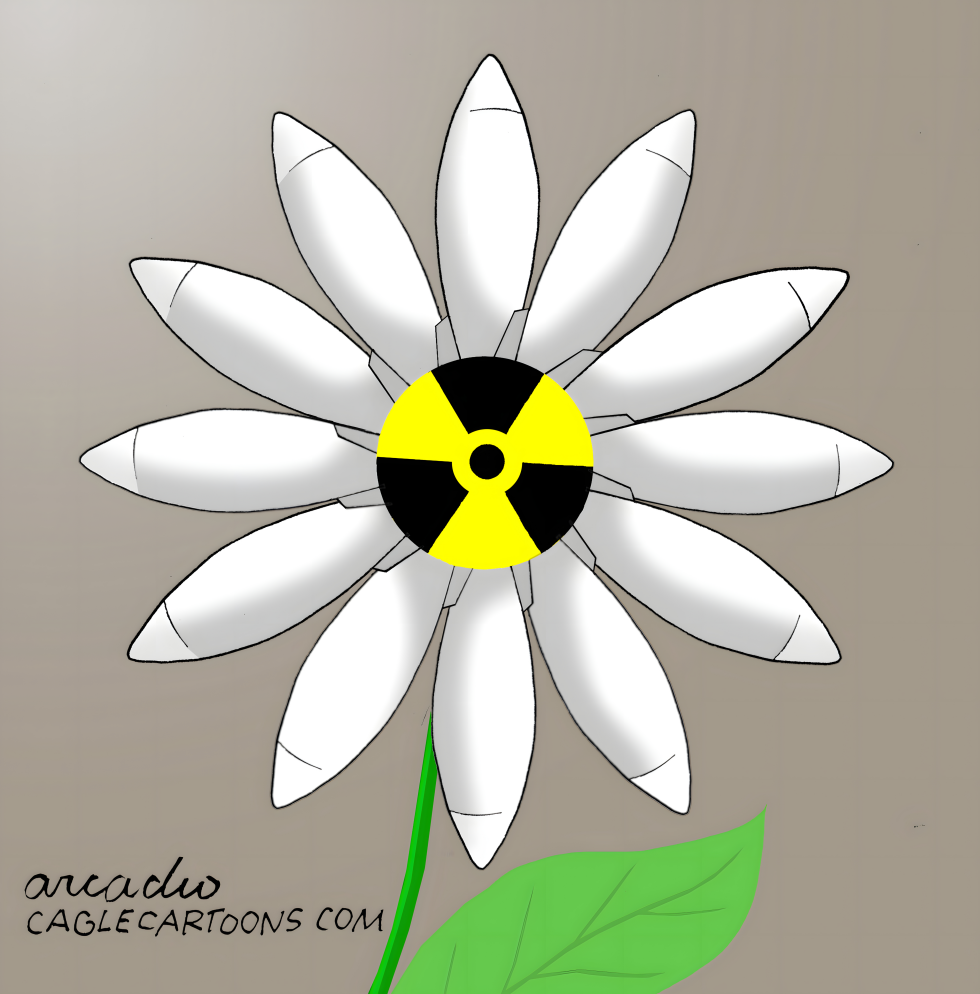
A daisy flower illustration replaces its petals with white missiles arranged around a central radiation warning symbol in yellow and black. The green stem and leaf extend downward from the bloom against a plain background. Artist Arcadio Esquivel signed the work in the lower left with the CagleCartoons.com credit.
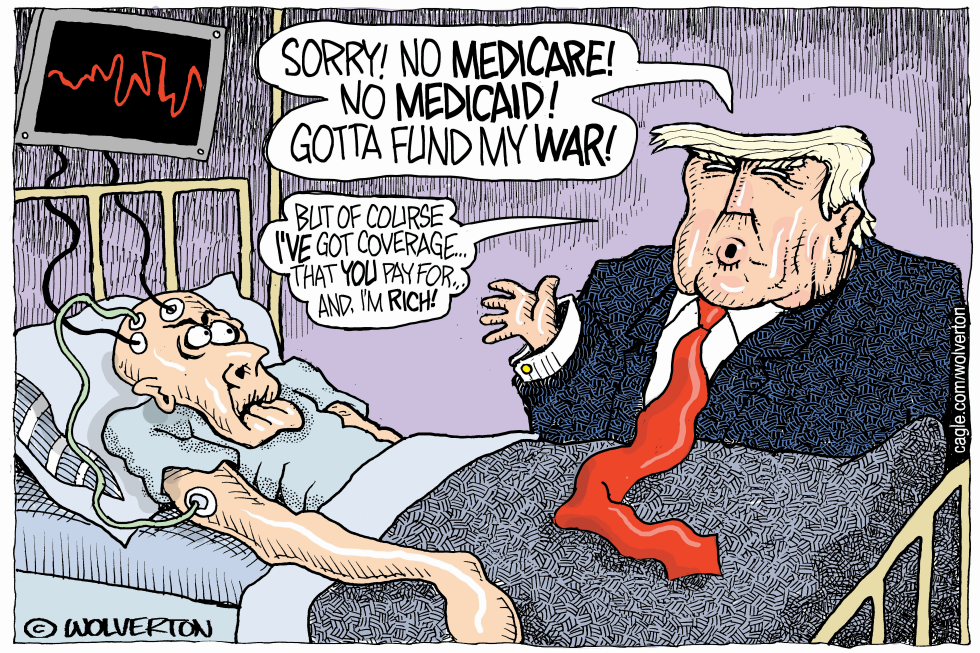
On April 3, 2026, a political cartoon depicts President Donald Trump at the bedside of a patient in a hospital room. Trump states that Medicare and Medicaid cannot be provided because funds must support an ongoing war. The patient replies that coverage exists because Trump pays for it and the patient is wealthy. The image references the Iran War and healthcare access issues.
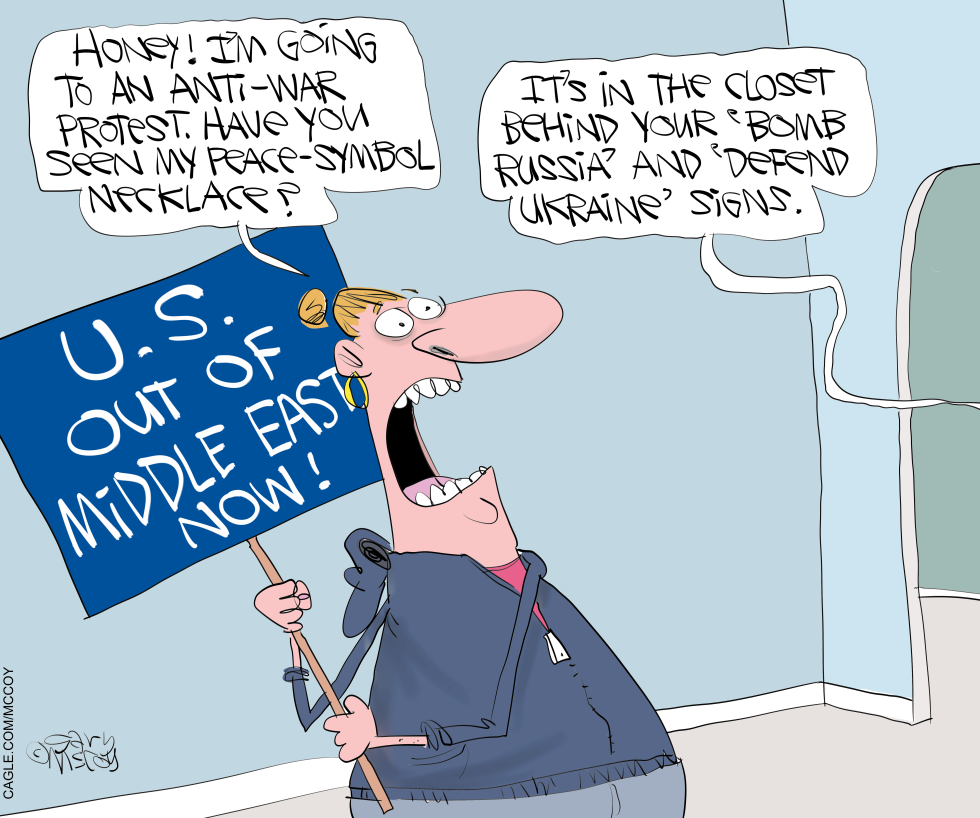
A woman preparing for an anti-war protest asks about her peace-symbol necklace. Her partner notes it is stored behind signs calling to bomb Russia and defend Ukraine. The scene underscores inconsistent stances on U.S. involvement abroad as of early 2026.