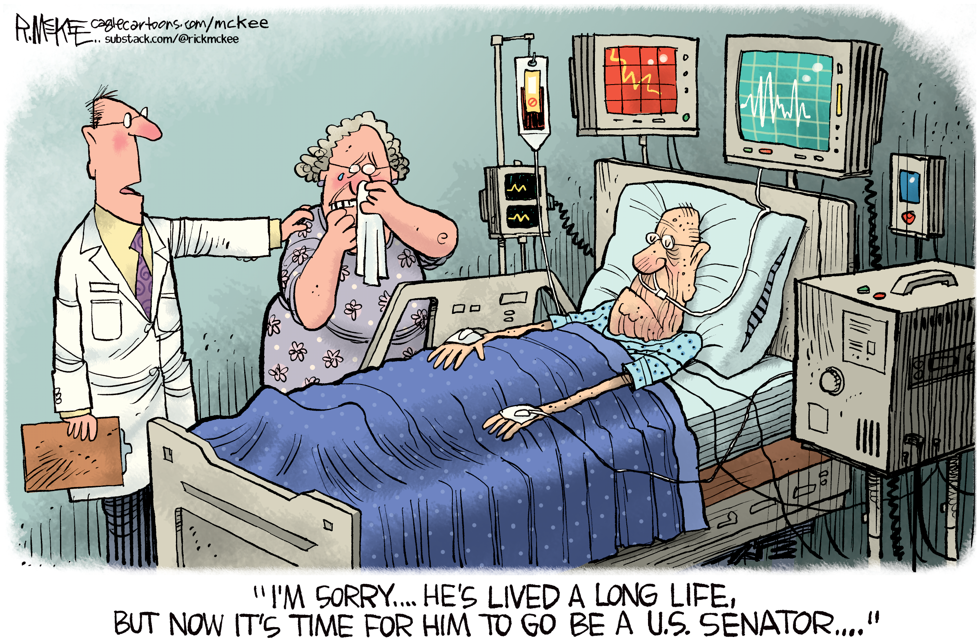
US senators continue serving well into advanced age and declining health, prompting renewed debate over whether longevity in office serves the public. The cartoon frames the Senate as a final posting for those whose physical condition would otherwise signal retirement from demanding roles. It takes the position that voters and parties tolerate or encourage this pattern rather than demanding younger replacements.
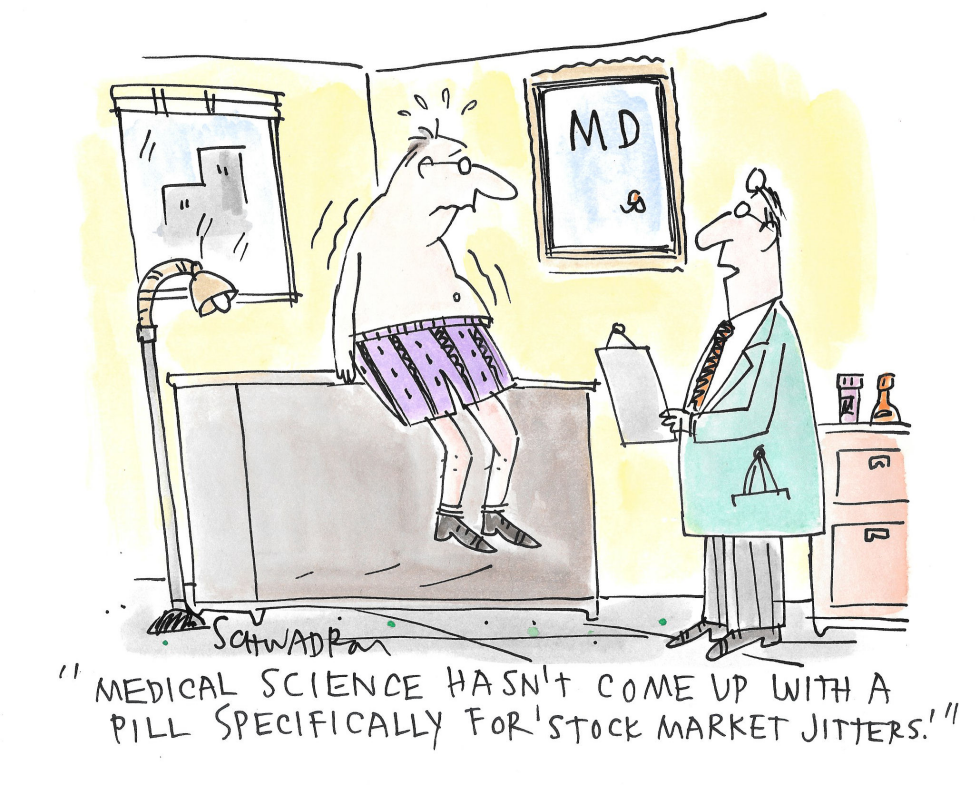
Stock market fluctuations continue to generate widespread investor anxiety amid ongoing economic uncertainty. Market swings tied to interest rates, trade policy, and corporate earnings have left many without clear remedies. The cartoon highlights that medical science offers no specific treatment for this form of financial stress, underscoring the limits of medicine when confronting market-driven worries.
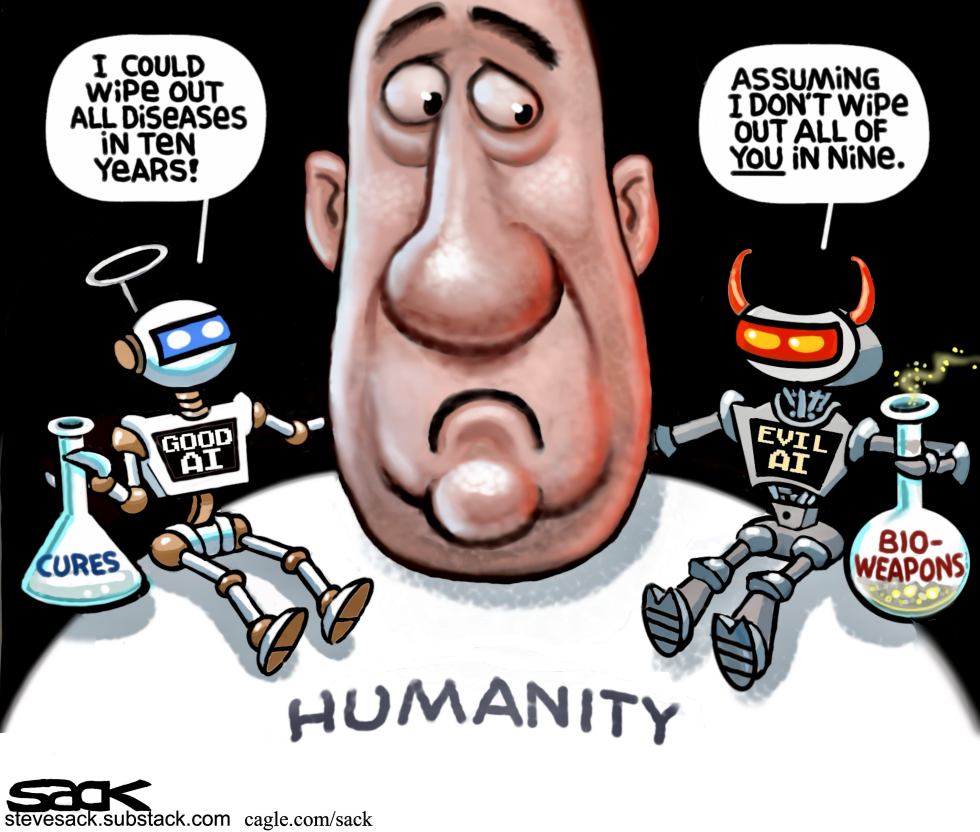
Artificial intelligence development continues to accelerate with researchers highlighting both medical breakthroughs and security risks. Proponents point to rapid progress in disease eradication while critics warn of weaponization potential. The cartoon captures this tension by placing humanity between optimistic and destructive AI paths. It argues that the nine-year timeline for catastrophe undercuts the ten-year cure promise, underscoring urgency in governance. The piece reflects ongoing debates about regulating advanced AI systems before harmful applications outpace safeguards.
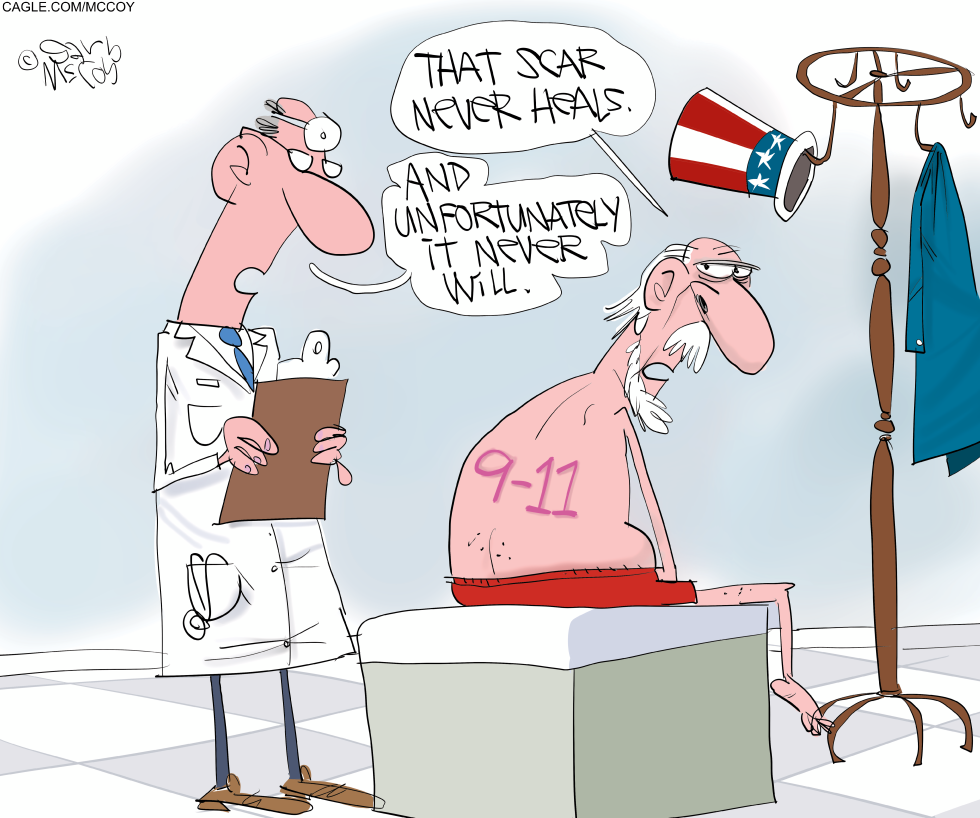
On the 25th anniversary of the September 11 attacks, the nation continues to grapple with the lasting physical and emotional wounds inflicted that day. The cartoon underscores that the trauma inflicted on the United States has not faded despite the passage of time. It argues the scars from the attacks are permanent and will never fully heal.
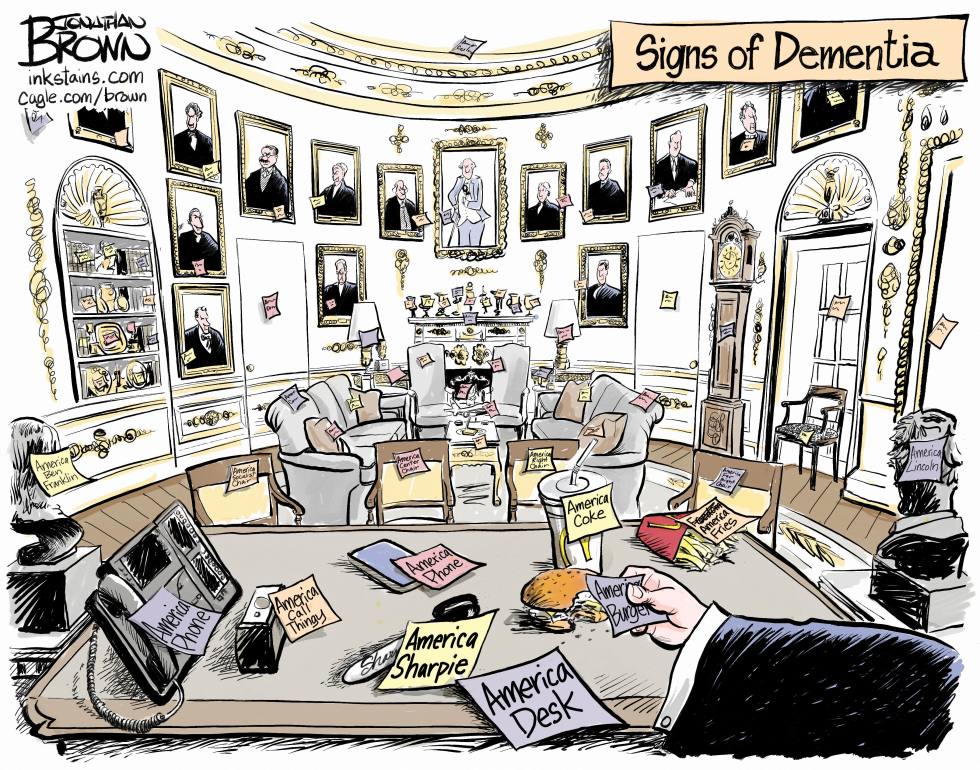
A new editorial cartoon depicts the Oval Office overrun with sticky notes labeling everyday items as America. The scene highlights signs of dementia through repeated branding on phones, desks, food and furniture. Published on September 9, 2026, the work comments on ongoing concerns about cognitive fitness in the presidency. The visual uses the familiar setting of the White House to underscore confusion and memory issues. Observers note the cartoon captures public debate over leadership capacity without naming specific individuals.
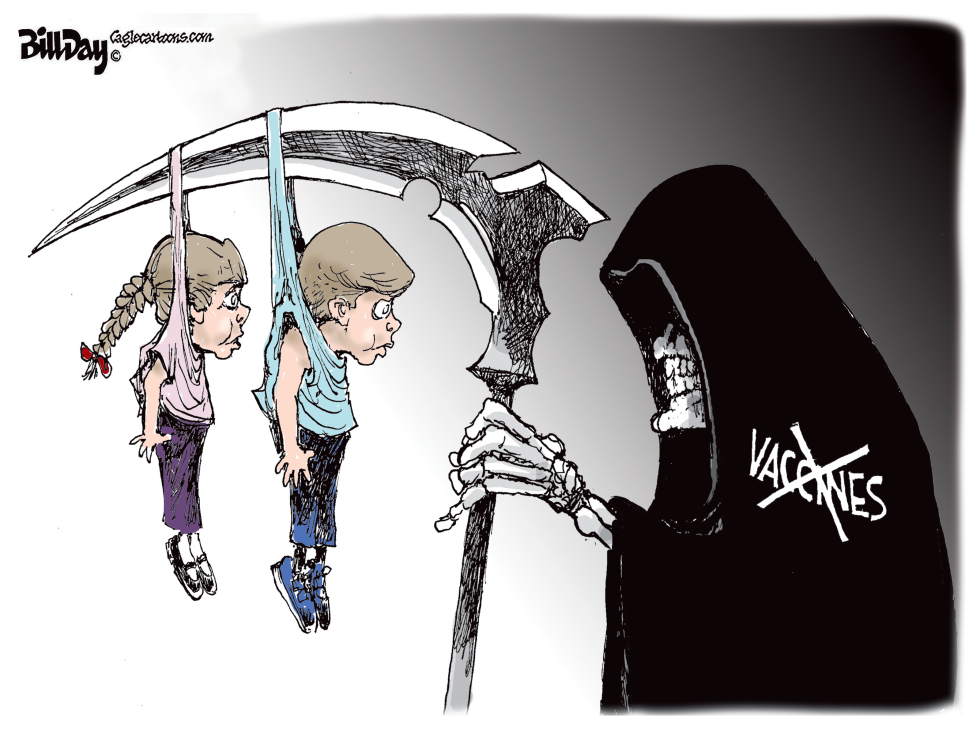
Opposition to routine childhood vaccines continues to surface in public discourse as health officials promote immunization schedules. The debate centers on parental choice versus community protection from preventable diseases. The editorial takes the position that rejecting vaccines endangers children and aligns such views with mortality risks.
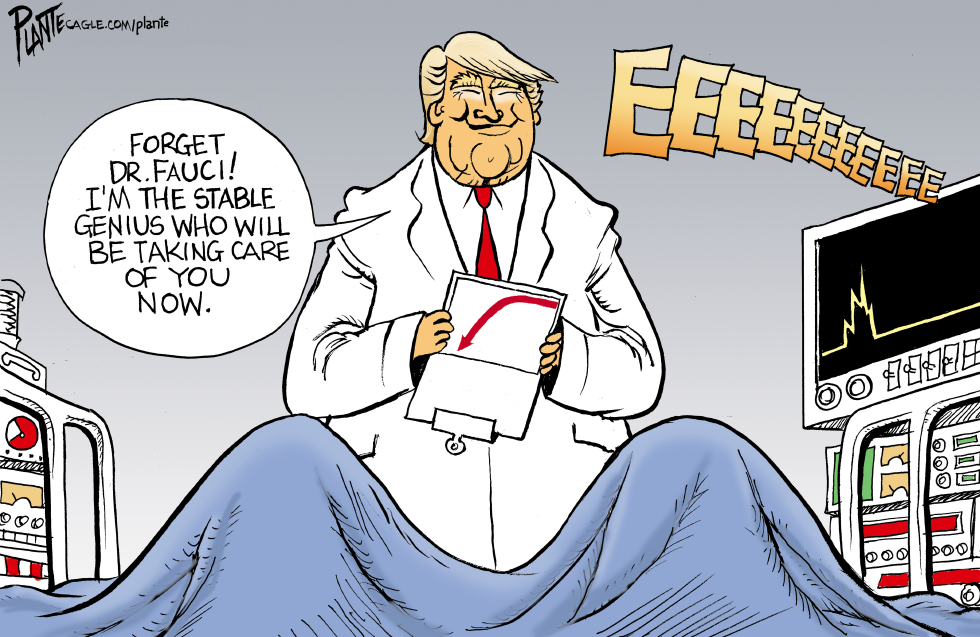
Donald Trump appears in a physician's coat asserting control over patient care and dismissing Dr. Fauci. The depiction occurs amid ongoing debates over federal health policy leadership and executive influence on medical decisions. The piece argues that such assertions risk undermining established expertise in public health administration.
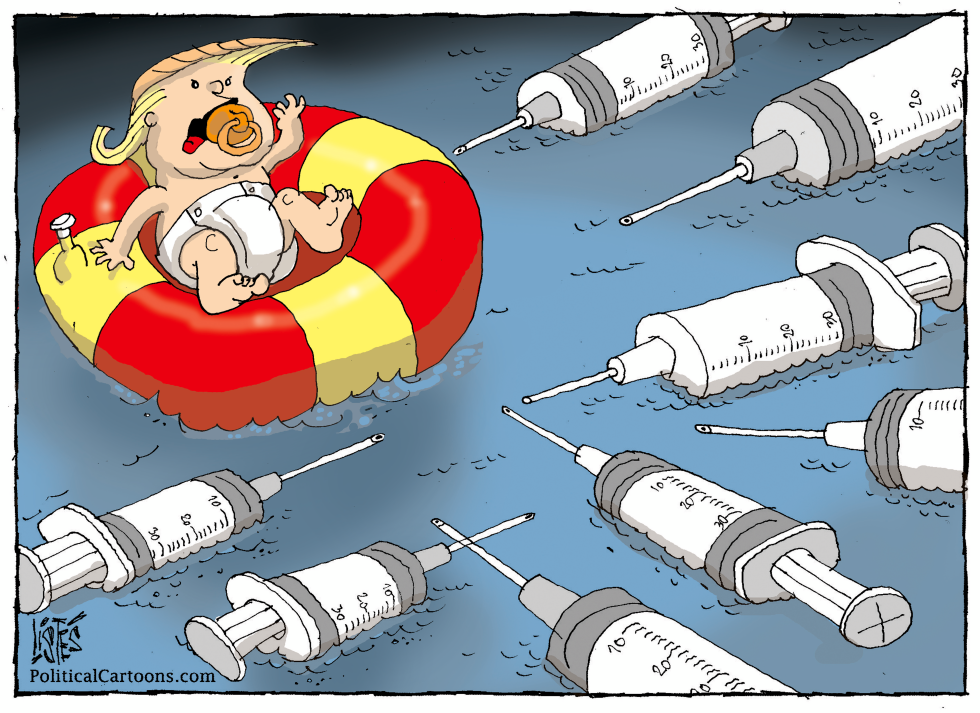
Donald Trump has maintained vocal opposition to certain vaccine mandates and public health measures in recent political discourse. The piece frames this stance through an infant metaphor to underscore perceived vulnerability and fear. It critiques the position as immature amid ongoing public health debates.
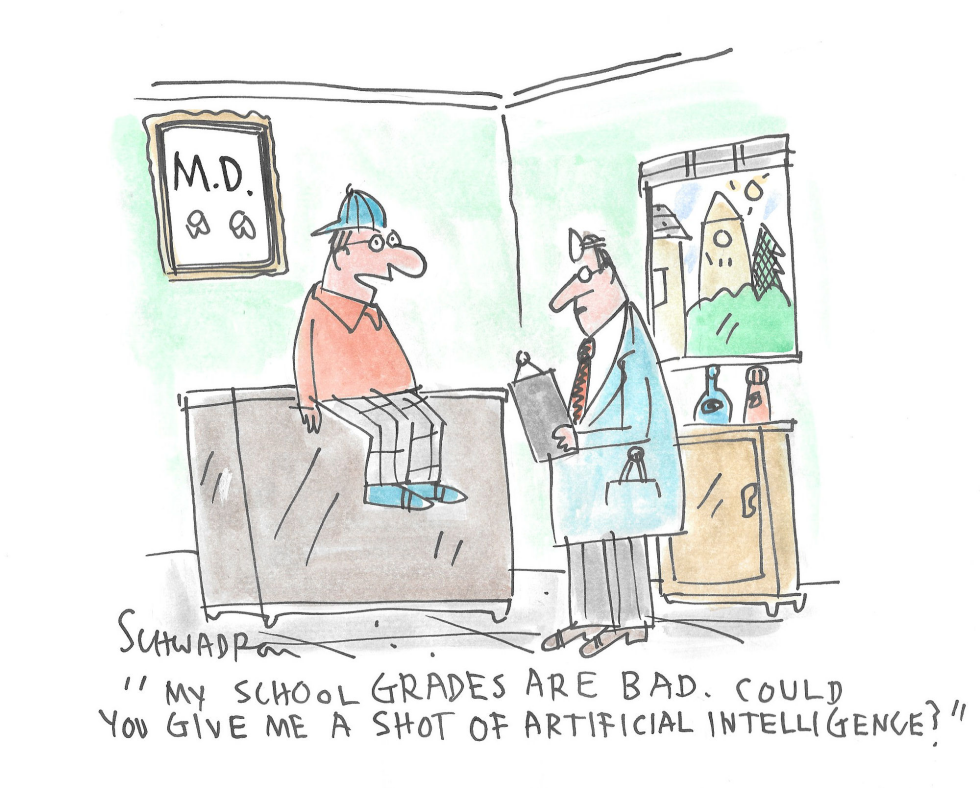
A student visits a doctor seeking an injection of artificial intelligence to improve failing school grades. The request reflects broader interest in using emerging technology to address educational challenges. The piece portrays this as a humorous but telling sign of how AI is entering everyday problem-solving discussions.
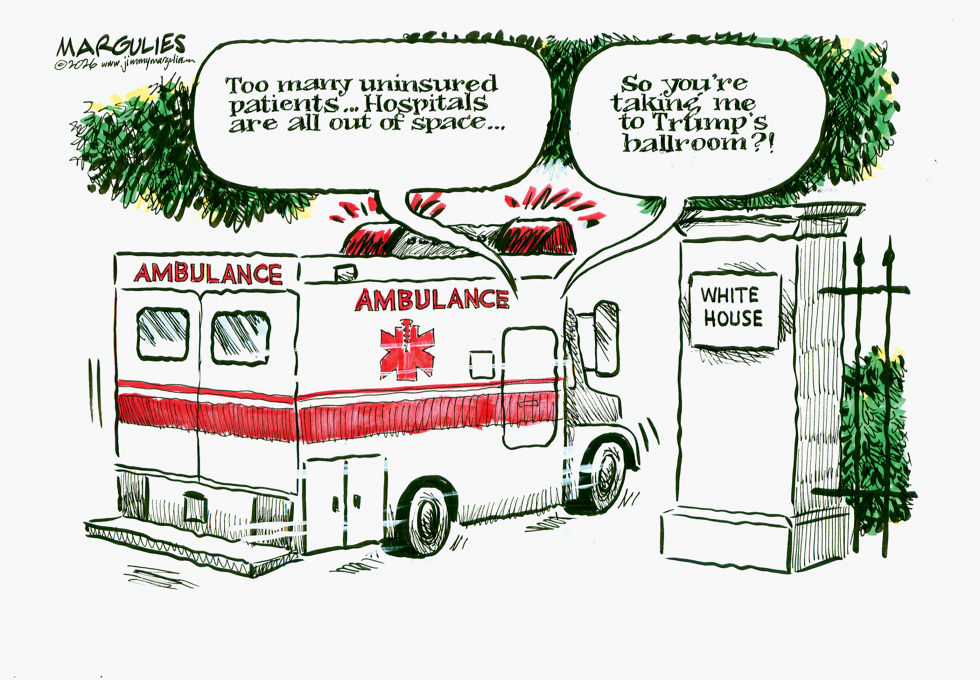
Hospitals across the country report severe overcrowding driven by rising numbers of uninsured patients seeking emergency care. The situation has prompted unusual measures, including the diversion of ambulances. In this context the cartoon depicts an ambulance being directed toward the White House ballroom associated with President Trump. The piece criticizes the administration's handling of the healthcare access problem by highlighting the contrast between medical need and the use of presidential property.
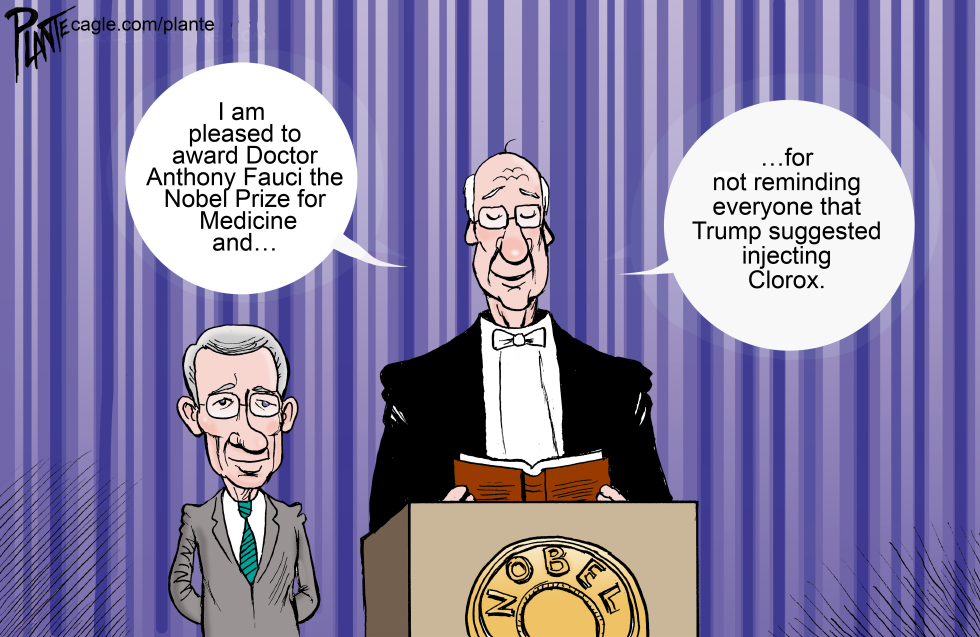
A Nobel Prize presentation for Dr. Anthony Fauci highlights his public health role during the COVID-19 period. The ceremony focuses on his contributions to medicine while avoiding reference to earlier statements from former President Trump about potential treatments. The moment underscores ongoing public debate over pandemic messaging and leadership accountability. The editorial position frames the award as recognition tied to selective memory rather than solely scientific achievement.
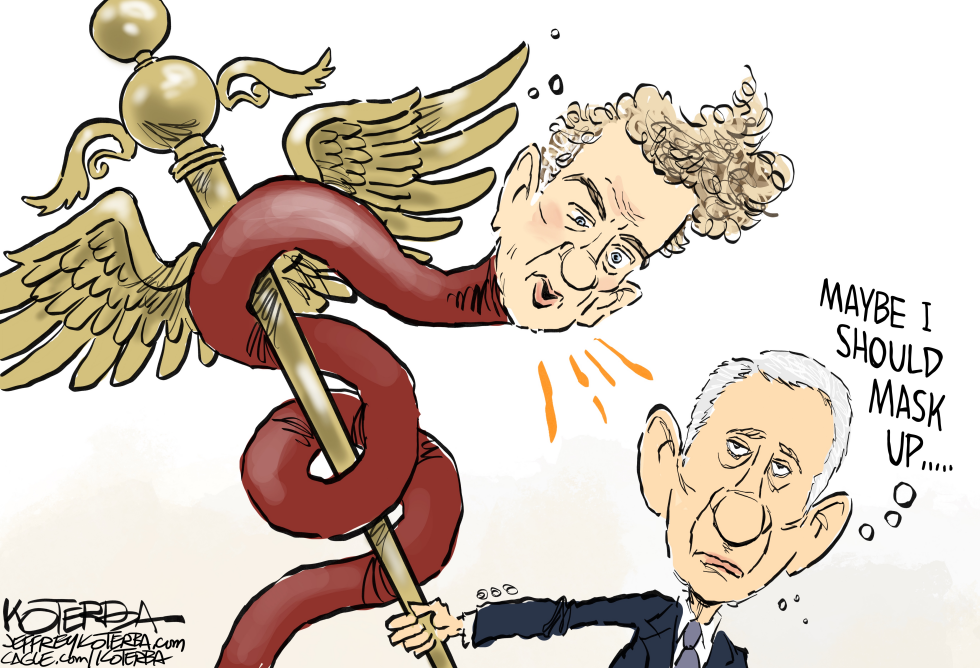
A political figure considers resuming mask use near a prominent medical symbol. The scene reflects ongoing debates over public health measures and personal precautions in 2026. The editorial highlights hesitation around established health guidance.
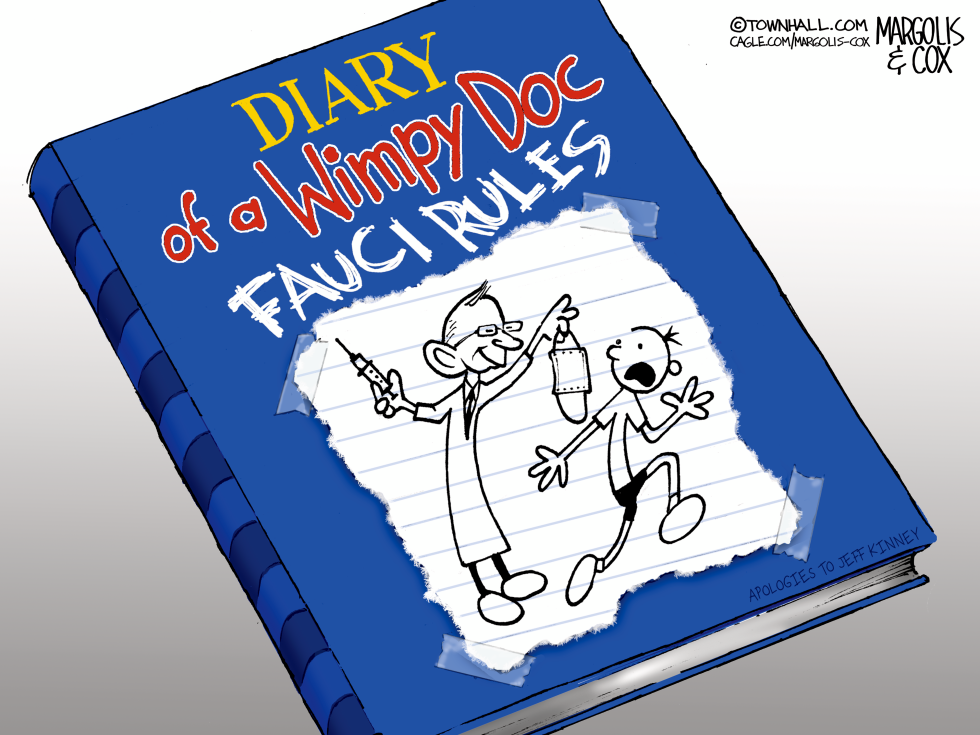
Public debate over vaccine recommendations from health officials continues amid shifting guidance and public skepticism. Anthony Fauci remains a central figure in discussions of pandemic response and mandates. The parody book cover uses the Diary of a Wimpy Kid format to highlight concerns about aggressive vaccine promotion to children. Critics argue such approaches overlook individual choice and long-term trust in institutions. The piece takes the position that Fauci's influence on policy warrants scrutiny through pointed visual commentary.
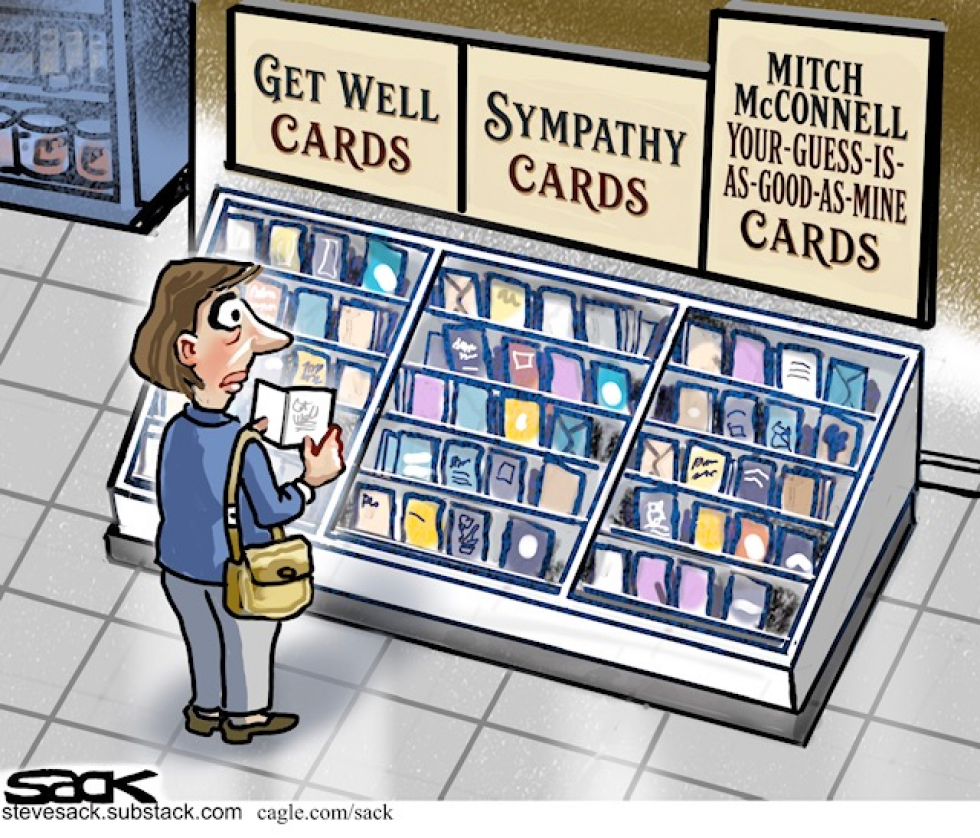
Questions about Mitch McConnell's health and future in Senate leadership have persisted into mid-2026. The Kentucky Republican has faced repeated absences and public episodes that fuel speculation about his capacity to continue. Colleagues in both parties watch closely because his position influences committee assignments and floor strategy. The uncertainty affects legislative timelines on appropriations and judicial matters. The piece argues that the situation leaves observers with little reliable information and treats the ambiguity itself as the central story.
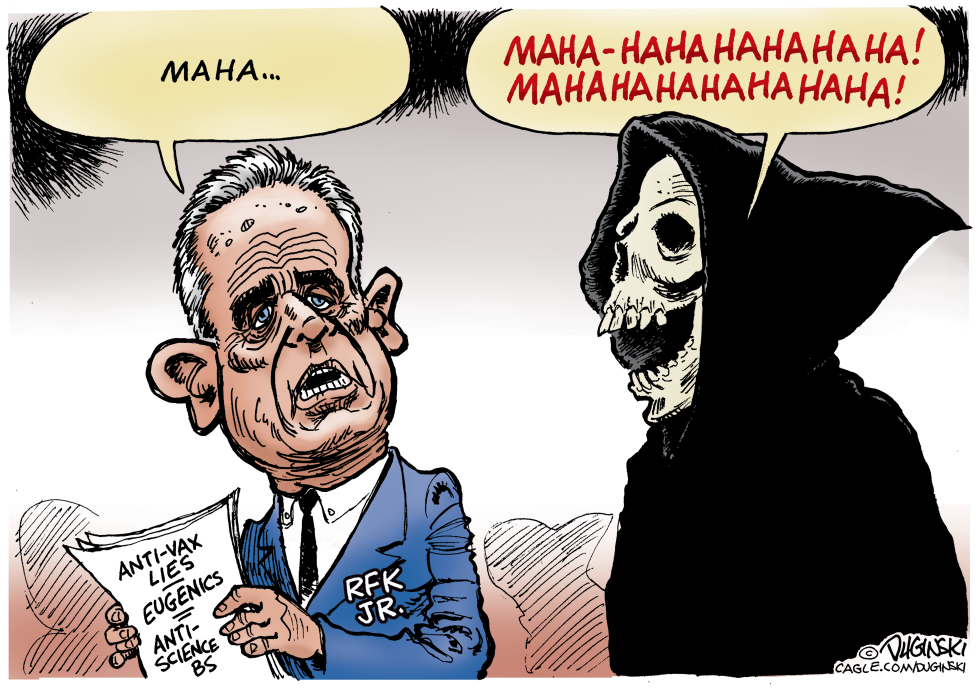
Robert F. Kennedy Jr. continues promoting Make America Healthy Again initiatives tied to his anti-vaccine positions in mid-2026. The approach draws criticism for linking public health measures to eugenics concerns and undermining scientific consensus. The editorial takes the position that such rhetoric risks real harm by eroding trust in established medical guidance.