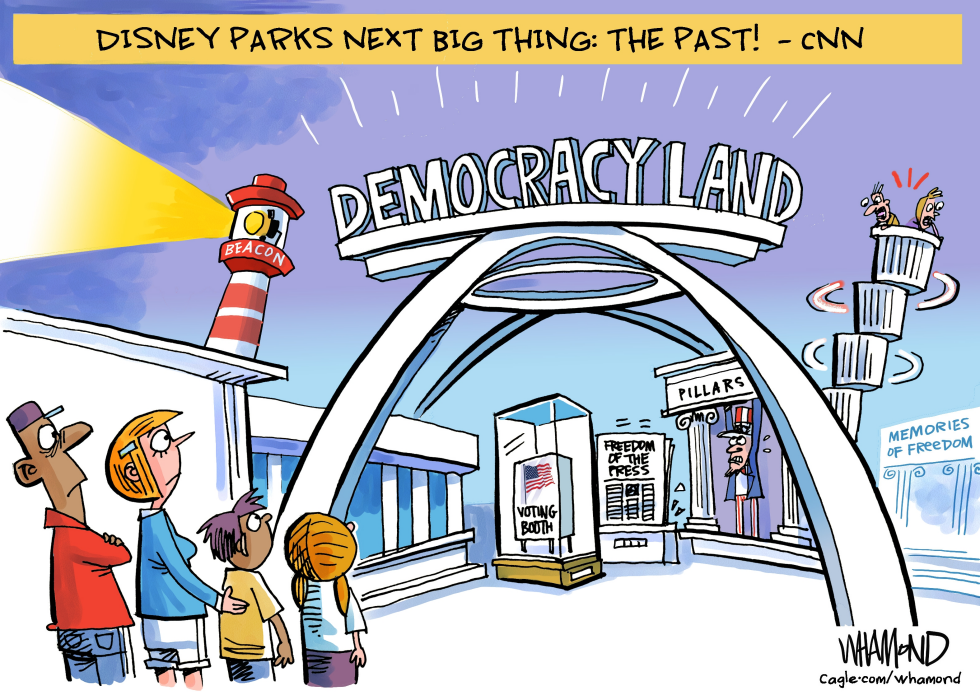
A CNN report on Disney parks reviving past attractions coincides with ongoing debates over voting access and press protections in 2026. Critics argue recent policies have weakened core democratic safeguards, turning once-central institutions into historical curiosities. The cartoon frames this shift as an editorial critique of backsliding norms.
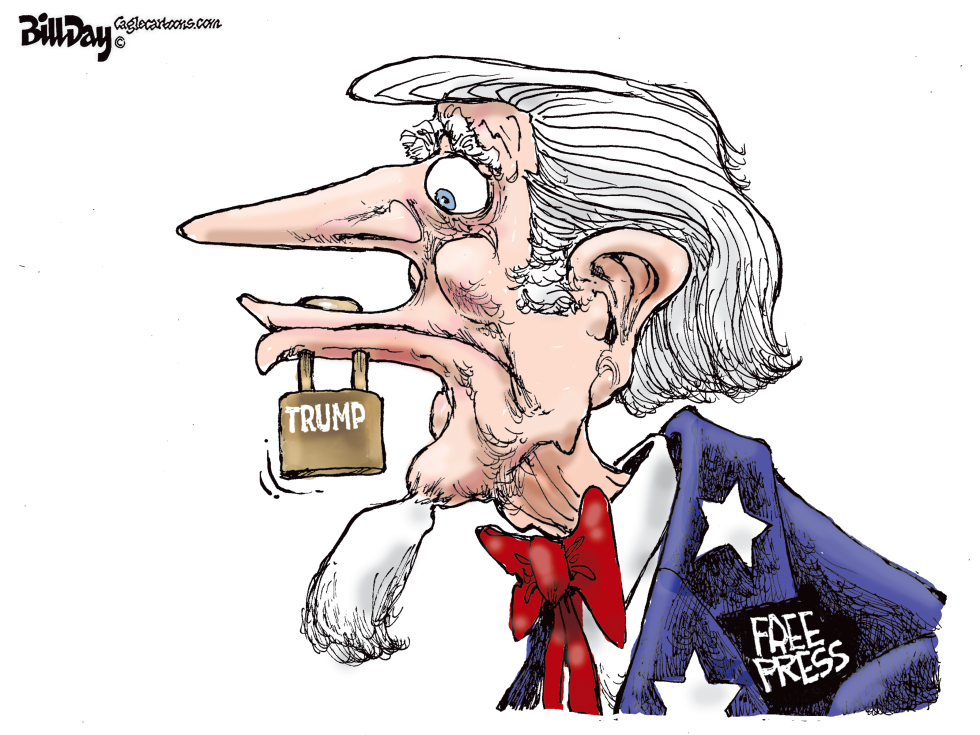
Donald Trump, holding office in 2026, faces renewed scrutiny over efforts to limit press access and information flow. Critics argue these moves undermine democratic oversight. The cartoon portrays the administration as actively securing or restricting the free press through direct control.
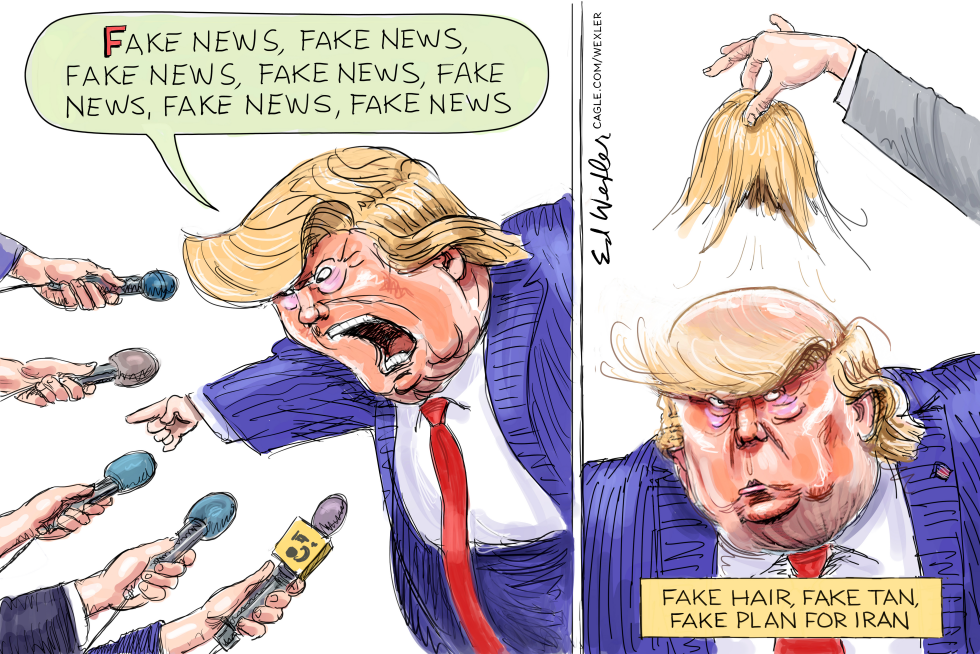
Donald Trump repeatedly labels media coverage as fake news during press encounters. The cartoon responds by questioning the authenticity of his appearance and his approach to Iran policy. It portrays the disconnect between his public statements and underlying realities.
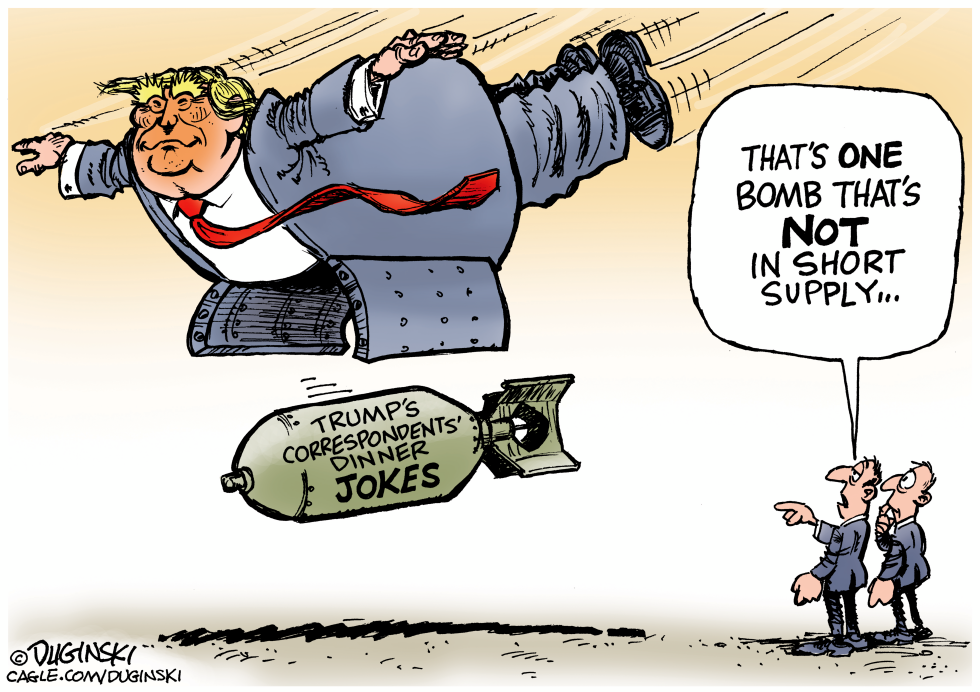
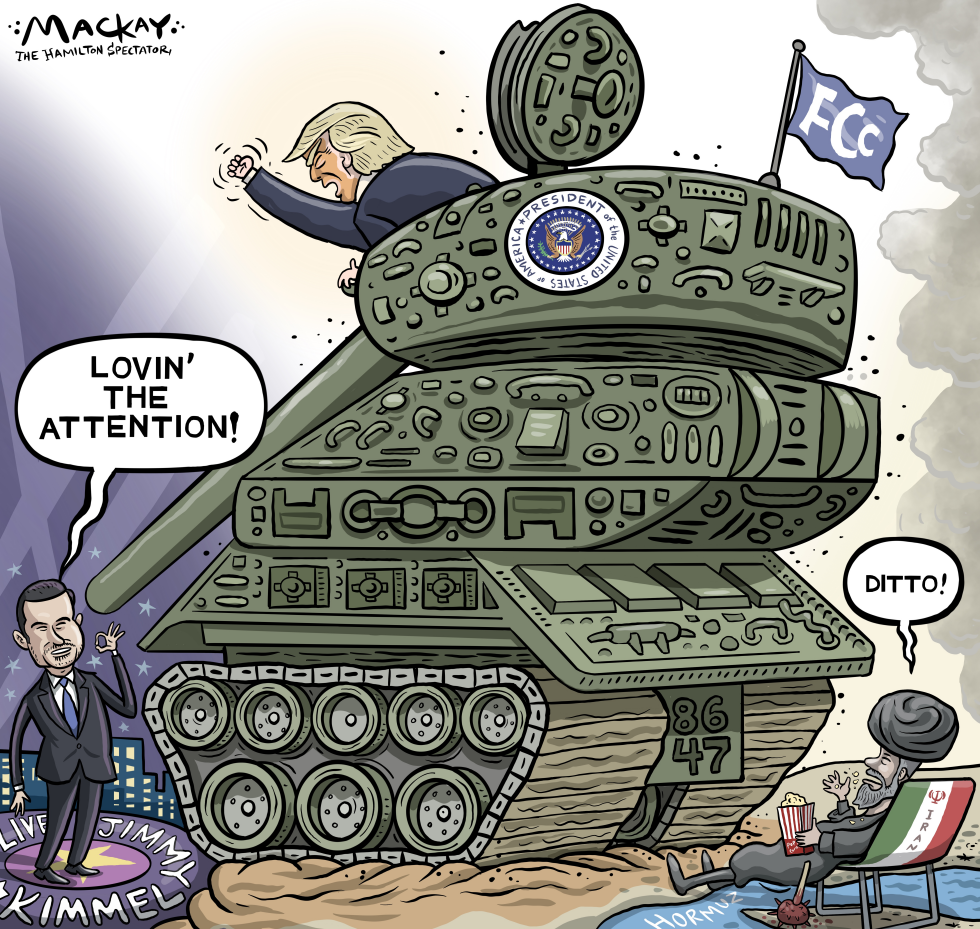
Donald Trump delivered jokes at the 2026 White House Correspondents Dinner that landed poorly with the audience. The event drew attention for the president's comedic missteps amid ongoing tensions with the press. The piece argues the routine exposed a persistent pattern of tone-deaf delivery rather than isolated misfires.
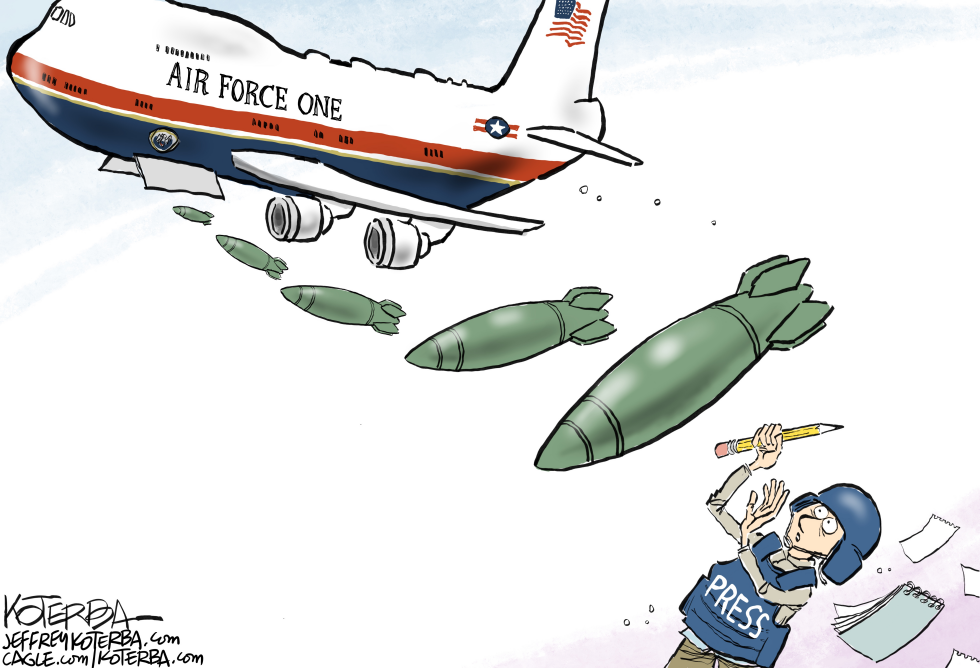
The image shows Air Force One releasing several green missiles from its underside while flying. Below, a person wearing a blue vest labeled PRESS and a helmet raises a pencil overhead with one hand while extending the other palm outward. Papers scatter around the figure. The plane displays the American flag on its tail and standard markings on its fuselage.
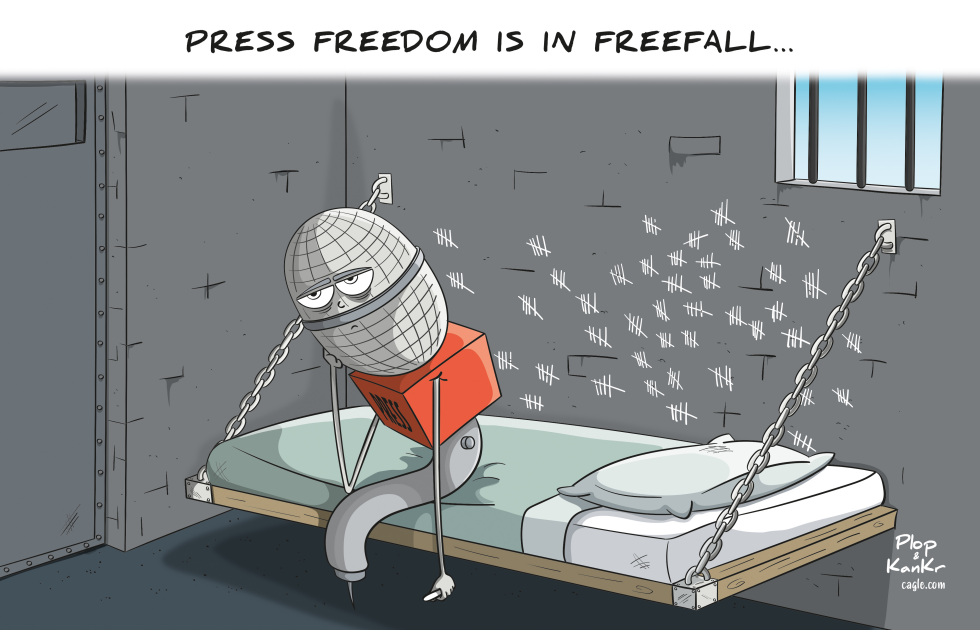
A helmeted figure labeled press sits chained to a bed inside a prison cell. Chains connect the figure to the wall and floor. The scene includes a window with bars and a pillow on the bed. Text above states press freedom is in freefall. The image responds to ongoing concerns about media restrictions by showing the press immobilized and confined.
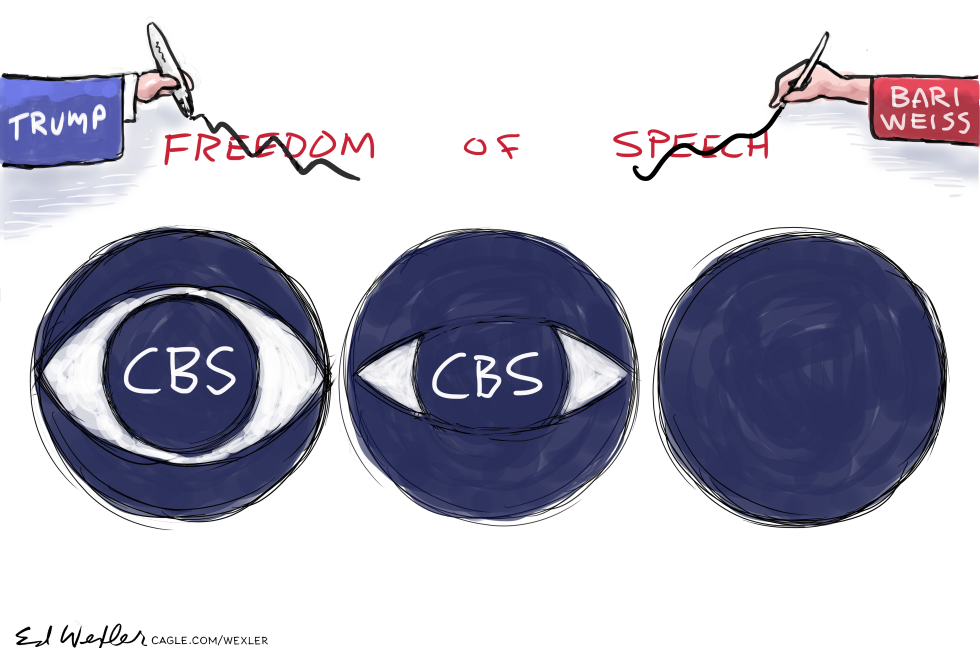
Arms from Trump and Bari Weiss cut the red words Freedom of Speech above three CBS circles with varying eye states. The left CBS eye is open, the middle is squinted, and the right is solid dark. The image responds to ongoing tensions over media coverage and press freedom involving CBS and public figures.
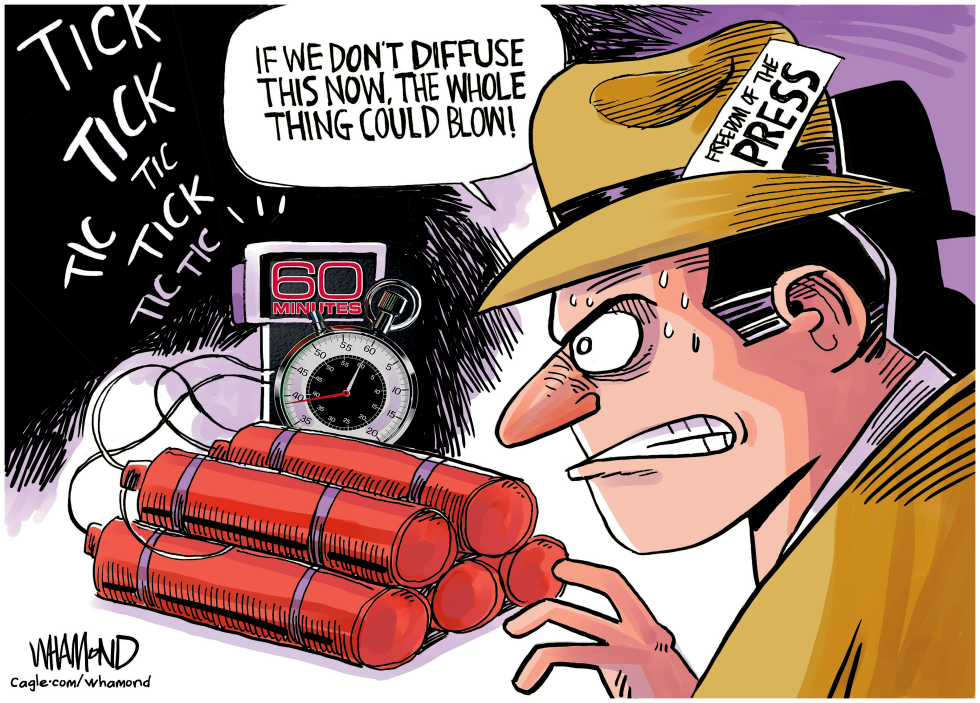
A sweating journalist wearing a Freedom of the Press hat leans over a bundle of dynamite sticks wired to a 60 Minutes timer. The timer ticks loudly as the figure warns in a speech bubble that failure to defuse the crisis will cause everything to blow. The image responds to reported turmoil at CBS News involving 60 Minutes correspondents and leadership changes at Paramount.
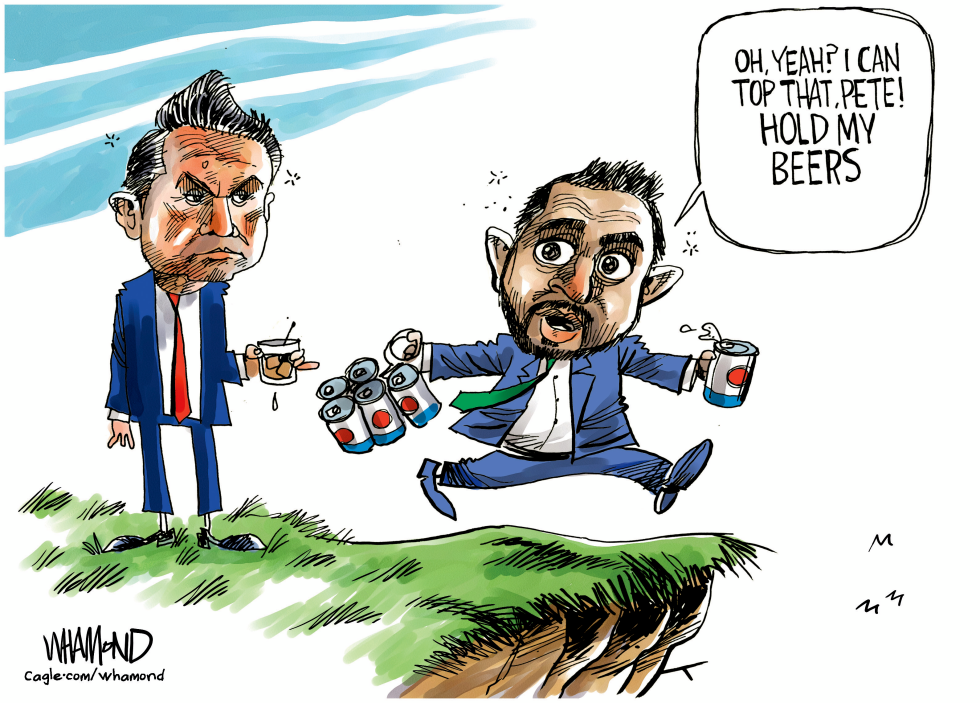
Dave Whamond's cartoon depicts Kash Patel energetically leaping from a grassy cliff, clutching a handful of beer cans and a drink, while yelling 'OH YEAH? I CAN TOP THAT PETE! HOLD MY BEERS' in a speech bubble. A stern-faced man in a suit stands nearby, holding a small drink. The scene plays on drinking allegations surrounding Patel's FBI director nomination, incorporating tags like The Atlantic article, reported alcohol use, drinks to excess, intoxication, unexplained absences, and Patel's 250M defamation lawsuit. The artwork uses caricature style to satirize political figures lashing out at press and Democrats demanding alcohol abuse tests, with Patel portrayed in a dynamic, over-the-top pose against a simple sky and grass background.
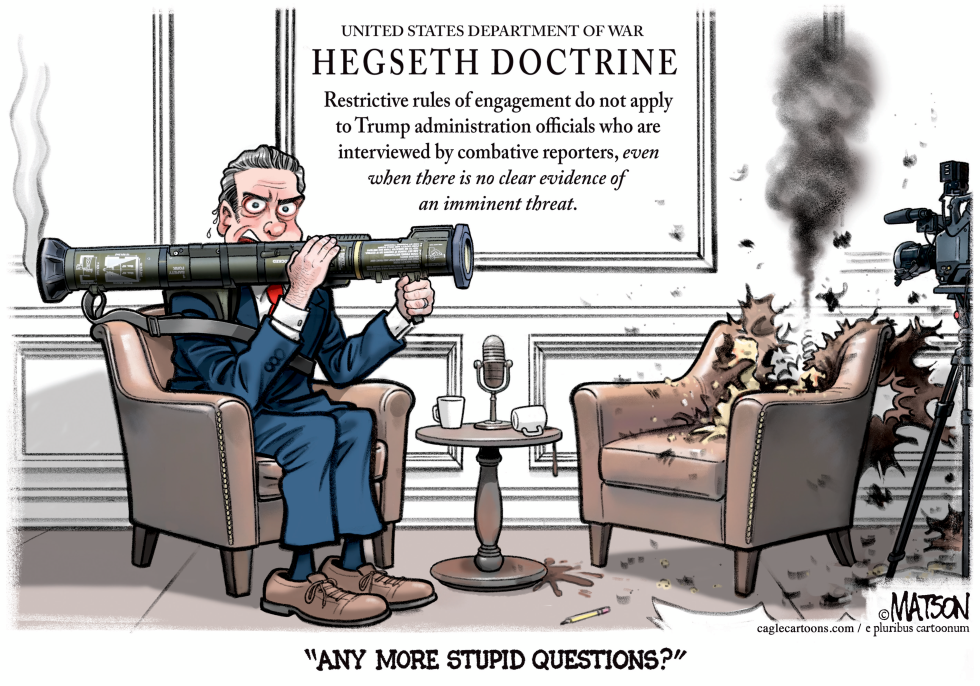
R.J. Matson's cartoon depicts a stern-faced official in a formal setting, wielding a massive rocket launcher that has just obliterated the interviewer's chair, smoke billowing from the debris. The header proclaims the 'Hegseth Doctrine' under the 'United States Department of War,' stating that restrictive rules of engagement don't apply to Trump administration officials facing combative reporters, even without clear evidence of an imminent threat. The official snarls, 'Any more stupid questions?' as a camera topples amid the chaos. This setup skewers the notion of overreactive defenses in political interviews, blending dry humor with sharp commentary on media relations. Tags like Hegseth Doctrine, Trump administration satire, press interview violence, combative reporters parody, imminent threat joke, and political cartoon Matson capture the essence of this visually punchy critique.
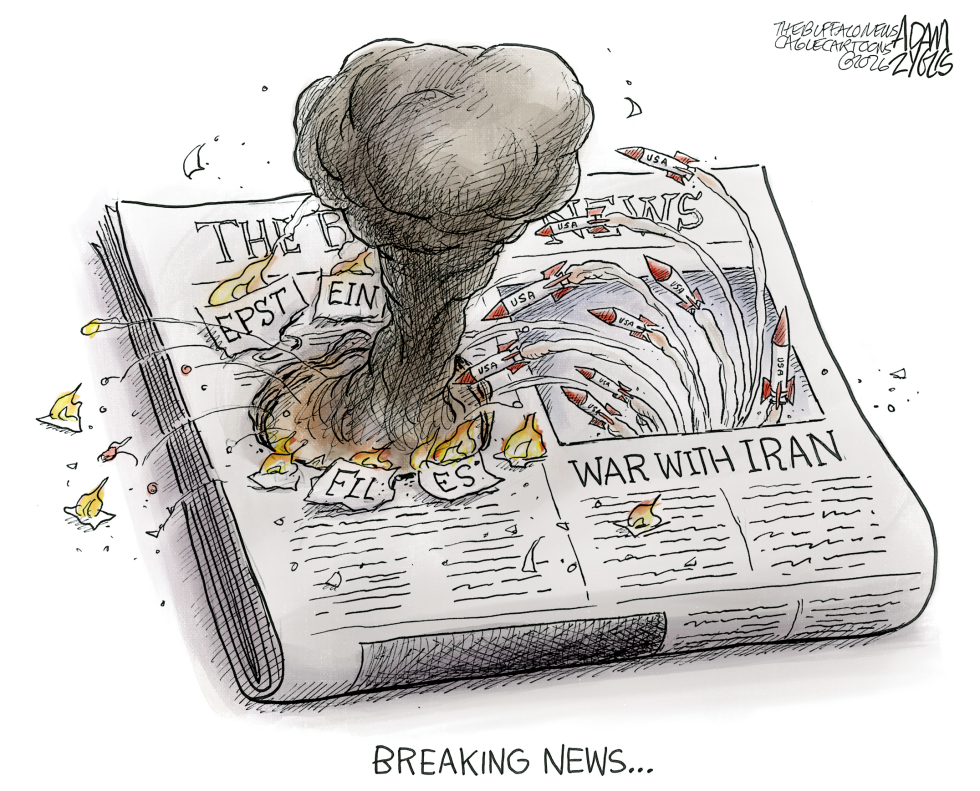
Dive into Adam Zyglis's political cartoon where breaking news morphs into a nuclear explosion, symbolizing media sensationalism around the Epstein files and war with Iran. USA missiles and Iran conflict visuals underscore geopolitical tension, while the exploding headlines serve as a sharp journalism critique. This satirical illustration captures the chaos of fake news explosion, reminding us how sensational stories can overshadow substance in today's fast-paced media landscape. With irreverent humor, it questions the ethics of turning tragedies into spectacles, blending satire with insightful commentary on news consumption.