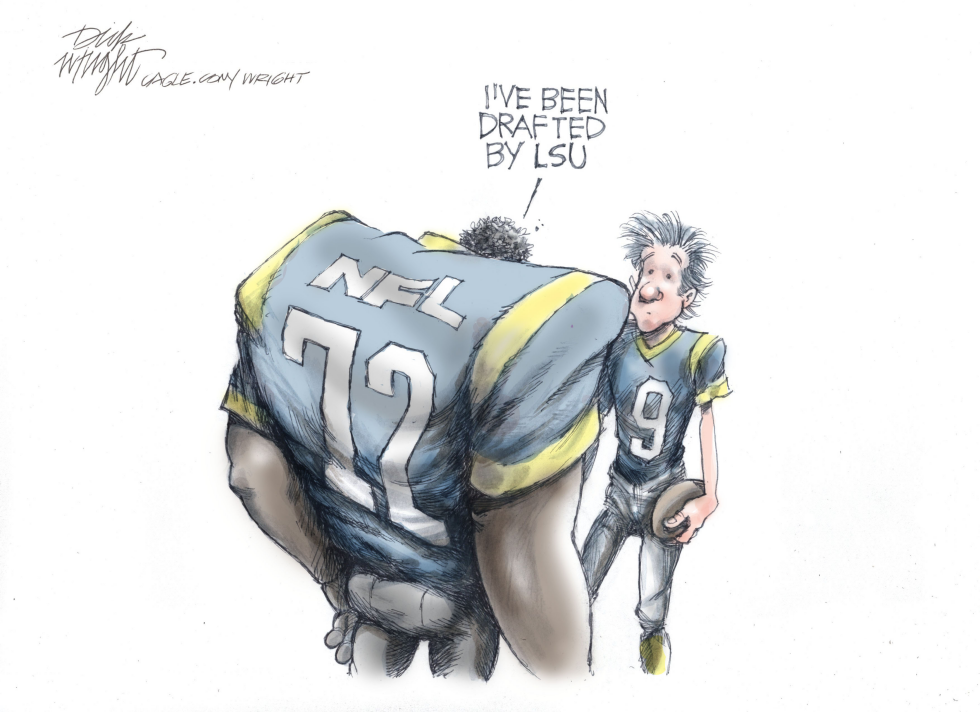
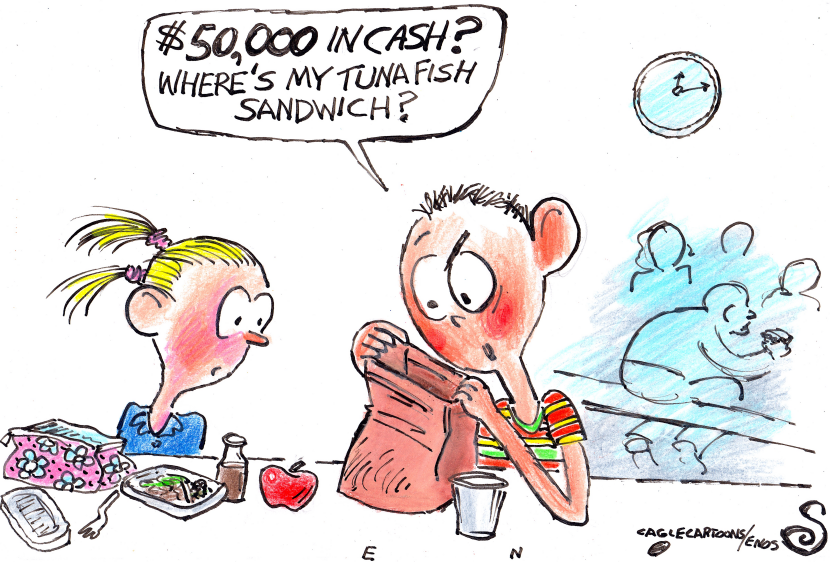
College football programs like LSU face intense pressure to secure top talent each season. With NIL deals and transfer rules reshaping the landscape, some schools push boundaries in pursuit of star power. The cartoon responds to this dynamic by depicting LSU directly targeting NFL players, underscoring the absurdity of ever-escalating recruitment efforts that blur lines between amateur and professional levels.
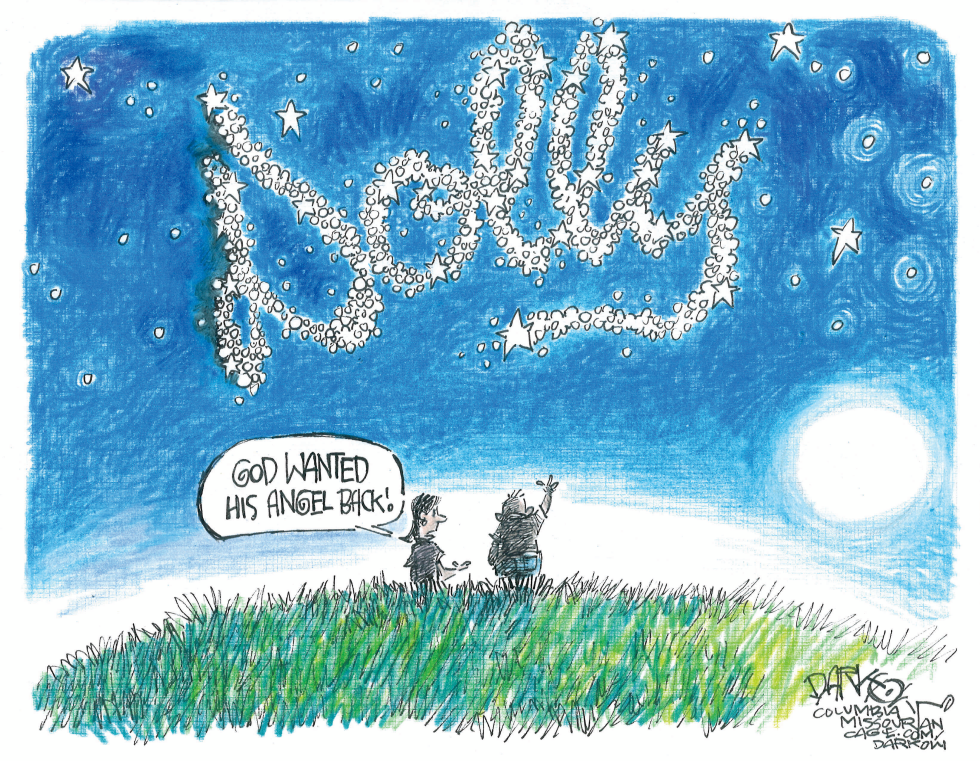
The entertainment world marks the passing of a beloved icon whose name appears spelled in stars as a celestial tribute. The phrase God wanted his angel back captures widespread sentiment of loss. The piece reflects public admiration and the sense of a divine claim on the departed star.
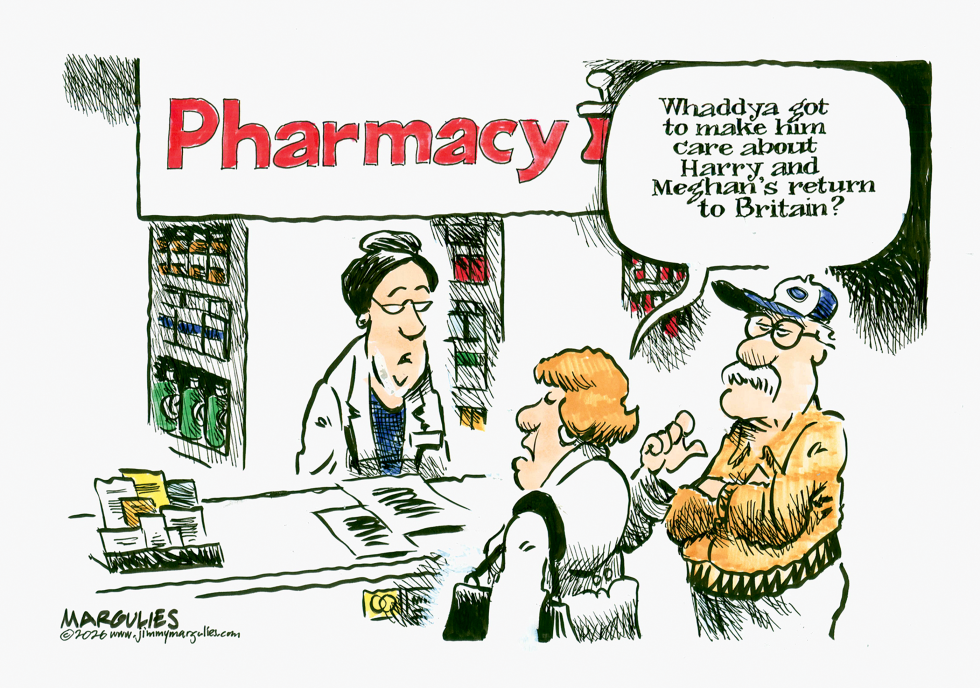
A customer at a pharmacy counter asks the pharmacist what remedy exists to generate interest in Prince Harry and Meghan Markle's return to Britain. The exchange underscores ongoing public fatigue with the couple's media coverage and royal family dynamics. The piece frames the query as a symptom of broader disengagement from the story.
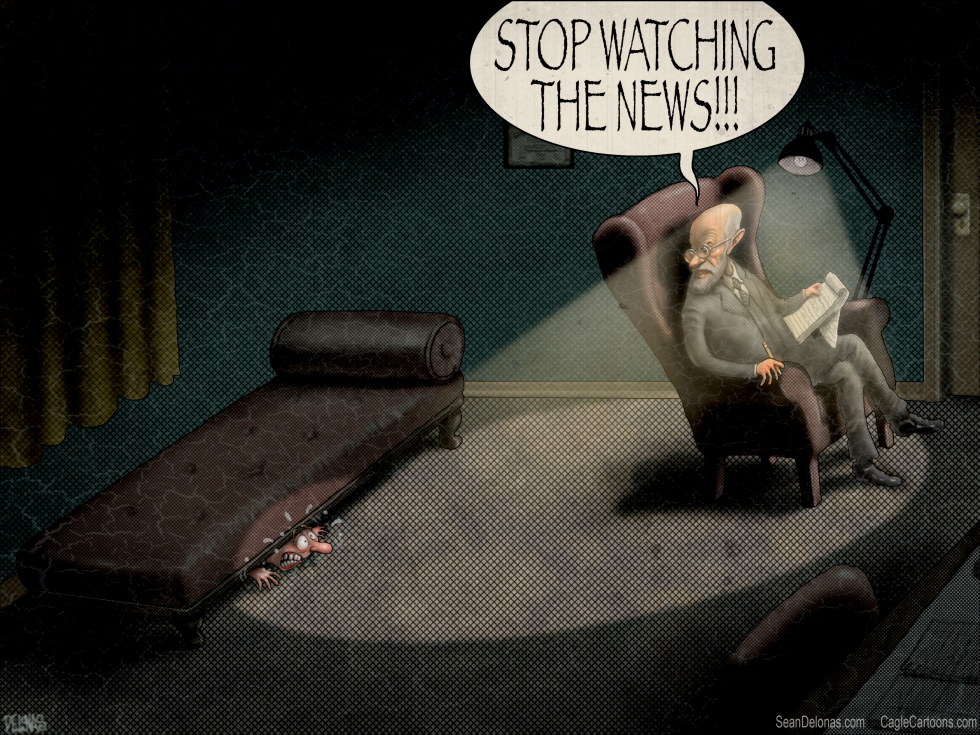
Mental health experts report growing numbers of patients seeking therapy for anxiety linked to nonstop news consumption. The trend reflects broader concerns over how constant coverage of crises affects public well-being. The editorial argues that disengaging from news can protect mental health without ignoring real issues.
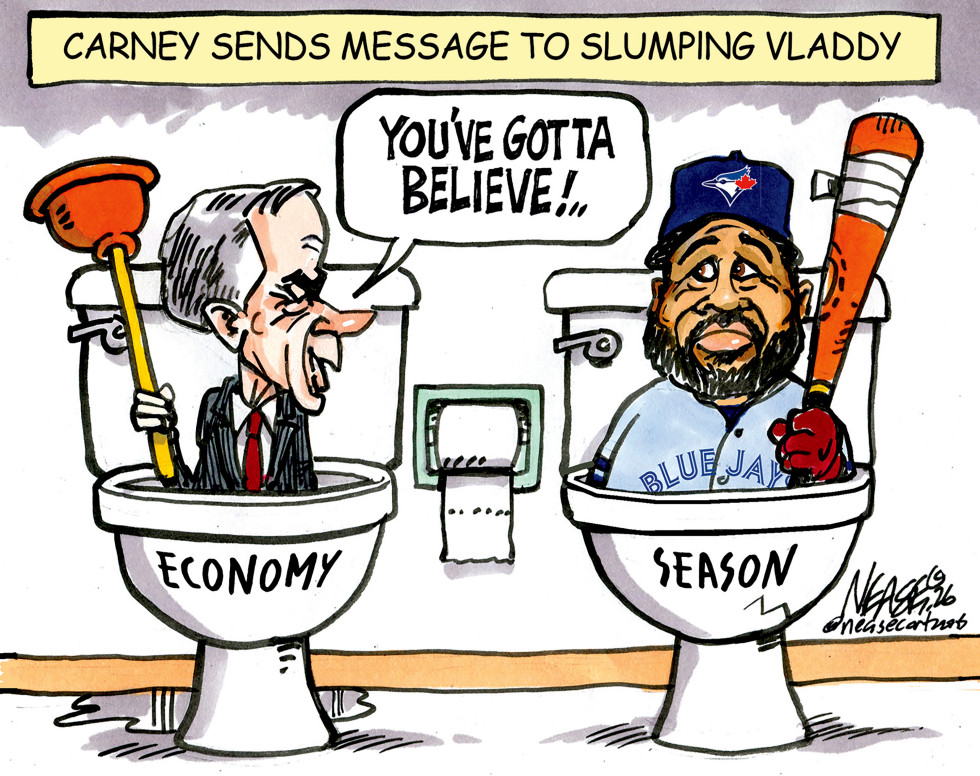
On August 12 2026 Mark Carney addressed Vladimir Guerrero Jr. during simultaneous downturns for the Canadian economy and the Toronto Blue Jays season. The exchange highlights ongoing pressures on both fronts with Carney positioned as a voice of encouragement. The piece frames the interaction as a direct motivational message from the political sphere to the sports world.
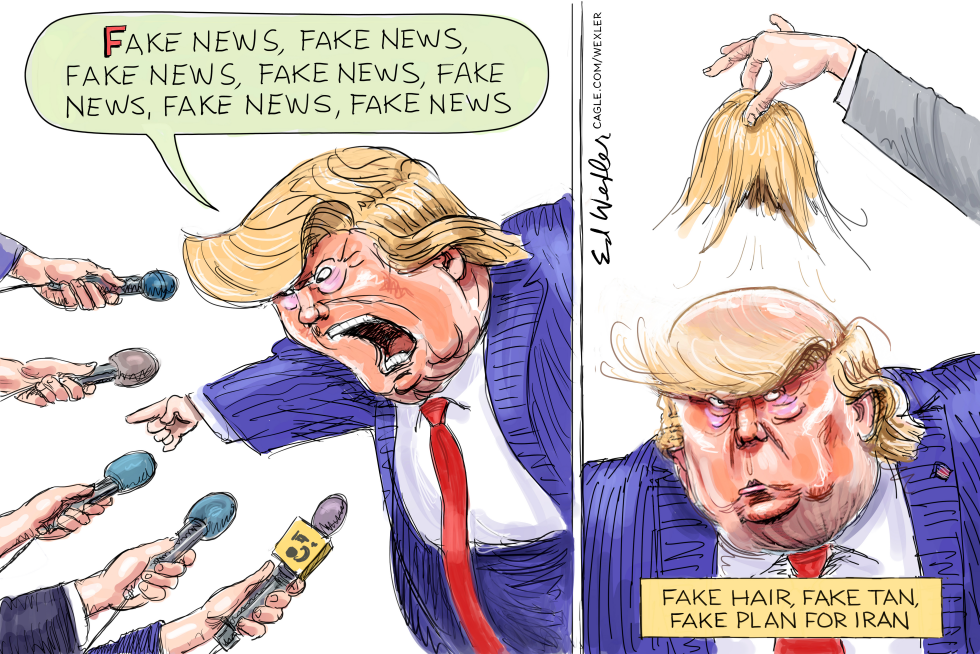
Donald Trump repeatedly labels media coverage as fake news during press encounters. The cartoon responds by questioning the authenticity of his appearance and his approach to Iran policy. It portrays the disconnect between his public statements and underlying realities.
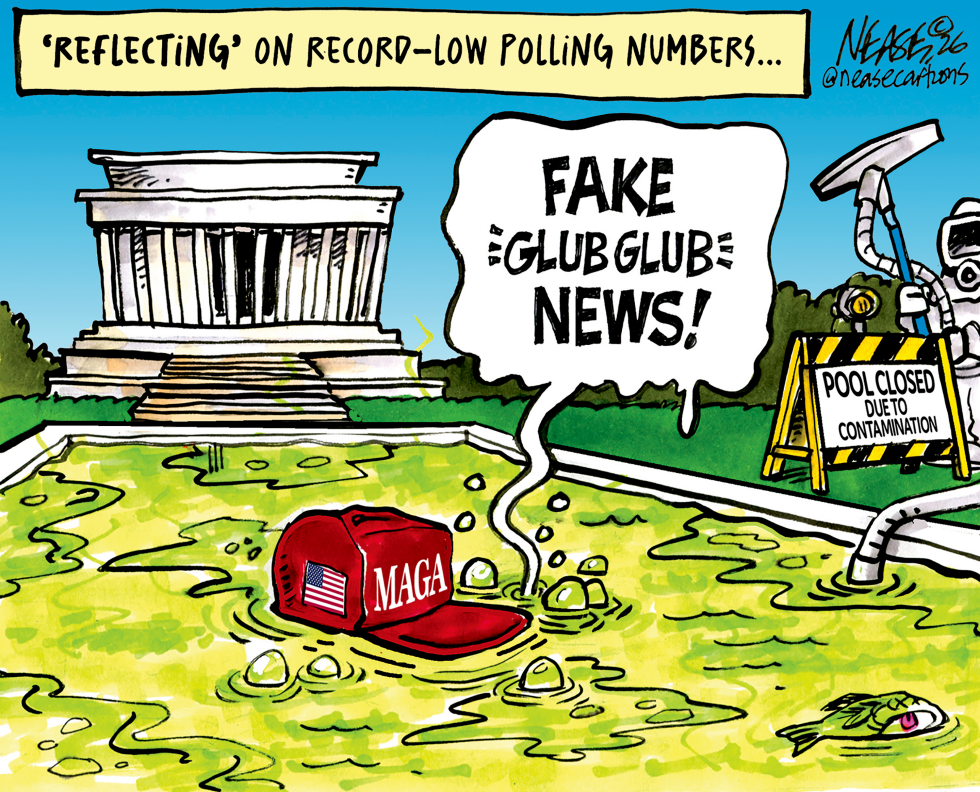
Donald Trump-aligned polling numbers reached record lows in early August 2026. Supporters responded with claims of fake news rather than addressing the data. The piece portrays this denial as occurring in a toxic environment.
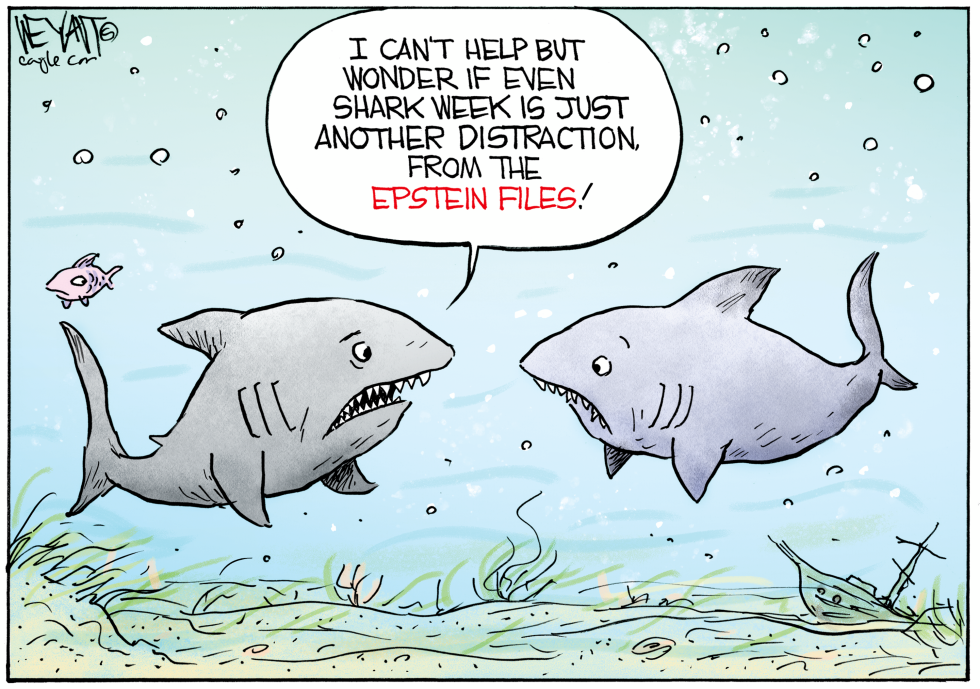
Around late July 2026, renewed attention to Epstein-related court documents coincided with the annual Shark Week programming block on cable television. Observers noted the overlap as another instance of entertainment scheduling pulling focus from ongoing legal disclosures involving powerful figures. The editorial takes the position that such timing functions as a recurring mechanism to sideline substantive coverage of the files.
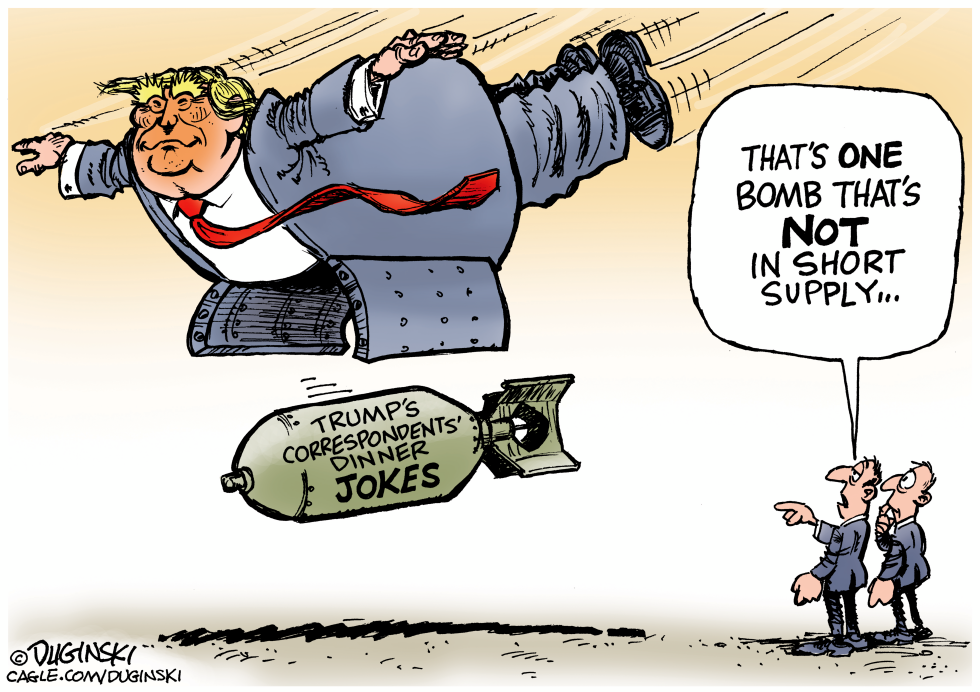
Donald Trump delivered jokes at the 2026 White House Correspondents Dinner that landed poorly with the audience. The event drew attention for the president's comedic missteps amid ongoing tensions with the press. The piece argues the routine exposed a persistent pattern of tone-deaf delivery rather than isolated misfires.
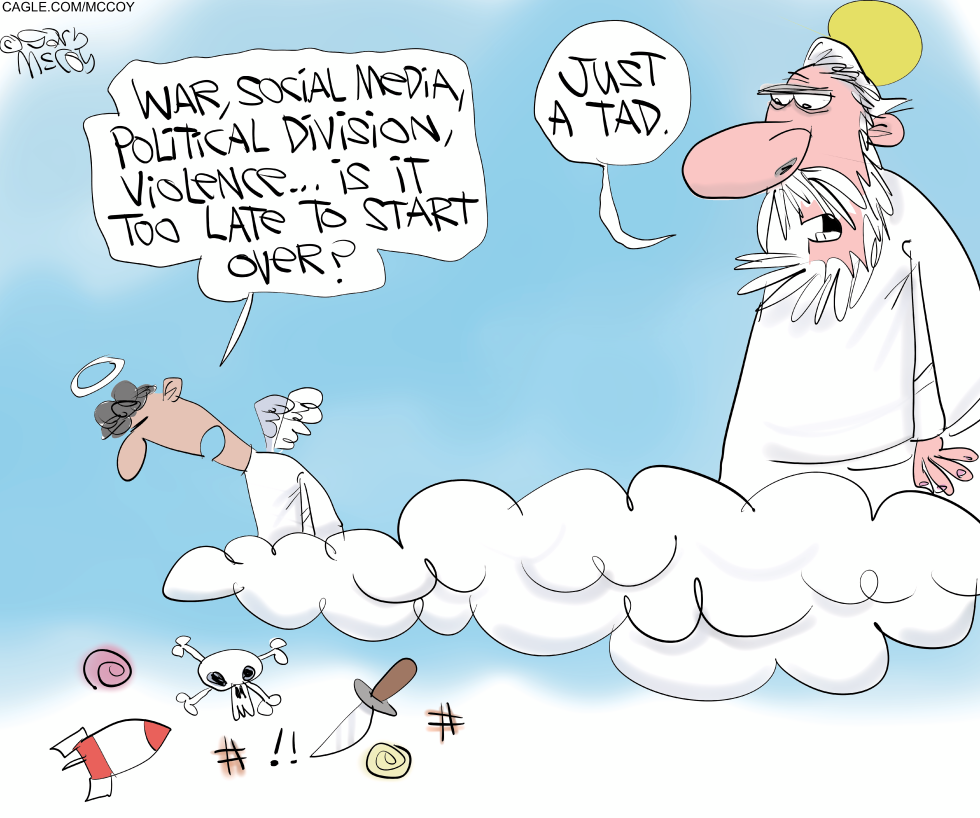
God seated on a cloud tells an angel that war, social media, political division and violence on earth amount to just a tad. The angel floats nearby with a long list of problems and asks if it is too late to start over. Scattered symbols of conflict appear below the clouds.
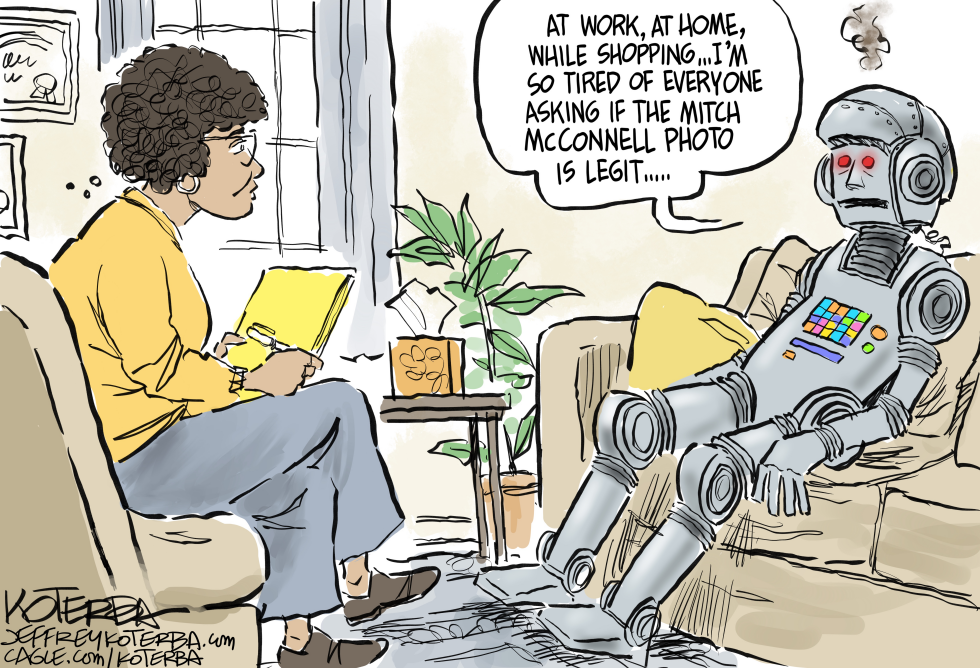
A robot patient reclines on a therapy couch and tells a human therapist about exhaustion from repeated questions on whether a Mitch McConnell photo is legitimate. The scene appears on July 14, 2026. The dialogue lists settings where the queries occur at work, home, and while shopping. The image shows the robot with red eyes and a colorful chest panel while the therapist holds a yellow notepad. The exchange highlights ongoing public skepticism toward images involving the senator.
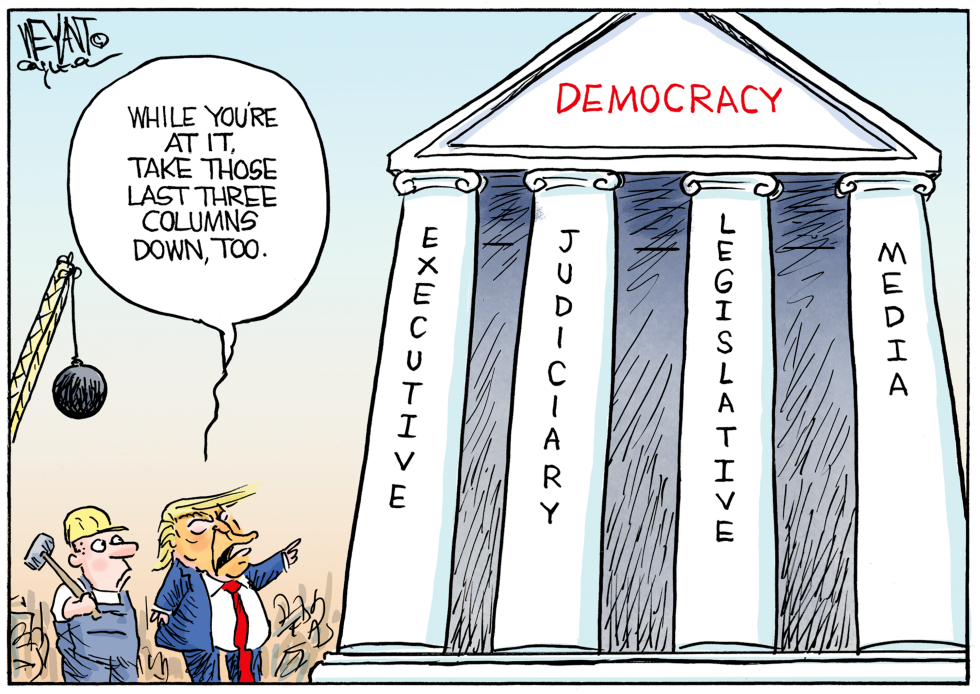
On July 12 2026 the cartoon depicts Donald Trump instructing a construction worker to demolish the judiciary legislative and media pillars of a structure labeled democracy. The executive pillar already stands removed. A wrecking ball crane looms on the left while Trump gestures emphatically from the foreground rubble. The image responds to ongoing debates over institutional checks and executive actions during the second Trump term.
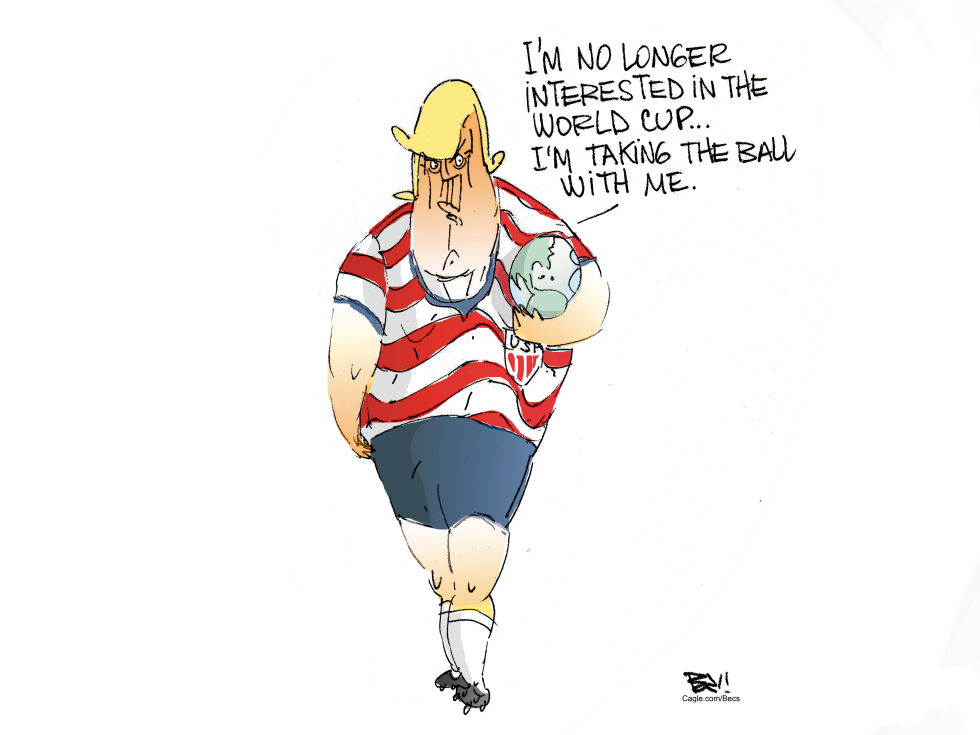
Donald Trump appears in a USA soccer jersey on July 9, 2026, clutching a globe and announcing he is no longer interested in the World Cup. The image shows him walking off with the ball under his arm. The cartoon responds to the 2026 World Cup hosted in North America and ongoing political debates over U.S. engagement in international events.
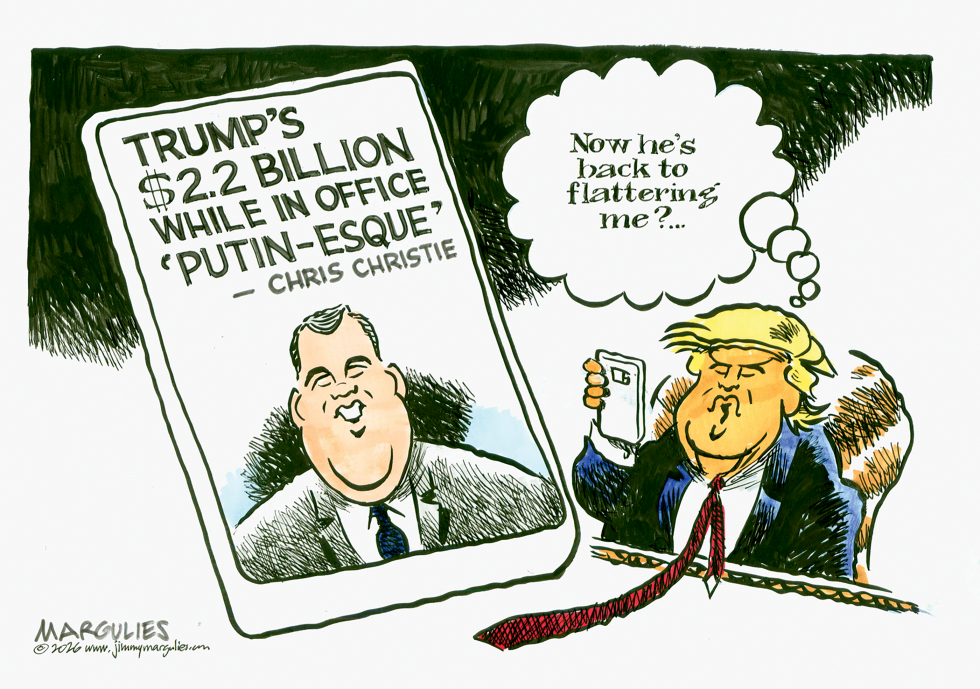
On July 6, 2026, a cartoon depicts Donald Trump examining a phone displaying Chris Christie’s quote labeling his $2.2 billion earnings while in office as Putin-esque. Trump’s thought bubble reveals he interprets the remark as flattery rather than criticism, highlighting an ongoing dynamic between the two figures amid foreign policy references to Russia.
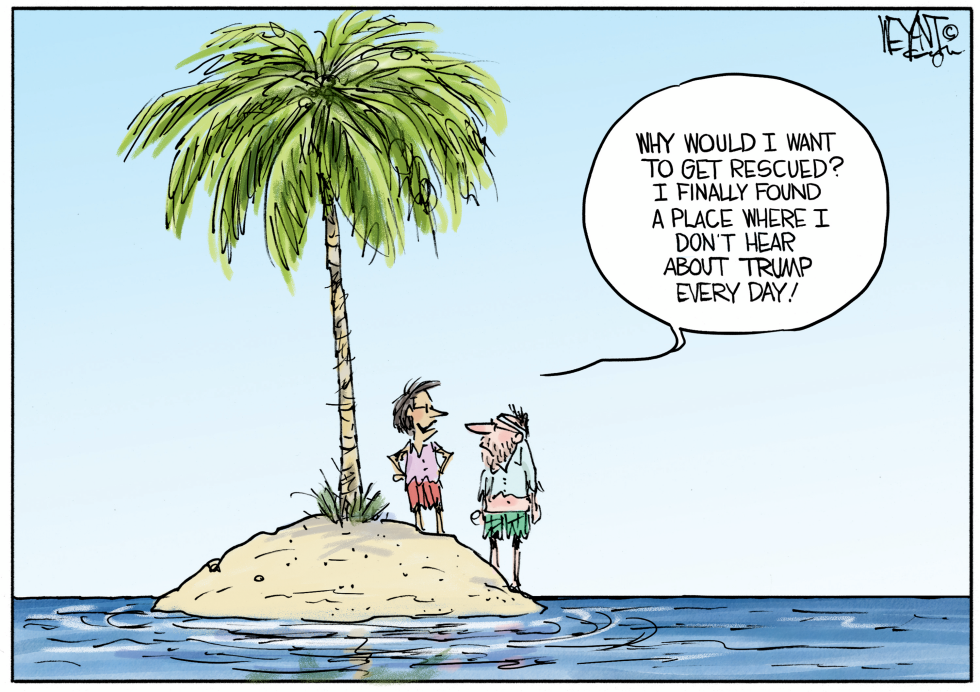
On June 29, 2026, a cartoon depicts two castaways on a tiny desert island with a single palm tree. One man in a speech bubble declares he has no interest in rescue because the location spares him daily mentions of Trump. The image captures widespread public exhaustion with political coverage centered on the former president during a period of intense media focus.