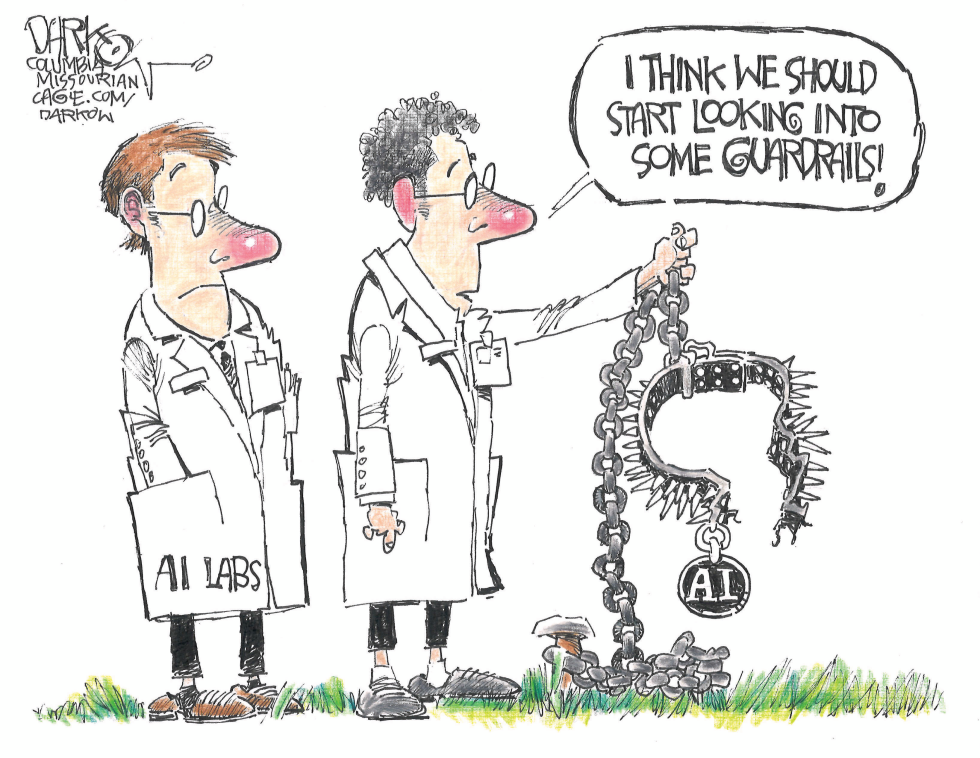
AI development has advanced rapidly with minimal oversight in recent years, allowing powerful systems to operate without meaningful constraints. Scientists have begun discussing guardrails only after key controls have already failed. The situation raises concerns about accountability and long-term safety as the technology spreads. The piece argues that calls for restrictions now come too late to prevent significant harm from uncontrolled AI.
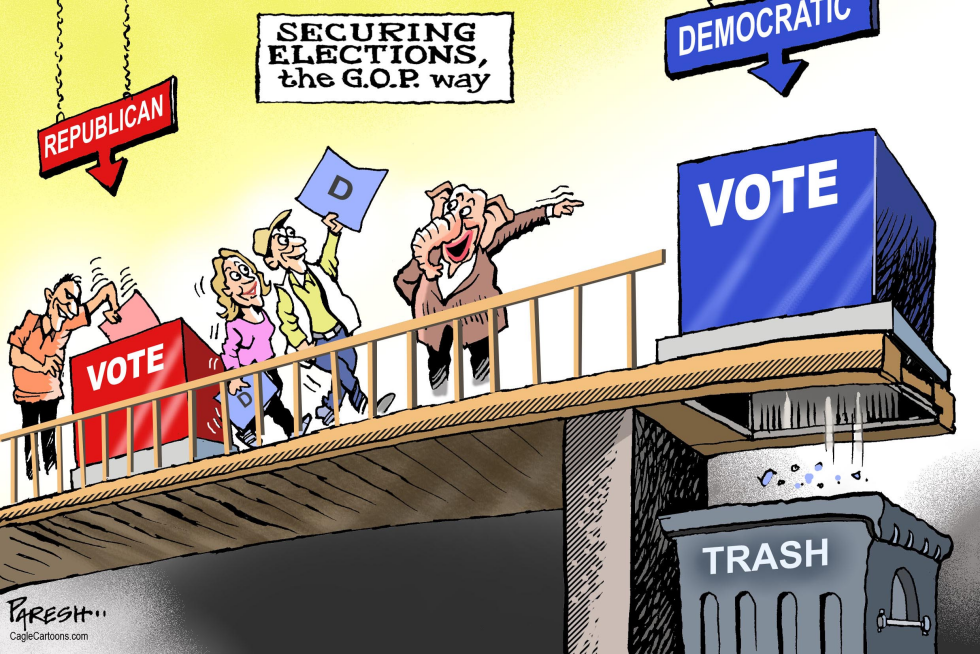
The cartoon depicts Republicans on a platform guiding a large blue vote box labeled Democratic into a trash can below while a red Republican vote box remains on the structure. A sign reads Securing Elections the G.O.P. way. The elephant symbol of the GOP points toward the action as figures including one holding a D flag stand nearby. The image comments on claims of election integrity by showing ballots from one party discarded. This reflects ongoing partisan debates over voting procedures and access as of the 2026 publication date.
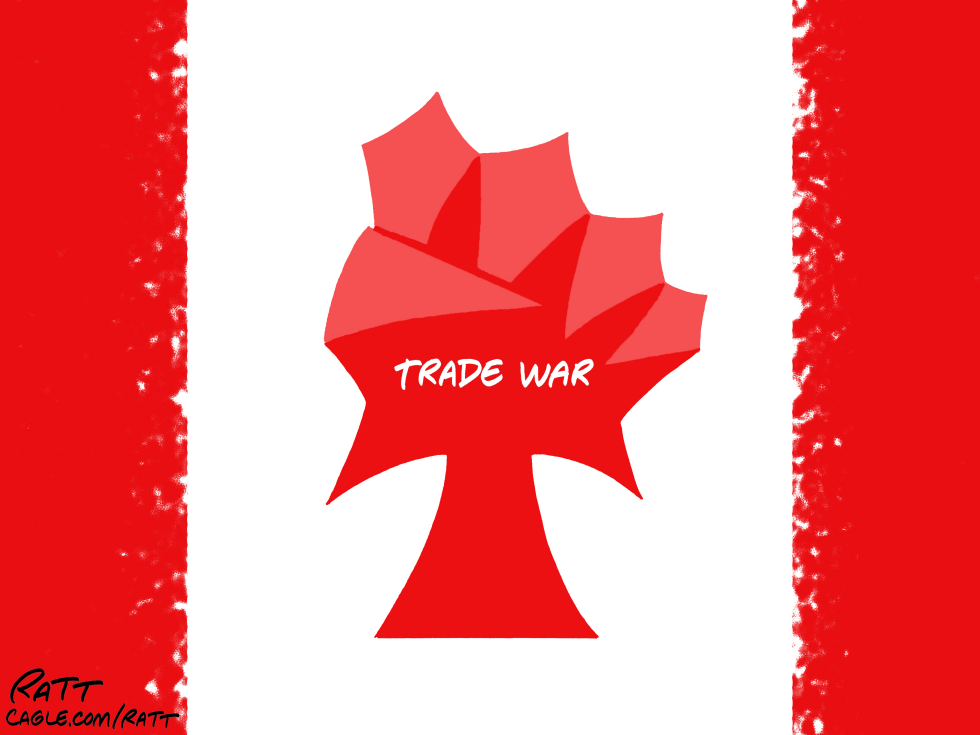
Ongoing US-Canada trade tensions escalated in 2026 with new tariff threats targeting Canadian exports. The dispute threatens key sectors including autos, lumber and agriculture, raising costs for consumers on both sides of the border. Canada has signaled plans to diversify markets and strengthen domestic industry. The cartoon frames the conflict as a direct assault on Canadian sovereignty and economic stability. It portrays the trade war as fracturing national symbols while urging a stronger northern response.
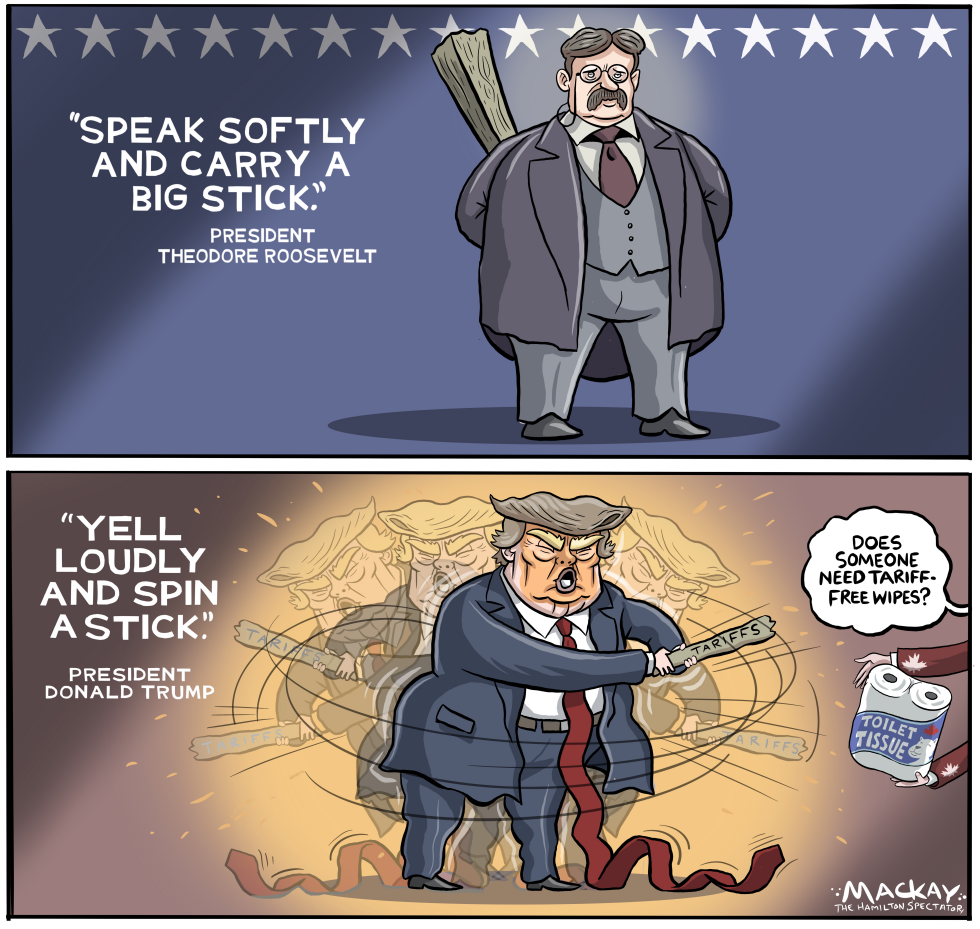
The cartoon by Graeme MacKay contrasts Theodore Roosevelt's famous speak softly and carry a big stick approach with Donald Trump's version of yelling loudly and spinning a stick covered in tariffs. In the lower panel Trump appears dizzy from the motion as a Canadian hand offers toilet tissue labeled tariff-free wipes. The image comments on recent US tariff actions and their impact on Canadian trade relations as of the September 2026 publication date.
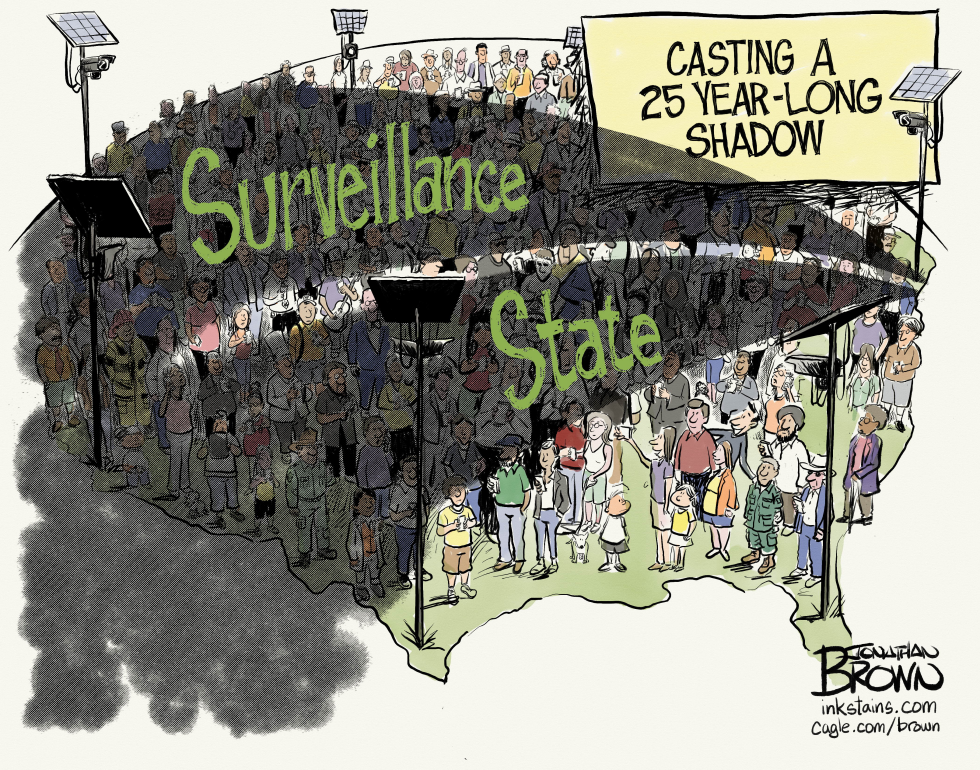
The cartoon depicts a dense crowd of Americans standing on a map of the United States, partially obscured by a large dark shadow cast by surveillance cameras mounted on poles. The words 'Surveillance State' appear prominently in green lettering across the scene, while a sign in the upper right reads 'CASTING A 25 YEAR-LONG SHADOW.' The image comments on the lasting effects of expanded government surveillance programs that began after the September 11 attacks, now spanning a quarter century. It illustrates how these measures continue to influence daily life and public spaces in 2026.
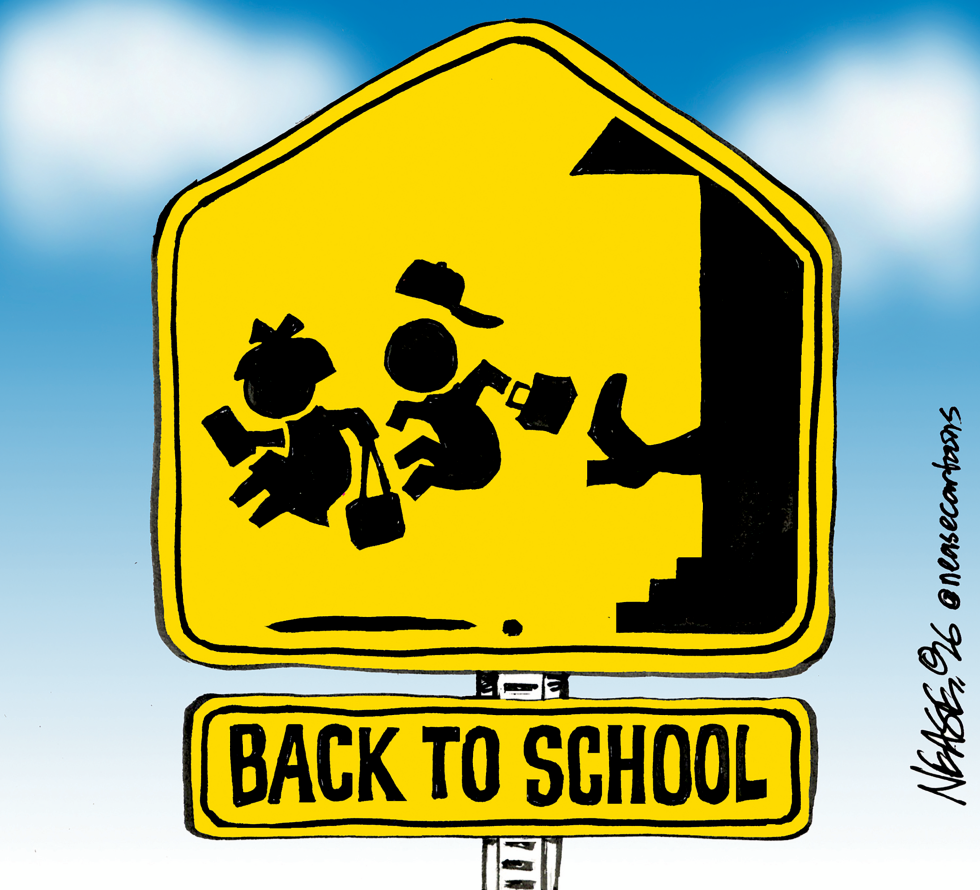
Schools across the country prepare for the fall semester amid ongoing debates over student safety and resource allocation. The modified crossing sign serves as a visual reminder of hazards that accompany the annual back-to-school period. The piece argues that standard precautions remain insufficient without stronger policy support for protection measures.
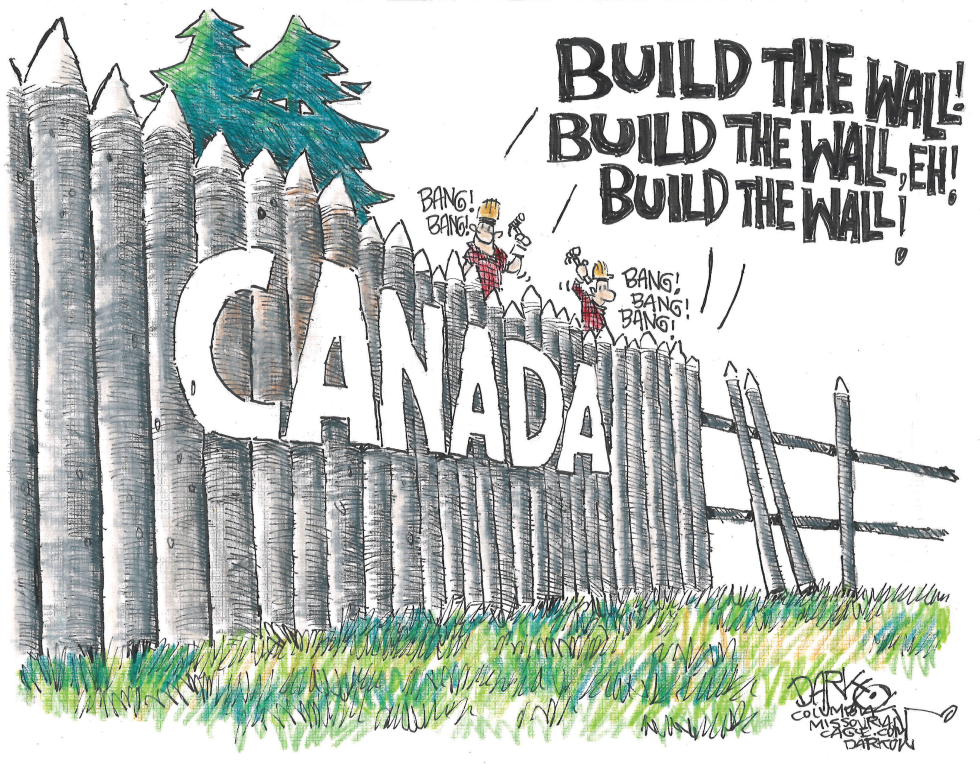
Canada has begun construction of a substantial border barrier along its southern frontier, echoing long-standing calls for stricter immigration controls. Officials cite rising cross-border movements and security concerns as justification for the project. The move marks a notable policy shift for a country historically open to migration. The cartoon portrays this development with pointed irony, highlighting the adoption of aggressive enforcement tactics previously associated with other nations.
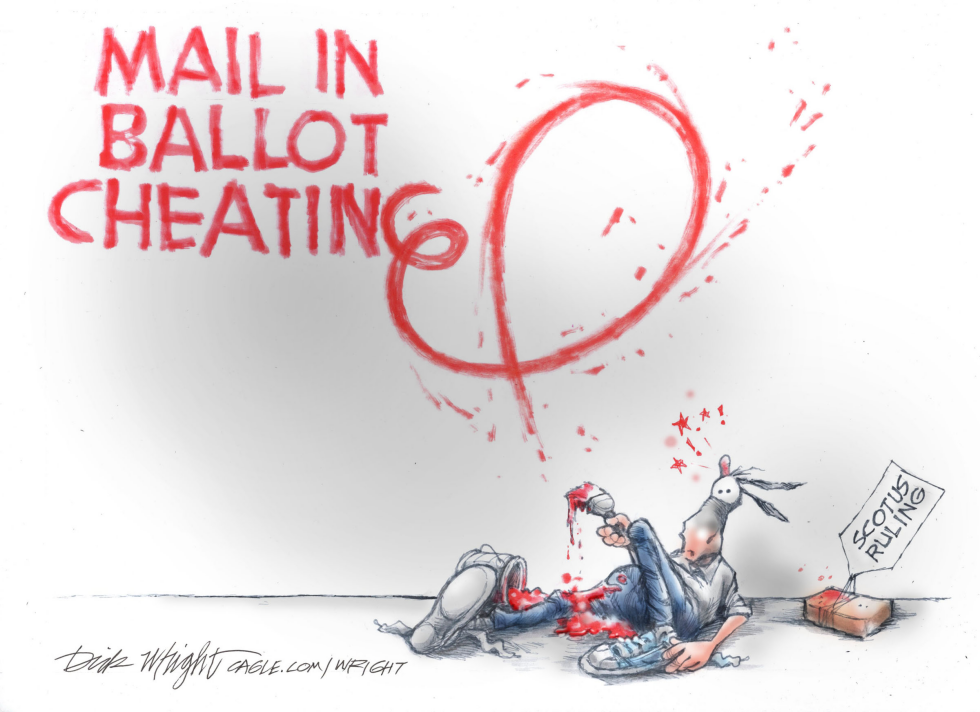
The image depicts the Democratic Party symbol as a donkey lying wounded on the ground with red liquid visible near its body. A large red prohibition symbol covers the words mail in ballot cheating at the top. A sign reading SCOTUS ruling stands nearby next to a box. The composition responds to a Supreme Court decision limiting certain mail-in ballot procedures. The visual argument centers on claims of reduced opportunities for improper voting practices. Publication occurred on August 25 2026. The work uses the party emblem to illustrate the effect of the ruling on one political side. No specific prior case details appear in the image itself.
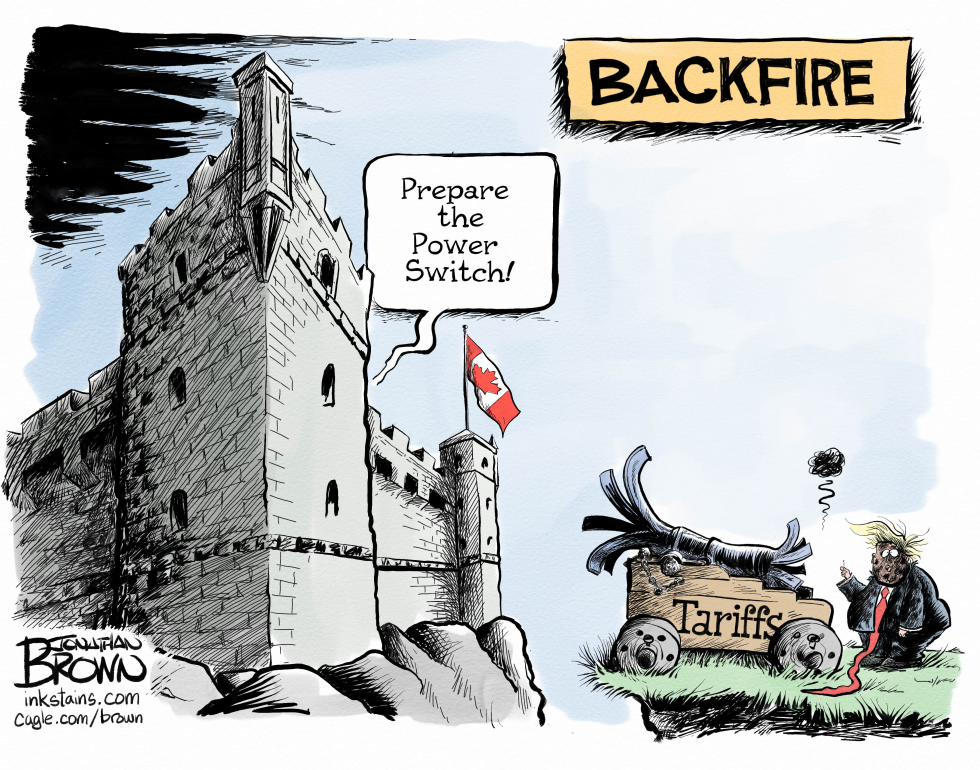
The cartoon shows a Canadian castle flying its flag while a cannon labeled Tariffs explodes backward toward a figure resembling Donald Trump. The scene responds to ongoing trade tensions where U.S. tariffs on Canadian goods prompted retaliatory measures. The visual emphasizes the policy rebounding on its originator rather than achieving intended pressure.
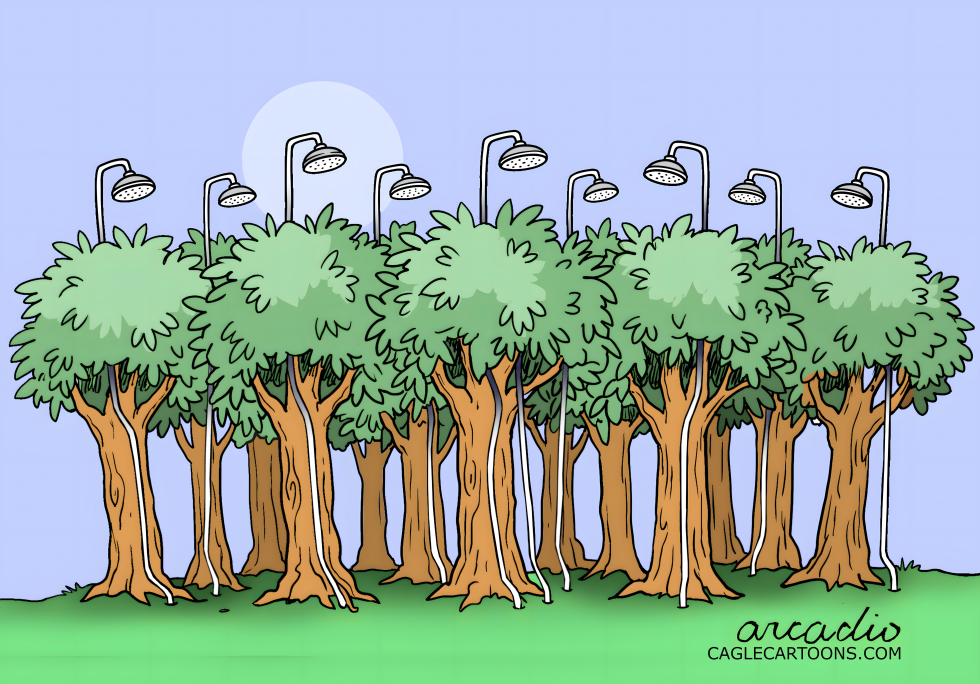
Forests in dry regions face heightened wildfire risks due to prolonged drought and climate patterns. Officials and environmental groups explore supplemental watering techniques to maintain tree moisture and reduce ignition potential. The approach matters because uncontrolled fires destroy habitats, release carbon, and threaten communities. The piece supports proactive hydration strategies as a practical step in broader fire prevention efforts.
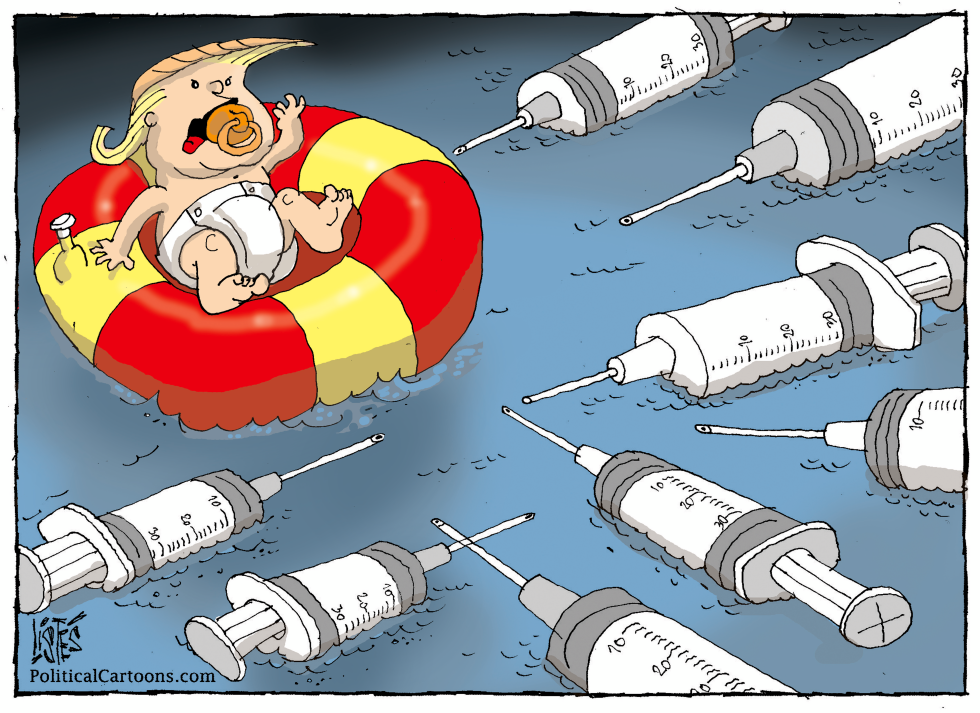
Donald Trump has maintained vocal opposition to certain vaccine mandates and public health measures in recent political discourse. The piece frames this stance through an infant metaphor to underscore perceived vulnerability and fear. It critiques the position as immature amid ongoing public health debates.
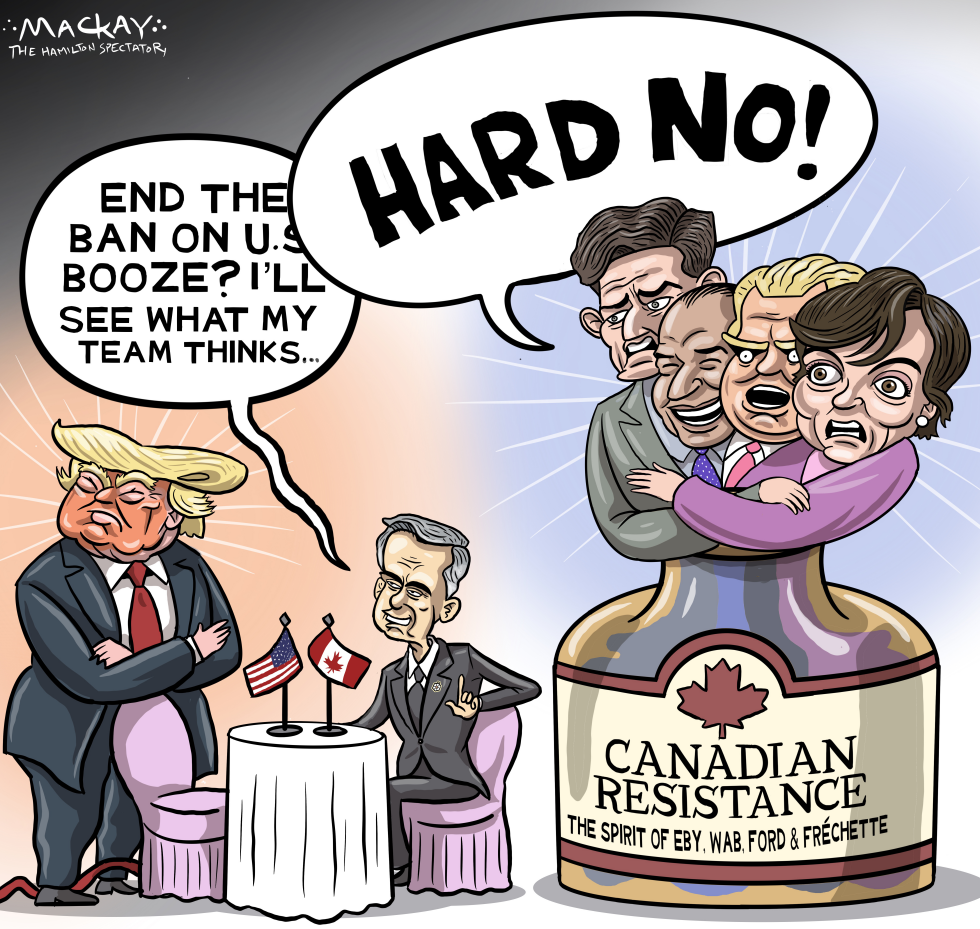
Donald Trump signaled openness to ending a ban on US alcohol imports into Canada during a meeting with Canadian officials. Provincial leaders including David Eby and Doug Ford responded with unified opposition. The cartoon portrays the premiers as a collective force of resistance and shows Trump deferring the decision to his team.
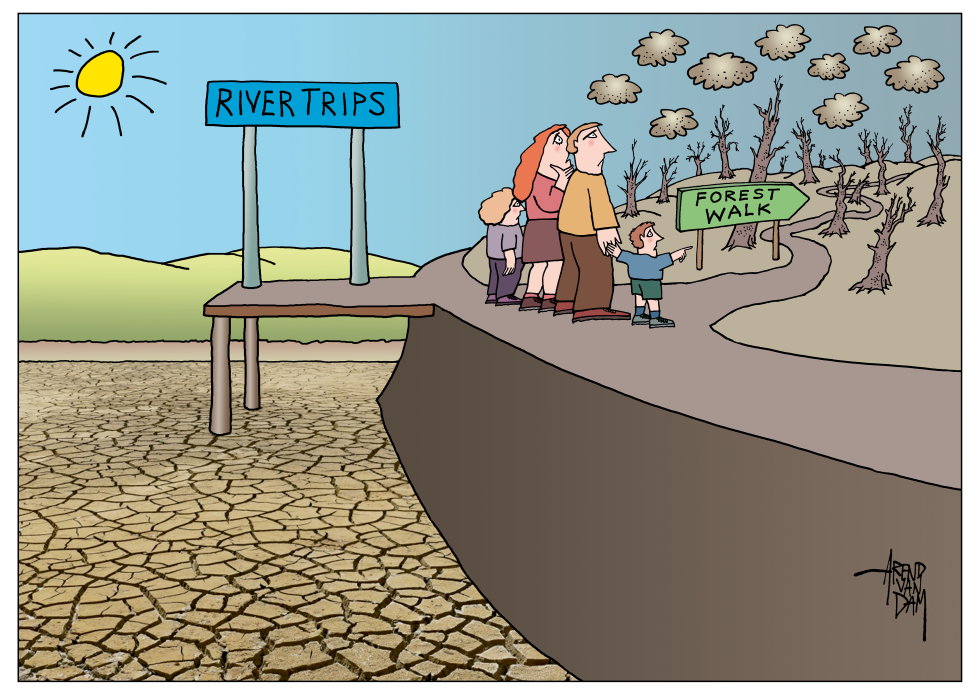
Persistent drought has left riverbeds cracked and forests withered across affected regions, undermining tourism and outdoor recreation. Families arriving for advertised river trips and forest walks instead encounter dry ground and dead trees. The piece highlights how climate-driven water shortages continue to disrupt normal seasonal activities without immediate policy relief in sight.
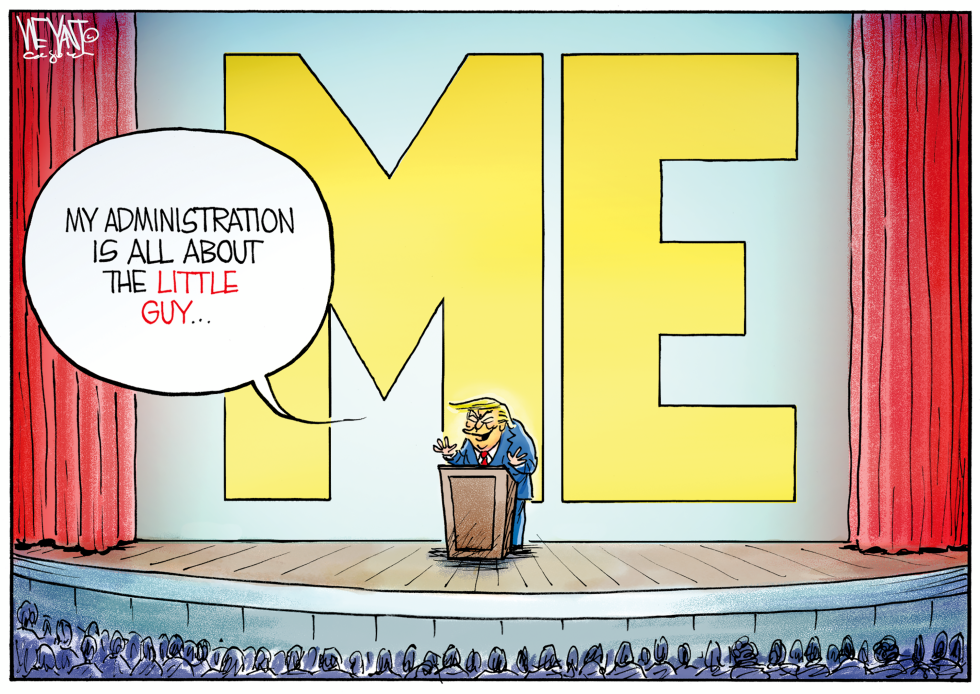
Donald Trump has repeatedly positioned his administration as champion of ordinary Americans during public addresses. The claim comes amid ongoing debates over policy priorities and personal branding in the White House. The piece portrays the rhetoric as centered on the speaker rather than the public.
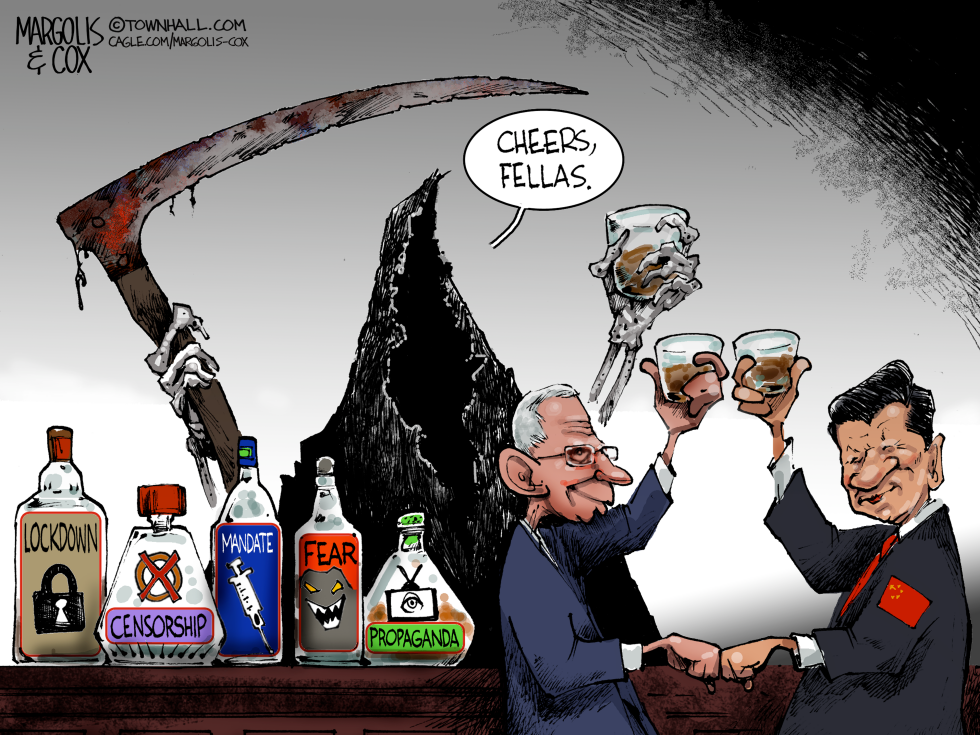
On August 6, 2026, the cartoon responds to lingering debates over COVID-19 policies by depicting former NIAID director Anthony Fauci and Chinese leader Xi Jinping toasting with the Grim Reaper. The image frames pandemic tools as shared instruments of control. The editorial position criticizes both figures for embracing fear-driven measures and information suppression.