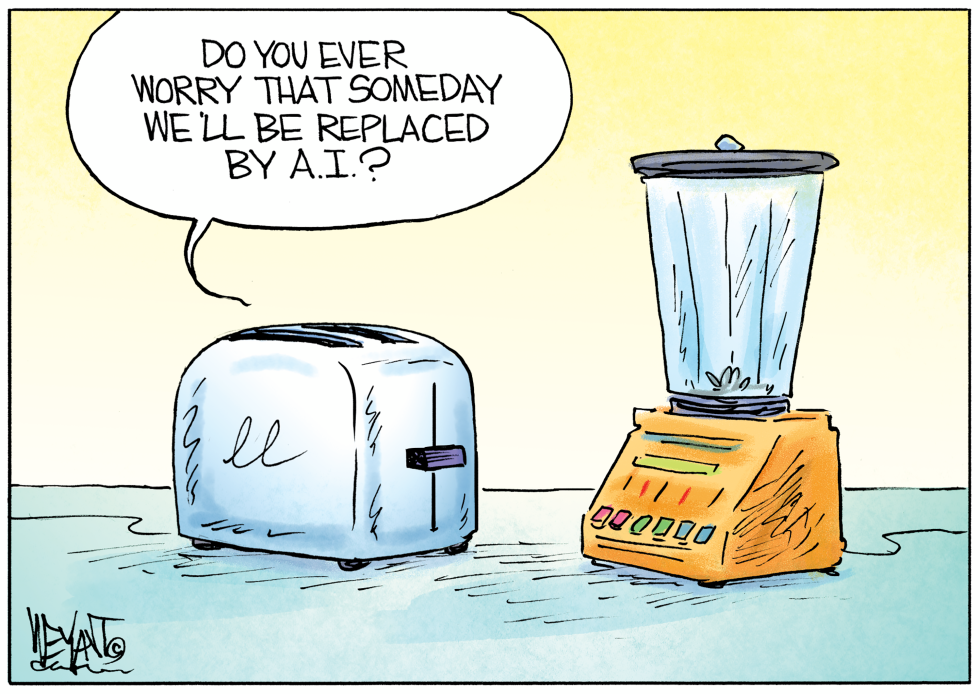
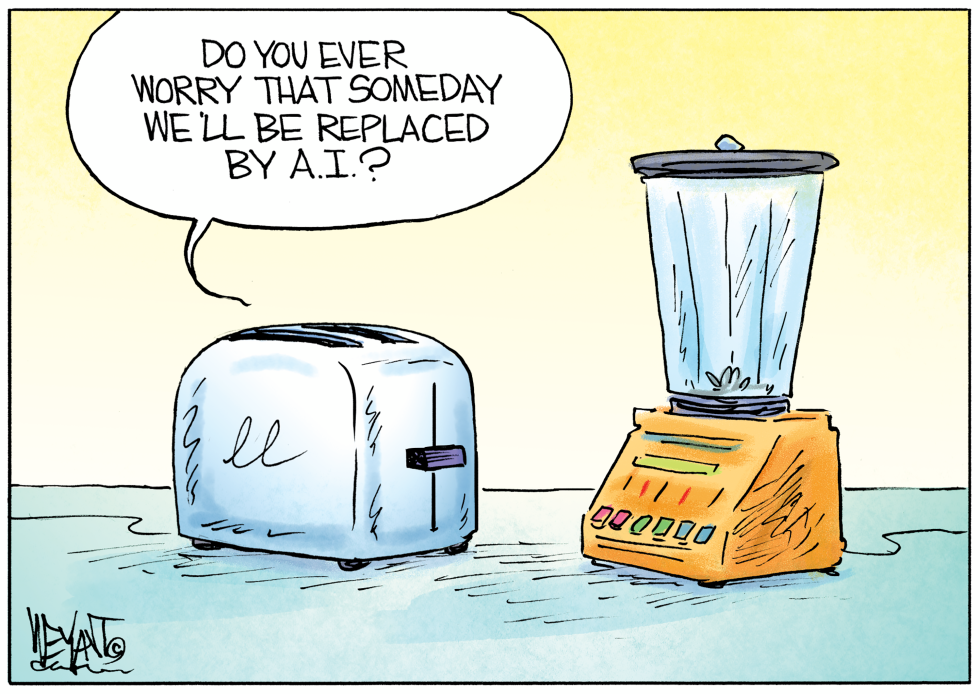
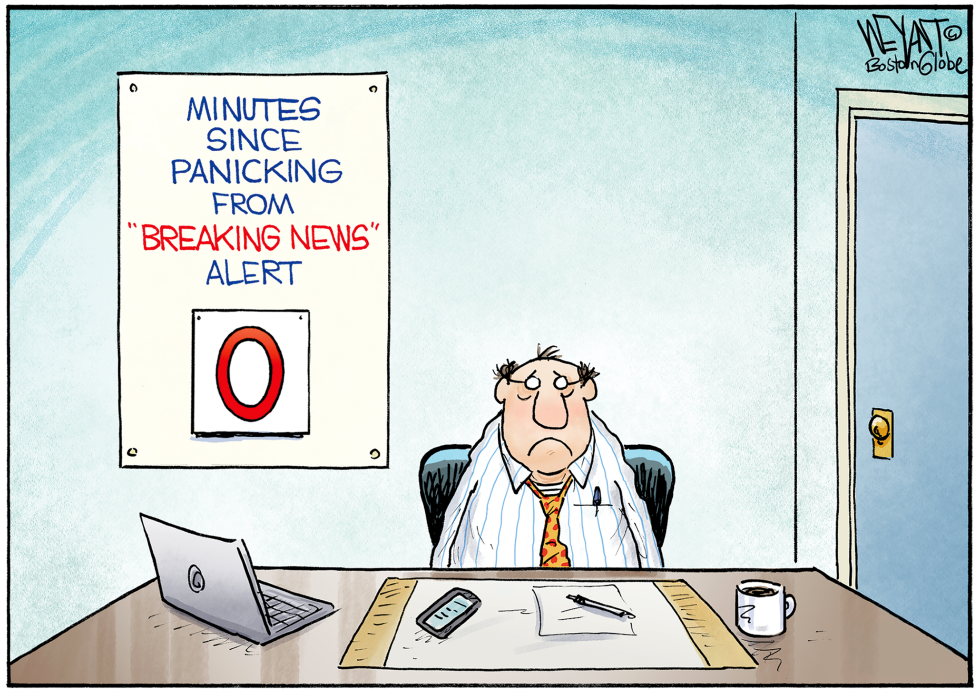
Anxiety about artificial intelligence replacing human work has spread across industries. The piece responds to widespread uncertainty over which roles automation will absorb next. It treats the worry as universal enough to reach even household appliances.
Artificial intelligence continues to advance across industries, prompting widespread discussion about job displacement for workers in various sectors. The concern centers on how rapidly evolving tools could automate tasks once handled by humans. This piece frames the debate through everyday objects to underscore persistent public anxiety about technological change and its long-term effects on employment.
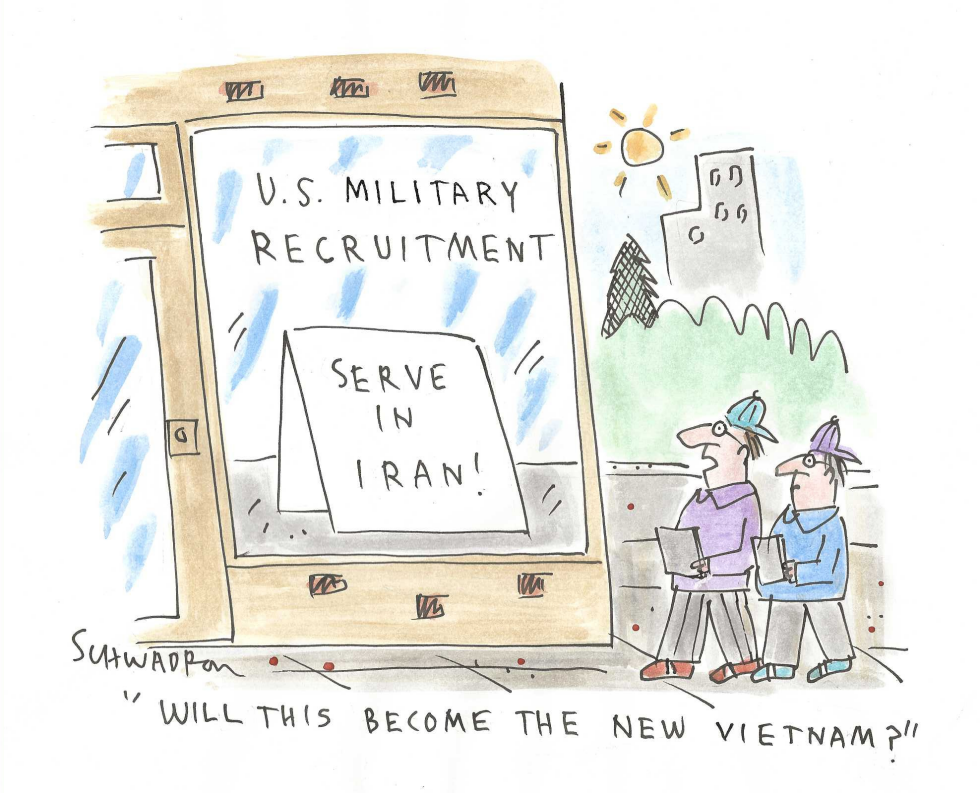
U.S. military recruitment efforts have begun highlighting opportunities to serve in Iran, prompting public questions about potential escalation. The move comes amid ongoing regional tensions and draws direct comparisons to the Vietnam War era. Observers worry the campaign signals a shift toward deeper U.S. military commitments overseas. The editorial takes the position that such recruitment tactics risk repeating past mistakes by underestimating public resistance to prolonged conflicts.
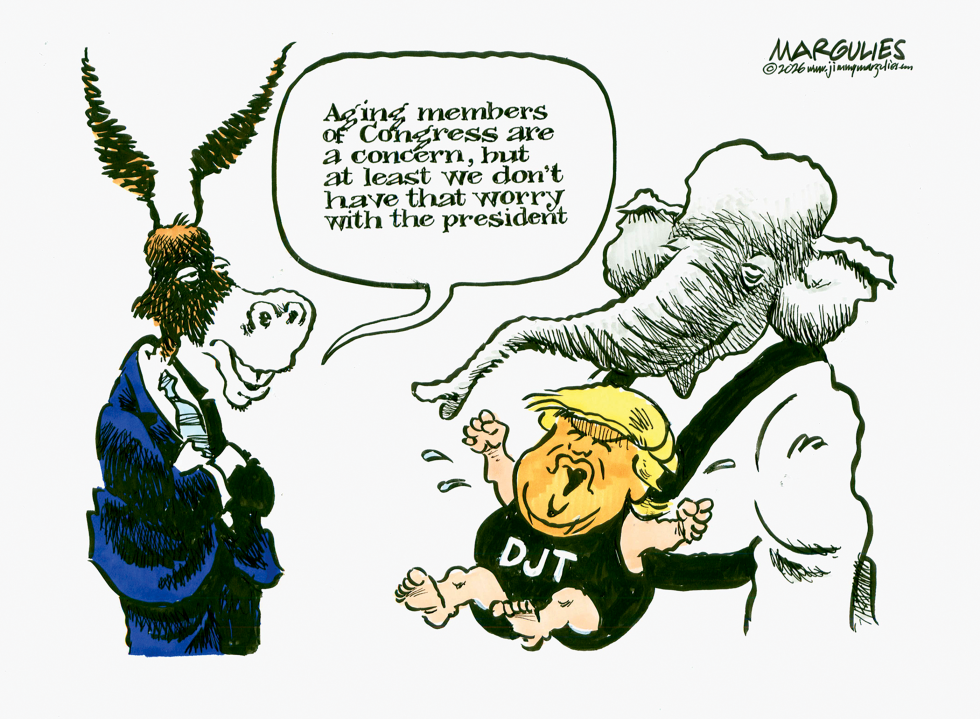
Democrats have raised alarms about aging lawmakers in Congress while downplaying similar concerns about President Trump. The dynamic reflects partisan divides over leadership fitness and selective scrutiny of age in politics. The piece argues this stance reveals inconsistency in how age is treated depending on the officeholder.
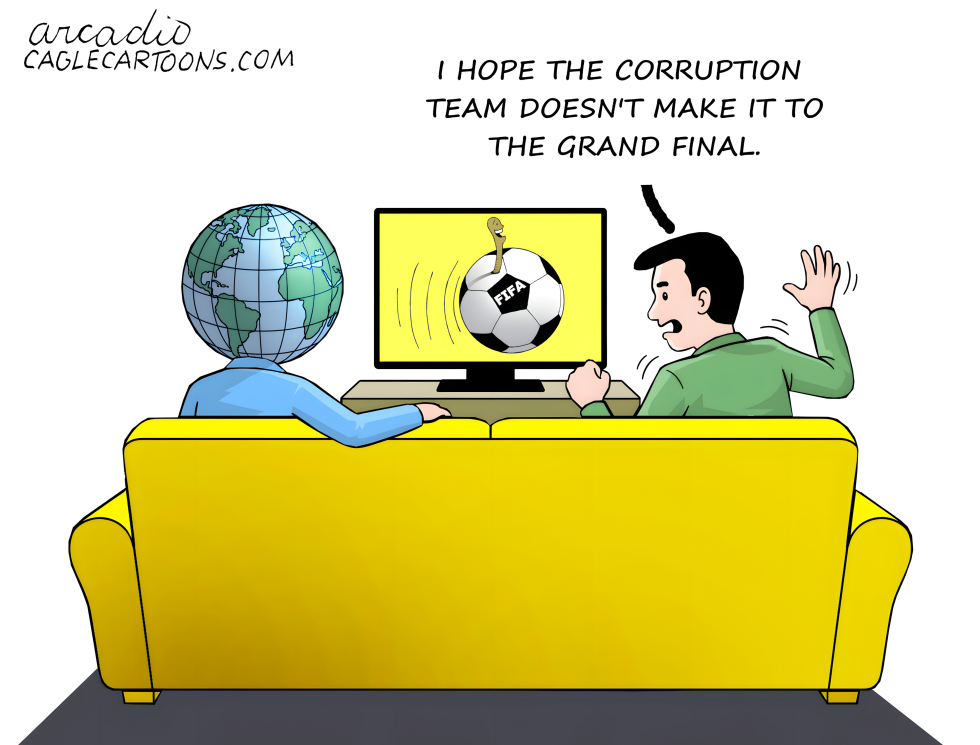
A man with a globe for a head sits beside a green-shirted viewer on a yellow couch, both staring at a television displaying a FIFA soccer ball with a worm emerging from it. The viewer raises a hand in alarm while a speech bubble expresses hope that the corruption team will not reach the grand final. The image, dated July 7, 2026, captures public anxiety over ongoing FIFA integrity issues tied to major soccer events.
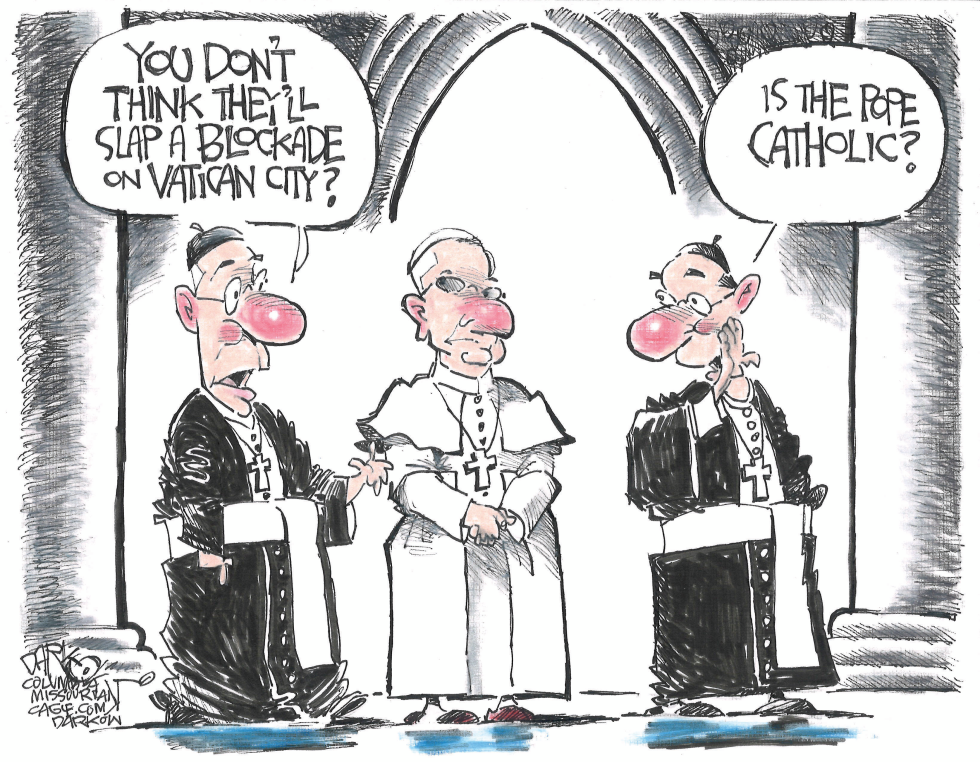
John Darkow's cartoon captures three Catholic clergy in traditional attire, with the central Pope figure amid a discussion on a Vatican blockade. The left figure worries about sanctions slapping Vatican City, while the right delivers the classic 'Is the Pope Catholic?' line, a rhetorical jab at obvious truths. This piece uses dry humor to spotlight tensions around religious institutions facing isolation, blending blockade fears with papal identity. The archway background grounds it in Vatican aesthetics, emphasizing the blockade theme without overreaching into unseen politics.
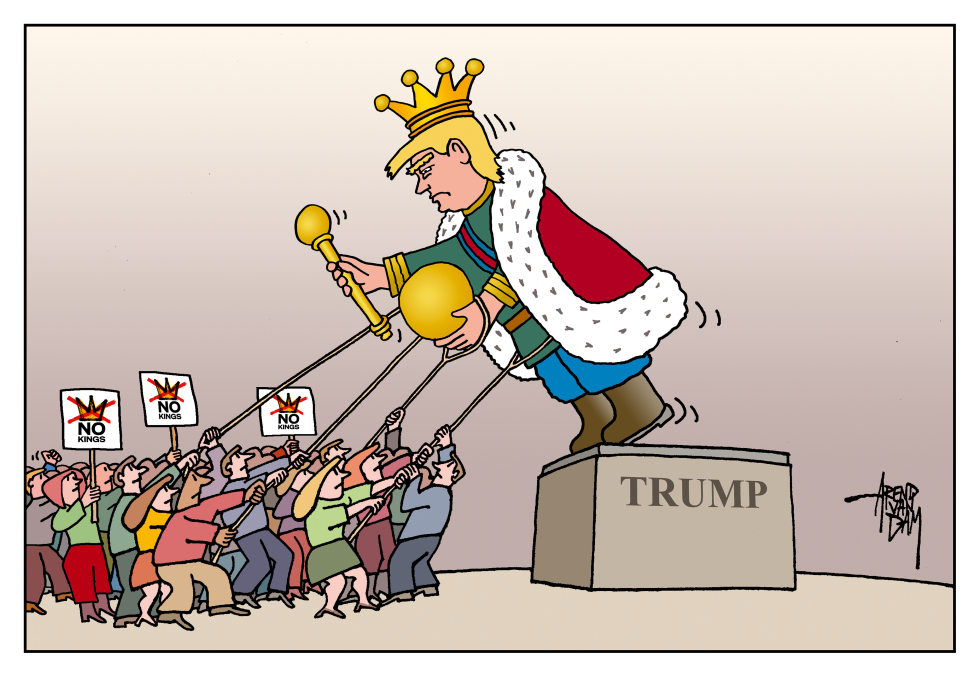
Arend van Dam's cartoon depicts a massive figure resembling Donald Trump, adorned with a crown and royal robe, perched atop a pedestal marked 'TRUMP.' A diverse group of protesters, holding signs reading 'NO KINGS,' 'NO,' and another 'NO,' tug on ropes attached to the figure's scepter, causing it to tilt as if being toppled in an act of resistance. The scene evokes themes of USA democracy clashing with autocracy, portraying a symbolic revolution against a would-be king or dictator. Protests and demonstrations fill the foreground, highlighting public outcry against unchecked power. Dated 2026, the artwork underscores ongoing concerns about authoritarian tendencies in politics.
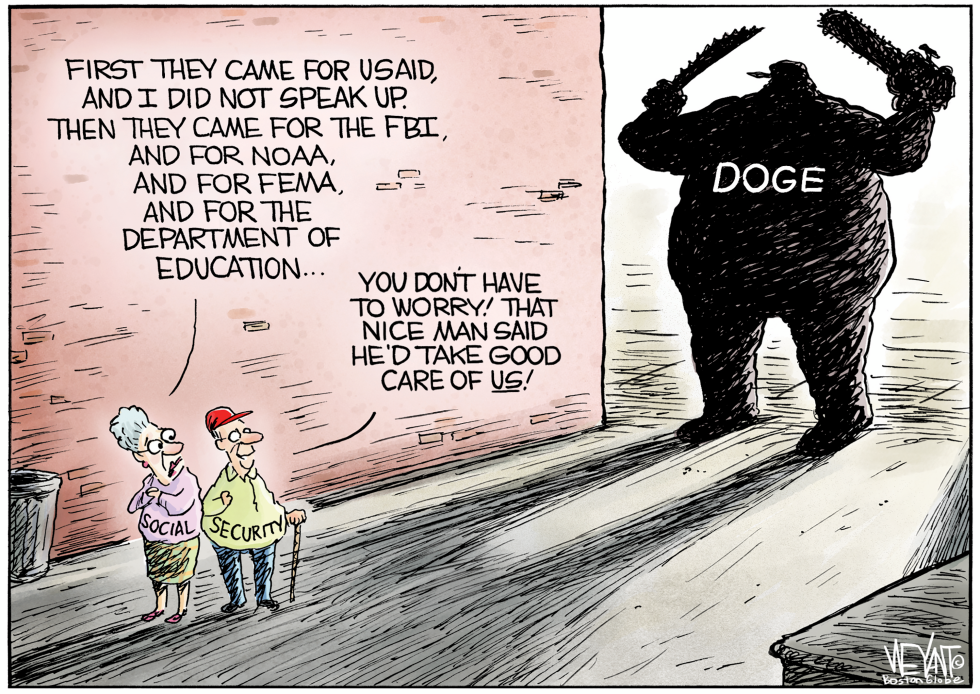
The cartoon depicts a massive DOGE figure wielding chainsaws while two seniors labeled Social and Security express concern on a sidewalk. Text on the wall recites an updated version of the 'First they came' poem listing USAID, FBI, NOAA, FEMA and the Department of Education. The seniors reply that a nice man promised to care for them. The image responds to 2025 efforts by the Department of Government Efficiency to reduce federal agencies and spending.