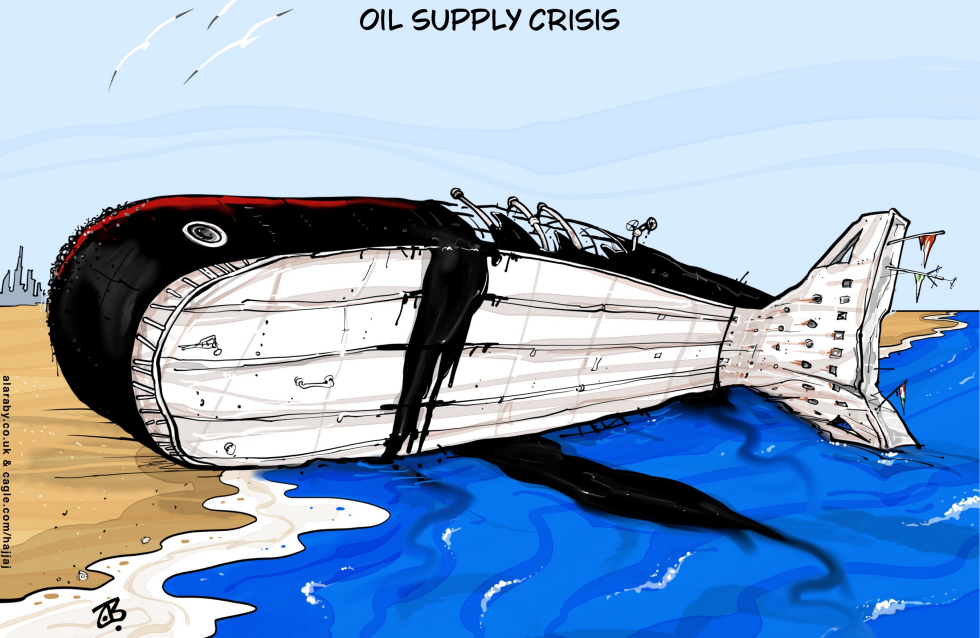
A major oil tanker has run aground, disrupting supply routes and releasing crude into coastal waters. The incident underscores vulnerabilities in global energy transport networks that rely on aging or poorly maintained vessels. Such events can spike fuel prices and trigger immediate cleanup costs for affected regions. The cartoon frames the grounding as a direct cause of the broader supply crisis rather than an isolated accident. It points to systemic weaknesses in oversight and infrastructure that allow one failure to cascade into wider shortages and ecological harm.
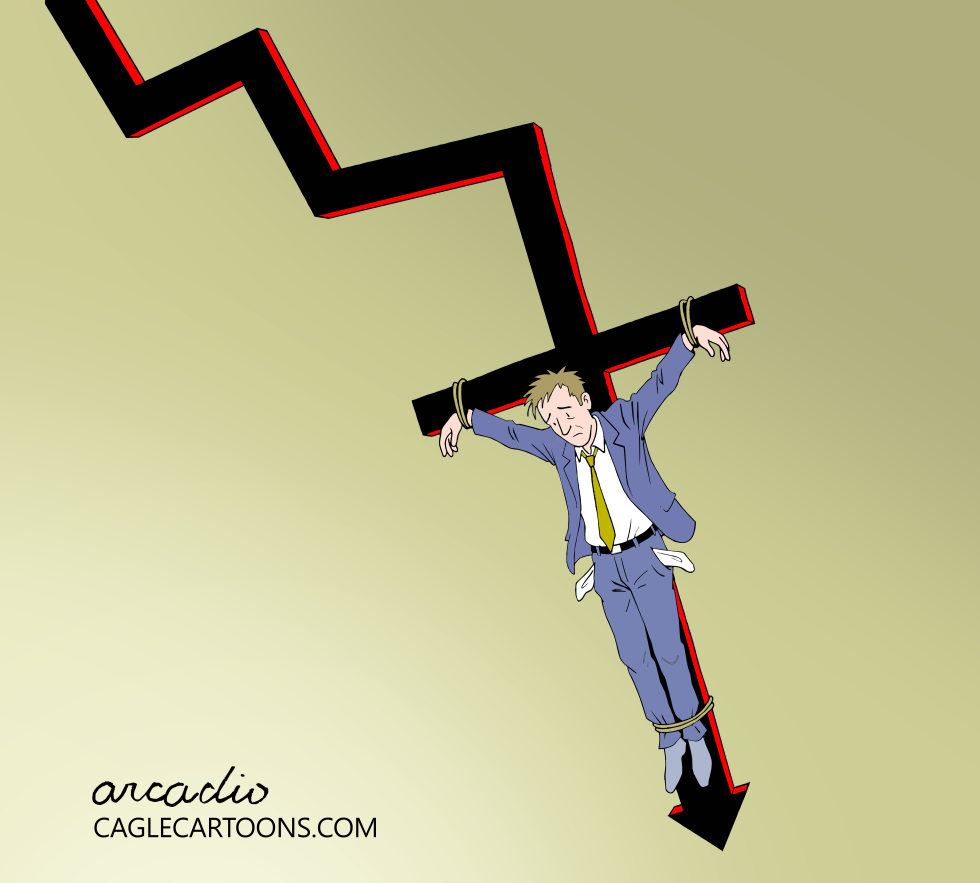
Corporate leaders continue to confront sharp market drops that directly affect company performance and investor confidence. The situation underscores how executives remain closely tied to negative financial trends rather than insulated from them. The piece argues that such binding reflects the reality of accountability in failing markets.
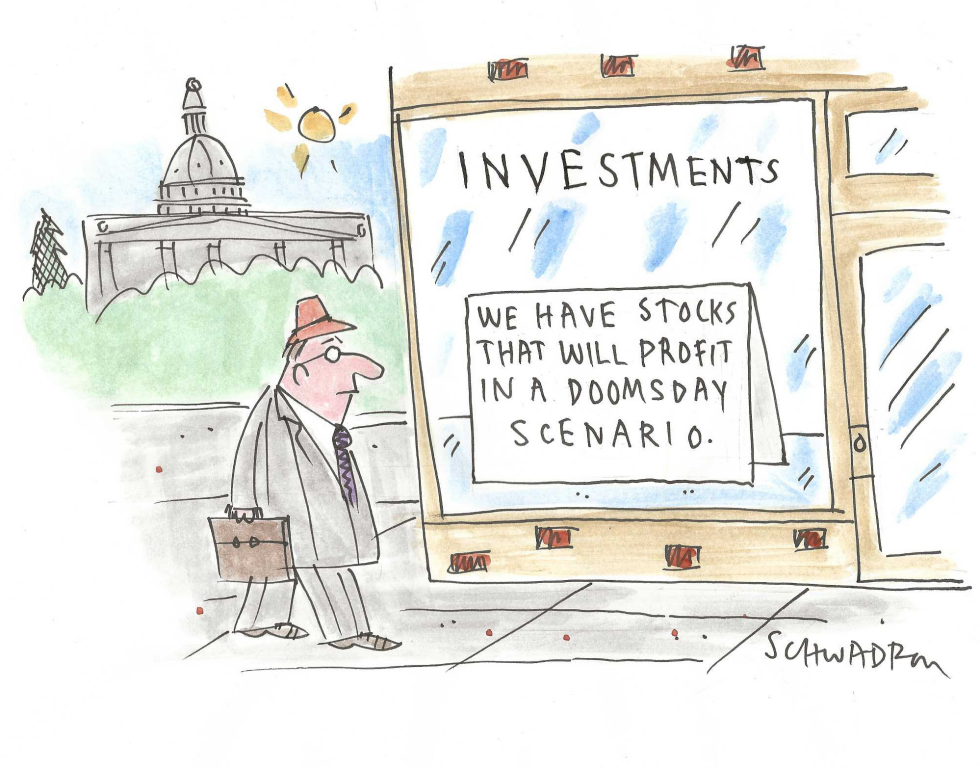
Investment firms continue to market specialized stock offerings designed to gain value during periods of widespread economic or geopolitical turmoil. Such products attract attention from clients seeking protection against market downturns or global instability. The cartoon highlights the persistent appeal of these instruments even as broader uncertainty lingers around policy and international developments.
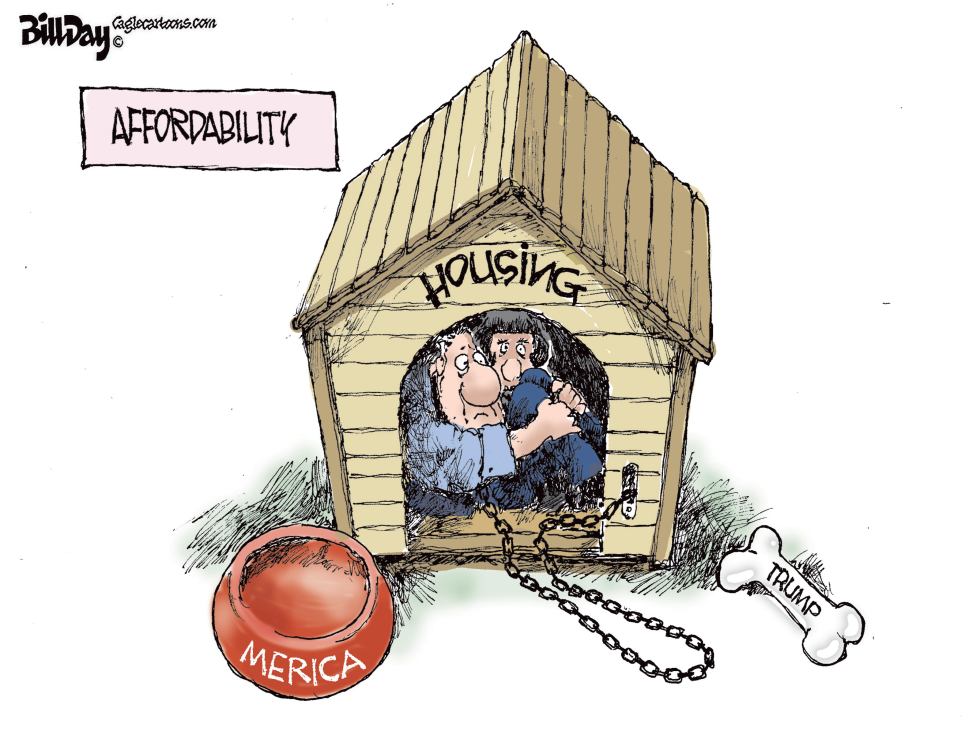
A couple appears confined inside a doghouse labeled housing on June 25 2026. A chain connects them to a bowl marked Merica while a bone labeled Trump lies nearby and an affordability sign stands above. The scene addresses housing costs during the period.
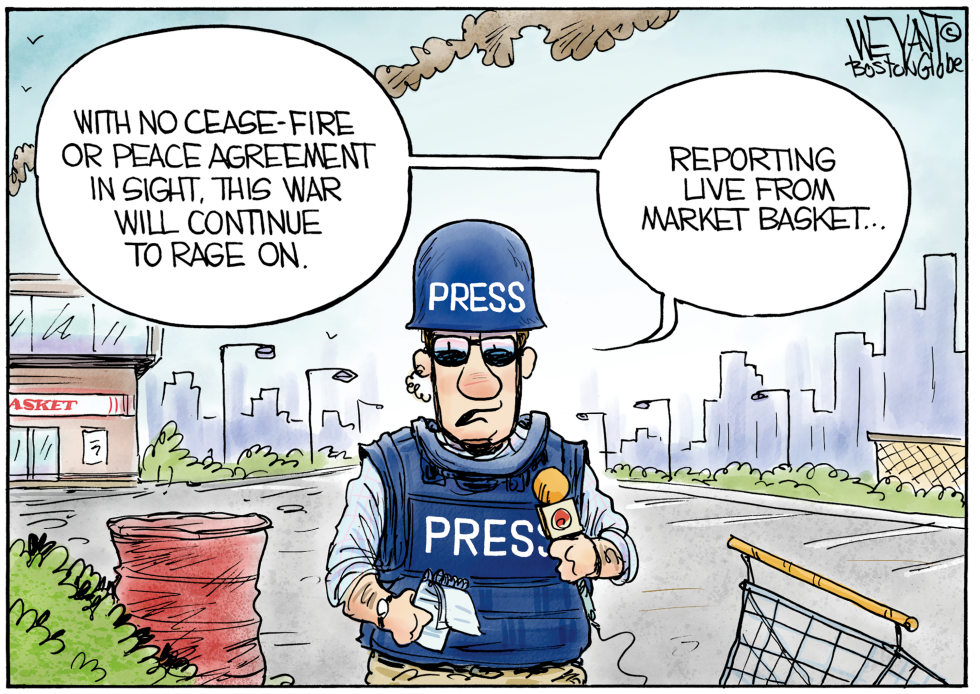
A Boston Globe cartoon shows a reporter in press armor broadcasting live from a Market Basket store. Speech bubbles frame the supermarket scene as an unresolved war with no cease-fire in sight. The image responds to ongoing tensions over ownership, supply chains, and rising prices at the New England chain during August 2025.
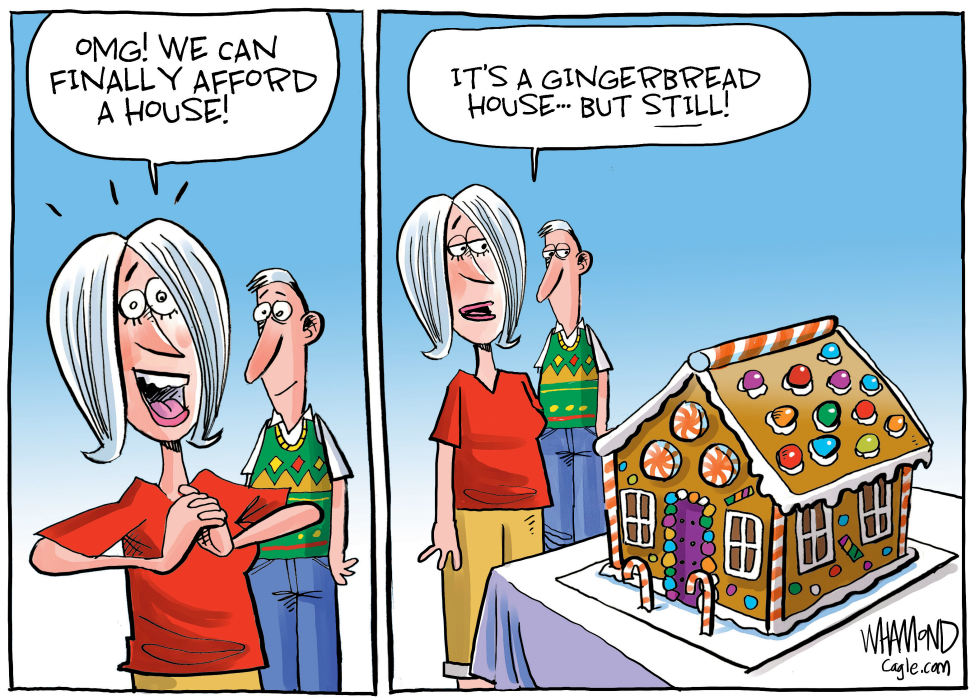
Housing costs remain elevated across the United States as mortgage rates and limited supply keep traditional homeownership out of reach for many middle-class families. The situation has persisted through late 2023 with little relief in sight for buyers. The editorial uses a holiday metaphor to underscore how the American dream of owning a home has become an unrealistic goal for average households.