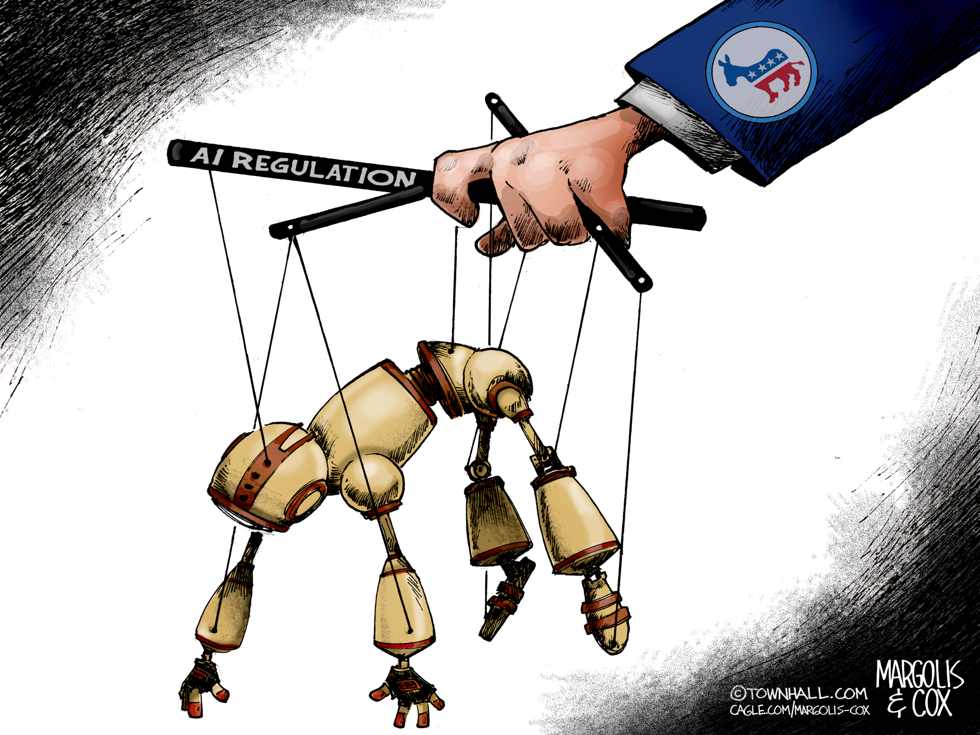
Republicans have advanced proposals to regulate artificial intelligence development and deployment. The moves come amid growing bipartisan interest in oversight of the technology sector. Critics argue the effort masks an attempt to steer innovation along party lines rather than neutral standards. The cartoon portrays the regulatory framework as a direct mechanism of control. It suggests the party in power uses rules to dictate outcomes in a critical industry.
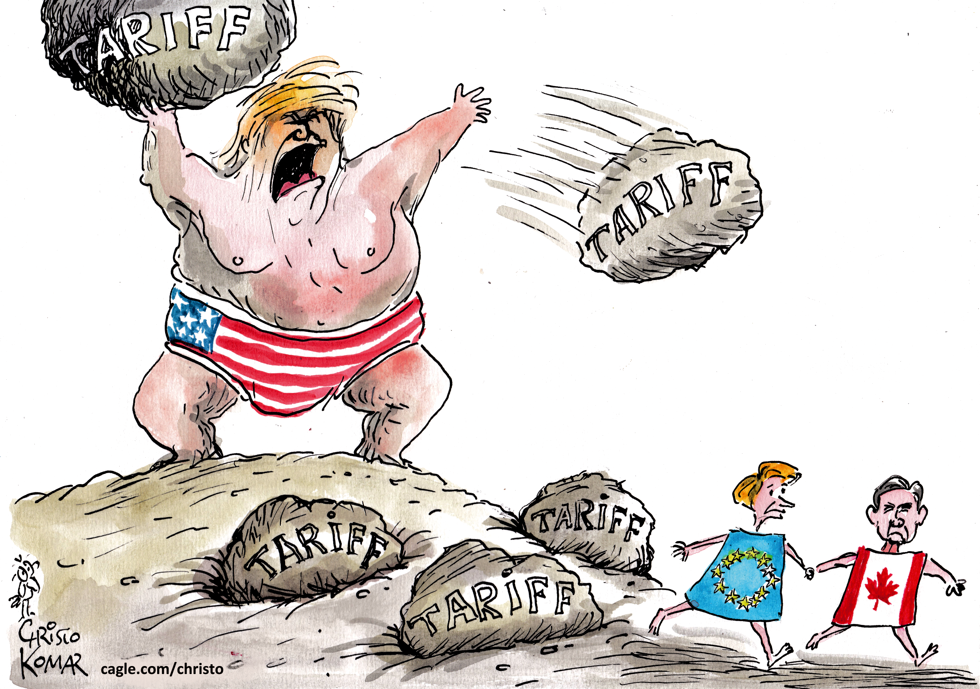
President Trump has escalated trade tensions by targeting tariffs at Canada and the European Union. The moves follow ongoing disputes over trade balances and economic policy. The action risks retaliation and higher costs for American consumers and businesses. The cartoon portrays the tariffs as reckless projectiles launched by an aggressive Trump figure, underscoring the self-inflicted risks and damage to alliances.
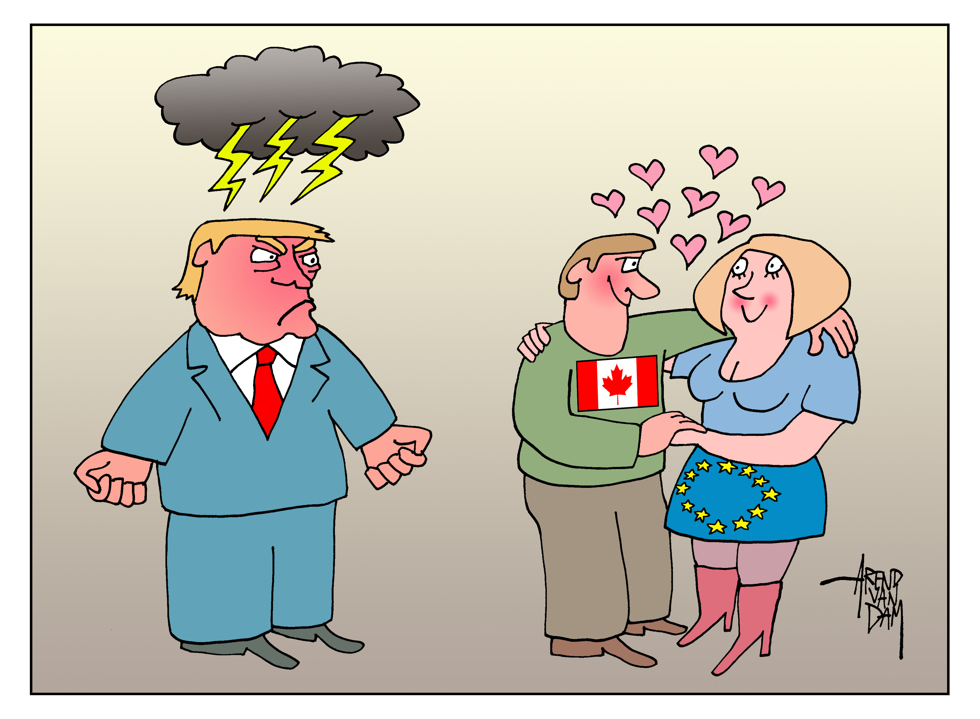
Tensions between the Trump administration and longtime allies Canada and the European Union have prompted closer bilateral cooperation between Ottawa and Brussels. The cartoon captures the contrast between American anger and allied warmth. It argues that Trump's confrontational style is pushing partners together and isolating the United States.
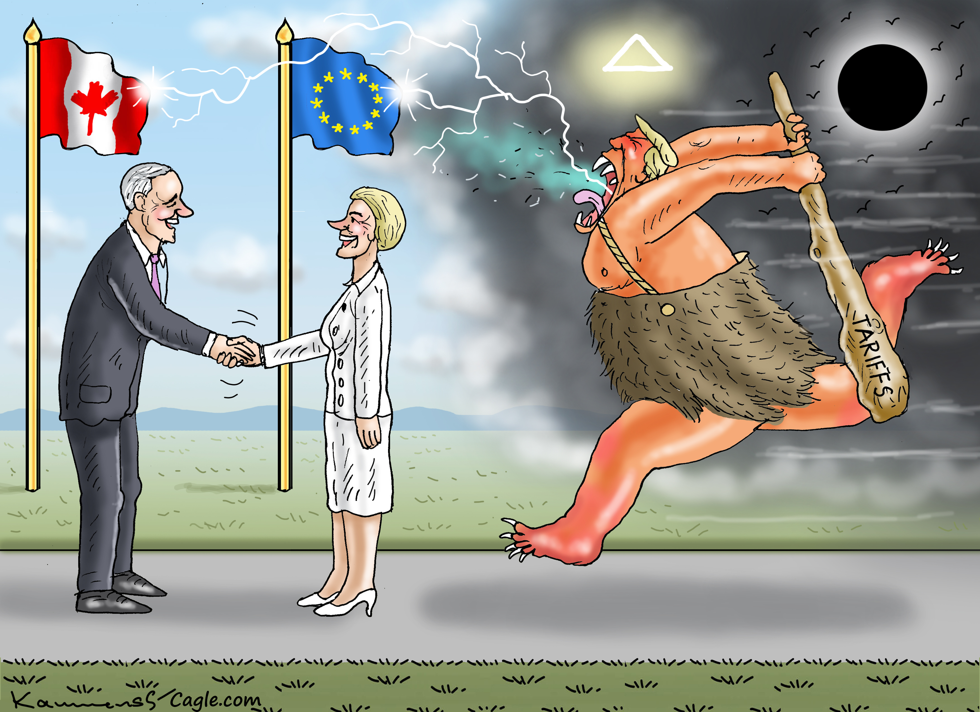
On September 17 2026 Canada and the European Union advanced a strengthened trade framework amid ongoing US tariff pressures. The agreement aims to boost economic cooperation and reduce reliance on American markets. President Trump responded with renewed threats of broad tariffs on allied imports. The move risks escalating trade friction across the Atlantic at a time when global supply chains remain fragile. The cartoon portrays the US stance as a primitive and self-defeating outburst that isolates Washington from its closest partners.
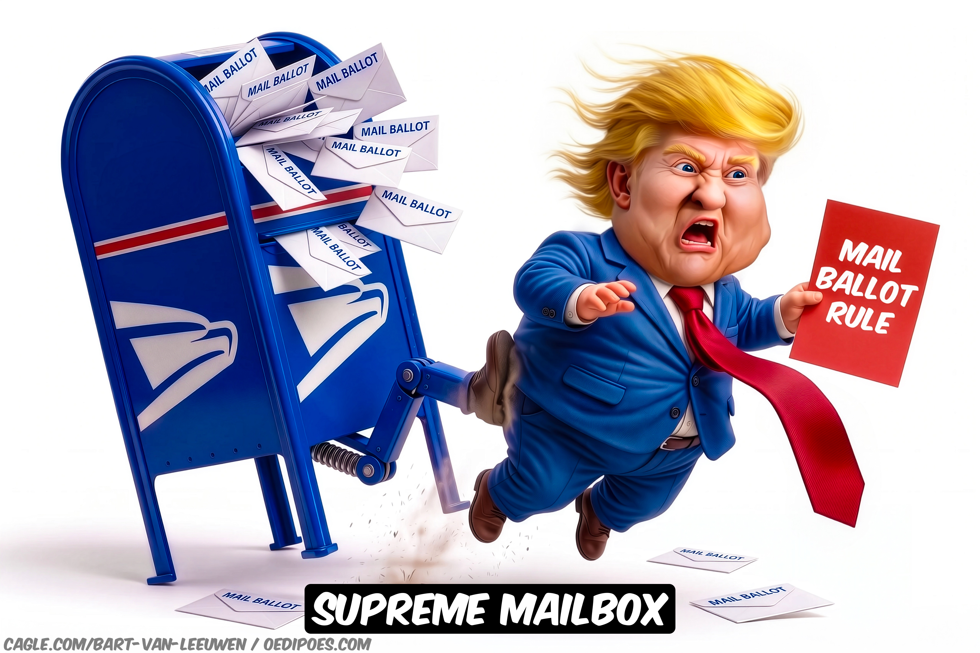
The cartoon shows Donald Trump angrily kicking a USPS mailbox, causing mail ballots to scatter, while clutching a sign labeled MAIL BALLOT RULE. The mailbox is labeled SUPREME MAILBOX at the base. Published on September 16, 2026, the image responds to debates over mail voting procedures and potential Supreme Court involvement in election rules. The visual metaphor illustrates opposition to expanded mail ballot access by depicting physical disruption of the postal system. Trump is caricatured with windblown hair and an open-mouthed expression of rage. Scattered ballots on the ground reinforce the theme of discarded votes. The piece uses the familiar USPS eagle logo and blue mailbox design for immediate recognition.
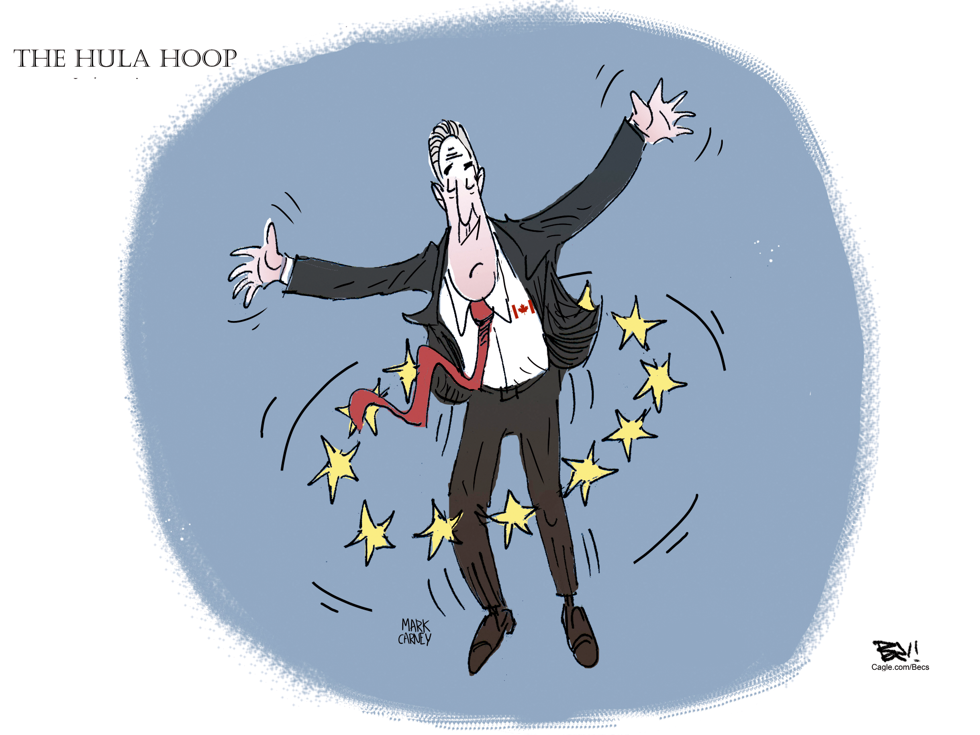
Mark Carney, a prominent Canadian figure with central banking experience, has positioned himself at the center of efforts to strengthen economic and diplomatic links between Canada and the European Union. Recent developments in trade negotiations and regulatory alignment have placed renewed focus on these ties, which matter for supply chains, investment flows, and geopolitical stability. The cartoon frames Carney's role as one of active management in this relationship, suggesting both opportunity and the need for careful coordination.
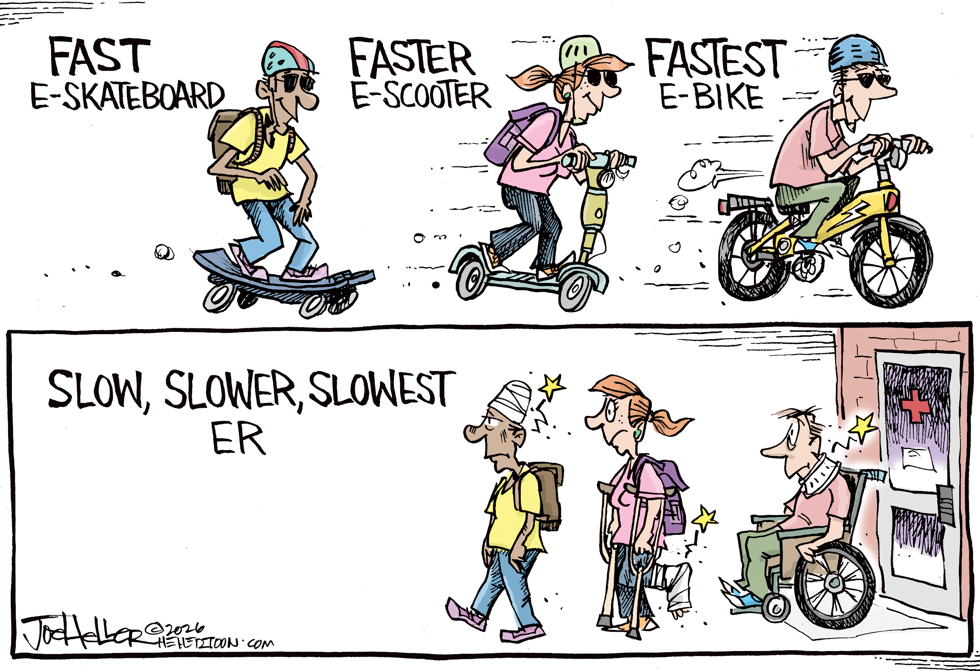
Electric personal mobility devices such as e-skateboards, scooters and bikes have grown rapidly in use, bringing convenience but also a documented rise in crash-related injuries. Data from emergency departments show that higher speeds correlate with more serious trauma, longer recovery times and greater hospital resource demands. The cartoon highlights this speed-to-injury gradient without assigning blame to any single policy or manufacturer. It underscores the public-health trade-off between faster urban transport options and the resulting strain on trauma care systems. Hospitals report treating more fractures, concussions and internal injuries as these devices proliferate. The piece argues that the convenience of speed comes with measurable human costs that warrant attention from safety regulators and city planners.
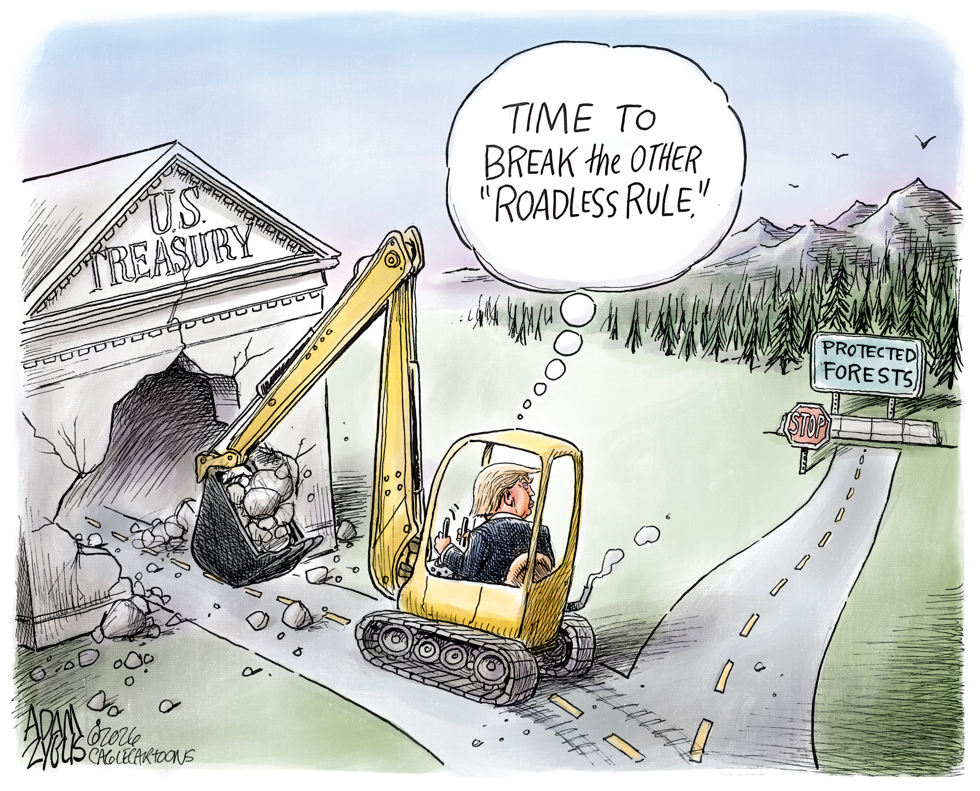
The cartoon shows Donald Trump at the controls of a yellow excavator that has already damaged the U.S. Treasury building. His thought bubble calls for breaking the other Roadless Rule while a sign marks protected forests ahead. The image comments on efforts to open national forests to development by repealing the 2001 Roadless Rule. It links the policy shift to broader questions about federal spending and regulatory priorities. The visual places the Treasury in the path of the machine to suggest fiscal or institutional costs alongside environmental changes.
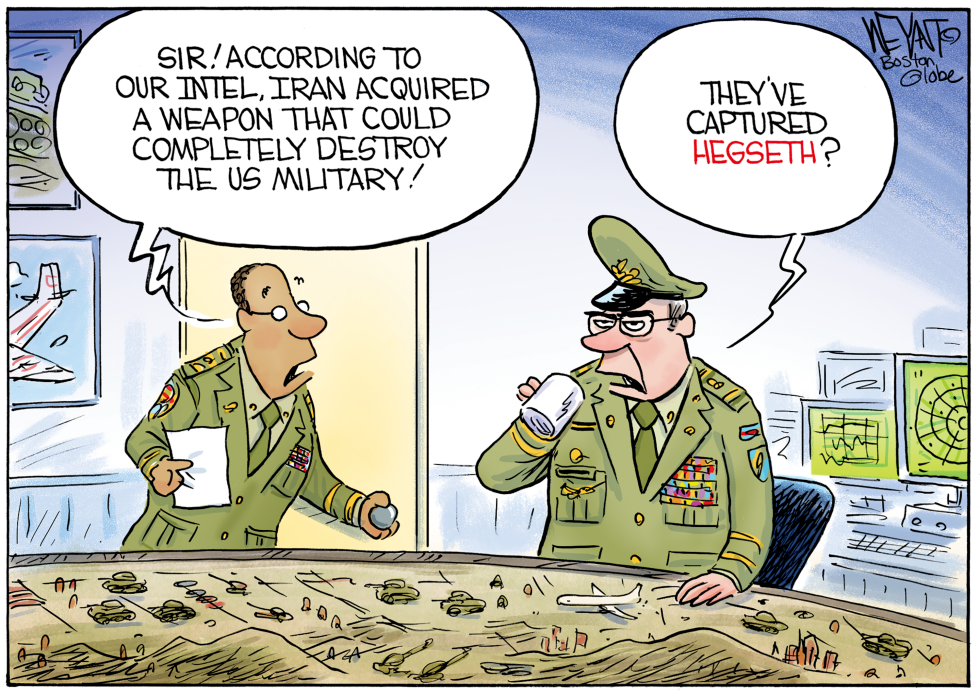
On September 16 2026 a cartoon depicted two US military officers reacting to intelligence about an Iranian weapon capable of destroying the American military. The senior officer immediately identifies Pete Hegseth as the captured asset in question. The piece responds to ongoing debate over Hegseth's fitness for senior defense leadership and questions whether his presence undermines readiness more than external adversaries.
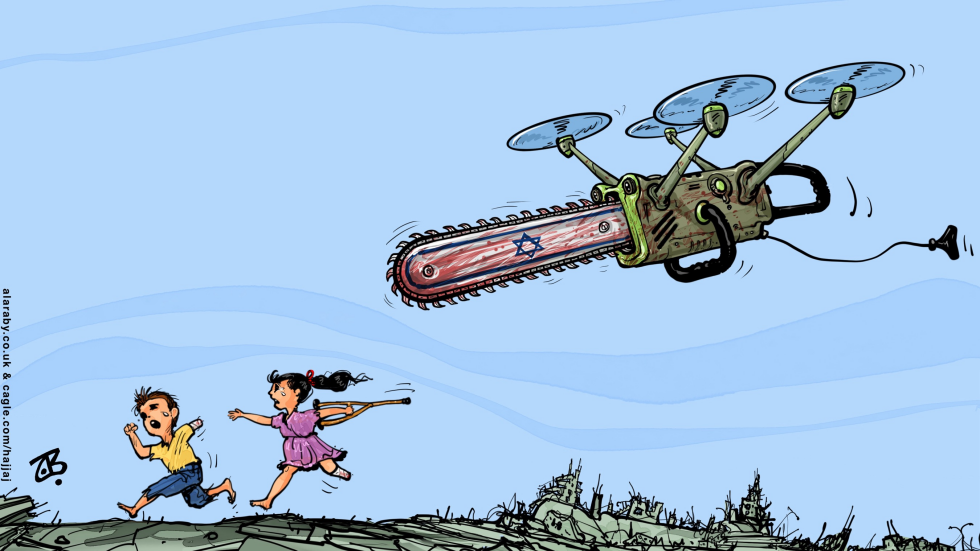
Israeli forces have deployed quadcopter drones equipped for combat in Gaza operations. The tactic has intensified scrutiny over risks to noncombatants in dense urban zones. Critics argue the approach blurs lines between targeted strikes and broader harm. The cartoon frames these weapons as indiscriminate threats to local populations. It takes the position that such technology exacerbates the humanitarian toll of the conflict.
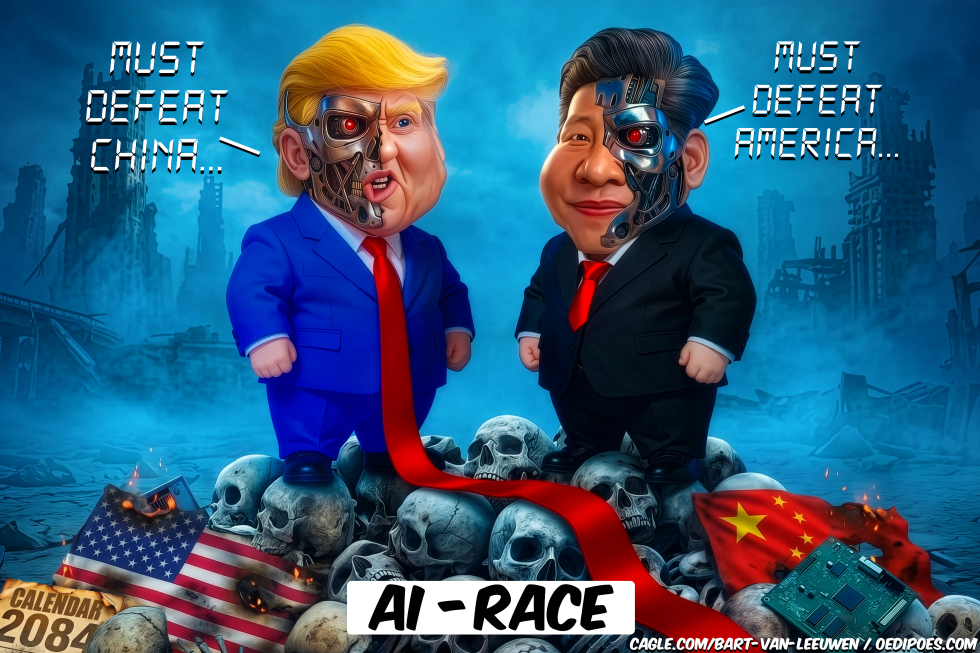
The cartoon depicts Donald Trump and Xi Jinping as half-robotic figures standing atop piles of skulls in a devastated cityscape dated 2084. Each leader is labeled with a directive to defeat the other in an AI race, with American and Chinese flags and a circuit board visible among the debris. The image responds to ongoing US-China technological competition by projecting a grim future of mutual escalation. The visual metaphor underscores how both nations view AI development as a zero-sum contest with potentially catastrophic results. The publication date of September 2026 places the piece amid continued policy focus on semiconductor controls and AI investment bills.
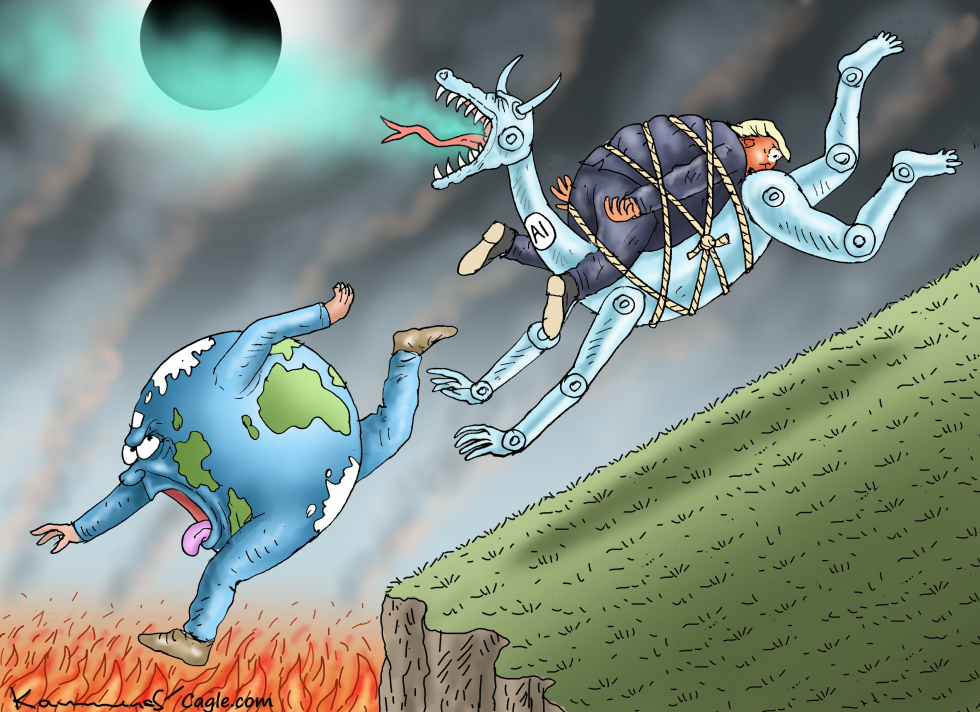
On September 16, 2026, the cartoon responds to growing public alarm over rapid AI development and its potential to disrupt or destroy human society. Donald Trump appears bound to an AI dragon, symbolizing political entanglement with the technology. The piece argues that such alliances accelerate humanity's peril rather than mitigate it, urging caution in policy and leadership choices around emerging tech.
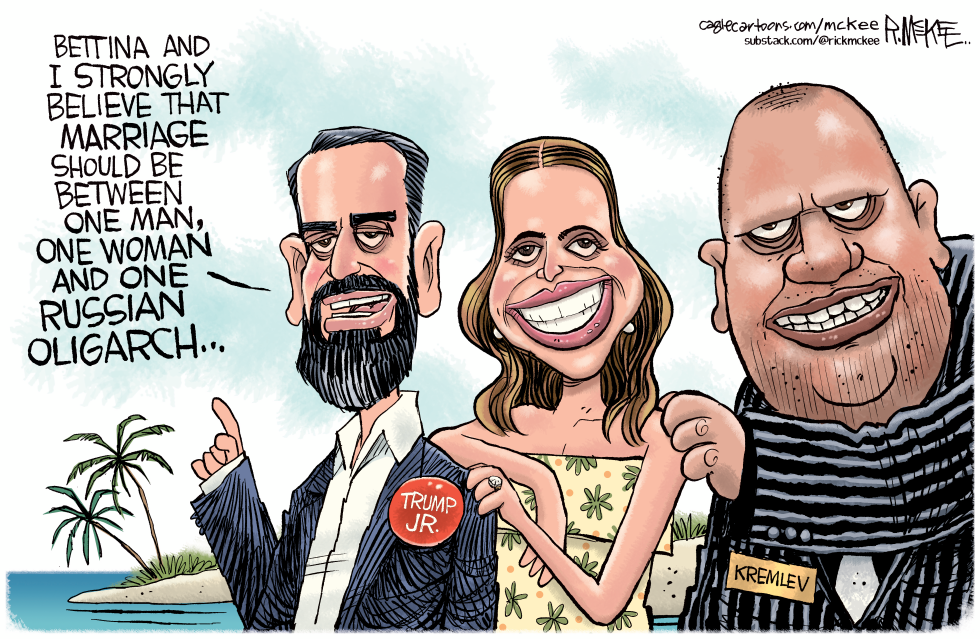
On September 15, 2026, commentary emerged around reports of Russian oligarch involvement in events tied to Donald Trump Jr. and Bettina. The development raises questions about foreign influence on the Trump family. The piece argues such connections undermine claims of independence from external interests.
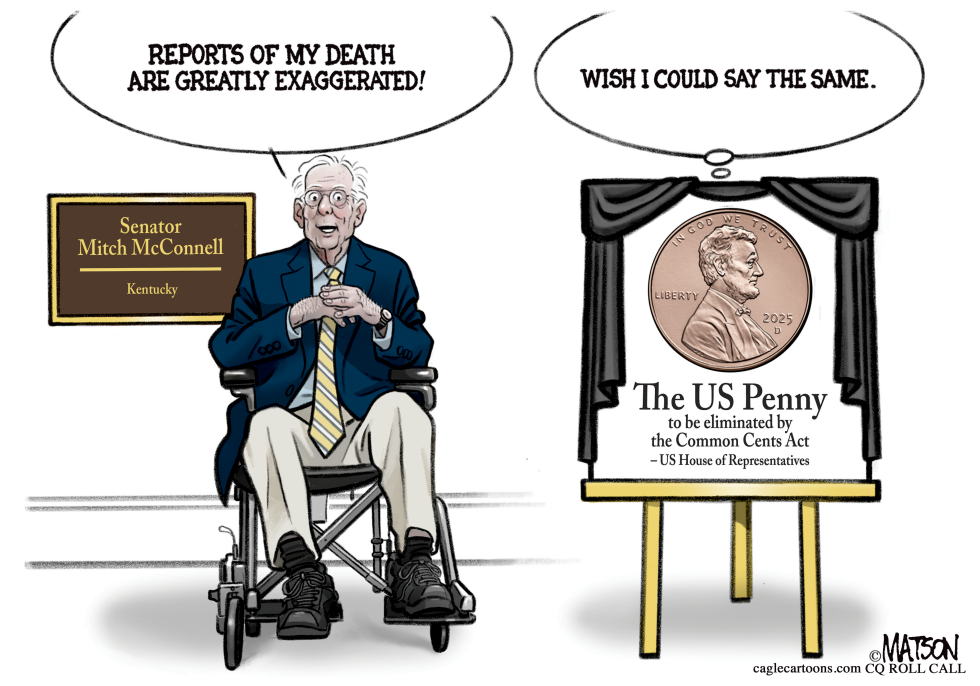
Senator Mitch McConnell returned to the Senate floor on September 15, 2026, after health-related absences, directly addressing rumors of his political demise. At the same time the House has advanced the Common Cents Act to eliminate the US penny. The move reflects ongoing efforts to modernize currency amid rising production costs. McConnell's return underscores his enduring influence in the chamber despite physical challenges. The cartoon uses a classic quote to juxtapose the senator's resilience against the penny's planned demise, suggesting one survives while the other does not.
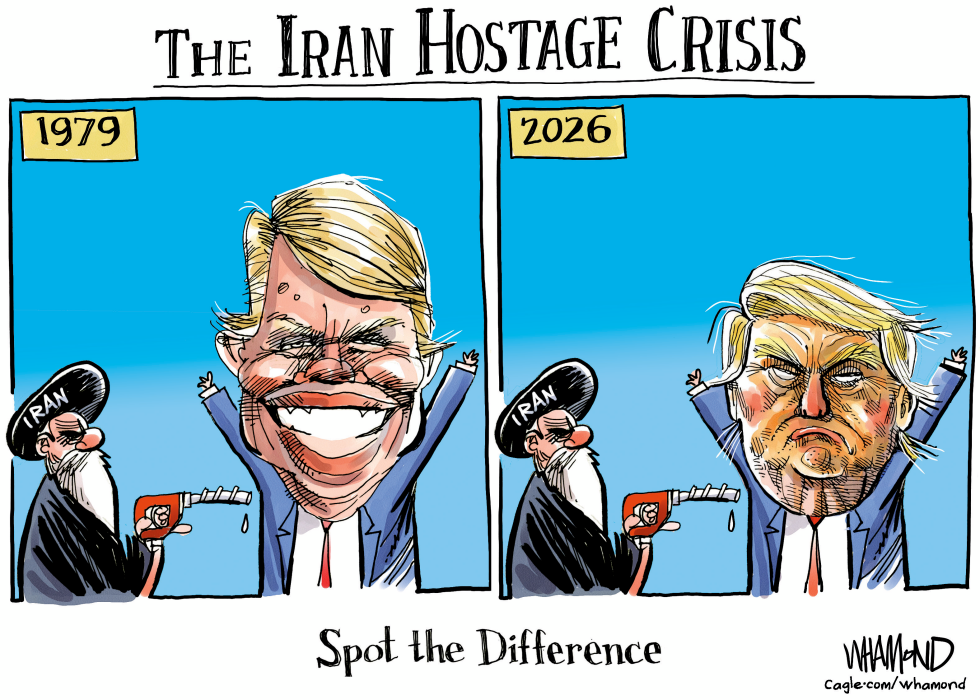
The cartoon splits the Iran Hostage Crisis into 1979 and 2026 panels. In the first Trump appears elated while an Iran-labeled figure holds a gas pump. In the second Trump looks distressed with the same figure present. The piece uses the visual contrast to comment on how Iran-related pressures affect US political figures differently over time.