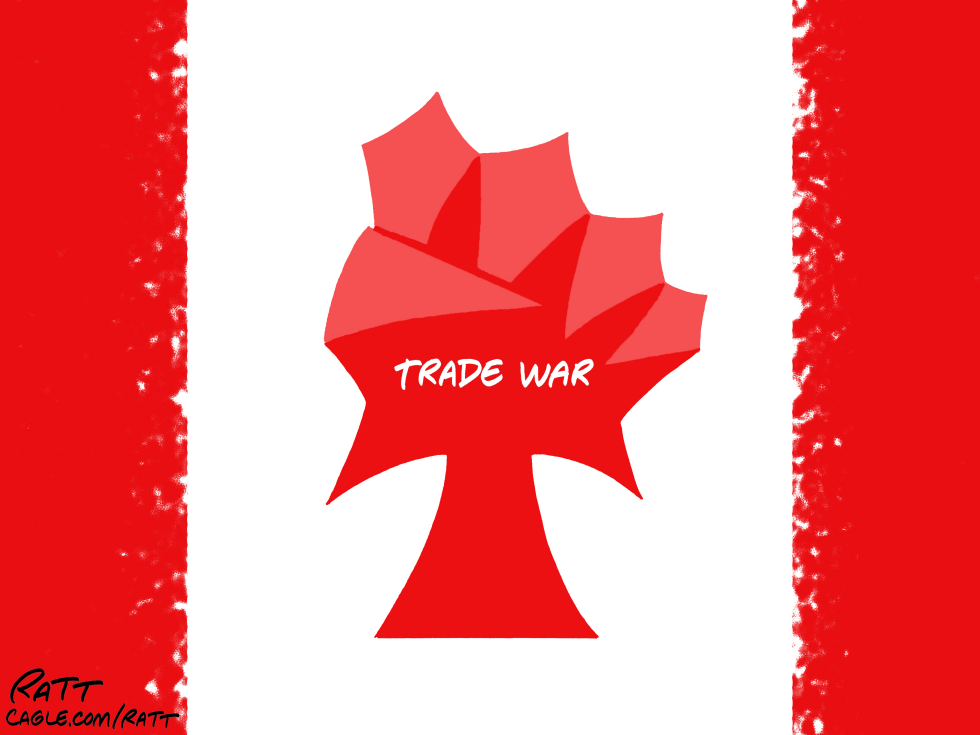
Ongoing US-Canada trade tensions escalated in 2026 with new tariff threats targeting Canadian exports. The dispute threatens key sectors including autos, lumber and agriculture, raising costs for consumers on both sides of the border. Canada has signaled plans to diversify markets and strengthen domestic industry. The cartoon frames the conflict as a direct assault on Canadian sovereignty and economic stability. It portrays the trade war as fracturing national symbols while urging a stronger northern response.
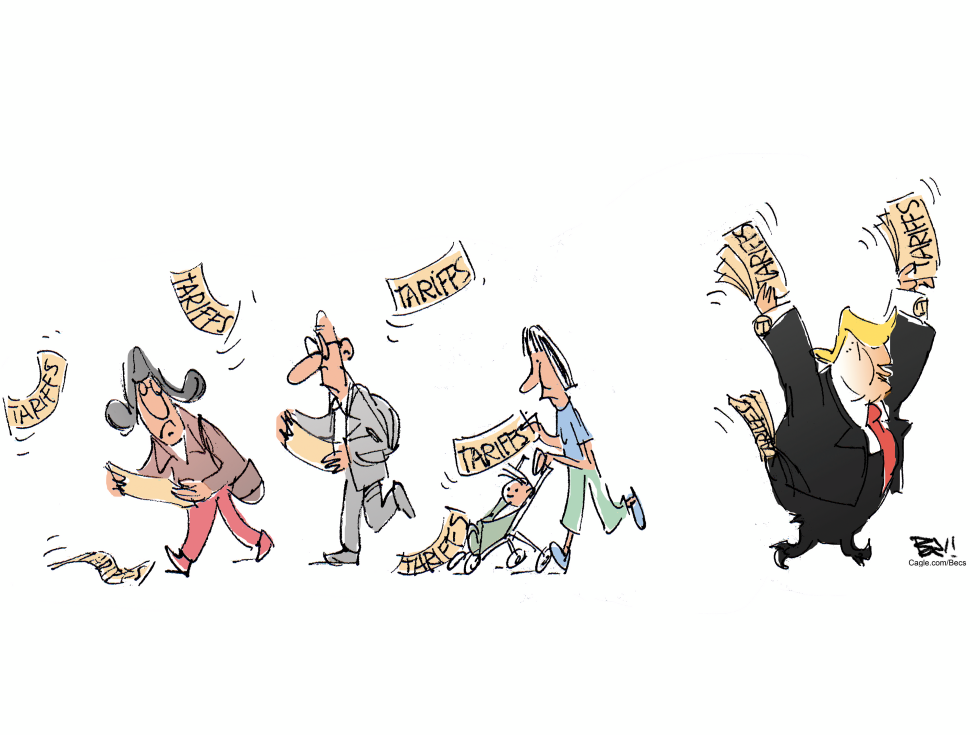
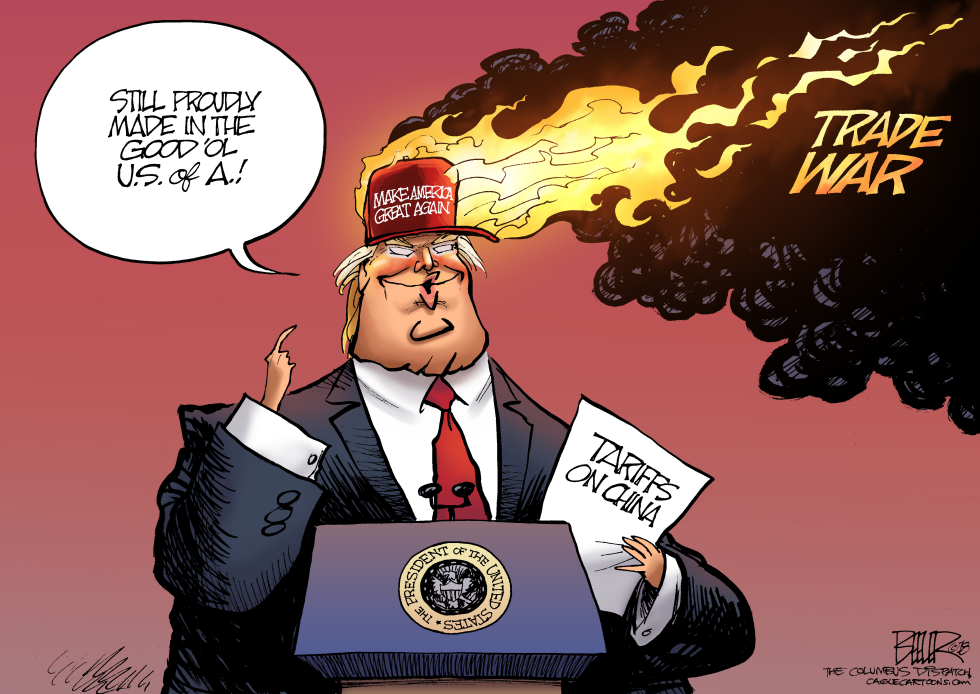
Donald Trump expanded tariffs across trading partners in mid-2026, triggering immediate market volatility and diplomatic pushback. The move raised costs for consumers and businesses reliant on imports. The piece portrays the policy as an indiscriminate barrage that disrupts daily life and global commerce.
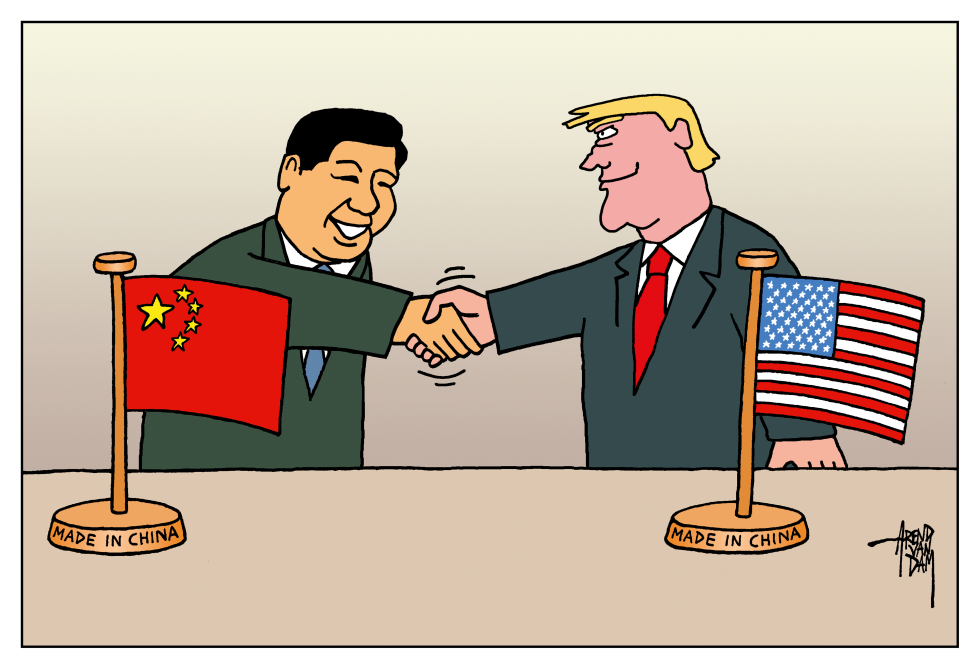
On October 31 2025 Donald Trump and Xi Jinping are depicted shaking hands over a table. Each national flag is mounted on a wooden base labeled Made in China. The image highlights ongoing economic interdependence between the United States and China despite political differences. Trade and production issues remain central to bilateral relations at the time.
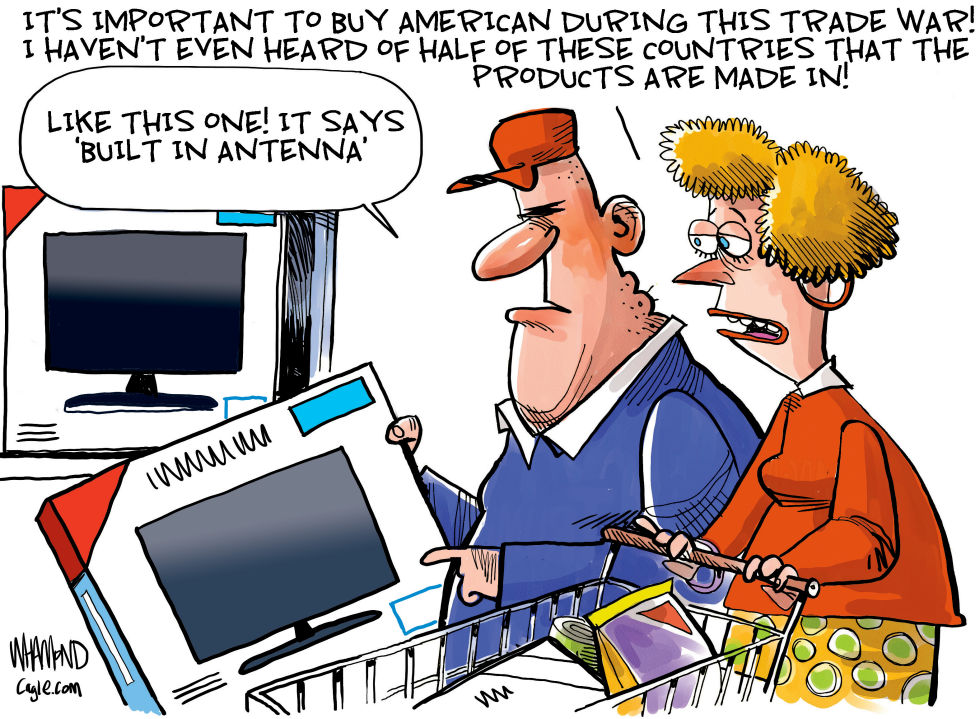
A couple shops for electronics in a store as the man points to a television box labeled built in antenna while declaring support for American goods during an ongoing trade war. The woman reacts with surprise at the label. Large text overhead stresses the importance of domestic purchases because many product origins remain unfamiliar. The scene reflects consumer reactions to tariffs and protectionist policies active in late 2025.
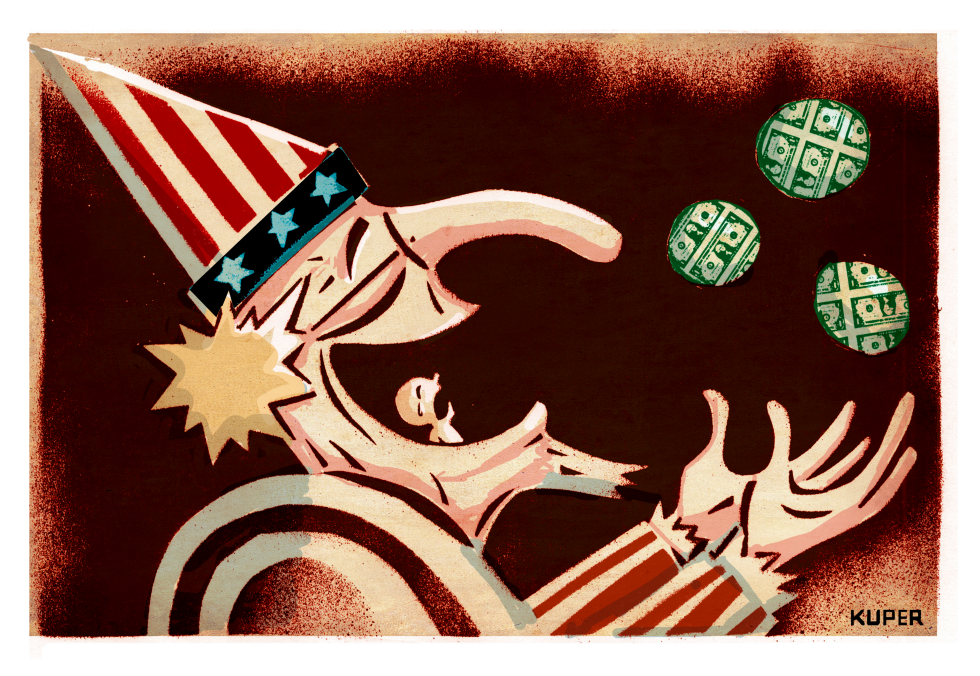
A figure in a starred hat juggles three dollar-marked orbs against a dark backdrop. The image addresses rising U.S. budget deficits tied to tariffs and spending plans. It points to potential effects on manufacturing, grocery prices, layoffs, and programs such as Social Security and Medicare. The visual ties these elements to broader income disparity trends under current political leadership.