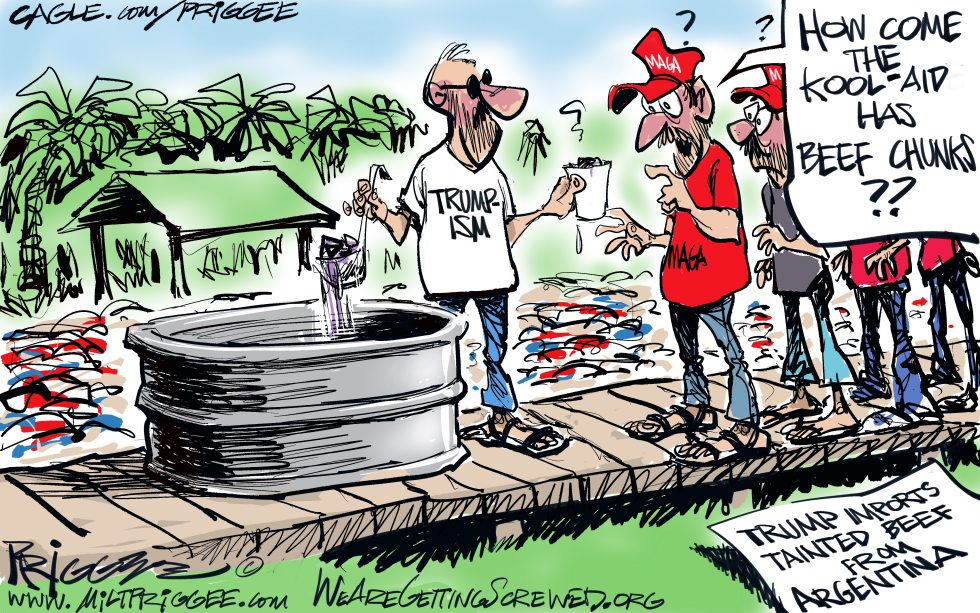
The cartoon depicts a figure labeled Trumpism pouring liquid into a well while two men in MAGA hats question why the Kool-Aid contains beef chunks. A sign at the bottom states Trump imports tainted beef from Argentina. The scene references recent policy allowing beef imports from Argentina amid concerns over quality. Supporters appear puzzled by the outcome of the trade decision. The image uses the classic Kool-Aid metaphor to illustrate how backers process the news of the imports.
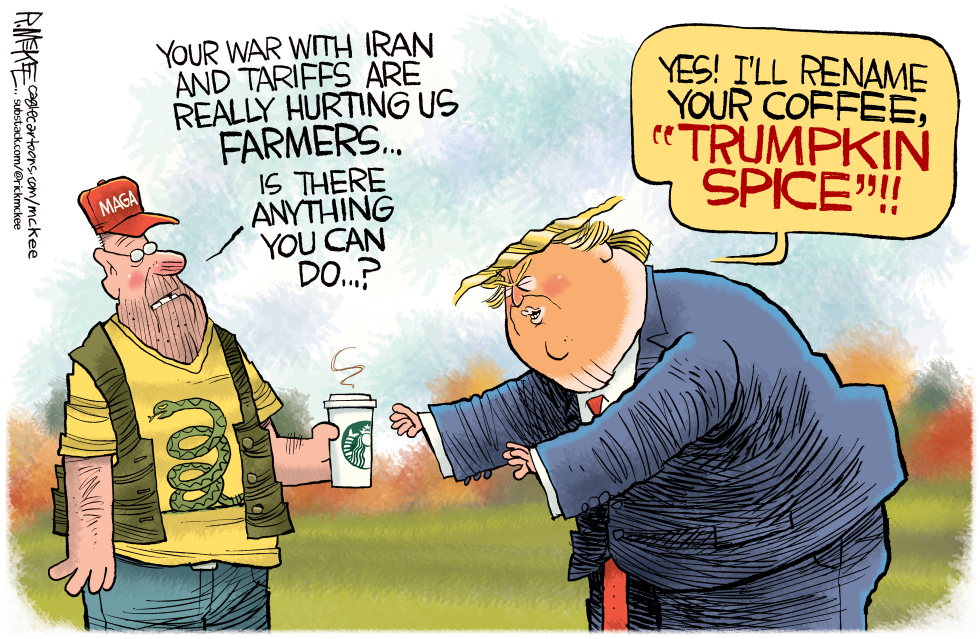
Farmers have raised concerns over the effects of tariffs and tensions with Iran on their livelihoods. President Trump responded by proposing to rename their coffee Trumpkin Spice rather than adjusting policy. The exchange underscores the administration's approach to addressing rural economic complaints through branding gestures instead of substantive relief measures. Critics argue this misses the core issues facing agricultural communities. The cartoon presents the interaction as emblematic of misplaced priorities in handling trade disputes and international relations.
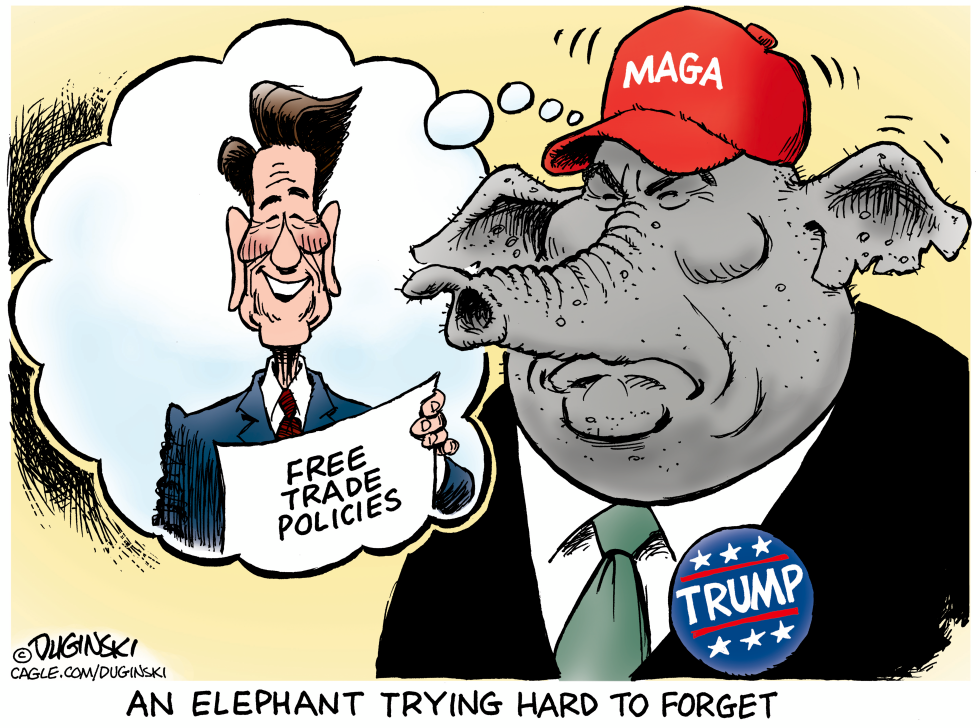
Republicans under Donald Trump have moved away from Ronald Reagan's free trade advocacy toward protectionist policies. The shift reflects internal party tensions over economic strategy and global engagement. The cartoon criticizes the GOP for abandoning a core Reagan principle in favor of current leadership priorities.
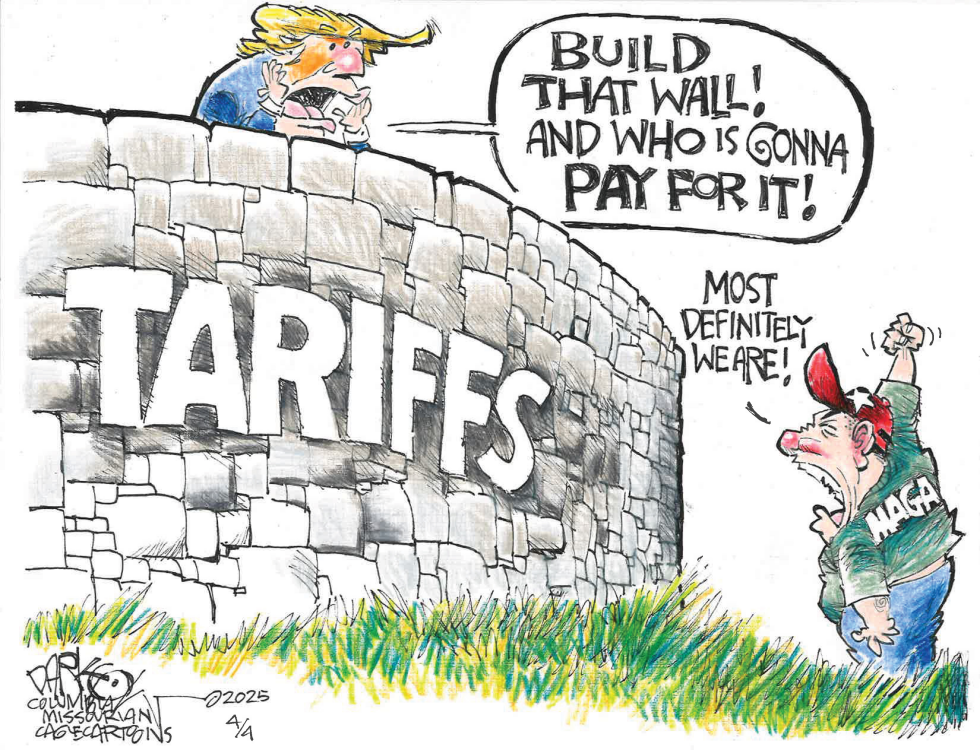
The cartoon shows a blond-haired man atop a stone wall marked 'TARIFFS,' shouting 'Build that wall! And who is gonna pay for it!' A red-hatted figure in a 'MAGA' shirt below responds 'Most definitely we are!' This setup draws a parallel to familiar chants, underscoring tariffs as a burden on consumers. Tags like Trump, tariffs, build the wall, MAGA, inflation, economy, trade war, backfire, and recession frame the scene. The dry humor lies in the obvious irony, where supporters unwittingly acknowledge the cost. Composition keeps it simple, with grassy base and bold lettering for impact. Such cartoons thrive on timely policy jabs, making this one sharable amid ongoing trade debates.