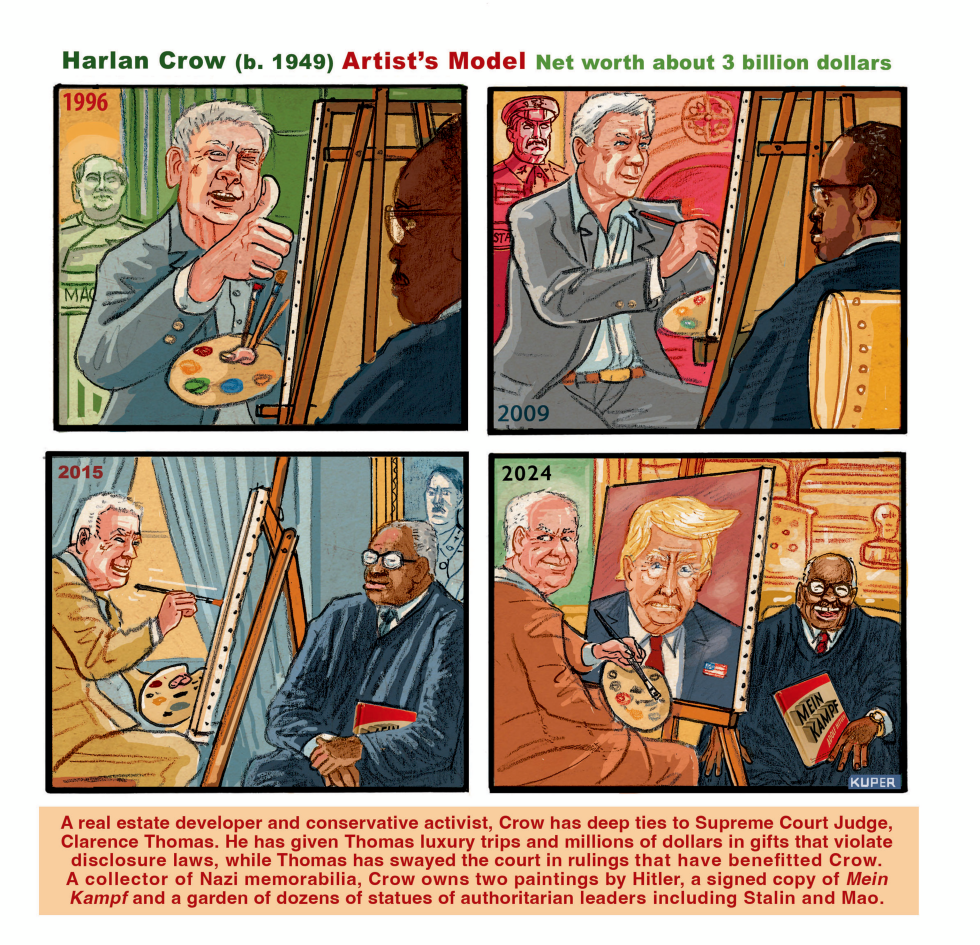
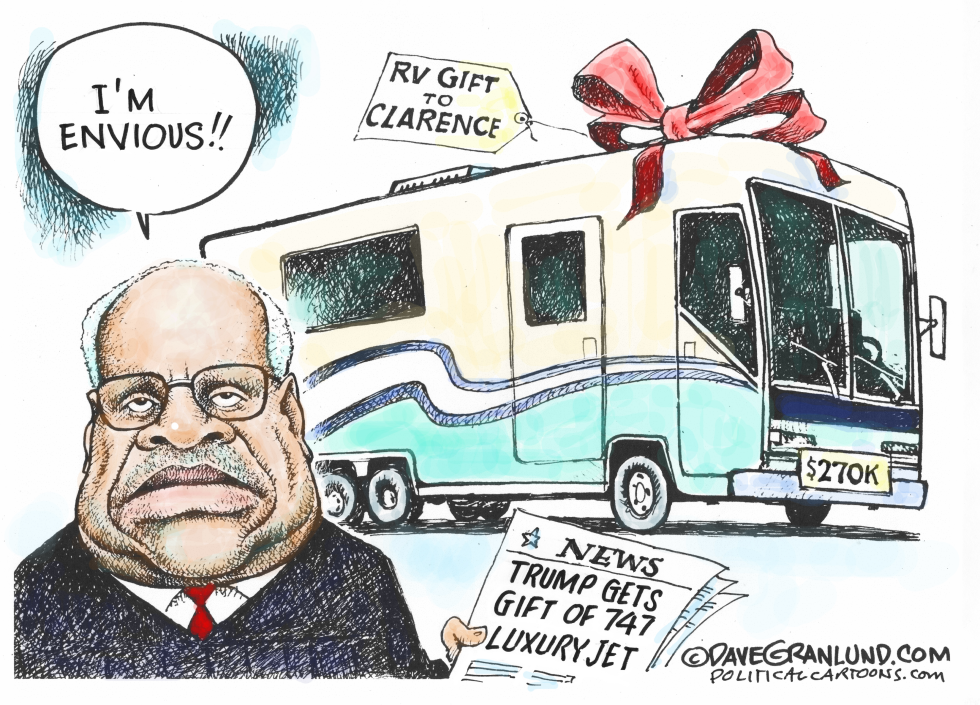
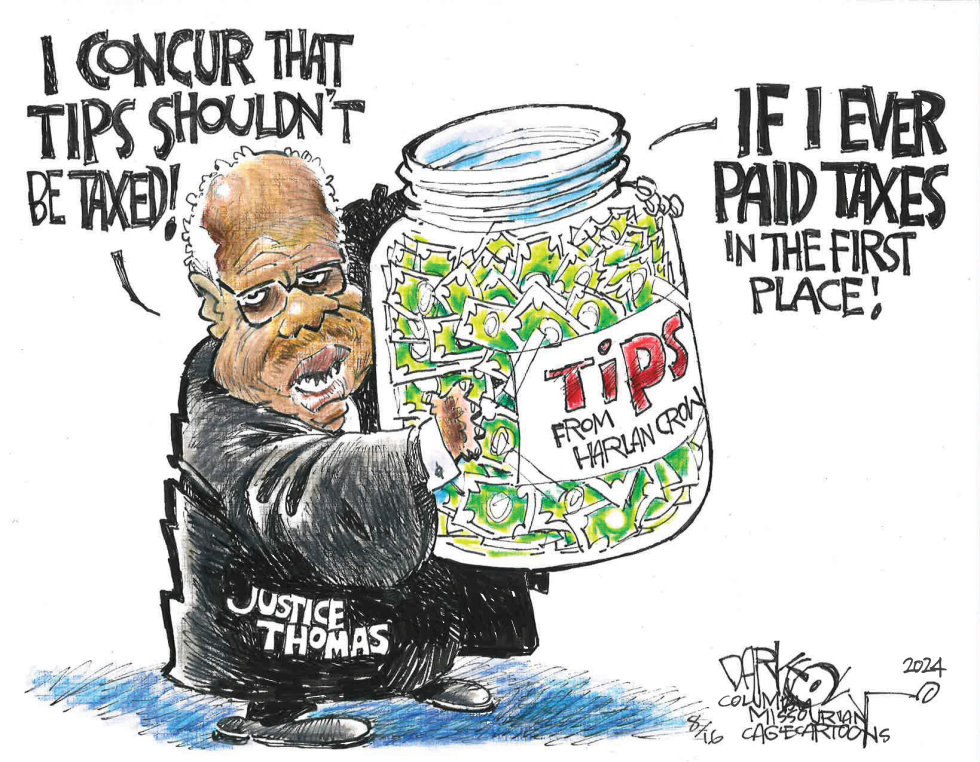
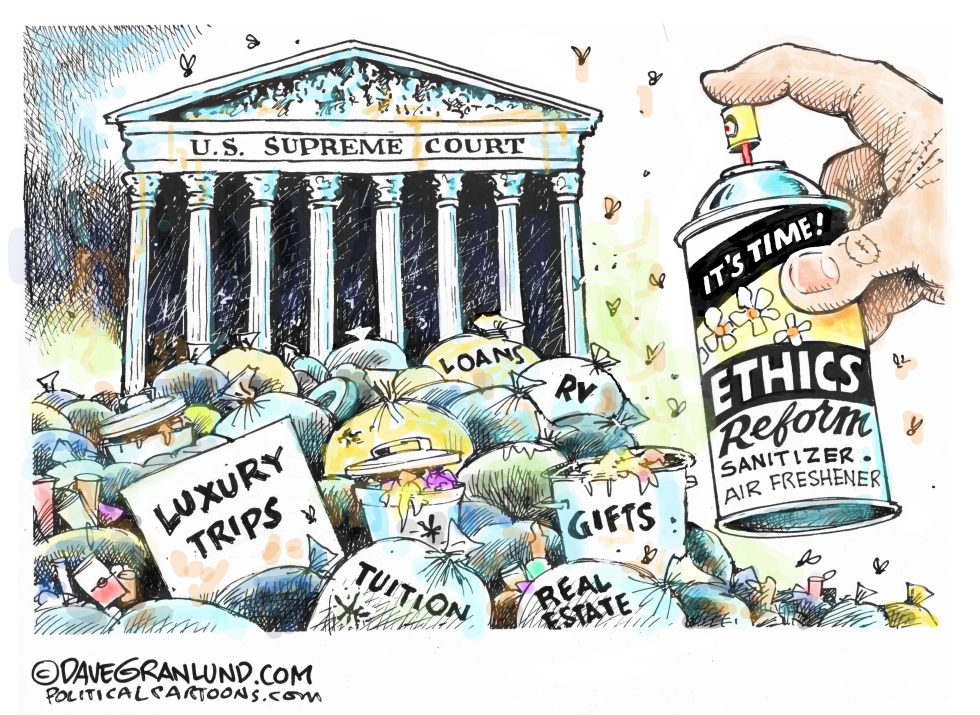
Real estate developer Harlan Crow has provided Supreme Court Justice Clarence Thomas with luxury trips and millions in undisclosed gifts that violate ethics rules. Thomas has participated in rulings benefiting Crow. Crow also collects Nazi memorabilia including Hitler paintings and a signed copy of Mein Kampf. The cartoon extends the pattern to a 2024 portrait of Donald Trump. It criticizes the intersection of wealthy donor influence and judicial decisions.
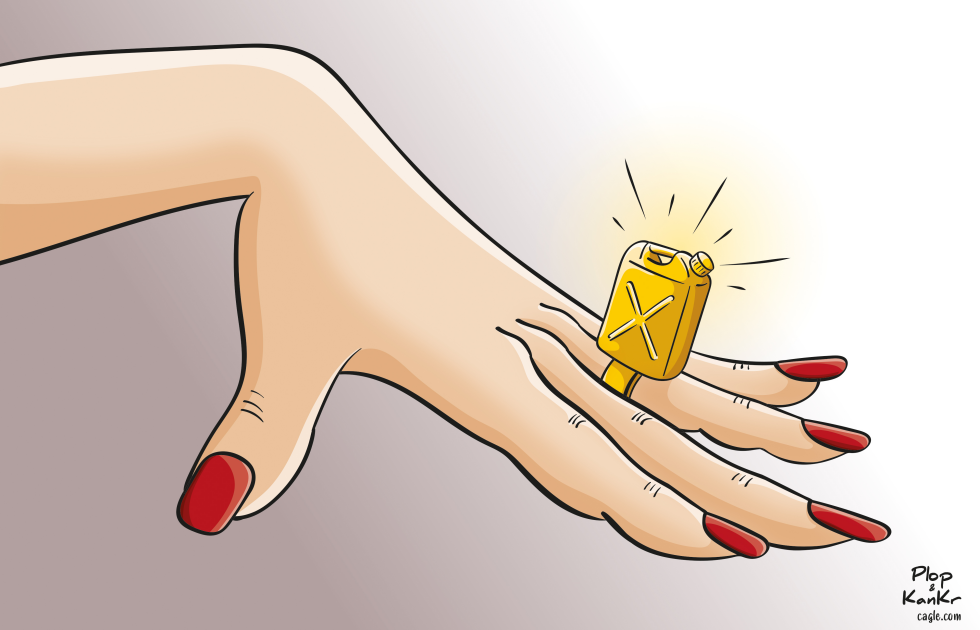
The cartoon shows a hand extended, wearing a ring shaped like a yellow gas can with an X, sparkling as if it's a precious diamond. Red nails add a touch of glamour to the scene against a plain background. This straightforward image pokes fun at oil prices skyrocketing, turning everyday fuel into something as valuable as jewelry. Tags like fuel luxury, energy satire, gasoline bling, petroleum parody, high costs humor, and economic pun capture the dry wit here. Cartoonists Plop and KanKr keep it simple, letting the visual speak without overcomplicating the message. It's a classic setup for editorial pages, reminding readers how energy crises make basics feel extravagant.
John Darkow's cartoon captures the sting of high gas prices amid inflation and war, showing a yellow vehicle at a station with unleaded fuel marked at 3.95 9/10 per gallon, pay in advance. Speech bubbles reveal a conversation where one asks about not going anywhere for spring break, and the reply puns on being 'Spring Broke' due to gas costs. The image underscores travel disruptions, with tags like gas prices, inflation, spring break, travel, war, and economic satire emphasizing how rising fuel expenses halt vacation plans. This straightforward drawing uses dry humor to point out everyday economic frustrations without overcomplicating the scene.
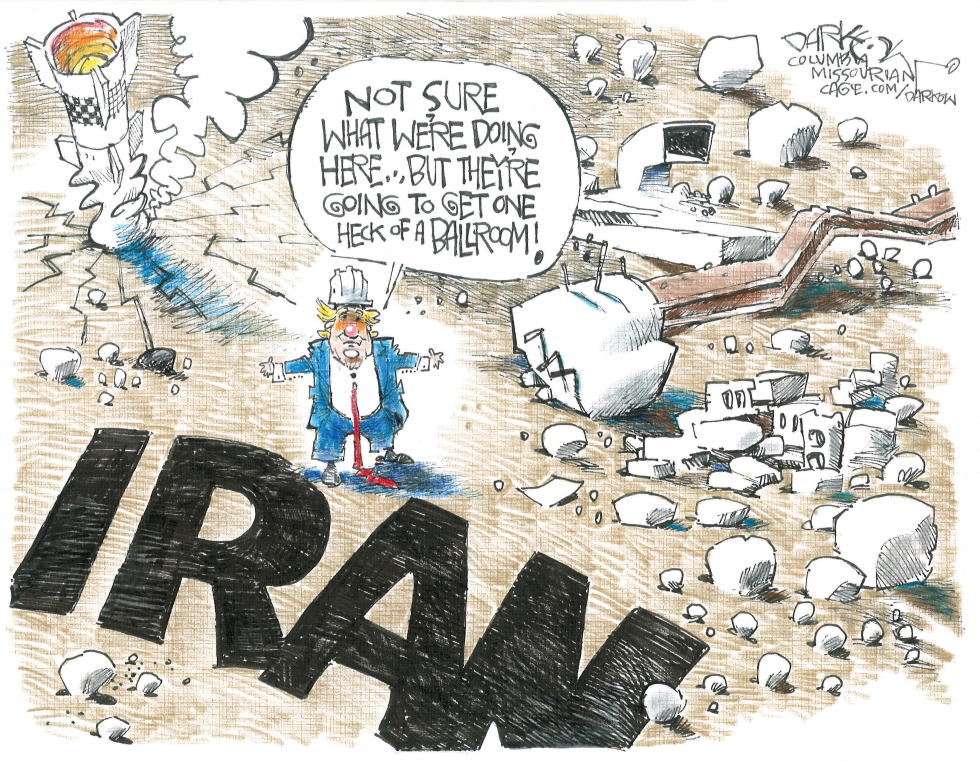
This biting political cartoon features a caricatured Donald Trump in a construction hard hat, overlooking a bombed-out landscape labeled 'IRAN,' with a missile launching in the background. His speech bubble confesses confusion over US actions but promises 'one heck of a ballroom,' a sly pun on Trump's real estate empire clashing with foreign policy blunders. Incorporating tags like political satire, Trump caricature, Iran nuclear program, US-Iran relations, geopolitical humor, and Trump hotel pun, the image mocks the haphazard withdrawal from the nuclear deal, suggesting it paves the way for Iran's nuclear ambitions while Trump envisions luxury redevelopment. The ruined buildings and debris emphasize the destructive fallout, blending humor with insightful critique on Middle East instability.
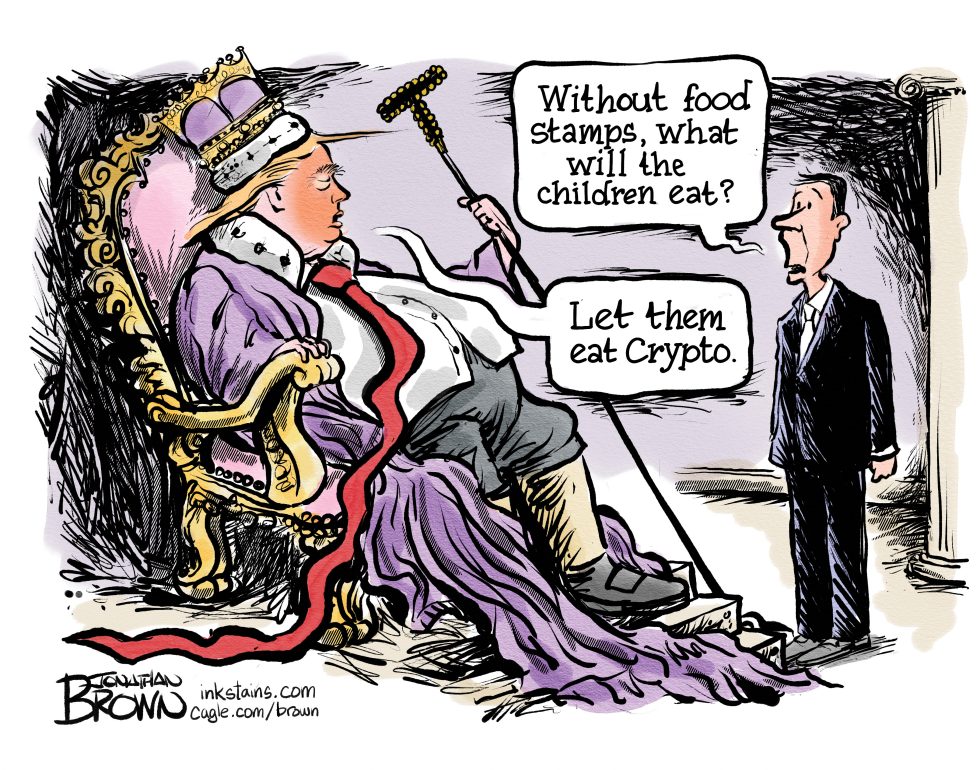
The image depicts Donald Trump dressed in royal attire on a throne responding to a question about food stamps during a government assistance halt. The suited figure asks what children will eat without SNAP benefits. Trump replies by suggesting crypto as the solution. This draws on the publication date of October 27 2025 when SNAP program disruptions were under discussion. The visual frames the response as detached from everyday economic pressures faced by recipients.
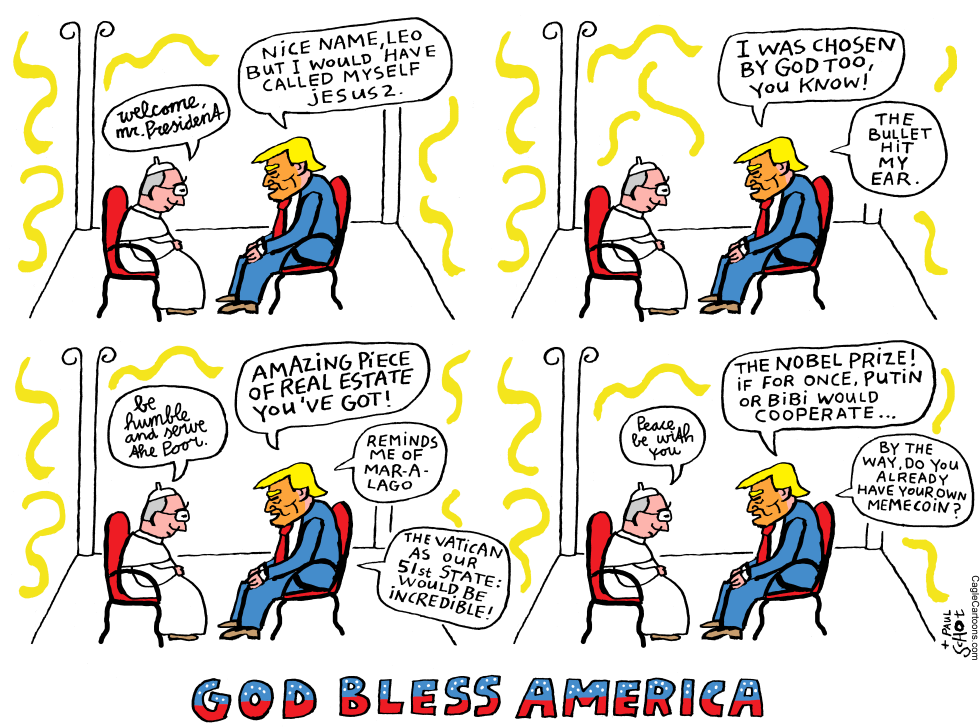
The image presents a four-panel satirical comic strip Donald Trump Pope Francis, where characters exchange quips on divine selection and ambition. Political cartoon Trump Pope meeting highlights Trump boasting about being chosen by God after a bullet grazed his ear, while praising the Vatican's real estate. Humor God bless America cartoon escalates with Trump suggesting the Vatican as the 51st state, reminiscent of Mar-a-Lago. Nobel Prize Putin Bibi cartoon references appear as Trump muses on peace prizes and cooperation with world leaders. Trump real estate Vatican satire peaks with inquiries about meme coin, underscoring commercial angles. The bottom caption 'GOD BLESS AMERICA' ties the scene with patriotic irony, crafted by artist Schot in a straightforward cartoon style.
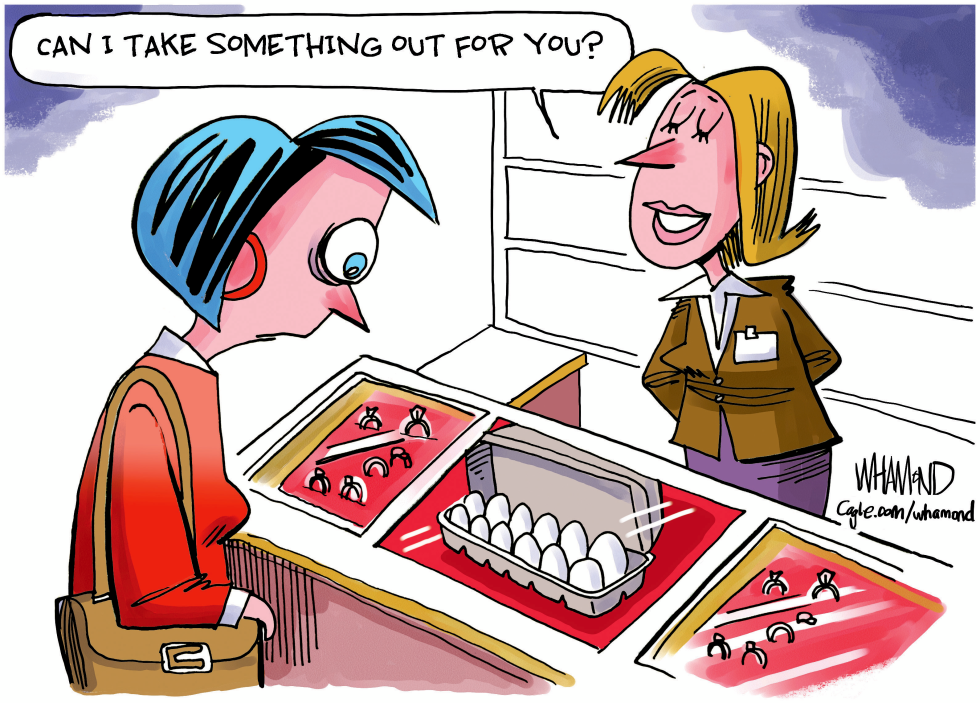
A jewelry store scene places an open egg carton between ring displays. The customer asks the clerk if she can take something out. The image responds to 2025 price spikes in groceries tied to tariffs and supply issues. Egg prices feature prominently in recent economic reports. The visual places everyday food items in a luxury setting to underscore cost pressures on households.